Sunday, June 27, 2010

Caltrop


Salve,
a little drawing of a hussar stopping his charge due to caltrops, that had been spread by the enemy infantry. In Polish this device was called a 'czośnik' (plural - czośniki). 
Normal battlefield occurrence in Europe and in Asia Minor from the Alexander the Great era through early modern warfare, obviously used by the infantry against  cavalry but also could be used against the infantry.

 Caltrops from Chania - X-XII centyrt AD

Caltrops from Muscovy (present Russia)
...

Thursday, June 24, 2010

Klushino - a new English language text by dr. Radek Sikora


Salve,
Let it be my pleasure to attach here a link to my friend Radek Sikora, already a 'doctor'  :)  or Ph.D.,  newest English language and the best researched  'take' on the Klushino battle - please do enjoy Klushino

And above and bellow  my own sketches based on the XVII century work of pan Józef Naronowicz-Naroński drawing of a Russian/Muscovy streletz version of the infantry field anti-cavalry defense. The second sketch intends to show   a post-hussar charge view of   horse casualties  inflicted  by these 'kobylice' (cheval de frise) - name used by our  Polish military scholar, Naronowicz-Naroński in his "Architektura militaris, to jest budownictwo wojenne" ,  published in the XVII century.

Wednesday, June 23, 2010

Vienna Codex - another splendid image


Salve,
more images of Ottoman Turkish military form the late XVI century, including the  Vienna Codex 6000. Fearsome delilers - perhaps the best warriors of the Ottoman Army -
 Note that  the turbaned (most likely the helmet underneath the turban) commander is wearing an 'anima' laminated  cuirass, coat-of-mail under the cuirass protecting his arms and maybe his hips, while at his side there is a sabre, underneath his left thigh a broadsword (pallasch), while leading his splendid chestnut steed with one hand (horse is curb-bitted and holds his head high, parading :) )  and the right hand with a risen menacingly 'nadziak' or a steppe and eventually Turkish, Polish, Hungarian version of horseman  bec-du-faucon (pico de grajo).
Rider behind the turbaned ghazi is carrying  a heavy lance, painted, not dissimilar to the Polish Winged Hussar lances or even earlier Renaissance and medieval ones. His left side is covered by a leopard pelt - is he a Turkish hussar?
The foreground rider - and the most striking out of them, is a very muscular man with a shaved head but for a 'scalp lock' of the Slavic tradition. He has a red hat on his back, a type called by prof Zygulski jr. a Bosnian hat, so perhaps these riders were Bosnian converts. This man is caring a tuck/estock (panzerstrecher) underneath his left thigh, while his curved Hungarian style sabre is out of its sheath, being brandished in a typical manner -high above one's head.  Curb-bitted stallion has some interesting horse tack, especially the crouper  with what appears to be copper or brass bells, not dissimilar form the Spanish conquistadors bells used in the Americas.
The last man is wearing a bear coat, perhaps harking back to the ancient warrior rites  of the Indoeuropeans, where bear-men were the most fearsome warriors. Addition of a bird of prey wing on top of his head seems to go back to the steppe tradition of the Saka, Sarmatians and ancient Turks. He also has a nice Hungarian sabre, so popular with the Eastern European nobility and warriors during the XVI century.
Finally, the boots and spurs on these warriors are similar  to Polish and Hungarian ones.  
More Delilers from the Ottoman Turkish  miniatures, done in the second half of the  XVI century.


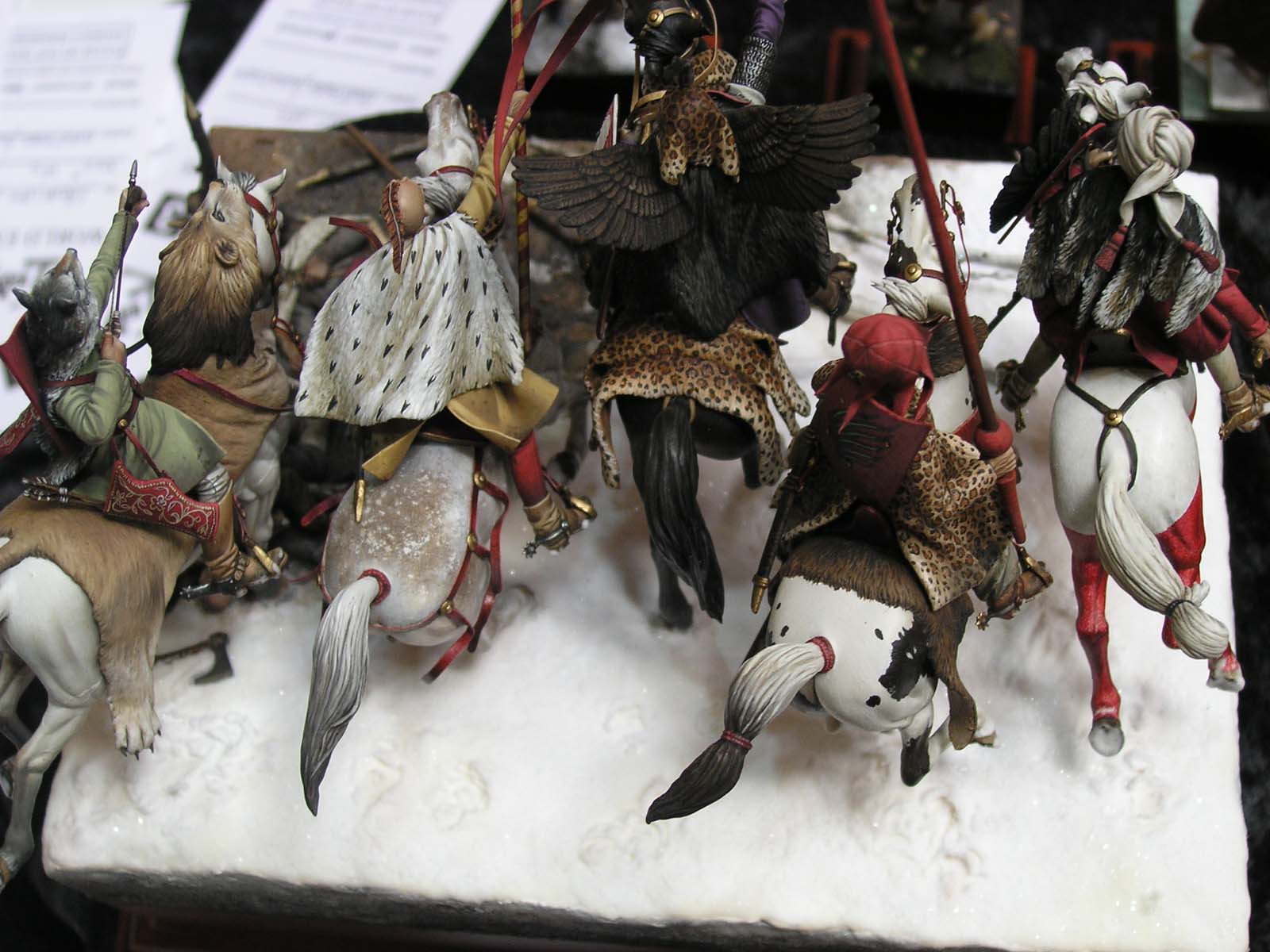
 6 years ago these soldiers were subject of a nice historical miniature, but not error free,  soldiers diorama at the Boston World Expo, work done by two Italian miniaturists Cartacci and Mariano Numitone , and I took some photos of them  Boston_Expo/Cartacci-TooLate.jpg
 I will speak more about the image of a deliler on the right some other time..

Tuesday, June 22, 2010

Image of glory and memento to passing time


Salve,
Don Gustavo, one of my Facebook friends and fellow admirer of fine Polish, Belorussian, Ukrainian, Lithuanian, Hungarian, Livonian, German nobility,  their gallantry and bravery, and who is a follower of my blog as well, pointed to me something that I have not seen before.
It is the attached below an image of the Polish knight (appears to be a winged hussar), deceased AD 1596, who was immortalized by his family with an epitaph, adorned with  a truly Renaissance portrait.
The  buried hussar's name was Andrzej Kochanowski of Korwin coat of arms  Korwin .
He was the founder of  the church  where he was buried, this late  Renaissance Roman Catholic Church in Grodek, near Kozienice in Poland. Mosci pan Andrzej Kochanowski, son of Dobieslaw, was himself  a cousin of our most preeminent Renaissance  poet- Jan Kochanowski, who himself was described wearing a hussar outfit during the fabulous 1574 royal entry to King's city of Cracow ( the entry of our shortest ruling and only French monarch, Henri Valois). Perhaps one day I return to Jan and his poem 'Jezda do Mokswy'  Jezda_do_Moskwy  , that describes the famous raid by Filon Kmita of coat of arms Radwan_Sowity , Haraburda  and Krzysztof 'Thunder' Radziwill against the
Muscovy's interior during king Bathory's war with Muscovy 1577-82.

Ad rem, our pan Andrzej here has a fine Renaissance armor (note a visible gilded spur  at this armored heel) and coat of mail, while his knightly weapons,  sword and sabre, along with his shishak with red plume are at his side. He is eternally resting on the human scull, a somber remainder : memento mori, while  a finely painted hourglass has for ever reminded the viewer about the passing time -Πάντα ῥεῖ pantha rei.
This is a somber and very pious piece of art,  and this style of painting portraits of deceased to decorate their burials and soon coffins/caskets became so called Sarmatian fashion across the Polish-Lithuanian Commonwealth, resulting in many fabulous paintings of our ancestors  Portret_trumienny_B._D._Lubomirskiej.jpg .  


ps
another drawing of mine above the text, it seems that those fabulous wild cats skins were often carried underneath the saddle, in ancient  Macedonian (vide Alexander the Great equestrian portraits) and Great Steppe warrior fashions.

a little of Renaisance and Triumph of Emperor Maximillian

Salve,
Hans Burkmair  Hans Burgkmair , designed one of the most impressive German Renaissance woodcut projects - more than 150 woodcuts of various  aspects of Emperor  Maximillian I (not a friend of Polish-Lithianian Jagiellonian Kingdom) display of power.  Also there can be found a little book on the archive.org  triumph of emperor where many details regarding these plates are given in somewhat antiquated English of the late XIX century.
Anyway,  this greatest link to the 'Maximillian Procession' woodcuts ( Graz collection of some of the hand painted woodcuts surviving form the Triumphal Procession of Maximillian) was  found by Michal 'Kadrinazi'  triumphzug 
Although Michal graciously posted the link on his blog, I decided to post it here since his blog is in Polish   http://kadrinazi.blogspot.com/ ... and few readers of English tongue might go  dircetly over to his fine, almost daily updated, blog on XVII century military, but if you choose to do so here is his post about it  http://kadrinazi.blogspot.com/2010/06/triumphzug-kaiser-maximilians.html .
thank you, Michal :)
ps
and my little drawing with GIMP paint studio and Mypaint, of our King Sigismund Augustus royal hussar circa 1553

Monday, June 21, 2010

in the spirit of Kluszyn 2010 (Klushino)

salve,
 today's little drawing of a charging winged hussar (true,  I'll have to add the wings later on)  - I hope I am showing here  the process of lowering his lance  the  while his rumak (war steed) is in full gallop... seconds before hitting the target.

Saturday, June 19, 2010

English Sportsman on Polish horse circa 1730s

Salve,
While perusing Sportsman Dictionary vol. 11, published 1737,  I found the following depiction of our Polish horses:
"These are much like the Danish horse, and are generally about the size of the Spanish Jennet, are of a middle stature, but their limbs are much better knit together, and are of a much stronger make, than the Spanish ones.

This horse is in many respects, like our natural English horse, except that their head are somewhat slenderer, like the Irish hobby; but  their necks and crests are raised upright, and very strong; their ears are very short and small, and their backs capable of bearing any weight; their chines [shins] are broad, their hoofs are judged to be as good as those of any horse in the world.
They are very good for a journey, and will endure long ones, with more ease than any other horse"


The attached  prints,  done during the late 1645 to  1651AD  in France,  by the Italian  draughtsman and master printmaker Stefano della Bella you can see such horses [nota bene this etching above  was used by Richard Brzezinski to reconstruct a winged hussar for this Osprey book - Polish Winged Hussars ]


Almost 60 years later, in their 1790s edition, famous  Encyclopedia Britannica editors wrote:
'Polish horses are like Danish, only the have not so fine a fore-hand, their colour is generally a bright bay, and that of the outward peel of the onion, They are fiery and vicious, '
while the depiction of the Danish horse is as follows:
'Danish horses are low, short, and square, but they have a fine head and short hair.'

ps

nice page with medieval and early modern horse tack, including a blurred image of a winged Polish horse from 'Certamen Equestre' series ( these Eimmart prints   commemorate the 1672 horse parade at the Swedish court of Karl XI ) horse tack
this one above is one of the G.C.  Eimmart's prints showing Polish musicians on Polish horses. Please note that many of the Eimmart's prints were used by the Poland's preeminent military costume historian and fabulous artist, pan Bronislaw Gembarzewski. Unfortunately his works were burnt during the savage destruction of Warsaw by the Hitler's Germans in 1944, and they mostly survive in microfilms and old publications, especially valuable are his books:  Żołnierz polski. Ubiór, uzbrojenie i oporządzenie wojska polskiego od XI wieku do 1831 roku (from microfilms published in 1960-1966, 4 volumes) [this one is a compilation of then available sources on Polish military men and their horses] , Wojsko polskie. Królestwo Polskie.  1815-1830  [Polish Kingdom] (1903), Wojsko polskie. Księstwo Warszawskie. 1807-1814  [Duchy of Warsaw] (1905), Husarze [Winged Hussars]  (1500-1775) (1939)

Turkish horse II

Merhaba :)
I found some more interesting depictions  of Turkish horses - from the AD 1737 English publication titled 'Sportsman Dictionary, ' vol 11.
"These horses are originally natives of Greece [ Byzantium ], and bear an extraordinary price with us [English], partly because of their extraordinary beauty, and partly because of the great expense of bringing them over [from Ottoman Empire to England].
These Turkish horses have fine heads, somewhat like Barbary ones, beautiful fore-hands, and straight limbs, rather small than large, are of a most delicate shape, their pace is genteel and graceful, and besides they are horses of good spirit.
Their coats are smooth and short, their hoofs long and narrow, which is a sign of swiftness; in a word, there are horses of great beauty courage and speed.
Their colour is, for the most part, grey of flea-bitten, tho' there are some of a bright bay colour; but most of these we have now in England, are grey."
Almost hundred years earlier, during his voyage across the seas 1647-52 English merchant Robert Bargrave visited Constantinople [Istanbul], the capital of the empire. He wrote in his travel diary:
'..but are to be seen such horses, and that in great number, as all Christendom cannot vie with; many of whose accouterments  alone are worth thousands, and those are but common which cost less than hundreds'
page 86, 'The Travel Diary of Robert Bargrave Levant Merchant 1647-1656,' ed M. G. Brennan.

Above, Sultan Suleiman the Magnificent  Suleiman_the_Magnificent on campaign riding  one of his fine horses, surrounded by his guards.

Tuesday, June 8, 2010

Kluszyn 2010 - another progress sketch II

Salve,
  I am looking to forward to have some time later this summer to be able to prepare a series of  blog entries regarding the Ottoman Turkish cavalry, especially the deli/deliler - here from a Vienna codex miniatures


and sipahi  below-


- here  a sipahi from Swedish ambasador Ralamb book of miniatures (1650s) and below kapikulu sipahis of the Vienna Codex miniatures.


Meantime I have been drawing Polish hussars, getting my spirits going  for the Kluszyn 2010 in Warsaw, Poland.
And to stay in the spirit of horses and cavalry find the google links to two old but still good history of cavalry books on google:
history of cavalry
cavalry roemer
 this one is a Polish book, written by one of Polish XIX century historians - Konstanty Marian Gorski (no English wikipedia entry  Konstanty Gorski   amazon uk entry  .amazon.co.uk Historya-Polskiej-Konstanty-Marian-Gorski) - is a sources based history of Polish cavalry and infantry, and although the title on google states only 'history of Polish infantry' actually this edition contains both the history of infantry and history of cavalry together, almost 600 pages of good reading  - Gorski historia piechoty y jazdy polskiej

Another of my sketches in this theme that progressed from color pencils and watercolor to GIMP PS and MyPaint.
Do enjoy   -:)

Monday, June 7, 2010

Kluszyn 2010 - work in progress I

salve,
Kluszyn 2010 festivities kluszyn1610.pl in Warsaw, Poland are fast approaching - I am hoping to be  there along with my son Jasio for the famous battle reenactment mounted and dressed as a szlachcic/Crimean Tatar  -:) , thanks to the support from  my lovely wife Julia, and dear friends Radek Sikora and Bartek Siedlar :)
Meantime, I have been sketching various winged hussars - and there is one of them - work in progress: from colored pencils and watercolor to GIMP Paint Studio and MyPaint...

Sunday, June 6, 2010

Ottoman tamgas - mark of the Sultan armories


Salve,
At McGill University Library, Montreal Quebec, they have this very interesting journal: Livrust Kammaren - Journal of the Royal Armoury. In the volume 17 from 1985 I found an interesting article on Eastern helmet - cicak or szyszak (shishak). I cannot read Swedish but I saw the photos, drawings etc,  and thus I copied some of the tamgas associated with the Istanbul/Constantinople Ottoman Sultan Armouries of the XVI-XVII centuries
-    http://en.wikipedia.org/wiki/Tamga
I hope my picture speaks for itself

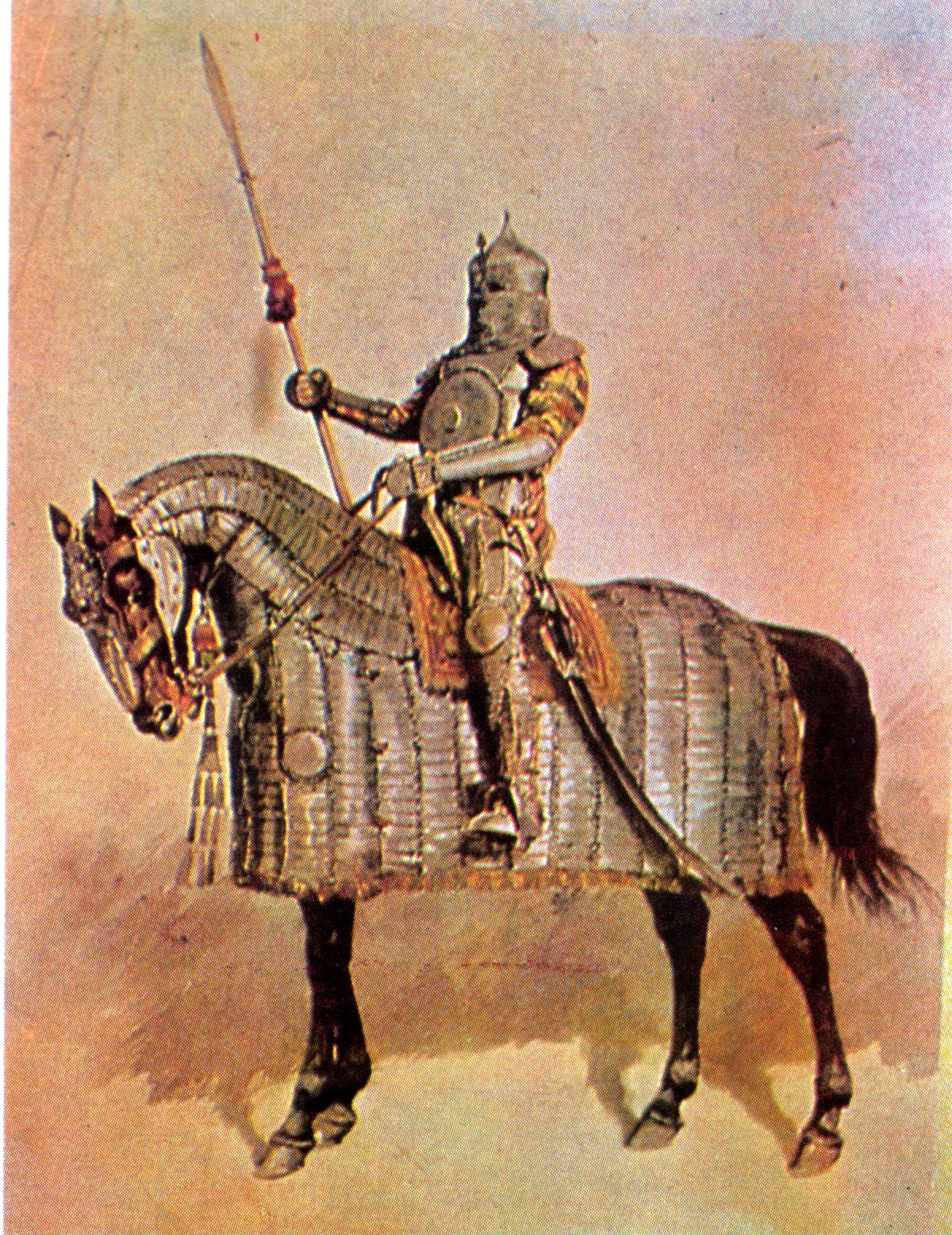
 and the  Ottoman armored kapikulu sipahi armor for horse and rider

Saturday, June 5, 2010

Polish language sources to the Chocim/Khotin battle 1621 - from google

 
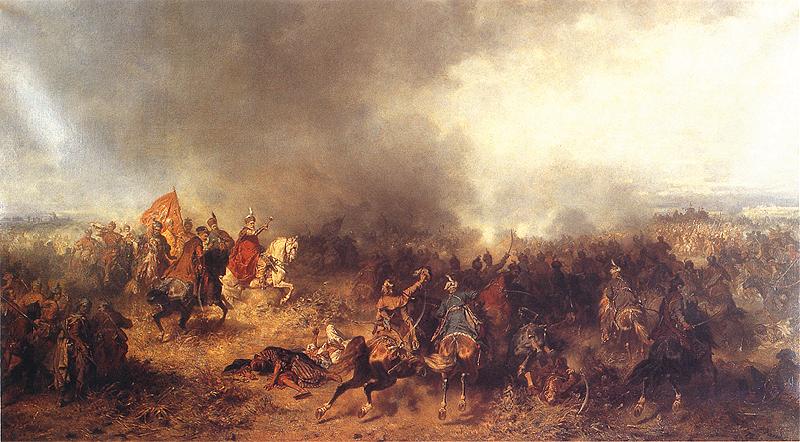
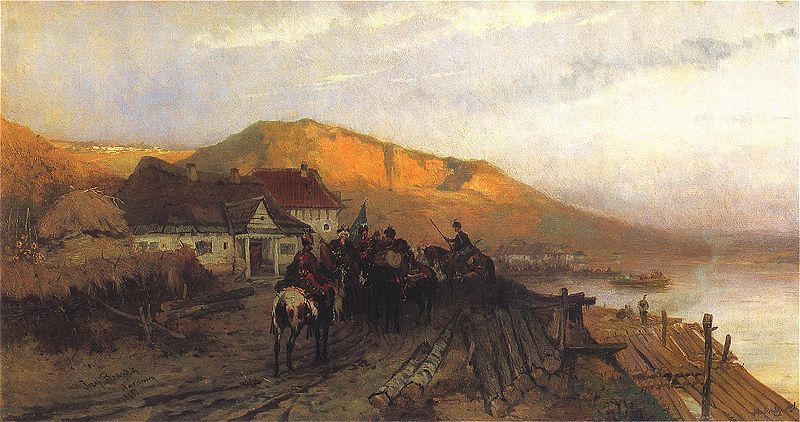
      almost 411 years ago a large Polish-Lithuanian army (including huge Zaporozhian Cossack contingent under Piotr/Petro  Zahajdaczyny/Sahaidaczny) commanded by the grand hetman Jan Karol Chodkiewicz (in this Jozef Brandt painting Chodkiewicz Chocim ) withstood one of the largest Ottoman Turkish  armies in a defensive encampment at the Chocim/Kotin  fortress Chocim   , also acrossing on the Dniester River (you can see the Dniester shore in this Jozef Brandt painting  Nad_Dniestrem ),  in Moldavia (present Ukraine).
The 1621 Chocim campaign has not been a subject of any  extensive scholarly study in English - there are some  articles though - they can be downloaded from the wikipedia wikipedia.org Battle_of_Khotyn 1621   battle page.

There are published Polish languages primary sources to this battle, compiled already in the XIX century by Polish historians and enthusiasts.
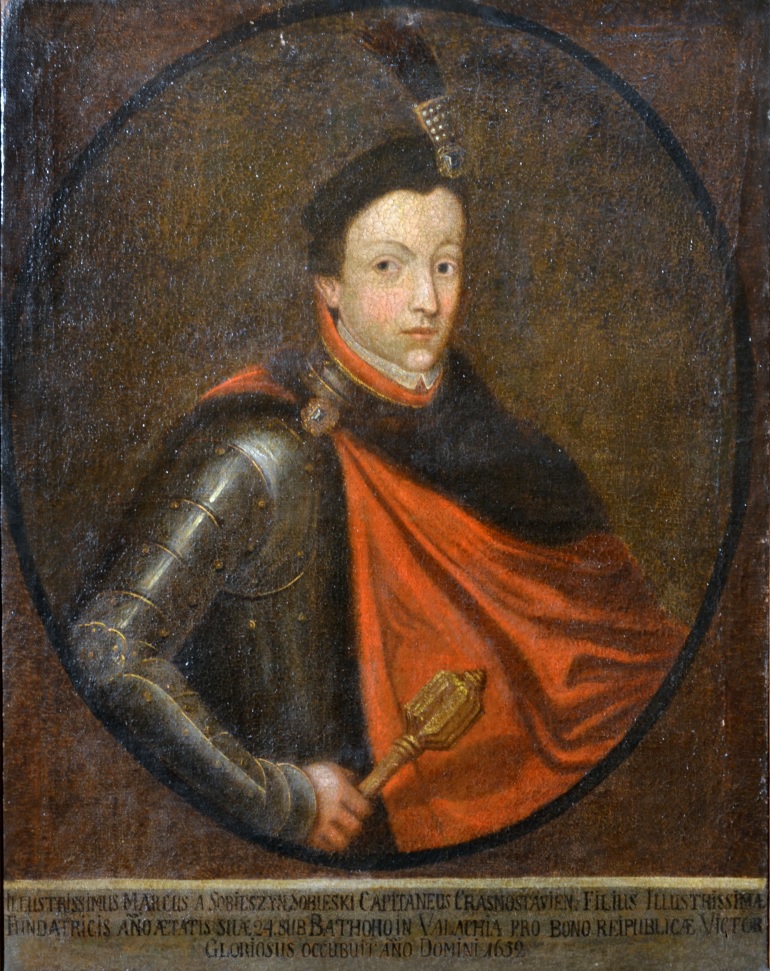
First of them,  Pamiętniki o wyprawie chocimskiej r. 1621, is a compilation of Polish writers (themselves participants of the famous battle)  Pamietniki Wojny Chocimskiej - including the diary of Jakub Sobieski  Jakub Sobieski , father of future king Jan III of Poland-Lithuanian and his prematurely deceased brother Marek Marek Sobieski ( I will write a page or two about this great cavalryman and patriot).

The second,  Collectanea z dziejopisów tureckich: rzeczy do historyi polskiey służących, is a compilation of various Ottoman Turkish writers as they relate to the Polish-Turkish relations between XV and XVIII centuries  Collectanea z dziejow  .

Finally a work of licentia poetica based in Sobieski'diary  by the already mentioned XVII century Polish-Lithuanian poet and bonn vivant  Waclaw Potocki who wrote this most famous XVII century Polish  epic poem known as Transakcja wojny chocimskiej (The Progress of the Khotin War)  and it can been read in various formats from archive.org  wojna chocimska .

Friday, May 28, 2010

historic saddles reproduced


Salve,
Memorial Weekend upon us in the USA, and time to take a dip in the ocean before that horrible BP Oil Spill in Mexican Gulf comes our way around the Florida Peninsula and up the Jersey shore  - :( .

I was surfing the net and came upon a Polish artist-saddle maker who reproduces historic saddles from XVII century onwards. They do look fantastic, although no winged hussar saddle yet but I am sure that can be customized (judging from kind of work the artist is doing.
I have been waiting for this kind of artisan saddlery work for long time.
The name of the saddle maker is Stanislaw Paszkiel and he lives along with his family and horses in  Gostków,  25-120 Bliżyn,  Swietokrzyskie Województwo( province)  in Poland.
This is the website showing photos and film of these various saddles, they do look very functional and 'pretty' -  saddles jazda-w-zabytkowym-siodle   .  Hopefully I can get more information on the Polish XVII century saddle replica, and some photos form this saddle maker.

And on ebay I found what it appears to be a historic original Ottoman Turkish saddle from XIX century - with plenty of great photos showing leather work, construction and degree of preservation of this very interesting equestrian object   OLD-ANTIQUE-OTTOMAN-TURKISH-HORSE-SADDLE .
This is an example of an old Ottoman Turkish saddle below with a description Antique 19th century Turkish Ottoman horseman saddle and stirrups .The saddle with wooden frame covered with leather and incorporating a pair of leather flaps on each side, the front and rear mounted in white metal frame and applied with plaques .retaining its original straps and stirrups. Condition: the saddle has sign of usage; the leather is dried up and with wear and same old repairs. Reference: A similar Ottoman saddles to this one are published in the Russian book "TURKISH ARMS” by E.G.Astvatsaturjan. Dimensions: length: 44cm (17 1/4 in), width: 32cm (12 5/8 in), height: 34,5cm (13 1/2 in).

Monday, May 24, 2010

Charles John ffoulkes works on archive.org

salve,
Again I would like to share with you a splendid page from the greatest free book depository, i.e.,archive.org   .

This time the books were written by one of the early British scholars on the arms and amour - Charles John ffoulkes - his bio   royalarmouries charles john ffoulkes .
We have four books worth perusing, full of period drawings, paintings, photos and actual museum objects:
1. The armourer and his craft from the XIth to the XVIth century (1912)  armourer his craft
2.Armour & weapons (1909) armour weapons
3. Inventory and survey of the armouries of the Tower of London (1916) vol 1
archive.org inventory survey Tower1
4.Inventory and survey of the armouries of the Tower of London (1916) vol 2
.archive.org inventory survey tower2    
enjoy reading nad looking  :)

my own photo of the  XVI century horse armour from the New York Metropolitan Museum of Art.  Amazing and fearsome curb bit as a part of this horse armour!

horse images - reference for painting and drawing I

'old style' (Roman-nosed) American horse head photo reference...

Sunday, May 23, 2010

great Medieval and Renaissance arms and armor book in 5 volumes


Salve,
Sunday is always a great day to visit a museum or library in NYC and we (my son and I ) are going to go to the New York research library on 42 street to read and photo some books there, especially Wawrzonkowska Z., Uzbrojenie i ubiór rycerski Piastów śląskich od XII do XIV w.  nypl.org Wawrzonkowska , to further my study regarding Polish Medieval arms and armor. 

   However, since electronic media and virtual libraries have sprung like 'mushrooms after a good rain' in the internet,  it is worthwhile to search for books at archive.org or google books.
While reading several articles and books on the Medieval and Renaissance arms and armor I came across this work of early scholar Guy Francis Laking www.royalarmouries.org guy francis laking  (note that I did not use wikipedia but unfortunately the entry in the wikipedia is not the best) and his opus magnum A Record of European Armour and Arms through Seven Centuries (1920).
The book is full of  interesting text and hundreds of great pictures of arms, armor, saddles, period miniatures and paintings, I have read certain parts thus far and it is one great, enjoyable resource on arms and armor. The horse oriented information is presented throughout the volumes, e.g. volume I chapter III has a short discussion on horse accouterments  in XII and XIII centuries, while volume IV, chapter XXII is dedicated to horse armor from XIV to XVII centuries,  saddles, spurs etc.

    Books can be downloaded here www.archive.org record of european 01 laking  (you can access all other volumes by clicking on sir Guy name etc),  many parts can be read in form of web pages in many places eg.  laking on bulfinch  and here vikingsword.com laking index   .
Flamboyant Sir Guy also catalogued the  famous Wallace collection Catalogue of the European armour and arms in the Wallace Collection at Hertford House and this catalogue can be downladed from archive.org as well  archive.org catalogue europe lakig .

Do enjoy your reading :)
ps
the drawing above was done with a fine sketch Rotring Art Pen  rotring.com artpen and watercolor No.2 brush on hot pressed Arches  arches-papers.com watercolor paper and purports to show the famous 'anima' helmet (part of the complete suit of armor   wikipediacommons Zbroja_Batorego )  belonging to the  Polish_Lithuanian king Stefan (Stephen) Bathory  wikipedia.org king Stephen Bathory .
ps"
would like to welcome several new followers - bloggers in their own right 

V.

Friday, May 21, 2010

Some English sources to the 'Time of Troubles' in Muscovite Russia


Salve,
    I just came across the internet archive book (from University of Toronto collection) titled 'False Dimitri" that contains many interesting documents related to the English mercenaries' accounts of their experiences during the 'Times of Troubles' - (Wielka Smuta,  Смутное время ), including several English accounts of the battle of Klushino  Battle of Klushino - eg original letters from tzars,  Henry Brereton account originally published  circa 1614, story of tzar Dimitri, his murder etc.
Sonia E. Howe's book can be obtained here  Sonia Howe false dmitri   and it is free :).
pa ka

ps
My friend Patryk 'Varaz' (wild boar of the Sassanians) Skupniewicz, already o scholar of the Sassanian arms and amour, will be starting his PhD program in UK coming Autumn 2010 - so we should expect some great work on the knightly riders of ancient Iran in the not so distant future - good luck Varaz !

ps'
Another of my friend, Radoslaw Sikora, a noted specialist on the history, organization, battles and tactics of the Polish winged hussars, has just received his PhD in history - congrats!

a a little sketch in 'progress' Gimp and Mypaint

Wednesday, May 19, 2010

XIII century Poland's Kinghts and their horses II

hello again,
perhaps I am rushing this theme a bit but I was perusing 'UZBROJENIE W POLSCE SREDNIOWIECZNEJ 1350-1450' (Arms and armour in Medieval Poland  1350-1450) editor Andrzej Nadolski, and there in an article by Zdzislawa Wawrzonkowska titled  'Rzad konski i oporzadzenie jezdzieckie' (horse tack and rider's equipment) in a footnote no.15 I found some interesting statement. Namely,  the author   (to her other work on the Silesian Piasts I shall return later) wrote that the earliest curb-bit depiction  in the Polish medieval  iconography is atributed to the AD 1247 seal of Piast prince Przemysl I of Wielkopolska (Greater Poland)   Przemysl I of GreaterPoland and that curb bit can only be vaguely classified due to the small and general depiction in said seal.
Well, I found this seal in the Internet  poczet przemysl I and here we go

XIII century Poland's Kinghts and their horses

Czolem amici et viajeros,
I have been reading some and then some more on the Medieval knights and their horses. I have not posted anything on that period save for a small post on Grunwald AD 1410 and Zawisza Czarny. This will change after the Summer as I am planing to do some reconstructive drawings of the Polish (Piast and Pomeranian/Kashebe) princes and knights of the XIII (13th) century, the century which I find the most intriguing in the Poland's medieval era.
There are some iconographic images form the period, i.e., XIII century or shortly thereafter, eg famous Maciejowski Bible medievaltymes maciejowski bible   wiki Maciejowski_Bible.
One of the most famous images is the German miniature painting of our Piast Silesian prince and almost a Polish king, Henryk (Henry) Probus, included in the so called Manesse Codex wiki Codex Manesse   Manesse Codex heidelberg , a compilation of amazing miniatures showing poet knights of the Central Europe, withing the milieu of the high knightly German culture that at this time permeated or shined into the lands to the east and north of Germany proper.
Henryk Probus Henry IV Probus in full glory as a younger man (there is also  his famous sepulchral effigy from and I will write about it.

Some of my favorites of the Poland's XIII century:  Swietopelk II of Pomerania  Swantopolk II

and Boleslaw Pobozny of Wielkopolska  Boleslaw the Pious
here in one of his seals, showing our prince  slaying a winged dragon or a serpent-like winged monster (perhaps  a monster of Swietopelk's Pomerania).
... and finally I am very proud to show my own  9 years old son's drawing of prince Henryk Probus, done two days ago (color pencils), based on the famous Manesse Codex miniature:


well, let this be  my introduction... of sorts.

Sunday, May 16, 2010

Turkish horses of Cilicia Pedias (Cukurova Plain)

hello,
In the Polish and Muscovy XVI-XVII century sources the so called Turkish horses  were listed as the most splendid and notable steeds fit for the kings, magnates and noble ''rycerstwo'' (knights, chivalry, noblemen).

Being curious about the Ottoman Turkish horse origin, some time ago when I was at the McGill University Library special book collection, where one cannot use any writing tools but for their own short pencils,  I found a very interesting book.

Let's talk about the book first. At the library  I perused - in two days 1-2 hours each - this absolutely splendid and awfully overpriced book in two volumes (one text  and one fine photographs of some horse-related Islamic  artifacts) titled 'Furusiyya' - http://openlibrary.org/books/OL17608339M/Furusiyya
There I found many articles written by noted scholars on the subject of the horsemanship and horse ridding related to the present Islamic land, no matter how deeply into the pre-Islamic history, e.g. Seleucid heavy cavalry.

One of the articles written by J.M. Rogers titled 'Ottoman Furusiyya' (pages 176-183 in the vol.1) deals with XV-XVIII (15-18th) century Ottoman Turkish horses and horsemanship.
Thus I copied some information on the Turkish horses from his article:
   Rogers states that the proper Turkish horses were bred in Cukurova Plain (southern fringes of the Taurus Mountains in the South-eastern Turkey or better put on the wikipedia   http://en.wikipedia.org/wiki/%C3%87ukurova ) first, and later on the rest of Anatolia became the breeding ground, while Epirus and Thesally, historic ancient Greece horse breeding grounds, continued to serve as such for the Ottomans overlords.  I can add my own thought here that this area was part of the medieval Armenian Kingdom of Cilicia, divided into ''Cilician Trachea'' and ''Cilicia Pedias.'' Cilicia Pedias became the Ottoman tributary during  XV century  perhaps as a result of wars between the Ottomans and the Mamluk Egypt, and thus Cilicia would continue in a semi-autonomous existence until her annexation by the Turks circa 1515, thus it would  seem reasonable to think that Cilician Armenians were the actual breeders of the so called 'Turkish horse.'  In my opinion (absent from the said article by Rogers) this horse breeding area and its people also  seem  to fit  nicely with  the ancient horse-breading traditions of the Armenians under the Achaemenid Persian kings and before [Urartu], and their horses are shown on the Apadana Staircase in Persepolis, Iran (via Livius  livius.org apadana armenian delegates   ). It also seems to me that great ancient traditions of the Iranian and Turkish peoples with Greek (Byzantine ) input produced this treat stead of the XV-XVII centuries.

Continuing with Rogers' article - other breeds: Arabian, Tatar and Hungarian were less numerous, but by 1650AD excessive demand for Turkish horses virtually exhausted the Anatolian breeding grounds and this led to actual replacement of the Turkish horse by the horses from the north of the Danube Basin (for the Ottoman military).
Rogers cites Busbecq ('Turkish Letters of Ogier P. de Busbecq,' 1554-62 AD)) and Marsigli ('Strato militare dell'Imporio Ottomano' Hague Amsterdam 1732 AD) as his best sources. Marsigli in his famous book stated that Turkomanian horses were very valued in the Ottoman Empire, and that the best war horses came from Hungarian, Transylvania, Polish and Moldavian stocks. Horses from Dobruja (   wikipedia.org Dobruja   )  were esteemed as parade horses (due to their size, for they were tall). According to conclusions drawn by Rogers from his sources the Arabian horses were not used for war, as they could not withstand cold and damp conditions of Turkish northern campaigns, and also were difficult on the battlefield  because were extremely afraid of the gunfire.
 I could add that we known from the records that during the Vienna Campaign of 1683 AD victorious Polish commanders and noble cavalry 'towarzysze' (companions) captured some very fine Arabian horses [including mares] from the taken Turkish camp after the famous battle. Perhaps those were parade  favourites of the horse-loving Turkish commanders and warriors etc (similar to the way many men nowadays own luxury cars without really driving them daily).

Rogers also writes that Turkish horses were shod  with shoes that were continuous and solid (so no stumbling and damage to the frog etc). According to his sources Turkish horses were used up to 28-30 years of age, fed on hay and barley, while their straw bed was made from dried horse manure (similar to the Persian Turkoman traditions).

The rest of the article dealt mostly with the  different Ottoman warrior and soldier types eg voynuks , akinjis, sipahi etc,  the cavalry of the standing armies of the Ottoman state - Kapikulu  Corps (eg sipahi in reconstruction ) - and its  cavalry branch, subject that I will indulge more in the future. Also I will introduce the writings of a Polish and Ukrainian writer and ' un caballeros supremo' Michal Czaykowski (Sadyk Pasha aka  Mehmet Sadık Paşa   books.google.com Czaykowski biografia )  who while being a Turkish cavalry commander in the mid-XIX century wrote about the pitiful state of the regular Turkish cavalry of the late Ottoman period, but was extolling Balkan horses and Circassian and Turkoman horses...
pa ka

ps
aha, I am working on this sketch of a saddled XVII century horse, it is not finished yet  ... GIMP and MyPaint :)

another Gallic horseman

Salve,
I just 'cartoonized' another of my Gallic horsemen. Time frame is around  the Wars of the Second Triumvirate  ( 43 BC – 33 BC ), with the great battle of Philippi  http://en.wikipedia.org/wiki/Battle_of_Philippi  as the largest land battle of the Second Triumvirate (eg the life of one of the principal actors -Brutus by Plutarch here Plutarch Brutus   ).  HBO series 'Rome' season 2 did attempt to show the battle, but it was not the greatest reconstruction I daresay.

Polish readers can find a nice book on the battle of Philippi authored by Maciej Milczanowski titled 'Filippi 23 X 42 p.n.e.'  published bye Wydawnictwo Inforteditions from Zabrze  in 2006.


English readers can read Osprey's book by Si Sheppard amply  titled 'Philippi - 42 BC' osprey Philippi-42-BC 
 Reviewed on Amazon.com by R. Forczyk  - the entire review here:
amazon.com Forczyk Philippi

The great podcast (actaully just one great history of Rome in lectures) on the subject is here:  historyofrome the-second-triumvirate

Monday, May 3, 2010

some idea

salve,
Tonight I will return to the idea included in  Messer Kadrinazi's  comment to my previous post :
"[...] in relation of English cavalrymen serving in one of 'British' company of reiters we  had information, that when those units were en route to de la Gardie's army [AD 1610] they'd defeated a contingent of 700 'Polanders', capturing 'sconce furnished vs not onely with great store of riches, but also with number of Polish Horses; and as many armes as sereud to arme fiue hundred men'. Maybe that could be idea for Your new drawing Dario ;) Scots or Englishemen on Polish horses, with some Western and some Eastern equippment :)"
well, some years ago I did draw a cavalryman of Western provenance mounted on an 'Eastern' horse et al, sort of a dragon officer in Polish serivce.  I manipulated this sketch with GIMP and MyPaint so it is quite different from the pen and ink original.

Although this image tends to show a later - mid 17th century - cavalier, I think it gives some idea about the cavalrymen from the  story told above.

Friday, April 30, 2010

a little 'joke' on Olesko Chocim painting

Salve,
Since they were posted  I have been immensely enjoying the great quality of the pictures taken by the hussars portal team http://www.hussar.com.pl/12776/husaria-pod-chocimiem-1673r   ( those of the Klushino and Chocim victories) drawing  ideas float around.
This morning, after some exercise in the park while walking my son's dog ;) ,  I had decided to play a little 'joke' and   I painted in a rather pensively looking  nobleman standing in front of the battle of  Chocim /Khotyn 1673 painting  with  future king Jan III Sobieski  - then grand hetman - looking on ( wikipedia  http://pl.wikipedia.org/wiki/Bitwa_pod_Chocimiem_%281673%29   http://ru.wikipedia.org/wiki/%D0%A5%D0%BE%D1%82%D0%B8%D0%BD%D1%81%D0%BA%D0%B0%D1%8F_%D0%B1%D0%B8%D1%82%D0%B2%D0%B0_%281673%29  ) .

Our Polish-Lithuanian glory belongs to the past - as in a Latin saying  Sic transit gloria mundi -  http://en.wikipedia.org/wiki/Sic_transit_gloria_mundi and our nobleman may be reflecting on it.
Hope this little 'desecration' of this artwork will not offend any traditionalists surfing out there  the world wide web :) .


ps
I want to welcome two newest followers of my blog:  Julia and Michal-Kadrinazi, his blog is a marvel of sources, information and erudite analysis on the XVII century (17th )  warfare http://kadrinazi.blogspot.com/  (but it is in Polish only ).