Showing posts with label bison. Show all posts

Tuesday, May 26, 2026

Bison & Indigenous People of the Plains

 Salvete Omens,


The Memorial Day weekend came and went and let us share this video of Bison, People and Plains from Ancient Americas Yt channel. 


Before the coming of the horse the bison (Plains and Wood Bison) 


and indigenous people lived in a particular relationship, with perhaps as many as 30 to 35 million bison living in the North America, hunted by the Indians and thus providing them with food, skins for tents and clothing, bone tools and many, many other uses. 


The dogs pulled smalledr travois and thus their tipis were smaller. During the 1500s the Plains Apaches who were the nomads lived in their wickiups in their Plains rancherias.


.


The dominant pre-Columbian Plains  inhabitants were the  horticultural tribes  who lived in the Plains from time immemorial. They lived by the rivers in the river valleys with fertile soil, in their permanent earth lodge villages (eg Pawnees, Mandan etc) or like the Caddo confederacies in large towns made out of the grass houses.  


Their hunts were seasonal and when hunting they also used tipis for dwellings during this communal hunts. 


enjoy 

ps there is a project Hunt Primitive in North America, where they hunt animals, including bison, with stone weapons - bow and arrows, atlatal, spears etc.


Valete

Thursday, August 21, 2025

Buffalo wolf - the loafer of the Great Plains

 Salvete Omnes,


back to the Great Plains before the settlement by the European-American settlers, when with the millions of bison and antelopes two kinds of wolves roamed the plains - the coyote and the buffalo [often white or black] wolf (Canis lupus nubilus). Plains Indians, both in the pre-horse and post-horse period,  used the entire hides of these large wolves (more than 4 feet without a tail) to approach as close as possible the grazing bison herd and to hunt that grazing bison with a bow and arrow.  The native scouts on warpath used these pelts to camouflage themselves and to show their special status within a raiding band, including wearing eagle feathers attached at the head of the pelt. 


wolves hunting a bull

American traveler and artist, George Catlin, recorded the wolves in their natural environment, and even used wolf pelt as a disguise to approach and to observe and  sketch bison herds.

Wolf pelt camouflaged native hunters, with bows and arrows, creep up to a grazing herd in order to hunt the beasts up and dangerously close, risking being trampled or gored to death by the bulls 

Catlin and his native companion approaching the buffalo herd

Upper Missouri Bluffs, with a pair of white wolves

wolves attacking a bull
..

the description of the  wolf of the Great Plains (1819-20) -


a rather gruesome photo (by John Grabill) of a band of Wyoming cowboys with a captured-with-lasso wolf 

these wolves were hunted to almost extinction in the Great Plains, most often with poison, but they survived in the north-est, in Minnesota, in the Canadian Prairies and so on.
Hence, they are surviving in Montana and perhaps Colorado - here some photos of the  actual wolves 


and its southern cousin, the Mexican wolf

enjoy

Valete

Sunday, February 16, 2025

Buffalo vel bison hunting III - bison skinning or dressing - The Eastmans

 Salvete Omnes,

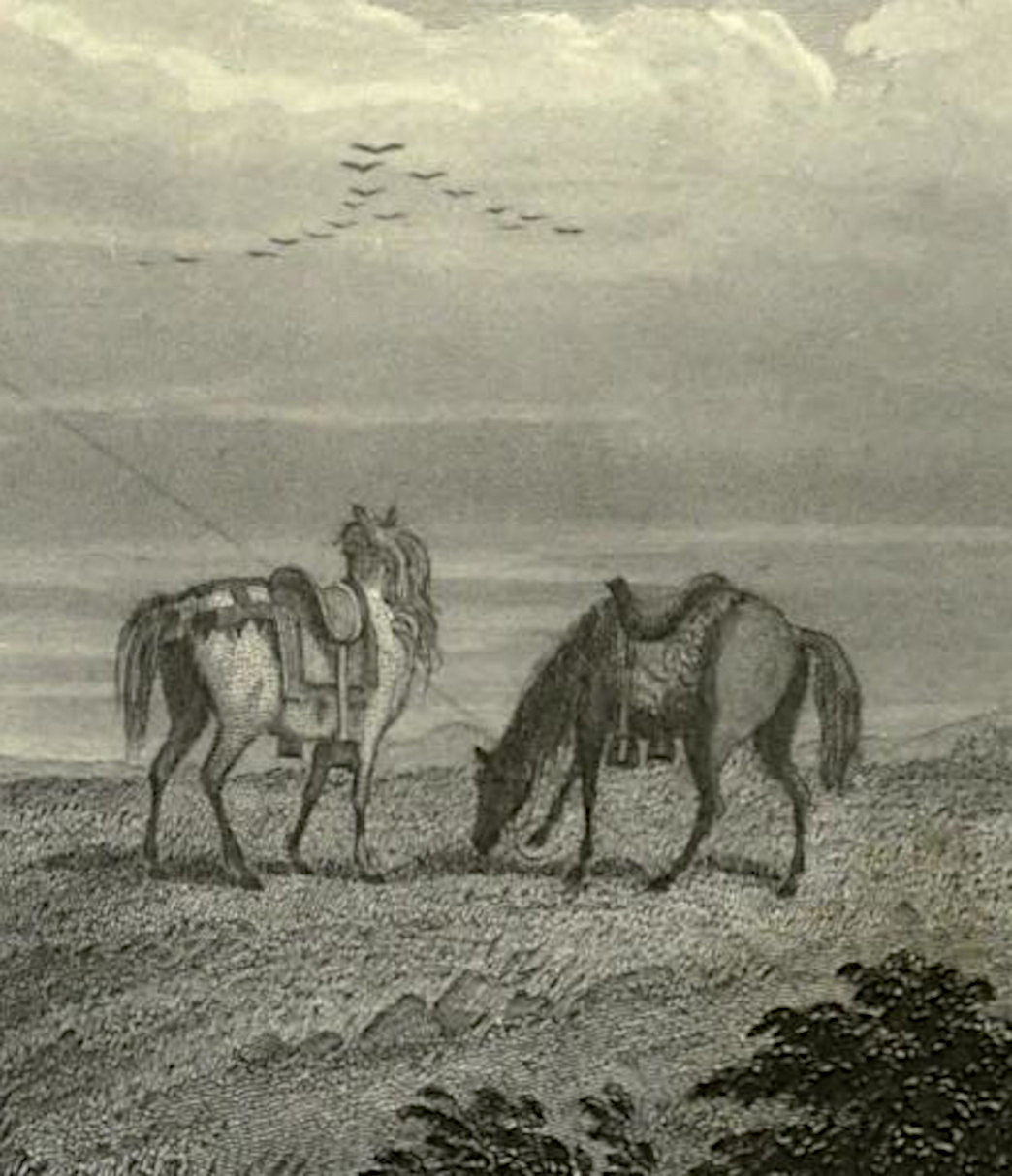
Seth Eastman's drawing engraved


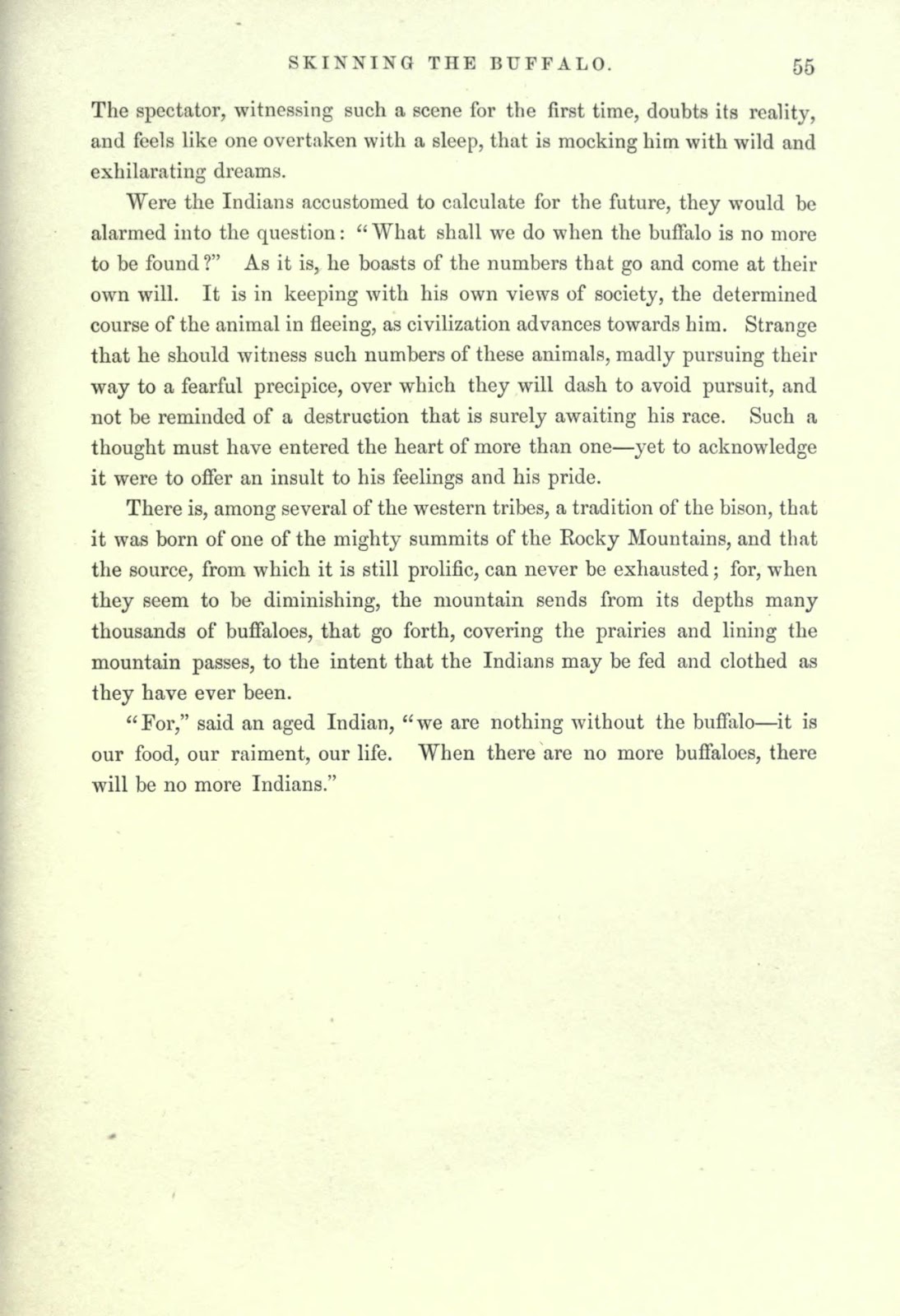
the last chapter on hunting bison - the process of skinning of bison etc.
In this chapter Mary Eastman brings forth much more information from the colonial and frontier annals, 

Mary ends the chapter the the ominous saying stated to her by 'an aged Indian' -'When there are no more buffaloes, there will be no more Indians.'


.


.


  the illustration drawn by Seth provides some more detailed information on the equestrian, two grazing buffalo runners,  in the background -


they seem to be outfitted with the native saddles with stirrups and one horse has a bison hide blanket, while the 'flea-beaten gray' has more elaborate harness with a crouper. In some of the Eastman's paintings these  fringed croupers appear as well. The can be seen in the perido art - from George Catlin, Paul Kane, Bodmer, A.J. Miller or Rindisbacher. 

Valete 

Buffalo vel bison hunting II - bison winter hunt by the Eastmans

 Salvete Omnes, 


continuing from the last post, Mary and Seth's chapter on the bison hunt (and deer)  in the winter, in the snows and frozen conditions.


.


.


tbc

Valete

Buffalo vel bison hunting I - bison chase by the Eastmans

 Salvete omnes,

the grey horse chasing the bison has some splendid horse tack

a quick 'lope' to frontier America, when the Eastmans, Mary and Seth


lived and wrote and Seth painted and drew the aboriginal people of Minnesota country, where Seth was a commanding officer at Fort Snelling, Minnesota - 1841-49.


They knew the Dakota Indians, of the Eastern division of the greater Sioux Nation, Seth already spoke the language, serving at Fort Snelling during the 1830-32 there, and  in 1831-2 he was married to a prominent Dakota family's daughter  named Stands Sacred with whom he had had a daughter Winona and thus Seth would be the grandfather of the famous doctor, pastor and writer Charles Eastman.  Upon leaving the Minnesota frontier in 1832/3 for West Point post he 'divorced' his Dakota wife. 
Mary learned to speak Dakota language and learned of the Dakota Sioux lore and customs etc. 


In 1854, while living near Washington, D.C., Mary wrote and Seth, then already a veteran officer in the US Army,  illustrated  a book titled 'Chicora and other regions of the conquerors and the conquered.'

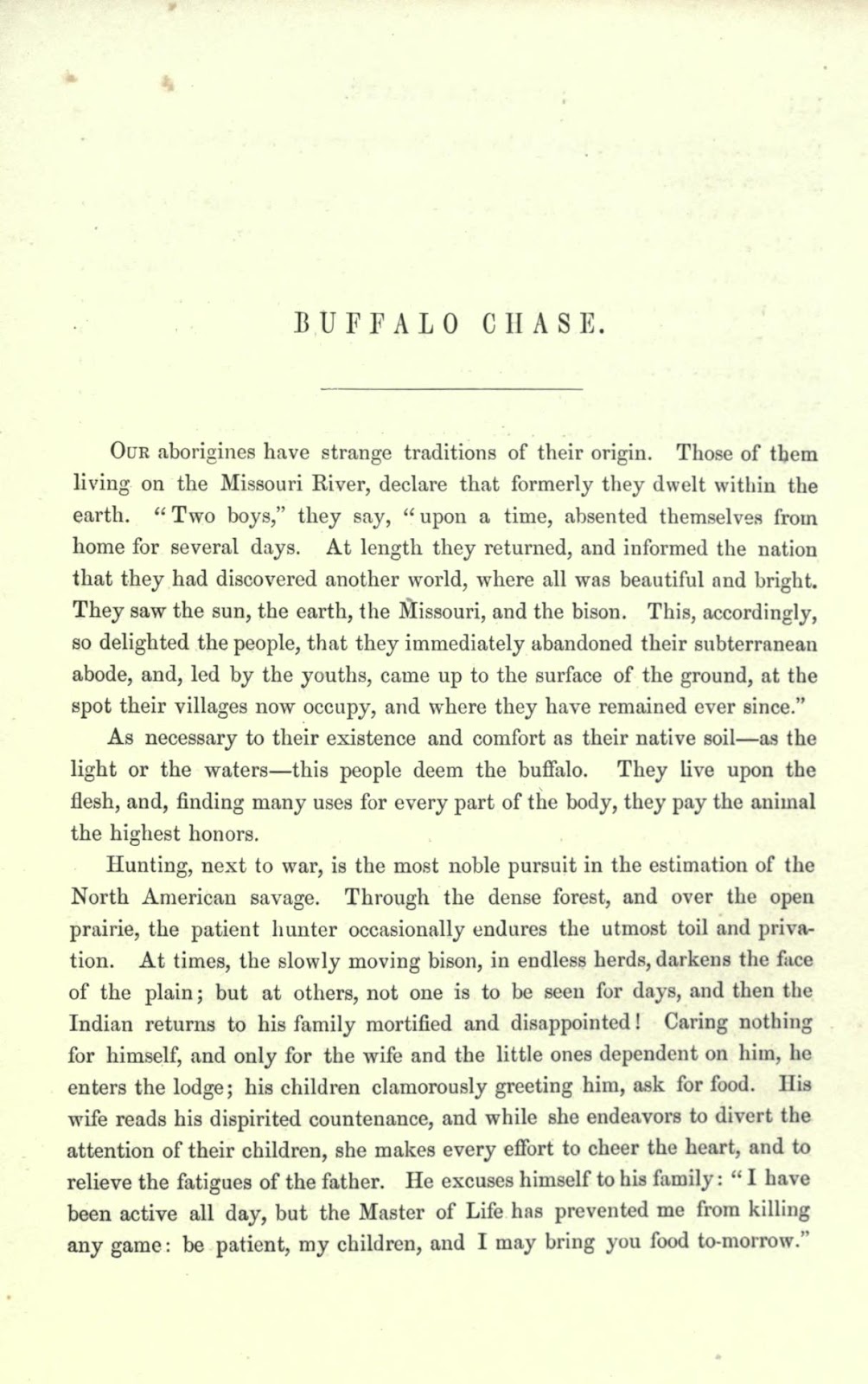
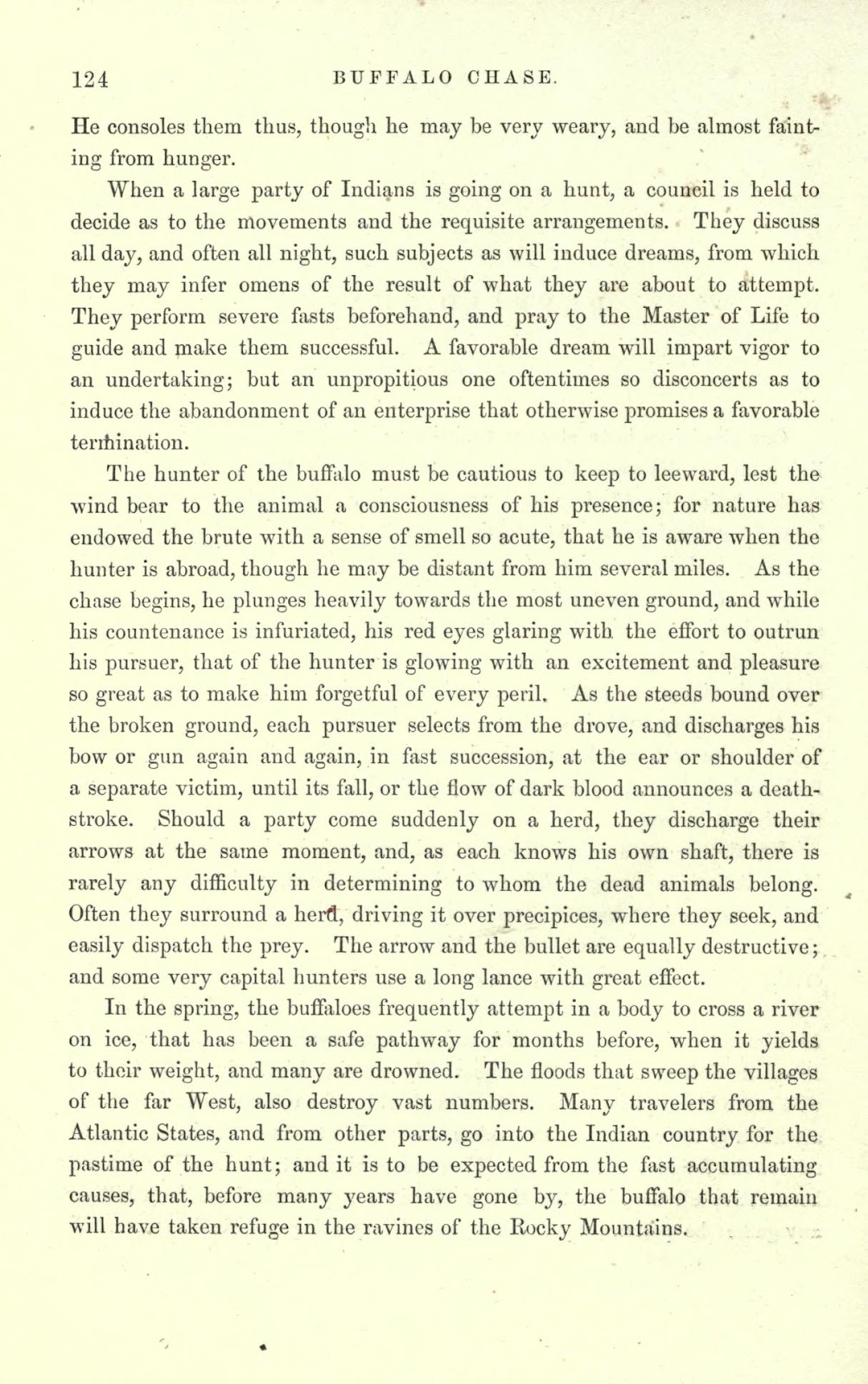
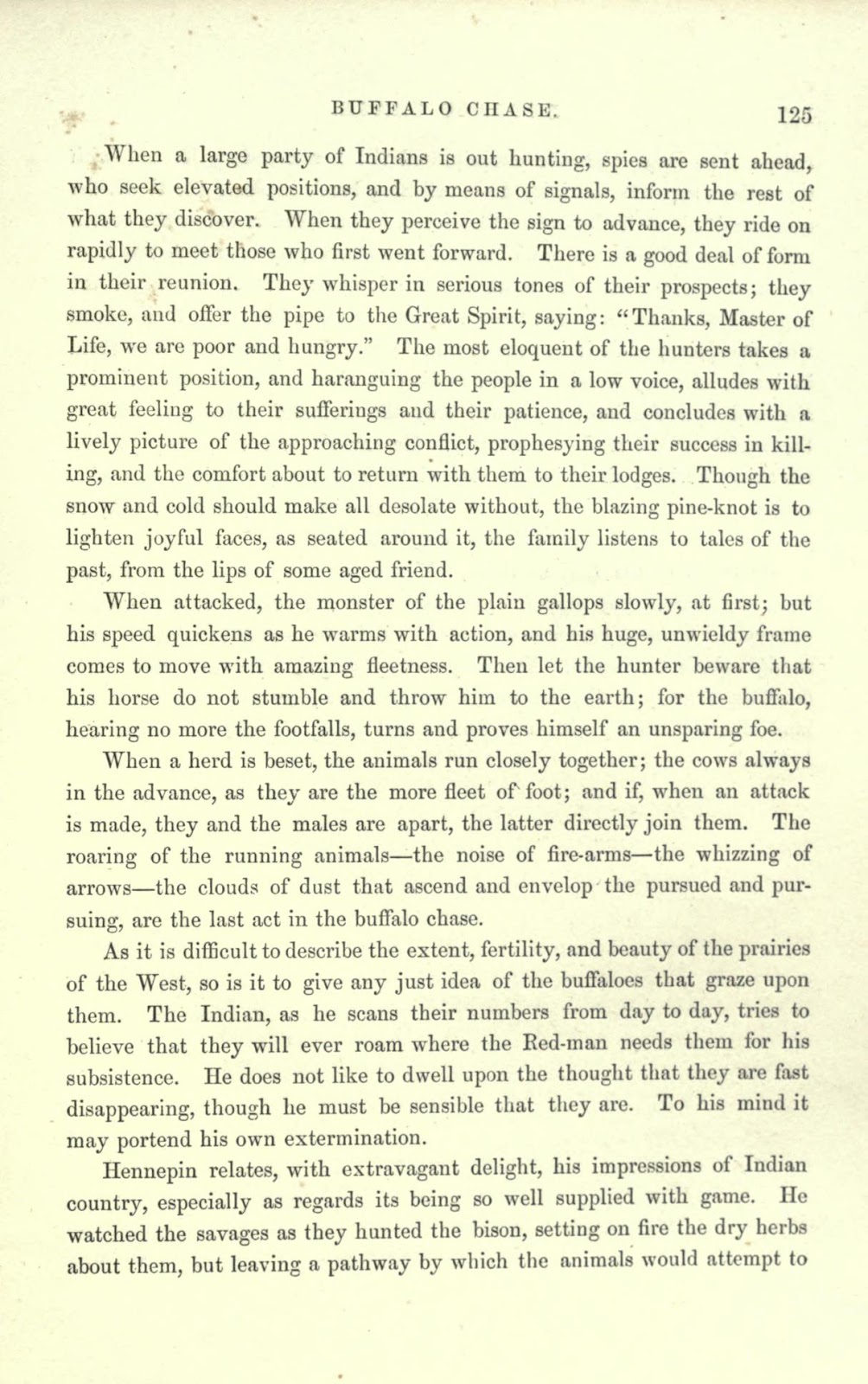
from that book come there pages on buffalo(bison) hunt on the plains - 

.


.

.


to be continued 

Valete

Saturday, July 29, 2023

Horse Whips and Quirts on the Plains - as George Catlin saw them

 Salvete Omnes,


a  quick 'gallop' with famous American artist George Catlin via his Letters and Notes on the Manners, Customs and Conditions of North American Indians.


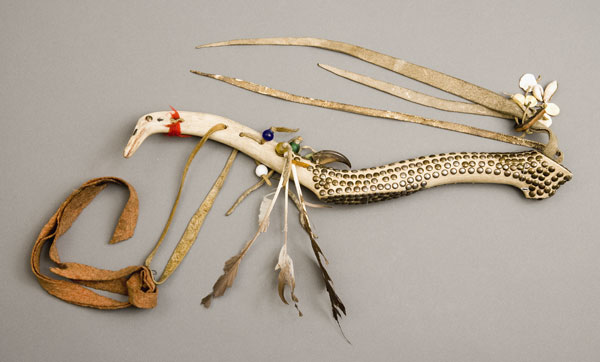
About horse whips used by the Great Plains horsemen:


one of the original Plains people - the Pawnee, who dwelled on the Republican River and for centuries gardened and hunted and made war along the river valleys of Nebraska.


so when you draw or paint a Plains warrior do not forget a horse whip on his right wrist :)

And two XIX century Nez Perce quirts - from Wiki Commons


Valete