Showing posts with label chestnut horse. Show all posts

Saturday, August 30, 2025

Horses from XV century San Sebastian piantings

 Salvete Omnes,

Spanish panel - Saint Sebastian and Saint Fabian

Panta rhei -said Heraclitus. So  August 2025 is ending, king of colder and rainier than ususal.
I always enjoy the XV century European art, especially paintings. 
Saint Sebastian (protector or defender against plague etc, patron of archers and athletes) was a popular saint of the Catholic Church during the period, many altar pieces had been painted during that great century, when Europe moved from chivalry to global exploration (reaching the Americas and South and Eastern Asia).

German altar painting from Nuremberg, 1487AD

a chestnut with a star & stripe, and a snip on its face (three socks are visible) , and a grey in a background. Horses have no forelocks

.

Master of the Holy Kinship the Younger painted this retable. 

grey horses, and one sorrel on the opposite side

German painting - perhaps  the very end of the century


.

Andrea Previtali - Saint Sebastian with a donor in a background

the donor is portrayed   training  his dextrarius , destrier being a  grey horse, while another destrier bay or chestnut horse held in the background by a groom.


enjoy

Valete

Wednesday, June 18, 2025

Wexy - a brave Irish horse at Waterloo 1815

 Salvete Omnes,

210 years ago French, Dutch-Belgian, Prussian and British armies met at Waterloo (I am going to do a separate posting about the battle of Wavre). 

10 years ago I posted about the grand reenactment festival that took place at Waterloo. 
This past decade has not been the best for us, human beings, in the Western world. And new wars are taking place, in addition to the Ukraine-Russian Federation catastrophic war, as of past week - the Israeli attack on Islamic Republic of Iran (the site of my beloved ancient Persian  civilization). God have mercy on all of us. 

the saddle is placed too much forward or high on the withers in this display, perhaps indicating museum curators ignorance of principles of saddling and riding with a saddle on 


Ad rem,

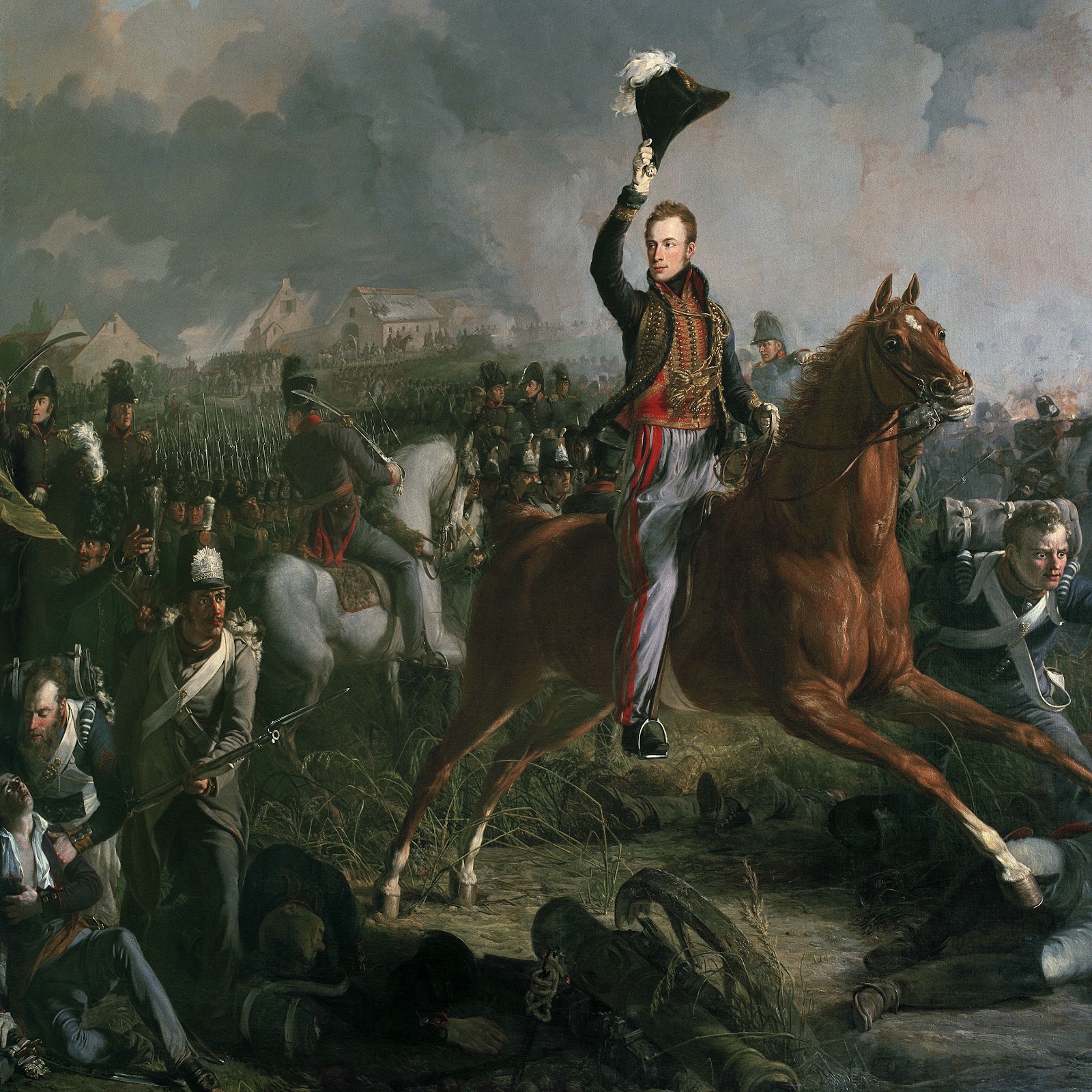
At Waterllo  Commander of the 1st Corps of the  Allied army William, Prince of Orange ( future William II of the Netherlands ), had a horse, presumably among many mounts his royal highness had to posses in his staff, that was called Wexy.  


Wexy was an Irish hunter(?) or half English Thoroughbred, perhaps a light bay? Hard to tell from the photos.

 According to the linked article it is unknown how and when this horse came into prince's possession. Perhaps during the campaigning in the Iberian Peninsula from 1811-1813, where Prince was part of the Duke Wellington's staff. Prince of Orange was popular with the British and they called him 'Slender Billy.' In Spain prince William took part in the siege of Badajoz and the battle of Salamanca.  


Prince of Orange and his mount were hit by a bullet half past seven (7:30 PM) during the battle of Waterloo.

.

This warhorse lived to a tender old age, dying in 1839 or 40, having been foaled circa 1801 in Ireland.

here the saddle was placed correctly on Wexy's back, without impacting the scapula/shoulders and without restricting the movement


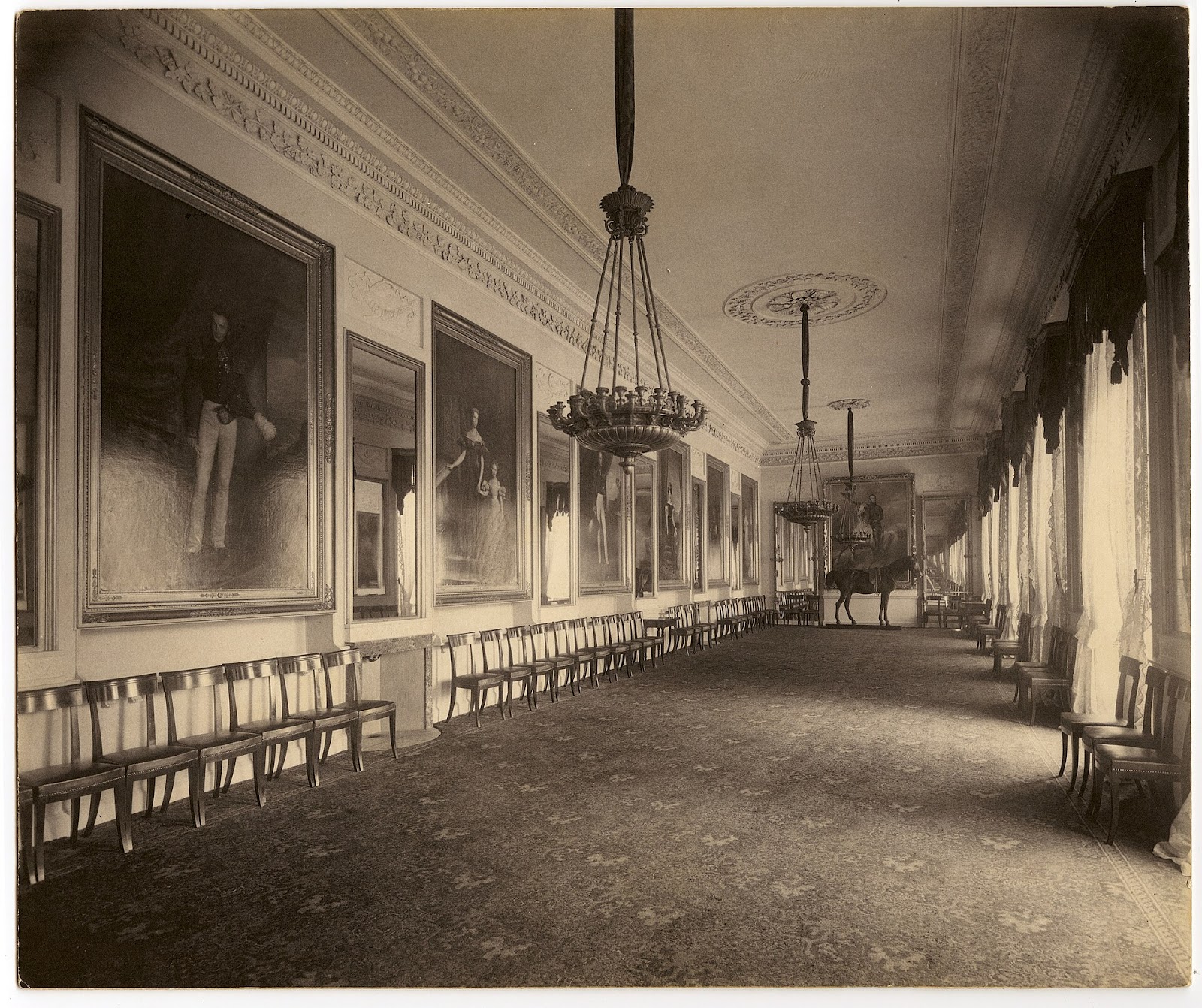
 The horse was stuffed and mounted on display in Gothic Hall at Kneuterdijk Palace, and since 1900 at the Royal Stables. Daily Mail article erroneously claimed that Wexy was killed during the battle of Waterloo.


the painting showing prince William at Quatre Bras seems to be showing a different, chestnut horse, since Wexy had no socks.


I wonder if the horse in this equestrian monument of William II was modeled after Wexy.

Valete

Sunday, December 15, 2024

Have a nice Sunday with J.G. Pforr's stallions

 Salvete Omnes,
 only 9 days to Christmas - heehaa 

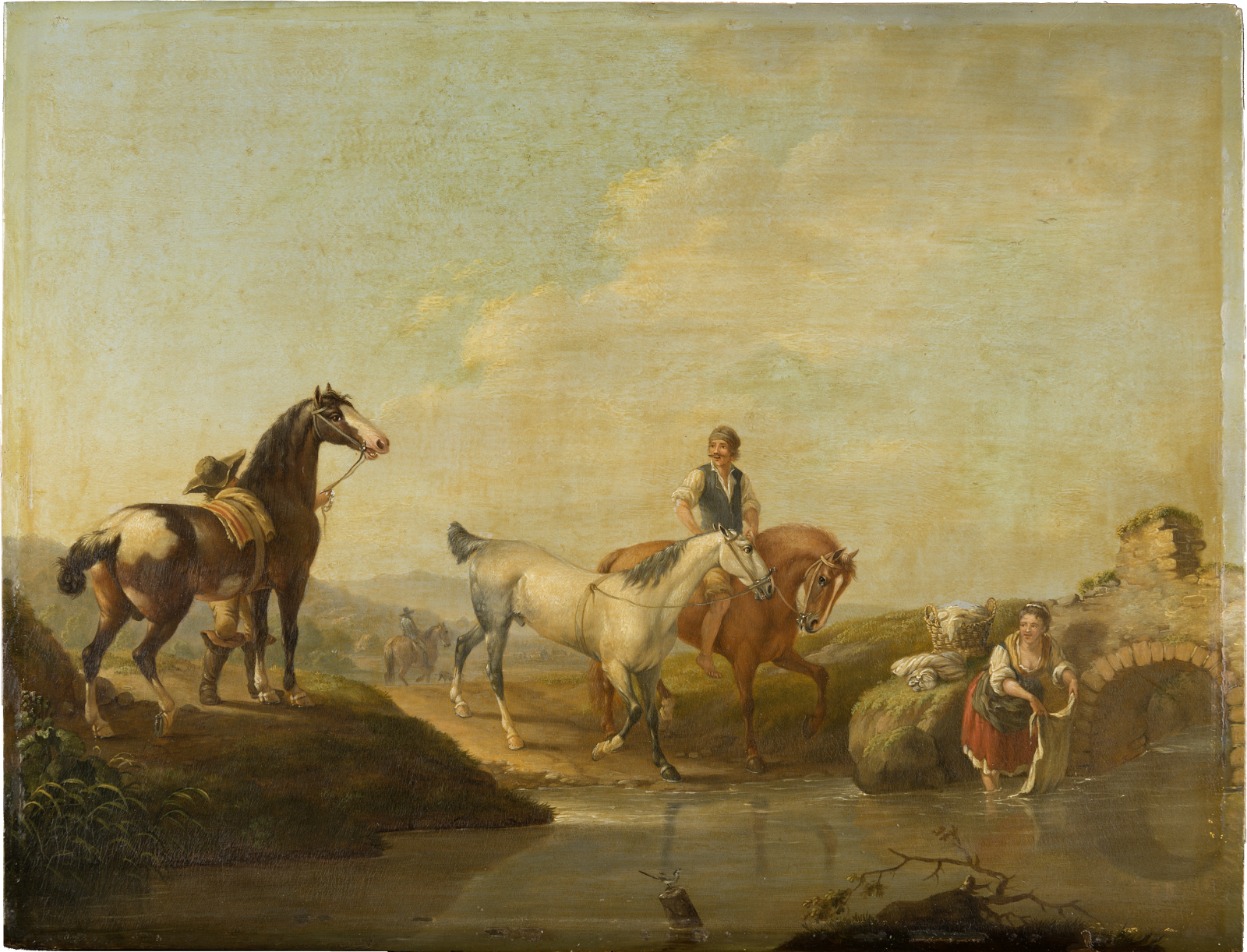
enjoy your Sunday with some beautiful Pforr's horses - XVIII century the 'crème de la crème' of the breeding and riding in continental Europe 

presenting a stallion - perhaps a Spanish, Neapolitan or Lipizzaner? 


.

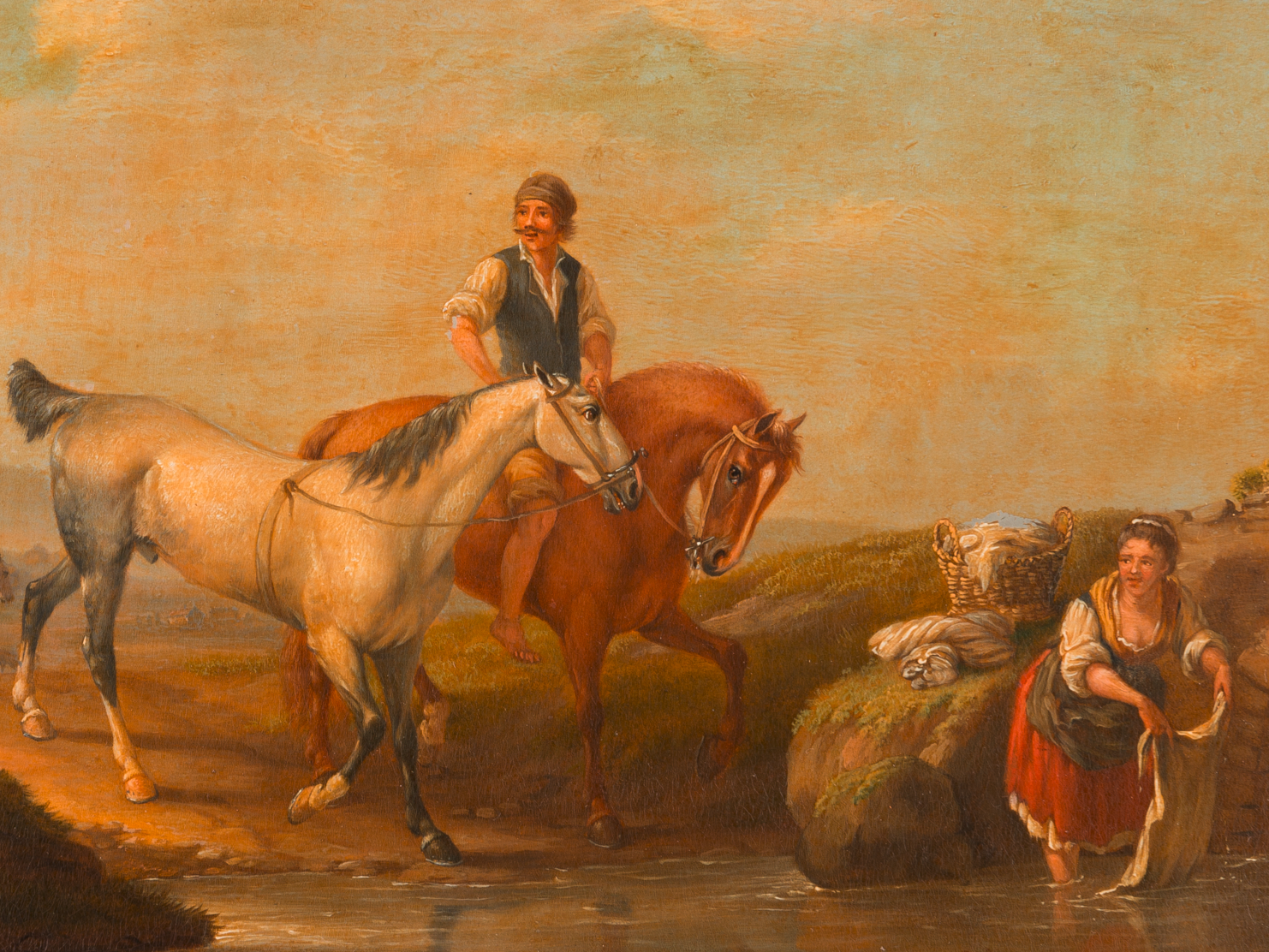
grey stallion (English Thoroughbred?) in training,  a cavesson bridle 

mustachioed, bare-leged horseman riding bareback a chestnut horse

and a nice paint in the foreground
folded blanket as the saddle, snaffle bit 

enjoy your day 

Valete

Thursday, December 5, 2024

Krzysztof Dorohostajski, grand marshal of Grand Duchy of Lithuanian, in Krakow 1604

 Salvete Omnes,

yesterday or on the 4th of December but in 1604 AD, the rulers , many lords, magnates and common citizens of  Polish-Lithuanian Commonwealth came to the capital of the realm - i.e.,  Krakow (Cracow), to greet and welcome Constance of Austria as the new wife  of our king, Sigismund III. Constance would wed and be crowned as queen-consort of the Polish-Lithuanian realm.


The Krakow entry was commemorated in the fabulous scroll painting known as the Stockholm Roll - this name is due to the fact that the Swedish king  had the painting taken from the Warsaw Royal Castle in 1655AD and it had been stored in Sweden until returned by prime minister Olof Palme in 1974. 


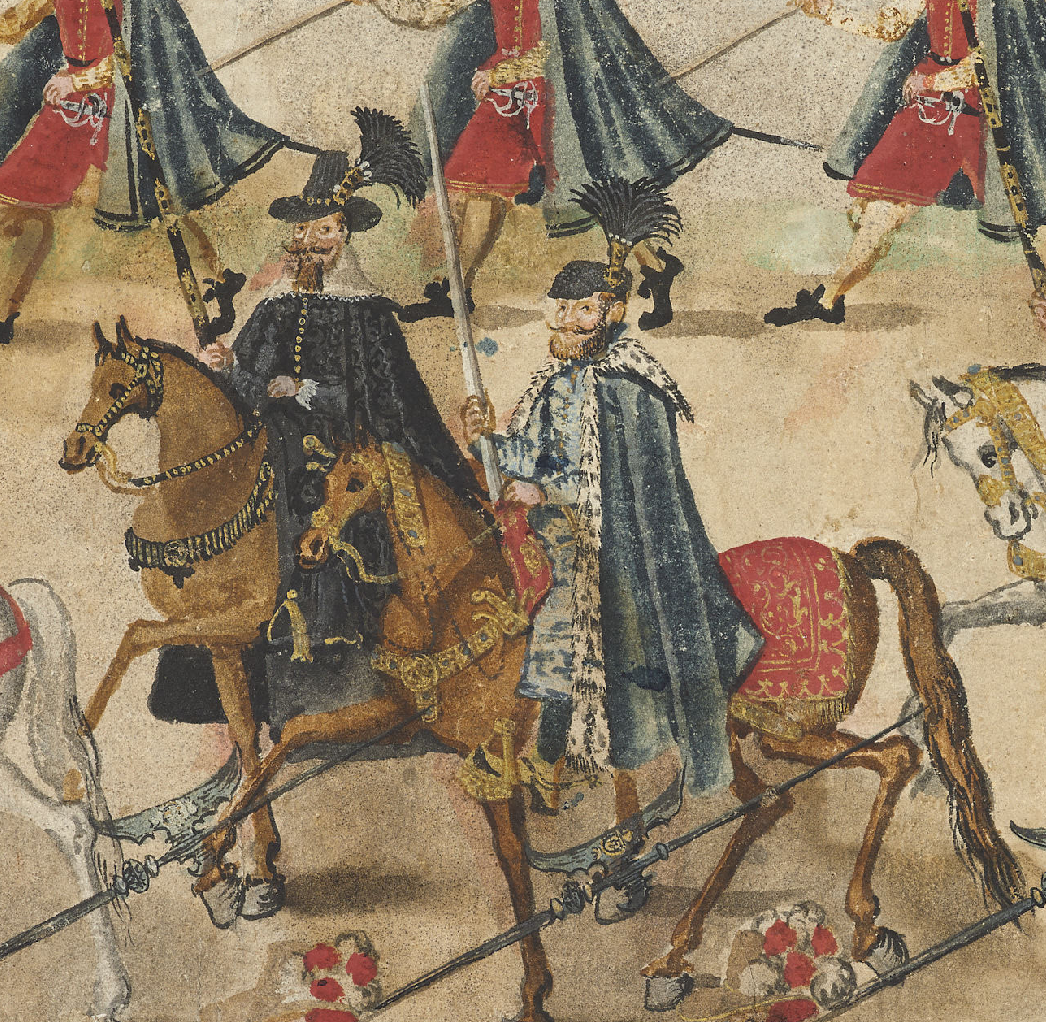
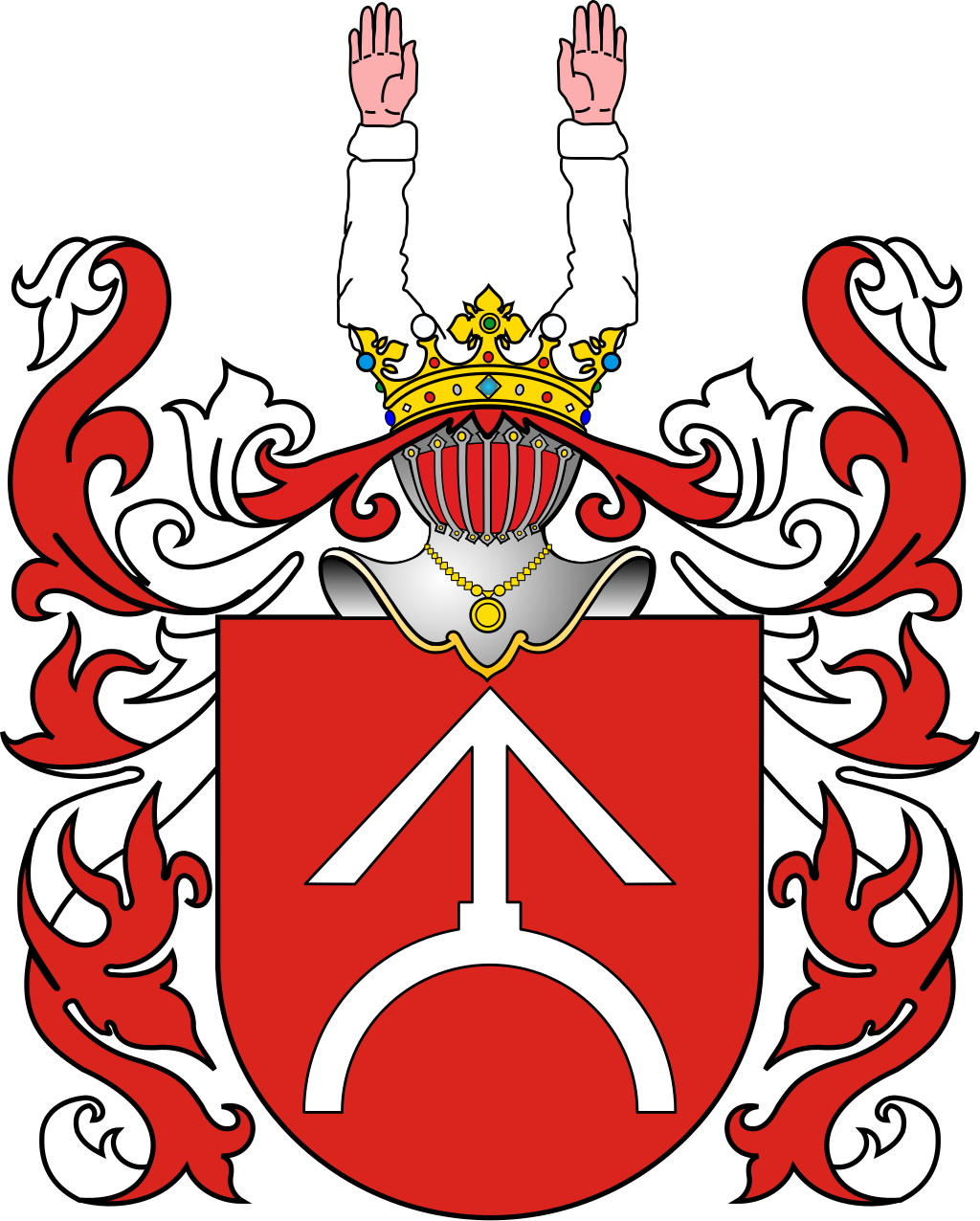
One of the officials depicted in this gouache painting is senator Krzysztof Dorohostajski vel Dorohostayski (Leliwa coat of arms),


 who was the grand marshal of GDoL during this time. 

Dorohostajski is dressed in a Spanish or Italian dark costume of the period, holding his staff of office

Pan Krzysztof, an authority on war, law and horses, is riding a bay or rather a  chestnut horse, presumably a stallion, himself being a famous writer of a horsemanship treatise, Hippika,  published in 1603, and formerly a winged hussar companion and at that time a captain of  his own winged hussar company. He would participate in the wars against Sweden and Muscovy until his passing in 1615.
Dorohostajski horse's tack appears to be very splendorous and exquisite, gold pieces on the black background, with gold or gilded stirrups.  
The court marshal of GDoL, Piotr Wiesiolowski (Ogonczyk coat of arms),


riding on a chestnut stallion next to Dorohostajski, is dressed in a prevailing then Hungarian style of  costume, his horse furniture more like of the winged hussars, and he has a sword under his thigh.  All gilded and ornamented with precious and semiprecious stones and perhaps pearls. 

                                                                                              ***

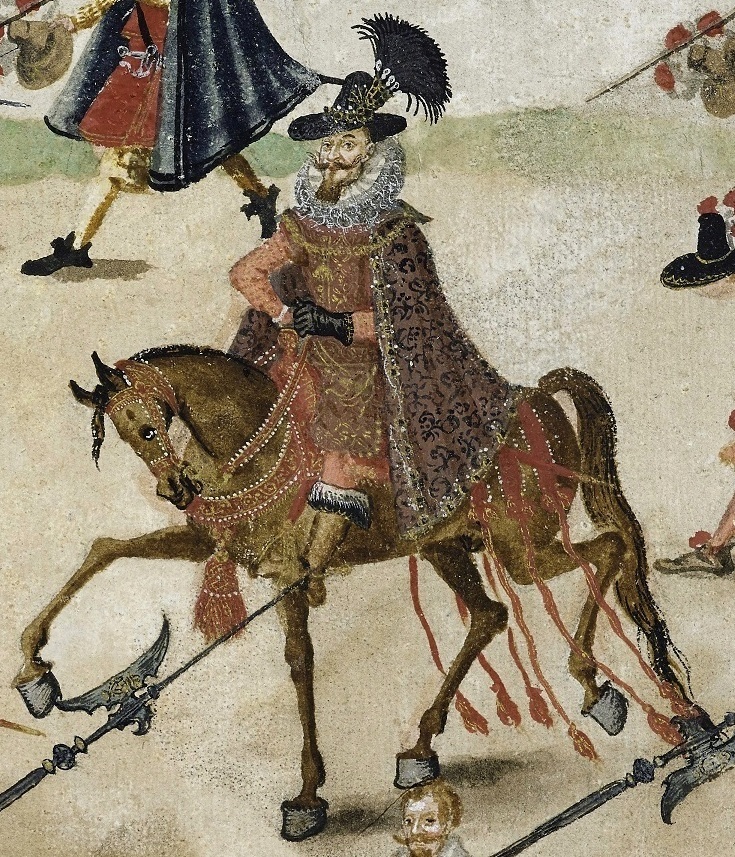
Nota bene our then king and groom, Sigismund III Vasa, is depicted as mounted on a dark chestnut stallion 


and his bride and queen to be, Constance of Austria with her royal entourage in the carraige: her mother archduchess  Maria Anna, her sister Maria Christierna and king's sister princes Anna. 


enjoy

Valete


Saturday, October 19, 2024

George Henry Laporte

 Salvete Omnes,


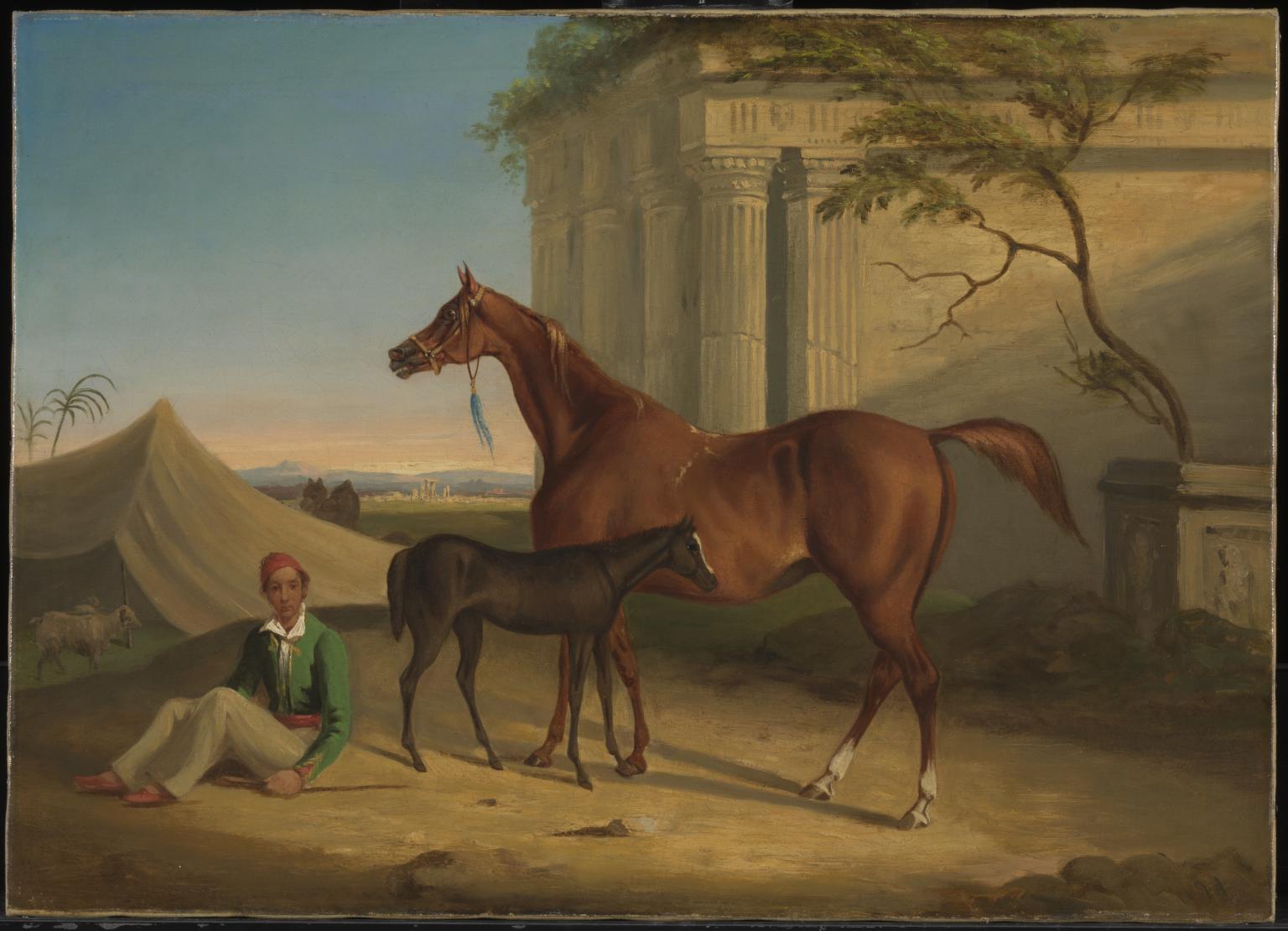
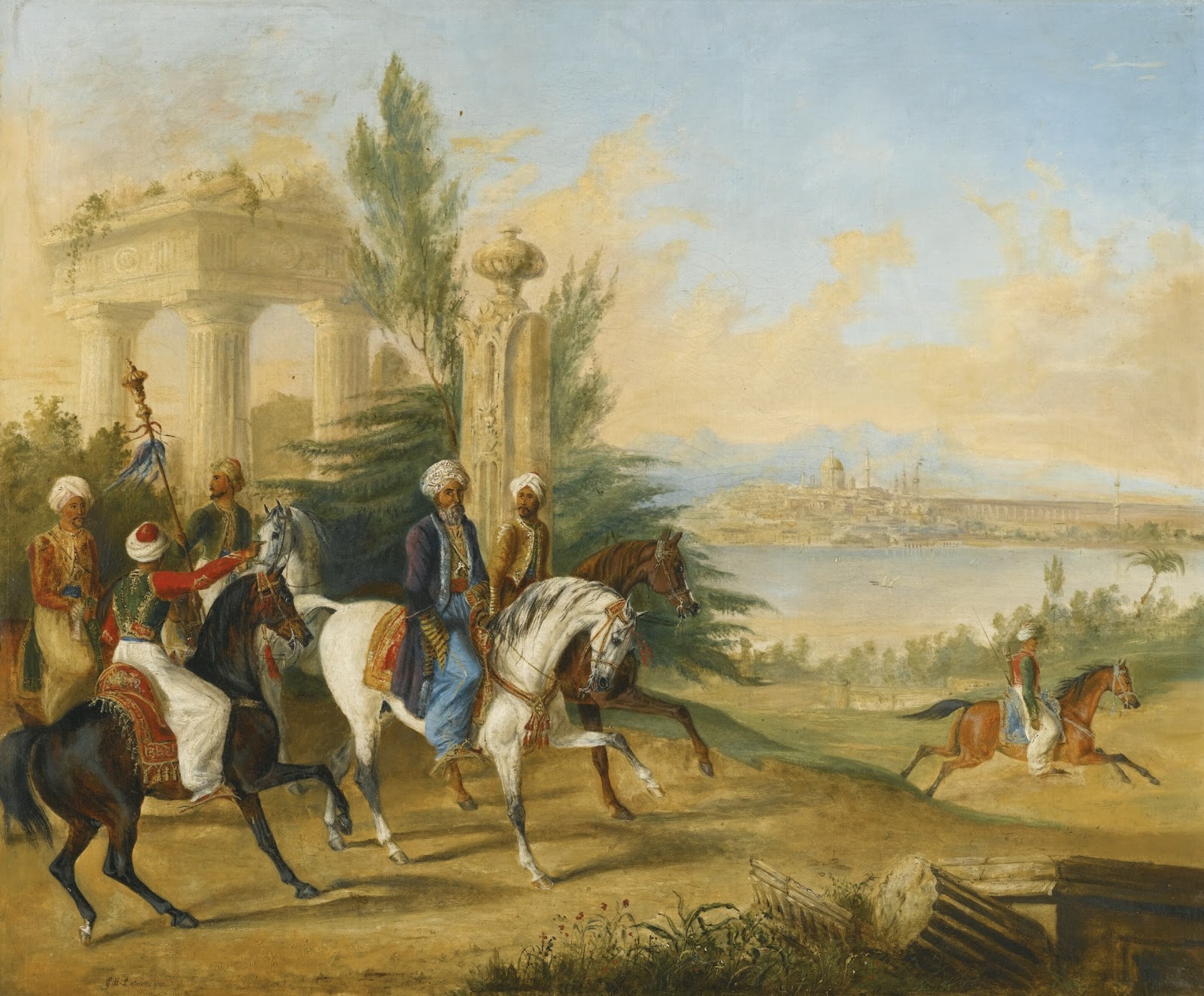
 today is Saturday and a good day to show some artwork by George Hnery Laporte, XIX century  English painter of Huguenot descent.

He was a son of John Laporte, a noted English watercolorist.


So without much ado - here are some of his fine equestrian works -


Arabian horse theme:


Tate Gallery - mare and foal and an attendant 


from Sothebys Orientalist Sale -

.


from Hungarian National Gallery 


enjoy 

Valete

Friday, September 13, 2024

J.G. Pforr - Falconry & hare hunt

 Salvete Omnes, 

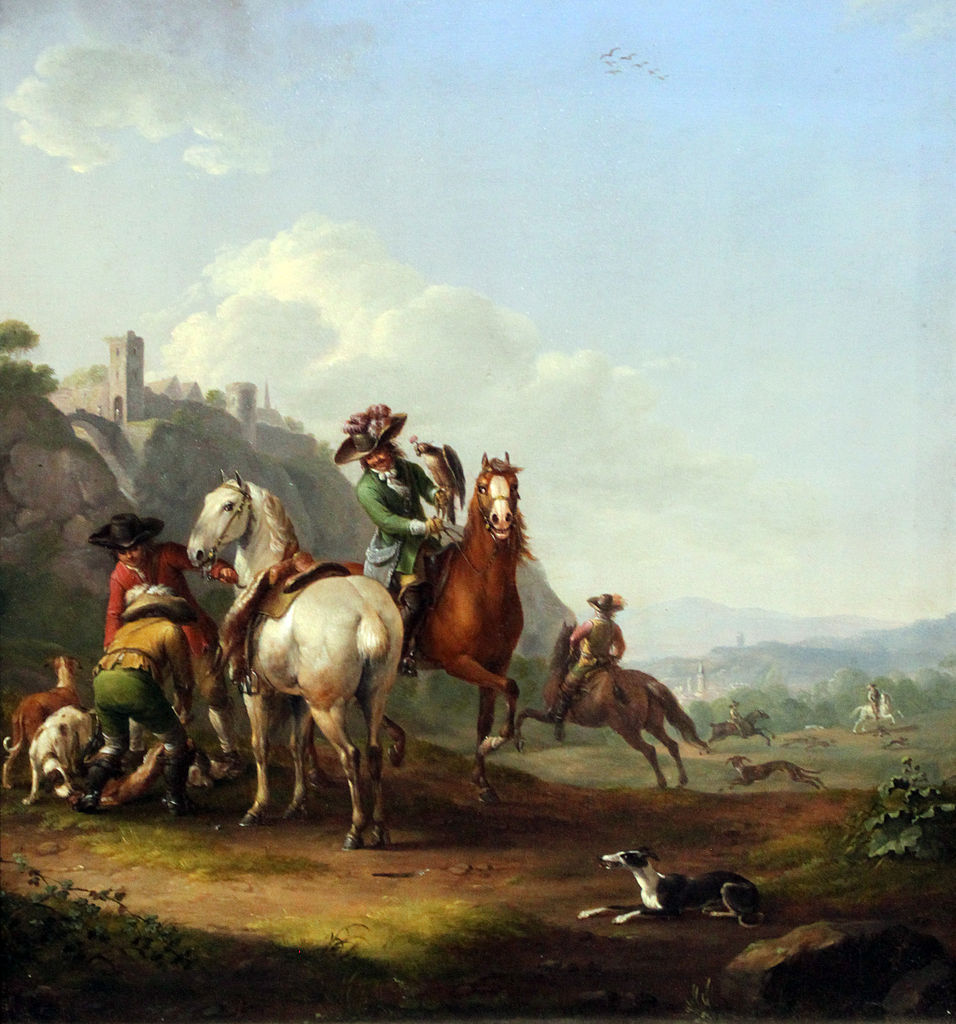
a nice Johann Georg Pforr's painting - oil painted on walnut board.

very Wouwerman like


Falconry in action, however the costumes seem odd for 1780s in Central Europe.


.

Roman nosed head of this grey, and interesting saddle, non-English I presume

a very popular docking of the tail - 
.

. and two hunting falcons painted around the period or slightly alter

Icelandic gyrfalcon

a Falcon by Landseer


Valete 

Thursday, September 5, 2024

J.G. Pforr - peasant and draft horses

 Salvete Omnes,
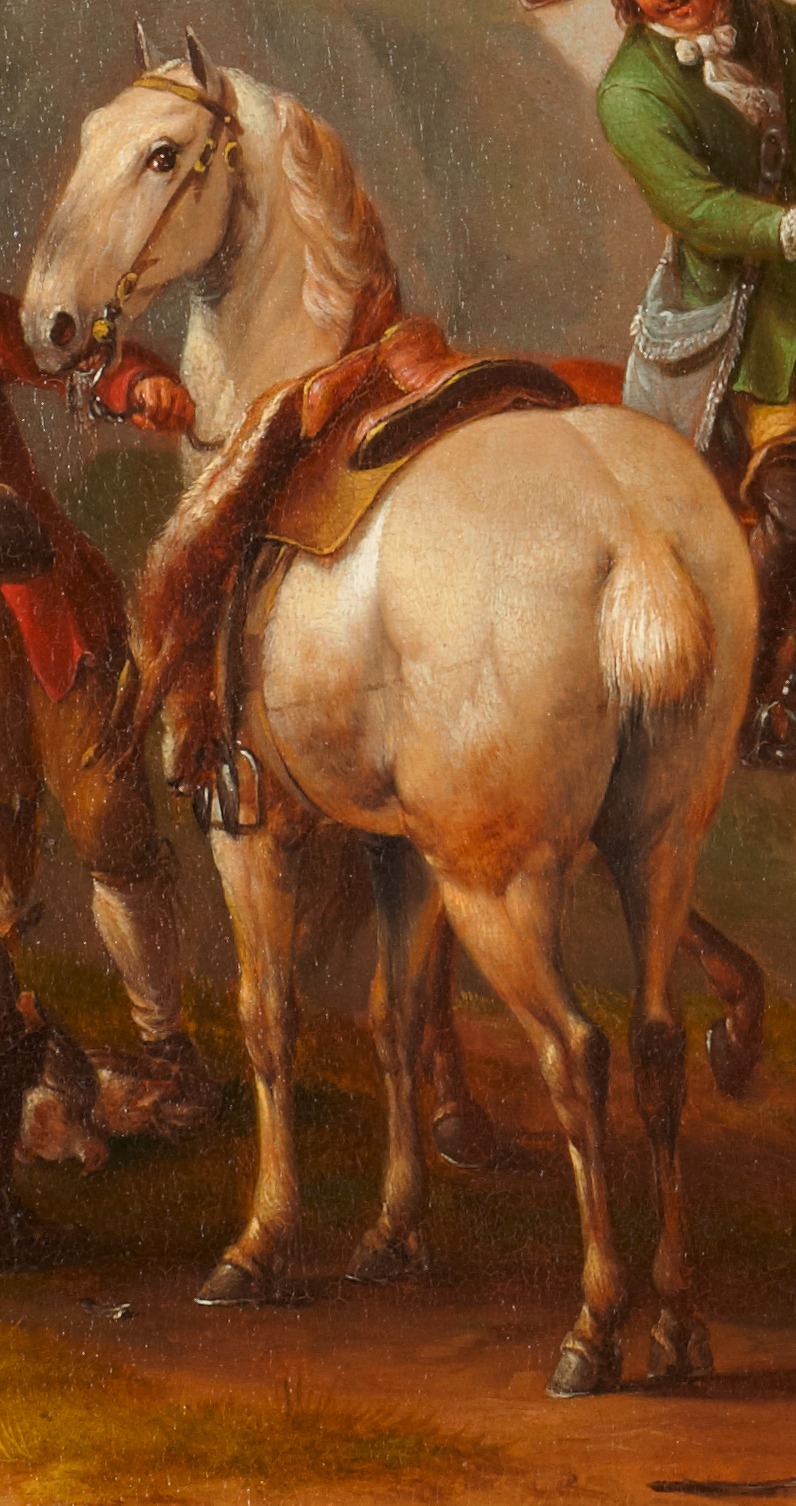


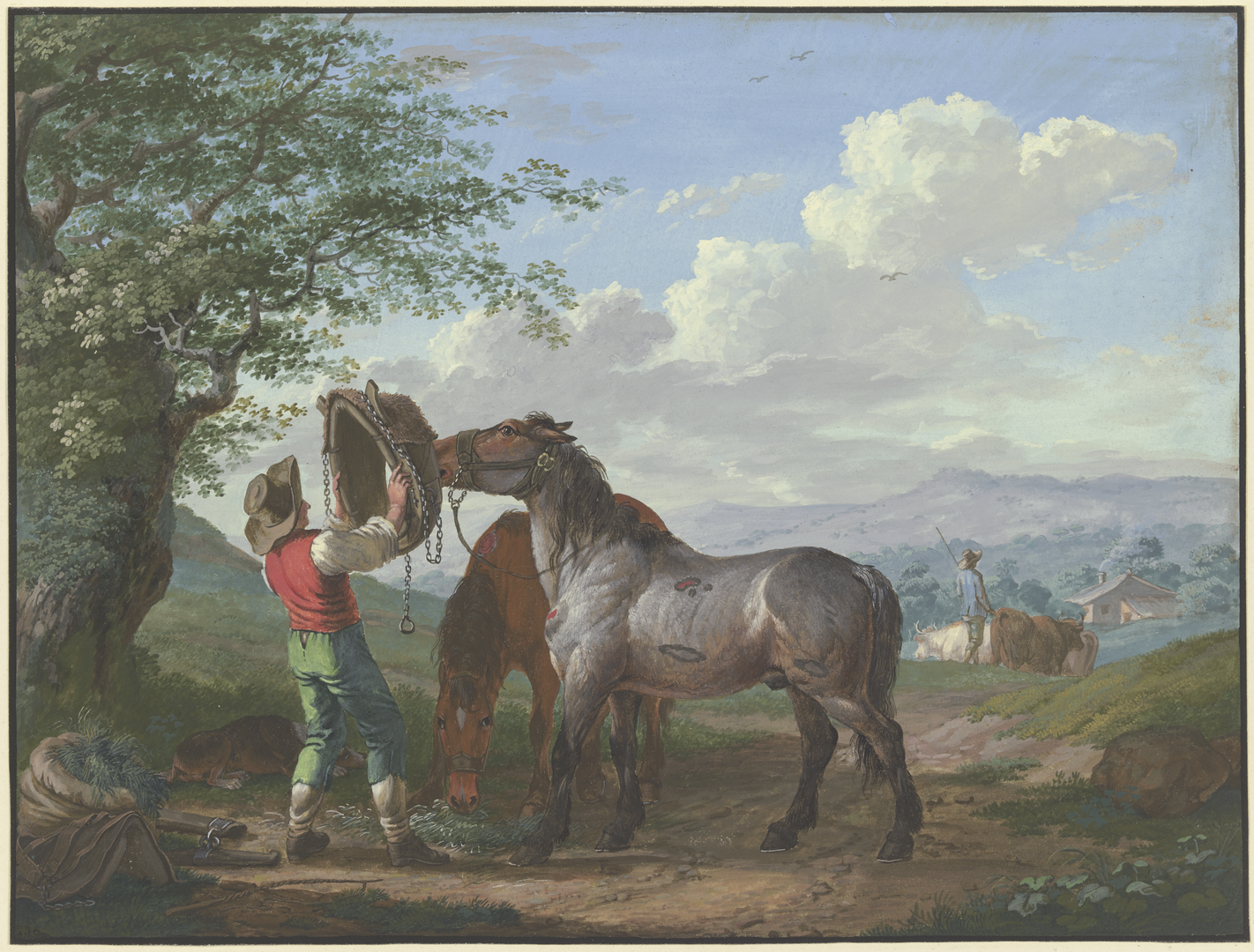
back to Pforr's fabulous drawings and paintings of  horses - 

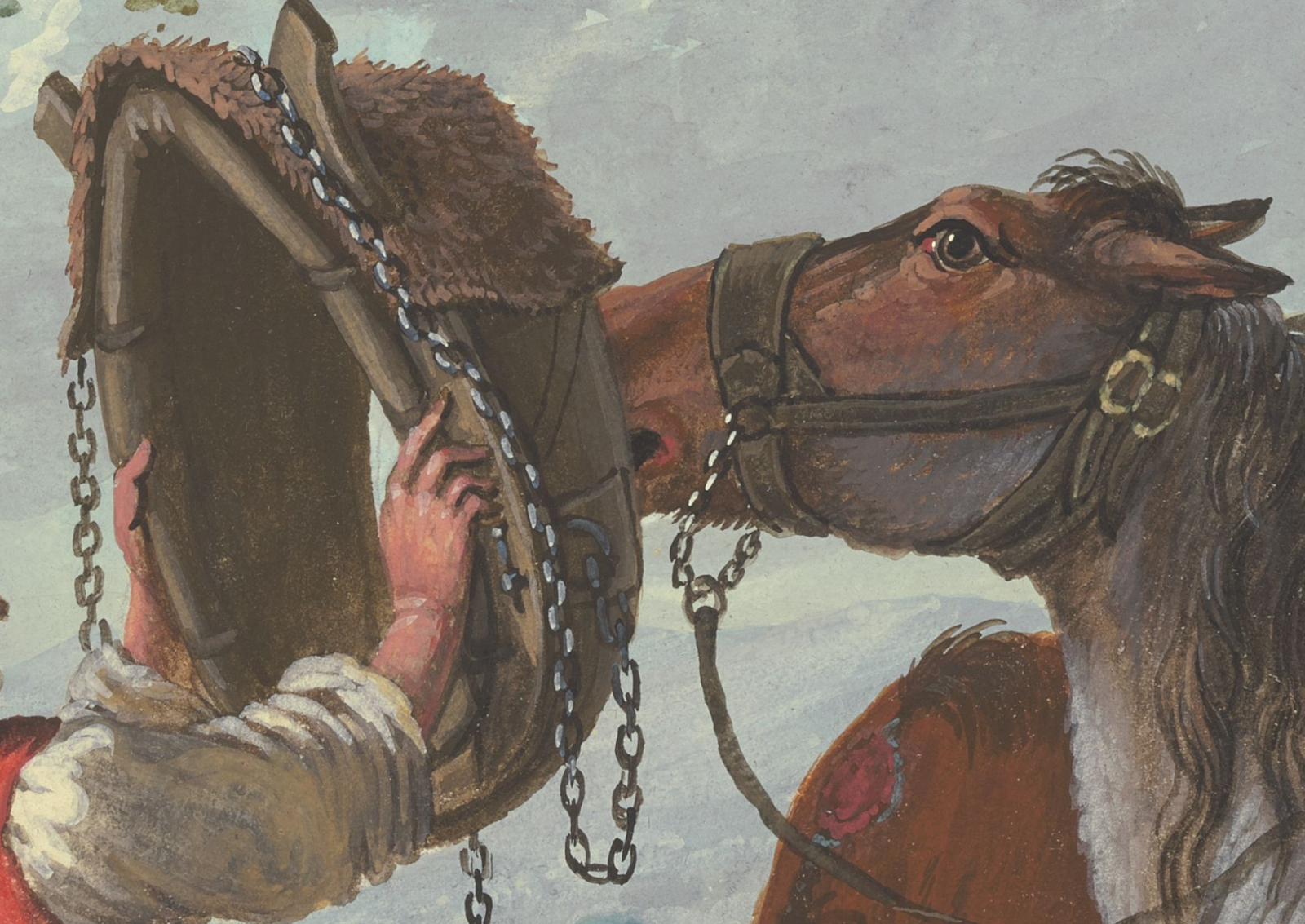
there is lots of realism in this picture - these working horses have rope and collar burns and other work-related injuries
.

.


.

and some closeups & details 


clearly visible withers -neck injury from collar 


all these plates are gouaches, inks and watercolor 

Valete