Showing posts with label Proto-Indoeuropeans. Show all posts

Monday, October 14, 2024

Columbus Day or the Day of the Return of the Horse to America

 Salvete omnes,


today, as usually every Monday around Oct 12 we celebrate the Columbus Day or discovery of  the Americas by the Old world representatives in likes of the Spanish Admiral Cristobal Colon and his Spanish Crown fleet. 
 It was the true beginning of the so called Columbian Exchange between the Americas and the Old World. (my postings from the past on this subject - one & two)

infographics from this page as fair use only


For the Hispanic or Latino populations of the Americas this is El Dia de la Raza, and for the indigenous Americans, from Aleutian Islands to Tierra del Fuego, this important anniversary is The Day of Sorrows and Resistance. 

So perhaps horse could bridge the vast and growing gap between the past and presence, namely, as paleohorses  went extinct on the American continent but survived in Eurasia and there were domesticated by our ancestors the Proto-Indoeuropeans some 6,000 years ago, and  as Equus F. Caballus were returned by the Spanish and Portuguese explorers. 
In fact, the first horses (of the primitive Andalusian stock and perhaps offsprings of the imported hacas and local mares)  were carried on board of the Admiral's fleet and were landed  in the Caribbean horse paradise-to-be  on Colon's (2nd) second voyage (along with circa 1,500 men and wome & kids from the Spanish realms), thus the date of the arrival is actually 1493 AD, but we could celebrate the date of October 12 as the Day of Horse of Americas.
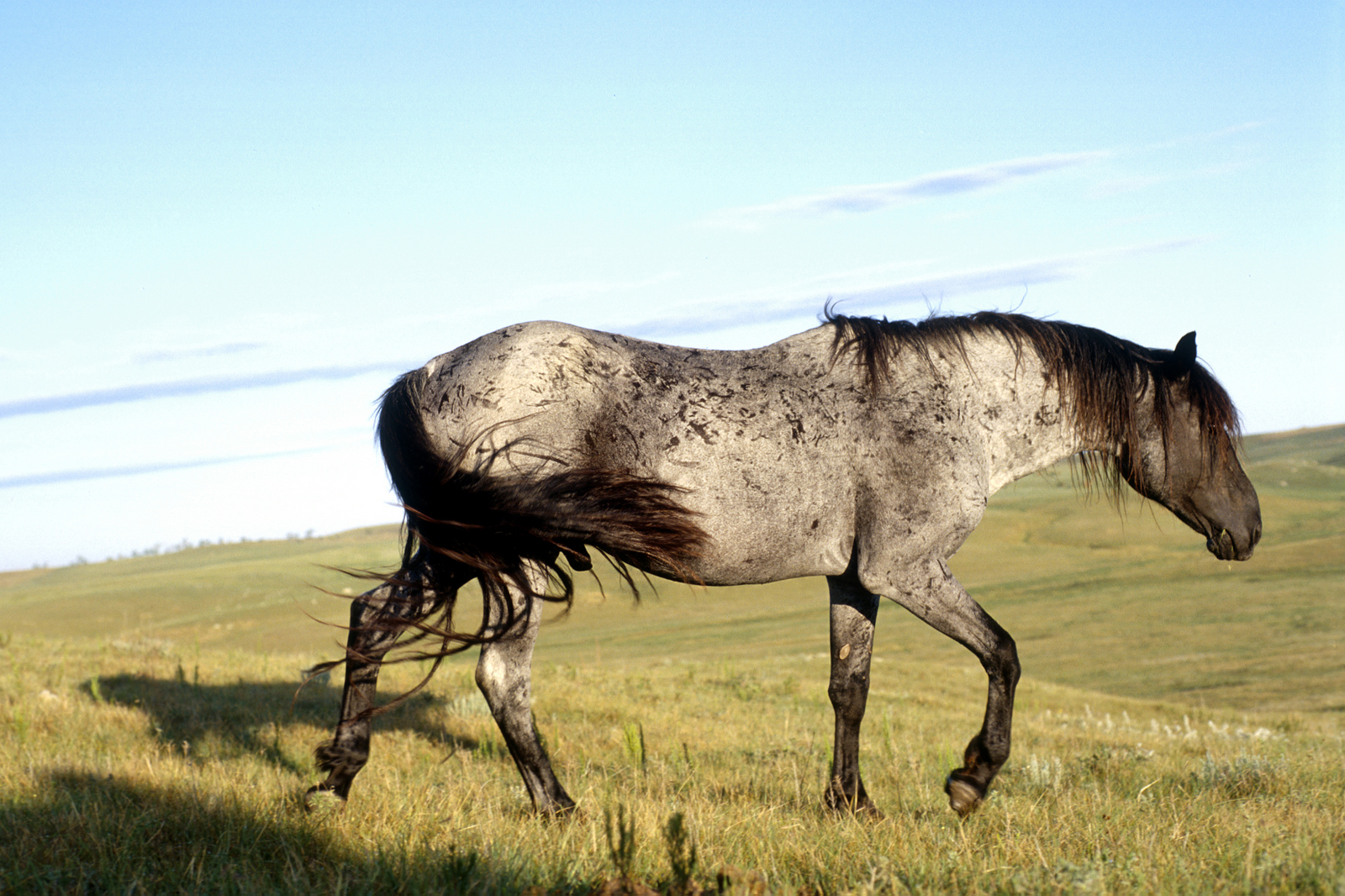


So happy Return of the Horse day or whatever you wish to celebrate, just celebrate history and learn from it. 

ps

obviously we don't know whether the Chinese, Mongols, Koreans, or later Muscovites sailed their ships to the western shores of Americas  before Columbus. The Islandic Norse sailed from Greenland to eastern shores of during the so called Vinland sagas period, but whether they left there any horse it is unknown. Also it is unknown whether the the traders and fishermen from southern France and northern Spain, who sailed to the bays and inlets of the eastern New England and Canada in the XV century prior to 1492AD,  brought with them any horses. But it is highly unlikely -  but absence of evidence is not evidence of absence (Carl Sagan). 
Valete

Wednesday, April 24, 2024

Metal bit - on the Zeravshan River in Bronze Age BMAC & steppe


 Salvete Omnes,

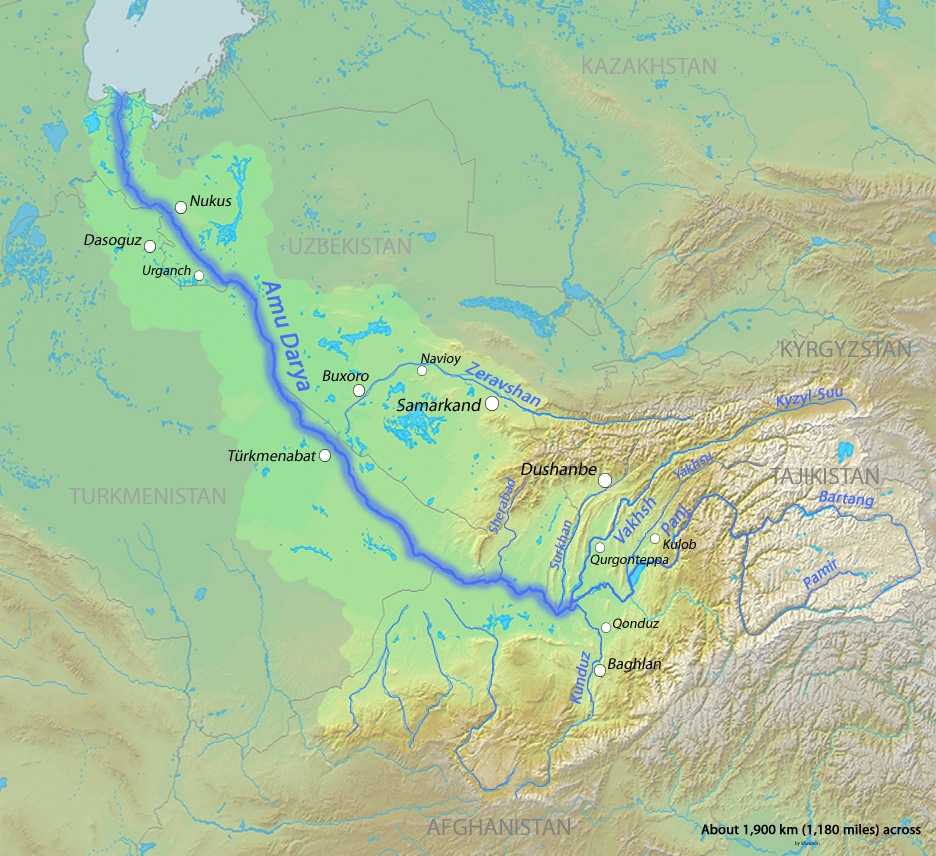
Tajikistan and Uzbekistan share a fine river, that  is known nowadays as the Zeravshan [Зарафшон] River  ( the Polytimeus River of the ancient Greeks, later also  the Sughd River) , which meaning in Persian is the 'spreader of gold,' 


flows from the Zeravshan  glacier of the  Zeravshan Mountains, passes between two mountain ranges, Zeravshan and Turkestan, and empties her waters into the irrigation projects  and sands of the Kizil-Kum (Kyzyl-Kum) desert before reaching the mighty Amur-Daria River.  


Near the famous Panjakent [in Tajik Панҷакент or in RussianПенджикент] in the Zeravshan Valley there is  this ancient BMAC site - Sarazm - that between  IV (Namazga I-II) through late III millennium BC(Namazgan V) was  residing on the edge of the world, between the vastness of Eurasian steppe and its Proto-Indoeuropean  inhabitants and the sedentary civilizations to the south, west and east. It was the center for tin and copper, turquoise trade. With the copper and tin mined in the steppe, processed there and shipped by the Sarazm traders to the Akkadina and Ur elites, to the Harappan, Mohnejo-Daro and Elam sites, as well in the Caucasus and further west.


About 30 km west of Sazam at Tugai, not far from today Samarkand, as Sarazm was being abandoned some Petrovka -Sintashta nomads moved east and settled at the end of III millennium and/or early II millennium (Namazga V) to practice copper smelting and smithing. They moved from the Ural-Ishim steppes with their wagons, cattle, sheep and goats, and chariot-pulling horses.*

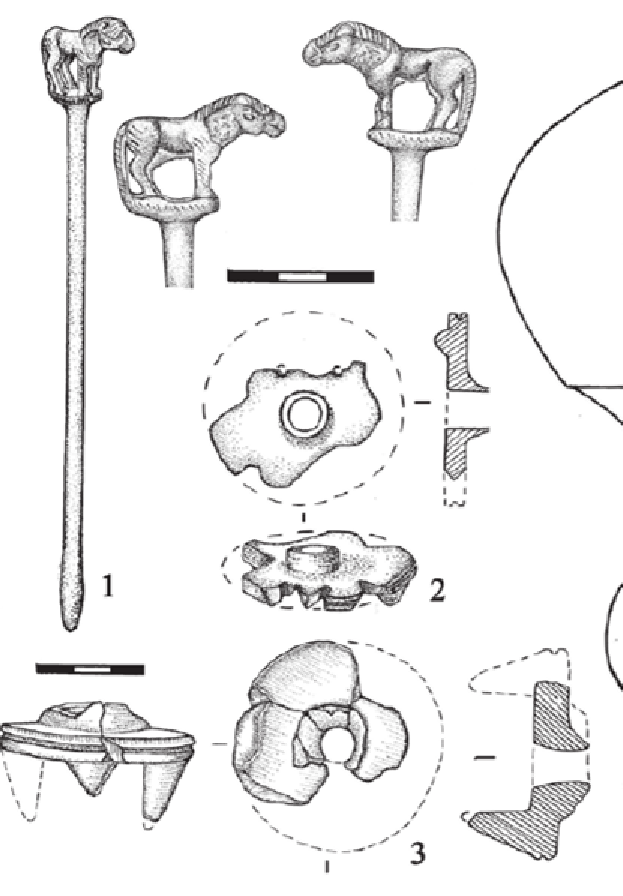
Circa 1km from Sarazm there is a burial site at Zardcha-Khalifa. There a male was buried - his plentiful  grave gifts included two bronze bar bits with looped ends; two complete bone disc-shaped cheekpieces and two fragmented ones of the Sintashta type. The bar bits are the older known metal bits found. The arrangement suggests that was part of the chariot team equipment.* 


The grave also included the only known BMAC-made pin with the figure of a horse - perhaps this Zardcha-Khalifa chief was a horse dealer?*


Nota bene the ancient Middle Eastern tin, for bronze production, came from BMAC- Central Asia.

*you can read more about this site and this period in dr. Anthony's 'The Horse, the Wheeel and the Language.'* (chapter 16)

Valete


Saturday, December 31, 2022

David Anthony et al - Indo-Europeans and the Horse

 Salvete Omnes,


this 2022 is about to expire today - so I will post one more entry today:


the Proto-Indoeuroepans and their wheeled wagons and horses and the rest is history..


I have discovered for myself that Dr David Anthony made his book - The Horse, the Wheel and the Language - available on Archive.
And here you can listen to dr Anthony being interviewed on the subject at hand - the origin of the Indo-Europeans.


Dr Kristian Kristiansen, archaeologist from Sweden (google scholar and Academia), who participated in this great paper - The origins and spread of domestic horses from the Western Eurasian steppes- delivered a very fine lecture here - Towards a New European prehistory: genes, archaeology and language . And here dr Kristiansen gave interview on the subject - the Birth of Northern Europe.


And the very interesting interview with dr James Mallory - Finding the Indo-Euroepans.


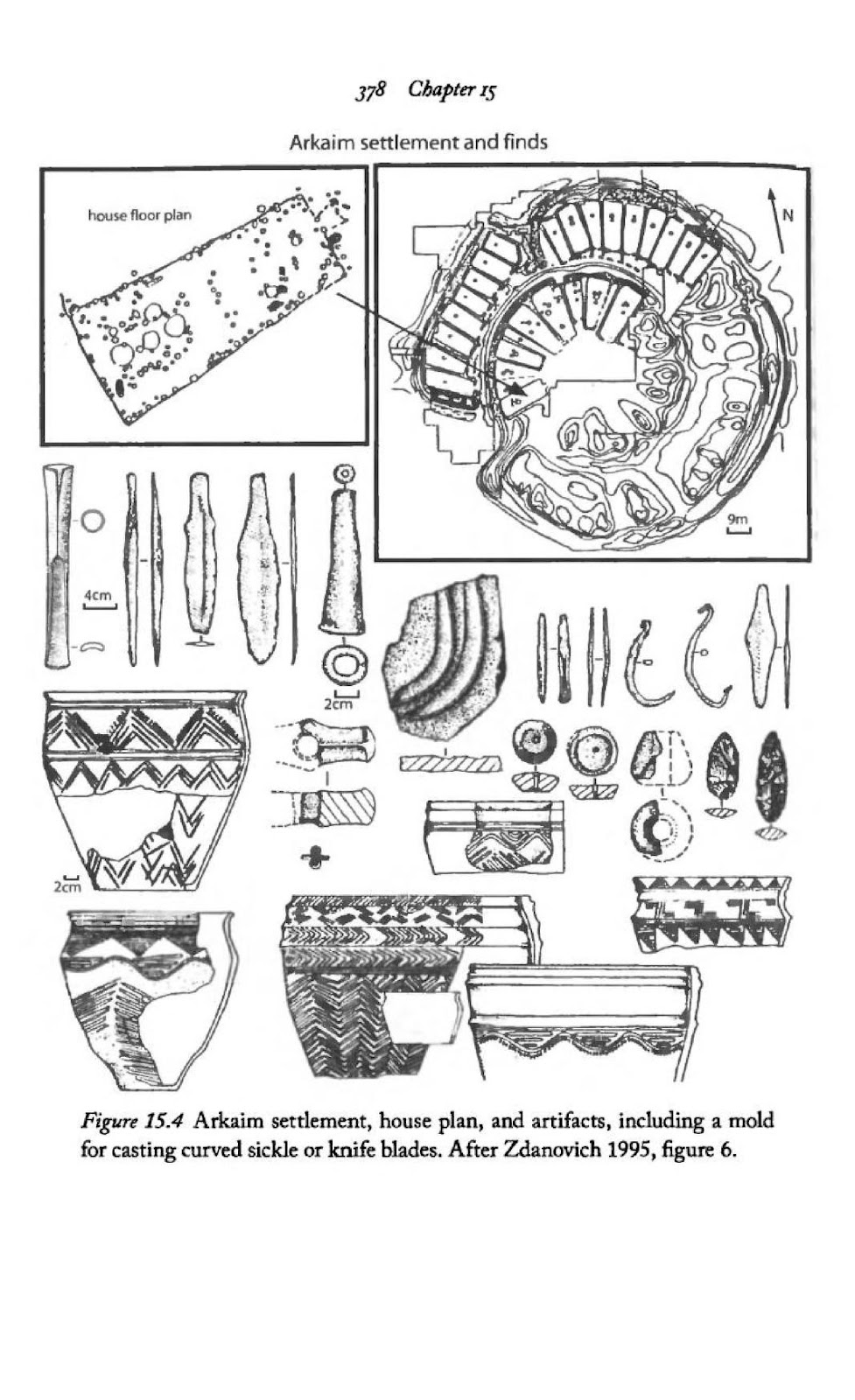
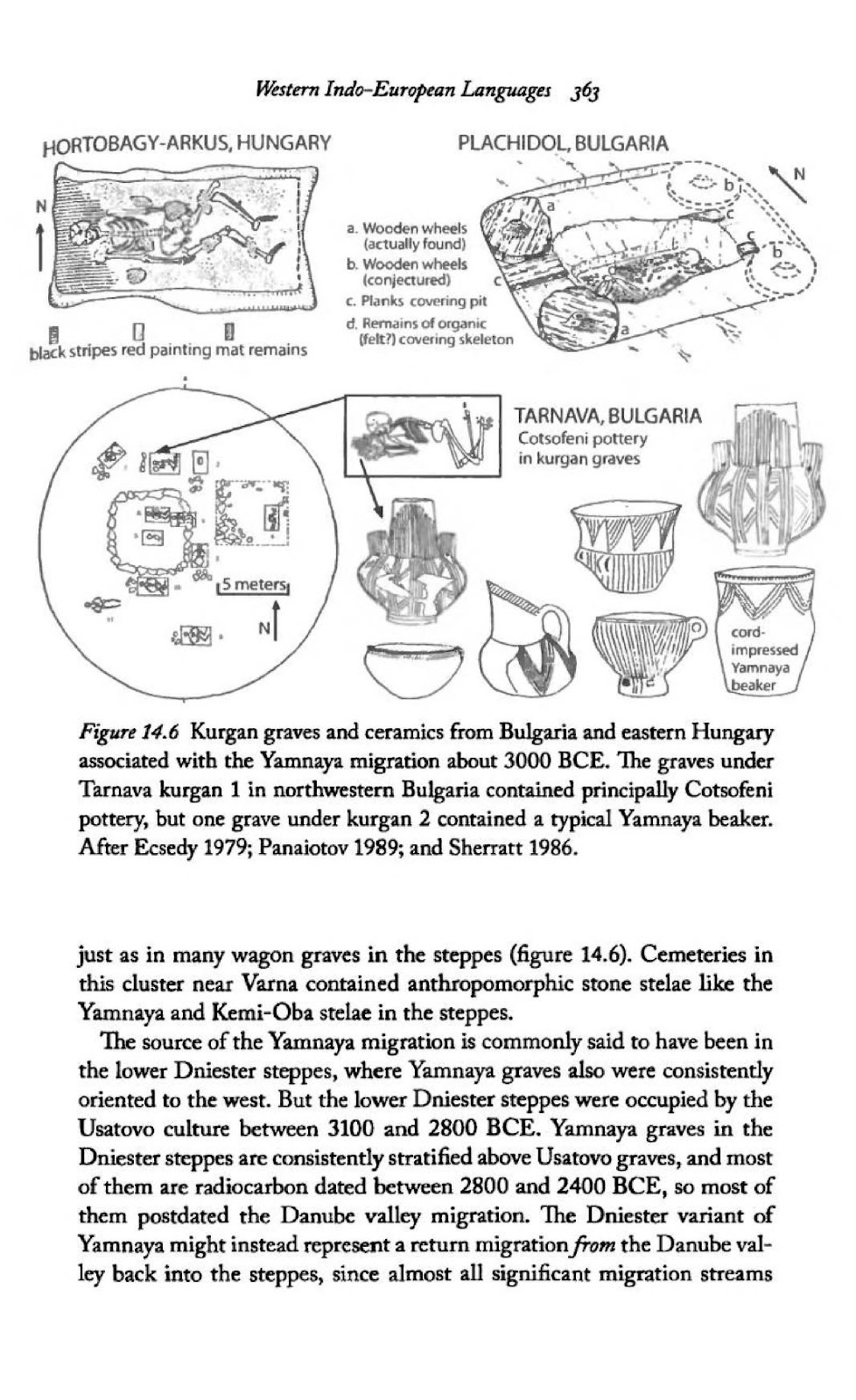
My post illustrated with the pages from The Horse, the Wheel and the Language - all archaeological artefacts. 


Happy New Year

Valete


Thursday, December 30, 2021

Marija Gimbutas lectures from the Oriental Institute

 Salvete Omnes,


yet again more links to videos and archive books: 
The Oriental Institute of the University of Chicago made available three memorial lectures on and about Marija Gimbutas life and her Kurgan hypothesis in relation to the DNA research. 

three lectures in order presented:

Colin Renfrew -  lecture  2018 

Petra Goedegebuure - lecture 2020  - on the Hittite branch of the Indo-Europeans

Ruth Tringham - lecture 2021


and some books on the archive world library  by Gimbutas, including plenty of books you can borrow:

The Balts (1963)

Bronze Age cultures in Central and Eastern Europe (1965)

The Living Godessess .. 

Civilization of the Goddess


Valete

Wednesday, December 29, 2021

Yamnaya Culture & face reconstruction

 Salvete Omnes,

the short entries rule - :) 

so here we go with yet another video link this week and month (and I dare say not the last one, some 2 days are still left of this month of Omicron... sorry..  December 2021) 
- nota bene I am awaiting my new drawing and painting tablet-monitor and doing some painting on canvas and paper (thanks to my loved ones and their generous gift giving).

So there is a channel on YouToube - Survive the Jive - and Tom Rowsell, the content creator, provides many an interesting video presentation  there.
This is the link to his Yamnaya video that is quite informative and entertaining while educational (and vice versa - :) ). The video provides the facial reconstruction of the Yamanay individuals reconstructed by Robert Moylneaux .

 Thuletide site has an article that also provides a link to this video and the facial reconstructions( using Gerasimov method)  of the Yamanaya male warriors (?).  You can watch on their site or go straight to YT.

Also, a British magazine article about the Yamnaya and their milk proclivities, so to speak. 

Nota bene - this is a very interesting illustrator using Twitter as his vehicle for spreading his art - Graman and his art. 


Valete

Kernosovka stelae

 Salvete Omnes,

one of the most interesting artefacts of the Yamnaya period in the Pontic steppe  is the stele/stelae or stone slab from Kernosovka (a village in Ukraine).


the stela is about 1,2 m high stone slab carved and sculpted; in its front there is a face, presumably of a man, with arms and a phallus under his belt.


Man's face has a deep-set eyes, pointed long nose, a chin or pointed downwards beard, with a long drooping mustache. The figure has two arms bent, between the left shoulder and bent arm there is a bow with an arrow notched.  He has a belt, single one.
Under the arms and in the back of the stele there are other weapons and tools -
a battle ax

a belted battle mace with circular head

a knife?

a hoe and/or mattck

a casting mold

a 'spoon' for metal casting

etc

At the bottom  there are two horses carved, and also there is an ox or bull and a turtle? .

The backs of the stele has various ornaments - perhaps representing his garments like a cow hide painted with lines ?  - and under the belt there are his spare? shoes.

Left side contains an image of coitus between a man and woman under the rows of triangles and an animal under the belt; the right has rows of triangles and zigzag lines between the triangle lines. 

Is this an image of a powerful chieftain ? The tools of metallurgy arts exemplify the  Indo-European skills with metal working, including probably the oldest iron smithing, from a meteorite iron, in Eurasia, thousand years before the Hittite ironworking in the II millennium BC.

There is this article by J.P. Mallory and D.Y. Telegin, The Anthropomorphic Stelae of the Ukraine: The Early Iconography of the Indo-Europeans, Journals of Indo-European Studies, Washington DC 1994 - but I do not have it nor have not read it.


Valete

Thursday, December 23, 2021

Old Debate from 2012, citing goes on - Mismodeling Indo-European origins - and a discussions about Maria Gimbutas - videos


 Salvete Omnes,


right before Christmas - so this is this rather old video from 2012 - but it goes to the heart of the matter, i.e., debate on the origins of the Indo-Europeans and the politics of the academic world - eg my post about the November 2021AD article of the Tocharians etc.

So in 2012 The Science (and NYT followed with this article) published this article: Mapping the Origins and Expansion of the Indo-European Language Family

Two scholars: Martin W. Lewis & Asya Pereltsvaig, in this video they did a very pointed and excellently delivered critique  on the errors and falsities of that Science article at Stanford Univ.. this short lecture is a great voyage into the historic linguistics and the story of Indo-Europeans. 
But in spite of the soundness of their arguments the article from The Science keeps on being cited (as you can see from the PubMed link. 

Regarding the Kurgan theory there are many critics of the Gimbutas, Anthony et al., kurgan hypothesis  - like  this presenter.


Nota bene:  

James Mallory, David Anthony, and Dorcas Brown talking about Maria Gimbutas and her theories being vindicated - from UCLA October 2021. 

from more distant past - dr Anthony's Wheeled vehicles, horses, and Indo-European origins lecture from 2012.


Valete


Saturday, December 18, 2021

Dr David Anthony on migrations in prehistoric Eurasia Steppe

 Salvete Omnes,


Today I came across this interview with dr David Anthony, one of my most favorite researchers on the prehistoric horses and Eurasian steppe people  - How ancient DNA revived ancient migrations in archaeology.

[Abstract]  Among archaeologists, until recently migration was regarded as a simplistic (at best) and even racist (at worst) way to explain culture change in the ancient past. Ancient DNA recovered from prehistoric humans has shown, however, that our ancestors moved long distances in demographically significant migrations that had profound effects on food, gender, architecture, and regional genetics. Integration between modern migration studies and archaeological interpretation is necessary to better inform archaeologists about the dynamics of these encounters. 


Nota bene his 1990 article - Migration in Archaeology 


and the most recent article available 'libre' -   Dairying enabled Early Bronze Age Yamnaya steppe expansions (Nature). 


Valete