Showing posts with label American Indian horse. Show all posts

Saturday, May 16, 2026

Apache drawings from Fort Sill, Oklahoma

Salvete Omnes,


on April 13 passed 140th anniversary of the arrival of the first Chiricahua Apaches deported to Fort Marion, Florida (San Augustine) - April 13, 1886. 

From Carli Digital Collections (Newberry Library) comes a set of ink and watercolor drawings created by an Apache (White Mountain) artist Frederick Gokliz, son in law of the famous leader  Cochise, who was deported, along with the Chiricahuas and  Warm Springs as prisoners of war, first as prisoners to Fort Marion in Florida, and then to Mount Vernon, Alabama, until 1894 and finally at Fort Sill, Oklahoma since 1894 to his death in 1901. 

Gokliz drew and painted his plates  most likely at Fort Sill , where they were acquired  for Edward E. Ayer.


warriors - 


  . Apache warrior and a woman on horseback


hunting bear & bison 


more images at the Carli portal

Valete

Monday, May 11, 2026

William Robinson Leigh's Indian ponies, horses & riders

 Salvete Omnes, 


a quick entry - William Robison Leigh (1866-1955) and his equestrian art as available on Wiki Commons ,


...


.


.

.

Gilcrease Museum Collection. actually huge collection of Leigh's works  - amazing collection of Indian ponies - oil on canvass.

Pony


.
William Robinson Leigh at  the auction house Christie's

Sotheby's auction house.

Invaluable portal.

And more Wiki Commons 

Bears in the path


Amazing landscapes of Grand Canyon - 


.

Valete

Friday, February 28, 2025

Arapaho horses in 1870 - Fitz Hugh Ludlow

 Salvete Omnes,

travois in this print from Fitz' book


a quick lope into the Kansas and Colorado Great Plains of the post-1868 war ( battles of Washita and Summit Springs),  our witness to the life of the Plains people, the Arapahoes and their horses, was Fitz Hugh Ludlow .


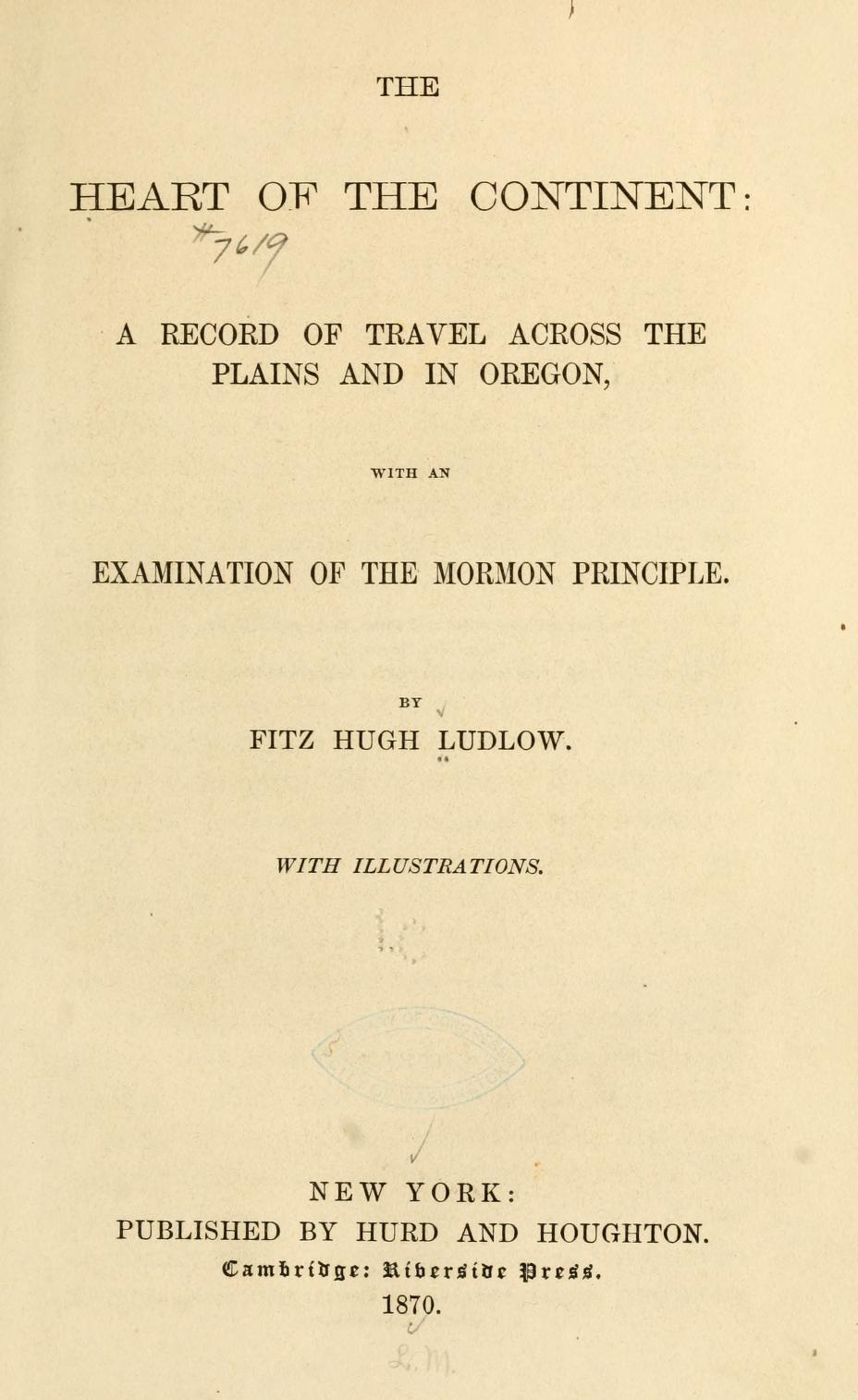
Fitz of New York, was a writer and traveler who made a long trip across the Plains & the Rockies to California* and Oregon -his recollections of this journey - titled The Heart of the Continent - was published in New York in 1870, the year he died.


While his observation on the American Indian women and men, especially the Arapahoes in this chapter taking place near South Platter River, are far from flattering, his short description of the horses can be of interest.


This period, post 1868 on the Plains was the waning of the free roaming tribes and their pursuit of bison, as they have been ravaged by diseases and loss of good hunting and really the way of life.  Fitz pointed to one aspect of the Plains Indians' approach to horses, namely, that the horses and their riders seemed to communicate by touch and understanding. 


Photos by William S. Soule, circa 1870s


*Fitz will be back with his depiction of antelopes, bison and horses and horsetack in California

Valete