Showing posts with label 1st Konarmia. Show all posts

Thursday, August 17, 2023

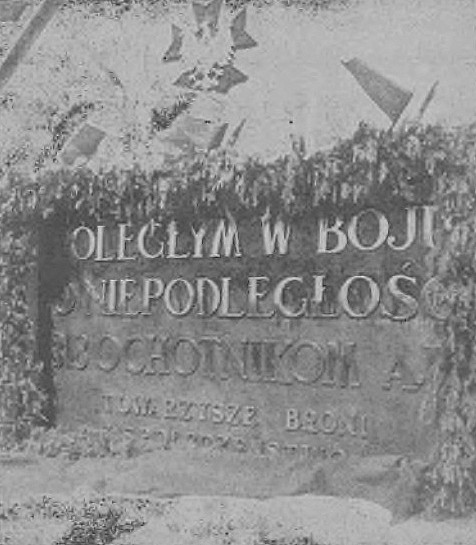
Zadworze - Polish Thermopylae 17th August 1920 anniversary

 Salvete Omnes,

a short posting of the summer type


in the past I devoted 2 posts - in 2020, a detailed one  here and the funeral one  here - to the commemoration of  the last stand battle of Zadworze and its aftermath.
Today I just want to commemorate the event - one of the few  truly Thermopylae-like battles in our Polish military history.

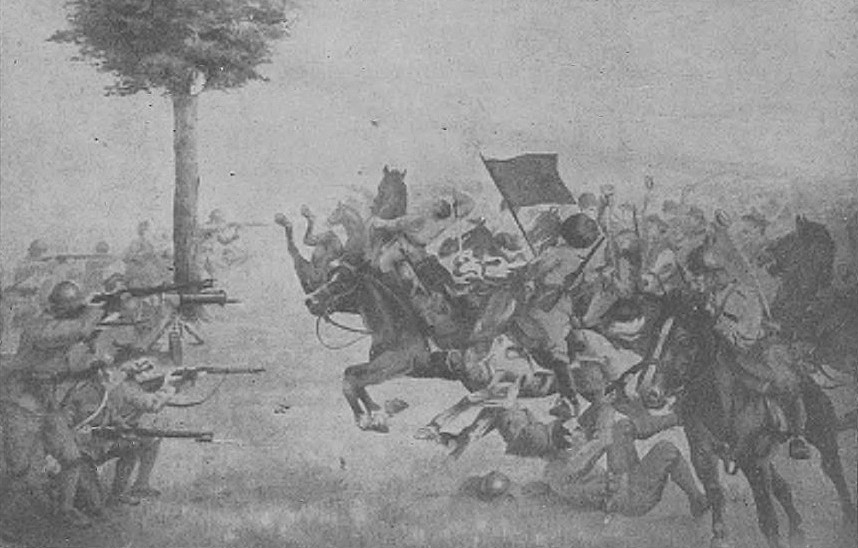
and some  unusual illustrations showing the fighting in Zadworze done  by a painter Mieczyslaw Iwanicki (in the photo below), who was a volunteer soldier of the Abraham Detachment during the very war. 


painted and published in 1938 in a magazine titled 'Wschod' (The East) - Lwow, Stanislawow, Tarnopol.


With all those machine guns and artillery, repeating carbines and grenades etc I wonder how many horses died and were wounded in this heroic fight... 

Hail to the heroes - Pacem Aeternam to the fallen

Valete

Wednesday, August 31, 2022

Bitwa pod Komarowem 1920-2022 - bitwa i Pomnik

 Salvete Omnes,

[in Polish]


dzisiaj, 31 Sierpnia, przypada rocznica wielkiej bitwy kawaleryjskiej miedzy oddziałami 1 Dywizji Jazdy wojsk polskich a oddziałami 1 Armii Konnej. Na polach w okolicach Zamosci,a opadal Komarowa i Woli Sniatyckiej, na lewym brzegu rzeki Huczwy stoczono boj kawaleryjski, gdzie jazda polska (wspomagna artyleria konna) pokonala kawalerie Armii Czerwonej.


Aleksander Pragłowski


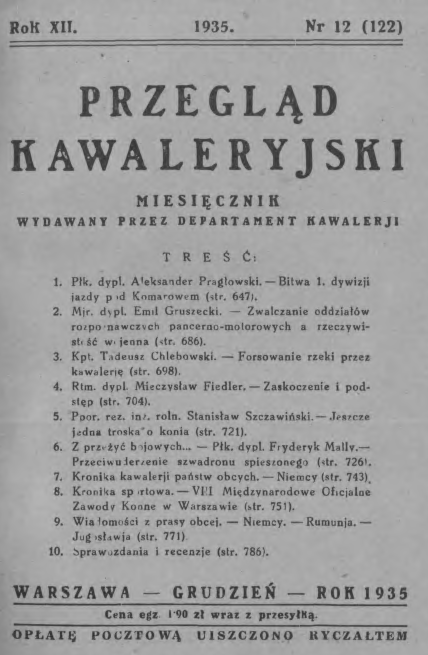
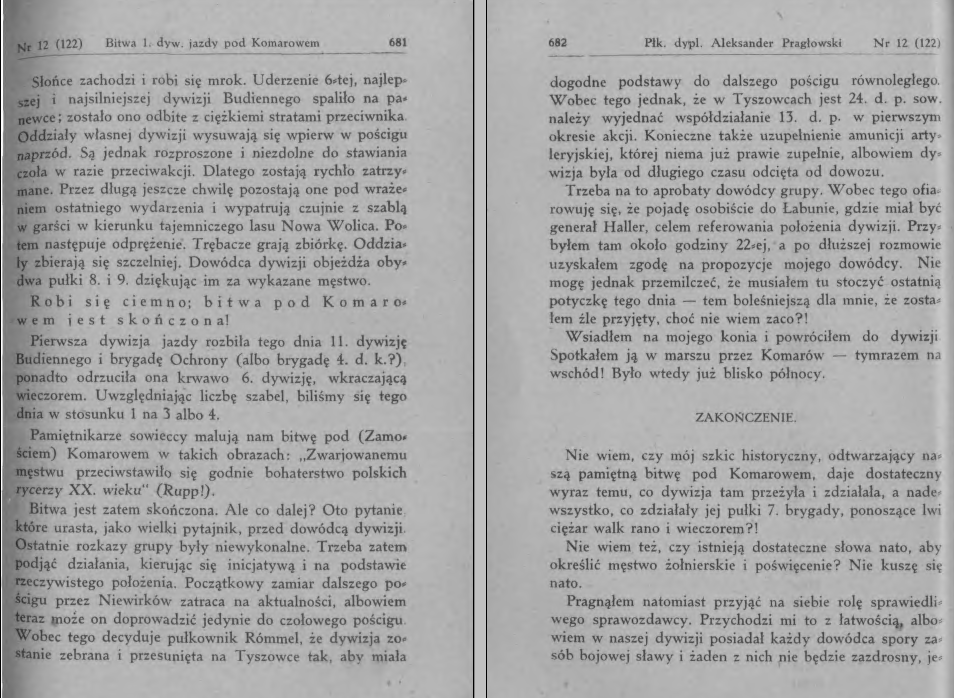
W Przeglądzie Kawaleryjskim z 1935 roku ukazał się szkic historyczny pułkownika Aleksandra Pragłowskiego - Bitwa 1. dywizji jazdy pod Komarowem (Rok XII, nr 12 [122]). Cały artykuł można czytać lub ściągnąć na własny czytnik z Wielkopolskiej Biblioteki Cyfrowej-FBC


i mapa pola  bitwy z Wiki Commons


W ostatni weekend sierpnia 2022 odbyło się odsłonięcie Pomnika Chwały Kawalerii  i Artylerii Konnej w Woli Sniatyckiej - relacja ze strony Komarowa


18 Dywizja Zmechanizowana Wojska Polskiego na Fb pokazała zdjęcia pomnika -
oto przykładowe zdjęcie

W tym artykule w formacie pdf można poznać historie powstawania Pomnika - entuzjasci historii Jazdy Polskiej,   fundacja Bitwa Pod Komarowem i ofiarnosc Polakow et Polek doprowadzili do powstania Pomnika. Chwała im et Vivat!

Tamże jest do przeczytania czy  ściągnięcia fragment wspomnień uczestnika bitwy z 1szego pułku ułanów - Jana Bielckiego.

Obok Pomnika Tysiąclecia Jazdy Polskiej w Warszawie i Pomnika Grunwaldzkiego w Krakowie sławiących czyny i zwycięstwa Jazdy Polskiej to ten pomnik jest chyba najpiękniejszym monumentem w przestrzeni publicznej poświęconym chwale jazdy polskiej i oręża polskiego.

Valete

Monday, August 31, 2020

Komarow 1920-2020

Salvete Omnes,
 exactly 100 year ago the brave and intrepid Polish uhlans and horse artillery cannoneers battled the Russian 1st Konarmia at Komarow and Wola Sniatycka near Zamosc.

Polish Cavalry Division commanded by colonel, later general, Juliusz Rómmel consisting of 2 cavalry brigades fought and defeated the two divisions of the 1st Konarmia. It was the last large cavalry battle of the Polish-Russian War of 1919-20, perhaps the last large cavalry battle in world history.

There are surviving memoirs and recollections written by the battle participants, one of those is a published memoir written by the 8th Uhlan Regiment commander rotmistrz (rittmeister)   Kornel Krzeczunowicz , Ostatnia Kampania Konna (The Last Horse Cavalry Campaign).
 General Rómmel wrote his recollections - Moje Walki z Budionnym, (My War against Budionny) Lwow 1932, but I have not read them.
This very year, during the  weekend of Aug. 29-30,  various Polish cavalry reenactment associations (and a detachment of fine  Bavarian Uhlan reenactors) brought horses, reconstructed horse tack, and reconstructed uniforms and arms and etc in order to take part in a large, festive commemoration of the battle: the gathering included the reenactment of the battle itself, more than 400 cavalrymen and women, a logistics feat and achievement.
The festivities, on the eve of the battle anniversary, were official  with Polish national and local government participation; especially with the participation of the Polish Armed Forces.
And with some participation of the public spectators - due to the current limitations on public gatherings etc.
There is this article by Nowy Kurier Zamoyski on the battled reenactment - plenty of photos.

I am pretty sure that shortly  the net - especially many the Facebook pages similar to these I linked already - will be full of great and fine photos from this event in Poland; the words is that many fine photographers went over there in order to document this historic event and make some glorious art.

                                             ***
There is is issue of the monument.
In 1936 in Poland this competition was called for creation of the cavalry monument commemorating the battle, and talented Polish architect Borys Zinserling won the first prize for his project titled 'pomnik Chwały Kawalerii i Artylerii Konnej' ( Glory of Cavalry and Horse Artillery monument). Once completed the monument would have been erected in Wola Sniatycka, hill 255, where on August 31 the most decisive and bitter combat between the Polish and Russian horsemen took place.
World War II and subsequent Soviet rule in Poland until 1989 delayed the construction of the monument, and even the newly restored independence did not hasten this project at first.
Fast forward then to 2007 when the idea of building the monument was resurrected among Polish historical groups and cavalry associations, and during the next 10 years the design had been worked out and improved, but the artists were working along the lines of the original project from 1936, i.e, the magnificent winged hussars0style  eagle wings overlooking the battlefield.
In 2018 various organizations and many good willed people came together to finally start sculpting and to build the monument along the newly redesigned project.
Today is the 100th anniversary,   the moment is very close when the monument will be erected in its rightful place.
It is going to be glorious (and very tall) once finished as evidenced by the images below, and many other images on this page:


Valete

Thursday, August 20, 2020

Janina Lada-Walicka - ulan wojny 1920roku

Salvete Omnes,
[in Polish]
Hej! Hej! Ulani!
Malowane dzieci!
Niejedno serduszko
Za wami poleci!

    ... krotki wypis z linkiem do pracy pani kapral Janiny Łady-Walickiej, jej wspomnień z walk w obronie Lwowa i Polski latem 1920 roku, kiedy Lwow wystawił Małopolska Armię Ochotniczą, w skład której wchodziła Ochotnicza Jazda.

Kapral Walicka była weteranem walk  lwowskich, w obronie  Lwowa i Ojczyzny już od czasu rozpoczęcia wojny polsko-ukraińskiej. Walczyła pod komendą majora Romana Abrahama w obronie Lwowa 1918-19 roku, a od lipca 1920 stanęła w szeregi Detachement'u (oddziału lotnego Armii Ochotniczej) tegoż majora Romana Abrahama, w II Szwadronie zwanym 'Szwadronem Śmierci'.

II Szwadronem dowodził rotmistrz Ryszard Dittrich, a cala jazda Detachement'u czyli III Dyonem Jazdy rotmistrz Tadeusz Korab-Krynicki.

Zachowało się zdjęcie kapral Lady-Walickiej w grupie ze sztandarem szwadronu.

Na zdjęciu stoi, na lewo od chorążego ze sztandarem,  znanym we Lwowie pisarz  i krytyk literacki oraz wtedy jeszcze kapral (choć nazywa go kapral Walicka plutonowym)  Artur Schroeder (wkrótce bohater spod Zadwórza, naszych Polskich Termopil, które cudownie przeżył ale ciężką raną),
 

Kurier Lwowski z 20 sierpnia donosił o ranach Schroeder'a i niewoli dowódcy karabinów maszynowych porucznika Nittmana. (kapral Walicka opisuje okoliczności popadnięcia w  niewole bolszewicką porucznika)


Kapral Walicka pozostawiła zbiór wspomnień of owym lecie 1920r  pt  ''Ułani, Ułani Malowane Dzieci (Przyczynek do dziejów Armii Ochotniczej)'', Lwow 1921; kiedy obrońcy Lwowa wyszli do walki z 1sza Konarmia Budionnego.


My możemy żyć wesoło,
Bo nie wiemy, gdzie nasz grób:
Jedna kulka świśnie w czoło,
I na ziemie runie trup!
Taki los wypadł nam,
Dzisiaj tu, a jutro tam!

   Nota bene weterynarzem szwadronu była dr Maternowska.

Kura ze wsi wyskakuje
Gdy Żołnierza we wsi czuje,

Baba idzie do rotmistrza,
Kura z garnka łeb wytrzeszcza!

Autorka, pisząc w rok po wydarzeniach, zaznaczyła tylko parę faktów z bitwy pod Zadworzem, min sprawę wysłania do piechoty Detachement'u czyli batalionu kapitana Zajączkowskiego w Zadworzu plutonu III Szwadronu pod dowództwem podchorążego Zbroji.

a z ciekawostek to można się tam dowiedzieć, ze w czasie organizacji III dyonu Jazdy Ochotniczej 30 koni z rynsztunkiem  podarował II szwadronowi hrabia Włodzimierz Dzieduszycki, a ponad dwudziestu chłopom, którzy się zgłosili na ochotnika do wojska podarował po trzy morgi pola. Prowadzący konie urzędnicy z dóbr hrabiego Dzieduszyckiego pozostali w szwadronie - Horoszkiewicz, Krzysztofowicz i Biłycz.
Valete!

Tuesday, August 18, 2020

Polish Thermopylae - battle of Zadworze 17.08.1920

Salvete Omnes.
yesterday  there was the  100th anniversary of the battle of Zadworze (nowadays in Ukraine) known as the Polish Thermopylae.
 
Captain Roman Abraham, already very well known and capable soldier, organized and commanded the so called Abraham 'detachement'(detachment) in July 1920.
Abraham's unit, part of the Little-Poland Voluntary Army, was a special troop of very brave boys (Lwow Eaglets) and men and one woman (uhlan Janina Lada-Walicka in the photo below with her companions in arms as a part of the 2nd squadron also  called the Death Squadron) from Lwow, fresh from fighting during the Polish-Ukrainian war 1918-19.

The Abraham's Detachment, organized in July,   included only volunteers:
- battalion of infantry, (3 companies), commanded by captain Boleslaw Zajaczkowski,
- machine guns divizion under 1st lieutenant Dawidowicz
-machine guns squadron under 1st lieutenant and poet Tadeusz Nittman/later Krzywda Bogucki
-3 squadrons of cavalry under captain Tadeusz Korab-Krynicki,
-1 machine guns squadron -major Swiecki
-1 artillery battery under 1st lieutenant Karpowicz
- medical unit under second lieutenant Jaklinski
-logistics and wagon-kitchen unit etc 1st lieutenant Wojcicki*
*according to the volunteer chronicler Pogonowski, Boj of Lwow, 1921.
In total 1300 soldiers and 34 officers.

They went into action in the end of July in the defense of Lwow against the 1st Budionny Konarmia, According to prof. Lech Wyszczelski, Kampania Ukrainska 1920, the Abraham Detachment along with the 54th infantry regiment were withdrawing towards Winniki and Nowosiolki, to achieve the northern defense line of Lwow. Colonel Szemiot, the commander of this part of the Polish front, ordered Zajaczkowski's battalion to command the 222 hill in Zadworze while the 54th regiment moved away towards Winniki. Detachment's cavalry continued screening the front, but left their infantry withdrawing along the railway line in the morning of 17th August.
Masses of enemy cavalry from the 1st Konarmia 6th Cavalry Division etc - perhaps as many as 5000 strong -   had to circle back and retake Zadworze railway line and station.
Pogonowski, based on his contemporaries, stated that the infantry battalion was moving along the railway line in Zadworze towards Lwow, having successfully fought with their Detachment cavalry against the Bolsheviks in Nowosiolki, and was only about 2 km from the protective Barszczowicki forest where defense would have been easier against the cavalry, but during the fighting march along the Zadworze railway  Bolsheviks destroyed the munition wagons of the battalion,  and Polish soldiers faced the inevitable cavalry action along their wings and the final encirclement. 

So on August 17, 1920 for about 11 hours the 330 men strong battalion with their machine guns under overall command of captain Zajaczkowski fought  thousands of Bolshevik cavalrymen.
Eventually in spite of the heroic fighting and wonders of martial feats the 318 Polish infantrymen perished in this last stand fight.
In the rage that overtook many Bolsheviks upon the end of fighting they quartered with sabres the bodies of the Polish soldiers, and this barbaric act made their identification difficult by the loved ones. 
Some of the accounts of this battle were given by the railway's guard who was inside the Zadworze railway guard shack and by some of the survivors who were fortunately rescued by the armored Polish train, however this powerful armored train was too late to help the already fallen heroes.
 
Historians do not know how many Bolsheviks died this day.
The stubborn defense by this volunteer unit, and other volunteer units around Lwow, must have led to the abandonment by 1st Konarmia plans to capture and loot Lwow.
They marched north and soon met their Nemesis near Komarow - there will be another post about this battle, I hope

..
so in post-1920 Polish Republic this heroic battle of Zadworze became celebrated as Polish Thermopyle - and it was the Communist authorities in post-1945 Poland that suppressed and erased the memory of Zadworze in Polish collective memory. Perhaps the horrors of the Nazi and Soviet occupation of Poland helped to forget the glories of Polish Nation military victories and sacrifices of 1918-20.
Nowadays, the battle of Zadworze is very little known, but the tradition of celebrating the place - where a tall kurgan stands.


Nota bene on September 18, 1920 the City of Lwow buried, with much somber celebration aka pompa funebris, the bodies of 7 heroes of Zadworze:
Zajaczkowski, Obertynski, Demetr, Hanak, Marynowski, Gromnicki,Szarek, and their remains were buried in holly ground of  the famous Lwow Lyczakowski cemetery.

Salvete Omnes,

Sunday, June 28, 2020

Mitrophan Grekov - painter of Red Army Cavalry

Salvete Omnes,
100 years ago Polish, Ukrainian, Belarusian, and various 'White' Cossack forces battled the Red Army's onslaught that would be finally stopped on the flat plains of central Poland east of the Vistula River. Thus year is the anniversary of that famous battle of Warsaw.

I daresay  in the spirit of this anniversary Osprey Publishing released a book from the Campaign series by Steven Zaloga about the battle of Warsaw 1920. 
I am thinking about  addressing some issues I have seen with this book, but no promises there.
In the spirit of this centennial campaign let us take a look at one of the Soviet artists who was in fact a soldier and portrayed the famous Budyonny  1st Horse/Cavalry  Army or Konarmia of the Russian Civil War.

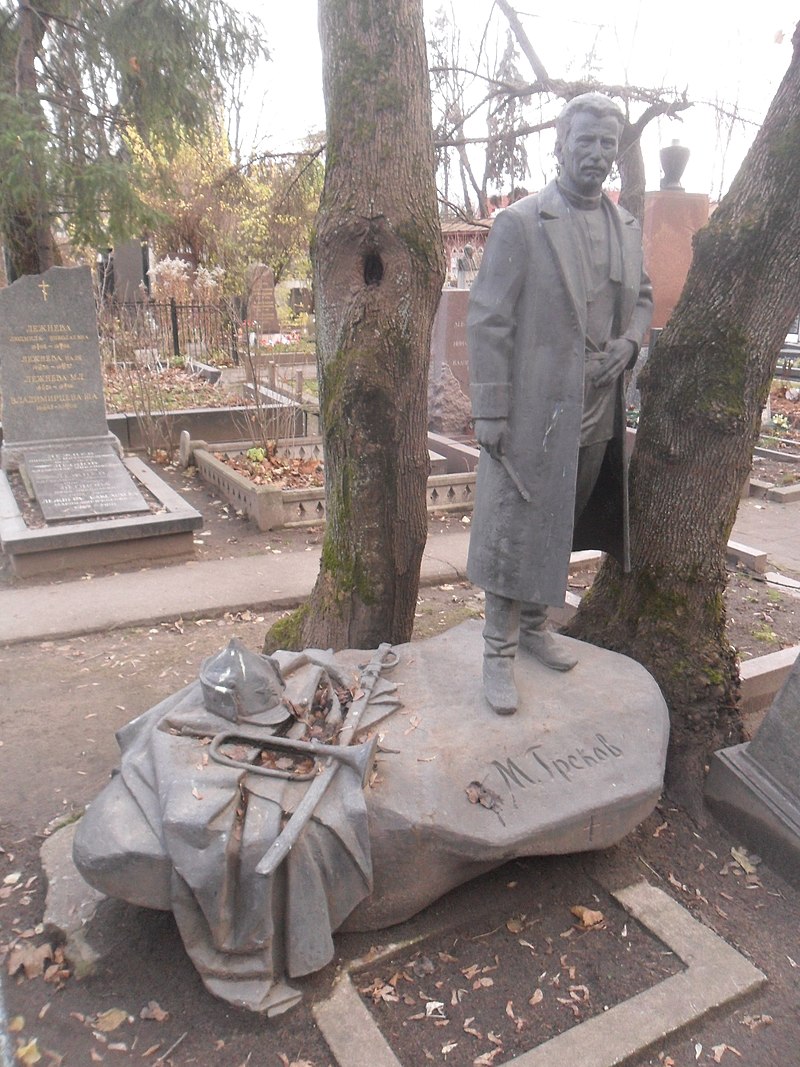
Artist-  Mitrophan Borisovich Grekhov/Grekov (1882-1934) - volunteered to join fight the Red Army and being a solider  he drew and painted, from nature, the Konarmia cavalrymen and their horses. And their famous tachankas - machine gun placed on a carriage that was pulled by at least 2 horse team.
there is lots of  steppe vastness and horse sprit in these paintings

Here some paintings -


valete