Showing posts with label Nisaya Nisean horse. Show all posts

Tuesday, June 28, 2022

Shapur I king of kings

 Salvete Omnes,


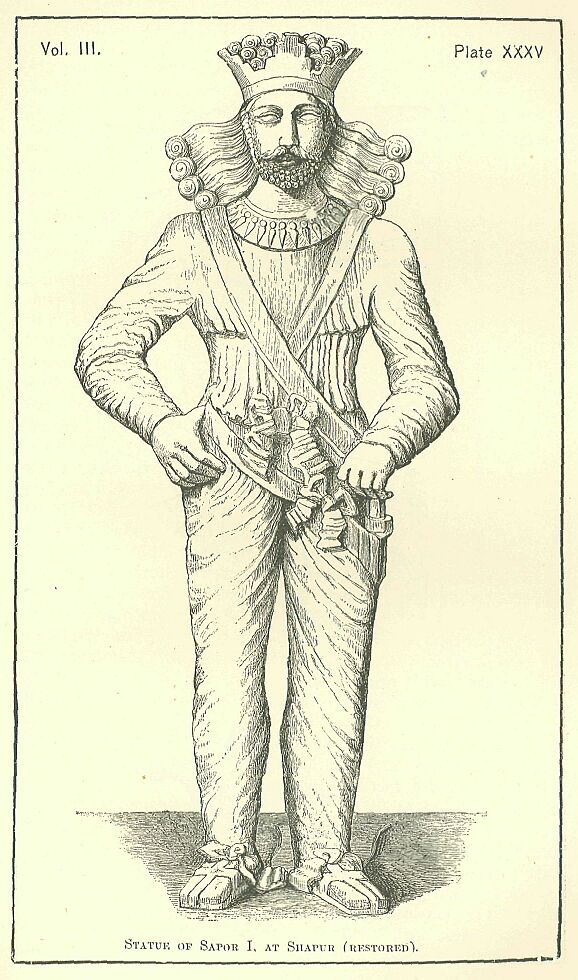
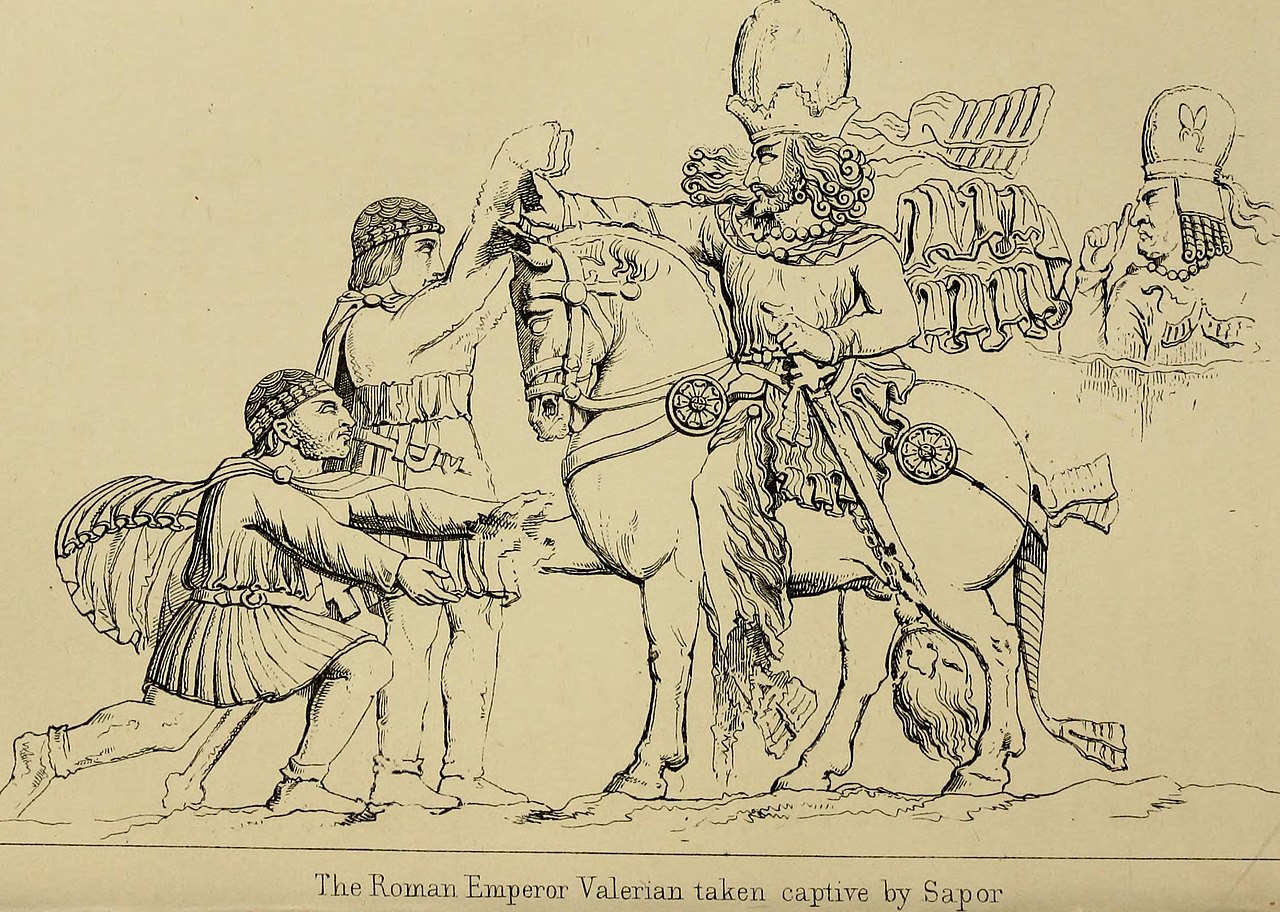
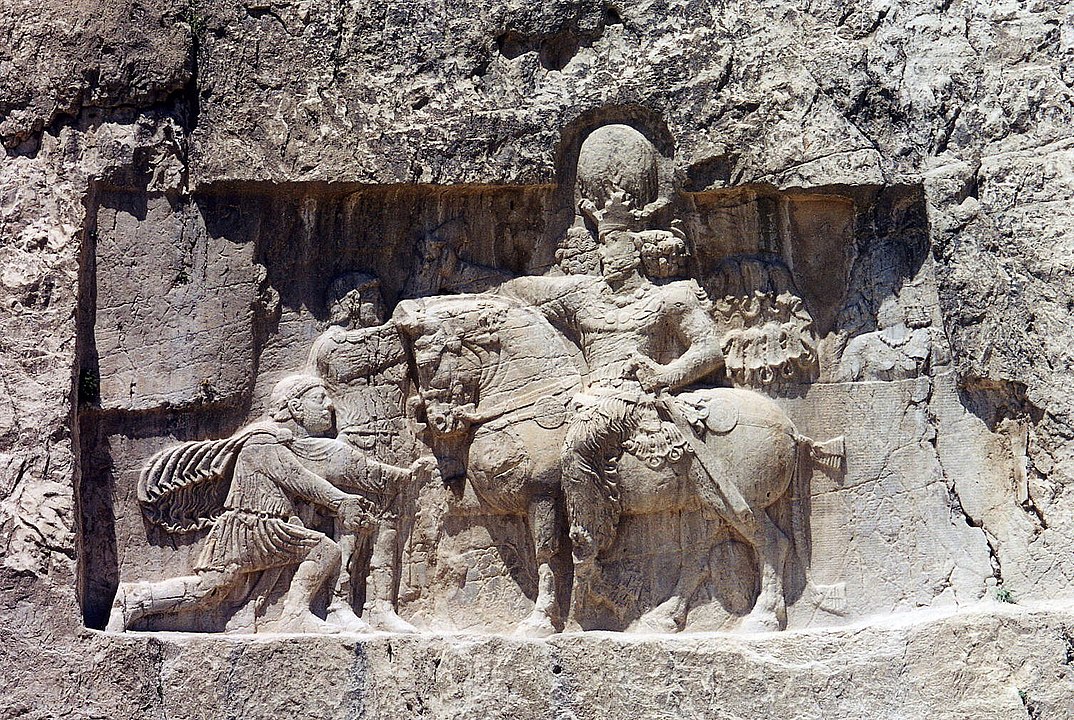
Lord Shapur, king of kings of Eran - well, let us gallop a bit across the III century AD ancient Iranian realm, with the famous king at the vanguard.. a collection of period images - triumphal and bellicose, but also very religious, and always equestrian astride his Nisaya/Nisean chargers

the most famous cameo from Louvre


there is plenty of research around Shapur I and his III century Persian realm - vide academia.edu articles eg THE SOURCES FOR ROME’S WARS WITH SHAPUR I: EUROCENTRIC AND EASTERN PERSPECTIVESRelief of Salmas, or on Shapur I coins, or on the rock relieves of his triumphs , and the entire corpus of works (including the finds of horse armor)  dealing with Dura Europos siege and capture etc...  so enjoy your research .By the way a different than military history  eg Prof. Katazyna Maksymiuk - The Position of Women in the Court of the First Sassanias.

you can find Shapur I in the novels of British historian and novelist Harry Sidebottom - Ballista aka Warrior of Rome series 


Valate

Sunday, May 1, 2016

Sassanian Rock Relief Khan Takhti

Salve,
it has been a while since the last Persian posting, so when I saw a short article about this relief on Dr. Kaveh Farrokh's  site I decided to share it with you.
The relief in question is located in the Iranian province of Western Azerbaijan (ancient Urartu and Armenian Kingdom ), near Khantakhti in the Salmas county, and shows famous father and son team, namely Shahanshah Ardashir/Ardašir I and Shapur I/Šapur I, the rulers of the newly established Sassanian Persia.


This is not the first time they are shown together, famous rock relief of Firuzabad may be one example.
I am of the opinion that it is not a stretch of imagination  to say that the rulers are riding their trusted warhorses of the Nisaya/Nisean breed - famous horse breed of the Ancient Persia.


Enjoy
ps
all images in Public Domain

Wednesday, July 3, 2013

Sassanian horses in rock reliefs 2

Salve,
continuing with the Sassanian rock carvings and their portrayal in various media,   I will turn to the drawings of  Jean-Baptiste Eugène Napoléon Flandin, who together with architect Pascal Coste trekked across Persia during 1839-41  drawing and sketching and painting along the perilous journey.
These are some  of the fantastic archaeological drawings published in multi-volume edition (one volume of the text and 5 volumes of plates) titled ''Voyage en Perse'' in France in 1851.

The drawings and engraving that were made after the drawings to have been reproduced in the books are precise, archival quality, a swan song of such drawings, soon to be replaced by the photography
...

...

...

...

...

...

...

...

...

...

...

...


Tuesday, July 2, 2013

Sassanian horses in rock reliefs 1

Salve,
while doing some research on the ancient Persian costumes and textiles, I went back to the images showing riders and horses at various rock/stone reliefs in Iran carved during the Sassanian Empire period.
 Hence, this entry in my blog has been born - bring as many images of the Sassanian horses as I can find in my collections (from various Wikipedia archives, photos and drawings), to have them 'corralled' in one place. Sometimes I find it useful to put all the images of one subject matter next to one another, perhaps some new ideas will have been born out of such compilation.

I am going to start with the drawings, and these are quite extraordinary, since they had been made by famous British traveler, diplomat and draughtsman  Sir Robert Ker Porter, during his travels across the Asia Minor, Turkish 'Arabia,' Georgia and Persia  almost 200 years ago - these drawings were published in a two volume account of the travels titled ''Travels in Georgia, Persia, Armenia, ancient Babylonia, &c. &c. : during the years 1817, 1818, 1819, and 1820''
London 1822.
Sir Robert executed these line drawings with lots of gusto and vibrant skill, and we can see some more detail of tack etc in his drawings than in the photos of the surviving monuments today. The horses are clearly visible(or better say as Sir Robert saw them carved in the rocks in his days): strong, graceful muscular bodies of warhorse, perhaps a Nisaya horse,  not unlike the horses shown in VII century Tang Chinese art, eg emperor Tang Tai Zong horses from his mausoleum resemble these a lot. The stallions are collected,
Finally  I say stallions because it is known since Herodotus that the Persians rode stallions, a particular equestrian custom they preserved until the modern era.

..

..

..

..

..

..

.. this one particularly interesting - it shows shah Ardashir, the founder of the Sassanian Empire,  and his son Shapur I
 This another traveler to the Iranian heartland - Eugene Flandin  tomorrow or part 2 if you will


..
On Livius.org  you can quietly pass the time exploring the Sassanian rock carvings, as the kindly scholar Jona Lendering organized them according the Sassanian kings' chronology.
Do enjoy

Thursday, February 7, 2013

Ancient horse from coins

Salve,
today is Tłusty czwartek (Fat Thursday) and our Polish folklore associates this day with eating pączki  and other delicious sweets; so enjoy them wherever you can find a Polish bakery :)

Good traditions aside,  I have been browsing the web looking for the ancient coins and other Hellenic and Roman art images showing Dioskouroi riding horses and holding palm branches, and I cam across some very interesting coins from the ancient Greeks sphere of influence, i..e., Mediterranean Basin. Why are they interesting? Well, because they show different types of horses.

Please note that I do not own any of these images nor have any right to them - they came from this website Ancient Coin search Info
I am showing them to simply share these interesting depictions of horses of the ancient Hellenic world.
Coins from V to III century B.C. - let's the images speak for themselves . Note that Ann Hyland has written on these horses in her book Equus, The Horse in the Roman World.
..
 circa 260 from Carthage - a Numidian stallion?

..
 Tarentine, Magna Graecia (Italy) - Osprey has a book on the Tarentine horsemen, we need one on the Numidian horsemen

..

..

..
 Macedon - Thessalian, Thracian, perhaps steppe influenced horses, eg king Philip II, father of Alexander, brought from his wars (340s B.C.) against the Thracians and Scythians thousands of horses as war spoils - so tell us the ancient historians, eg Quintus Curtius Ruffus or Arrian etc.


Paeonia (Greece)

..
 Thrace - Thracian horse, note the famous mares of Greek mythology or Rhesus of Thrace horses

..


Thessaly - a Thessalian horse


..

..

..
Caria, Achaemenid satrapy in Asia Minor - Nisean horse

..