Showing posts with label egreta. Show all posts

Monday, April 20, 2026

Nadir Shah - the last great Persian conqueror in equestrian paintings

 Salvete Omnes,


tomorrow the ceasefire between Us-Israel vs Iran will expire. Perhaps there will be more war in the West Asia or perhaps they will come to an agreement (and eventual peace in the Persian Gulf region) or perhaps POTUS Trump would simply walk away from the conflict (having more pressing issues like the mid-terms in Novemebr 2026) . God willing there will be no more war.  

ad rem,

Nadir shah and his bay argamak 

Since the Persians (Elamite, Median and Persian proper)  came into annals of history in the 2nd & 1st millennium BC their armies had been led by vast variety of successful generals but also by less lucky or even hapless commanders and warlords - including the most lucky Cyrus the Great & Darius III of the Achaemenid Dynasty, Alexander the Great (the last king of kings of the Achaemenid Persia),  Seleucus I and Antiochus the Great of the Seleucids, Mithradates II & prince Rustam Surena & Artabanus IV  of the Parthian Arsakid Empire, Ardashir I, Shapur & Yazdegerd III & Peroz III of the Sassanians, Abbas the Great of Safavids  etc.


The last truly great commander in Persian millennia long history Nadir Qoli Beg/Tahmasp-Qoli Han, came from Afsharid Turkoman tribe and as Nadir/Nader Shah became the shah of Persia in 1736 until his death. 

During his life he had become a famous military commander and reformer, and due to his fame and achievement often portrayed on horseback or with horses at war. Among many things he created one of the largest and strongest armies of the period in Asia - some 375,000 strong, 

Shah and his grey argamak


.


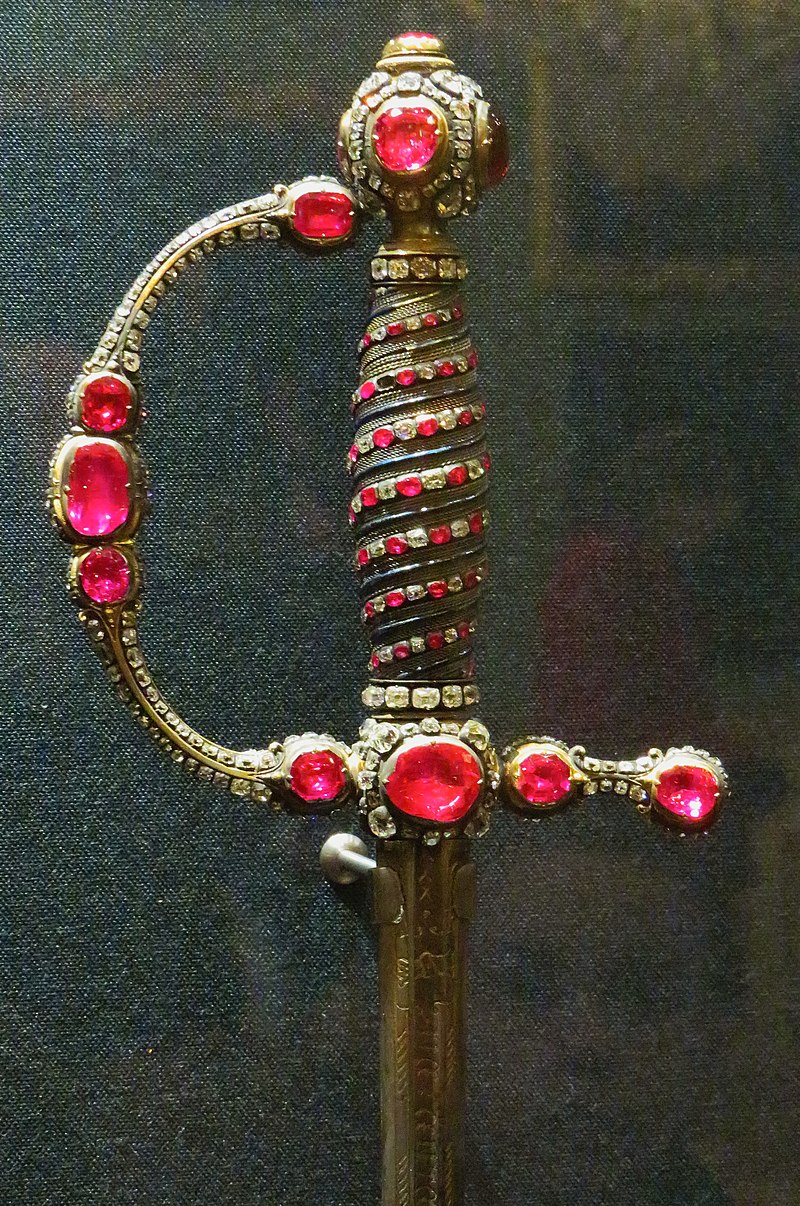
Shamshirs or sabres  of Nadir Shah 

Nadir Shah astride his grey argamak


Shamshir


Pdf - the army of Nadir Shah.


He was assassinated, almost Julius Gaius Caesar style, by the members of his comitatus in 1747.


Aga Mohammad Khan of the Qajars, the restorer of Persia unity since the  M. Karim Khan Zand rule etc, had the remains of Nadir Shah transferred to his new capital of Tehran, along the remains of Karim Khan.
But then he also had Shahrokh/Sahrok, the grandson of Nadir Shah, tortured in order to extract any treasures that had belonged to Nadir Shah, causing the hapless grandson to die. The current mausoleum is located in Mashhad, Islamic Republic of Iran.

.


enjoy

Valete

Tuesday, July 1, 2025

Two Riders - R. Savery - National Galleries of Scotland

 Salvete Omnes,

a new month has started and the Dog Days of the Summer have started as well - so let us start .

National Galleries of Scotland graciously allow us to share their digitized art collections, and one of period gems is this drawing by Roelandt Savery. (crica 1605-10AD)


.


Note that both riders are mounted on stallions and judging from their conformation these warhorses are of 'eastern', lighter, type. 

Are they the Old Polish kozaks cavalry ? Well, difficult to say - Savery had lived in Prague, Kingdom of Bohemia ( Austrian Hapsburg Empire) at least since 1604AD. But also he traveled down south to Croatia (then part of the Hapsburg Kingdom of Hungary) and Croats, Serbs of Krajina and Hungarians (including various ethnic horsemen of that Kingdom) used costumes, armor, weapons and horse tack similar to their Polish counterparts, and the preference to ride stallions and geldings instead of mares. Savery was a master of portraying of these East-Central European warriors, so just let us enjoy the drawing.

enjoy

Valete


Wednesday, November 8, 2023

Equestrian-themed Jewels from Polish-Saxon Court of Augustus II the Strong

 Salvete Omnes,


Dresden's Saxon Royal Castle contains some of the most outstanding royal jewels in the world - 


the famous and fabulous green diamond of king Augustus III


among there are some beautiful examples of jewelry made for our kings Augustus II the Strong and his son Augustus III (of the Wettin Hourse). 


Augustus II had a goldsmith Johann Melchior Dinglinger working for him, and master Johann created many magnificent object of his art. These objects can be seen at  the Grünes Gewölbe (Green Vault) inside the castle.

One of the is this cup with a horse - outfitted in the Polish style of the period, with the sabre suspended under the saddle's skirt. 


Agate, enamel, gilded silver, gold, precious and semiprecious stones were used by maestro Dinglinger to make this magnificent cup, one of two (circa 1722).

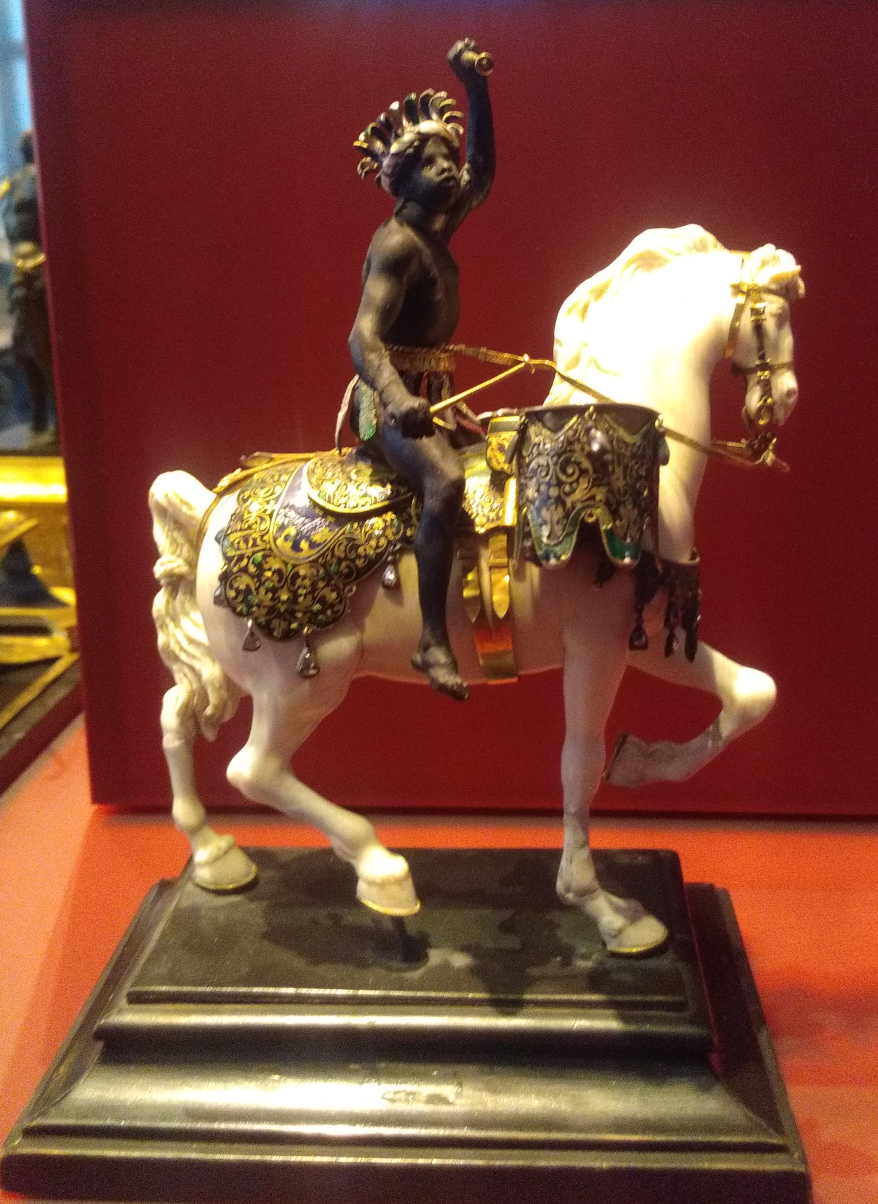
There is also these 2 figurines of  Nubian/Ethiopian drummer and trumpeter on horseback -


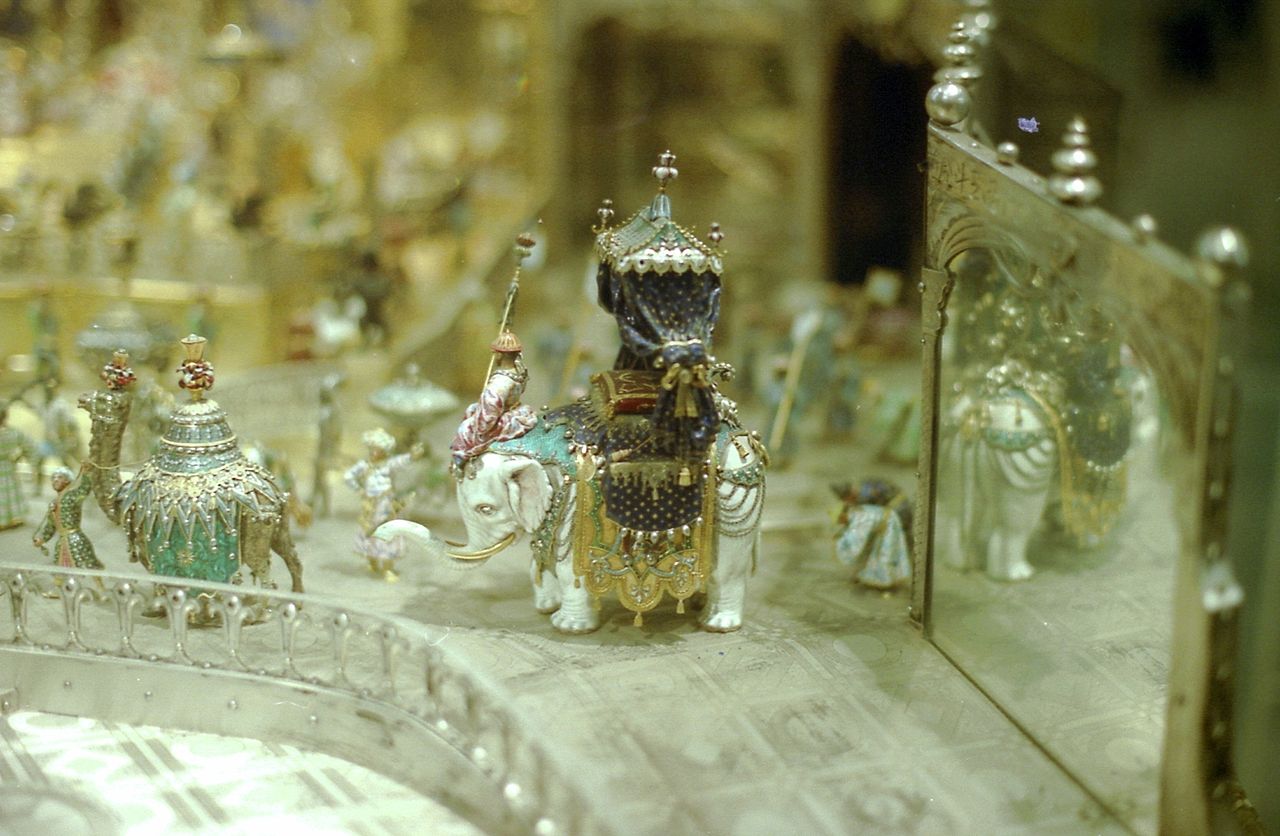
and many more beautiful objects - like this composition


or this egreta alias szkofia (aigrette)


Valete