Showing posts with label rumak. Show all posts

Monday, November 28, 2022

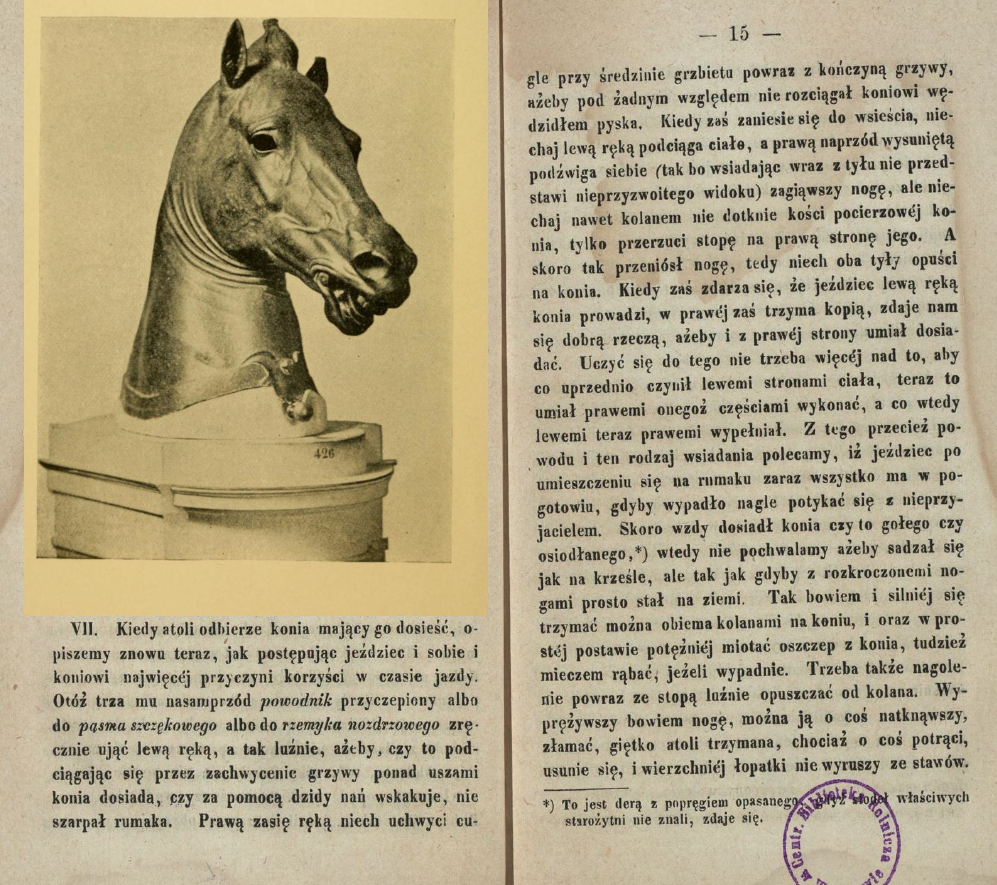
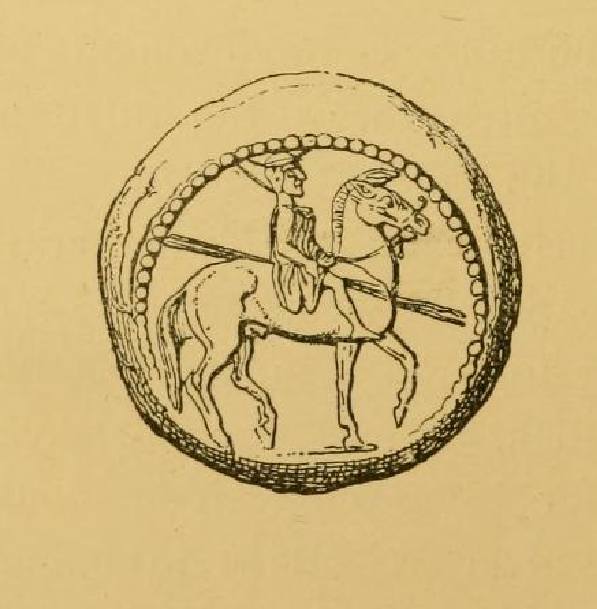
Hippika Ksenofonta w tlumaczeniu Antoniego Bronikowskiego II

 Salvete Omnes,

[in Polish]


Peri Hippikes mistrza Ksenofonta - czyli ciąg dalszy tłumaczenia pana Antoniego Bronikowskiego  z 1860tego roku-


Valete

Wednesday, November 23, 2011

Late XVII century horses and horsemen from Poland

Salve,
I found these prints on the net - they appear to have been made after a painting by old king Jan III Sobieski's painter Altamonte around 1697-8 or so (the original hangs at the Sobieski Palace at Wilanow, Warsaw-Poland). The painting depicted election of the Saxon prince Augustus II der Starke by the nobles of Poland-Lithuanian Commonwealth in 1697 (there were many issues with that election and history proved that this king was not appropriate monarch nor commander-in-chief nor statesman for the Commonwealth).

... a nice image of a winged hussar, with a wing not dissimilar to this winged hussar retainer's wing

... a noble rumak (fine riding stallion or gelding) with its tack, this horse appear to be a dapple grey one and some nobles with bows and quivers and warhammers


... horseman and more men with bows, behind them perhaps a hajduk ( musket and war-ax carrying infantryman of Hungarian style)


...  noble horsemen


... two nobles - perhaps a winged hussar companion and a cavalry chorągiew (company) with musicians in a background

They were going to fight in the incoming Great Northern War (1700-21), the war that destroyed Polish-Lithuanian Commonwealth economy, population and military power.

Sunday, May 16, 2010

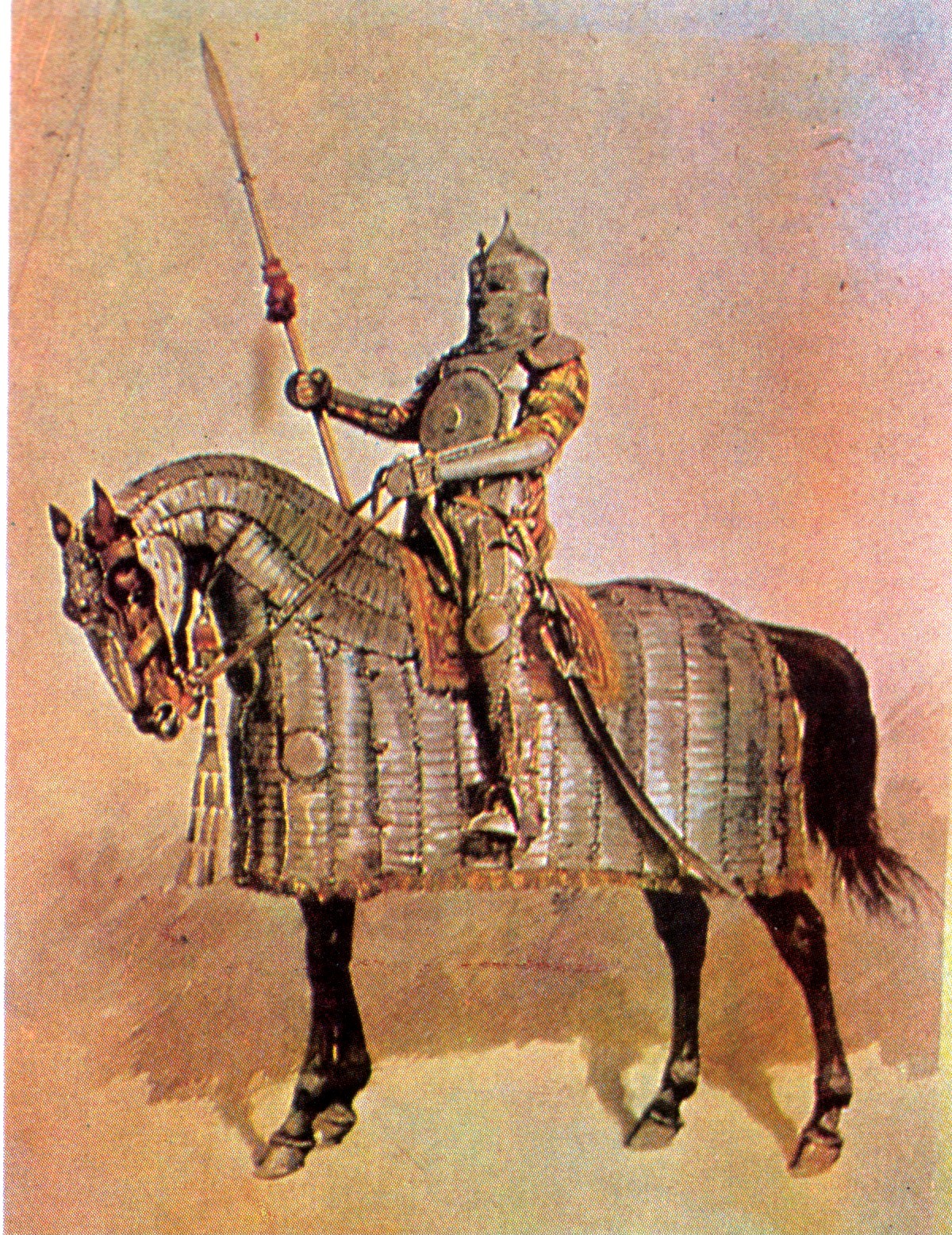
Turkish horses of Cilicia Pedias (Cukurova Plain)

hello,
In the Polish and Muscovy XVI-XVII century sources the so called Turkish horses  were listed as the most splendid and notable steeds fit for the kings, magnates and noble ''rycerstwo'' (knights, chivalry, noblemen).

Being curious about the Ottoman Turkish horse origin, some time ago when I was at the McGill University Library special book collection, where one cannot use any writing tools but for their own short pencils,  I found a very interesting book.

Let's talk about the book first. At the library  I perused - in two days 1-2 hours each - this absolutely splendid and awfully overpriced book in two volumes (one text  and one fine photographs of some horse-related Islamic  artifacts) titled 'Furusiyya' - http://openlibrary.org/books/OL17608339M/Furusiyya
There I found many articles written by noted scholars on the subject of the horsemanship and horse ridding related to the present Islamic land, no matter how deeply into the pre-Islamic history, e.g. Seleucid heavy cavalry.

One of the articles written by J.M. Rogers titled 'Ottoman Furusiyya' (pages 176-183 in the vol.1) deals with XV-XVIII (15-18th) century Ottoman Turkish horses and horsemanship.
Thus I copied some information on the Turkish horses from his article:
   Rogers states that the proper Turkish horses were bred in Cukurova Plain (southern fringes of the Taurus Mountains in the South-eastern Turkey or better put on the wikipedia   http://en.wikipedia.org/wiki/%C3%87ukurova ) first, and later on the rest of Anatolia became the breeding ground, while Epirus and Thesally, historic ancient Greece horse breeding grounds, continued to serve as such for the Ottomans overlords.  I can add my own thought here that this area was part of the medieval Armenian Kingdom of Cilicia, divided into ''Cilician Trachea'' and ''Cilicia Pedias.'' Cilicia Pedias became the Ottoman tributary during  XV century  perhaps as a result of wars between the Ottomans and the Mamluk Egypt, and thus Cilicia would continue in a semi-autonomous existence until her annexation by the Turks circa 1515, thus it would  seem reasonable to think that Cilician Armenians were the actual breeders of the so called 'Turkish horse.'  In my opinion (absent from the said article by Rogers) this horse breeding area and its people also  seem  to fit  nicely with  the ancient horse-breading traditions of the Armenians under the Achaemenid Persian kings and before [Urartu], and their horses are shown on the Apadana Staircase in Persepolis, Iran (via Livius  livius.org apadana armenian delegates   ). It also seems to me that great ancient traditions of the Iranian and Turkish peoples with Greek (Byzantine ) input produced this treat stead of the XV-XVII centuries.

Continuing with Rogers' article - other breeds: Arabian, Tatar and Hungarian were less numerous, but by 1650AD excessive demand for Turkish horses virtually exhausted the Anatolian breeding grounds and this led to actual replacement of the Turkish horse by the horses from the north of the Danube Basin (for the Ottoman military).
Rogers cites Busbecq ('Turkish Letters of Ogier P. de Busbecq,' 1554-62 AD)) and Marsigli ('Strato militare dell'Imporio Ottomano' Hague Amsterdam 1732 AD) as his best sources. Marsigli in his famous book stated that Turkomanian horses were very valued in the Ottoman Empire, and that the best war horses came from Hungarian, Transylvania, Polish and Moldavian stocks. Horses from Dobruja (   wikipedia.org Dobruja   )  were esteemed as parade horses (due to their size, for they were tall). According to conclusions drawn by Rogers from his sources the Arabian horses were not used for war, as they could not withstand cold and damp conditions of Turkish northern campaigns, and also were difficult on the battlefield  because were extremely afraid of the gunfire.
 I could add that we known from the records that during the Vienna Campaign of 1683 AD victorious Polish commanders and noble cavalry 'towarzysze' (companions) captured some very fine Arabian horses [including mares] from the taken Turkish camp after the famous battle. Perhaps those were parade  favourites of the horse-loving Turkish commanders and warriors etc (similar to the way many men nowadays own luxury cars without really driving them daily).

Rogers also writes that Turkish horses were shod  with shoes that were continuous and solid (so no stumbling and damage to the frog etc). According to his sources Turkish horses were used up to 28-30 years of age, fed on hay and barley, while their straw bed was made from dried horse manure (similar to the Persian Turkoman traditions).

The rest of the article dealt mostly with the  different Ottoman warrior and soldier types eg voynuks , akinjis, sipahi etc,  the cavalry of the standing armies of the Ottoman state - Kapikulu  Corps (eg sipahi in reconstruction ) - and its  cavalry branch, subject that I will indulge more in the future. Also I will introduce the writings of a Polish and Ukrainian writer and ' un caballeros supremo' Michal Czaykowski (Sadyk Pasha aka  Mehmet Sadık Paşa   books.google.com Czaykowski biografia )  who while being a Turkish cavalry commander in the mid-XIX century wrote about the pitiful state of the regular Turkish cavalry of the late Ottoman period, but was extolling Balkan horses and Circassian and Turkoman horses...
pa ka

ps
aha, I am working on this sketch of a saddled XVII century horse, it is not finished yet  ... GIMP and MyPaint :)

Sunday, March 28, 2010

Spring is coming - :)

Czolem,
slowly and with a lot of wind Spring is coming and I revisited my old drawing, adding a few dots and lines here and there using Gimp Paint Studio and MyPaint - it was a pleasant exercise...
 I titled it after a Polish saying - Panskie oko konia tuczy - or lord's (owner's) eye fattens a horse - :)

Friday, January 15, 2010

Kon Polski Polish Horse


         With this post I am returning to the horses, saddles and Polish-Lithuanian ( we could add Ukrainian as Ukraine was Polish then too, while Lithuania) horse tack of the XVI-XVIII (16-18th) centuries. The most preeminent Polish hippologist  prof. Witold Pruski wrote in his seminal work - "Two Centuries of Polish Breeding of the  Arabian Horses  (1778-1978)" -  that the best horse flesh in Old Poland came from what today constitutes the former Soviet Republic of  Ukraine.
 Contrary to many legends and good wishing these horse were not Arabians, but of Central Asian  and Anatolian & Armenian (Turkish) origin - I will write about that some other time.
Prof Pruski stated in the chapter I of his book that  the Turkish horse was an exclusive, particular breed of war horses bred  by the Ottoman Turks (especially in the ancient Armenian kingdom of Cilicia incorporated into the Ottoman Empire in the beginning of the XVI (16th) century)   http://en.wikipedia.org/wiki/Armenian_Kingdom_of_Cilicia  ).
Our Polish horses were often with ram's head and Roman-nosed, adhering to the old Ancient Roman standards for horse head - small in size, noble, thin skinned, alert and pointy ears, wide nostrils, intelligent and prominent eyes {one day I am going to write about that :) ] .

Nobody painted better Old Polish horses than Jozef Brant and Juliusz Kossak, two Polish painters of the XIX (19th) century.
Jozef Brant
http://www.pinakoteka.zascianek.pl/Brandt/Index.htm
Juliusz Kossak
http://www.pinakoteka.zascianek.pl/Kossak_Jul/Index.htm

In my humble drawing (by the way a different version of this drawing was published here in October 2008) a 'pacholik' (young servant/retainer) holds a rumak (from Turkish word argamak that in turn comes from a Persian word - he, horse traditions always lead to the ancient Iranians of Eurasian steppe and Central Asia)  dressed as winged hussar horse.

Rumak (Polish nobles rode stallions to war)  is saddled with a 'siodło usarskie' (hussar war saddle) of mixed Central Asian, Ottoman Turkish, Crimean Tatar and Italian provenance with a Tatar-Polish stirrup,  a smaller Turkish or Tatar 'czaprak' (shabraque) underneath the saddle, while the horse  is a bitted with a curb-bit. There are weapons too, a set of wheellock pistols, most likely German in manufacture, and a long armour piercing 'koncerz' ( tuck) attached to the saddle.  Feathers on his poll, feathered wing at the saddle, and a buńczuk - horse tail (Turkish-Tatar tug/kutas) - at his throat completes the picture..

Tuesday, October 28, 2008

Old Poland Horses


Czolem,
this time I am posting my own two, rather old, illustrations intending to continue my discussion about the so called Old Poland/Polish Horse:
one (color one) could be a 'bachmat' - from Tatar/Turkish language  (but the root of this word is old Iranian, another proof that Turkish people were taught all about horses by the Sarmatians and Saka - themselves Iranians) word for a smaller, but muscular yet fast and faithful warhorse; and the black and white drawing is an attempt to portray a rumak  with typical tack of mid XVII century that was a preferred mount  of our winged hussars and richer nobles - originally from old Persian 'argamak' which is a word for a splendid, noble warhorse. Both types were present in Old Poland, while the names are still in use in the modern Polish language.
There was one more 'horse word' used to describe war and parade horses: dzianet. This name was used for especially beautiful parade horses, and later on, during the XIX century came to denote  a noble and very beautiful horse, often used in poetry or novels, eg. Nobel laureate Henryk Sienkiewicz's "Trilogy." The word itself comes from Spanish - yennet or jennet or gennete, whether it meant a ridding horse or horse ridden in a special manner, with short stirrups (a la jineta) still remains an answered question. From Spanish this word passed into Polish language via Italian language with the arrival of our good queen Bona Sforza, wife to His Royal Majesty and Grand Prince Sigismund I (1467-1548). In 1518 Queen Bona brought to our lands many Italian horses, of Neapolitan extraction, trained in then fashionable Italian horsemanship and they were most likely ridden a la jineta, and thus we have dzianet name for this highly trained and beautiful parade horses. Dzianet is not used in everyday Polish language to describe horses  anymore.

to be continued