Showing posts with label epic poetry. Show all posts

Monday, April 20, 2026

La Gerusalemme liberata - Tassos epic poem in XVII c art

 Salvete Omnes,


Jerusalem Delivered or in original Italian- La Gerusalemme liberata (1581AD) - an epic poem on the liberation of Jerusalem by the First Crusade (1099AD) by Italian poet Torquato Tasso. The famous poem has been published many, many times and  illustrated by many artists over the centuries since its publication. 

I corralled some illustrations of the poem created in the XVII century - by David Tenniers the Younger, Nicolas Poussin, Paolo Domenico Finoglia.  

. Paintings by Finoglia and David Tenniers the Younger 


...


paintings by Nicolas Poussin 


.


the most acclaimed English translation was accomplished by Edward Fairfax and published in 1600AD. - the 1901 edited version from Archive


Polish poet and translator Piotr Kochanowski, Korwin coat of arms, wrote his version of the poem and this translation was published in 1618, but was not limited to a single edition as it was printed several times during the XVII century. 

1651 edition 

Valete

Saturday, January 13, 2024

Fortes Poloni, equites boni -

 Valete.

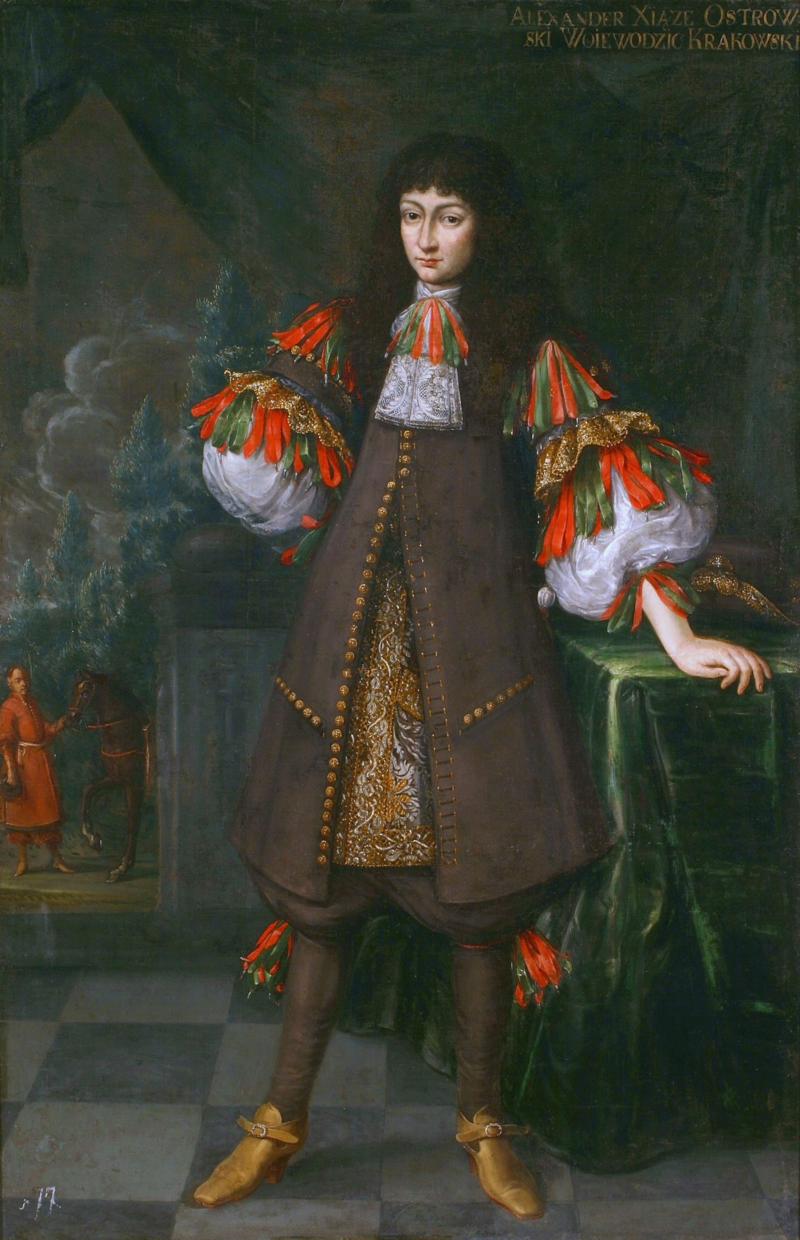
detal z obrazu Andrzeja Stecha, czeladnik w zupanie i szarawarach z koniem


a Polish XVII century satirical poem - by pan Waclaw Potocki, Szreniawa coat of arms - who in his verses lamented and scorned the 'new' fashion of sending young noblemen to learn fashionable airs and manage  riding in France. 

[in Polish]


fraszka Fortes Poloni, Equites Boni (Ogrod Fraszek, Tom I,  Ogrod nieplewiony czesc II) - 
piora Waclawa Potockiego - lament poety nieledwie. 

 Fortes Poloni, equites boni. 


Wedle złej, teraz niej, szlachcic jeden mody, 

Wyprawił syna w obce dla nauk narody. 

Więc, kiedy rok i drugi tym naukom mija, 

Pytam: jaka ćwiczenia jego profesya. 

Jeździć i osiąść konia krokiem prawie chyżym 

Nawyka i dlatego bawi się Paryżem. 

A gdzież, rzekę, Polaków, naród zdawna konny, 

Wsiadać na koń i jeździć uczył kraj postronny? 

Co im świat przypisuje, do Francyi po to 

 Z kosztem jeździć? 0 wieczna ojczyzny sromoto; 

Do Rzymu, albo raczej gdzie na wschodnie światy,

 Piękniej, bo, niźli frezy, ujeżdżać bachmaty. 

Polakowże, co prawie na koniu się rodzą, 

Koniem, piszą, granice ojczyste rozwodzą, 

Niemcy, albo Francuzi konia uczyć mogą,

Jako ręką przy cuglu i w strzemieniu nogą,

 Jako się sprawić w siedle i którym to wiedzieć 

Właśnie należy, jako na koniu ma siedzieć? 

Obaczę go też w wojsku. Nie będzie tam, prawi. 

 A na kataż się koniem we Francyi bawi?

 Żeby więc przed swą damą, na chodziwym turku,

 Korbętował w peruce po warszawskim burku? 

Czy niedosyćże hańby, gdy ich zewsząd płoszą 

Poganie, że jej więcej Polacy przynoszą,

Których męstwa widział świat oczywiste znaki;

 Mistrzami Marsa bywszy, postrzygli się w żaki,

Kiedy, jako po szkołach, jakby wojny w domu

 Nie mieli, po Paryżach wtoczą się bez sromu.

..

detal z obrazu Stecha


.

Książę Aleksander Janusz Zasławski-Ostrogski (ur. 6 marca 1650, zm. 31 maja 1673) - autor Andrzej Stech


Książę
 Dominik Zasławski-Ostrogski herbu własnego (ur. 1618, zm. 5 maja 1656), zwany Pierzyna.


Valete

Saturday, November 18, 2023

Page, esquire & knight - a little poetry from a chivalry book

 Salvete Omnes,


The Archive World Library has millions of book and materials -
I was browsing the topic of chivalry, and one of the books I encountered was this one - Page, Esquire and Knight - a book of chivalry.


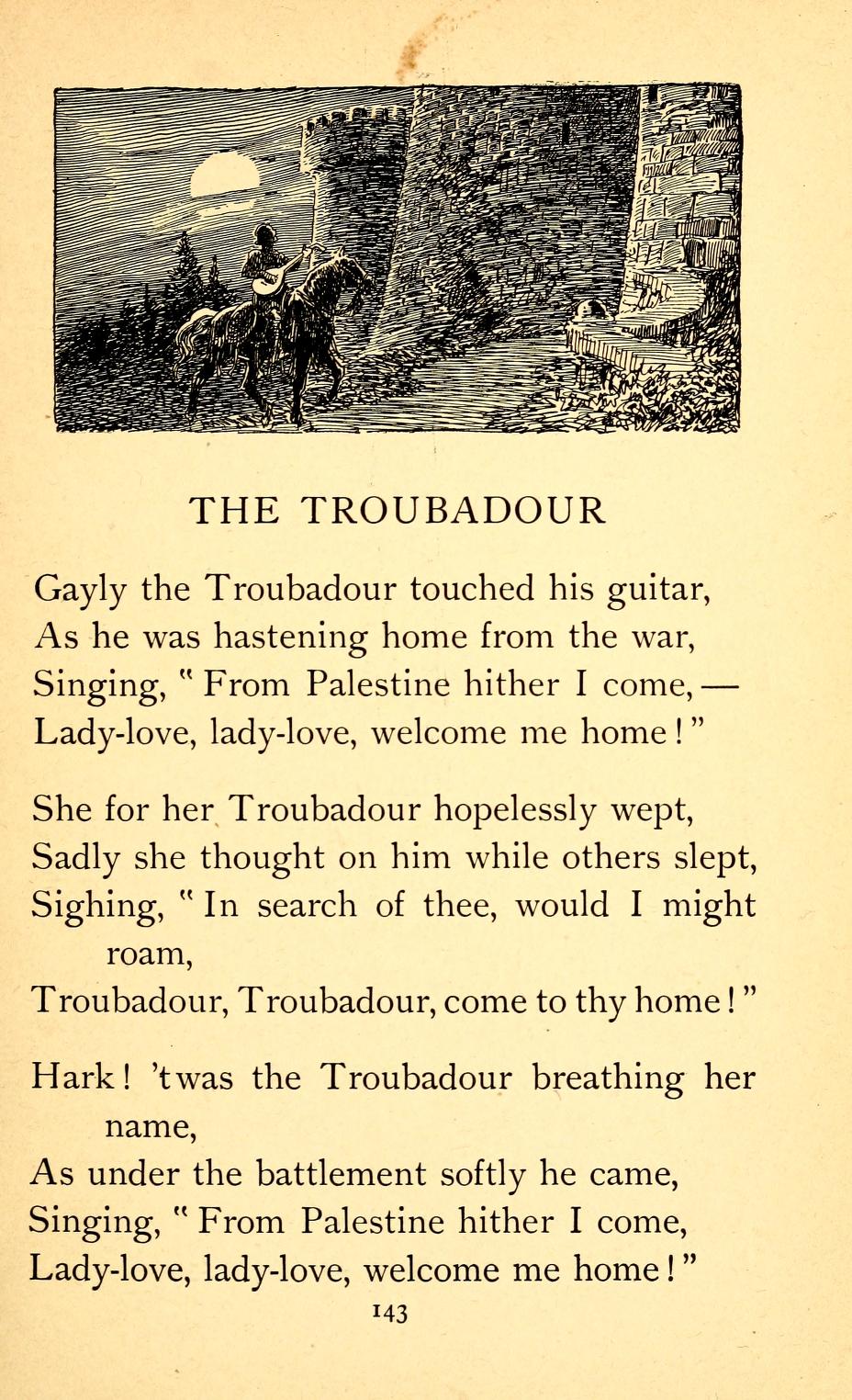
inside the book, authored by Marion Florence Lansing and published by Ginn & Company  in 1910, there is the whole world of chivalric tales and stories, including this poem -


and original poem from XIV century French poet - Eustache Deschamps


and the troubadour

..


all illustrations are by Charles Copeland
valete

Sunday, August 13, 2023

Mazeppa's Ride - Byron

 Salvete Omnes,


While in college I took an advance class in English late XVIII and XIX century literature - from William Blake to Kipling et al. 

Among many poems, novels, and other works of literature we studied there were poems of  George  Gordon, Lord Byron.

Byron wrote a long poem somewhat based on the life of  Ivan (John) Mazepa-Kolodynski, a nobleman of Kurcz coat of arms, and a real political leader, a hetman, of the Zaporozhian Cossacks of the so called 'Left-Bank Ukraine(semi-independent Russian territory on the left bank of the Dnieper River taken from Polish-Lithuanian Commonwealth during the long war of 1653-1667). At first strong ally of the Russian tsar and Polish-Saxon king Augustus hetman Mazepa and his Cossacks switched sides, from Russian-Saxon to  Charles XII, King of Sweden,  during the Great Northern War. But upon the defeat of the Swedish-allied forces at Poltava (allied - Swedish-Polish-Cossack army was defeated  by tsar Piotr  I(Peter) of Russia) he withdrew his remaining Cossack forces into the Ottoman territory, where being a refugee from his land Cossack hetman Mazepa died at Bendery in the fall of 1709.
Byron took the story of the ride from some French publications, perhaps from Voltaire's History of Charles XII, King of Sweden, while Voltaire must have taken it from perhaps some French courtier who had been a courtier or soldier of our king John III Sobieski, and via Polish court had been acquainted with the Mazepa's tragic amorous story. The original story seem to have been  first described by Polish memoirist Jan Ch. Pasek in his memoir. 
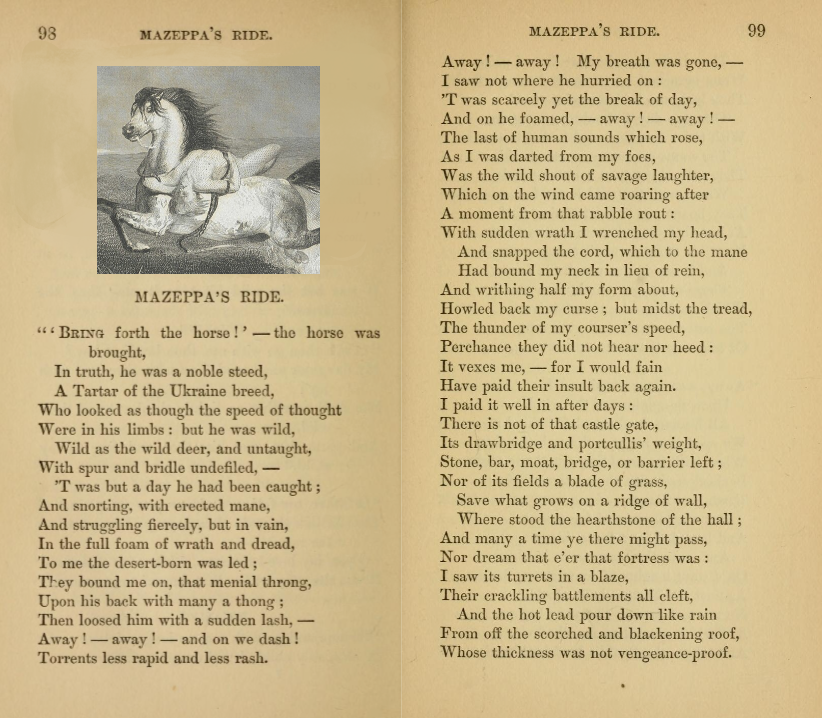
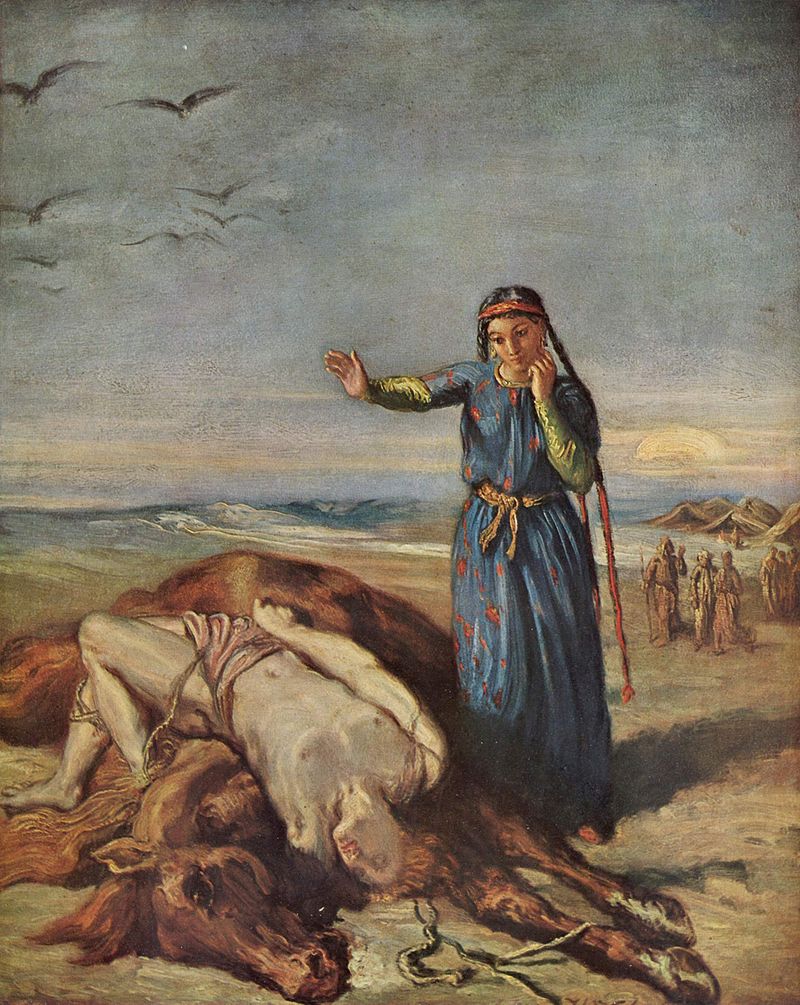
The important aspect of the epic poem is the famous Mazeppa's ride -  on the back of the 'Tatar noble steed.' - as we call it a bachmat.


  the Mazepp'a Ride via Byron's own verse and artwork that came after the publication of the poem


one day soon we may read about the historic Mazepa's  ride as our XVII century Polish memoirist Jan Ch. Pasek described it.

Valete

Thursday, January 30, 2020

Shota Rustavelli - Knight in Panther's Skin in Georgian XVIIc miniatures

 Salvete Omnes,
it has been some time since  I read Shota Rustavelli's Vephkhistqaosani (English- The Knight in the Panther's Skin; in Polish the title is translated beautifully as 'Witeź w tygrysiej skórze' ) and looking at the Wiki Commons I find a nice gallery of different illustrations to the Georgian XII century epic.
Below poet Shota Rustavelli as imagined by the artist 
-
I have never been to Georgia in the Caucasus, perhaps one day, but I like their national epic, and the music of various Georgian Karvelian ethnic groups (nota bene there is the Kartvelian Laz - albeit Muslim - population in Turkey, but they mostly lost their language and culture during the last century).
The epic is still important for the Georgians, as some of the articles on academia seem to suggest and underline. 

 The XVII century artist Mamuka Tavaqarashvili painted illustrations for a copy of manuscript in AD 1646, when he was at the court of mtavri  Levan II Dadiani, ruler of Mingrelia ( Christian Georgian principality).
the illuminations show accurate weaponry, armor, and horse tack and many other aspects of the Georgian life during the XVII century.
You can read the epic work directly from the net - eg  here.
 
This 1912 translation was done by Marjory Scott Wardrop.
some of the plates showing horses and warriors


Valete,

ps
There is a very important academic researcher from the present Georgia Mamuka Tsutsurmia, whose research  on the Medieval warfare in context of Georgia etc can be read on academia. eg the articles on the so called Krakow Wawel Castle helmet (first & second).