Showing posts with label Old Polish costume. Show all posts

Saturday, November 2, 2024

2 "Amigos' from one source - on using the period iconography

 Salvete Omnes,

I would like to share with you two interesting examples on fair use of art and also on the need for caution when looking at the period art.

Stefano della Bella - Italian artist working until the 1660s - active in Rome (papal court), Florence and Paris (French court), creating his own art in the form of drawings, then engraving & etching and printing his creations. 

MET has this image - Polish horseman, part of the 'Figures on Horseback' (Cavaliers nègres, polonais et hongrois) collection.


Rotameister or rotmistrz Pieczowski in 1645AD


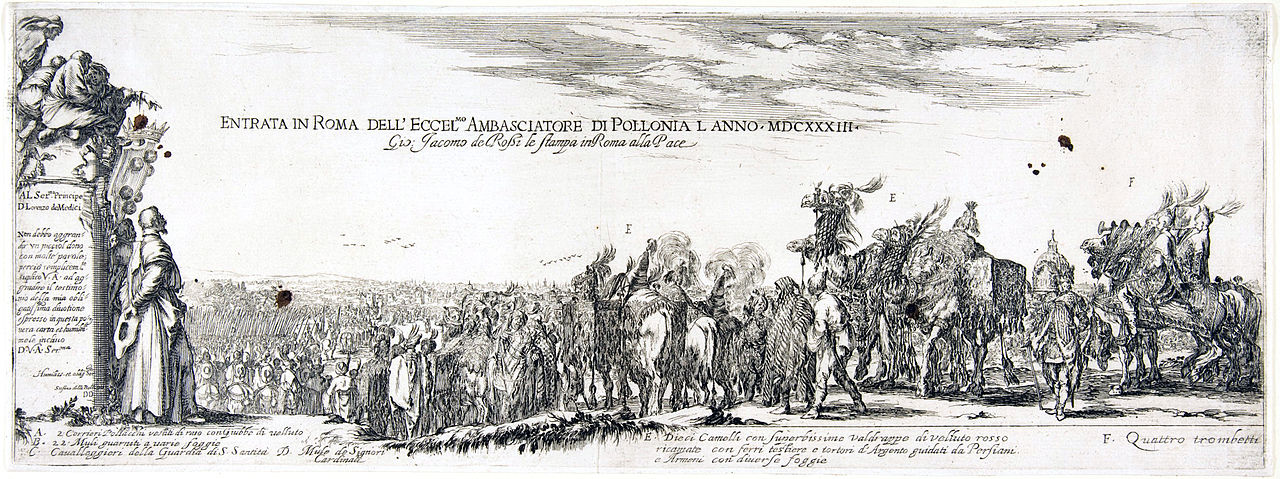
this etching - dated to 1648-53 - , aside his beauty and artistic aspects,  is very  rich in the material cultural details, as it is most likely than not that the actual drawings drawn by della Bella, eg  in situ when our royal Polish ambassador's cavalcade entered Rome in 1633 , served as the source material for maestro Stefano. 
The embassy of 1645 - the royal  Polish ambassador's entry into Paris in 1645 - drawings held in the British Museum, and my posts about them here & here.

Fast forward to the period of wars in Polish Commonwealth -1648-1670s - and this artist Johann Hoffman of Nuremberg combined the original image by della Bella with the head and hat from Hondius. (Hondius' etching was done in 1650AD says this portal)
instead of the mace our king carries a nadziak (horseman's pick)
Also, this Nuremberg artists did not know the reins were not chains with links, but sort of little 'apples'-bells that when in motion created noise and jingle. (there are actual examples of such jingly reins in the Russian museum of Kremlin).

Finally, another artist made use of the della Bella's original -  Johann A. Boner, who created a mirror image by coping the original, with his limited skill and knowledge, and created a busy background for the images, consistent with the tittle.
This time the rider became a Tatar Khan with the Ottoman Turkish army in the background .
enjoy

Valete


Saturday, August 17, 2024

Bericht und Ordnung der Gebiss a. 1578 - manuscript

 Salvete Omnes,


at the Austrian National Library they have this manuscript - by our prolific ecuyer Georg Engelhard Lohneysen.
Dated 1578AD it is beautifully written and illustrated - the men leading their mounts - done in gouache


.


.

Hungarian, Ottoman or Polish noble

.

mule or large donkey with a docked tail


the printed version of 1588  is condensed as per images  but equally pleasing in its beauty, but without the plates with horses and mule being led. I do not read old German so to me these plates are it has to be - on Fb there is a group talking and writing about these old German equestrian manuscripts.


enjoy
Valete

Tuesday, May 30, 2023

Zygmunt Vogel, Old Poland, Jewish and peasants' horse

 Salvete Omnes,

Warsaw's panorama as seen from the Praga Vistula bank


 Zygmunt Vogel (1764-1826AD) was a Polish artist of German descent, both parents emigrated to Polish Kingdom during the mid-XVIII century, who was active both in the XVIII and XIX centuries. 

Krakowskie Przedmiescie Street


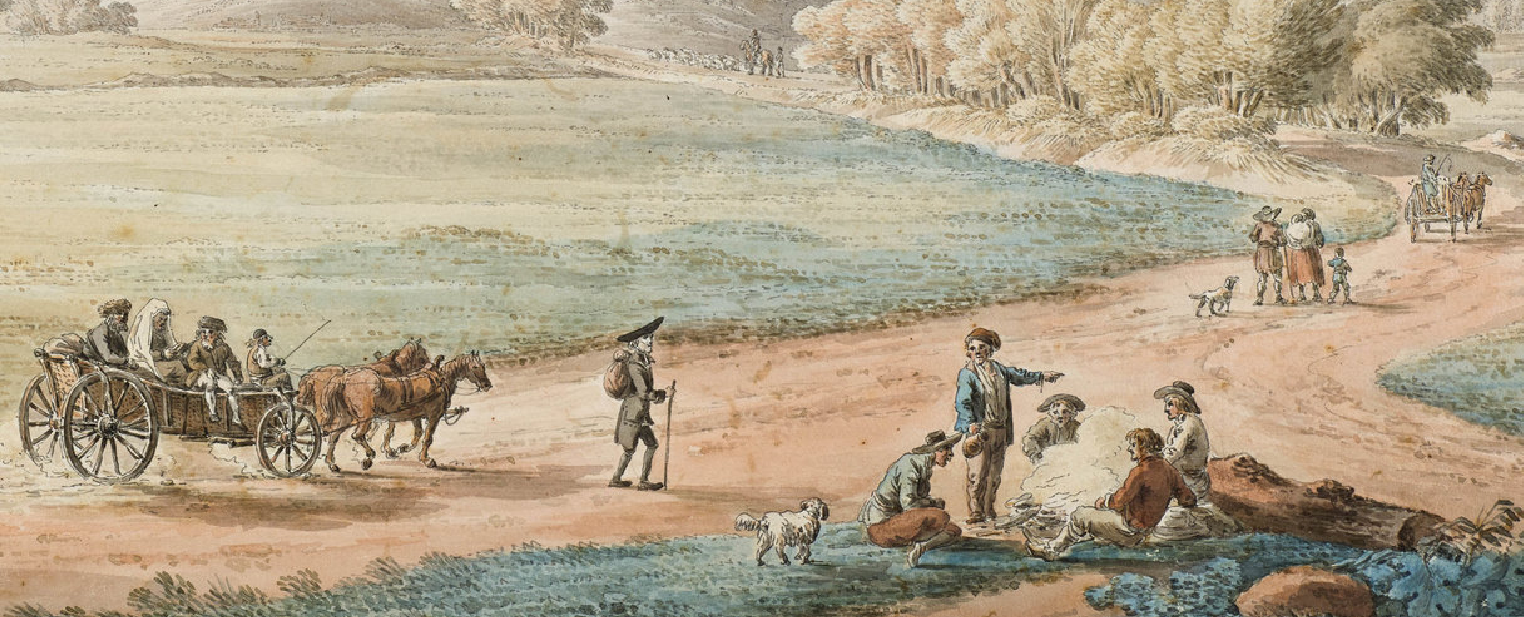
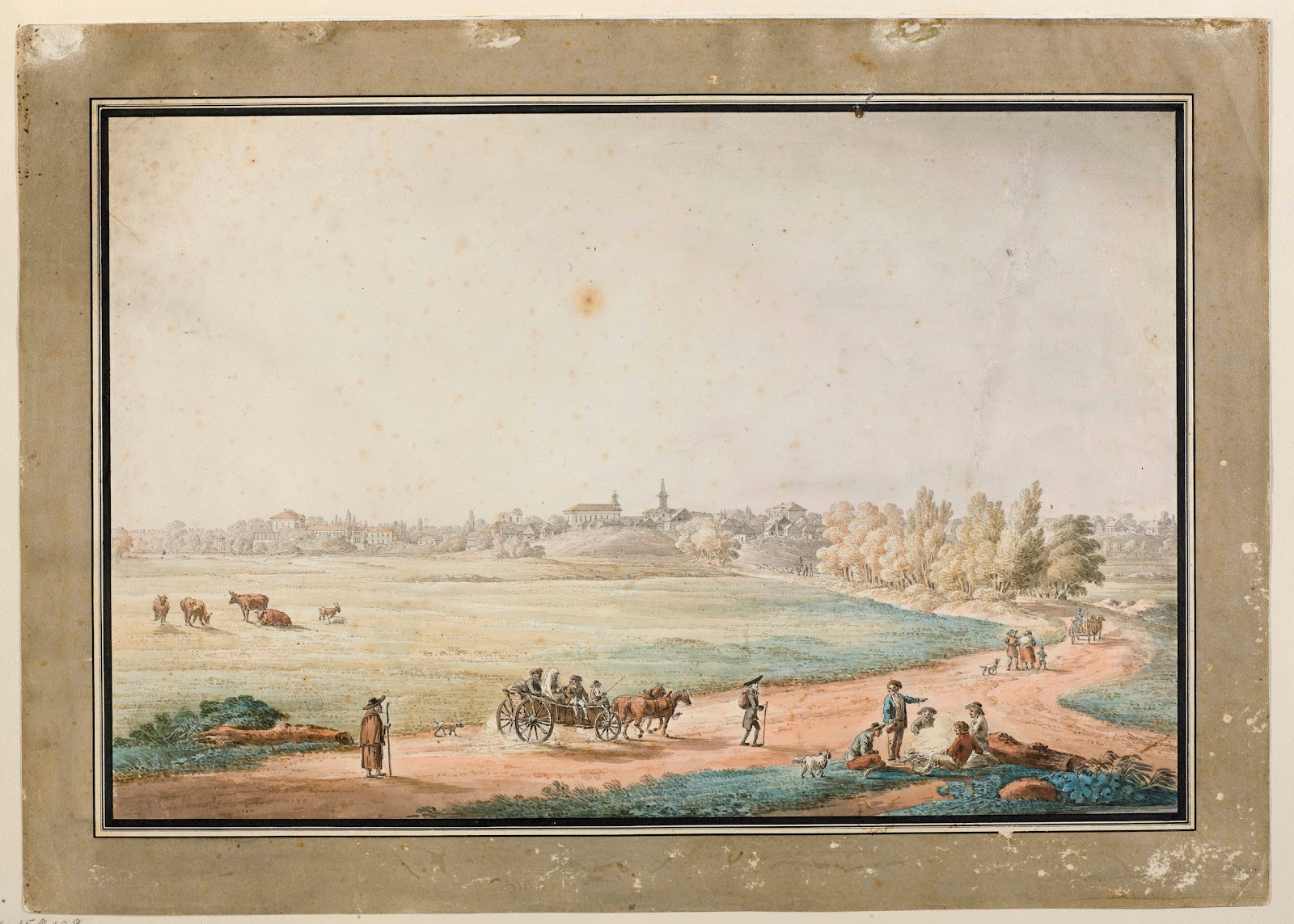
 In these watercolors we see the town of Kock - two different views ( from the collections at the National Arts Museum in Warsaw).

Do note the wagons and men and boys riding pareback.


In this view, there is a Jewish family abroad a wagon returning to the town, with some traveler  way ahead, another cart pulled by horses and perhaps farmers and beggars at the fire.

there are some red, Old Polish cows in this landscape


in this watercolor the town of Ostrog, during the Ruthenian, Duchy of Lithuanian and  Old Poland the town & castle was the seat of the Ostrogski clan. 


 Krasinski Palace in Warsaw - the south side - as it appeared in the 1790s


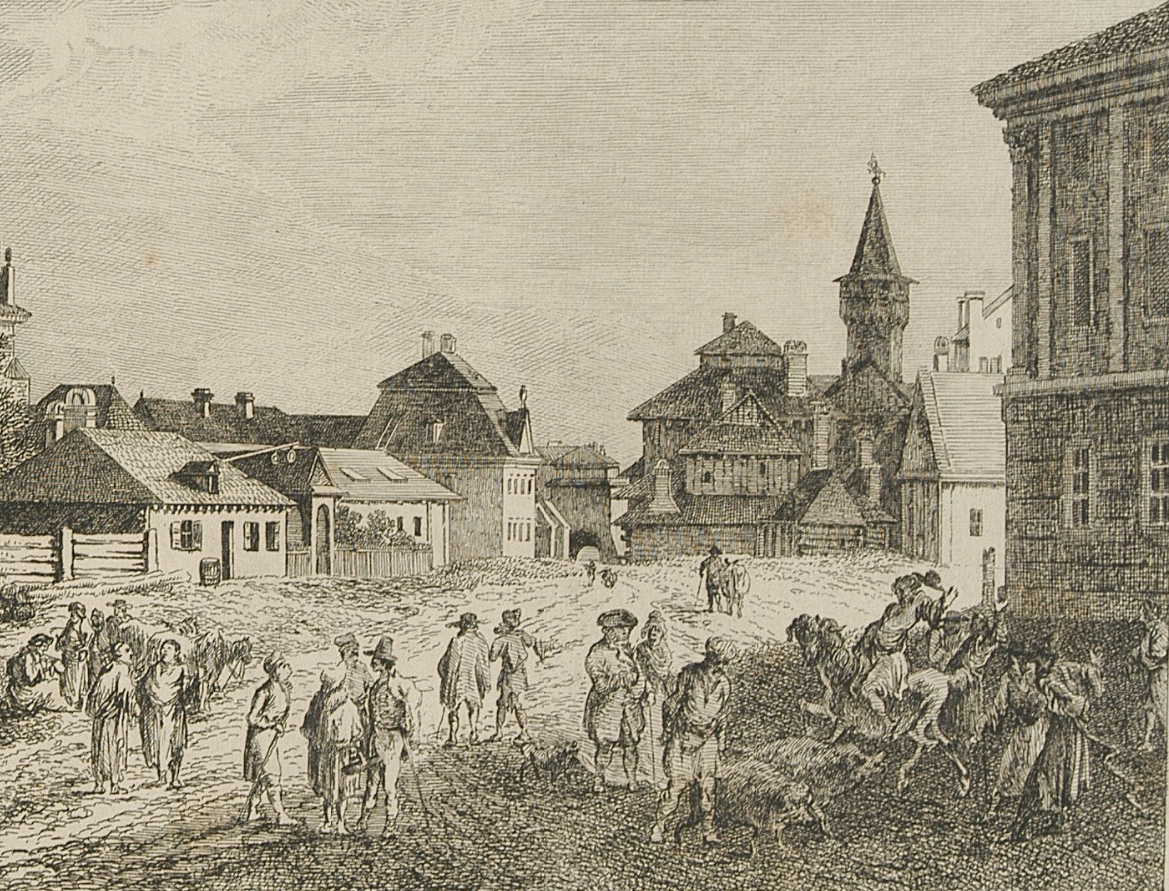
A detail of town dwellers and one horseman, from a print showing the old town of Tarnow - 

Note that the people in those watercolors and prints are dressed in the Old Polish costumes and national attire etc. Back then we had our own popular culture, one cannot say about the present days in Poland... but even then our poets satirized the wealthy and rich propensity to follow Paris and London fashions (like the riding attire from England was all the rage well int the XIX century early years).
and some Old Poland cattle in this view of the Ujazdow castle.


I will have more Vogle's artwork in the future, the pieces from the Duchyof Warsaw period. as they are very interesting per the army and ulan cavalry etc.

Valete

Tuesday, March 7, 2023

Jerzy Ossolinski 'entrada' into Rome - a Kornik painting circa 1640AD

 Salvete Omnes,


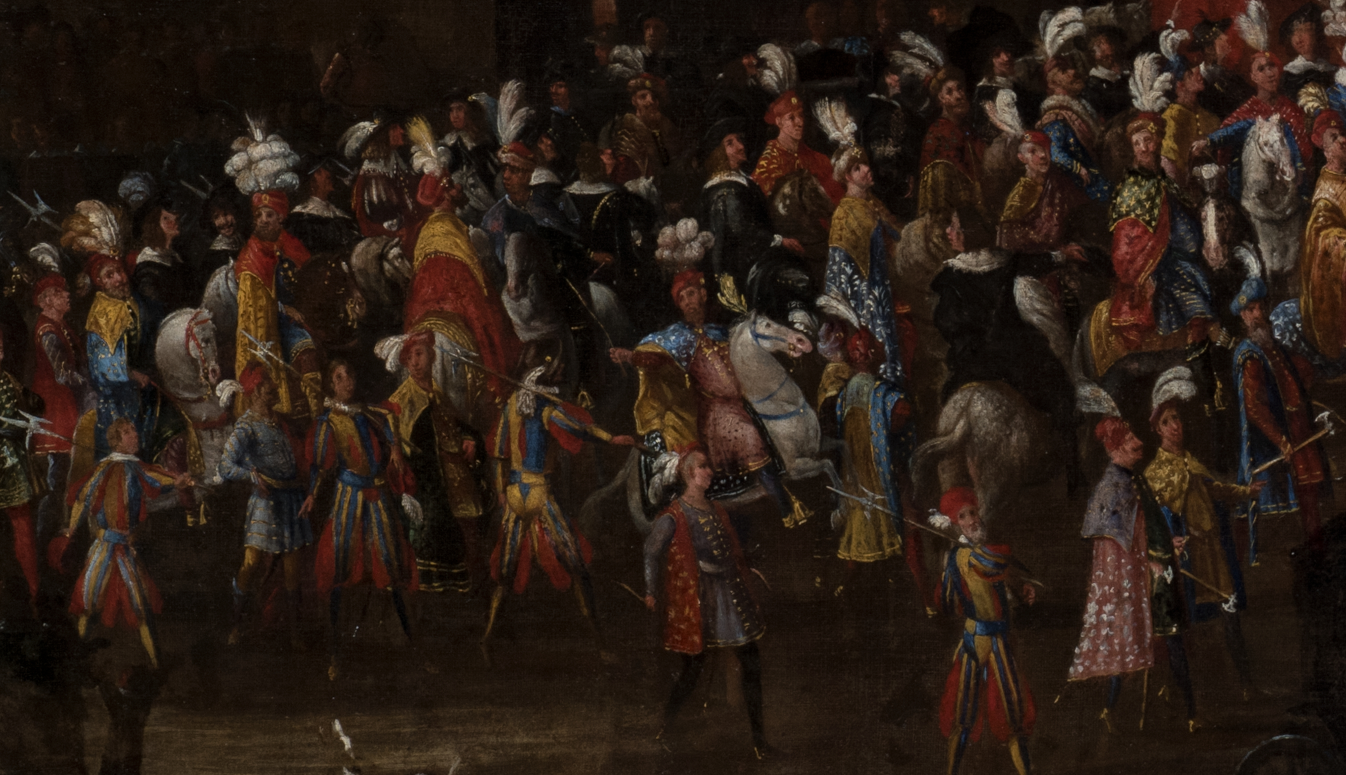
it is a bit ironic that the entry of Jerzy Ossolinski, the Polish King's Ambassador* to the papal court,  to Rome  had generated so much fine artwork in during the Old Poland history, mostly or presumably mostly by the Italian artists-Della Bella, Bellotto etc- of the era 91633-1795).


Today I would like to share with you this huge painting (  3,38m long)-  photo from the digital collection at the Kornik Library at the Kornik Castle.
It is nothing short than amazing on so many levels per Polish history-related works.


more about the detail and pertinent information about this historic event in the future, God willing

Valete

*newly elected king Wladyslaw IV, victorious against the Muscovy at Smolensk War (1632-33AD)