Showing posts with label XIII century saddle and tack. Show all posts

Saturday, January 3, 2026

Romanesque Magi on the way to Adoration

 Salvete Omnes,


several more days to the Feast of Epiphany, so more chances to explore the Magi in pre-modern art with equestrian themes.


French church- Saint-Barthelemy de Fleury la Montagne contains the XIII century tower with a Romanesque tympanum showing the Three Kings and Holy Family.


and some more Romanesque Magi from French churches 


.

.

and a beautiful iron work on the door from the Velelay Abbey


Valete

Sunday, May 28, 2023

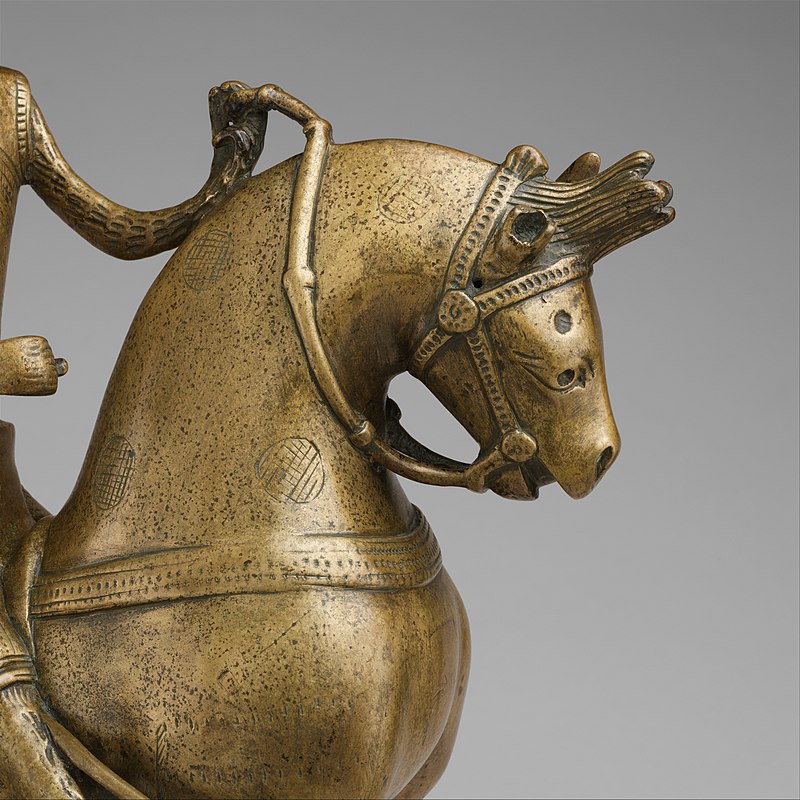
Maciejowski Bible & medieval aquamanile circa 1250 from the MET

 Salvete Omnes,


a little excursion to the field of beautiful art and horses in that field, this being the Medieval art naturally.  


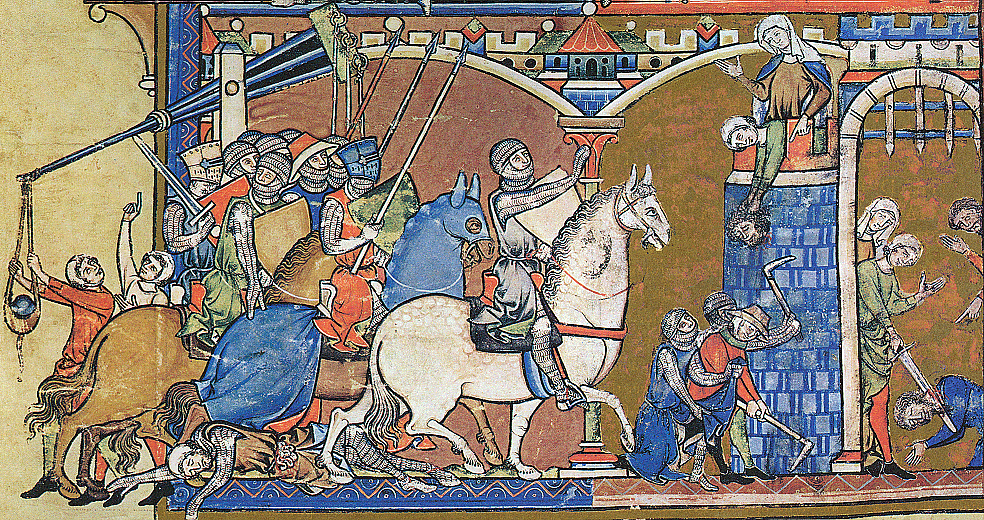
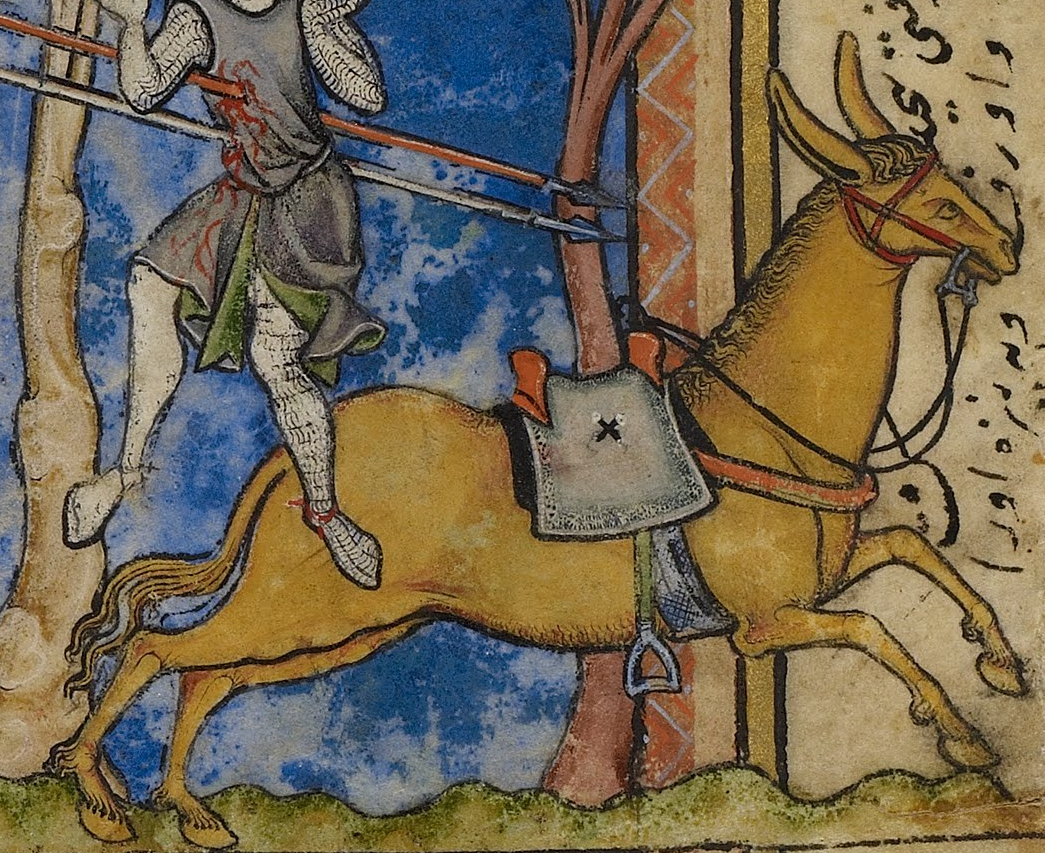
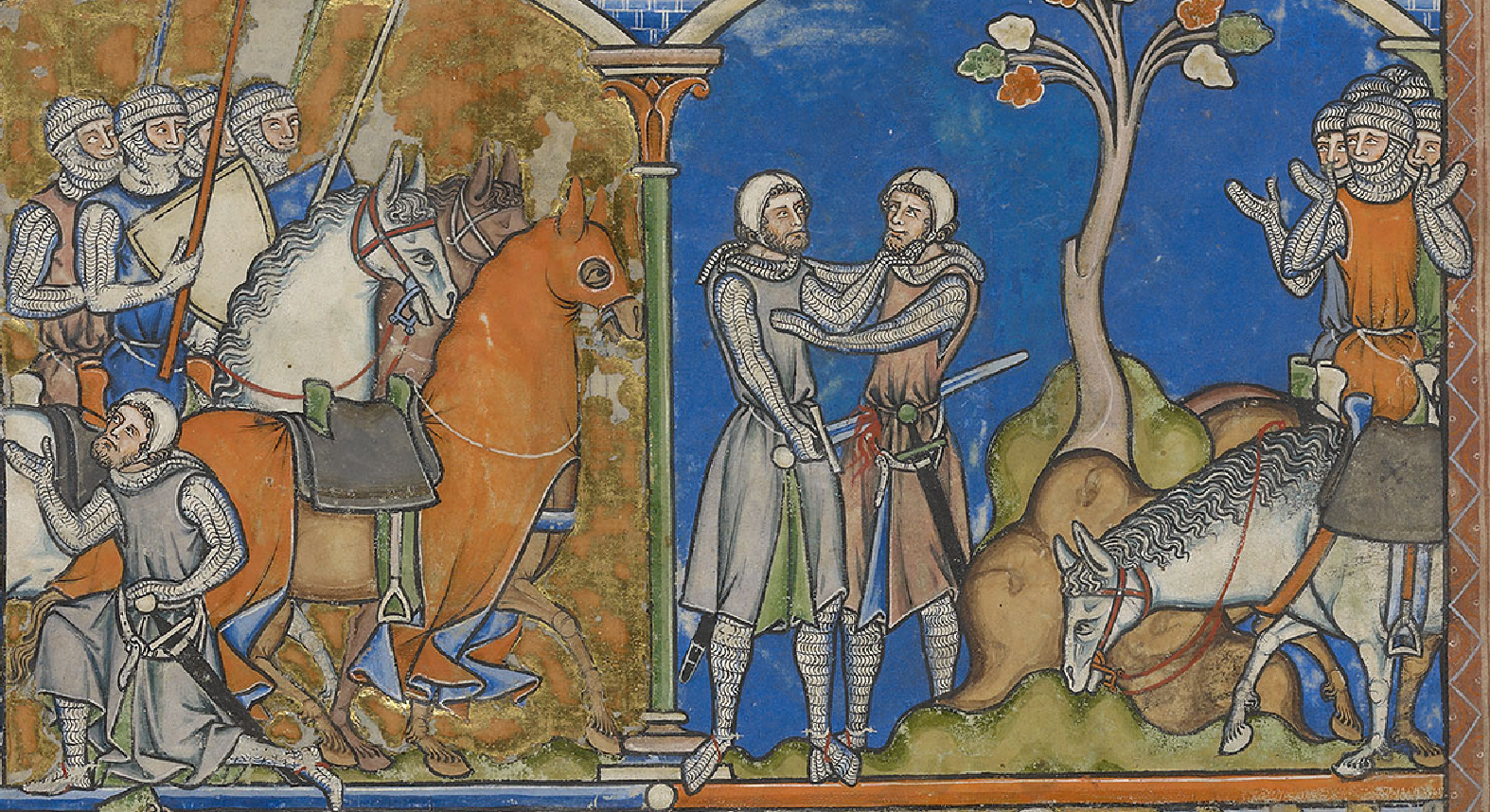
I love looking at the illuminations that complement the text of the Maciejowski Bible. Morgan Library's Maciejowski Bible ( created in the French realm for their saintly crusader king Louis IX, ended up in our Polish Kingdom and was a gift sent by our archbishop Bernard Maciejowski - Ciolek coat of arms - to shah Abbas I  of the Safavid Persia)  is just full of amazingly detailed imagery of that XIII century war horse horse & tack, weaponry and costumes notwithstanding.
so some examples for your viewing pleasures - violent as it may be.


there are saddles shown in several illuminations, including a driving saddle and tack:


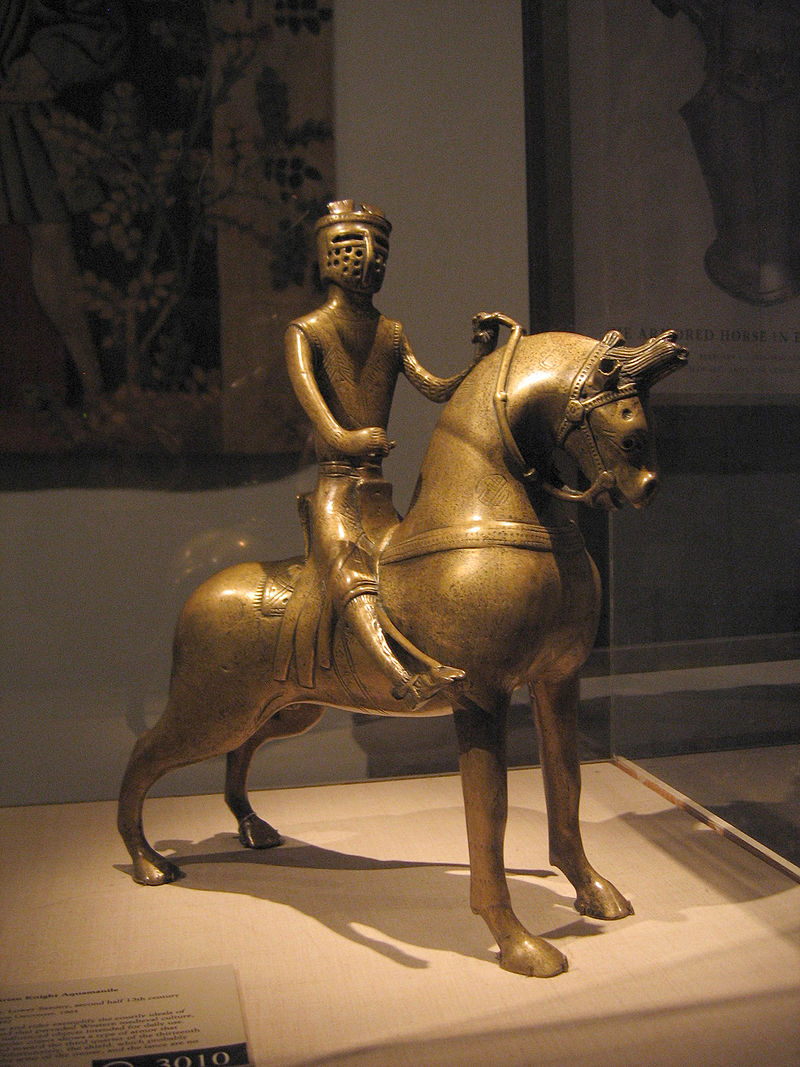
Now, the aquamanile is another beautiful manifestation of the Medieval art and life. Below one of the most splendid examples of this water vessel made within the Holy Roman  Empire during the XIII century.


The MET has this article devoted to the subject of metal aquamanile in general, and their own collections of those artifacts.
While this Medieval scholar presents this article on the hand washing vessel that was the most sumptuous tool to the proper table manners, be it at the castle and rich burghers' houses.


Now, I ran across this article - on  a medieval helmet  from Lucera, Italy. There is some great iconography at the end of this article, showing knights and often their horses.


and last but not least, the unusual aquamanile from the XIII century Azerbaijan to be found among the Hermitage collections, the vessel going back to the traditional Iranian-Persian ancient traditions - its history and provenience.
valete

Friday, March 4, 2022

Apocalypse 1

 Salvete Omnes,

we had pandemic*, now we have conquest* war* and death*,  and who knows what else our lords have for us up the sleeve - so let's look at some Apocalypse imagery - the Four Horsemen of Apocalypse.

Four Horsemen

Conquest on a White Horse -1st Horseman


War on a Red/Roan Horse -2nd Horseman


Famine on Black Horse -3r Horseman


Death on a Pale Horse - 4th Horseman


Apocalypse, Thuringia ca. 1350-1370 AD,  BL, Add 15243, fol. 12r

That German Apocalypse is a bit different - second linked description from British Library talks about it.
Peace in Ukraine!

Valete

Sunday, May 20, 2018

Medieval horseman - detail from the Hereford Cathedral Mappa Mundi

Salvete Omnes,
Mappa Mundi - a medieval map (XII-XIII century map, at least per horse tack) from Hereford cathedral in England.
Rider portrayed with an archer in tow and a hunting dog on leash.
Horse is a palfrey, spotted and highly trained while his trappings and harness is of high quality and richness, including  wide breaststrap (eg Chronica Majora by Matthew of Paris) and very unusual crouper (with small bells? ) similar to the ones portrayed in the Liber ad Honorem Augusti.

another equid from the map

 and the mythical faun


Valete!
ps
details from the Wiki Commons copy originally published in the XIX century 

Arne Koets on Knightly Lancer saddles


Salvete Omnes,

Just a short entry - thanks Marcin Ruda of Ruda Saddlery of Poland-

well known ecuyer Arne Koets did a short video presentation of two medieval  lancer saddles, one from the XIII-XIV centuries (or even as early as XII century)  and the second more developed lancer saddle from the XV century,  saddles were made by Andre Görlach (XII-XIVc) and Joram van Essen (XVc) of Germany.

Arne takes time to explain the saddle construction and its impact on riding and lance fighting - so enjoy and learn.


Enjoy

Saturday, January 6, 2018

Happy Epiphany or the Magi have arrived

Salvete Omnes,
and so we have arrived at the end of the Journey of the Magi, and today we have the Feast of Epiphany.
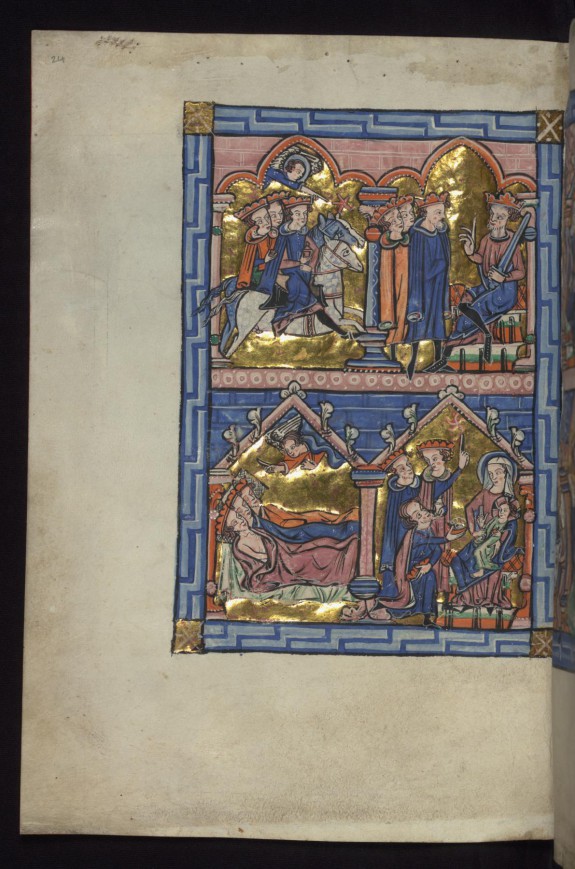
For this occasion I selected this illumination from an East Anglian codex titled Carrow Psalter presently held at the Walters Art Museum in Baltimore, USA.
It was created during the mid-century and is very important in many ways, including the depiction showing the murder and martyrdom of Saint Thomas Becket by 4 knights (with their retainers) of king Henry II of England inside the Canterbury Cathedral.
The Magi are shown riding at the flying gallop (?), or with the front and hind horses' legs extended as in a jump, a traditional way to show fastest gait of the horse before the XIX century. They are following the Bethlehem Star with their gifts shown a bit in right hand, while guiding their mounts with the left, or at lest the two Magi are doing this.
The mounts are presumably stallions as their sex is shown, and again are grey, just the middle one is shown to be a steel grey for the sake of contrast I presume.
The monk painting this illumination created flying tails which is perhaps another indication of the fast speed.
 Horses have multicolored tack, their bridles have no curb-bit but what appear to be a snaffle and a single set of reins. Perhaps they are riding in full collection, as their heads are elevated etc. The bridle has no throatlatch but a browband.
The saddle of the front Magi has black color covering the saddle skirts and shabraque or just longish skirts, extending and tapering to the back, and light brown high arches, typical of the period saddles.
Whether the saddle skirts were in fact this long or painted & dyed black, or dyed some other color we will not know, but the single cinch is also typical, note its width and the criss-cross pattern on it most likely indicating that it was made out of  woven fabric.

Matthew of Paris pinxit - war saddle of the period, note the breastcollar arrangement in relationship to the saddle, also the cinch buckle


Matthew of Paris, saddle with larger skirts, underneath rectangular shabraque
Matthew of Paris,  a saddle with short saddle skirts, but large textile shabraque edged with loose fringe

the second half of XIIIc, saddle with either saddle skirts or a saddle shabraque
There is also a typical for the period breast collar strap, simple and without any additional adornments
Magi riding and then visiting Herod the Great
 The foremost Magi is riding with his legs fully extended forward, feet in stirrups and spurs indicated,
Adoration of the Magi - detail from the illumination

Valete!

Friday, December 29, 2017

The Magi from XIII century

Salvete Omnes,
let imagination take us to the XIII century German lands in order to see some fine horses, their tack and riders from the early part of that century, as portrayed in the medieval manuscript illumination showing Adoration of Magi.
The images comes from the Berthold Sacramentary that has been named after  Berthold of Heimburg who was the abbot of the Benedictine Weingarten monastery( in the Holy Roman Empire) between 120 and 1230 AD, and it is currently held at the The Pierpont Morgan Library, NYC.
The name of the monk who painted them is unknown and he has been named the master of the Berthold Sacramentary.
Adoration of Magi


Below, on the gold chestnut palfrey, that is  stepping horse, do note high pommel and cantle saddle, double cinches and curb-bit, extended legs of the rider
note the horseshoes

 A stepping steel grey palfrey and his rider in full foreshortening


Fine portrayal of the foreshortened horse and rider - both rear and front, note his long, extended leg position in the saddle.

elaborate bridle on the stepping gold chestnut palfrey


Valete!