Showing posts with label Batoh 1652. Show all posts

Saturday, June 26, 2021

Polish Army at Batoh list - II

 Salvete Omnes,

galloping easily from the northern Great Plains of America to the Polish-Lithuanian southern lands and the sadness of Batoh 1652 disaster - continuing with Polish Crown Army Ordre de Bataille or OdeB.


Polish  historian Jan Wimmer , among many of this works, made a compilation of the Crown units during the period ( published in Studia i Materialy do Historii Wojskowosci, volume 5):

so these are the mounted harquebusier companies  within the army of field hetman Marcin Kalinowski-

1- Stanislaw Pogórski company --    94 horse

Stanislaw Pogórski, Ogończyk coat of arms - I have not yet found detailed info on this commander


1-Franciszek Mycielski company -    98 horse 

Mycielski, Dolega coat of arms, - yet to find more info on this commander


and two Pigłowski brothers, in the sources they appear as active cavalry commanders from the beginning of the Chmielnicki rebellion,  and their separate mounted harquebusier companies :

1-Krzysztof Pigłowski company -    90 horse


1-Jarosz Pigłowski company --        77 horse


                                                         In total 4 companies, 359 horse and portions


all these harquebusier companies were destroyed at the Batoh Wilds massacre

Valete

Friday, June 11, 2021

Polish army at Batoh list - I

 Salvete Omnes,

continuing with Batoh battle and massacre topic


I am going to provide the list of known Polish banners and regiments at Batoh wilds May 31-June 2nd, 1652.
(compiled by  Polish historian Wojciech Jacek Dlugolecki in his book Batoh 1652) - 

                             Commander-in-chief - Crown Field hetman Marcin Kalinowski

today the heavy cavalry and our winged hussar banners and their commanders and/or owners:

 1.Crown Quartermaster (Obozny koronnyy) Samuel Kalinowski's banner,  commanded by 'porucznik'?(lieutenant) Sokolnicki - 116 horses and portions

2.Crown Field Hetman Marcin Kalinowski banner  - 150 horses

Stanislaw Zygmunt Druszkiewicz , Bozawola coat of arms, was a hussar companion in this unit and he survived this battle to have an illustrious career as ...a light cavalry commander during the later years well into the reign of our king Jan III Sobieski. Druszkiewicz wrote a diary published

3. Crown Standard-bearer Aleksander Koniecpolski's banner, commanded by Stanislaw Wyzycki - 150 horsess


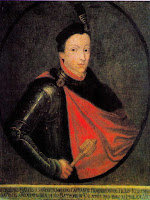
Stanislaw Wyzycki

then a podstarosci perejaslawski (substarost of Perejaslaw) Stanislaw Wyzycki, Gieralt coat of arms,  survived this rout and massacre, and later commanded as a porucznik (lieutenant) winged hussar banners during the later wars eg at the great victory at Cudnow (1660), rising to a rank of regimentarz (Deputy Hetman) in a Crown Army. He was an elector of our king Michal Korybut Wisniowiecki, and then of Jan III Sobieski. A member of Sejm in 1676, died in 1680.

4.Crown Grand Marshal Jerzy Lubomirski's banner - 123 horses

5.Starost of Krasnystaw Marek Sobieski's banner - 85 horses

6.Starost of Sokal Zygmunt Dynhof(Denhoff)'s banner - 111 horses

7.Tobiasz Minor's banner - 75 horses

Tobiasz Minor of PrzybyslawicePolkozic coat of arms -   pan Tobiasz might have been present at Batoh, and certainly his winged hussar banner, that he had lead since 1649,  was annihilated there, but he survived, along with his much reduced cossack banner, and fought on at least until 1653, while his sons Aleksander and Jan continued military careers.
He was a seasoned soldier, fought at Orynin (1618), was not present at Cecora 1620 and Chocim 1621, but took part in the victorious  battle of Uscie 1629, where under the command of castellan and future field hetman Stanislaw Lancoronski, Zadora coat of arms, Crown forces defeated Tatars. During the Chmielnicki Rebellion he was active from the very beginning, and fought with distinction and bravery.

8.Castellan of Chernigov Jan Odrzywolski's banner - 63 horses

Jan Odrzywolski (1590-1652),Nalecz coat of arms,  was a famous Polish raider and cavalry commander of the Crown army, especially during the 1618-1625 period, eg he led a successful Crown army raid against the Tatars dwelling  the Pontic shore, in the Akkerman and Ochakov shore area.
He was a cossack banner commander during Stanislaw Zolkiewski's  Cecora campaign of 1620, and during the inconclusive battle he was on the right wing of the Crown army. Then when in the fighting withdrawal  he, along with famous raider Stefan Chmielecki and , abandoned Zolkiewski's war laager, broke through the Tatar encirclement and thus was saved, but it was not a honorable action on their part, and he might have lost his Crown Guard position as a result of his avtions. Historians are not certain if he was present at the battle of Chocim (1621), and perhaps he might have provided, again along Chmielecki, services as a commander of the smaller forces screening and deterring Tatars from raiding deeper into the Crown lands.
During the battle of Martynow (1624) fought with bravery and distinction against Kantemir  mirza , leading special advance units into the fray, and after the battle he, along with Chmielecki, commanded the special group organized by hetman Koniecpolski that kept pursing the defeated Tatars, inflicting serious casualties upon this elusive enemy. 
Later  being a professional soldier he also became a politician and a magnate, and eventually a senior army commander. Twice  he was a Sejm representative from Braclaw voivodeship in 1639 and 1642, became a senator (a castellan) and important southern Polish Crown personage, both in politics and military areas.

His command suffered a defeat inflicted on them by the Tatars during the victorious  battle of Kamieniec (22nd October 1633), battle won by hetman Koniecpolski . Working with the grand hetman he was trusted and often carried important tasks and duties, eg he organized hetman Koniecpolski's  war laager marching towards Ochmatow 1644, and during that battle he commanded the forward units that defeated the Tatars and then pursued  the Tatars all the way to their camp there, making important addition to the total victory there. 

During the Chmielnicki Rebellion he was a senior officer of the crown armies. eg fought at Korsun battle (1648),and during tactical Korsun withdrawal commanded the center of Polish war laager where he was taken prisoner by the Tatars. During the great battle of Beresteczko (28-30th June 1651) he commanded his own 'division' on the left wing of the Commonwealth army. Starting in 1637 he was the owner of one pancerny cossack banner and one winged hussar banner. 

During the battle  of Batoh (1-2nd June 1652)  he commanded, along with Marek Sobieski, the cavalry formations against the Tatars.
He was murdered on June 3, 1652 at Batoh.


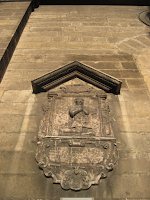
Stanislaw Wyzycki - epitaph at the Bernardine church in Lviv


So in the Crown army under hetman Kalinowski there might have been 873 horse strong detachment of winged hussars. These banners were all but destroyed - according to the army rolls and registers for the 2nd and third quarter of 1652AD.

to be continued

valete


Thursday, June 3, 2021

Hiob Ludolf - vision of Batoh AD 1652

Salve,


the very first days of June always bring  to my memory  some unhappy recollections  about one of  the most tragic and terrible military debacles in our Old Polish military history.


Namely, the war between the Polish-Lithuanian Commonwealth and the rebellious Zaporozhian Cossacks supported by their allies  - the multiple Tatatar hordes (Crimean, Nogay, Budjak etc) - had been suspended since the Biala Cerkiew agreement of September 1651. The agreement was a compromise, since the Polish forces failed to route and destroy the rebels, while the rebels were to weak to continue the campaign.
One of the conditions of this agreement was the return of the Jews to the Cossack-held Ukraine, as proper Commonwealth citizens and erstwhile managers of noble estates and places of lodging and drink.
Our Sejm (Diet) or parliament failed to ratify the agreement, due to the very first formal liberum veto by the infamous Wladyslaw Sicinski took place in the Spring of 1652, while ataman Chmielncki and his councils continued to rebuild their forces destroyed at the Beresteczko route of 1651 and defeated at Biala Cerkiew in the fall of 1651.
Thus this rather very tenuous status quo existed in south and south eastern voivodeships of the grand Commonwealth, sort of a silence before a storm.
Polish Crown forces, or the professional state army, were stationed roughly in four divisions - one in Zadnieprze (Left-Bank Ukraine), Kijowszczyzna (Kijov Voivodeship on both sides of the Dniepr river), in Podole (Podolia) and Braclawszczyzna (Braclav voivodeship).   


Ataman Bohdan Chemilnicki spent the entire winter rebuilding his forces and secured alliances of the Crimean and other Tatar hordes for the late Spring and Summer campaign in the principality of Moldavia, on the south-western border of the Commonwealth, where  Chmielnicki wanted to marry his son Timofiej( Тимофій, Тиміш, Тимош Хмельницький ) to a daughter of prince Bazyli Lupu ( Vasile Lupu ).

So, in the Spring of  1652 on the grassy plain near the banks of the river Boh (southern Bug) known as Batoh uroczysko (wilds), Bracalw voivodeship, Malopolska (Little Poland) province, our Crown field hetman Marcin Kalinowski, Kaliowa coat of arms, ordered a concentration of the Crown army 'pulks' and by the late May  commanded this  very spacious and  large 'laager' or war camp of  Polish Crown army, however only his own Braclawszczyzna or Braclaw division was present and his sub-commanders and officers were still streaming down from Kamienic Podolski, Winnica and other towns of the region when the first elements of the enemy were aporaching the banks of Boh river.
Many historians studying this conflict (Polish-Cossack, Tatar and Muscovite war 1648-66AD) gathering and digesting the surviving sources, that one must say are very scant and often conflicting,  conclude that our field hetman was thinking to  intercept the Cossack army going into Moldavia, while also he was intent on marrying the Lupu's daughter as proposed by the Moldavian prince -  part of the so called Moldavian 'adventures' in Old Poland history. 


The Crown army, 12 thousand soldiers-strong plus probably as many or more thousands of armed camp servants, families and camp follower, encamped in a very large campo on the Batoh  uroczysko(wilds) and cognizant of the Cossacks and  Tatar hordes coming. Yet  for some reason the river fords, as Boh river was rather difficult to cross in the late Spring, were left withour strong points to defend them, and  Kalinowski's  command failed to do diligent reconnaissance about the whereabouts of the enemy, and failed to protect and deny the oncoming enemy division Boh's ford crossing.
  Moreover, the Braclaw division of the Crown army seemed to lacked cohesion, spirit de corps and especially respect for the commander-in-chief (not dissimilar to the Cecora debacle of 1620AD) and could not win  this incoming struggle with the commander as unprepared as our field hetman Kalinowski  and his command. 


So  in  the battle that was fought  on June 1 and 2, AD 1652 on the Batoh wilds,  this Kalinowski's Polish-Lithuanian Commonwealth Crown army was defeated and routed by the allied Zaporozhian Cossack-Crimean Tatar army on late June 2nd,  the sources even talk about some rebellion against the commander, and the unprepared Polish laager was taken, leading to the death of the Polish commander and thousands of his soldiers and their camp servants. However, a part from the killed in action Polish soldiers and their camp servants  there were many thousands of experienced Crown army soldiers and their camp servants  from their retinues who  were taken prisoner by the Chmielnicki's allied Crimean, Budjak and Nogay Tatars.   As the defeated army was mostly  taken prisoner, with actual field losses were about a thousand or two thousand soldiers killed, Bohdan Chmielnicki had the commander of the Crimean Tatars Nurradin soltan paid  a fixed sum, some sources say 50  thousand gold thalers, for the Polish prisoners and then had the Nogay Tatars kill with utmost cruelty the hapless Polish noble prisoners
 
Thus in  the aftermath of this Polish defeat and rout, the  rebel ataman (commander) and political leader Bohdan Chmielnicki had the Polish prisoners,  taken prisoner by the various Tatar parties slaughtered by the Nogay Tatars.  During the 3rd and 4th of June 1652 Nogay Tatars and murderous Cossacks slaughtered shackled and tied up Polish prisoners, and hunted those who were hiding among the Crimean Tatars and surrounding woods and other hiding places in the hills, ravines and gulches of the Braclaw and Podolia countryside.
The lists of the murdered were/are long - perhaps as many as 8000 men were murdered cruelly.
Among the executed prisoners was a soldier of the greatest expectations - Krasnystaw starost Marek Sobieski, Janina coat of arms - and  the older brother of our future king Jan III Sobieski.


The commander of the infantry and artillery, general Zygmunt Przyjemski, Rawicz coat of arms, and the defender of the camp was cruelly murdered too, along with  young Kalinowski's son Samuel and thousands of others.
The ever pecuniary and slave hunting Crimean Tatars hid some of the Polish prisoners, and later exchanged them for hefty ransoms and thus some Polish  participants of this battle lived to tell their story.
The remaining  thousands of  Polish camp followers - women and children-  were taken by the Tatars and then either retained in the Crimean, Budjak or Nogay slavery or sold into slavery to the Crimean and Istanbul  slave dealers - the Jewish traders - to be resold in the more distant Ottoman slave markets. 

Hiob Ludolf, a scholar working in Frankfurt, in his published work added this illustration showing the imagined scene  of this atrocious killing of Polish prisoners and captives.


I may write more about the sources describing this battle, some of them were written by winged hussar participants (8 banners of Crown winged hussars were destroyed in this debacle) or pancerny-cossack cavalry companions (many more pancerny Crown banners were annihilated in this battle).

Batoh massacre of 1652 AD sadly was not the last event of mass murder of the Polish military elites in our history, the most infamous being the series of massacres collectively known as the Katyn Forest Massacre of 1941AD.

Valete