Showing posts with label Great Plains horse people. Show all posts

Monday, August 17, 2026

Medicine Man - Charles Marion Russell

Salvete Omnes,


more dog days of the summer - so a nice Monday with a painting by America's favorite Western artist - Charles Marion Russell. 
The subject here is a shaman or medicine man, 

Medicine man - Blanton Museum of Art, painted circa 1916 


.
Medicine man - Amon Carter Museum
Medicine man from the Gilcrease Museum 

Gilcrease M.- Medicine Man


and a solitary 'Cree Indian' (the title goes) 


Valete 

Monday, August 25, 2025

Frank Henderson Ledger - Arapaho fame and honor

Salvete Omnes,

the glyph of a rider and horse in the top part of the page gives out the identity of the artist portraying himself astride his war horse


a quick trip to the Great Plains via some free available drawings by an Arapaho artist 'Frank Henderson'(1862-1885) [and his friends] in the collection of Metropolitan Museum.. American anthropologist Alfred Kroeber was the researcher who spent years observing the Arapaho tribe, and observed that the tribal warriors, warrior societies and their families sought martial exploits in war as the means to obtain fame and honor.


As the Nicelle Beauchenne Gallery biography states:  the true Arapaho identity of this artist is unknown, that he came from Cheyenne and Arapaho Indian Agency, Darlington Indian Territory. It was most likely done during the period of post 1874-5 war in the Southern Plains, where US Army units defeated the tribal warriors and forced all the belligerents into the Indian Territory, where they were to create a new reality for themselves, no longer free hunters of bison and horse-cutting raiders, under the goverment agents and their might. 

The researchers concluded that the Henderson Ledger contained drawings by many artists, became a gift for his former teacher, Martha Ker Underwood. The ledger was exhibited in NY (Acevedo Gallery) in 1988, researched, unbound and pages sold off. The Hood Museum at Dartmouth College (Dartmouth, MA) and MET. 


The page 172 from the ledger graces the cover of this book


the researchers uncovered that at least one of the artists who created images within the Henderson Ledger can be found in Vincent Price Ledger.

Valete

Thursday, August 21, 2025

Buffalo wolf - the loafer of the Great Plains

 Salvete Omnes,


back to the Great Plains before the settlement by the European-American settlers, when with the millions of bison and antelopes two kinds of wolves roamed the plains - the coyote and the buffalo [often white or black] wolf (Canis lupus nubilus). Plains Indians, both in the pre-horse and post-horse period,  used the entire hides of these large wolves (more than 4 feet without a tail) to approach as close as possible the grazing bison herd and to hunt that grazing bison with a bow and arrow.  The native scouts on warpath used these pelts to camouflage themselves and to show their special status within a raiding band, including wearing eagle feathers attached at the head of the pelt. 


wolves hunting a bull

American traveler and artist, George Catlin, recorded the wolves in their natural environment, and even used wolf pelt as a disguise to approach and to observe and  sketch bison herds.

Wolf pelt camouflaged native hunters, with bows and arrows, creep up to a grazing herd in order to hunt the beasts up and dangerously close, risking being trampled or gored to death by the bulls 

Catlin and his native companion approaching the buffalo herd

Upper Missouri Bluffs, with a pair of white wolves

wolves attacking a bull
..

the description of the  wolf of the Great Plains (1819-20) -


a rather gruesome photo (by John Grabill) of a band of Wyoming cowboys with a captured-with-lasso wolf 

these wolves were hunted to almost extinction in the Great Plains, most often with poison, but they survived in the north-est, in Minnesota, in the Canadian Prairies and so on.
Hence, they are surviving in Montana and perhaps Colorado - here some photos of the  actual wolves 


and its southern cousin, the Mexican wolf

enjoy

Valete

Wednesday, June 25, 2025

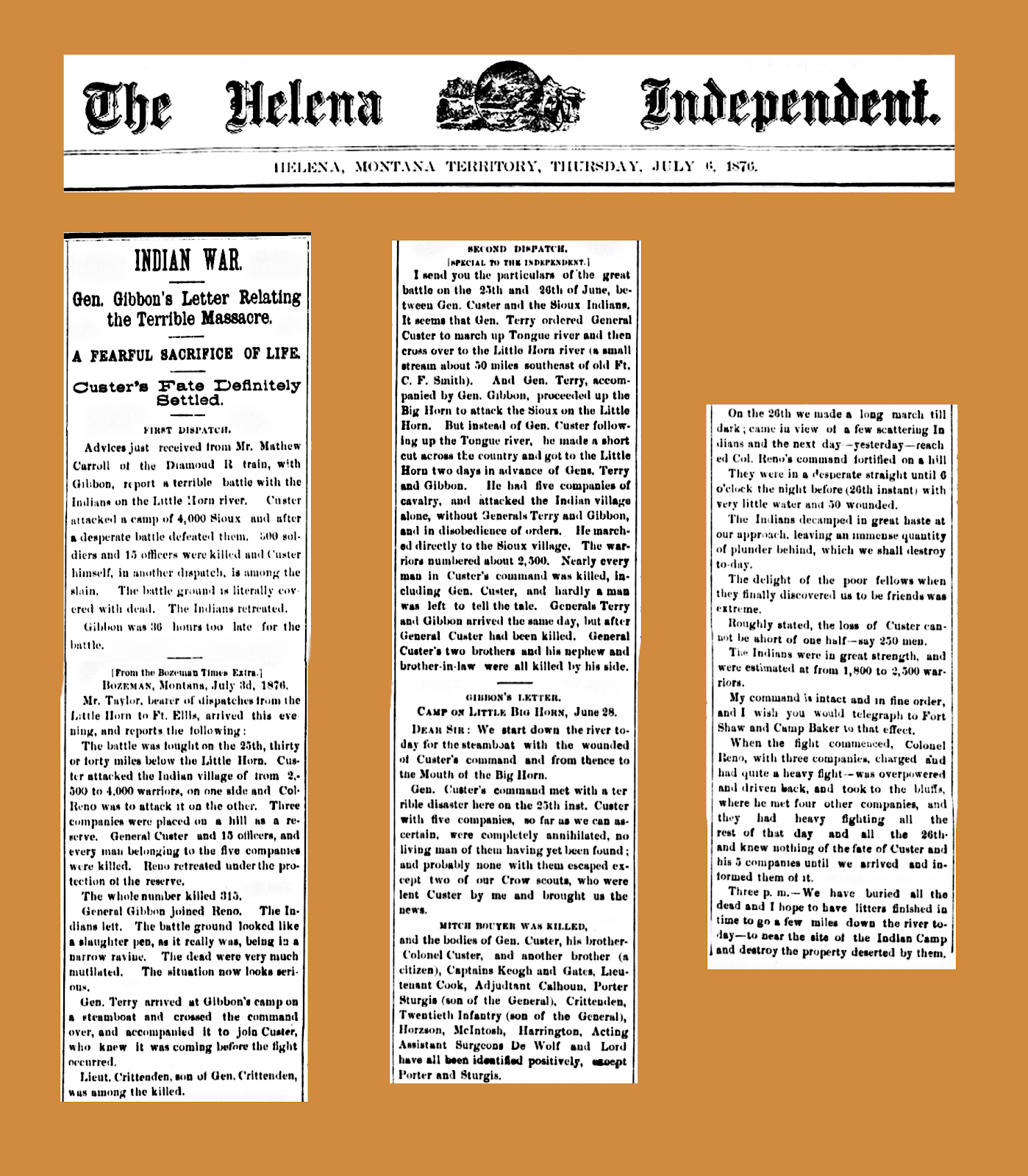
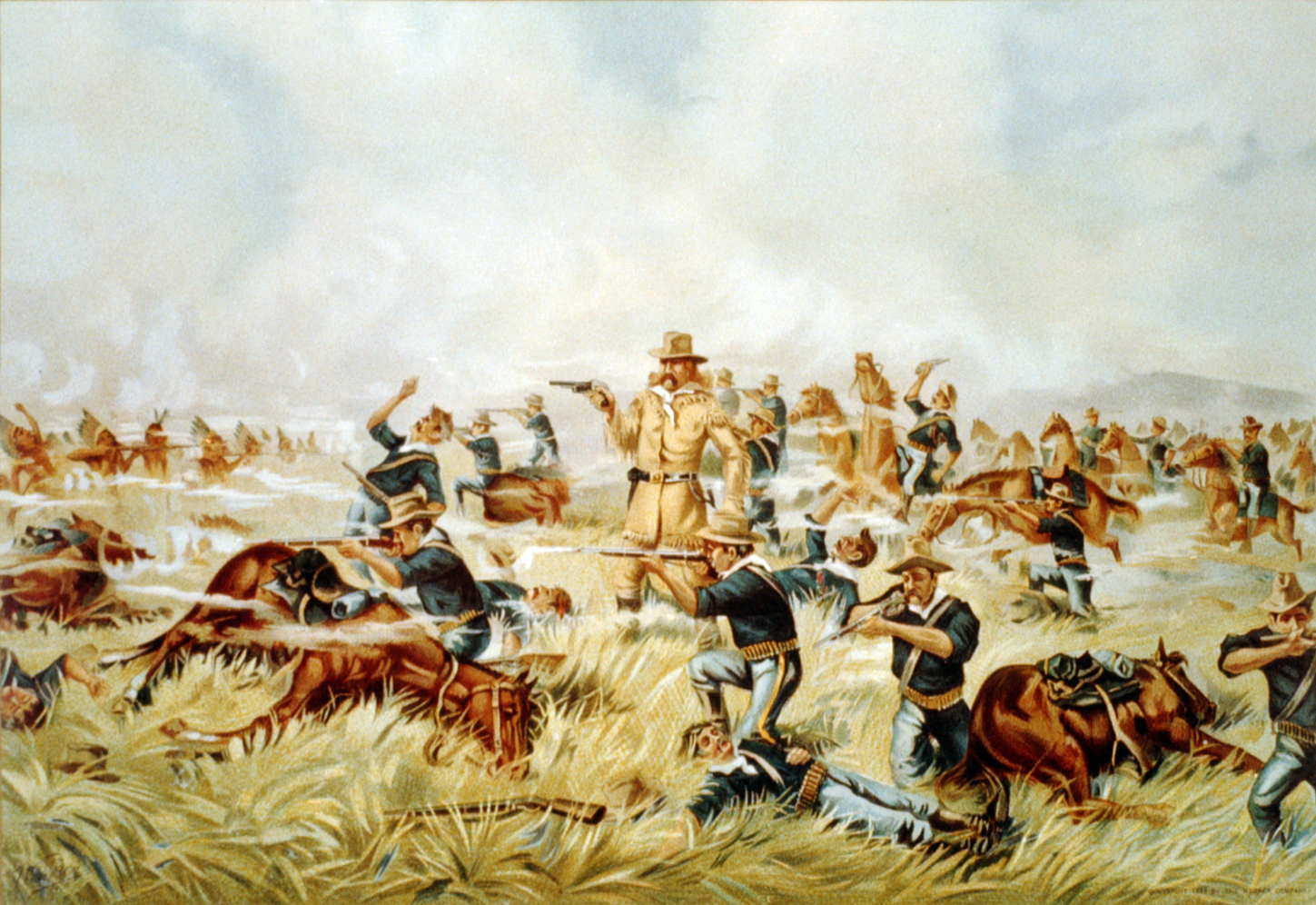
Little Big Horn or Greasy Grass- a cavalry battle 1876-2025

 Salvete Omnes,


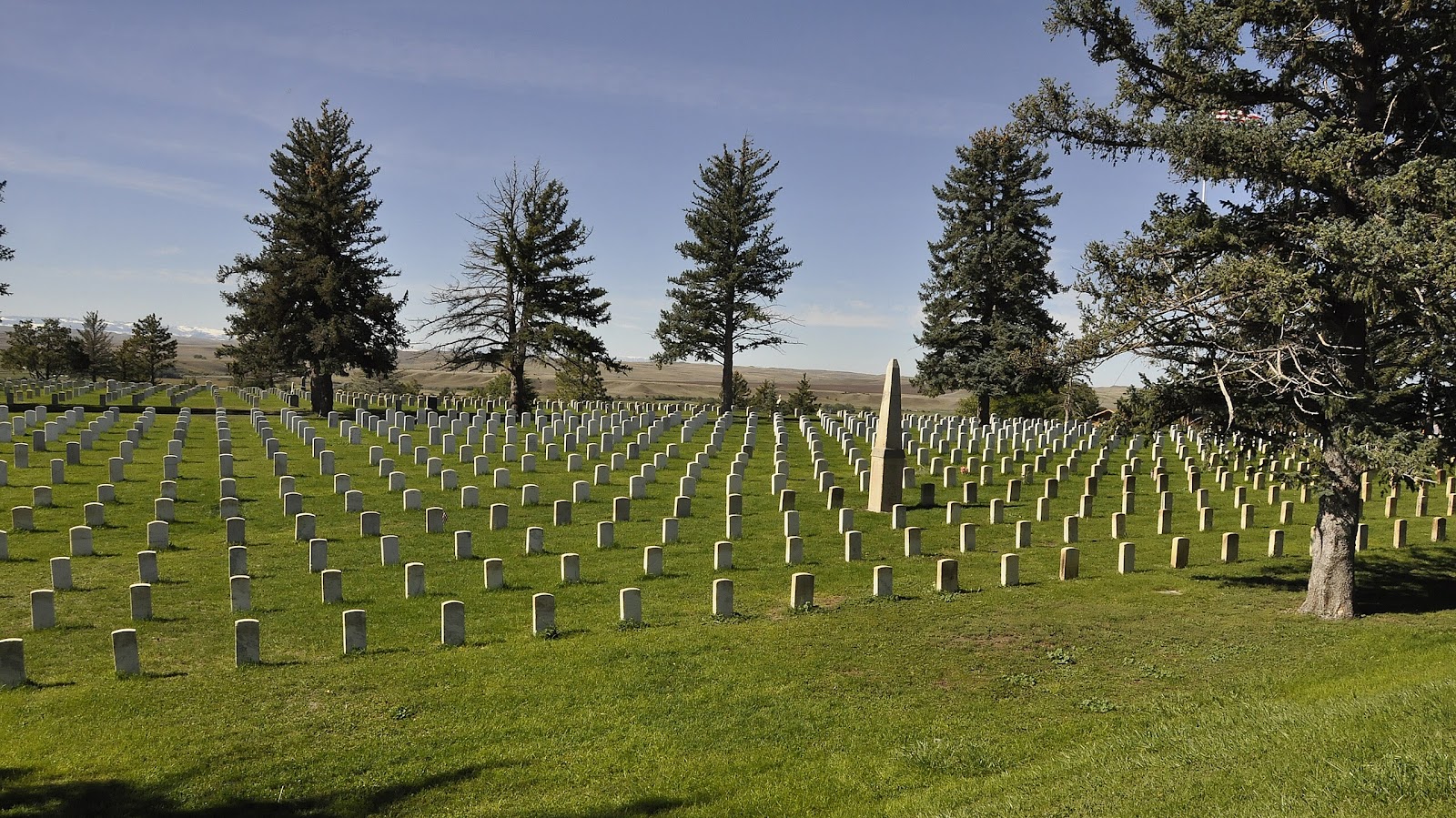
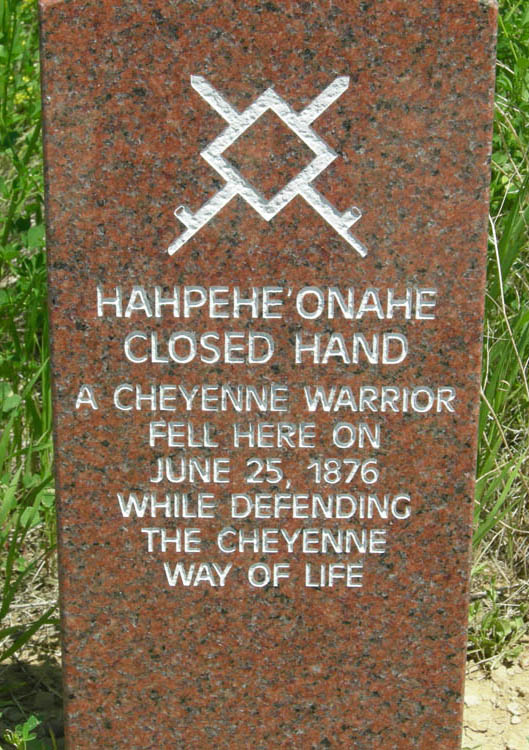
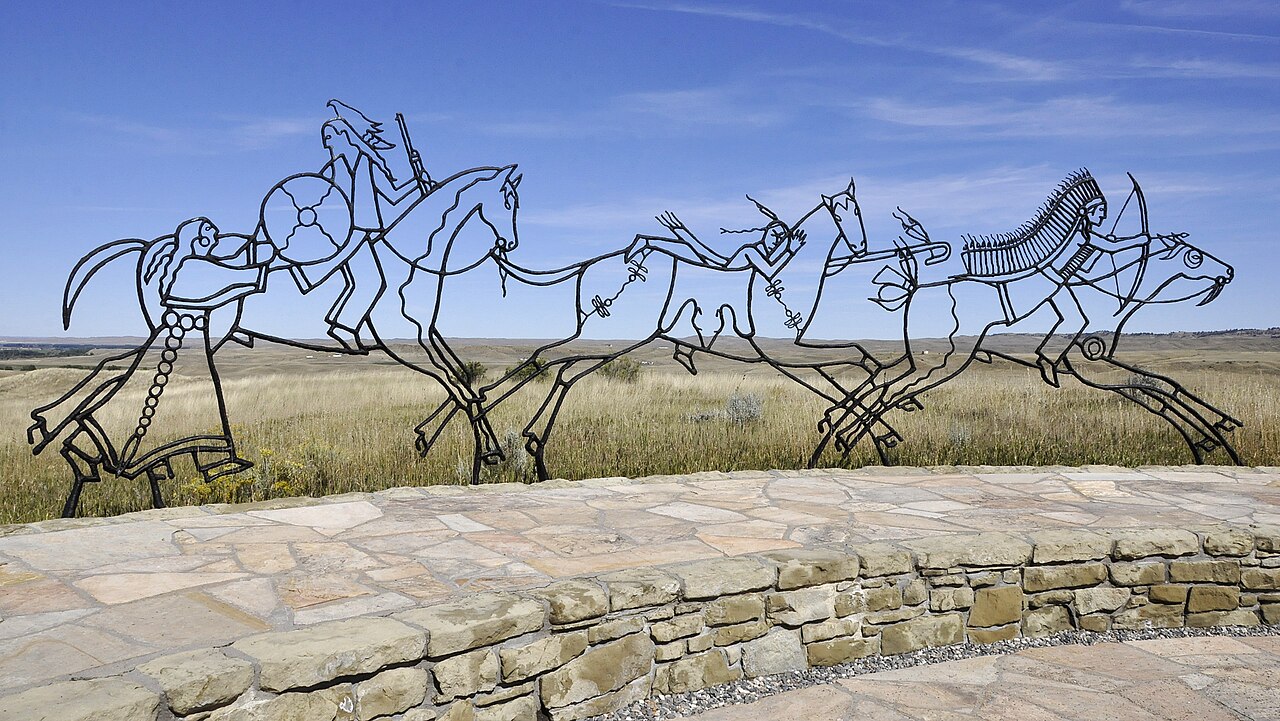
June 25, 1876 - first and the decisive day of the battle in the valley of the Greasy Grass River aka the Little Big Horn River. I have done numerous posts about the battle and yet when then anniversary comes I want to revisit and remember the heroic struggle between the native warriors of Lakota and Northern Cheyennes against the Progress embodied by the politicking commander, G.A. Custer, and his 7th US Cavalry horsemen and native allied scouts.

a view from the Custer Hill towards distant Big Horns


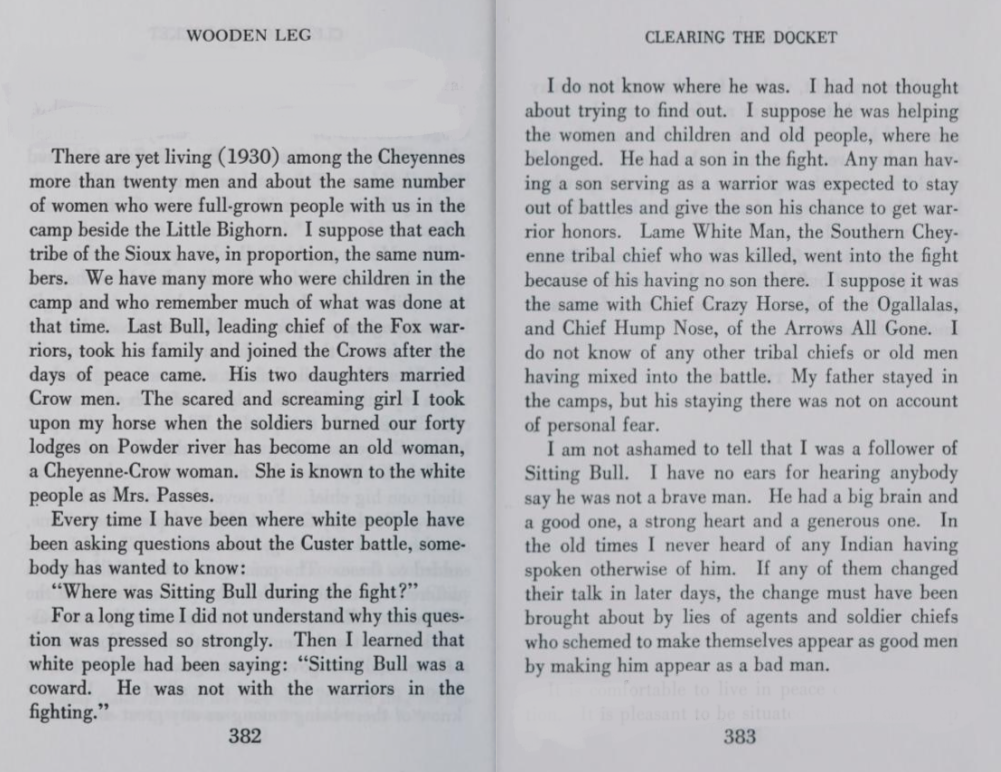
warrior Wooden Leg of the Northern Cheyennes recounts here his recollections about the battle. Perhaps one day I will return to the narratives etc described from this book.


Sitting Bull's recollections about the battle as printed by the New York Times, 1881.
The American Surveyor magazine  - GPS used to solve some Custer's Last Stand mysteries. 


Pacem aeternam

ps
texts about or related to the battle on Archive

Valete

Friday, June 20, 2025

Sitting Bull - from Harper's Weekly 1876

 Salvete Omnes,


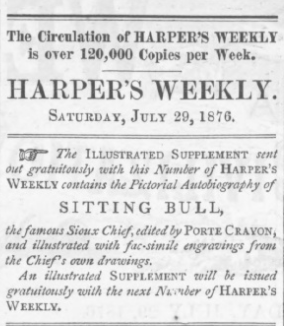
let us travel back to the Centennial Year or 1876 wheren this very unusual article with the most unusual art - Lakota Hunkpapa spiritual and political leader Sitting Bull and his drawings - appeared in the July 1876 issue of Harper's Weekly, right after the battles of Rosebud and Little Big Horn.


.

.

.

perhaps the editors did no anticipate the US Army defeats and Lakota-Cheyenne successes during the initial stages of the so called Centennial Campaign.
That ship had sailed and the rest is history.

Valete
Thursday, June 12, 2025

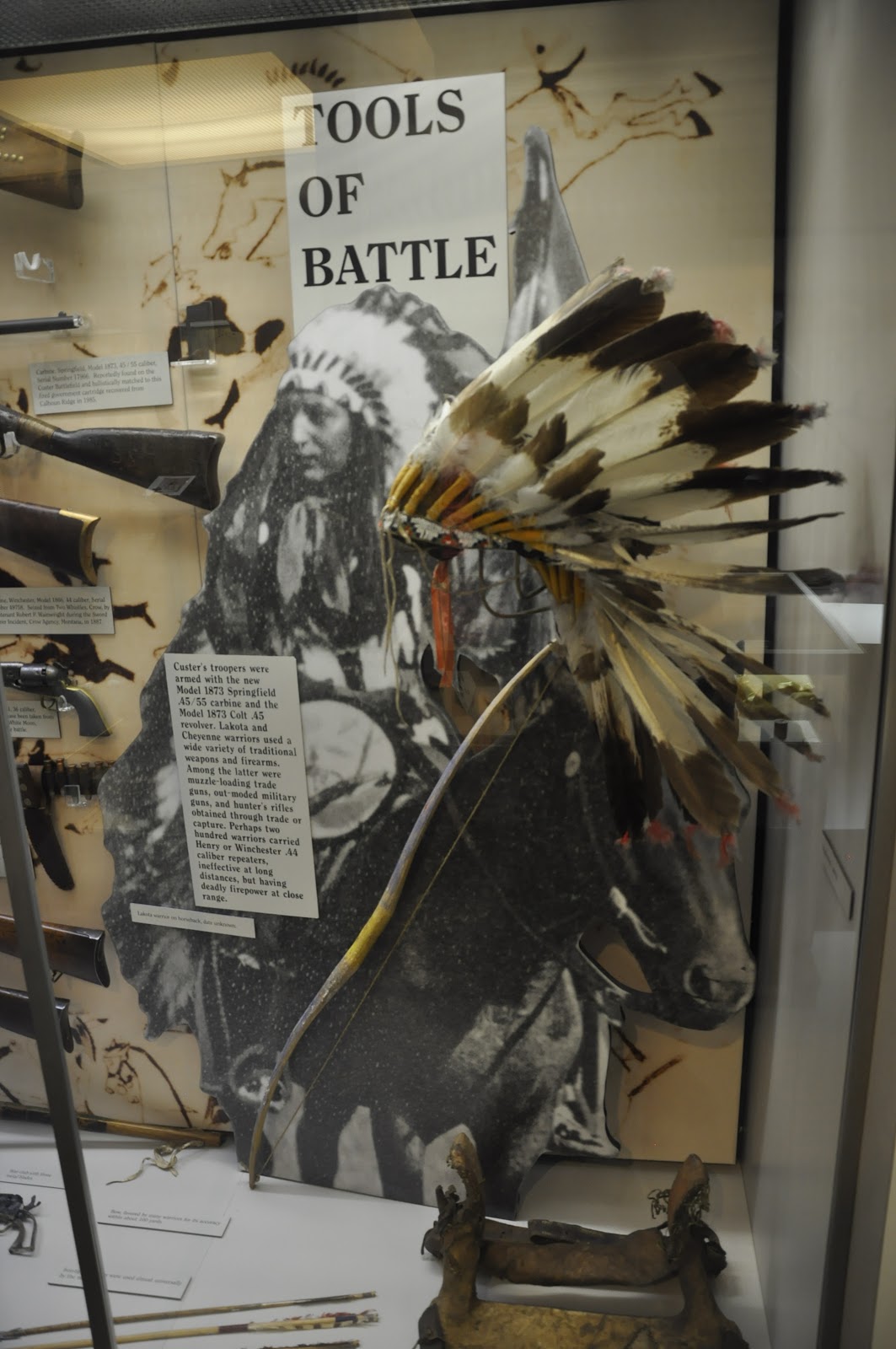
Belden, the white chief- apishamore saddle circa 1870

 Salvete Omnes,

George P. Belden, native of Ohio, was a cavalryman in the Nebraska Cavalry and then got his Lieutenant's commission in the regular army as as 2nd Lt US 2nd Cavalry , serving in Dakota Territory and Wyoming Territory. He was cashiered from the Army in Nov 1869, and died in 1871. 
He wrote and published his experiences as Belden, The White Chief; or Twelve Years Among the Wild Indians of the Plains (Vet pub, NY- 1870), with illustrations based on his and fellow soldier, Mr. Innman, drawings.

Within his book there is a short chapter on the 'apishamore'  or soft pad saddle made for  White Bear by his wife.


.

.


.
to be continued

Salvete