Showing posts with label sipahi. Show all posts

Tuesday, August 4, 2026

Ottoman Turkish horsemen - Niklas Stor

 Salvete Omnes,


summer is in its dog days - 
I corralled some woodcuts from a German artist Niklas Stor (1503-1562)  depicting the Ottoman Turkish warriors. During this period  the Ottoman empire, Hungarian kingdom and German Reich entered into almost continued warfare. 

Master Niklas' work, in the tradition of master Albrecht Durer, provides plenty of information on the Ottoman riders and their equipment. 


.


.
.


. jasyr ( esir/asir - captives in captivity)


two camels(Bactrian & dromedary)  


& a giraffe 


enjoy

Valete

Thursday, October 9, 2025

Parkany II - 9 Ocotober 1683 AD

 Salvete Omnes,

the routed Ottomans' fatal crossing of the river Danube - detail from a painting by Pierre-Denis Martin


today we celebrate the anniversary of the second battle of Parkany - 9th October 1683AD.

on the left bank the fortress of Parkany or today's Sturovo in Slovakia opposite Gran in Hungary

.


Parkany II was mostly a cavalry battle, roughly some 30-plus thousands on each side, although some sources say 15-plus thousands of cavalry and 1000 Janissary on the Ottoman side. The Ottomans had a camp with supply train with the swamped banks of Hron river behind them.


Victorious engagement for the armies of  our Polish Crown and Hapsburg Empire against the Ottoman Imperial army commanded by seraskier Kara Mehmed.
Hapsburg army was commanded by prince Charles of Lorraine, husband to the widow of our king Michal Korybut.  Overall command belonged to Jan III.

Winged hussars shock tactics shone in this battle - skillfully managed by our king Jan III. 

Jan III placed prince Charles' forces - infantry and artillery - in the center of the allied army, his left wing under hetman Stanislaw Jan Jablonowski, and the right wing under Hieronim Augustyn Lubomirski, here also was the command post of king Jan III.  Around noon the allied army advanced and came up to the enemy lines, about 1,5km from the Parkany fortress. Then the Ottoman forces attacked furiously and charged, mostly the left wing, according to Dupont, king's secretary, at least ten times they charge, but the center was protected by the portable devices known as cheval de frise, while Jablonowski counterattacked with his Polish cavalry supported by the Imperial cuirassiers.  King's left wing moved forward breaking the right wing of the Ottomans and causing panic that ended in a rout. Most panicked Ottoman cavalry then tried to swim the Danube, a huge river at this juncture, and drowned in process. Serskier Kara Mehmed did save himself but his command was destroyed. 
The battle resulted in a complete annihilation of the Ottoman army - depriving the sultan  of his best sipahi cavalry. 

Pierre-Denis Martin's full canvass showing the battle


Altomonte also painted  this monumental canvass - 


Parkany frieze from  the royal Wilanow Castle

Monument to king Jan III Sobieski in Sturovo


ps.
there are some interesting primary sources to this engagement, including three Ottoman chroniclers. 

enjoy

Valete

Wednesday, July 19, 2023

De Warnery on Ottoman Turkish Spahis

 Salvete Omnes,


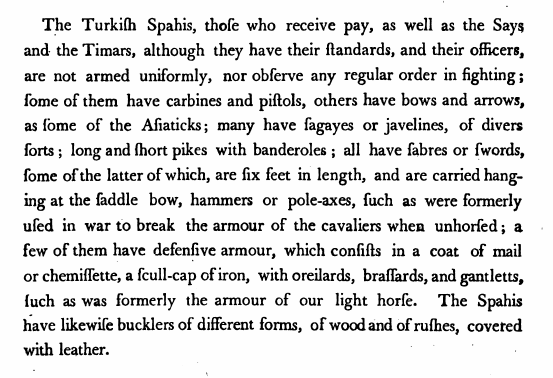
long time ago I brought here the book by a Prussian & Polish cavalry general Charles de Warnery - Remarks on Cavalry

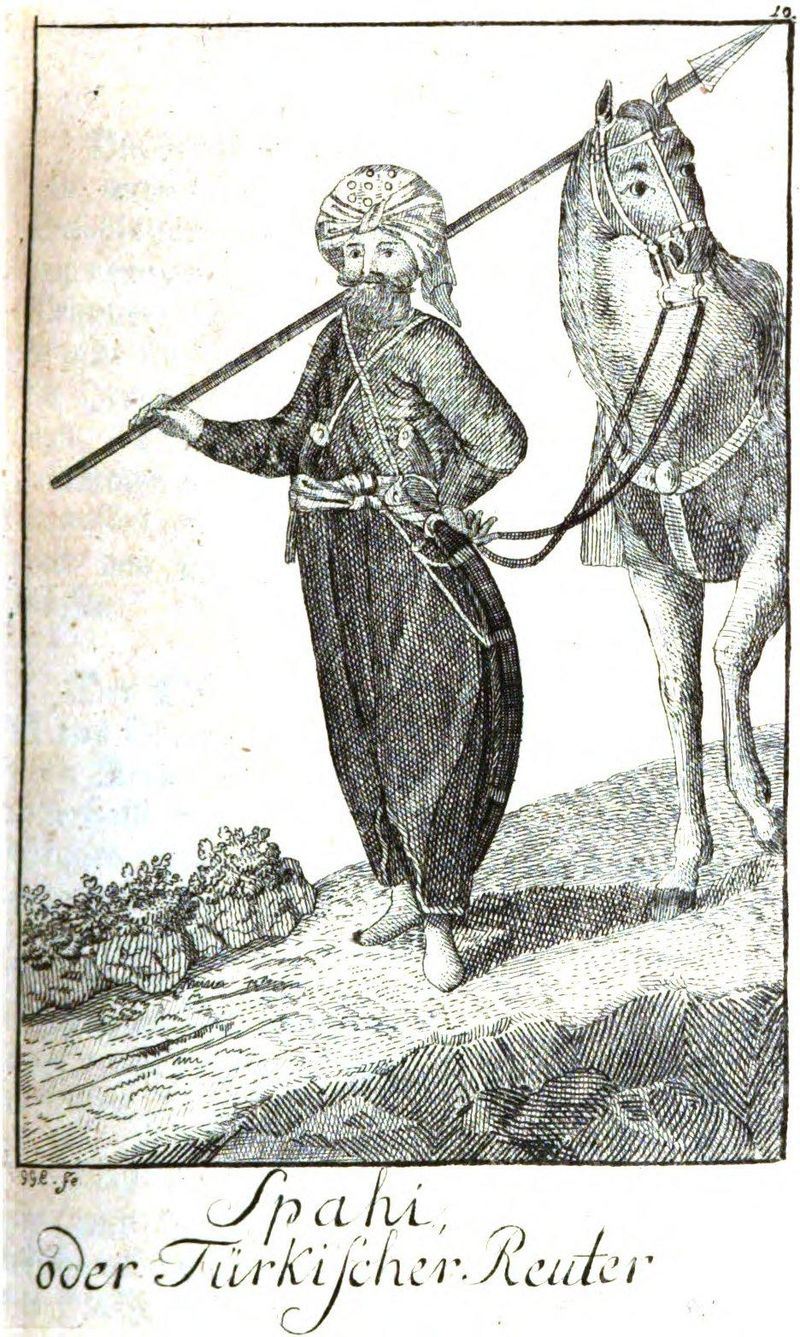
Today, I would like to bring to your attention the short description of the Ottoman Turkish spahis/sipahi as seen by general de Warnery. 


and some other late XVIII century images of the Ottoman Spahis


enjoy

Valete

Saturday, January 29, 2022

Winged Hussar and other images from the Book of friends

Salvete Omnes,


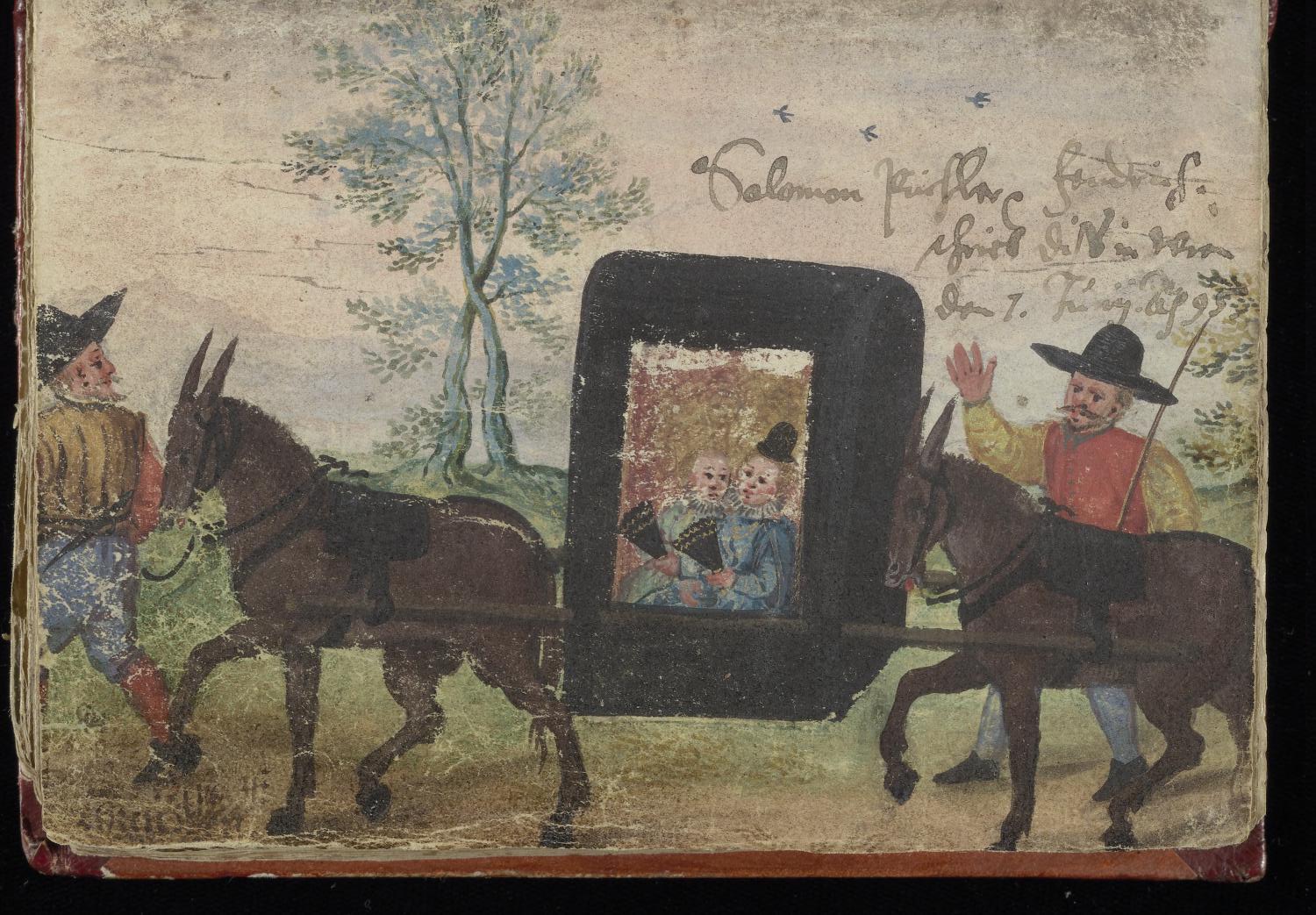
Book of friends -  or more properly Johann Joachim Prack von Asch's liber amicorum was a compilation of entries spanning 1587-1612AD, including the period of the so called Long War (thanks to Bruno Mugnai I have the 2-volume book  on the said war  ), with the paper coming from the ancient paper bazar in Constantinople. Joachim Prack von Asch from was a Hapsburg diplomat, who  traveled between Constantinople,  the capital of  Ottoman Empire and  Bohemia and other lands of his emperor, Rudolph II Hapsburg.

The Book of Friends is available either on the Getty Digital Collections site or on Archive - world's library - and from its pages come this gouache miniature showing a winged hussar killing his lancer adversary, a Turkish Ottoman lancer.


the Christian winged hussar is on the left - piercing with his hussar lance the throat of the Ottoman sipahi or perhaps the elite Deli lancer.
The winged huusar has a large wing on his left side, clearly visible shield, a shishak helmet with three feathers, a leopard pelt on his shoulder, short zupan, red close-fitting breeches, yellow boots with long spurs, under his thigh he carries a hussar war-hammer with pick (nadziak) - he is a picture-perfect winged hussar of the period, be it in Polish realms or the Hungarian lands.  His sorrel horse is caparisoned with an animal pelt, the bridle is with a curb-bit , reins and headstall without any visible adornments .
His Ottoman adversary has a shield,  tall Ottoman shishak with a wing on its front,  he has  some armor(perhaps mail), loose-fitting sharavari (Turkish salvar, from Persian sharavara) pants, a kilij sabre and a koncerz (estoc), also  a painted lance with lance apple.  His gray horse is caparisoned with a long textile fringed shabraque,  his bridle is ornate and sumptuous, at the throatlatch there is a long horse bunczuk(Turkish tug),  

and some other horse-related images


Valete 

Thursday, September 30, 2021

Ottoman army at Chocim - Sept.02,1621 - Sultan and his soldiers

 Salvete Omens,

back to Chocim campaign - 


… young sultan Osman II declared war on Polish-Lithuanian Commonwealth and war preparations entered new phase in the early 1621. But as noted by some chroniclers the Turkish capital elites were much against going to war with Polish realm. Even more than reluctant, they wanted to pay for the already extended costs and expenses towards the 1621 campaign-in-organisation. 


Perhaps the Ottoman Turkish elites and even the imperial merchant class were tired of the constant state of warfare the empire had been in since the late XVI century. Polish observers also noted that lackluster will for war against Polish king and his subjects. But it was the sultan who made his will realized, i.e., by undertaking this 'easy war' against the Polish infidels and their Cossack proxies.


So the Sultan willed and thus his Ottoman army concentrated at Adrianopole (Edirne) in Thrace, outside Constantinople, and the force was to march onto Silitsria. First, they had to march to Nikopolis on the Danube. So the army marched across the Balkan mountains to the valley of Danube and north into Transdanubian principalities. They had crossed 450km of rocky roads and upon entering the valley of Danube, its swampy country. It took them almost a month to make this trek. 


Then they marched along the river in Dobrudja Tatar country, very rough and unhealthy season to be in that swampy province, to the river port town of Galati, in order to cross the Danube in its vicinity. 

Artillery was brought there via the Black Sea shipping and landed on the left bank of the great river. They all came there in July, and starting July 11 the crossing of the great river begun. The bridge built in order to have the army cross was under the strain from the swift currents of the river(about 700 meters wide there), and the Ottoman navy under Kapudan-Pasha had to fight off the Cossack flotilla that attempted to break the bridge. The prisoners taken in this river battle were executed, including murder by pulling them apart with the elephants. The massacre of these Cossack prisoners was to keep the spirit of the army high and bellicose. At the same time other Cossack flotillas attacked Ottoma shipping on the Black Sea, including fighting large scale battles with the Ottoman navy (one flotilla under Bohdan Chmielnicki, future hetman of Zaporozhian Ukraine). While crossing the river, young sultan practiced archery(his arrows were able to hit targets across the river) and received news that his Crimean Tatar vassal, khan Djanibeg/Janibeg Giray, and his 10,000 Tatars crossed the Dniester river and were encamped awaiting the emperor's host.
On July 18th the vanguard of Osman’s army marched away from the Danube. On the 28th of July a column of cavalry under Beylerbey Dylewar Pasha from mostly Kurdish Dyarbekir eyalet in the south-eastern of Anatolia.
On August 16th the vanguard reached old Polish camp at Cecora. There the entire army rested and mustered before their final push towards Chocim on the Dniester River and its Commonwealth defenders.


The army marching from Cecora camp on the Prut River  to Chocim battlefield on the Dnieper River was set up as follows:

10,000 cavalry column from Rumelia and Anatolia commanded by Hussein Pasha.

After them, various units of Wallachian and Moldavian vassals , charged with repair of roads and building water crossings and managing terrain obstacles.
Next, marched the remainder of units from  Anatolia and the sultan’s Kapikulu janissary corps  under Hussein Pasha, the great vizier.

After that ‘division’ marched sultan himself, with his corps of elephants and entire court, with the timariot cavalry and his spahis corps of Kapikulu army.

After the sultan’s division marched the artillery, and then the entire train of wagons and camels, and slaughter animals (oxen, cows, goats and sheep) and spare horse herd.
The entire Ottoman host was screened by the light cavalry, aware of the Cossacks bands that had been lurking around in Moldavia since at least August 8. Hetman Borodwaka and his Cossacks ruined the countryside between Jassy and the Polish border, thus the Ottoman host marched across the despoiled and pillaged country, putting strain on their supply lines and  comforts. 


Crimean Tatars fought the marauding Cossack bands and larger units, and some of the fights were epic, the most memorable were two encounter - the defense of some cave near the Prut River by a small troop of Cossacks against the entire Ottoman army, as the Tatars were reluctant to storm the cave full of firearms and determined Cossack fighters; and the second the defense of about 200 Cossacks who dug pits and felled trees on the other side of the Prut, across from the first fight. They fought the Ottoman might until the darkness of the night, and then tried to make their escape. Only few made it alive to the Polish side. But these and other fights delayed Ottoman progress and caused waste to the country where the Ottomans could have relied on getting supplies.(story of hetmans Borodawka and Konaszewicz_Sahajdaczny conflict and murder during the August march will be for anther time). 


Finally, on September 2nd, 1621 about 3-4 miles from the Chocim Polish camp the vanguard of the Ottoman forces was sighted.
Thus Osman II reached Chocim and his army begun building their widely spaced camps and constructing gun posts for their artillery, while he witnessed his chosen janissaries attack the Cossack camp.


The counting of numbers for this army could present a problem – already, in 1621 contemporary Polish sources noted the following accounting of Osman’s troops:

30,000 Spahis/sipahi,

20,000 Janissaries

60,000 Tatars (Crimeand and Budjak Nogai etc)

100,000 timariot troops and other troops. - in total: 201,000 soldiers [sci!].

Jan Wimmer (1061), modern historian, cestiamted 100,000 Ottoman soldiers, including 15,000 Tatars.
Jerzy Teodroczyk(1984), another modern historian, estimated 110,000 soldiers.


XVII century historians – French Ricaut and Turkish Ayna Ali- provided more precise description, and Polish historian Leszek Podhorodecki put down the following list fore the kapikulu, timariot, volunteers, vassals, artillery etc:

-Beylerbey of Anatolia Hassan Pasha – circa 14,000 (max 25,000)

-Beylerbey of Rumelia Jusuf Pasha – 18,000 (max, 22,000)

-Tayjar Bey Pasha of Aleppo sanjak – 2,000 (max 3,000)

-Beylerbey of Diarbekir Dylewar Pasha - 4,000 (max 10,000)

-Beylerbey of Bosnia Hussein Pasza – 7,000 (mac 14,000)

-sanjak of Tripoli – over 1,000

-Beylerbey of Syvash Ibansagly Hassan Pasha – 3,000 (6,000 max)

-Beylerbey of Karaman Mustapha Pasha – 2,000 (3,000 max)

-Sanjak of Marash under Abazy Pasha – 1,000

-Beylerbey of Damascus Nogai Pasha – 2,500 (5,000 max)

-Beylerbey of Caffa Cherkess Hussein Pasha – 2,500 (5,000 max)

-sanjak of Raqqa – 2,000

-volunteers from Dobrudja – 1,000

-various Ottoman officials’ retinues and nomadic vassals – 5,000

finally, Beylerbey of Buda Karakash Pasha – 5,000 (10,00 max) – that came to the sultan’s camp after the siege battle had already started.

So perhaps 55-60,000 to 70,000 – after all the losses from sickness, marching or even desertion.

Next the Kapikulu sultan corps–

8,000 spahis/sipahi corps

12,000 jannisary corps – commanded by Aga Mehmed Pasha

(a part of the kapikulu corps stayed behind, guarding crossings . And actually deserted during the march)

The artillery consisted of at least 62 guns, including 15 heavy ones (up to 55 punders) – managed by perhaps a less than a thousand soldiers and assistants.


The vassal Tatars – according to Olgierd Gorka, Polish modern historian, - 10,000 Crimean Tatars under the khan, 5,000 Budjak and Dobrudja Tatars under Kantemir Murza; and 1,000 Tatars of the Sultan guard.


Wallachains – under prinece Radu Minchea 6,000 to 7,000

Moldavians – unde Stefan Tomza circa 5,000.


Finally,  all these soldiers were provided for and were supplemented by the unknown number of armed and unarmed camp servants and followers – perhaps as many as 50,- 60,000 thousand men?
Plus thousands of pack camels, horses, draft oxen, cows, sheep and goats, and probably thousands of wagons and carts.


Perhaps it is worth noting that during the first large engagement, the janisaries attack on the Cossacks camp on September 2, 1621, the first Polish-Lithuanian officers killed during this hot fight were two Muslim Lithuanian Tatars - captain Bohdan from Zenowicz’ pulk and captain Czarowicz from the grand hetman’s pulk – these two captains or rotameister died fighting bravely and heroically in the defense of their king and country.

valete

ps

all image from Wiki Commons 


Sunday, September 26, 2021

Cecora 1620 - Iskander-Pasha, Tatars and Ottoman army

 Salvete Omnes,

re: Cecora-Chocim battles theme  as the anniversaries are here- 


let us turn our attention to the Ottoman forces that 401 year ago took to the field against the Polish-Lithuanian Crown army that marched into Moldavian territory in September 1620AD. 

Faced with the Commonwealth invasion led by grand hetman Stanislaw Zolkiewski  the Ottoman Empire command   in the region had various types of troops available to them, namely, the imperial troops paid by the state, nobles levy (toprakly) and finally the vassals,allied and tributary troop. The most important allied soldiers were units brought by the Crimean Tatars and steppe Tatars (Nogai, Budjak etc).

The experienced northern  Ottoman commander  beylerbey of Silistria   Iskander (Alexander) Pasha who according to the Turkish sources could have been Hungarian, tall and brave (like Rustam of the ancient fables) shaved his beard in a Bulgarian fashion leaving a big mustache - was to command this rather motley of forces to face the invasion.


Iskander-Pasha was rather quite experienced in warfare against our Polish-Lithuanian armies on this front.

as far as I can gather he might have  been  one of the lower Ottoman and Tatar commanders led by Ibrahim Pasha, Wali of Silistria, that defeated large Polish-Lithuanian army (large component consisted of  winged hussar banners) at Sasowy Rog on July, 19 1612AD; 

Iskander Pasha  is certainly known as the  victorious commander over another Polish-Lithuanian army (that had large contingent of winged hussars) again at Sasowy Rog in Moldavia on August 2, 1616. His command contained Ottoman, Tatar, Moldavian, Wallachian and Transylvanian troops.

In the summer of 1617 he commanded a large (perhaps 40,000 strong) army, but apart form raiding some villages, including burning of Raszkow on the Polish side of Dniester, there was no large action against the Polish side recorded. But by standing on the border, i.e,  Dniester river, and threatening the Polish-Commonwealth with a savage invasion,  this warlike demonstration resulted in a peace treaty of Busza (September 23, 1617), where Polish-Lithuanian Commonwealth agreed to stop interfering into the Moldavian, Wallachian and Transylvanian(Bethlen Gabor ) affairs, stop the Zaporozhian Cossack invasion into the Ottoman lands, and  return Chocim castle, on the Moldavian side of the Dniester Rive, to the Moldavian principality.  The Ottomans were to stop the Tatars from riding into the Commonwealth.  Both sides immediately and consequently always  failed on the prohibition of riding each other by their proxies.

The 1620 found him rather short of large number of Ottoman troops when compared with 1617 and without any support from Bethen Gabor and other vassals, but  the Tatars were present and ready, and he was aided by various Ottoman regional commanders with their very limited troops - 

We know that  had some jannissaries and  sipahi cavalry units, and Ottoman artillery. Probably he had a body guard of chosen troops, including the deliler (deli singular) or guard cavalrymen, and all his Ottoman commanders had such bodyguard troops. Chronicler Naim claimed that Iskander Pasha had only 1000 of his own troops.
Five other sanjaks provide some troops, commanded during the battle by these commanders:  Jusuf Pasha  beylerbey of Rumelia, Circassian  Hussein Pasha, Nikopol Mutasarrif Chyzyr pasha, Vidin Mutasarrif Sarymsak-Terjaki Muhammed Pasha (after the ''Collectanea or the compliation of Ottoman' primary sources translated into Polish by Sekowski, and published in 1824 in Warsaw, Congress Poland)

Crimean Tatar horde units  were led by Galga Soltan Devlet Giray, aided by Neberd Giray and varied in number, more about the numbers below.

Uymak(horde) of  the Nogai Tatars was commanded by their zealous ghazi warrior and enemy of the Christian foe - Kantemir Murza and his brave sons- Urak Mirza, Selman-shah and Ynayet-Shah and Weli-shah.
Finally there were also Wallachian tributary troops

Period Ottoman Turkish sources claimed that iskander Pasha had less than 10,000 soldiers under his command.

Polish contemporary sources saw various numbers - 10-15,000 Tatars and about 2-300 Ottoman Turks plus Wallachian tributaries.
We should also think that there were camp servants - all professional cavalry and troops had servants, all noble cavalry had armed servants and non combatant retinues, and also led thousandth of animals, spare horses, train and pack animals, and animals for food. Also Ottomans often counted all living beings as the part of the army, but it appears that here they just counted the combatants.


Polish historian Majewski in his book 'Cecora,' p 180,  set forth the following numbers for the combined forces commanded by Iskander Pasha:

2000 Ottoman soldiers (imperial?)

2-3000 Nogai Tatars

6-8000 Crimean Tatars. led by 


eg Leszek Podhorodecki saw the Iskander Pasha army as:
4-6,000 Ottoma Turks and Wallachians

5,000 Nogai under Kantemir Murza

6-8,000 Crimean Tatars

...

Valete

Thursday, May 27, 2021

Costumes de la Cour du Grand Seigneur

Salvete Omne,


a quick entry today -  the great French National Library on line aka Gallica contains a digital copy of a manuscript titled  'Costumes de la Cour du Grand Seigneur '[Ottoman Turkish emperor], compiled around 1630AD.


Drawn and painted in gouache, and written in Italian this manuscript is a veritable feast for the eyes, showing the splendor and beauty of the old Ottoman and Crimean Tatar costumes and people. 


Some of the plates below:

Tatar khan


Tatar warrior

Sipahi


Cairo [Ottoman Egyptian cavalryman)


and his servant

master of the stables


Courier 


Janissary


Valete