Showing posts with label Jan Ch Pasek. Show all posts

Tuesday, November 11, 2025

Chocim 1673 AD - Jan Sobieski's infantry and cavalry victory

 Salvete Omnes,


On November 11, 1673AD Polish-Lithuanian Commonwealth armies under the command of Crown  hetman Jan Sobieski, aided by many capable senior commander like Lithuanian grand  hetman Michal Pac and junior commanders like Mikolaj Sieniawski, destroyed the Ottoman army, commanded by Hussein Pasha,  at Chocim (Khotyn in Ukraine now, by the will of Joseph Stain since 1945). Our king Michal Korybut Wisniowiecki died on Nove.10, 1673.
Polish historian D. Orlowski estimated, in his popular book Chocim 1673 (2007), that there were 27 thousand Crown soldiers, the Grand Duchy of Lithuanian brought close to 7 thousand soldiers. In total some 34 thousand soldiers, 65 cannons and 1 mortar. There are still the armed servants from the noblemen soldiers retinue, and we don't know how many of those participated in the storming of the Ottoman earthworks and camps. We have to take into account the 4-5 thousands of the Moldavian and Vallachian soldiers who came over to the Polish side with their rulers. Their infantrymen must have participated in the storming, capturing and dismantling of the Ottoman earthworks.

Ottoman army under Hussein Pasha, according to the Polish historians, were about 30-31 thousand strong, well provided for with munitions, supplies and fodder for the winter. They had a 25-30 artillery pieces and were in contact with their commands in Moldavia and  Kamieneci Podolski, and it is thought that the some Moldavian and Vallachian troops who had stayed with the Ottomans. They could not count on the Tatars, because these Ottoman vassals had been attacked by the Kalmucks from the  Don steppes, and Zaporozhian Cossacks from the north and west. 

I should add that before the battle there were tournament like duels and fights (harc in Polish) between bravest and most audacious horsemen from both sides. Two Polish notable knights died in these duels on the 9th of November, namely the Sieradz sub-cupbearer Jedrzej Modrzewski and leutenant Florian Maj. Polish-Lithuanian tried to take the earthworks defended by the jannisaries on the 10th but after a number of  very bloody engagements Polish attackers had to withdraw from the Ottoman fieldworks. Polish side maintained formations and martial spirit during the night of 10/11th  and thus Ottoman side had to stay in armor and with arms. 

In the morning of the 11th Polish artillery opened fire - the chroniclers say a quarter hour in duration of artillery fire. At 8 A.M.  in a surprise attack the  Polish infantry regiments and companies, camp servants and dragoon companies stormed the earthworks. with Jan Sobieski with a sabre in hand walked ahead of   his own dragoon regiment, yelling - 'for the love of God, for the [Christian] faith, and churches, for Amor Patria (Love of Homeland), with hope in God attack them courageously.'  many great infantry officers and other commander like the Crown artillery commander Marcin Katski,  Stefan Stanislaw Czarniecki, Korycki, Zebrowski, Denhoff, Tetwin, Heydepol, Pietrzykowski, etc. The rest is history 
We should note that Hussein Pasha, with about 5 thousand spahis cavalry, had made across the Dniester bridge before it collapsed, and found refuge in Kamieniec Podolski, with Halil Pasha.  But 8 thousand spahis perished, 6-8 thousand of jannissaries were cut down, many good commanders were killed or died from the wounds. 3000 Ottoman soldiers were taken prisoner.  
Both the small fort on the Turkish side of the river and the Chocim castle (Nov 13th) were taken.
Jan Sobieski marched his Crown army into the Turkish lands, Moldavia, and the war went on, and it was not going as good as the victory at Chocim promised. Moldavia was to become the object of Sobieski-Ottoman struggle and warfare for the next 20 odd years. But that is for another post. 

 
 The next Spring Jan Sobieski would become Jan III after the free election by the noblemen at Wola, then a village near Warsaw.

Saint Martin in the foreground, with Jan Sobieski and his army at Chocim in the background. 

 I played a little bit with this Vasa battle-flag and changed the Vasa coat of arms to Janina, Sobieski family coat of arms. 


. Jan Huchtenburg painting battle  at the National Museum, at Warsaw.


.

Jan Pasek, who was not at the battle, observed  in this Memoirs:   'During this[1673] the Turks did no leave the field [of war], but entrenched themselves at Chocim and encamped there. [..] with the Tatars already having gone from them. In inaudio exemplo (unheard of example) our side decided to take the entrenched camp, first they came close to the fieldworks, had the entire camp circumcirca (all around) surrounded. The  infantry climbed the walls' of  Turkish earthworks, and destroyed these walls nemine reclamante (with nobody protesting), since the Turks did not even fired their artillery, yet they had so many artillery pieces [at their disposal]. Our Lord must have blinded the pagans and taken away their hearts[courage]. for they received our men, who were clamoring to get to them, as modeste as if a guest had been arriving and not the foe.

Polish researcher-historian Zbigniew Hundert published an article [in Polish] on the winged hussar companies at Chocim 1673 - available on Academia

Like I write above, many thousands of men and horses died in this struggle, and when the bridge across the Dniester River, from the Turkish entrenched camp to the Moldavianside where there was a small Turkish fort, collapsed under the weight of men, horses and equipment, many more Ottoman soldiers and servants perished in the icy waters of the mighty river. Many perished from the Polish light cavalry pursuit and also from the wrath of the Moldavian peasantry. After the victory and march either back to Lwow or march into Moldavia,  the Polish-Lithuanian camps saw many thousands of horses die from the  very cold weather conditions etc. 

Perhaps some other time I will write about some aspects of this battle - like the booty and captives and animals taken by the victorious side.

Happy 11th to all Polish people around the globe and to all Veterans

Valete

Tuesday, October 14, 2025

Young Pasek at Parkany & Juliusz Kossak painting

 Salvete Omnes

the painting above, a watercolor painted by famous artist Juliusz Kossak in the late XIX century, depicts a particular event that took place during the aftermath of  the 2nd battle of Parkany.

Polish XVII century memoirist Jan Ch. Pasek wrote down the description of the 1683 campaign based on conversations with the actual participants. One of them was his brother's son (hence synowiec) or nephew  Stanislaw Pasek.
The painting describes Stanislaw's tale about what happened after the battle:

'My nephew Stanislaw Pasek [captured] a certain  important-looking Turk, because of his fine costume and  of a beautiful steed he was mounted upon; he had already disarmed [his prisoner] and rode with him by leading the [Turkish] horse by its reins, with the Turk mounted upon it, until a German [horseman] rode up, and when [the German] was parallel to the Turk , he run  [the Turk] through with his sword. The Turk just only groaned, so when [my] nephew turned to see [he saw] that the [Turk] opened his mouth  in last gasps and was falling off the horse. The German rode quickly to the side. My nephew berated the [German] -
-"Oh scoundrel, such and son of the bitch! you killed my prisoner, is that honorable?"
The German just laughed and said [in broken Polish]:
-"I am [your] Pan/Sir / Brother , Pan/Sir/ Pole, I am astonished that you want to feed this devil/pagan."
My Nephew continued to scold him:
-"You are a knave, not a chivalrous man, when you kill a prisoner in my custody (in my hands)."
The German kept on laughing and riding, thus slipped away [unpunished].                                                     What was the nephew to do? The German harbored [then] great hatred towards the Turks [...] and because the German were cruel by nature and when in victory don't know how to show noble moderation.''

in Polish from one of the versions that survived, devoid of Latin phrases and curses) -


..


enjoy

Valete

Sunday, August 13, 2023

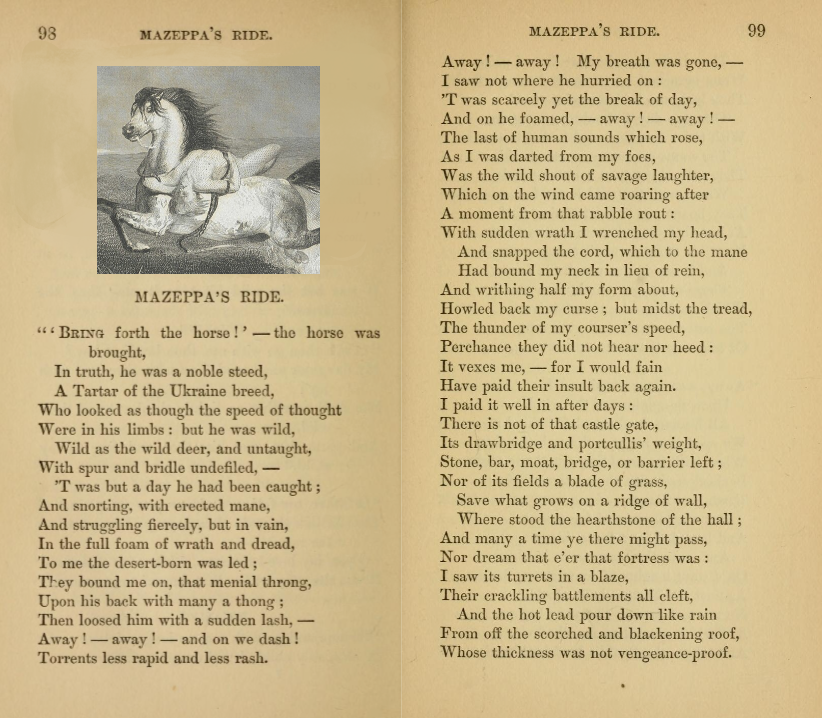
Mazeppa's Ride - Byron

 Salvete Omnes,


While in college I took an advance class in English late XVIII and XIX century literature - from William Blake to Kipling et al. 

Among many poems, novels, and other works of literature we studied there were poems of  George  Gordon, Lord Byron.

Byron wrote a long poem somewhat based on the life of  Ivan (John) Mazepa-Kolodynski, a nobleman of Kurcz coat of arms, and a real political leader, a hetman, of the Zaporozhian Cossacks of the so called 'Left-Bank Ukraine(semi-independent Russian territory on the left bank of the Dnieper River taken from Polish-Lithuanian Commonwealth during the long war of 1653-1667). At first strong ally of the Russian tsar and Polish-Saxon king Augustus hetman Mazepa and his Cossacks switched sides, from Russian-Saxon to  Charles XII, King of Sweden,  during the Great Northern War. But upon the defeat of the Swedish-allied forces at Poltava (allied - Swedish-Polish-Cossack army was defeated  by tsar Piotr  I(Peter) of Russia) he withdrew his remaining Cossack forces into the Ottoman territory, where being a refugee from his land Cossack hetman Mazepa died at Bendery in the fall of 1709.
Byron took the story of the ride from some French publications, perhaps from Voltaire's History of Charles XII, King of Sweden, while Voltaire must have taken it from perhaps some French courtier who had been a courtier or soldier of our king John III Sobieski, and via Polish court had been acquainted with the Mazepa's tragic amorous story. The original story seem to have been  first described by Polish memoirist Jan Ch. Pasek in his memoir. 
The important aspect of the epic poem is the famous Mazeppa's ride -  on the back of the 'Tatar noble steed.' - as we call it a bachmat.


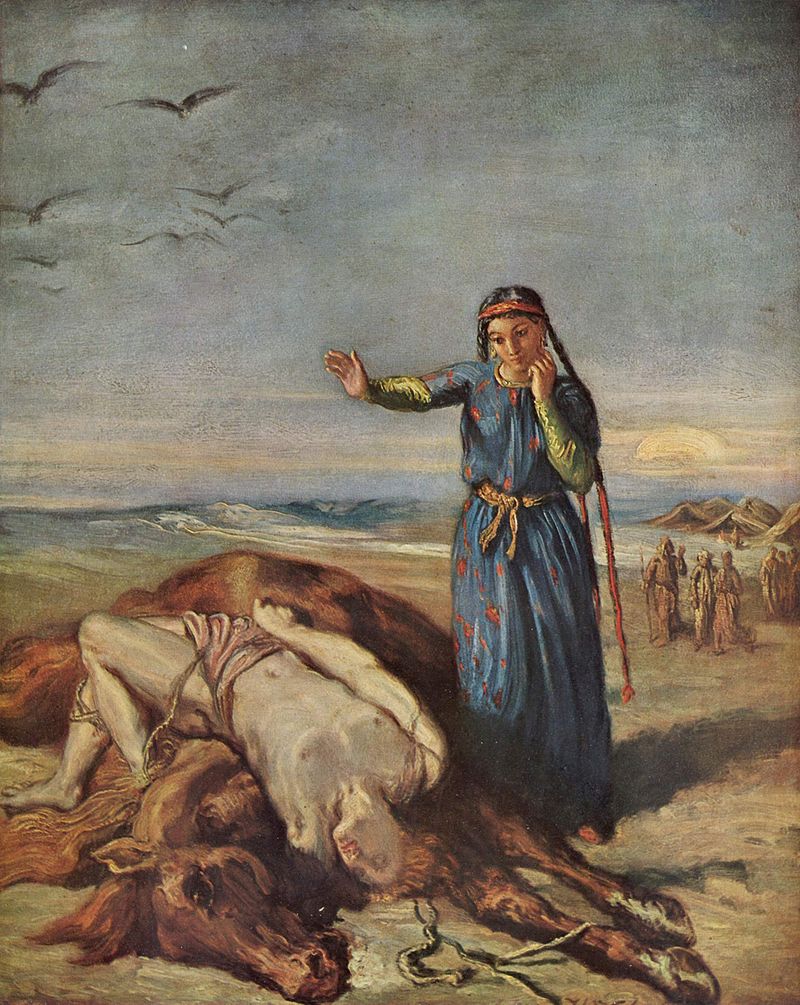
  the Mazepp'a Ride via Byron's own verse and artwork that came after the publication of the poem


one day soon we may read about the historic Mazepa's  ride as our XVII century Polish memoirist Jan Ch. Pasek described it.

Valete

Tuesday, December 14, 2021

Czarniecki , Pasek et consortes - crossing the sea to Als

 Salvete Omnes,


a little remembrance of the Deluge and Polish cavalry action - on December 14, 1658 AD Stefan Czarniecki, commander of the Polish Crown army division in Danish Kingdom, ordered his horse banners to cross the open Baltic Sea waters, circa 500 meters wide straits, onto the island of Als, where the Swedish invaders were holed up. The cavalrymen and their horses crossed the straits and having surprised the Swedish enemy with their resolve and bravery and being somewhat immune to the freezing cold, won the day. 


This event was described in some detail by one of the most famous Polish diarists of the XVII century, Jan Ch. Pasek, who was also a pancerny kozak companion serving under Stefan Czarniecki during the Deluge and this Danish  campaign.


The event was so unusual in Polish history, a very land based nation at that time, that when 150 years later Jozef Wybicki wrote Mazurek Dabrowskiego,  current Polish national anthem, he included this feat in the text of the song.
In Polish art history this campaign was popular with the artists, especially during the XIX century  realism period.


[in Polish]

Wydawnictwo InfortEditions wydalo rok temu prace polskiego historyka Wiktora Czermaka na temat wyprawy Czarnieckiego do Danii.

W tej edycji opus Czermaka sa moje dwie ilustracje nawiazujace do opowiesci Jana Chryzostoma Paska o przeprawie na Als.


Valete

Monday, March 22, 2021

J.Ch. Pasek - Deresz


Salvete Omnes,
[in Polish]

Dzisiaj z tematycznego 'mojego' zbioru poezji o koniach polskich epoki staropolskiej
Oto co był napisał nasz sławny (od odkrycia pamiętników w XIX wieku) pamiętnikarz-Sarmata, towarzysz chorągwi pancernej imć pana wojewody kijowskiego Stefana Czarnieckiego alias czarniecczyk, i zawadiaka a rębajło wielki imc pan Jan Ch. Pasek, herbu Doliwa, o swoim bojowym koniu masci dereszowatej:

Apostrophe
...............
Nie umiejętność moja to sprawiła,
Ale natura dobrym cię czyniła;
Ta zaś łaskawość i kochanie z tobą
Z tej okazyej, żeśmy rośli z sobą.
Kiedym wsiadł na cię, tak mi się widziało,
Że na mnie wojska sto tysięcy mało;
Było i męstwo, było serca dosyć,
Nie trzeba było w pierwszy szereg prosić.
Ustaną teraz we mnie te przymioty,
Ubędzie owej, co była, ochoty;
Zawsze od bystrej wody sokół stroni,
Gdy czuje, w skrzydłach że piora wyroni.
Nie takieć nasze miało być rozstanie,
Nie z takim żalem ciężkim pożegnanie;
Tyś mię donosić miał jakiej godności,
A ja też ciebie dochować starości.
Ciężkież to na mnie będą peryody ,
Gdy sobie wspomnę na owe swobody,
Ktorych, na tobie jeżdżąc, zażywałem
I com zamyślił, tego dokazałem.
Gdy wojska staną w zwykłej bataliej,
Ja nie wygodzę swojej fantazyej.
Więc ciężko westchnąć i zapłakać cale,
Na cię wspomniawszy, moj dereszu — Vale![ .
Ciężkież to na mnie będą peryody ,
Gdy sobie wspomnę na owe swobody,
Ktorych, na tobie jeżdżąc, zażywałem
I com zamyślił, tego dokazałem.
Gdy wojska staną w zwykłej bataliej,
Ja nie wygodzę swojej fantazyej.
Więc ciężko westchnąć i zapłakać cale,
Na cię wspomniawszy, moj dereszu — Vale!

 (z wikizrodla )
 
piękny deresz i jego wielkopański jeździec - autorstwa Agusta Querfurta z XVIIIwieku

 ps
Koń dereszowaty to po rosyjsku  Чалый (масть). A po hiszpansku - caballo ruano. 

 
Valete!

Tuesday, October 20, 2020

Bachmat - kon tatarski

 Salvete Omnes,
today a little entry in Polish  on a 'bachmat' or the Polish word borrowed from the Tatar language, to describe a Tatar horse good for war and chase.


 [in Polish]

zrodla etc:

Bachmat - koń tatarski, equus Tataricae originis (Vasyl...prestitit equum.. bachmath czysavy 1500 AGZ XV , 399. (za Slownik Staropolski, tom 1, strona 50, Warszawa 1953-55). [Equus] caballus Moschoviticus et Scythicus.

 Słownik Języka Polskiego, tom I B. Linde:


Słownik Polszczyzny XVI wieku, Stanisław Bąk et al,. tom 1, strona 260


kolejne źródło to Glogera 'Encyclopedia Staropolska' tom I :

- 'sama końcówka at wskazuje, że to wyraz perski. Po turecku bachmat znaczy koń, po persku zaś 'pechn' (wymawiane przez Turków bachu) znaczy szeroki. To też bachmatami nazywali Turcy konie tatarskie, grubopłaskie. na niskich silnych nogach. Wyraz ten, po upowszechnieniu się w Polsce, oznaczał również człowieka krępego, barczystego, opasłego. Bachmaty tatarskie słynęły z wytrzymałości na głód, pragnienie i trudy.'

'Dorohostajski w swojej Hippice powiada, że ''Tatarowie bachmatów swoich aż w piątym roku dosiadają".

Gwagnin o bachmatach mówił, że są to wałaszone wielkie i rosłe konie tatarskie, które głowy ku górze w biegu podnoszą [niczym konie peruwiańskie czy np Morgany z US]. Wacław Potocki twierdził, że ''Tatar się bachmatem szczyci".

[W Wielkim Księstwie Moskiewskim miedzy XV a XVIII wiekiem bachmatami nazywano lepsze i szybkie konie tatarskie, sprowadzane do Moskwy ze stepów nadwołżańskich, od Nogajskich Ord.]

'Wyrazy: bachmat, bachmatka (o klaczy), bachmatowaty, przechowały się u ludu polskiego do naszych czasów, a są i przysłowia staropolskie: 

1) Idę na wyprawę — choć bachmata zdobędę;

2) Żebyś się twą zdobyczą na bachmata nie utuczył.

Pierwsze było wyrażeniem udających się przeciw Tatarom, drugie żartobliwą wróżbą, że nadzieja obłowu na Tatarach zawiedzie. '

                                                               ***

z Wielkiej Encyklopedii pojecie 'Bachmat' - i tutaj mamy najlepsza definincje jak do tej pory- z 1891 roku

'Nazwę tę nosił dawniej u nas koń bojowy, tatarskiego pochodzenia, jak to sama nazwa wskazuje; lotny, wytrzymały na głód, pragnienie i trudy, szczególnie przydatny dla lekkiej jazdy[ choc z tym mozna polemizować, bo inne bachmaty mogły były być w XV-XVI (pisze o 'yych roslych walachach ' Gwagin) wieku a inne w XVIII].'

'Nie możemy określić rasy, do której taki koń należał, w dzisiejszym tego słowa pojęciu. Pierwowzoru jego szukać raczej należy w tych licznych szczepach koni, które zasiedlają południowy wschód Rossyi, a więc pomiędzy końmi karabachskiemi, czerkieskiemi, kałmuckiemi, kirgiskiemi, krymskiemi i dońskiemi, oraz w produktach krzyżowania z sobą tych rozmaitych typów.'

Dalej: 'o twardych kopytach tych bachmacików tatarskich sam Dorohostayski pisze w swej księdze Hippika, rozdział O Kowaniu koni - Wielka to cnota w koniach, które nie z obrazą kopyta bez podków chodzić i drogi odprawować mogą: mają to niektóre z natury, jako bachmaty tatarskie.'

                                                                  *** 

Przy okazji - tutaj  obfite fragmenty źródeł zawierające 'bachmat'  - to np pamiętnikarz Krzysztof Zawisza w roku 1698 napisał o stracie swego bachmata - Koń mój kochany i doświadczony skaleczał i zdechł, bachmat biały tatarski; miałem go od Pruszkowskiego sługi mojego, berdyczewskiego gubernatora.'


*** 

Słownik Terminów Hipologicznych używanych w Polsce XVI-XVIIw na stronie 10 również  zawiera hasło bachmat, ale także obok sa fantazje i facecje 'lingwistyczne':  bachmacik i bachmatek, które autor nierozumiejący języka staropolskiego wyimaginował sobie , choć fragmenty źródłowe cytuje 'grzeczne' bo z Bielskiego -  .na małym bachmaciku ubiegł rumaki rosłe i ozdobne',  i za J. Ch. Paskiem - ''podobny był do bachmatka i łączek na niem goły, skorką tylko powleczony na kształt mody tatarskiej'' (tutaj wyjaśniam te hasła)

                                                                 ***

Nowsze polskie opracowania (eg ,  Grażyna Rytter, Wschodniowsłowiańskie zapożyczenia leksykalne w polszczyznie,  strona 47, wiki) wywodzą pierwotną nazwę  bachmat, pisane jako bahmat?,  od turecko-arabsko-perskiego połączenia  określenia 'bahim' czyli określenia na konia o  jednolitej maści[ bez żadnych odmian].
(bahim za Franciszek Meninski* John Richardson et al,  A Dictionary, Persian, Arabic, and English et al., strona 302, London 1829 i 1852),  i perskiego  slowa pehn/pechn -szeroki (wymawiane jako bah) i at (tureckie slowo na 'konia'?).

..


Back to English, there is a connection between bachmat (the horse) and the famous Great Northern War Zaporozhian Cossack leader Ivan Mazepa, but about that I will have another post , God willing.

Valete

*przy okazji ciekawa jest historia lotaryńczyka Franciszka Meninskiego autora sławnego słownika Thesaurus Linguarum Orientalium Turcicae, Arabicae, Persicae, Wiedeń 1680).

Friday, September 14, 2018

Jan Chryzostom Pasek - szwadron

Salvete omnes,
[in Polish]
Na blogu raczej nie sięgałem do Paska, ale dzisiejszym wpisem otwieram sobie drzwi do świata widzianego w pamietnikach pana Paska.
 Ad rem, imc pan Jan Chryzostom Pasek,  wciąż sławny [1]  i  niezwykły pamiętnikarz epoki II polowy XVII wieku, obywatel i zolnierz  Rzeczpospolitej Obojga Narodów, którego pamiętniki oprócz ogromnej wartości literackiej i historycznej są także gotowym scenariuszem na szereg filmów i seriali filmowych, komiksów czy opowieści graficznych czy nawet gier cyfrowych - ale o tych głucho i cicho wszędzie, niestety.

 I przywołany dzisiaj Pan Pasek napisał był o tytułowym  szwadronie w kwestii husarii circa AD 1660, kiedy to dywizja Stefana Czarnieckiego z wojskami Wielkiego Księstwa Moskiewskiego i Kozakami ukraińskimi nad rzeka Basia się uganiała.

Skąd wpadłem an przywołanie wpisu pana Paska, otóż czytając dr Radka Sikory jedyna jak do tej pory na rynku polskim prace o husarii pod Wiedniem AD 1683 pochyliłem się nieco bardziej  nad fragmentem o szykach husarii a zwłaszcza nad akapitami dotyczącymi taktycznej jednostki jaka wydaje się był 'szwadron' w bitwie pod Wiedniem (strona 14-141) te 335 lat temu.
 Tamże autor wnioskuje, ze chorągiew husarska tworzyła z dwoma chorągwiami pancernymi jednostkę taktyczna (PHP) zwana w przekazach źródłowych z epoki 'szwadronem', 'szkwadronem' czy 'skwadronem' (ta nazwa już wcześniej była znana, bo od początku XVII w. - nota bene szwadron epoki Sobieskiego to po francusku  le escadron np z przekazu Dupont'a Memoires, strona 138).

O związku taktycznym husarsko-pancernym zwanym szwadronem dr Radek Sikora pisze dużo wcześniej bo już w swej pracy doktorskiej, w rozdziale o szykach husarii. Pisze o szwadronie także w innej swej książce o niezwykłych szarżach i bitwach husarii.

Wróćmy do naszego towarzysza pancernego dywizji Czarnieckiego AD 1660, ergo Jan Pasek pisze o husarii i szwadronach - (edycja Wladyslawa Czaplinskiego, Warszawa 1979, strona 159) co nastepuje:
bitwa nad rzeka Basia:
-- ''Rok 1660[...] ale ze res non patiebatur moram*[...] Uszykowano tedy wojsko tak, jak i przeciw Chowanskiemu; ale juz choragwie husarskie, których było dziewięć, rozdzielano - kozda na trzy szwadrony, a za kozdym szwadronem pancerna chorągiew. Bylo tedy wojsko tak ozdobne, ze się zdało, ze jest husaryjej ze sześc tysięcy. Stanelo tedy w szyku wojsko; my [Pasek w choragwi] z Woynillowiczem na prawe skrzydło...'' --
 Kwestia czy użyta przez Paska nazwa odpowiada użyciu tejze pisowni i nazwy juz w  1660 roku czy tez była bliższa okresowi pisania Pamiętników przez imć pana Paska czyli epoce lat 1690tych.

W każdym razie chciałbym zaznaczyć zaistnienie szwadron jako jednostki taktycznej stworzonej zdaje się doraźnie bo głownie z powodu braku wystarczającej liczby kopijników (husarzy) w armii polskiej w czasie trwającej kampanii wojennej, i później rozwijanej w ciągu kolejnych kampanii wojennych , zwłaszcza epoki Jana Sobieskiego,  jako cześć historii polskiej sztuki wojennej i historii jazdy polskiej.

Ilustracja to kombinacja fragmentów  ryciny Abrahama van Booth'a circa 1628, planuje zrobić szereg ilustracji pokazujących szyki chorągwi husarskich i pancernych.

Valete.

*-''rzecz nie cierpiala zwloki'' [lacina]

[1] (bo czasy mamy ciekawe, i możne być uznanym np za staropolskiego szowinistę czy rasistę i wyrzucony z panteonu literatury staropolskiej etc)