Showing posts with label reconstruction. Show all posts

Sunday, February 12, 2023

In the saddle, on horseback - The art of war of the conquest-era Magyars - a film

 Salvete Omnes,

X century Magyar horse archer from Basilica Patriarcale (Aquileia)


a short entry - 
there is an amazing production to be watched on the web.
Namely, Digitalis Legendarium, from Hungary, produced a 28 minutes film titled:
In the saddle, on horseback - The art of war of the conquest-era Magyars. - link here. 

a screen shot - 
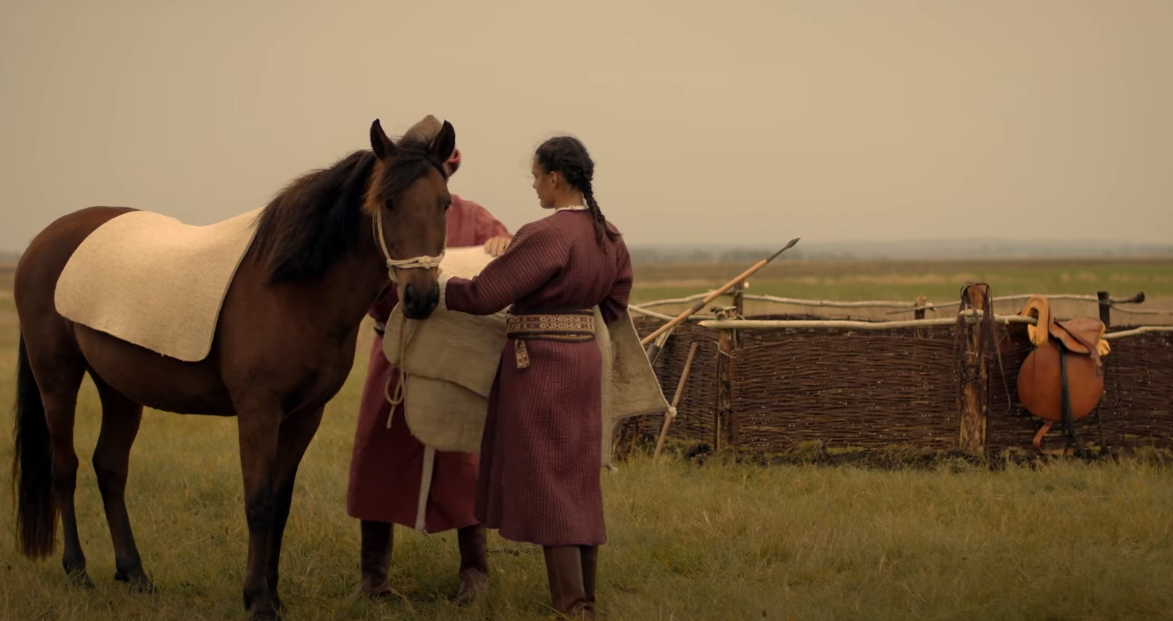

It is breathtaking presentation of the Magyar warriors and their military equipment in a very short, beautifully shot and presented video production. We get to see the bowmaking - arrows, recurve Hungarian bow, quivers, and bowcases, including straightening the arrow shafts with a special but simple device ; iron smithing , forging sabres and making them beautiful, making helmets and chainmail etc
We get to see the display of historic horsemanship & horse archery, and spear, battleax, and sword skills while astride the fabulous Hungarian horses. 
Then there is a segment on Magyar miltary organisation, strategy, tactics, and a short story of their campaigning in the early X century Italy etc. 
at the end we get a list of archaeological sites  from where this film reconstructed objects originated.  

enjoy 
ps
the makers of these Netflix,Disney or Amazon etc films and movies could learn a thing or two about how to show history and make it amazingly accurate and pleasing to the eye too.. alas, they gave us the horrible Witcher, Rings of Power and some other ridiculous imagery of the viking or some other fantasy.. 

Valete

Friday, February 26, 2021

Assyrian chariot - reconstruction in progress

 Salvete Omnes,


as you may already have known I am a big proponent of reconstruction and historic reenactment.

A friend of mine from Poland, Kuba Mikolajczuk who is a historian, history enthusiast and journalist, provided me with the link to this Youtube content creator from Australia.   Ancient Assyrian Props & Costumes of - thanks Kuba!

This gentleman - Donald Barkho - from Australia is working on a reconstruction of an Assyrian (Neo-Assyrian Empire) chariot  - Assurnasirpal II-style, as he calls it. And  here is a video link to the progress in his reconstruction - very interesting study in actual construction and potential issues while using.


Valete

Tuesday, January 1, 2019

Brand New 2019 - Evgeny Kray nomads

Salvete Omnes,
so we have crossed into 2019 - by by 2018 -:)
I would like to start with a link to quite spectacular page - of Evgeny Kray, Russian illustrator who has been reconstructing the ancient Eurasian nomads.
Here is the link to his VK page (including wall photos  and album showing his drawings based on Scythian kurgan of Kul-Oba artefacts).
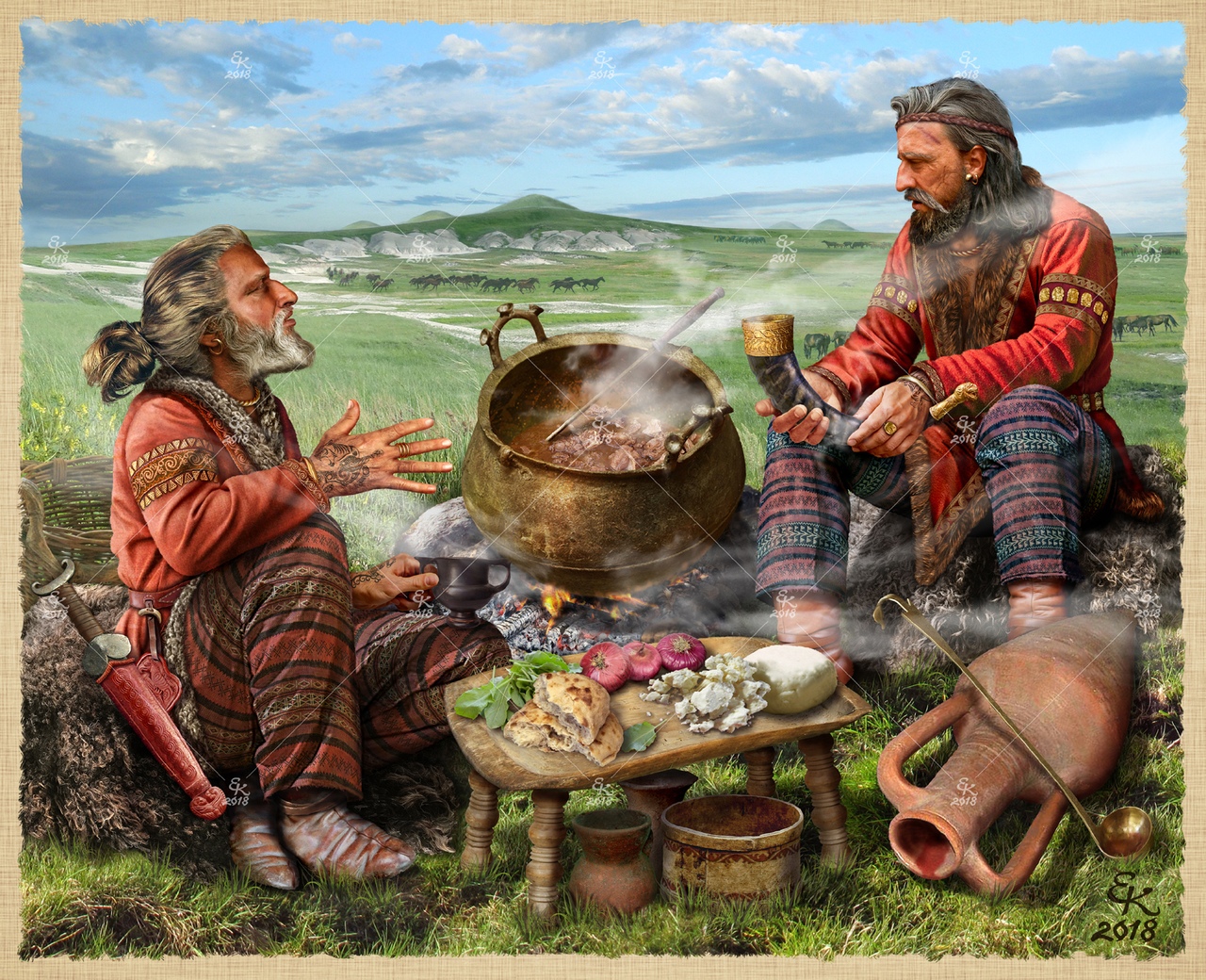
a Skithian feast, North Pontic V-IV c BC

above and below some of the plates - with all of quite evident errors in horse anatomy etc   - while the costume and armory is his own reconstruction.
Kimmerian vs Skithian north Caucasus VII c BC
Skithian Amazon warrior - north Pontic IVc BC
Sarmatian - Kuban steppe, III-II c BC
Sarmatina, Filipovka Kurgan
Meothic horseman - Kuban region
Sarmatian from Bosporan Kingdom and a wounded Skithian - III c BC
There are many questions and few answers, but this is one giant step into the visualization of the ancient Eastern European warriors and their horse tack.

Photo by Edward S. Curtis - great American photographer who immortalized the warrior horsemen of the Great Plains
I think , bah, I feel and have felt for a long time there is a connection between the ancient nomads of our Eurasian steppes and the mounted Indians of the Americas. I have been studying both over all these years.

Valete
ps
all Skudra images(and description) are copyright of Mr Evgeny Kray.

Sunday, July 22, 2018

Radek Szleszynski's newest Old Polish horse tack

Salvete Omnes,


last week our great historic tack maker Radek Szleszynski finished a complete set of horse harness based on an example held in the Polish Army Museum at Warsaw, and according to the art historians the original belonged to the Sapieha family clan.
Radek made it for his own winged hussar outfit and it will be worn by a horse ridden this August 15 during Army  Historic  Parade in Warsaw.
The leather material used in this project was goat and jucht (Russian leather aka bark-tanned cow hide)  leather. Goat skin was vegetable-tanned and dyed to malachite color. Leather parts were sewn together with the waxed linen thread.
The entire metal elements of this harness are brass that were cast via lost-wax casting, molded via Astragal (beaded molding) method and cut to finish.


Valete!

Tuesday, August 9, 2016

Saddle from Wielun XV century

Salve,
yesterday I wrote about  visiting the Slav and Viking Festival in Wolin, Polish Republic. I met there Mieczyslaw Mietko Machowicz from Kalisz, Poland, who leatherwork master and historical leathercraft reconstructor and researcher.
In his tent, along with many different examples of his craft and various leather and hides for sale, he had several interesting examples of horsetack and several saddles.

The saddle that brought my utmost attention is this one, from Wieluń in Poland:

reconstructed XV century saddle

 Article about the exhibit in Wielun, including a short information about this saddle, and many photos from this exhibit.

historic excavated saddle from Wielun
a Polish saddle circa 1467, a detail of a painting from the Holy Trinity/Holy Cross chapels at the Wawel cathedral
The historic saddle reconstructed by Mietko was excavated during the archaeological excavation in Wielun, Poland. According to the maker, the saddle has been used while riding, on the Polish 'konik' and with plenty of comfort and safety.
Below find some photos of this historic reconstruction.

saddle tree, horizontal view

saddle, horizontal view

saddle -front arch(pommel), right side

saddle - front arch (pommel), left side

saddle and saddle tree, horizontal view

saddle, 'underside' with rear arch (cantle) visible- with bars covered, and birch bark layers shown, saddle skirts from underneath

saddle, 'underside' with rear arch (cantle) visible- a closeup

so as you can see the saddle appears to have been a riding saddle, not a lancer war saddle, but it could have been used by the crossbowmen and squires too.
and one of my most favorite saints always on horseback - St. Martin in a painting from late XV century Kingdom of Hungary

ps
when I opened the photos I realized that I had not taken any shots of the saddle tree alone, and no shots of front and rear arches (pommel and cantle).