Showing posts with label Thessalian horse. Show all posts

Sunday, July 17, 2022

Petasos and Thessalian horsemen continued

 Salvete Omnes,


more about this ancient Greek horseman and their petasos hat (sort of early Latin American and Southwestern US hacendado 'sombrero' and then cowboy hat) 


just a short entry with a quote from prof, Nick Secunda -The Ancient Greeks. London 1986:


'[...] the Thessalians were the finest horsemen in Greece, and cavalry in Thessaly retained a prime importance in battle when it had become almost obsolete throughout the rest of the Greek mainland [not including Macedonia].
Thessalian riding dress was quite distinct , and adapted to the climate of the landlocked plain - very hot in summer, very cold in winter, thanks to the mountain-chains which surround it. The extravagantly wide-brimmed version of the Greek petasos, or sun hat, kept out the heat and dust of the plain, while , enveloping Thessalian cloak kept the wearer warm in winter but cool in summer. These two distinctive features of Thessalian dress are shown on a great number of Attic white-ground lekthoi which seem to show Athenian aristocrats dressed after the manner of their wealthy Thessalian counterparts. ' 

in these two lekthoi images you can see the realistically painted wide brimmed hat, chlamys, javelins, riding boots etc


to be continued
enjoy

Valete

Sunday, July 10, 2022

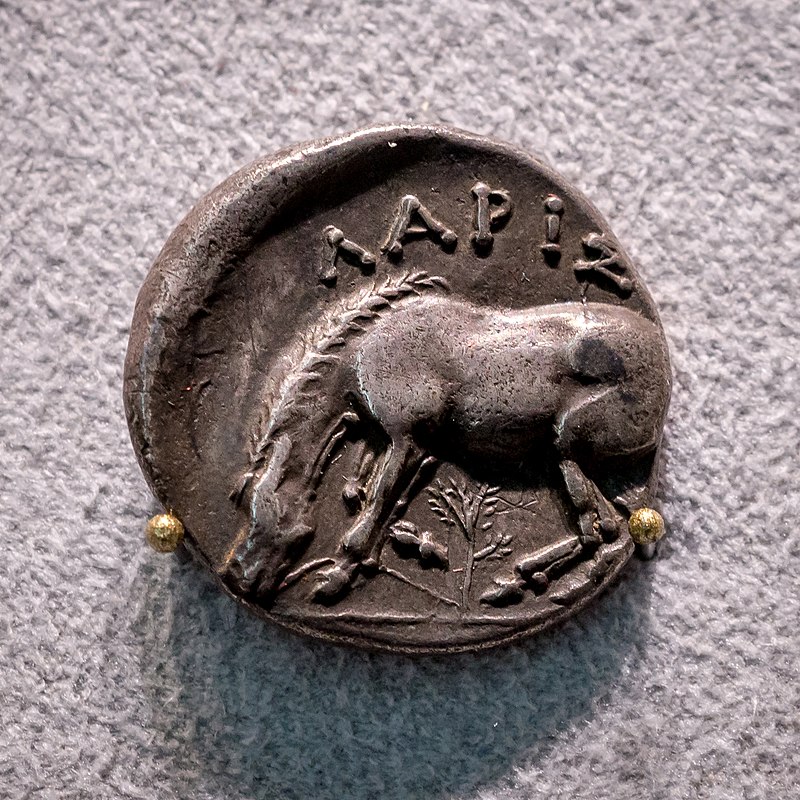
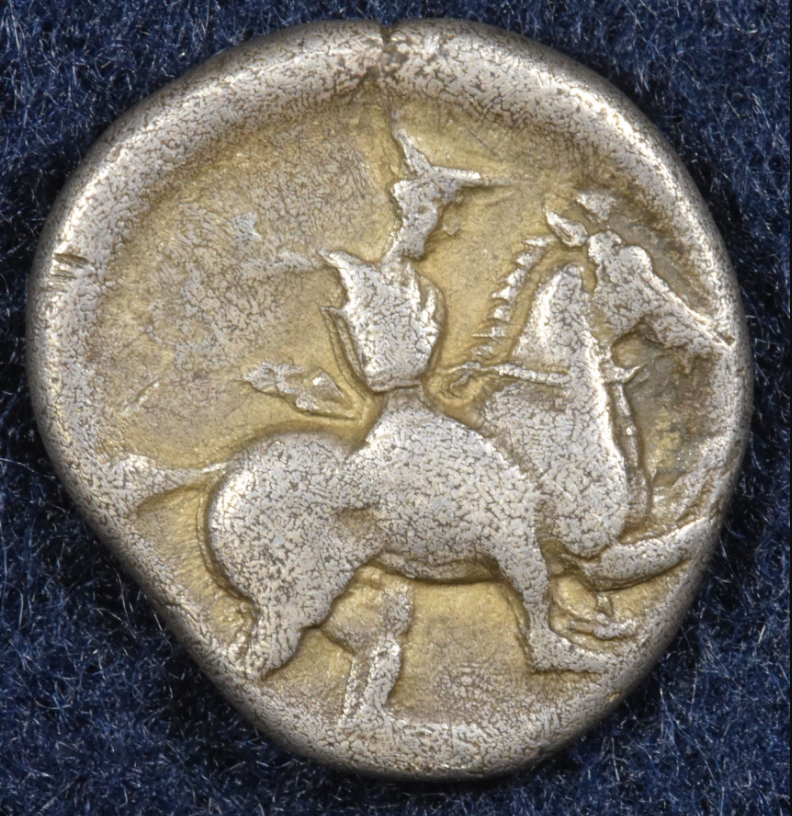
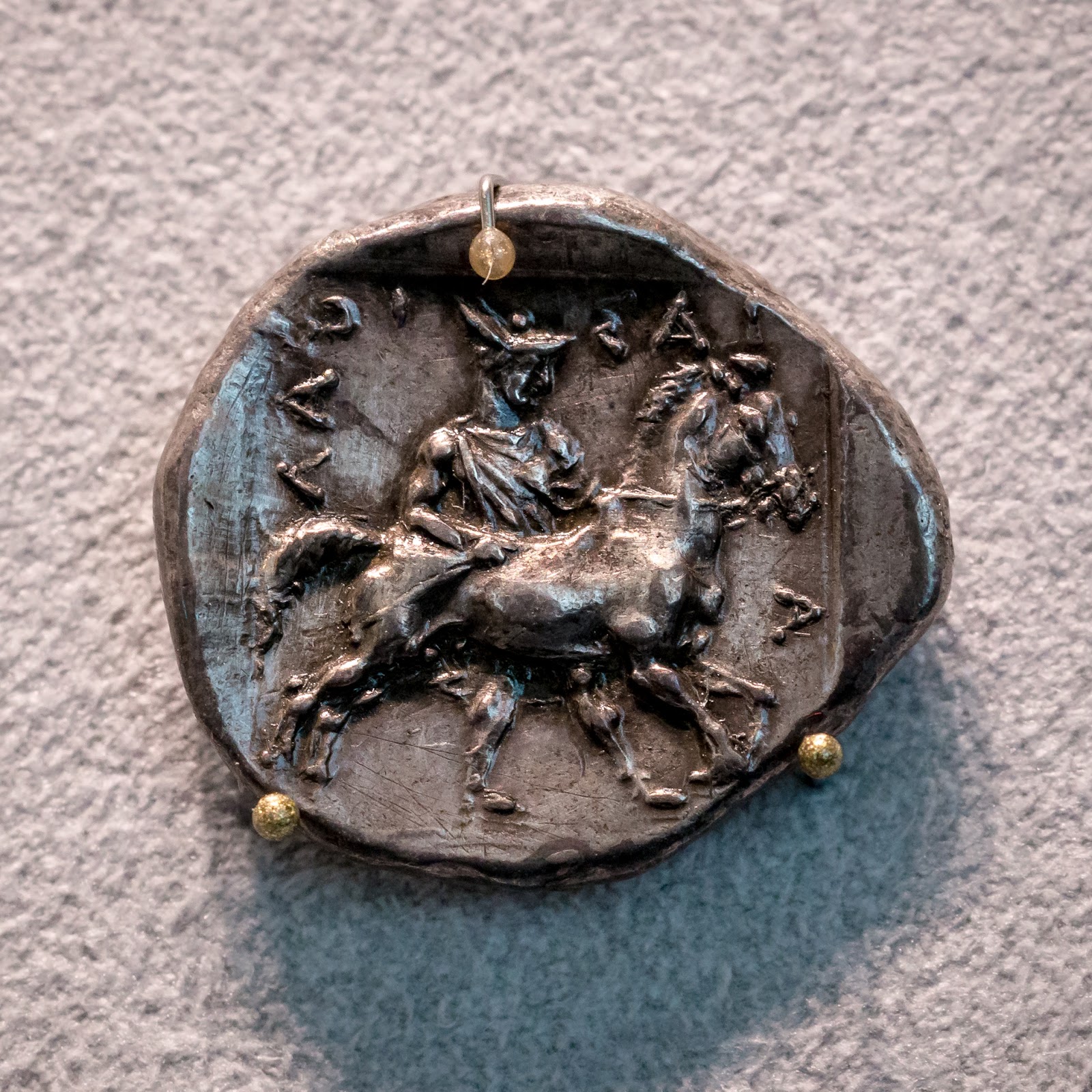
Ancient Thessalian horse and rider in their coins

 Salvete Omnes,


in my mind the land of ancient Thessaly has always been the land of horse and rider - with petasos, spears, javelins, chlamys etc.
Thessaly was a region of ancient Greece situated between the Pindos in the west (separating Thessaly from Epeiros) , Cambunian Mountains with Mount Olympus range in the north-east ending into the Aegean Sea (thus separating Thessaly from Macedonia), and  Mount Ossa and Magnesian (Pelion) range in the southeasterly direction ending with a peninsula into the Aegean Sea, and Mount Orhrys range  in the south(separating Thessaly from central Greece). In the center of this mountainous land there was a plain with rivers where ancient Greek horses were bred and horsemanship practiced. 


Thessalian lords had their sort of helot like dependent-class known as penestai and tribute paying free-class of perioikoi. Thessalians aligned themselves with Xerxes, the Great King of Persia, during the Persian invasion and returned to the Hellenic side after the battle of Plataeai of 479BC. Yet cities dominated Thessaly like Larissa, Cranon, Pharsalos and Pherai/Pherae somewhat unified into so called Thessalian League. 


Towards the end of classical age one lord emerged as the overlord or tagus/tagos of all Thessaly- Jason of Pherae.


Xenophon wrote about him in his Hellenica - on archive  or perseus.tufs.edu


Then came Philip of Macedon and it his 'unifying' of Thessaly (Thessalian League) with his and the Alexander's kingdom cemented the new state - only the Roman conquest ended Macedonian kingdom rule in 197BC, but then in 146BC Rome created the province of Macedonia and Thessaly was incorporated into that province. 


So I corralled some of the horses and riders from the Thessalian coins 


more coins of Thessaly during the classical and Hellenistic age here


Valete

Thursday, February 7, 2013

Ancient horse from coins

Salve,
today is Tłusty czwartek (Fat Thursday) and our Polish folklore associates this day with eating pączki  and other delicious sweets; so enjoy them wherever you can find a Polish bakery :)

Good traditions aside,  I have been browsing the web looking for the ancient coins and other Hellenic and Roman art images showing Dioskouroi riding horses and holding palm branches, and I cam across some very interesting coins from the ancient Greeks sphere of influence, i..e., Mediterranean Basin. Why are they interesting? Well, because they show different types of horses.

Please note that I do not own any of these images nor have any right to them - they came from this website Ancient Coin search Info
I am showing them to simply share these interesting depictions of horses of the ancient Hellenic world.
Coins from V to III century B.C. - let's the images speak for themselves . Note that Ann Hyland has written on these horses in her book Equus, The Horse in the Roman World.
..
 circa 260 from Carthage - a Numidian stallion?

..
 Tarentine, Magna Graecia (Italy) - Osprey has a book on the Tarentine horsemen, we need one on the Numidian horsemen

..

..

..
 Macedon - Thessalian, Thracian, perhaps steppe influenced horses, eg king Philip II, father of Alexander, brought from his wars (340s B.C.) against the Thracians and Scythians thousands of horses as war spoils - so tell us the ancient historians, eg Quintus Curtius Ruffus or Arrian etc.


Paeonia (Greece)

..
 Thrace - Thracian horse, note the famous mares of Greek mythology or Rhesus of Thrace horses

..


Thessaly - a Thessalian horse


..

..

..
Caria, Achaemenid satrapy in Asia Minor - Nisean horse

..