Showing posts with label Indo-Europeans. Show all posts

Friday, January 30, 2026

The Rise of the Slavs

 Salvete Omnes,

a short entry - Razib Khan talks to Peter Nimitz about the rise of the Slavs-  from the Proto-Indoeuropeans to the medieval Slavic explossion all over Central, Southern, and Eastern Europe. 

Through the more than a 1000 years of war against the Germanic invaders, and the 500 years of wars against the Turkic-Tatar nomads and the Ottoman empire, until the conquests of Vienna 1683, capture of Crimea in 1770s and liberation of the southern Slavs in the XIX century. 

Finally, until the victories of 1944-45 wiped out 1000  years of the German Drang nach Osten.


.


.


.


Mucha's Slavic epic 


enjoy


Valete

Thursday, July 24, 2025

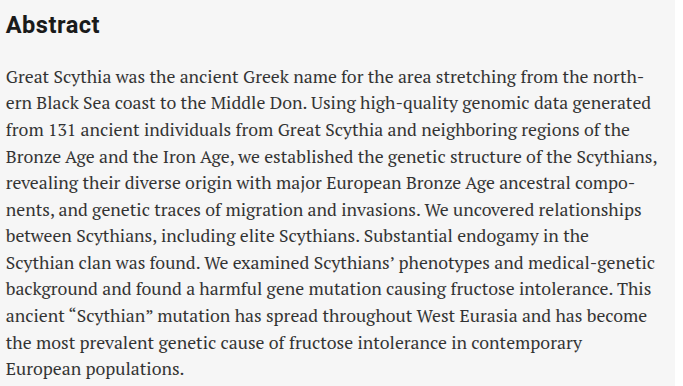
Genetic History of Scythia - Herodotus & DNA

 Salvete Omnes

a short entry -  


The Science Advances portal they published this article -  Genetic history of Scythia  - Tatiana V. Andreevea et al.,


.


.


enjoy

Valete

Wednesday, July 5, 2023

Sintashta chariot - the dawn of horse chariotry

 Salvete Omnes,


a short entry today, it is summer time - but lots of viewing pleasure, I daresay.


So here are two very interesting, exciting and unusual videos completely breaking and doing away with the narrative of the Bronze Age chariot being a Middle Eastern invention and practice. The presentations are about the Sintashta (Petrovka) culture of the present southern Russia and northern Kazakhstan, their chariots and the chariot reconstructions via experimental archaeology. 

In the chronological order:


The Sintashta culture - earliest chariots, fortified settlements and bronze metallurgy.  


EXARC - The Bronze Age Chariot of the Sintashta-Petrovka Period


Therefore we are able to see perhaps the very first charioteers from XXI century BC (2100-1800BC) . These were the possible inventors of driving harness and the very vehicle itself, plus the second most epochal aspect - horse breeding, selections and training for war (both archaeologists from the Torun presentation (late May conference in Torun, Poland) have their pages on academia, where, along with another seasoned archaeologist dr Andrey Epimakhov's work.

Ivan Semyan

Igor Chechushkov

Andrey Epimakhov

Upon registering on Academia you can download and then can study detailed explanation of the harness reconstruction, training, equipment, and surviving artefacts etc via their articles and books . 

Nota bene, in 1999 dr Anthony , after  the1995 carbon dating of the Sintashta discoveries, published his paper - The Sintashta Genesis. 


In light of last 40 years of research (eg the most important may be the English language work by prof. David Anthony's 'The Horse, the Wheel and the Language' already discussed here ) and many years of the experimental archaeology then the publications like Osprey Military Publishing: 

'The Mycenaeans' (2005).

'Bronze Age War Chariot' (2006) and some others must be corrected as it contains false information and thus is a 'garbage.'

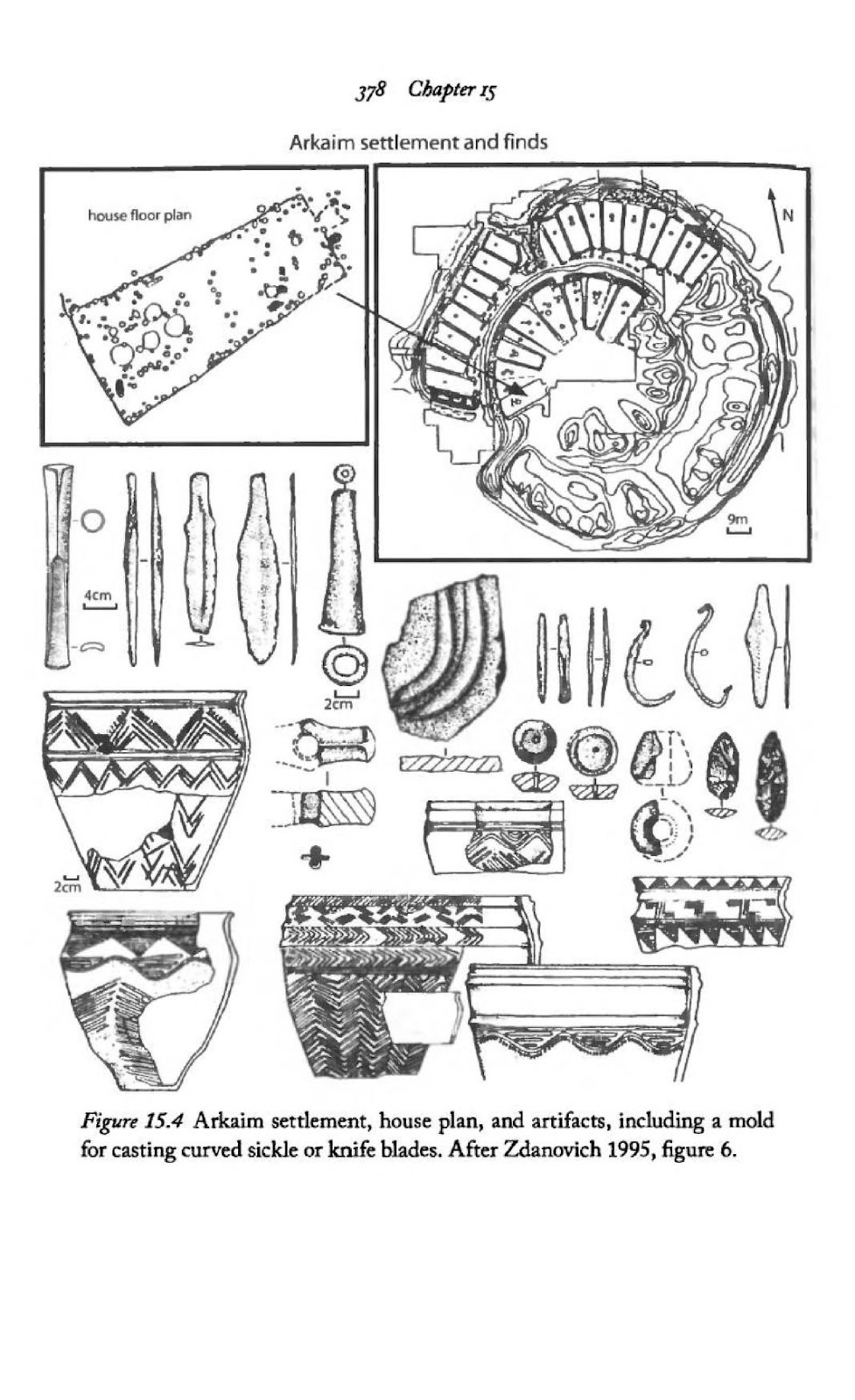
Arkaim/Arkhaim today 


Valete

Sunday, June 18, 2023

Tamgaly Petroglyphs - dawn of domesticated horse

 Salvete Omnes,


we will lope to the Central Asian heartlands - the Kazakhstan's heartlands where many rock art sites have been discovered and some studied and preserved in a kind of open air museums.


In Zhetysu or Semirechye ( the Seven Rivers) region of Kazakhstan there is this area known as Tamgaly/Tanbaly Reserve Museum and UNESCO site (Tamgaly River valley)- here, in this article from academia - authored by S. Sapatayev & B. Zheleznyakov cum J. Biver - you can view the geography (maps) of the region and  one fine rendering  of the Bronze Age petroglyphs from Tamgaly. First studied and described by a Soviet archaeologist A.G. Maksimova in 1958, these petroglyphs and associated archaeological sites have been studied by scientists. 


The Sun-beams & Sun-heads from the mentioned article - associated wit the Andronovo culture, and burial grounds belonging to the Andronovo culture (Atasu and Semirechye variants of  the Andronovo culture within Kazakhstan)the  have been found in this area.


Poznan Adam Mickiewicz University researcher prof. Andrzej Rozwadowski's article on the shamanic characteristics of these petroglyphs - more interesting aspects & examples  of this rock art in the Eurasian context can be found on the professor's  academia page (linked in his last name) 


you have many more available for viewing and downloading from wiki commons eg


a horse with ibex? horns like in the later Scythian/Saka kurgan burials eg Berel kurgans reconstructed by prof. Krym Altynbekov


Apart from horses and humans there are deer, cattle, argali (mountain sheep), camels and sacred motives etc.

Valete


Saturday, March 4, 2023

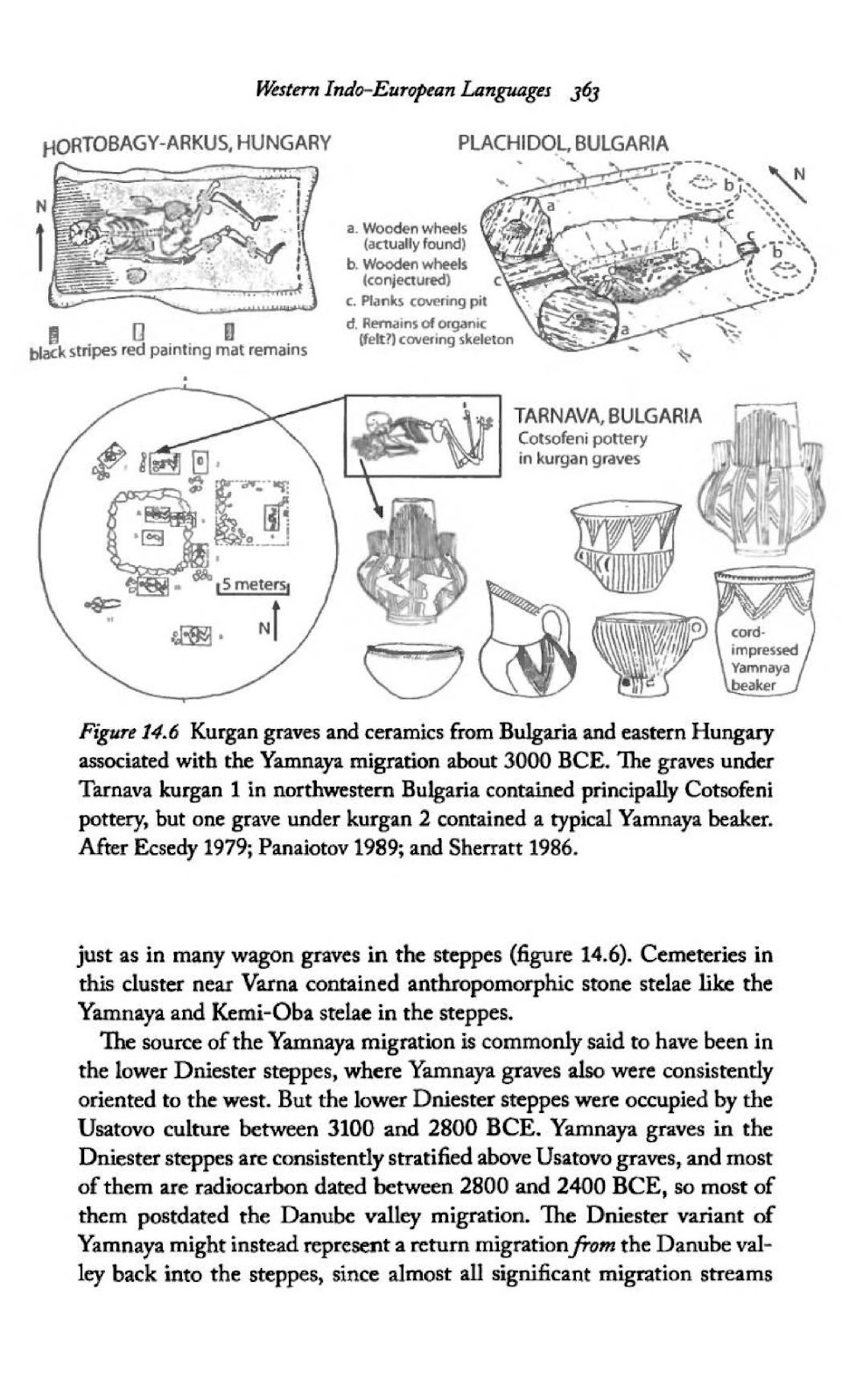
Yamnaya 'cowboys' skeletons and evidence for horseback riding

 Salvete Omnes.

March is upon us - bring peace to Ukraine, especially the Donbas  region...


photo credit: A. Frînculeasa, Prahova County Museum of History and Archaeology

a short entry -   the bioanthropological evidence for Yamnaya horsemanship, published in Science, vol 9, no.9, (March 3, 2023) .
Nota bene another Science article about the first horse tamers from the Eurasian steppe.


The Yamnaya Culture, the herders, horses, artefacts etc has been subject of my posts in the past, you can click on labels to go to those entries.
Today, a link to the article on skeletal remains of those Yamnaya cowboys' analysis from the point of view of osteological evidence.  


from the Abstract  - the entire article here.

The origins of horseback riding remain elusive. Scientific studies show that horses were kept for their milk ~3500 to 3000 BCE, widely accepted as indicating domestication. 

However, this does not confirm them to be ridden. Equipment used by early riders is rarely preserved, and the reliability of equine dental and mandibular pathologies remains contested. 

However, horsemanship has two interacting components: the horse as mount and the human as rider. Alterations associated with riding in human skeletons therefore possibly provide the best source of information. 

Here, we report five Yamnaya individuals well-dated to 3021 to 2501 calibrated BCE from kurgans in Romania, Bulgaria, and Hungary, displaying changes in bone morphology and distinct pathologies associated with horseback riding. 

These are the oldest humans identified as riders so far.

  Skeletons from Hungary, Bulgaria and Romania were studied and analyzed. Perhaps due to the Russia-Ukraine war no tests were done on the skeletons originated from burials further east in the Western Eurasian steppe.


 Nota bene , they found probable origin of the Bubonic plague in the Late Neolithic/Bronze Age gravesites.


Valete

Saturday, December 31, 2022

David Anthony et al - Indo-Europeans and the Horse

 Salvete Omnes,


this 2022 is about to expire today - so I will post one more entry today:


the Proto-Indoeuroepans and their wheeled wagons and horses and the rest is history..


I have discovered for myself that Dr David Anthony made his book - The Horse, the Wheel and the Language - available on Archive.
And here you can listen to dr Anthony being interviewed on the subject at hand - the origin of the Indo-Europeans.


Dr Kristian Kristiansen, archaeologist from Sweden (google scholar and Academia), who participated in this great paper - The origins and spread of domestic horses from the Western Eurasian steppes- delivered a very fine lecture here - Towards a New European prehistory: genes, archaeology and language . And here dr Kristiansen gave interview on the subject - the Birth of Northern Europe.


And the very interesting interview with dr James Mallory - Finding the Indo-Euroepans.


My post illustrated with the pages from The Horse, the Wheel and the Language - all archaeological artefacts. 


Happy New Year

Valete