Showing posts with label Józef Poniatowski. Show all posts

Friday, June 6, 2025

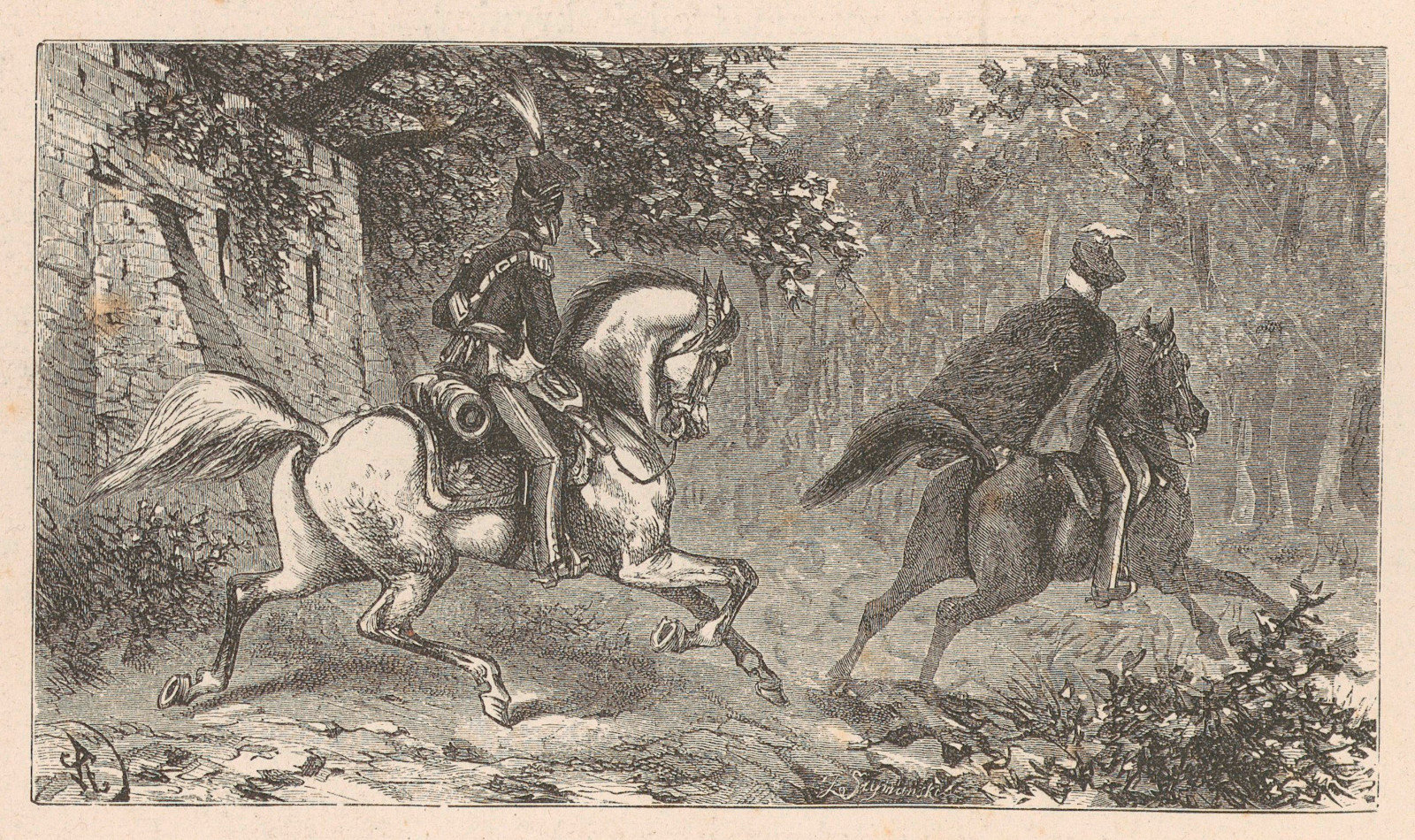
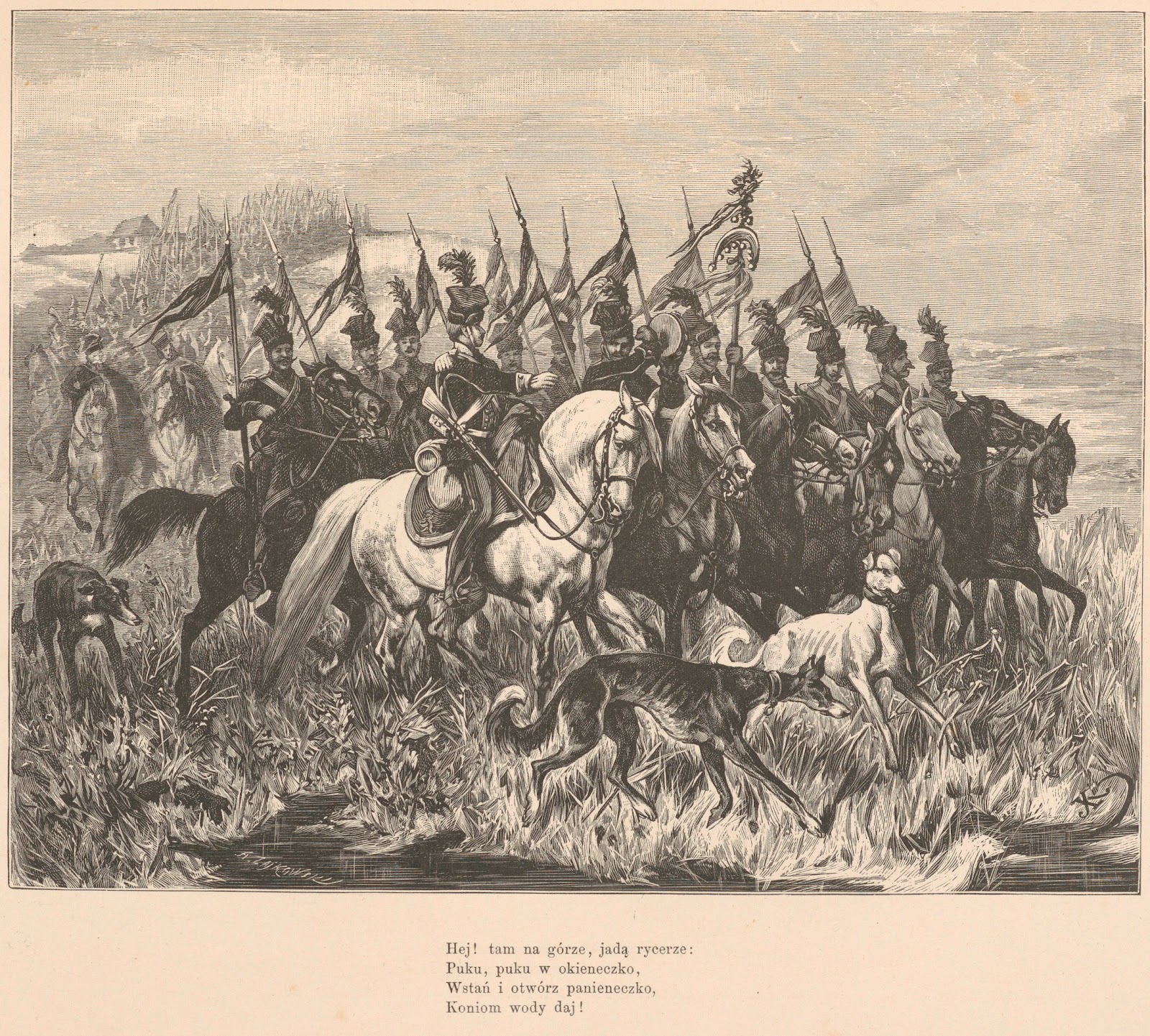
Julisz Kossak - Pol's Mohort illustrations


 Salvete Omnes,


in 1836-39 while living in village of Kalenica Wincenty Pol,  already a poet and veteran of November 1831 Uprising,  met a nobleman and veteran of Polish pre-1795 army, Duchy of Warsaw and all the other wars Poles fought in the early XIX century,  general Franciszek Ksawery Krasicki. 

Pol also met and conversed with another veteran major Kazimierz Ostaszewski of Zarszyn. In Nienadowa he met another veteran soldier Antoni Debinski, commander of infantry battalion in the pre-1795 Polish Crown army.
All these veterans told to Wincenty Pol these chivlaric  stories about one brave cavalryman Szymon Mohort, who in the autumn of this life, being almost a 100 years old  and still a soldier, was killed  defending Polish lands against the Russian invasion in the battle of Bruszkowice in 1792.

Inspired by these conversations our Wincenty spent a dozen year composing and polishing his poem - Mohort or  knightly rhapsody, officially finishing the poem on December 28, 1852.

Mohort Rhapsodies was published in in Krakow in 1854, and immediately  was met with praise and admiration by other writers, intellectuals, artists and general readership. It was published in many editions, more than a dozen times, between 1854 and 1914.  Many Polish artists of the era painted canvases based on Mohort poem, including Juliusz Kossak, January Suchodolski, Jozef Brodowski and others. 
The  1882 edition of Pol's  rhapsodies was particularly finely presented for the demanding audiences by Herman Altenberg of Lwow, who asked  then famous Juliusz Kossak to create illustrations for the poem.


This edition was exquisite and widely admired, adding more to the spread and interest in the Pol's poetic work.

I corralled some of these full page and smaller illuminations for our viewing pleasure - 
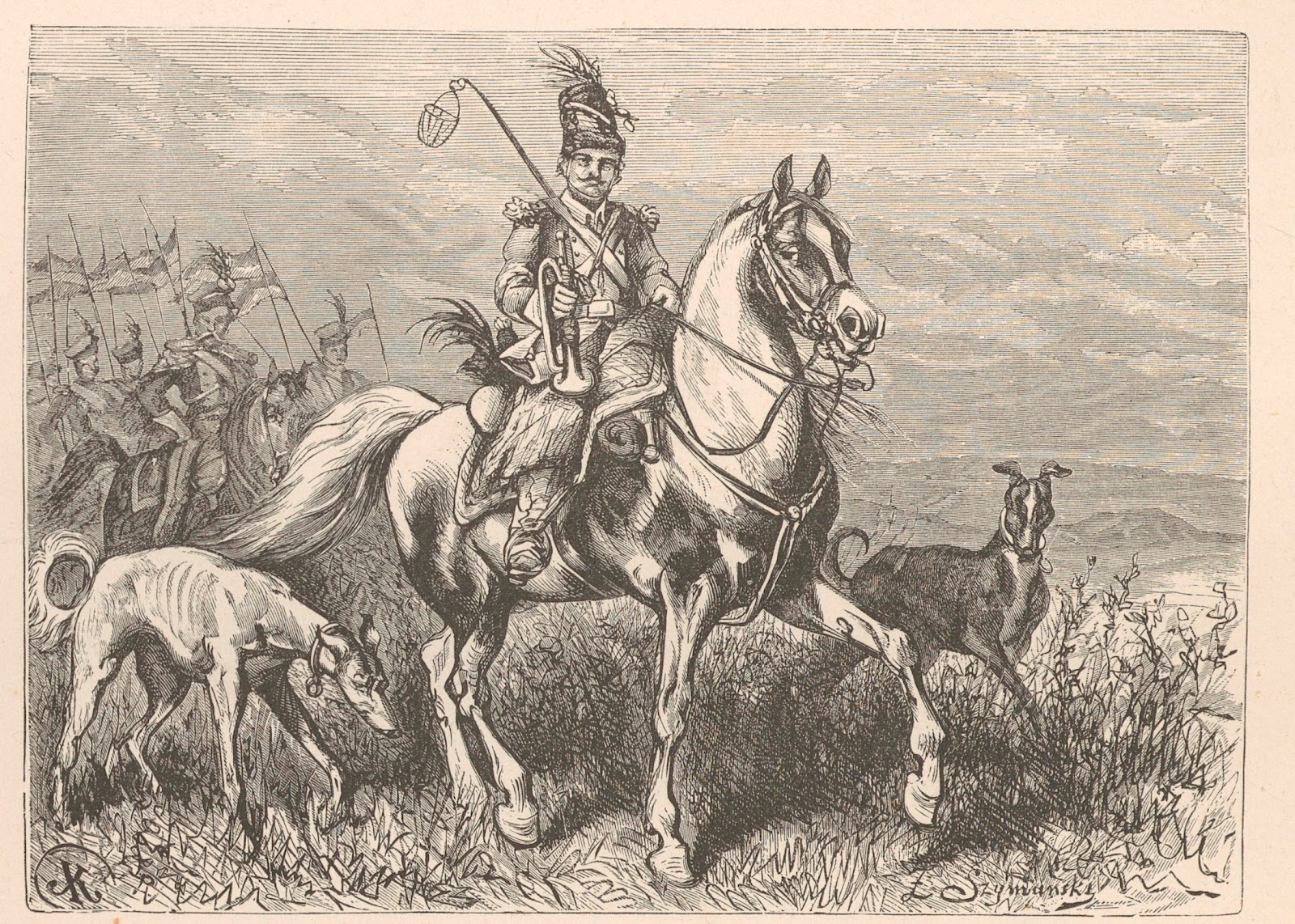


all images come from Polona, Polish National Library, digitized  edition of  Pol's Mohort.


.


.


Valete

Saturday, May 3, 2025

Constitution that triggered war of 1792

 Salvete Omnes,

some Polish history


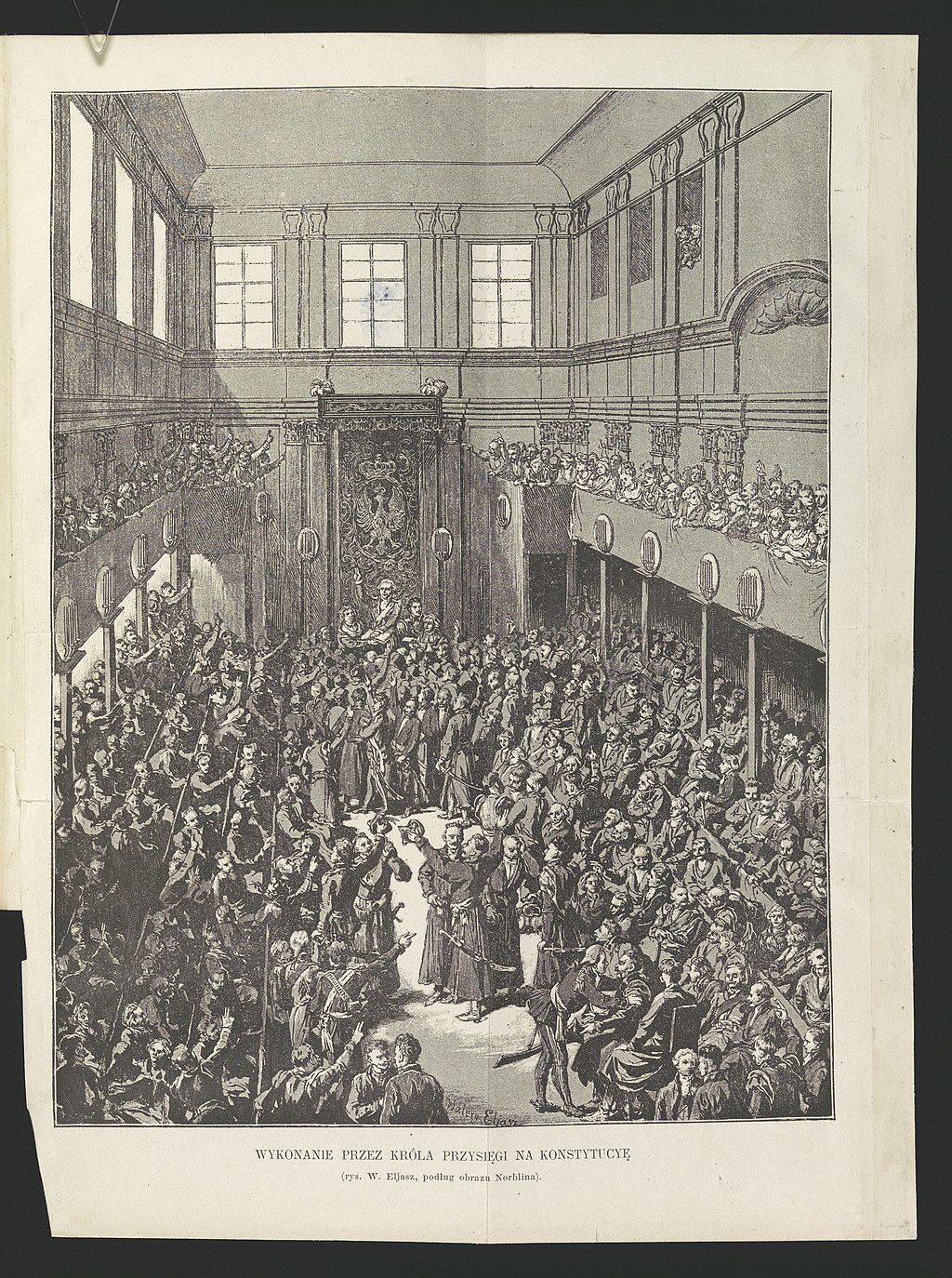
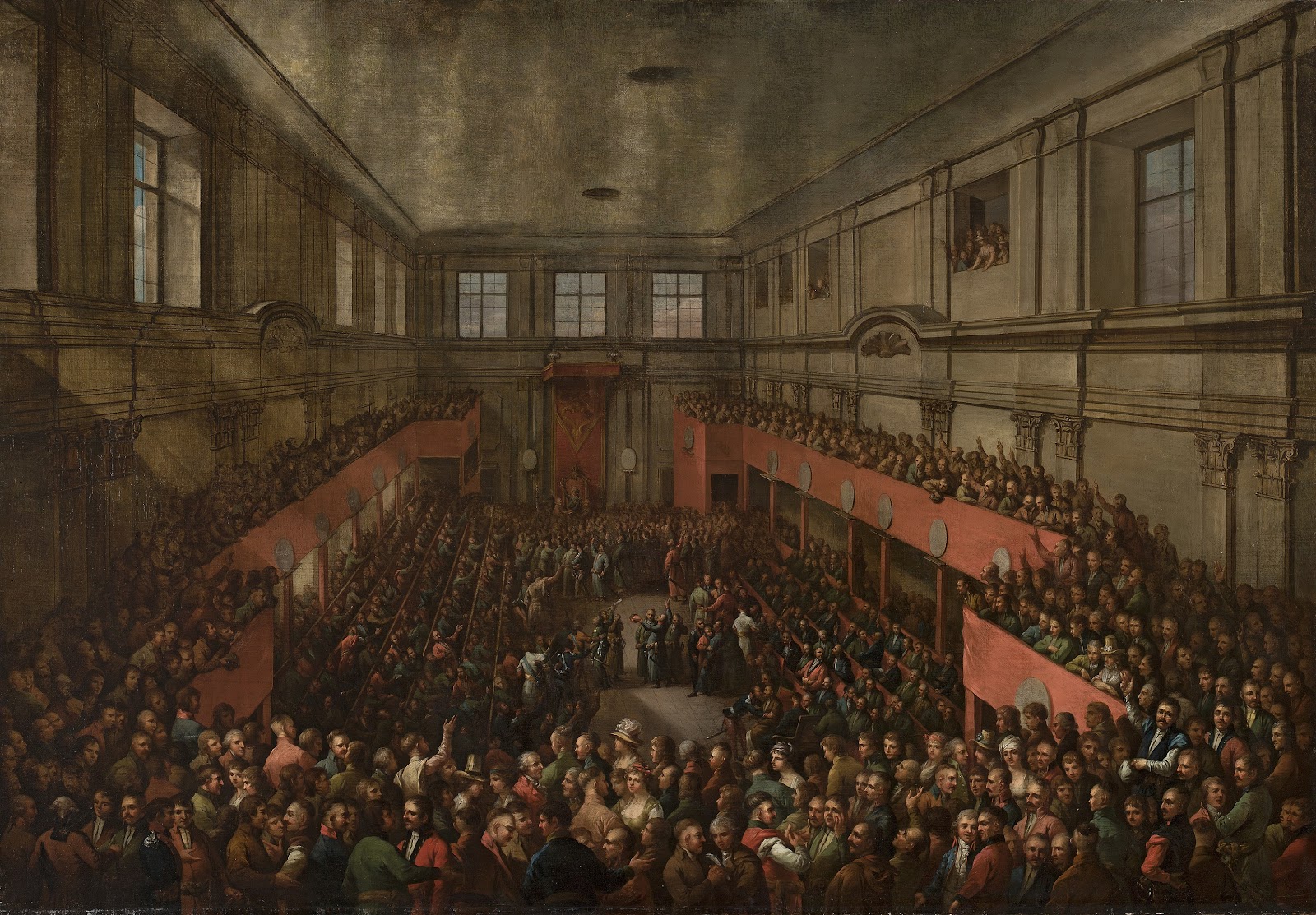
in Poland the third of  May  is celebrated as the official state holiday - the May Constitution Day - established  to  commemorate the final of the Polish constitutions passed by the Sejm (the Polish Legislature) not quite in presence of all parliamentarians present in Warsaw on May 3, 1791 AD. It was the first modern constitution in Polish history and actually also the first one in the European history too, being only second to the American constitution. 


The passing of that new constitution for the Polish-Lithuanian Commonwealth's Sejm was  opposed by many Commonwealth magnates and nobles. The new constitutional  framework for the Polish Republic was not welcomed by Russian Empire, Prussian Kingdom and Austrian Empire, those three powers that in 1772AD already took some parts of the Polish realm (known the the First Partition of Poland).


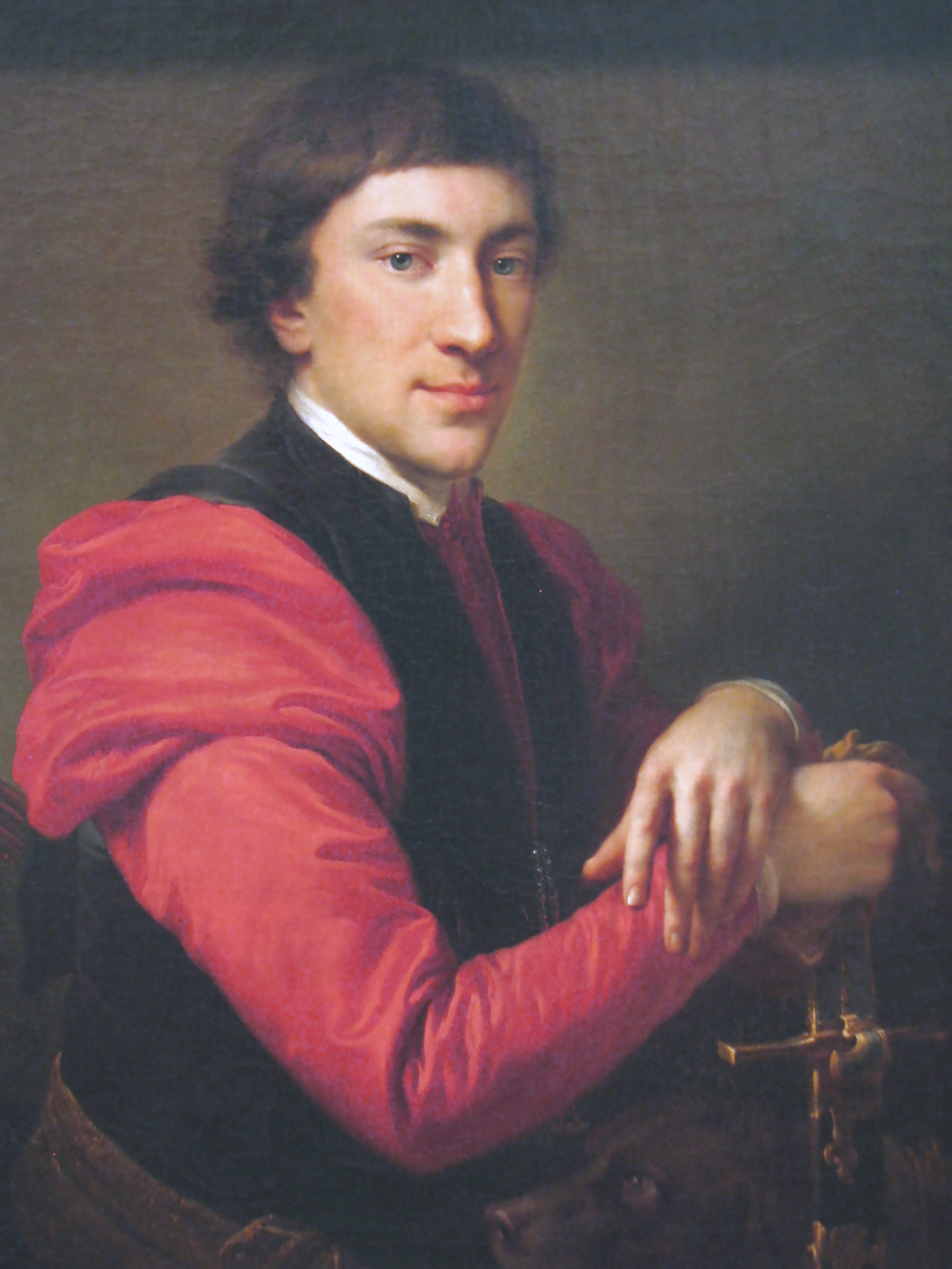
Empress Catherine II, the ruthless enlightened ruler of the Russian Empire, had the rebellion or confederacy (of some of the Polish-Lithuanian magnates, like Franciszek K. Branicki in the painting below,  and noblemen) organized in the winter of the following year ( formally declared in April 1792), and then these Commonwealth confederates commonly and jointly known as the Targowica Confederation called for the Russian intervention. 


And thus in the late spring of 1792 the Russian invasion commenced and a war started known nowadays as the Polish-Russsian war of 1792.


I would say this lawful and needful act of Polish Sejm ( Parliament) in May 1791 might have been the 'final straw that broke the camel's back,' i.e., it led to the Russian invasion,  a defensive war, cowardly  betrayal of the undefeated Polish Crown army in the field  by king Stanislaw August  and the so called reformers,   and in consequence eventually  the 2rd  partition  of the Commonwealth, then the Kosciuszko Insurrection of 1794 and the final Third Partition of Poland of 1795.

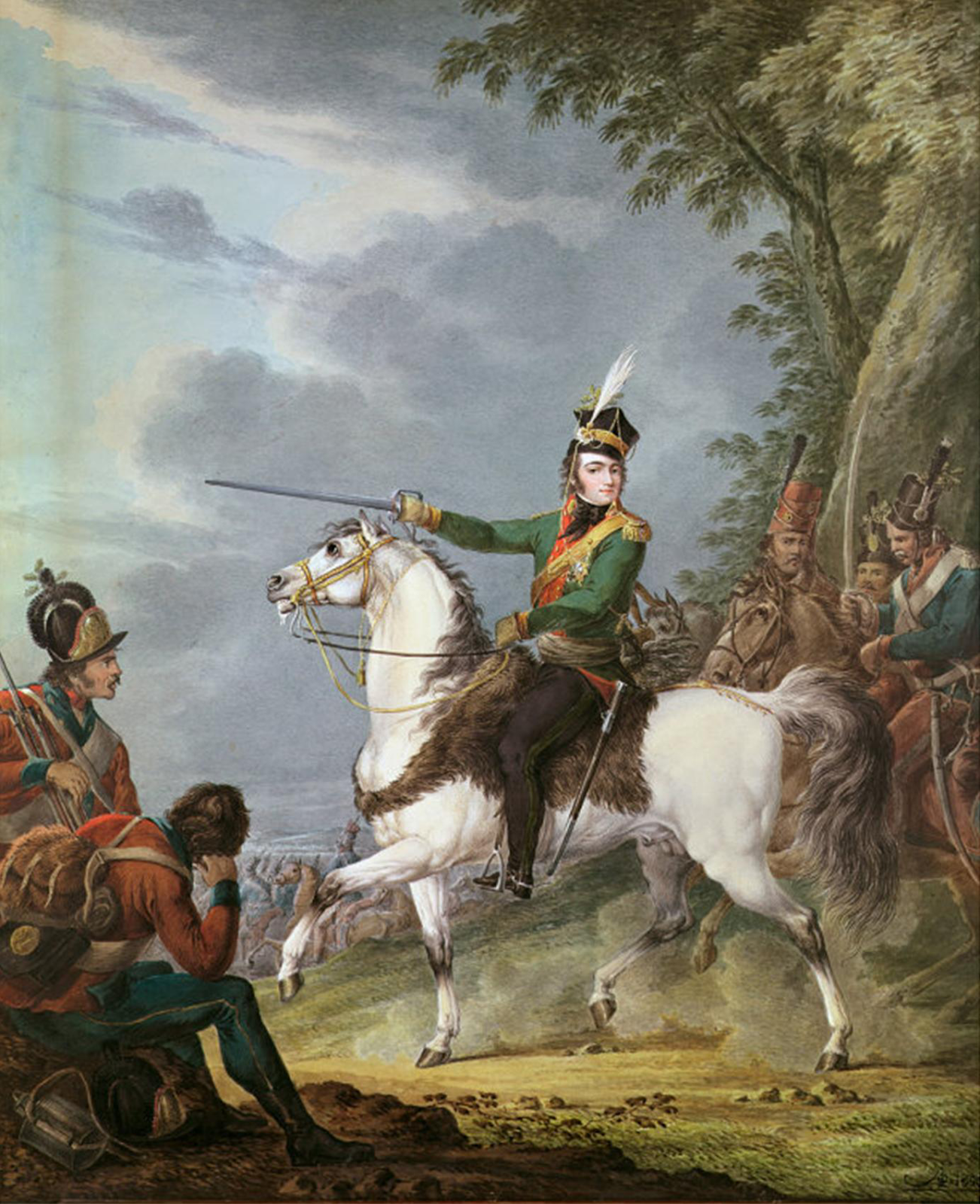
 the very young commander of the Crown Army, Jozef A. Poniatowski
Tadeusz Kosciuszko, commander of one of the divisions and  a veteran of the American Revolution
Pawel Grawbowski, commander of the 3rd infantry Regiment of the Duchy army


We can only guess and wander about the alternative history here, namely what could have happened if Polish-Lithuanian Commonwealth politicians and patriots stayed put for a few more years?
What if  the Great Sejm of 1788-92 ended without any new constitution and with no substantial reforms and thus the weak Polish state, with 900 thousand strong Jewish minority,  continued as the Russian protectorate until the coming of Napoleon and the Napoleonic war?
One could also speculate, not without a reason,  that the Prussians were behind all of this newly found courage suddenly displayed by Polish weak  king and his advisors in 1789-91, as  the Prussians themselves  were in fact  the ones who did benefit the most from the war between Polish state and Russian Empire, and the Prussians ended taking new Polish provinces, and in 1794-5 joined Russia  in fighting and then ending the Commonwealth.


Valete

Thursday, June 27, 2024

Juliusz Kossak, his stud presentation in print from National Museum in Warsaw

Salvete Omnes,

so the Dog Days of the summer have arrived.   

a little short entry 


I truly enjoy the art painted and drawn by the Polish XIX century painter Juliusz Kossak.

some year ago I posted this color version of Juliusz Kossak's oil painting - Mohort presenting the herd to prince Poniatowski.


Polish National Museum in Warsaw has a print (digitalized)  , showing the whole presentation scene in a  different composition, made circa 1870AD, the painting was owned by Mrs Eugenia Juszkiewiczowa.


enjoy
Valete
Sunday, November 19, 2023

Bog powiezyl mi honor Polakow, Bogu go tylko oddam - o ostatnich chwila polskiego Bayarda

 Salvete Omnes,

[in Polish]


w pazdzierniku, z okazji 210 rocznicy smierci wielkiego syna Polski, mialo miejsce spotkanie na Zamku Krolewskim w Warszawie pt „Jak naprawdę zginął książę Józef Poniatowski?" - debata.
Oto link ze strony polskiego radio z linkiem do nagrania ze spotkania na YT-   otoz jest to bardzo ciekawa prezentacja, pod katem badan medycznych i swiadkow-uczestnikow bitwy lipskiej,  owych chwil ostatnich wielkiego polskiego zolnierza i wodza armii Ksiestwa Warszawskiego ksiecia Jozefa Poniatowskiego (i juz wtedy marszalka Frencji, w czasie bitwy pod Lipskiem 19.X.1813.


Debatuja prof. Dariusz Nawrot, historyk i rekonstruktor epoki Ksiestwa Warszawskiego, i dr. Maria Turos, lekarz medycyny i rekonstruktor chirurgii et medycyny epoki napoleonskiej, a w ostatniej godzinie debaty mamy pytania i obserwacje od uczestnikow-widzow. 


Z pamietnika Bialkowskiego - o onym masztalerzu ksiecia i koniu, ktorym byl rumakiem ksiecia kiedy dosiegnal go Tanatos .


Nota bene wieczna chwala i honor dla oficera sztabowego Hipolita Beschamps'a, ktory wspomagal w czasie odwrotu rannego herosa i w ostatniej tragicznej chwili rowniez zginal od kul wrogow probujac ratowac smiertelnie rannego ksiecia.

Valete!

Wednesday, August 30, 2023

Maestro Ryszard Morawski - Pacem Aeternam

 Salvete Omnes,

 sad news today -

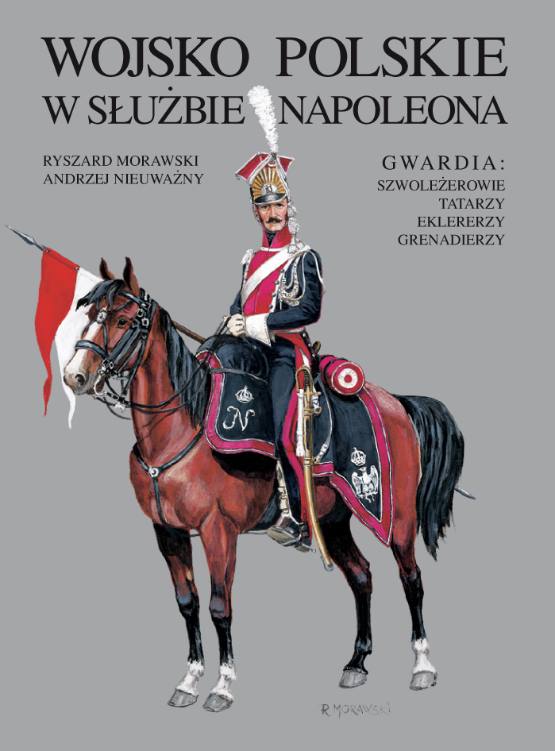
maestro Ryszard Morawski (born 1933) , Polish illustrator and historical artists - sculpture, painting and other graphic arts, passed away yesterday - 29th of August, 2023.
Pan Ryszard was trained at the Fine Arts Academy in Warsaw, Poland, with painting masters like Michal Bylina and Antoni Trzeszczykowski., both veterans of the Polish Army  and combatants of the wars, Trzeszczykowski of the Polish-Ruso War of 1920 and Bylina of 1939 and Home Army through 1944.
There is an interview, done by Adam Paczuski, with Ryszard Morawski on Napoleon website - in Polish, but can be easily translated via google books, to get the gist of it. Long time ago in NYC I met Andrzej  Zaremba, who cooperated with maestro Morawski, in his bookstore there. Nota bene Ryszard Morawski painted many portraits of the famous Polish Arabian horses from  the Arabian Horse Janow Podlaski Stud.

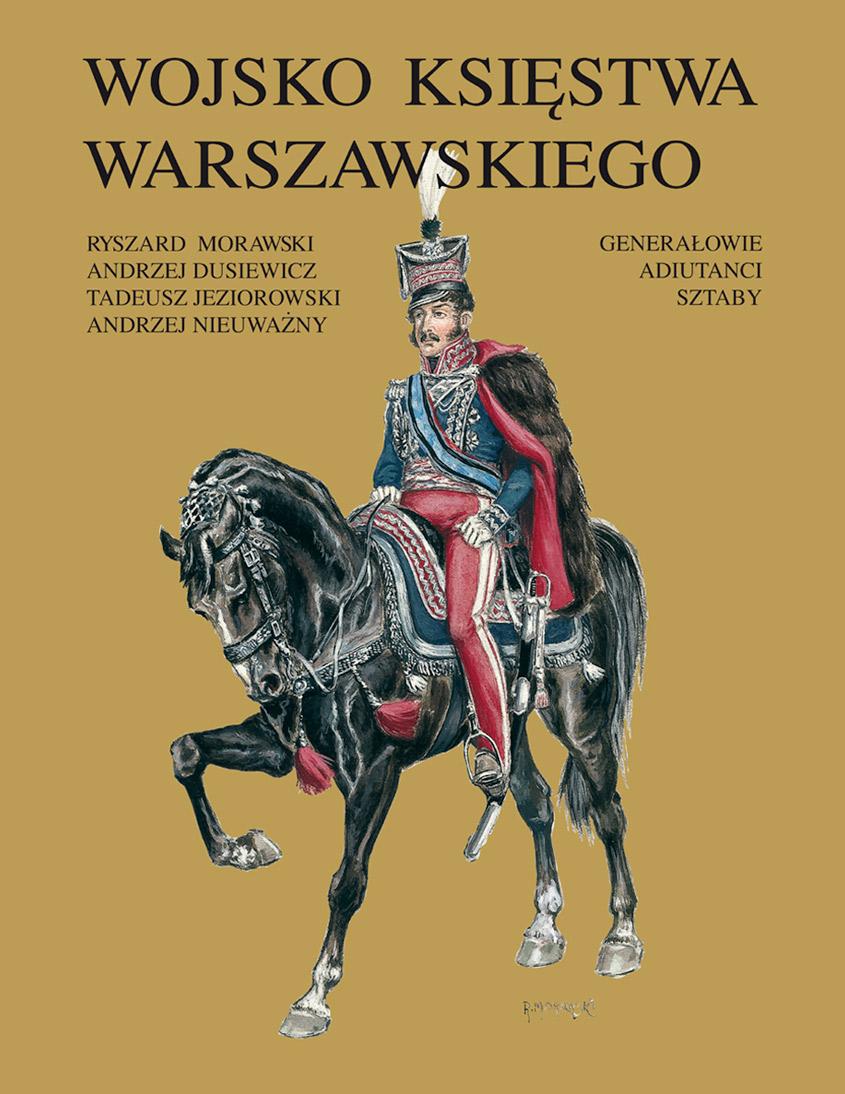
I started my adventure with Pan Ryszard's work via Polish comics magazine Relax (where his uniforms plates were published, along the comics stories by great artists like Grzegorz Rosinski Marek Szyszko, Christa, Boguslaw Polch, Jerzy Wroblewski etc, then the Cavalry of Duchy of Warsaw  and other of his fine books, of which I am attaching the covers - note I hold no copyrights to those images, as present them here only for educational purposes - of his albums that I have in my own library. 


His fine albums, individual plates and other art can be had from his Polish publisher Karabela.

Pacem Aeternam

Valete

Saturday, May 27, 2023

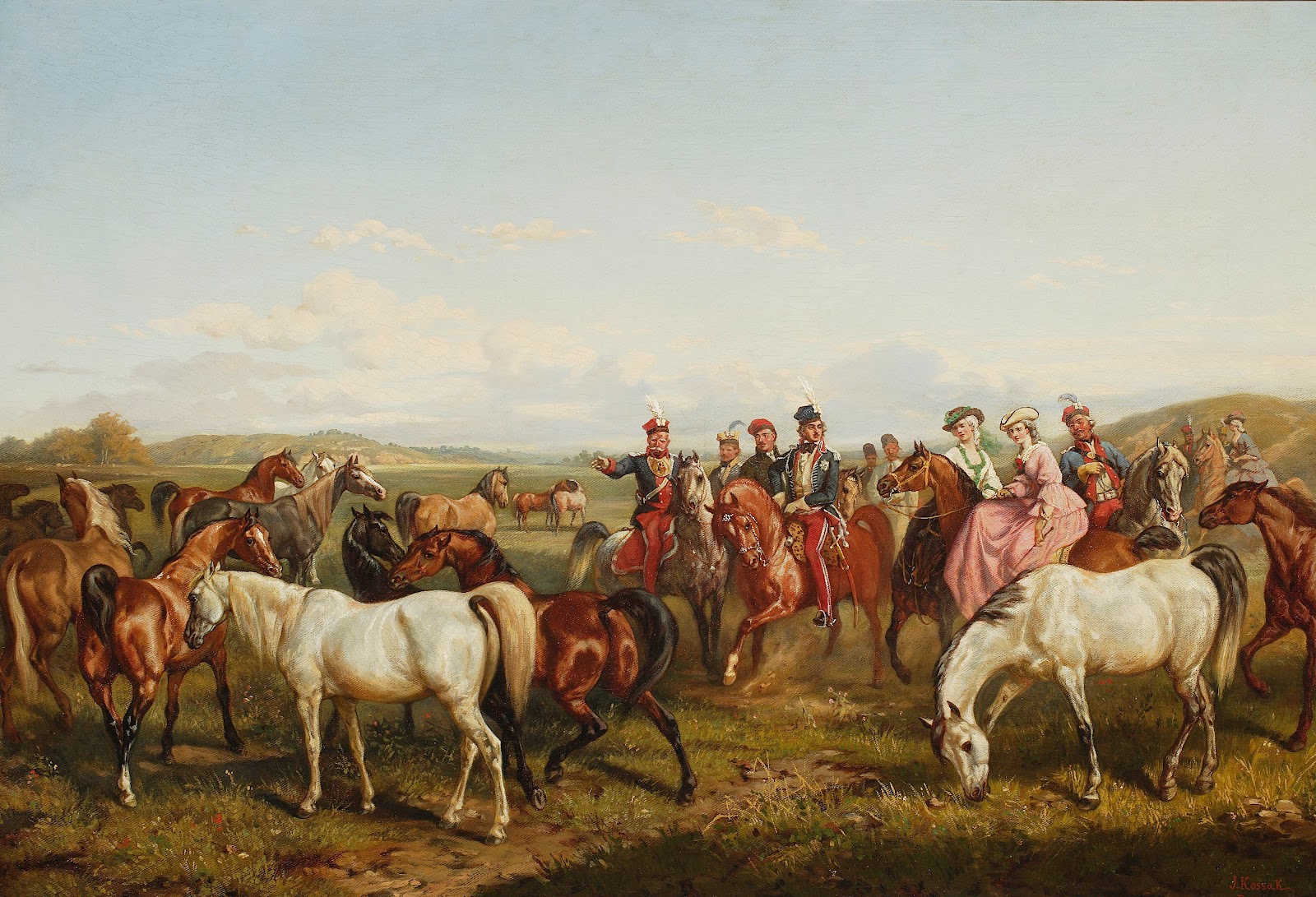
Kossak - Mohort presenting the herd to prince Poniatowski

 Salvete Omnes,
a short entry - 
Juliusz Kossak's paintings have graced these blog 'pages' for many years.
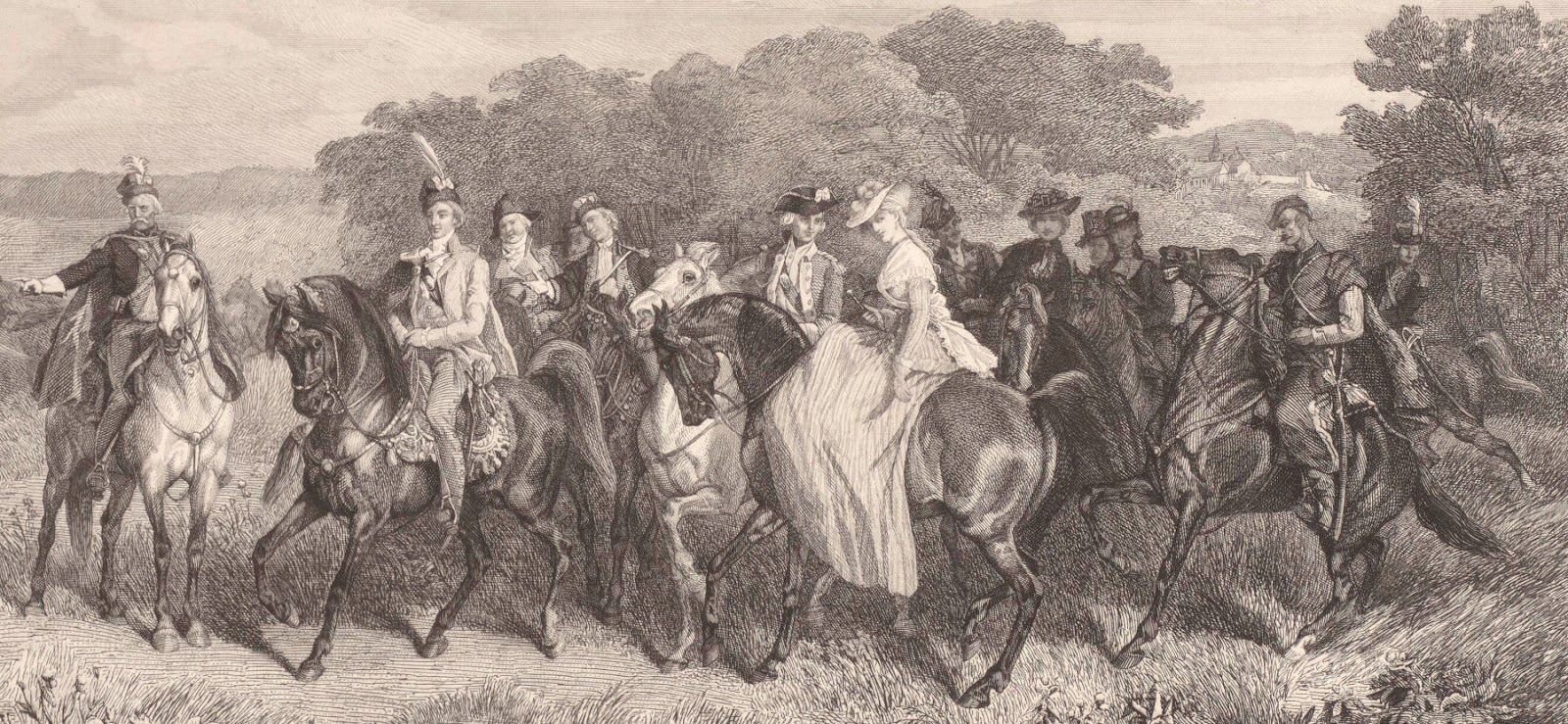
National Museum in Warsaw has a good size copy of his painting on their digital collections webpage- Mohort prezentujący stadninę [Mohort presenting the herd ...to prince Jozef Poniatowski], painted in 1858AD. Unusually this painting is an oil on canvas work, whereas the typical medium used by Juliusz Kossak was watercolor (with some gouache, ink etc) . 
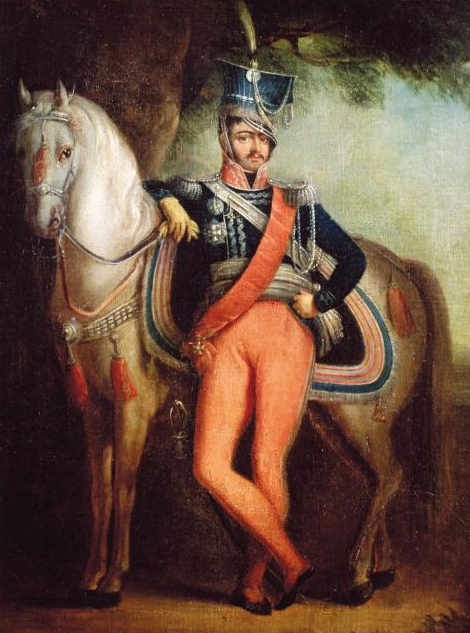
Here, the main protagonist is  a fictitious 'knightly' soldier-cavalryman, the defender of the Borderlands, the hero of Wincenty Poll's epic poem - Mohort. He rides next to a real hero and the last knight of the Old Poland - prince Jozef Poniatowski.
The three main male characters are portrayed in the late XVIII century Polish cavalry uniforms, while the ladies are perhaps dressed in some riding attire of that period? , I am not versed in the female fashions of the ear. 
The site is somewhere in the Old Poland's southern or eastern lands, that make today's central  Ukraine, our Polish lost mythical Kresy or Borderlands. 


The horses painted on this canvas most likely come from numerous sketches and in situ observations maestro  Juliusz Kossak made while visiting Polish studs and herds in those lands. He was friends with many Polish breeders and land owners of the era, painted many portraits of their horses and herds, while the very old Polish lands had been divided between the Russian Empire and Austro-Hungarian one during the three Partitions of Poland (1772-1795);  and in the past these lands were always Polish Crown centers of horse herds and war horse production. We suspect that the so called Old Polish Horse, used by the winged hussars and National Cavalry & Uhlans came from the Ruthenian and Podolian farms.
Perhaps it is worth noting that the majority of these fine Polish stud farms, breeding Polish Arabians as well, were destroyed during the World War I, Bolshevik Revolution  and the independence wars after the dissipation of both empires 1917-20

Valete

Sunday, January 27, 2019

Kon polski - Old Polish Horse


koń polski Adam remontowy używany w armii pruskiej od 1804 roku w regimencie dragonów królowej, a później w 9 regimencie kirasjerów, gdzie zmarł  w 1829 roku

Salvete Omnes,
[in Polish]


nieco o koniach dzisiaj:
Glinka bialogrzywy z Laszek Murowanych

książka mości Radka Sikory - Husaria, Duma Polskiego Oręża - posiada rozdział, króciutki bardzo niestety (no ale kogo interesują konie? choć bez koni każda kawaleria jest li tylko 'szarą piechotą' - ;) ), o koniach husarii  a raczej o tych koniach, które mogły być przez husarie używane ale o których zazwyczaj się nie pisze, oraz mala rozprawkę o tzw rasie konia polskiego.
Belotto


fragment sztychu Kalwarii Zebrzydowskiej

Add caption

Do tego rozdziału o koniach husarii dodany jest też rejestr roty (chorągwi) imć Marcina Kazanowskiego (AD 1580, Archiwum Akt dawnych Skarbu Koronnego) - te rejestry, bo jest ich więcej. to istna skarbnica o koniach wojska zaciężnego epoki XVI wieku.
 Orlowski


Na końcu książki przydałby się słowniczek terminów, w tym terminów hipologicznych, jako, że dla przeciętnego czytelnika mogą one niewiele znaczyć.

Nota bene na portalu Kresy jest artykuł mości Radka o Wyginięciu rasy konia polskiego. (trzeba by mu się przyjrzeć któregoś dnia - :) )
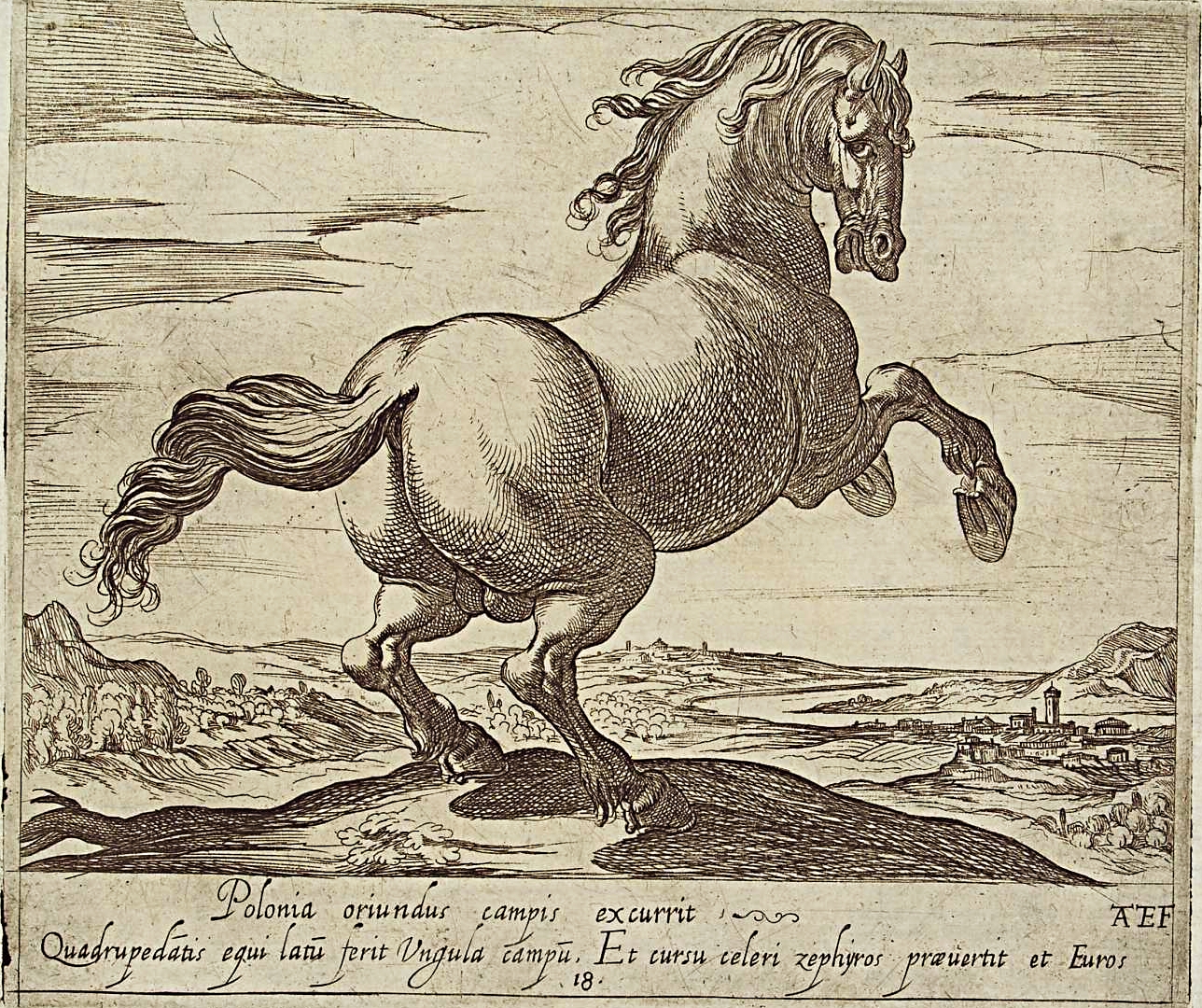
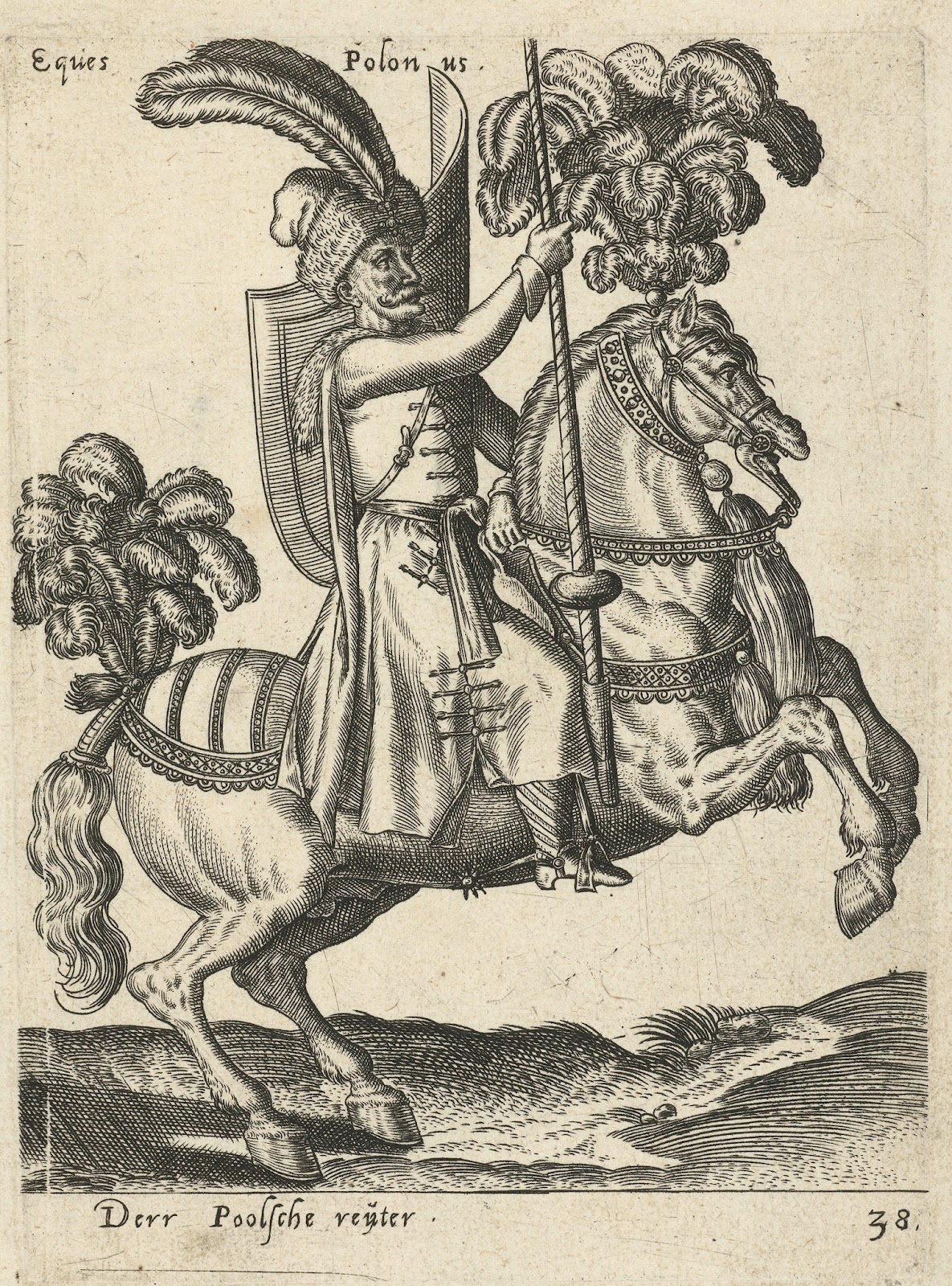
Dawno temu napisałem coś (eg  o koniu polskim od nowa, dzianet , kon polski etc ) niecoś o koniu polskim (plus dyskusja na historykach która zapoczątkował kolega Ramond), zawsze szukam i przeszukuje źródła na temat koni polskich (nota bene w książce nie znajdziecie mojego odkrycia o imporcie koni polskich do Królestwa Danii), a dzisiaj chciałbym złożyć tandem paręnaście wyobrażeń konia polskiego zaczerpniętych z ikonografii historycznej - wszystkie były już na blogu, ale nigdy wszystkie razem w jednym wpisie.

ergo,  mała galeria tychże wyobrażeń[1] razem ( cześć np jest w albumie Husaria Rzeczpospolitej panów Sikora & Szleszyński) z mojego bloga.


kodeks Behema


Charles Errard le fils konie polskie

Czapski


Tempesta


Lyszkowskiego kon polski


kon polski


Altomonte

Kazimierz Pulaski


Valete
&
Khoda Hafez*

...
* moja mala solidarnosc z Persja i Iranem

ps
przy okazji rozbawiają mnie wypisy jak ten na stronie Muzeum w Wilanowie. Mamy takze takie wypisy jak ten i ten na histmagu.

[1] duza czesc z nich występuje w książce, choc tylko dwa w rodziale o koniach