Showing posts with label red-figure pottery. Show all posts

Tuesday, April 1, 2025

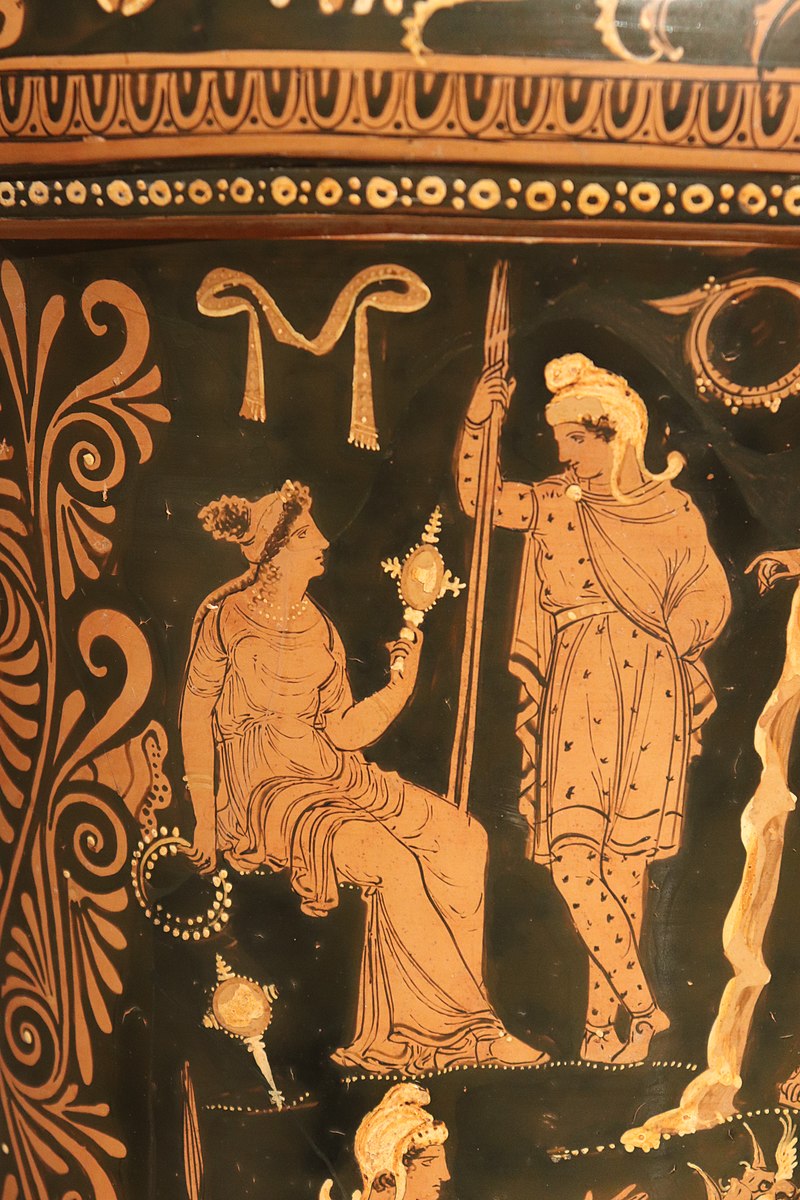
Heracles & Hippolyte's belt

 Salvete Omnes,


April 1st or April Fools Day -  what a Spring day to behold .. 

so let me invite you to the ancient Greek mythological  hero's adventure - the lion pelt clad and with armed with a bow and club Heracles, son of Alcmene and god Zeus, sailed on his quest for the belt of Hippolyte, the queen of Amazons. Accordingly the name Amazon was meant to mean ' without a breast, because the right breast was cut off, that it might not hinder the use of  bow' and javelin.


According to Apollodorus, in his 9th labor Heracles was ordered by the 'evil' Eurystheus, king of Tiryns, to fetch him the belt of Hippolyte (belt of Ares), the queen of the Amazon warrior-women from the river Thermodon [in Pontus according to Strabo]. 
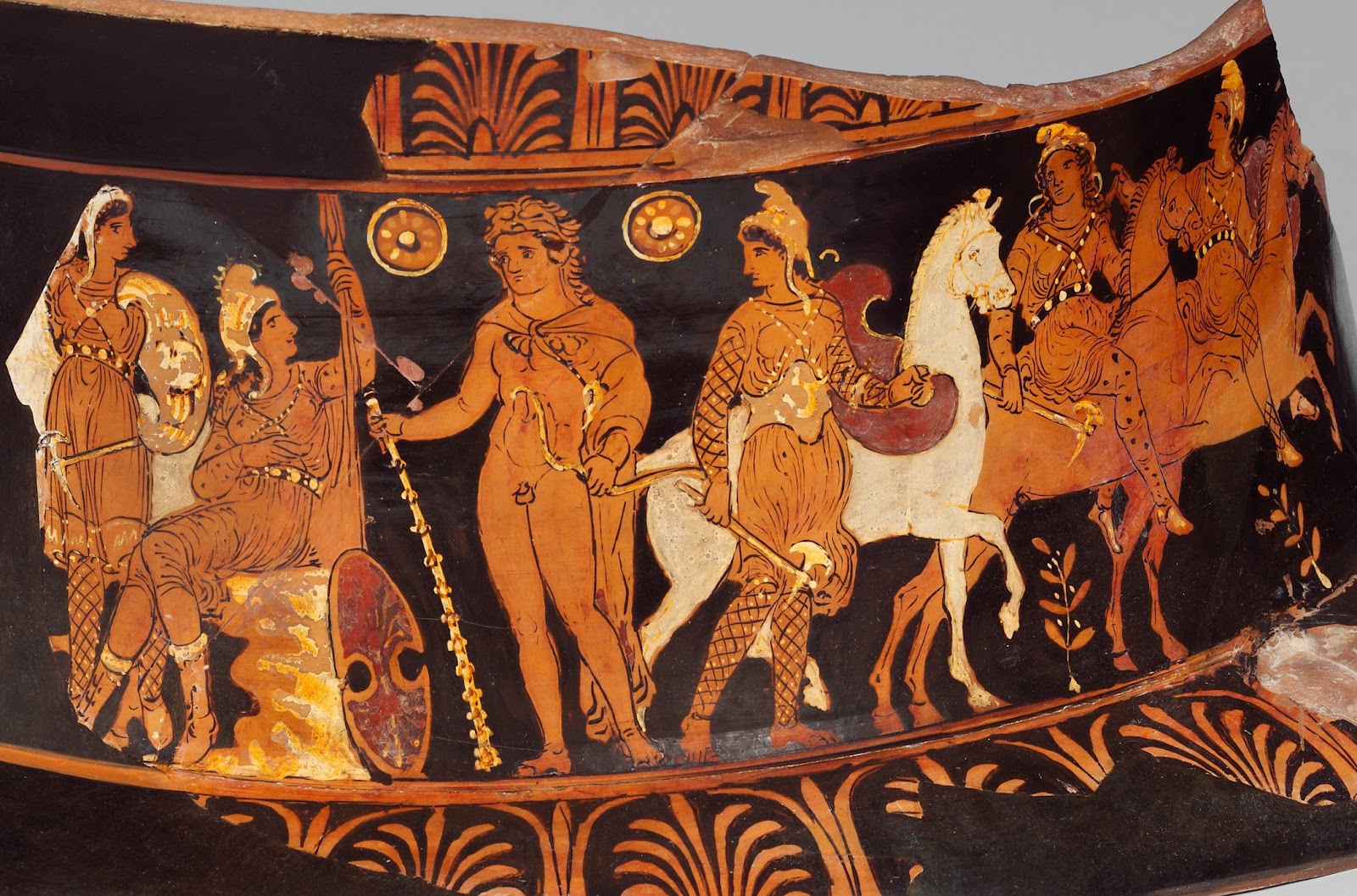


Apollodorus stated that 'these warrior-women cultivated male virtues,' while Diodorus Siculus wrote in his Book II that the women of Thermodon river held the 'sovereignty in their hand and performed services of was just as did the men. Of these women one, who possessed the royal authority, was remarkable for the prowess in war and her bodily strength, and gathering together an army of women she drilled it in the use of arms and subdued in was some of the neighbouring peoples[..], and as the tide of her fortune continued favorable, she was so filled with pride that she gave herself the appellation of  Daughter of Ares.' Greek god  Ares had a belt made for the queen, known as the belt of Ares. Their capital was called Themiscyra, in the mouth of Thermodon.


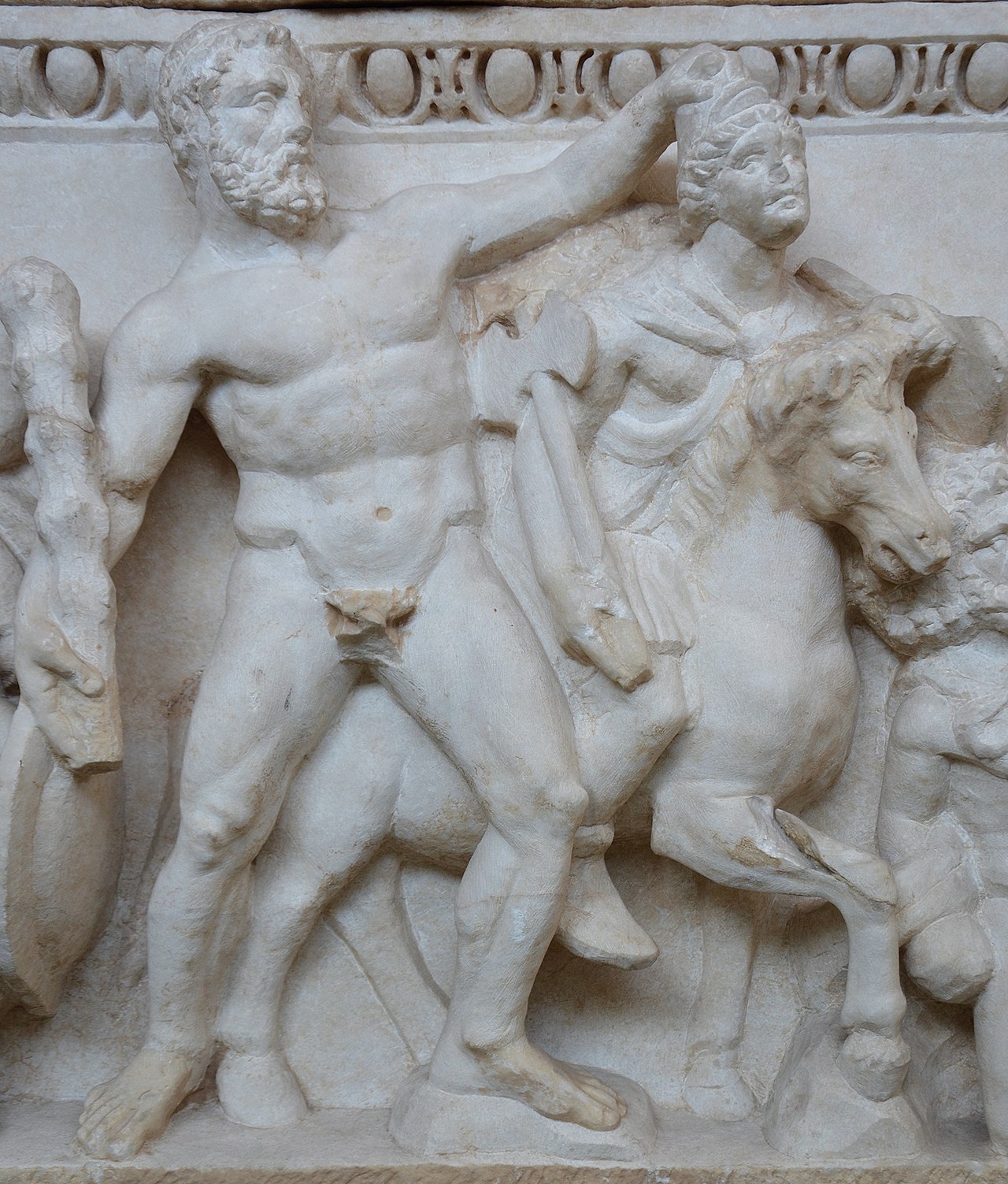
Heracles, according to Apollodorus, came by ship with his companions, and having put into the harbor of Themiscyra was visited by queen Hippolyte wearing the belt. Goddess Hera, always trying to derail Heracles in his efforts, arrived in the likeness of an Amazon warrior and went up and down the horde of Amazons saying the strangers who had arrived were carrying off the queen. So the Amazons in arms charged astride their horses down the harbor. But when Heracles saw them in arms, he suspected treachery, and killing Hippolyte stripped her of her belt. And after fighting the rest[of the Amazon host] he sailed awaya dna touched at Troy.'


Diodorus, Book II, 4-16.,  gives a detailed description of the battle between Heracles and the Amazons. 


enjoy

valete

Sunday, June 11, 2023

Scythian Bow presentations - Selby & Farrell

 Salvete Omnes,


a short entry then - :)  

I came across two videos on the ancient Scythian bows - I have been an archer since my childhood, although these days I shoot very infrequently. 


so, Two Videos from  On Target Consultancy or OTC, about 2 hours of talk and iconography, archaeology and practical analysis 

The Scythian Bow - Jack Farrell's presentation

The Scythian Bow - a discussion between Jack Farrell & dr Stephen Selby (of the Atarn ) and Masoud Golshani of the Scythian Group from Facebook. 


and some sketches


article from Hungary on the reconstructions and archery with the reconstructed bows - Academia : G. V. Szabó - A. Kiss - Z. H. Tóth: A shooting experiment with reconstructed Scythian arrows and bows. Based on discoveries made in Slovakia, Czechia and Hungary - the VIII-VII centuries BC in the  Carpathian region. 

ps

today is another anniversary of the famously unusual cavalry battle of Hodow 1694AD, this almost forgotten and rather heroic combat  between a small detachment of the elite Polish cavalry and the huge raiding army of the Crimean Tatars - Pacem Aeternam to the heroes . The actual 1695 AD monument erected by our king Jan III (Sobieski), still standing in Ukraine. 

Valete

Sunday, June 4, 2023

Sauromatae virgin warriors by Hippocrates

 Salvete Omnes,


 The ancient Skuda, Skula, Skolotai, Saka (Skify,Σκολότοι, Skithian, Scythians, Skudra, Sogdian, Скифы, Скіфи, Саки, Scytowie, Sakowie ) or the Archers of the Eurasian Steppe were dreaded second wave of mounted horse-archers, after the Cimmerians, in the ancient Western Asia. 


But for the ancient writers the image of the armed and mounted young woman was especially or perhaps extremely untypical, intriguing, astonishing  and perhaps exiting.  So today we will quote an ancient writer about the virgin warriors of the steppes - the Sauromatae ha-mazan.

I have not quoted on these paged the so called father of medicine or Psuedo-Hippocrates (Hippocrates 2), a Kos/Cos-born Greek medical writer and doctor of the second half 400s BC and first quarter of the 300s BC. (460BC-375BC) who left some interesting observations or perhaps more like some tall tales about the ancient Skuda from beyond the Don River in the vastness of the Scythian Desert. 


In one  his medical treatises titled 'On Airs, Waters and Places' Hippocrates provided some curious glimpses into the world of the nomadic warriors and wanderers, whether he traveled there or read it somewhere and included it into his writing we simply don't konw. 

First in this quotation  the country of the nomads, in his Greek world view (part XVIII):

What is called the Scythian desert is a prairie, rich in meadows, high-lying, and well watered; for the rivers which carry off the water from the plains are large.
There live those Scythians which are called Nomads, because they have no houses, but live in wagons.The smallest of these wagons have four wheels, but some have six;
they are covered in with felt, and they are constructed in the manner of houses, some having but a single apartment, and some three; they are proof against rain, snow,
and winds. The wagons are drawn by yokes of oxen, some of two and others of three, and all without horns, for they have no horns, owing to the cold.
In these wagons the women live, but the men are carried about on horses, and the sheep, oxen, and horses accompany them;
and they remain on any spot as long as there is provender for their cattle, and when that fails they migrate to some other place.
They eat boiled meat, and drink the milk of mares, and also eat hippace, which is cheese prepared from the milk of the mare. Such is their mode of life and their customs.


Now, the Sauromatae virgin warriors of Palus Meotis (Meotis Swamp or the Don Delta):
Part XVII
In Europe there is a Scythian race, called Sauromatae, which inhabits the confines of the Palus Maeotis (for this is the boundary of Europe and Asia*), and is different from all other races. 


Their women mount on horseback, use the bow, and throw the javelin from their horses, and fight with their enemies as long as they are virgins; and they do not lay aside their virginity until they kill three of their enemies, nor have any connection with men until they perform the sacrifices according to law. Whoever takes to herself a husband, gives up riding on horseback unless the necessity of a general expedition obliges her. They have no right breast; for while still of a tender age their mothers heat strongly a copper instrument constructed for this very purpose, and apply it to the right breast, which is burnt up, and its development being arrested, all the strength and fullness are determined to the right shoulder and arm.


 A short but informative entry on the fabled Amazons or ha-mazan on Encyclopedia Iranica page.

It appears that Hippocrates had some very negative views on the horseback riding and its effects on the human body - and according to his writing  the  ancient nomadic Scythians were affected negatively by horseback riding up to causing them impotence, which is curious since in Thessaly , where Hippocrates eventually died according to sources, and in Macedonia the aristocratic warriors rode more than walked, and Thessalians were the fabled horsemen of the ancient Greece (no Osprey about their horse, but about the Italian Greek horse, sadly).

ps

Perhaps I should bring here the writings by Herodotus on the Sauromatae.


 all images come from Wiki Commons

 *part XIII


Valete


Friday, March 10, 2023

Perseus, Gorgon Medusa & Pegasus

Salvete Omnes,


Spring is approaching fast  as time flies - we should have the new year start on the Spring Equinox - like the ancient nomads and ancient Iranians had had. 

Gorgon chasing after Perseus


Ad rem,
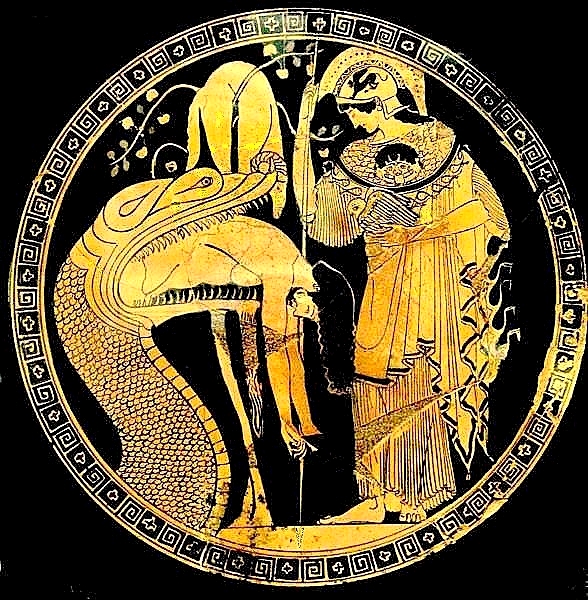
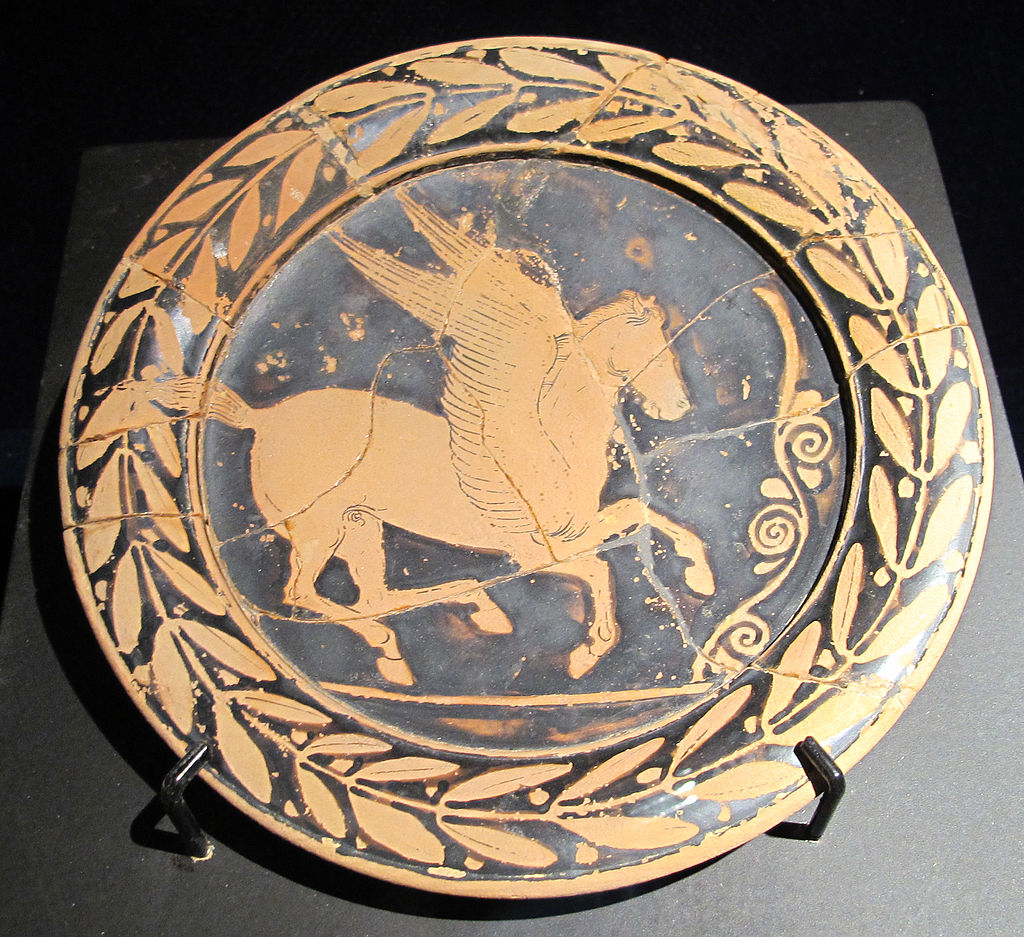
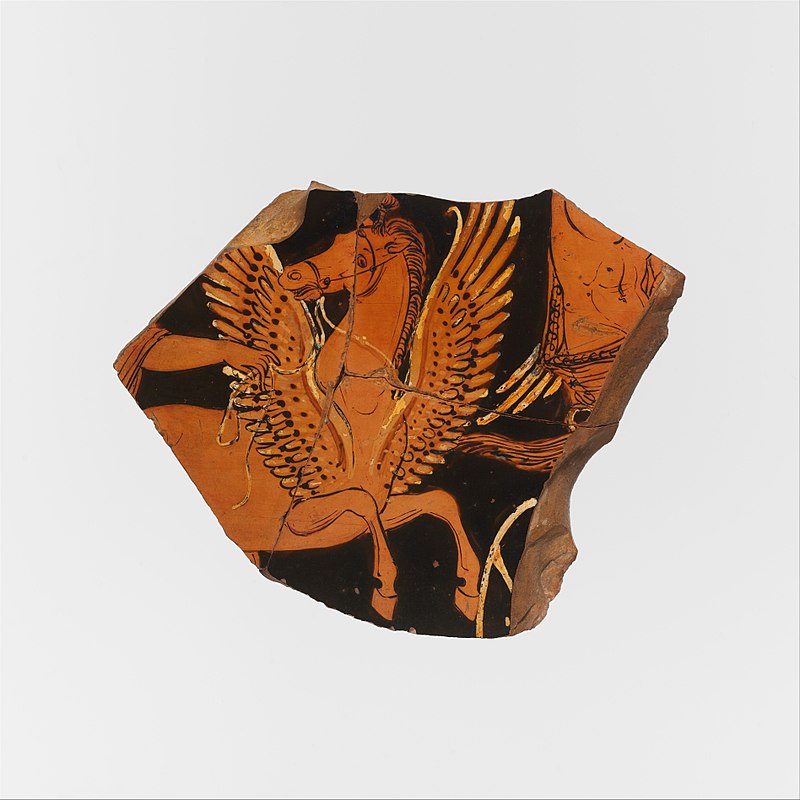
I love ancient Greek myths - and today decided to share some images related to the myth (well, collection of myths ) about the ancient hero named Perseus or the destroyer. Why Perseus, well, he is credited as the hero releasing the fabulous winged horse of the myths - Pegasus.


Hermes giving Perseus a curved sword

 Unwed Danae of Argos, daughter of king Acrisius,  was the mother of Perseus while his  father was the mighty and thundering  Olympian god Zeus (in form of the Shower of Gold or Golden Shower).  


Zeus as Shower of Gold coming to Danae


Danae and her son were banished from Argos by her father, sealed in a wooden casket and he had them thrown out into the sea. 

 After two days hey were fished out of the sea by Dictys (netman or fisherman), bother of king Polydectes (much-receiver or Death)  of Seriphos (island of the Cyclades). From that island he set our on his hero quest. The quest was prompted by the king Polydectes, lusting after Danae, who demanded that every young men on his  island provide him with a horse needed as a wedding gift for his intended marriage to Hippodamia (daughter of Oenomaus, famous for his chariot horses and chariot races). Perseus was too poor to own a horse so he boasted that he could find and slay a Gorgon monster. And as a result of his boast he set out on his quest.


Since Perseus was a mortal son of his Olympian god father, then his Olympian half-brothers and half-sisters would eventually come to his aid and provide him with magic items to help him achieve his hero quest: a cap of Hades (making the wearer invisible), winged sandals allowing him to fly, polished bronze shield, a curved sword, and a leather bag.

So this Perseus' hero quest involved searching for, finding and eventually slaying the Gorgon monsters, there sisters - Stheno (strength) , Euryale (far-leaper), and Medusa (wide-ruling). The most dangerous was Medusa, who once had been a beautiful girl and became the victim of Poseidon's lust and ravishment, and Medusa had the evil power to turn humans and animals into stones (petrifying them) just by looking with her eyes. 


Perseus, with his cunning, bravery, courage, and skills and magic tools, searched, found and slayed all there Gorgons, and used Medusa's head to carry on his other heroic deeds, including the defeating of the Poseidon's monster bound to devour princes Andromeda

Perseus freeing beautiful Andromeda

 
Perseus and Andromeda

Eventually, Andromeda and Perseus married and had children, and hero Heracles was one of their descendants. Perseus gave the Gorgon Medusa head to his half-sister goddess  Athena, who carried it on her shield.


Finally, about Pegasus and his coming to the world - when Perseus slayed Medusa by cutting her head, the monster carried her children conceived during the ravishment by Poseidon - winged horse Pegasus and a giant Chrysaor, and these unlikely 'twin' children finally left her body via her neck. Thus Pegasus flew into the skies and the legend. Not much is known about Chrysaor.


You can easily look for books available on the archive world library  - eg. borrowing  Early Greek Myth by Timothy Ganz, or the classic telling The Greek Myths by Robert Graves.

enjoy

Valete

Saturday, December 10, 2022

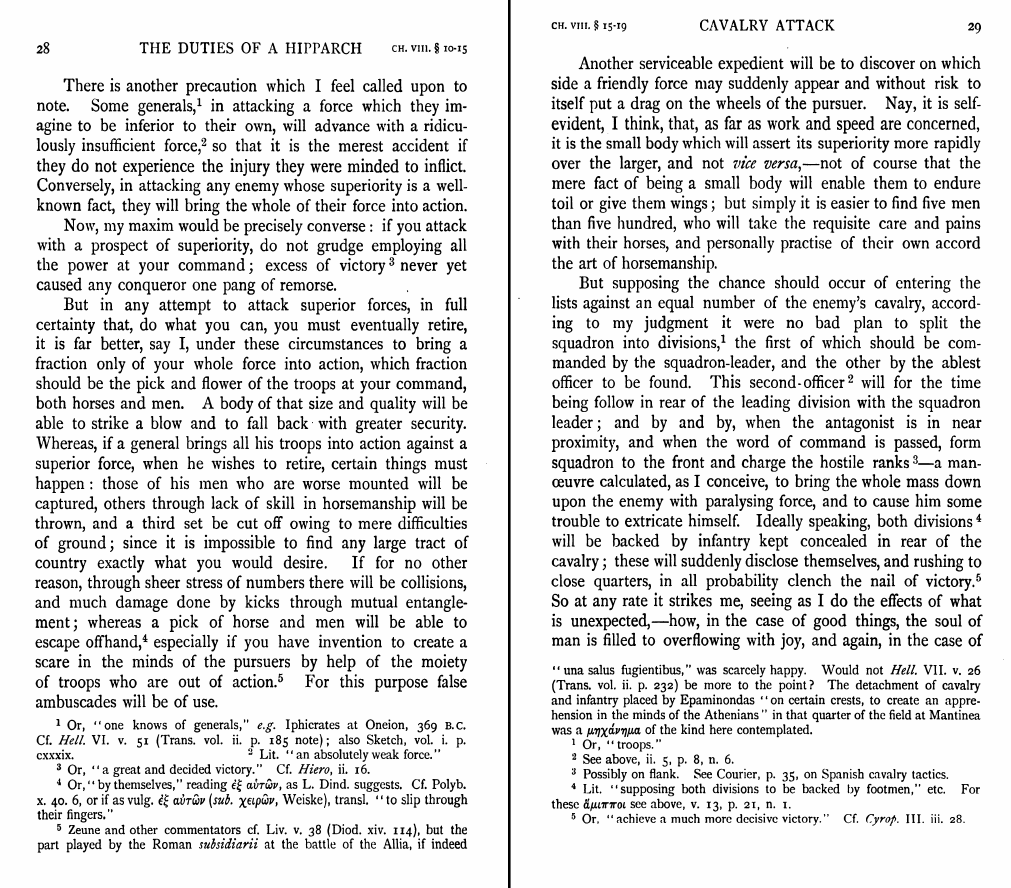
Xenophon, Hipparchicus On the Cavalry Commander

 Salvete Omnes,s
several days ago I posted Polish translation of Xenophon's Hipparchicus -


so today the English translation of this short and unique work on ancient cavalry
British Henry Graham Dakyns translation -


Valete