Showing posts with label Bronisław Gembarzewski. Show all posts

Sunday, November 30, 2025

Kingdom of Poland cavalry - uhlans and chasseurs a cheval 1815-31

 Salvete Omnes,


The very end of November brings back the story of the November Uprising of 1831, when during the night of 29th to 30th of November, a 80-plus company of  cadets and second lieutenants marched out of their barracks in Warsaw and aided by their civilian co-conspirators attacked the Belvedere Palace( the seat of the king's representative) and the Arsenal of Warsaw. In process they murdered 6 Polish army generals (out of the 30-plus of the whole number of the Polish army generals at this time).  Numerous pubs and alcohol magazine had been broken in and the inhabitants of the Old Town Warsaw got drunk and for the next two days there was mayhem in the city center.  Instead of putting the rebellious cadets and young officers on trial the ruling Polish elites could not decide on any concrete course of action, and faced with the Russian armies marching onto Warsaw in the winter of 1831 had to fight the war against their king  (well, the parliament, in the act of mass formation psychosis,  deposed the king, cutting off any road to 'salvation') and his armies, which had to end in failure due to the lack of any international support and especially due to the Russian supremacy in the field and in logistics (eg the problem of horses for cavalry and artillery for the Polish army).  Thus ended the Army of the Kingdom of Poland established by the Congress of Vienna in 1815, and since 1832 the kingdom existed in the name only, without any special Polish army, laws nor Polish symbols until 1916, with the Russian direct rule and with the Russian army and police forces policing the territory.

Congress Poland or de jure Kingdom of Poland was a state established on the ruins of the Duchy of Warsaw (minus the Greater Poland, Kujawy, Torun, and Free City of Gdansk/Danizg that were re-attached to Prussia, and Free City of Krakow as a separate Polish entity) joined with the Russian Empire by the person of the king (personal union), first it was tsar Alexander I who was crowned the king of Poland in 1815 (nota bene, he discovered that the Prussian monarchy destroyed by melting historic Polish royal crowns and regalia in 1818-11) and then his brother tsar Nicholas II, crowned the king of Polish Kingdom in 1829. Grand Duke Constantine was king's representative and the commander-in-chief of the kingdom's army residing at the Belvedere Palace in Warsaw. 
Kingdom had its own army - colonel Bronislaw Gembarzewski wrote and illustrated a very nice monograph on the kingdom's army in 1900s-20s.

The army consisted of the regular regiment and  guard regiments, which included:


one guard regiment of the chasseurs  a cheval (strzelcy konni) (renamed to 5th reg of the chasseurs a cheval in January 1831)


one battery of horse artillery.


the Cavalry of the line or Cavalry Corps of Polish Kingdom, commanded by general Aleksander Rozniecki,  consisted of:


the chasseur a cheval division - four regiment of  chasseurs named: 1st, 2nd, 3rd, 4th .

from the left - 1,st, 2nd, 3rd, 4th regiment

3rd chasseur - stable uniform


1st reg. chasseurs  in their field  uniform


3rd chasseur regiment -field uniform
4th chasseur - horse trumpeter 


the Uhlan/lancer  division's regiments were  named:


1st uhlan, 


2nd uhlan, 


3rd uhlan, 


4th uhlan.


.

2n uhlan regiment - lancer in his stable uniform


Each cavalry division was divided into 2 brigade, each brigade consisted of one uhlan regiment and one chasseur a cheval regiment.

Each cavalry regiment was divided into two divizions, each divizion consisted of 2 full squadrons. A full squadron had 160 soldiers, 13 NCOs and 8 officers. Each squadron was divided into two half-squadrons, and each half-squadron was divided into 4 platoons, in turn platoons were divided into thirds, each third was divided into 3 'rotas.' The 1st and 4th platoon had the best men, then the 3rd could pick from the remainder of all men and the 2nd had to take whoever was left. There platoons were commanded by the platoon commanders and 3 officers 'ou-or-rota', who sort of were to oversee but did not interfere. Squadron formed in two lines, the first line had the best men and best looking horses. For the marching order, the squadron marched in threes (or like the Russians in 6-men abreast ).

The uhlans/lancers were armed with lances and sabres, each squadron had 1 carbine-armed platoon, or equally possible was the arrangement where there were 4 carbine-armed rotas in each platoon of the squadron. The flanking carabine-armed uhlans were supposed to form in two skirmish lines and even to dismount  and defend the squadron, when necessary. They were trained to do these tactics with the use of trumpeters and their signals.

The chasseur a cheval (szaserzy) regiments, beloved of grand duke Constantine,  were armed with a sabre, a cavalry carbine, and a pair of pistols. although they were taught infantry drills and fire drills of the infantry, they were horse-fighting 'dragoons,' using essentially the same tactics as the lancers.

Additionally , every regiment had one more reserve squadron of 100 men. NCOs and officers, where recruits were trained and schooled. (Tokarz, Armia Krolestwa Polskiego 1815-30).

In total 6788 officer, NCOs and soldiers and horses as of  the late 1830.

This was the most beautiful, led by the most experienced officer  and best trained army in the Polish history since the Jan III Sobieski's reign(1674-1699).  

Eagle on the uhlan 'czapka' according to Bronislaw Gembarzewski's research

Valete

Tuesday, August 15, 2023

Polish Army Day - a millennium of defending the realm

 Salvete Omnes,


so  this day, August 15 is the Polish Army Day (Feast of the Soldiers) - the date is also the Feast of Assumption of Mary
So for more than millennium Polish warriors, knights and soldiers, mostly peasants led by their noble lords and officers defended the Polish lands.
This particular August date  commemorates the battle of Warsaw, AD 1920, when the Red Army Juggernaut of an  offensive was broken and eventually rolled back into the Red Russian lands (although there are many disagreements and disputes on why the leadership did not help White Russians finish off the Bolshevik rule and restore Russia from the communist monstrosity), thus preserving the newly restituted Polish state. 
The battle is important to the XX i XXI century modern Polish state ideology and politics, but we have had many battles equally important and momentous in our millennium long history. But be what it may, at least the holiday falls in the summer month, when the weather is warm and sunny. 

Hail to the defenders - and may war never return to the Polish lands

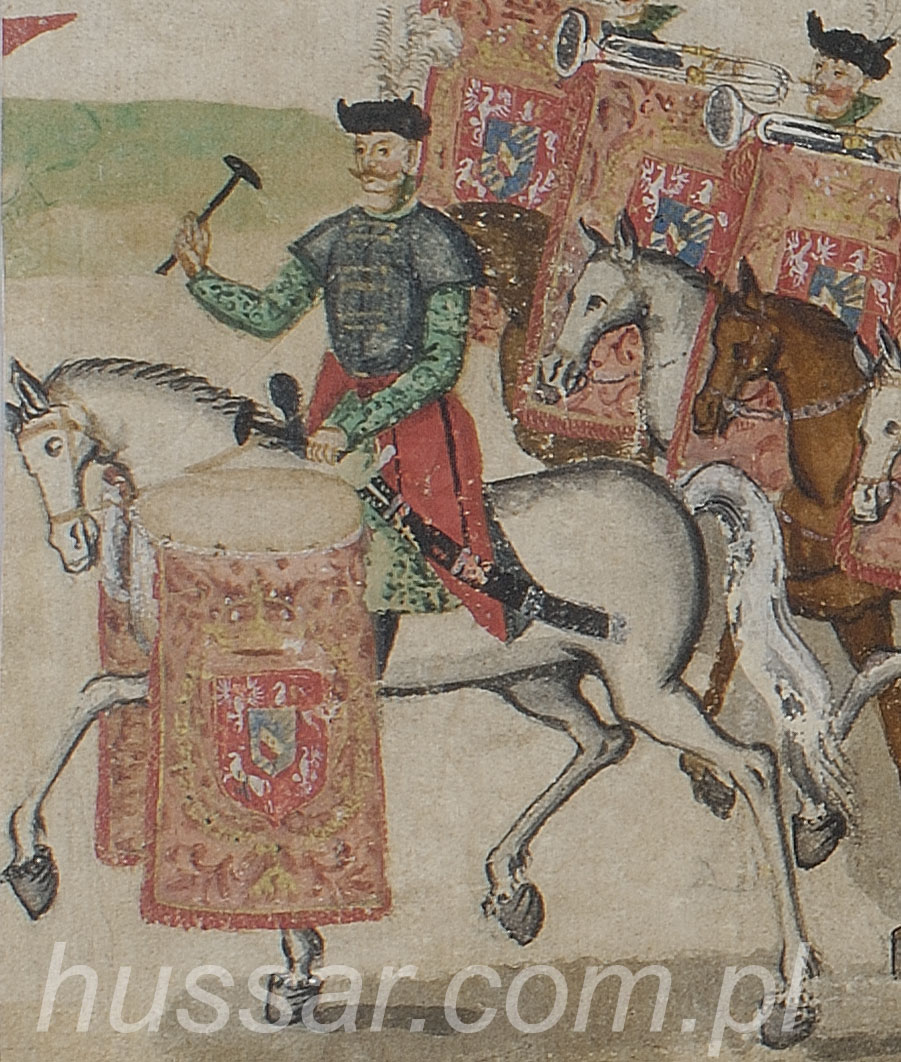
and along with the text I am including some photos of the Polish cavalry drummers of the mounted musicians platoon from the 1 pulk szwolezerow (1st chevau-leger regiment) of the 2nd Republic -  Polish names for these musician-soldiers were 'kotlista'(modern) and old 'pauker, paukier, pałkier, & pałkierz,  '


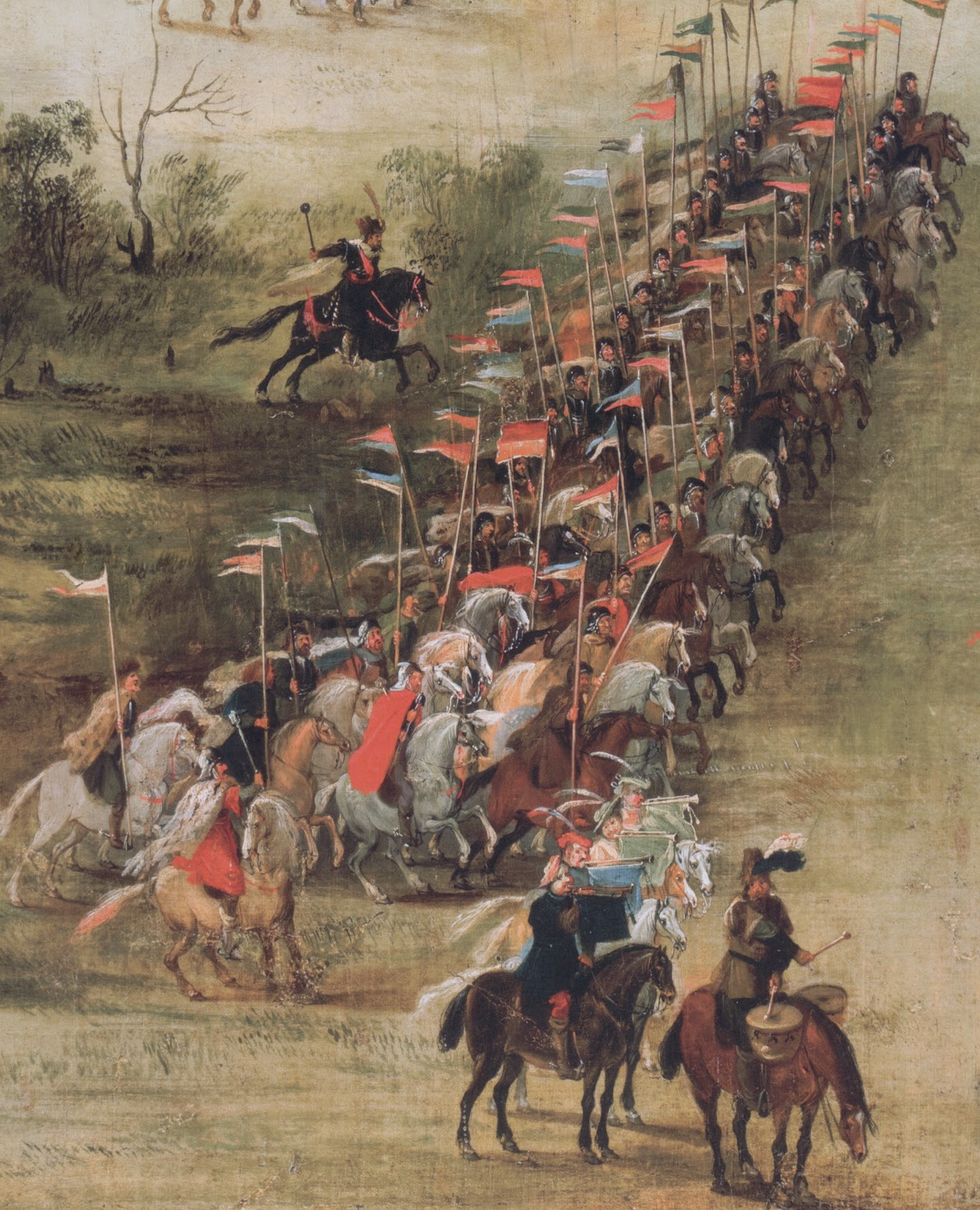
during the pre-partition Poland - Polish-Lithuanian Commonwealth and Crown of Poland - the mounted drummers were part of the cavalry units and were very colorful, while playing an important role of signaling and providing psychological support to the fighting troops.


and although the Napoleonic 1st Polish chevau-legers of the Guard were not part of the Polish army, their splendid uniforms and short but illustrious history merits to have them included here - painted by Bronislaw Gembarzewskie (great historian and illustrator, another victim of the Nazi German genocidal policies in occupied Poland)


Valete

Sunday, June 30, 2019

Rzad konski Kawalerii Narodowej AD 1791

Salvete Omnes,
[in Polish]
gwoli wstępu:

ostatnio malowałem kawalerzystę epoki Insurekcji Kościuszkowskiej dla Infort Editions* -
a jazda liniowa epoki panowania zającem podszytego Stanisława Augusta herbu Ciołek to formacji nazwana Kawaleria Narodowa, która stalą się ta formacją poprzez amalgamat chorągwi husarii i pancernych(i petyhorskich w WKL)  zgromadzonych w tzw 'partiach' w Koronie i na Litwie i tworzenie z nich brygad jazdy AD 1775-6.
W Koronie numerem jeden była oznaczona  Brygada I zwana Wielkopolską o której jest artykuł na stronie Arsenału. W Wielkim Księstwie Litewskim pierwsza była
Brygada I zwana Kowieńską brygadą Kawalerii Narodowej. 

Wielki badacz polskiej wojskowości imć pan Bronisław Gembarzewski napisał pracę pt- Rodowody pułków polskich i oddziałów równorzędnych od r. 1717 do r. 1831, gdzie można sobie postudiować historię Kawalerii Narodowej do 1794 roku.


Ponieważ na blogu interesuje mnie przede wszystkim sprawa końska, ergo poniżej przytaczam fragment* za
imć panem Konstantym Górskim, Historya Jazdy Polskiej 
 
'' W marcu roku 1791r wyszedł następujący przepis końskiego ekwipażu [rzędu i osiodłania] dla towarzysza i szeregowego:

''UŹDZIENICA razem z tręzlą, z 3 kółkami i podgardlem na sprzążkę przypiętem. Kółko przy cuglach z werblikiem dla włożenia w kółko uździenicy.

MUNSZTUK z 2 sprzączkami u góry z nagłówkiem, przez który przechodzi pasek z łańcuszkiem do kuplowania koni; ten łańcuszek jest na lewej stronie i zapina się w kółko na prawej stronie będące. Powyżej sprzączki a niżej kółka tego jest na prawej stronie rzemień, który przypada koniowi przez chrapy, pod widełka i zapina się na sprzążkę z lewej strony. Pasek wspomniany do kuplowania służący, gdy konie nie są kuplowane, aby nie wisiał przypina się maleńka szlufką przy średniej sprzążce lewej strony.

PODPIERSIEŃ z jedną różyczką większa w środku, gdzie dawniej był orzeł 2 mniejszych różyczek jednej i z drugiej strony jak się olstra kończą. Ten podpiersień obejmuje kule przednią i na lewej stronie zapina się na sprzączkę. Przy tym podpiersieniu są 2 kółka rzemienne z jednej i drugiej strony, w które olstra się zakładają i one utrzymują. Przy tych kółkach są pokrywy ze sprzączkami do przytroczenia płaszcza. Od zwyż wspomnianej większej różyczki idzie rzemień czyli wytok ze sprzążką do przykrócenia lub podłużania który pod brzuchem konia wchodzi w trok. Na przedniej kuli zwierzchu antabka ze rzemykiem do przytroczenia płaszcza w samym środku.

PODOGONIE z trzema różyczkami rzemiennymi z których 2 mniejsze przy ogonie a jedna większa na krzyżu końskim przypada. Całe podogonie przypina się dwoma sprzążkami w tyle kulbaki.

SIODłO zwyczajne, z dwoma kulami, potebinkami i wysłaniem w samem siedzeniu, na bokach olstra zawieszone na antabkach dwóch skórzanych przy olstrach a jednej żelaznej przy siodle pokrymem na sprzążkę przypięte.
Z tylu kulbaki 3 antabki żelazne, do trzech pokrymow t.j. jeden na lewej stronie drugi w środku pod kula,trzeci na prawej stronie, Wszystkie trzy potrzebne do utrzymania mantelzaka i furaźnej torby[..].


MITUG [sukienny] towarzysza dawnym kształtem i kolorem z tą tylko odmianą że bez orłów i pogoni i frędzli być powinien.
 
MITUG unteroficerski, trębacza i szeregowego z futra czarnego baraniego w koło na cali 4 sukno czyli wypustka koloru
kraprotowego a kolo niego na 2 cale szeroka wypustka granatowa. Ten mitug przykrywa sobą mantelzak, ażeby zaś dobrze lezal, katy boczne tego mituga wchodzą na denko mantelzaka bez żadnego przerznięcia w kule siodłową, przydziury na folge do przypięcia karabina. Figura tego czapraka jest okrągła podługowata na przedzie ostrzej a z tylu szerzej trochę.
MANTELZAK
z sukna kraprotowego 30 cali przy denku na szwie wypustka granatowa przy nim guzików 6 do zapinania. Pod mantelzakiem przychodzi furaźna torba płócienna 32 cali, z obu stron zaszyta  i tylko pośrodku otwarta, be żadnego zapięcia. [..]

TORBA płócienna druga na siano dla konia[...].''

maly szkic w Krita, GIMP i MyPaint


 Valete!
* dzięki mości Piotr Zalewski - rekonstruktor kawalerii epoki stanisławowskiej i niebawem doktor nauk humanistycznych (obrona 4 lipca 2019) - za pomoc i konsultacje w temacie.
ps
w tekście historycznym zachowana orginalna ortografia

Sunday, January 20, 2019

Gembarzewski i szkice rzedow konskich 1815-30


Salvete Omnes,
[in Polish]
 
powróćmy znów do mości pana Bronisława Gembarzewskiego i jego 'Rycerstwo i wojsko polskie od XI wieku do chwili obecnej, gdzie na Polona można zobaczyć  co nieco plansz dotyczących rzędów końskich i wyposażenia  jeździeckiego jak mantelzak czy strzemię.


Nota bene siodło żołnierskie z epoki Królestwa Kongresowego zachowało się, min w Muzeum Wojska Polskiego w Warszawie, pierwszą rekonstrukcje takiego siodła wykonał imć pan Piotr Zalewski, artysta i konserwator z Muzeum Narodowego w Warszawie a także dlugoletni rekonstruktor kawalerii polskiej 1785-1815,  a ostatnio także przedni rymarz i jeździec imć Marcin Ruda.

Valete & Khoda Hafez