Showing posts with label equestrian portrait. Show all posts

Wednesday, April 9, 2025

Sir Briggs and other horses by De Prades

 Salvete Omnes,

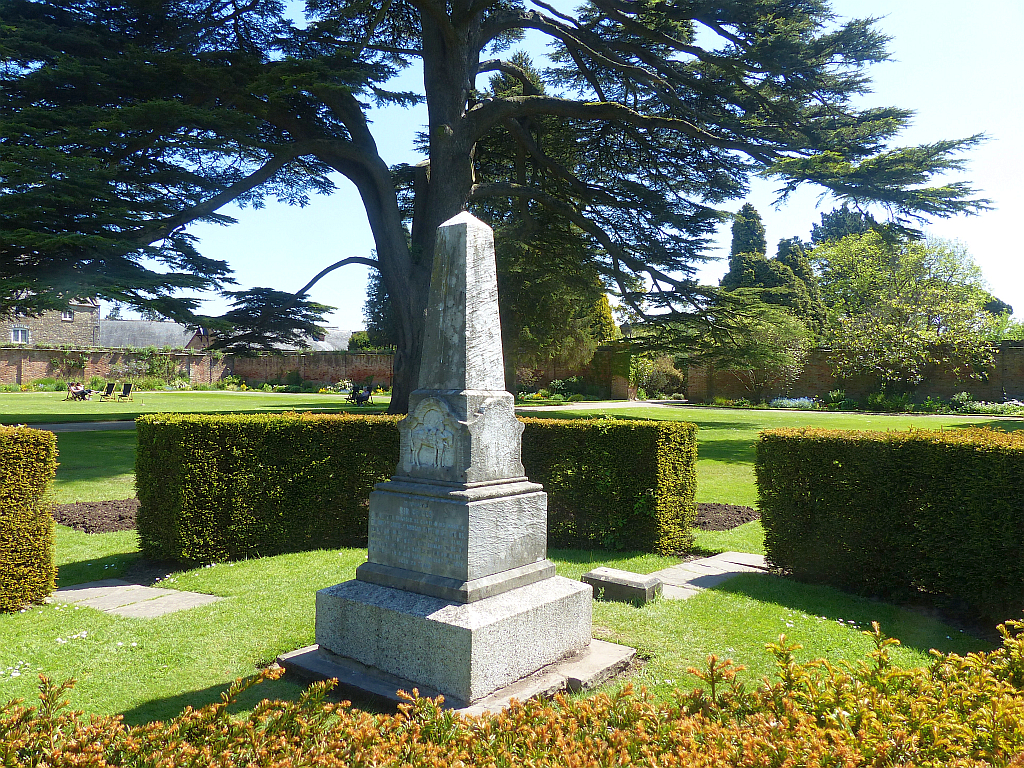
Tredegar House obelisk, Wales, UK


  from the English countryside come this unusual obelisk to commemorate a horse - a 15 hands tall bay stallion named Sir Briggs. Briggs went to the Crimean War theater as a mount for Captain Godfrey Morgan, of 17th Lancers aka Light Dragoons UK, and galloped with his rider into the Valley of Death during the Charge of the Light Brigade.

Probably in 1854 Sir Briggs, then still just Briggs, was painted by Alfred F. de Prades (French-English, 1825-1885), one of the XIX century British Empire preeminent equestrian and portrait painters.


Sir Briggs lived through the war and died, age 28, at Morgan's estate in 1874.

and here in Cardiff, Morgan and Sir Briggs sculpted in full lancer and war steed glory on a pedestal

sculpture by sir William Goscombe John

Below,  some more of Alfred F. de Prades' works:

starting with his canvas from 1838, when he was but a 13 years old boy.


.

a portrait of a horse


..


@ Christies


enjoy


Valete

Saturday, April 5, 2025

Jan Rosen - Amazon

 Salvete Omnes,


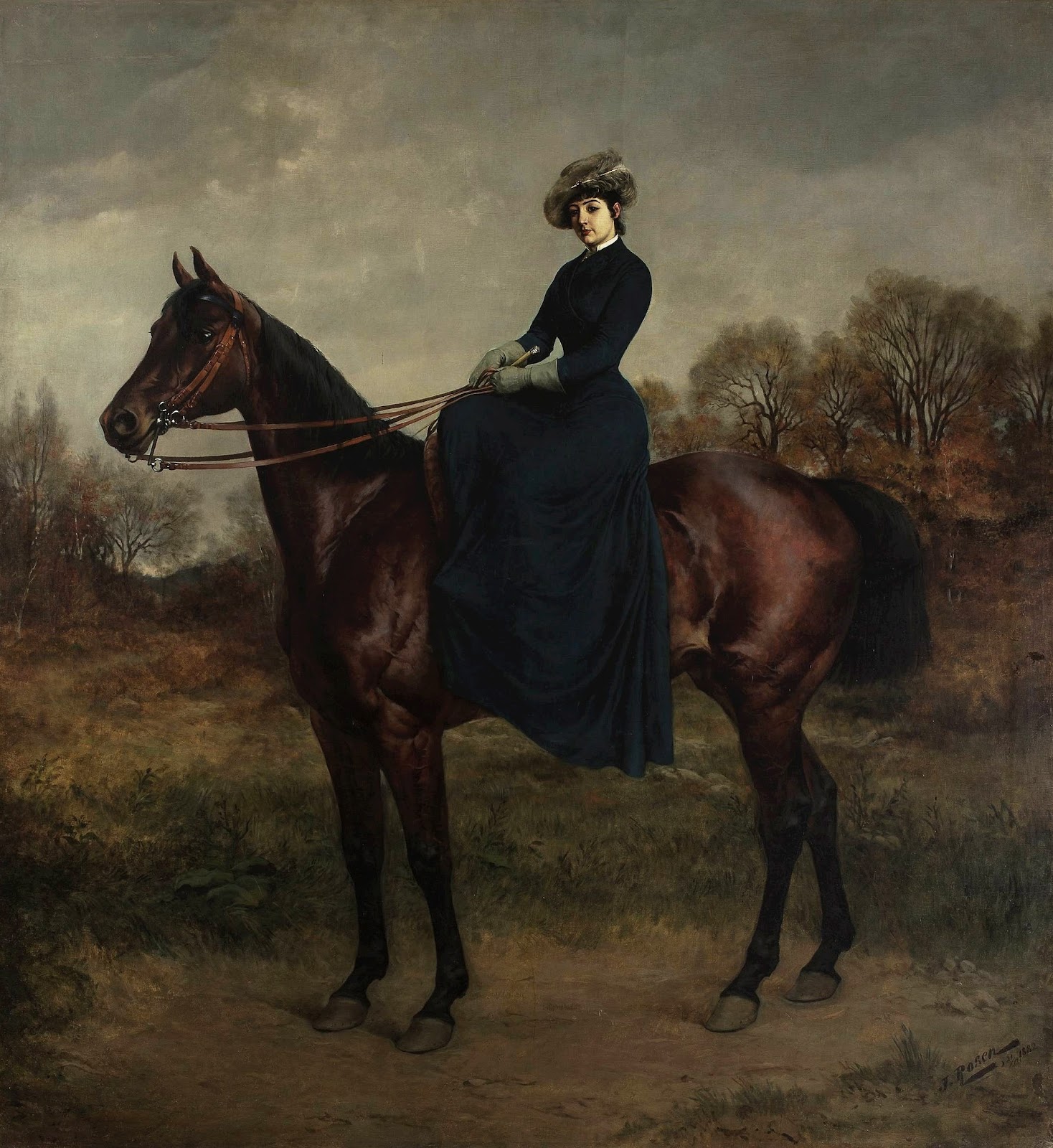
Polish painter Jan Bogumil Rosen (1854-1936) is famous for his equestrian and military-themed canvas - like the the immortal battle of Stoczek

He also painted portraits (in 1882), and here w have a very large painting - 73,6" by 66,5" (187cmx169cm)
I don't think his art has been published in an album, so it is kind of difficult to find a definitive collection of his life work. There is a collection of Jan B. Rosen' recollections written down by Anna Leo, published in Warsaw 1933. It is in Polish language and available to download on Polona - Polish National library.

His lineage is interesting, on one side he was the descendant of a famous astrologer Jacobus Leo, brought to Krolewiec/Konigsberg (now Kaliningrad), Ducal Prussia, by the Prussian duke Albrecht in the XVI century. His ancestors on maternal and paternal sides originally were of Jewish faith  but they converted back in the XVIII century etc to various Protestant denominations. His Warsaw ancestors were native to Warsaw, of wealthy bourgeois family, doctors and lawyers, scientists and artists etc.

per his art studies, Jan B. Rosen was educated under the tutelage of Jozef Brandt at the Academia of Fine Arts in Munich (Polish artists' veritable 'Mecca' during the Partition period) and later in Paris (Adacemie des Beaux-Artes) under Jean-Louis Gerome and Isidoreer Pils.

He was married to Wanda Hantke, daughter of the famous Polish Partition-period industrialist Bernard Ludwik Hantke, and they had one son who was the famous muralist Jan Henryk de Rosen (1891-1982) and two daughters, Zofia who was a sculptor, and Maria. 

Have a nice Saturday 


Valete 

Friday, April 4, 2025

Luigi I d'Este - tassels, bay horse and flowing scarf

 Salvete Omnes,


Luigi I d'Este one again 

here dear Luigi I carries a very long, narrowing towards the tip sword

.

a very detailed portrait - a bay stallion, and plenty of tassels 

typically long-shanked burb-bit

.

very nice riding boots with a spur of which we cannot see the tip 

.

sort of Sassanian Persian or old Medieval chivalry

.

splendid saddle with pistol holster and long-barreled pistol

enjoy

Valete

Tuesday, March 25, 2025

Rugendas - Stanislaw August on horseback

 Salvete Omnes 

Bavarian artist Johann Lorenz Rugendas (1775-1826) executed a drawing that his workshop converted into a etching and printed- the National Museum at Krakow has the print, and graciously allows for study and enjoyment via their Digital Collections.  


The subject of this print is last elected king of Polish-Lithuanian Commonwealth, Stanislaw  August (Poniatowski), (s)elected in November 1764, with the strong Russian 'bayonet and musket' presence, This last election followed  the short war between the national, conservative Sarmatian faction and the Progressive faction with Russian Imperial army in the vanguard. The war was atrocious on many levels, showing the complete ruination of the Polish Crown army, while the Lithuanian army, under the command of grand hetman Massalski, was told to stand aside, in exchange for large sum of money given to the grand hetman, while Progressive-allied Russian Imperial army marched into the Kingdom. It was during that war when the castle of Neswiez, the seat of Radziwill family then headed by Karol Radziwil 'Panie Kochanku', was plundered of its fabulous art and riches collections for the first time by the Russians (second will be in 1812). Withing the Royal Crown army  only the Tatar Ulan regiments,  that had freshly marched from Saxony and the Seven Years War's fields, showed themselves capable of any military action and order, while very ancient Crown grand Hetman Branicki was beyond any help as a military commander and leader.

In my opinion (and many historians), this ruler was to be one of the worst politicians ever on the Polish throne, being weak, afraid of this former lover empress Catherine the Great of Russia,  and always pursuing pleasures of life while borrowing money for his expensive ideas and projects, especially art collections. 

Ad rem, the mount of the monarch is white or grey - with the usual horse tack of this period, the 1760s. 


behind the monarch there are two attendants in stylized Hungarian attire

.

their horse also is bitted with a  double rein bridle, but the rosette in its forehead perhaps indicated both Polish and Hungarian bridle tradition. 


enjoy

Valete
Thursday, March 13, 2025

Luigi I d'Este, Marquis of Montecchio & Scandiano

 Salvete Omnes,

Luigi I d'Este, Marquis of Montecchio and Scandiano  - 1594-1664.
Italian imperial soldier and commander, participant of the 30 Years War and the war of Manuan Succession. 
His monumental portrait, by Nicolas Regnier, astride a powerful paint horse, probably a Neapolitan or Spanish war horse (could be Polish too, his head being small and eyes very large).


.

Marquis was portrayed wearing the final version of plate armor, a cuirassier version; most likely this armor was made shot-proof, withstanding pistol shot from close quarters if in the melee or hand to hand combat, and perhaps the cuirass itself was proofed against long distance musket shot. Note his long yellow riding boots.
His horse  was probably trained according to the highest Italian horsemanship standard, perhaps the presence of long-shanked curb-bit with rather  relaxed rein - note the tassel on its end, so the reins are split.

ornate bridle

.

ornate breastplate with a tassel
.

ornate, wide stirrups ..

there is another portrait of don Luigi while mounted, and I will discuss it too later one. 


Valete

Friday, March 15, 2024

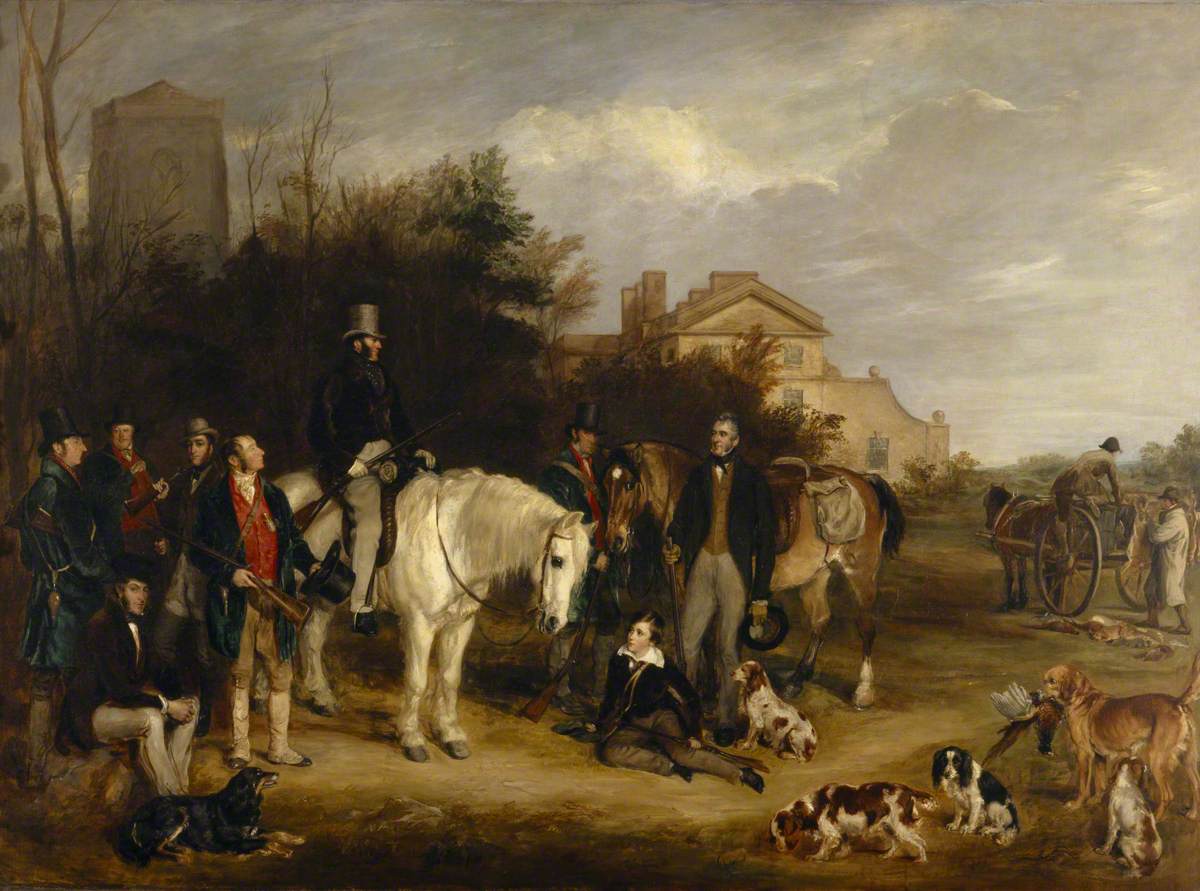
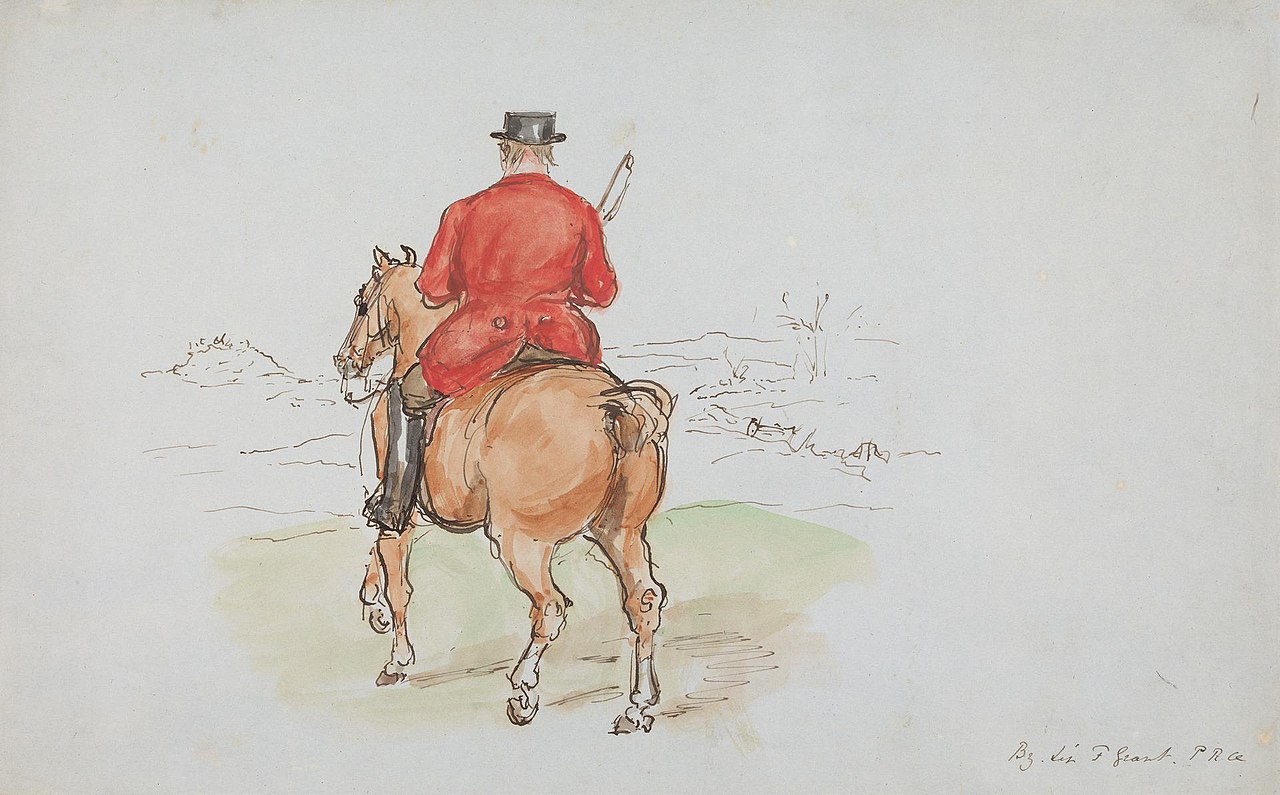
Horses of Francis Grant

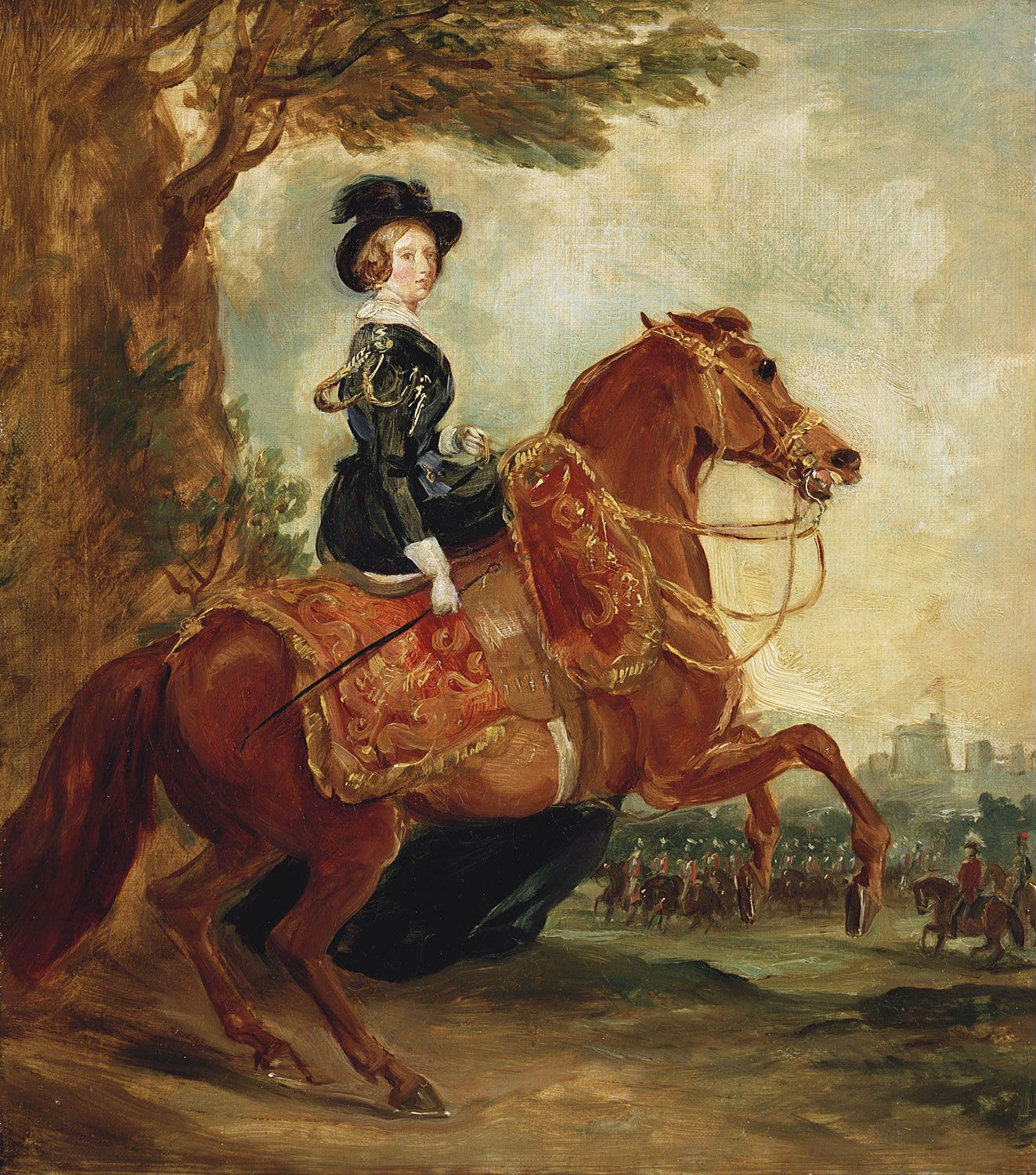
the Germanic queen of the British empire in full glory

 Salvete Omnes,


a short Friday entry, but heavy with the great talent, beauty of execution and subject matter and of  the XIX century Scottish brushmaster.

self-portrait

Francis Grant was a scion of the Scottish and British aristocracy (like sir Henry Raeburn etc) , educated as a lawyer who eventually decided to become a preeminent portrait of the Victorian era.


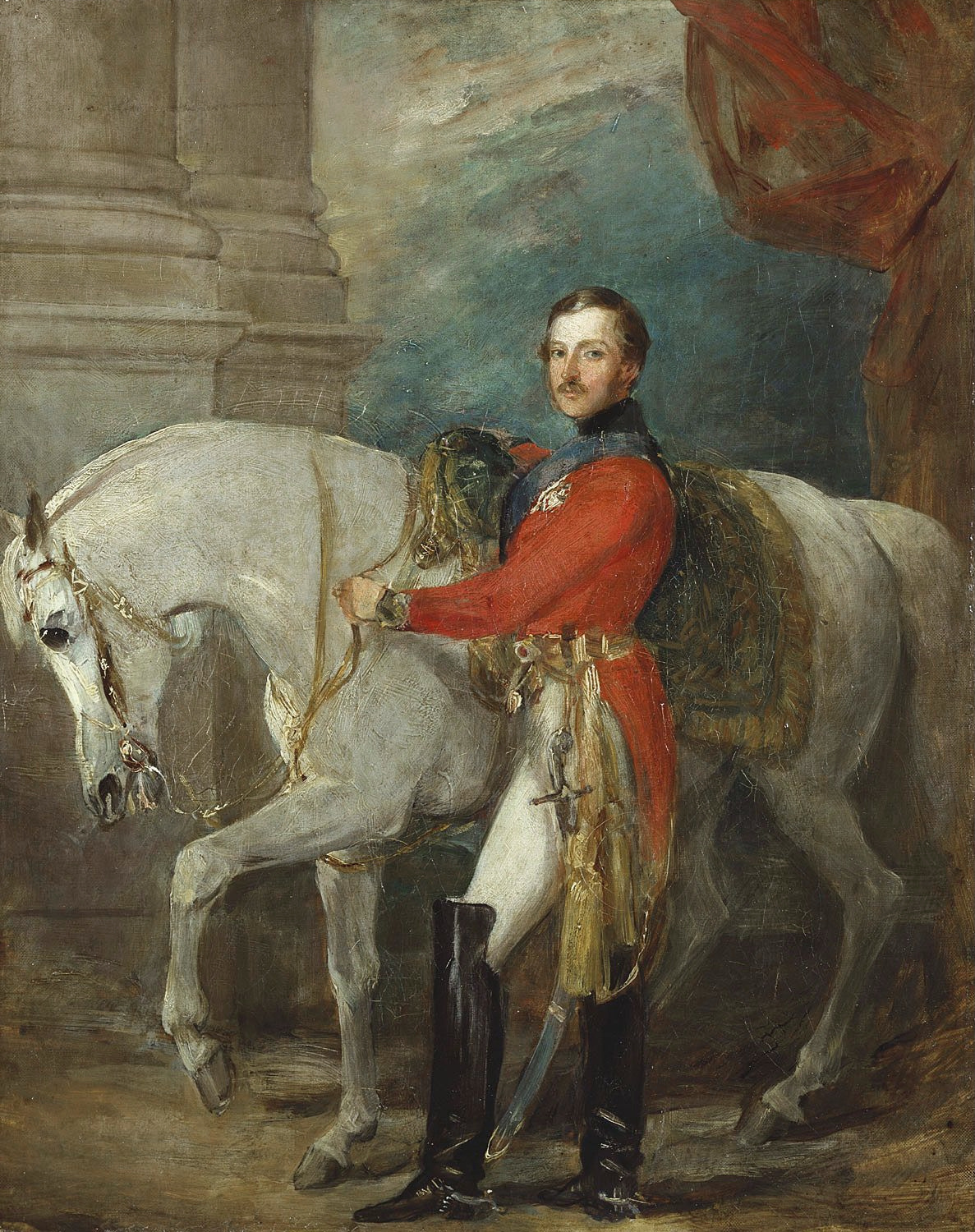
and some soldiers who supported their Queen with their swords and lances 

this general was taken prisoner by the Americans during the battle of Chippewa Lake, 1814 - here in the uniforms of the House Guard Cavalry?

Sir James Hope Grant as a Lieutenant Lancers 9th Lancers


Enjoy

Valete

Friday, June 9, 2023

Albrecht Wenzel Eusebius Valdštejn or von Waldstein - a Czech nobleman and war captain

 Salvete Omnes,


let us 'lope' to the first half of the XVII century and we can study the artworks and dip in a bit for a little Czech and Imperial European history of that period.

In this detail from the painting by Strobel - Albrecht in his finery, note his boots and  the boots of a chevalier behind Albrecht on the right, the rowel spurs on both noblemen's heels
Alcbrecht in a buff coat, with a marshal baton, and with the Golden Fleece

Albrecht in a buff coat and long riding boots, a huge shanks on the crub-bit, and large Western war saddle - copyright Alamy


Albrecht Wenzel Eusebius Valdštejn or von Waldstein/Wallenstein (1583-1634) was a prominent Imperial (Catholic) commander and war leader during the XXX Years War. He, a scion of the Waldstein branch,  was a descendant of the ancient southern Czech noble family of Markvartici.

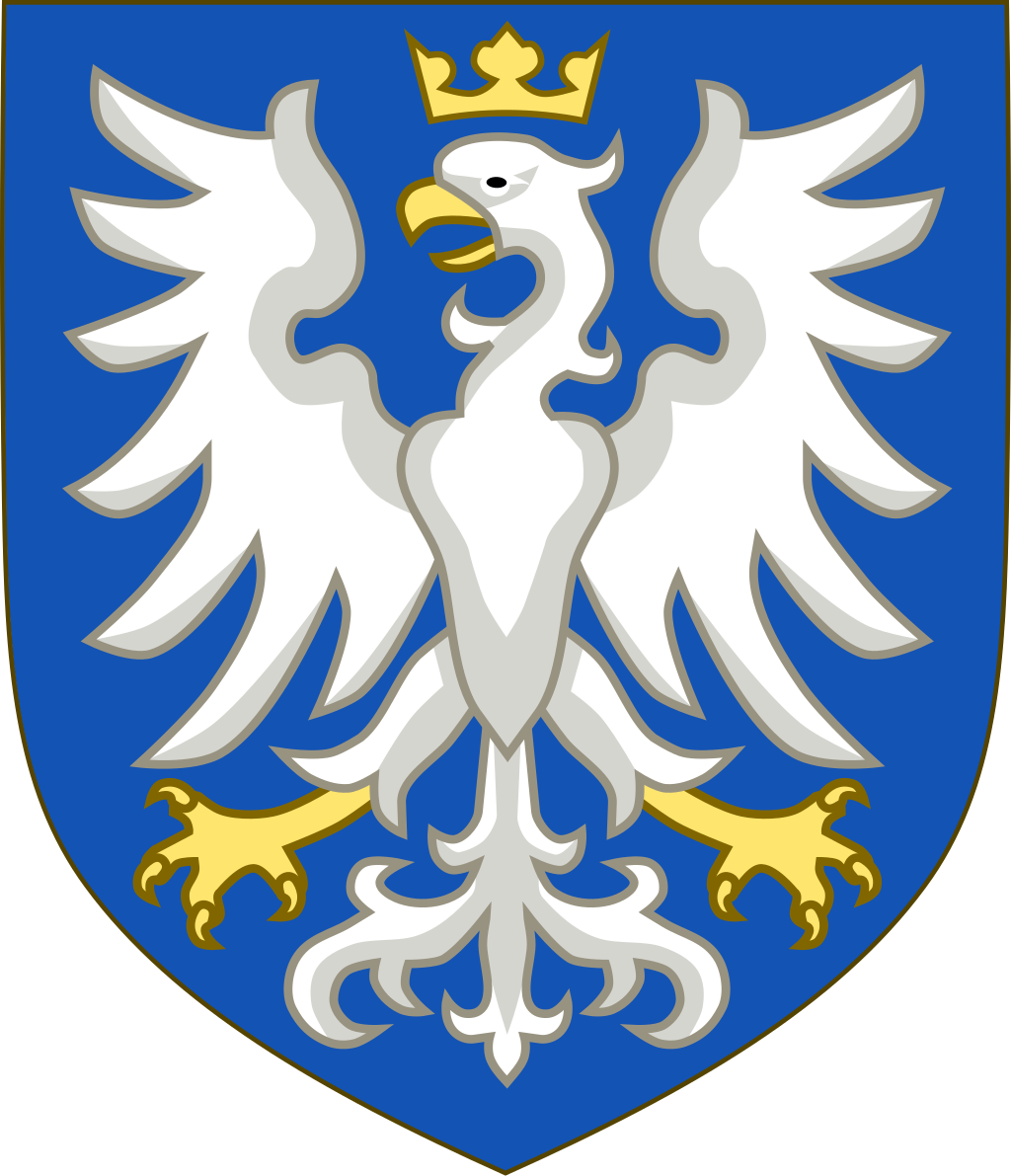
His coat of arms


He is famous for this actions during the tragic war, and perhaps infamous for plotting to switch sides, i.e., going over to the Protestant side. He was murdered by the henchmen, mercenary Scots, sent by his sovereign the Holy Roman Emperor Ferdinand II.
He was suffering from illness at least since 1620AD, after 1632 and battle of Lutzen  he was unable to ride a horse and was carried in a litter, and some researchers ascribe this illness to gout, while some to syphilis etc.


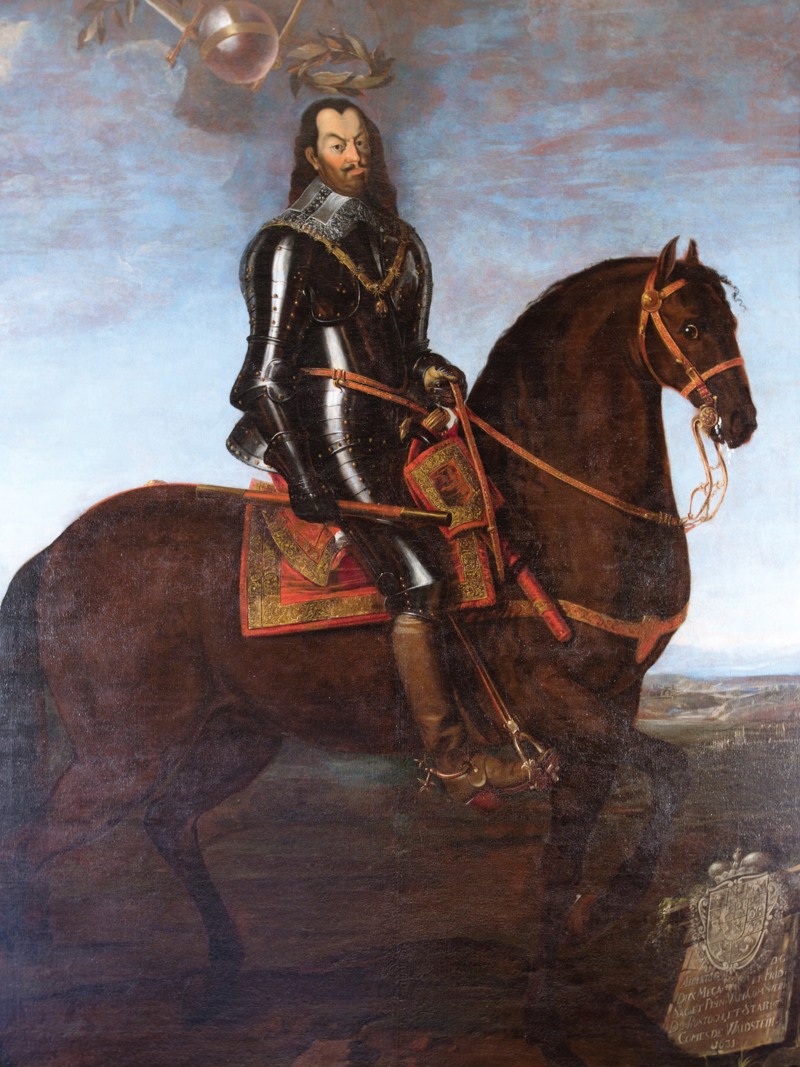
The most interesting to me is his portrait - by some unknown painter. - Waldstein appears to have been mounted on a bay horse

three-quarter cuirassier armor, long riding boots, long presumably wheel-lock pistol
long-shanked curb-bit

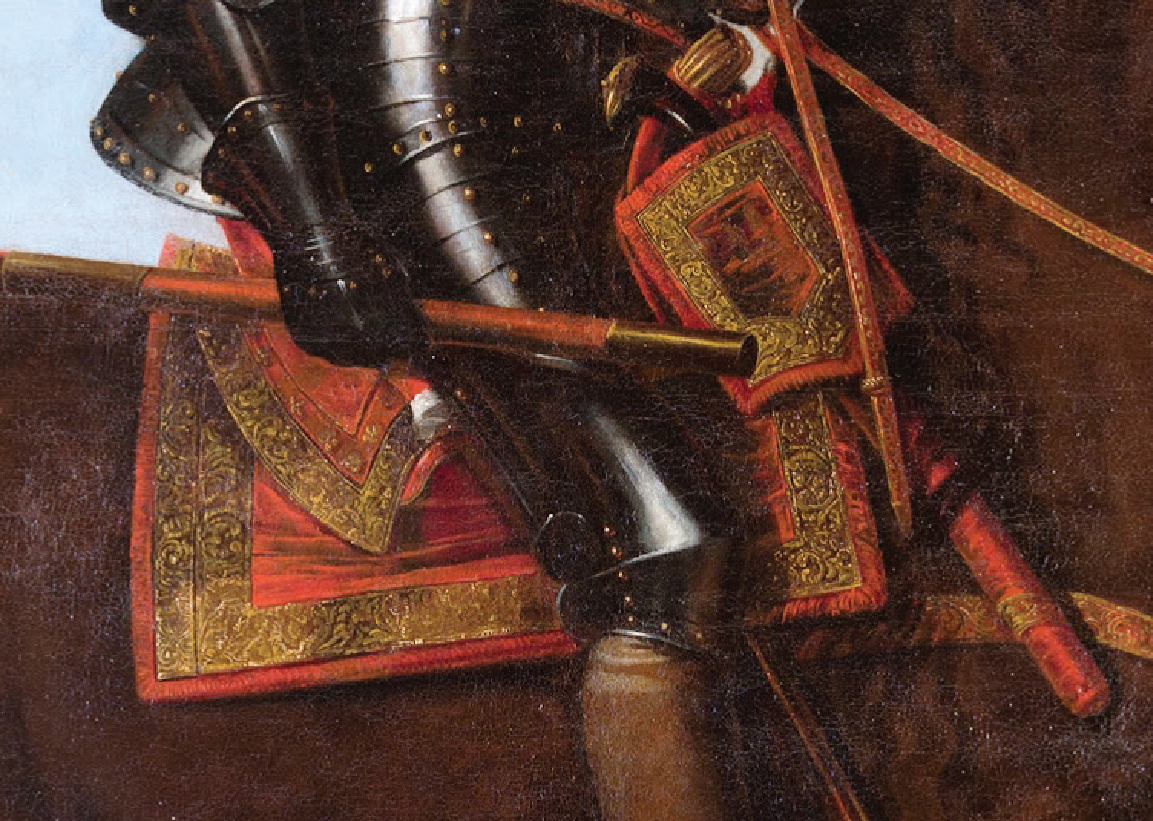
sumptuous war saddle, with a horn, and a pistol holstered with a crupper and breastplate

Rowel spurs on his high heeled long riding boot and a very elaborate stirrup


The artwork related to his battles (note, he participated in the the Long Turkish War - Der  lange Turkenkireg -  under Basta) - perhaps the most momentous was his defeat at Lutzen, that paradoxically changed the course of the war, for during the battle Lion of the North, Gustavus Adolphus of Sweden, the arch enemy of the Polish Vasa realm, died  fighting and the Swedish juggernaut was stopped in its relentless  advance upon the Imperials.

White Mountain

Dessau


the siege of Straslund

Lutzen in print

Lutzen on canvass

and an allegory from the palace fresco - Valdštejnský Palác.


Valete