Showing posts with label Mongol horse. Show all posts

Thursday, July 6, 2023

Chinggis Khan - Mongol Empire History - forthcoming book from Cambridge Univ. Press

 Salvete Omnes,

Chinggis Khan as the first emperor of Yuan Dynasty 


a shot entry - of course it is the dog day for sure - :) 


a new book on the Mongols and their meteoric rise to power and empire is coming this year - be it August or perhaps later . The publisher is the Cambridge University Press - The Mongol Empire, Two Volume Set. - Hiram & Kim editors et al

Chinggis Khan on horseback according to a Yuan Dynasty artist


Yuan Dynasty in China
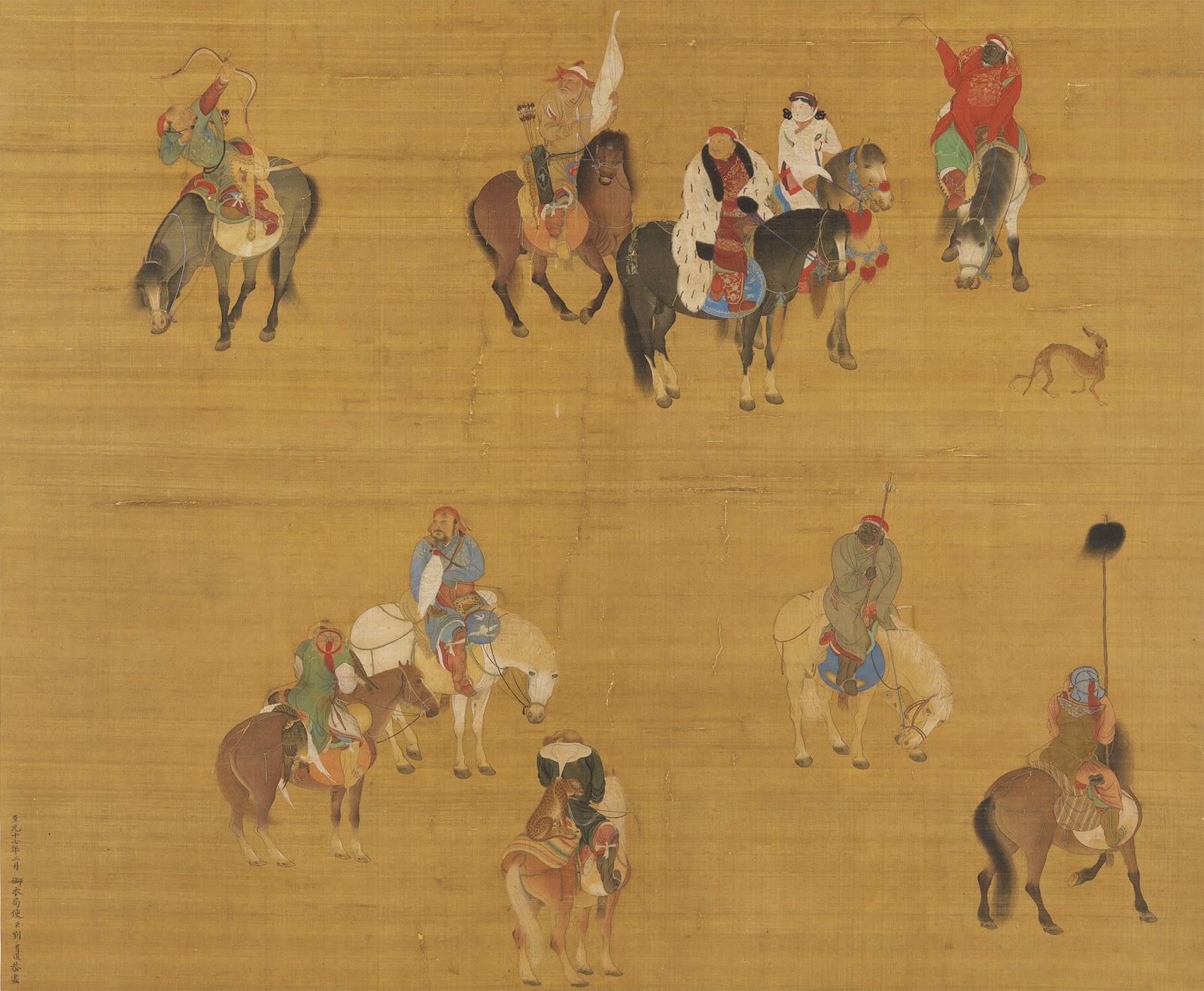
Kublai Khan on a hunting expedition, by Chinese court artist Liu Guandao, c. 1280
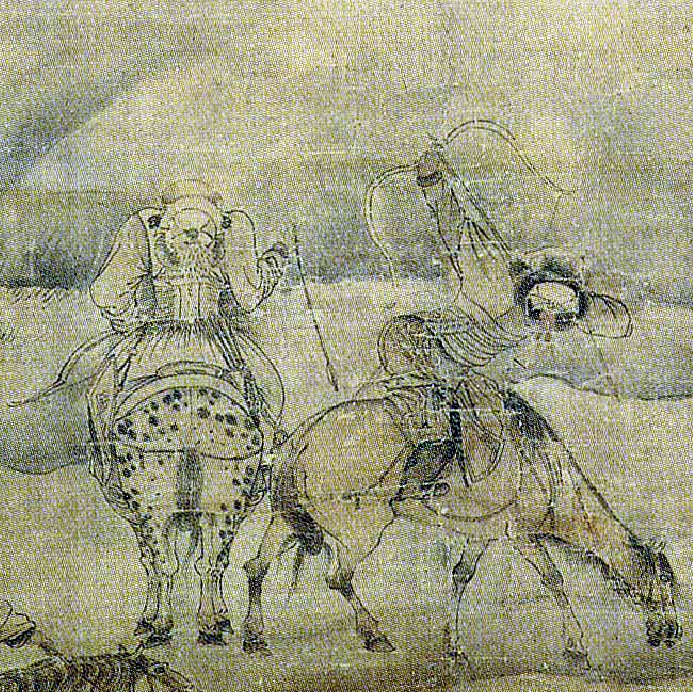
Temur Khan hunting geese - detail 


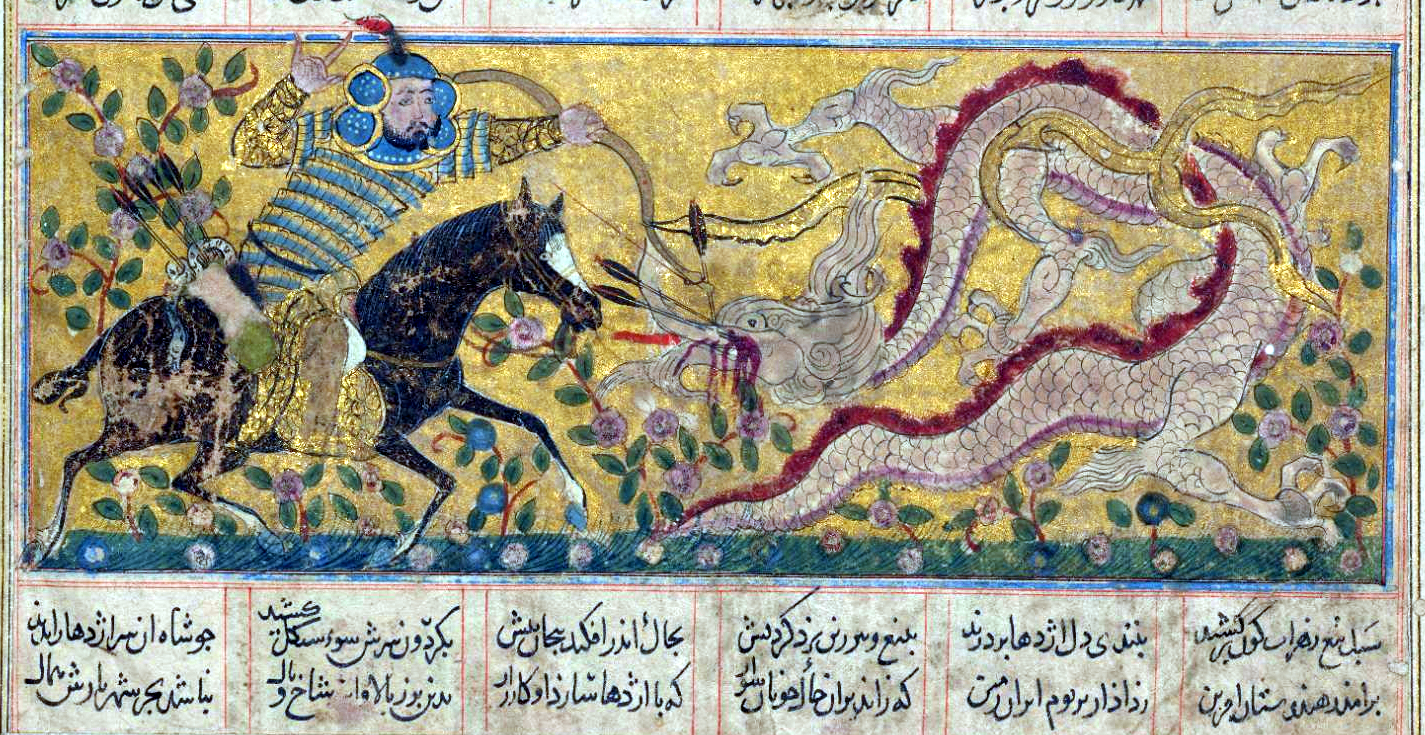
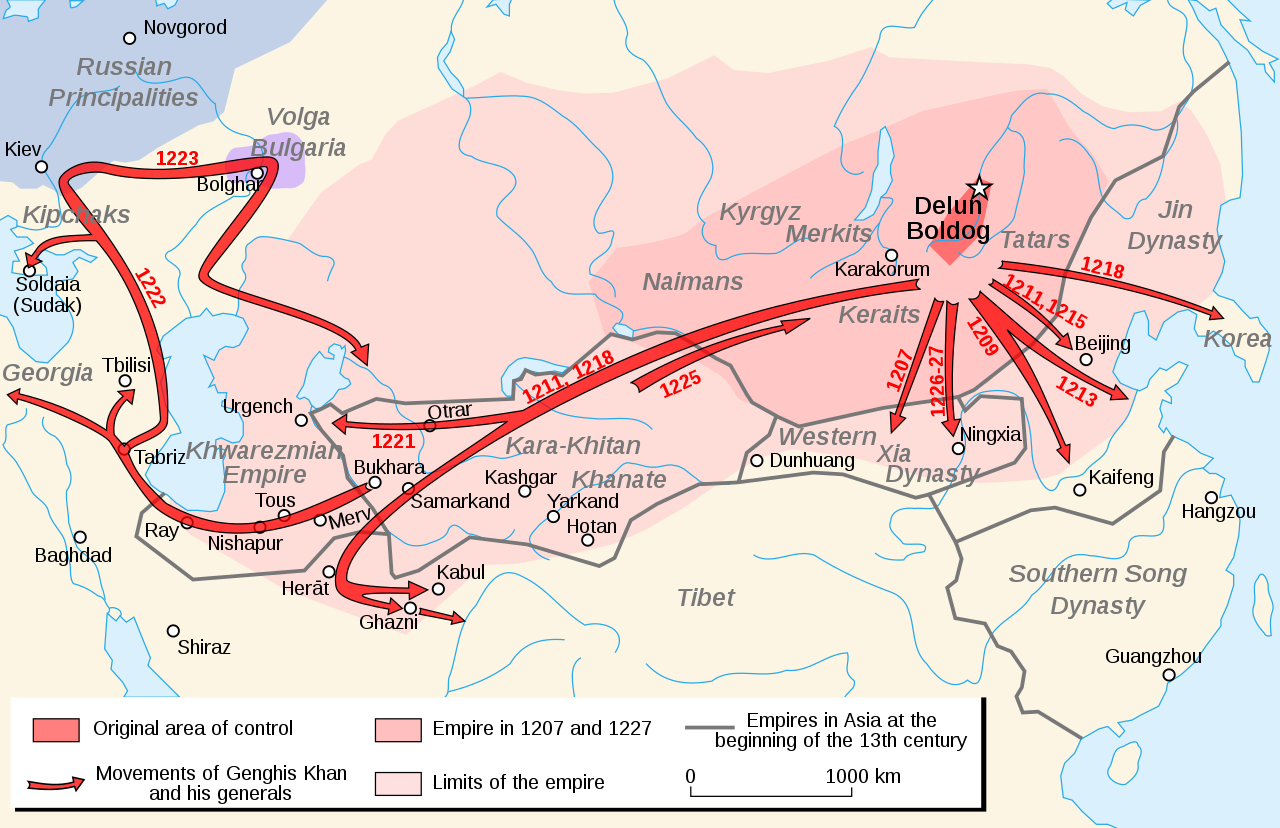
the empire was won on and from horseback - and many of these mounts might have succumbed to the hardships of  campaigning 


while other mounts thrived on 

horse archery, martial and hunting skills were the most desired attributes for a Mongol horseman
 
detail from a Yuan Dynasty painting 

a detail from Yuan Dynasty scroll - lots of jingles on this horse harness 


Looking forward to see this publication 

pure beauty of this painting from 1271-1368 period


valete

Sunday, February 20, 2022

Estonian Native Horse and genetics

 Salvete Omnes,

while perusing academia.edu subscriptions and searching for the Birka warriors etc I came across Gus Cothran's page on academia
I guess I started my adventure with horse genomics by reading prof. Cothran's articles etc.
So in his(and esteemed colleagues)  2019AD article -  Population Genetic Analysis of the Estonian Native Horse Suggests Diverse and Distinct Genetics, Ancient Origin and Contribution from Unique Patrilines- (link) we have a study of the Estonian Native Horse -    University of Oklahoma livestock and breeds page - wiki page, breeders pages. 


The horse averages 147cm at withers and about 430kg in weight (I guess the stallions). Its gene pool includes Mongolian horse and the Yakutian; Scandinavian horses like Gotland Pony, Norvegian Fjord, and Islandic Pony; British Isles horses - Exmoor and Shetland,  Polish Konik and Carpathian Hucul... 


This small horse might have been part of the horses' pool used by the Polish-Lithuanian Commonwealth armies as between 1569-1629 Duchy of Livonia was part of our Polish state. Also, it is reasonable to infer that some Polish stallions left their progeny among the herds of the Estonian horse during that period.  After 1620s the Duchy of Livonia was conquered and annexed by the Swedes who already held the northern part of Estonia. It all ended with Peter the Great of Imperial Russia conquering all of Estonia during the Great Northern War. And Estonian horse became popular in Imperial Russia.. and so on until the present it is the native breed in the independent Estonia. 


Valete

Thursday, December 2, 2021

Yuan equestrian art - ceramics

 Salvete Omnes,

snowy and frosty winter out there - I guess it must be the fabled global warming in the Northern Hemisphere. 


ad rem, from the great galleries of wiki commons- Yuan Dynasty equestrian figurines -
as you may have read here I enjoy the long Chinese history, and I read and watch about that history as much as I can.
The Yuans awere particular in many respects, and their art is part of the greater Chinese art heritage, as it was  the fusion of many elements that came to a happy fruition: the steppe patrons and their expectations, steppe artists and Han Chinese artisans, who all together  gave raise to the Yuan Dynasty art.
We should note here that  this foreign Chingizid Borjigin dynasty upon conquering various states and empires across the  land unified the  entire China for the first time since the demise Tang Dynasty.


So, some of these equestrian ceramics are corralled here: 


  camels


camel drummer


horse carriage and escort:


pack horses with folded chairs


and please find this short article on and about the Marco Polo's description of the military affairs of the Yuan Dynasty

Valete

Monday, September 16, 2019

Paola Giacomini - z Mongolii do Krakowa

Salvete Omnes,

 [Polish]

Paola Giacominifacebook strona i wersja angielska), włoska amazonka i jeździec długo-dystansowy, jadąc z Mongolii od ponad roku, 25km dziennie, wierzchem na koniu mongolskim z drugim mongolskim koniem jako jucznym na uwiązie dojechała do Krakowa i wręczyła włodarzom krakowskim i strażakom-hejnalistom z Wierzy Mariackiej strzałę mongolską przywiezioną w darze z Karakorum, dawnej stolicy Chanatu Mongolskiego. Podroż epicka i heroiczna zarazem - czapkę z głowy i do nóg się kłaniam przed wielkim wyczynem włoskiej amazonki.


 Muzeum im. Emeryka Hutten-Czapskiego, Oddział Muzeum Narodowego w Krakowie było miejscem spotkania z Paola 16 września 2019.
Po drodze przez Polskę jechała Paola przez Parczew.
Onet na temat wjazdu Paoli do Krakowa.
Polsat o Paoli.

 Krakowski Gosc o Paoli

Telewizja Kraków z artykułem i video.

Ale jej odyseja nie kończy się, gdyż Paola i jej dwa rumaki kontynuują swoją podróż przez górskie przelećże na Słowację, przez Austrię do Italii. Miejmy nadzieje, ze dotrą do domu zanim góry pokryją śniegi i lody nadchodzącej zimy.

Dodajmy, ze niektórzy dobrzy ludzie (eg pan Bartosz Kmiecik) pomogli podróżniczce i jej koniom w czasie jej jazdy przez polskie pola, lasy i łąki; ale w czasie trasy przejazdu spod Białegostoku pod Krakow zdaje się była często nieobecna, niestety, owa sławna polska gościnność, z która widocznie rozminęła się Paolo w czasie jej podroży przez Polskę. O tempora o mores!

[English]
Paola Giacomini, long distance rider from Italy - see the links at the beginning of this post, rode two Mongol horses from Mongolia to Poland, entering Krakow's Old Market Square today.
 This equestrian traveler riding 25km a day crossed Mongolia, Russia, Lithuania and Poland to reach Krakow, where she presented a special arrow from the mayor of Karakorum to the mayor of Krakow, the arrow of peace.
Paola could not ride through Kazakhstan and  instead had to cross the Altai Autonomous Republic and the southern Siberia. There in the vastness of Siberia she met many friendly people who were descendants of the  Sibiraks or prisoners sent there from Poland, Germany, Baltic republic, and other countries under the yoke of the Tsars or Soviet commissars.
She also went to Saratov on the Volga, in her own words  the capital of the Russian horse riding Cossacks, while in Lithuania she saw Zemaitukas (zmudzinki) horse, akin to her Mongol horses.
Long Riders Guild also noted this epic voyage from Karakorum, the old steppe capital of Mongolia, to Krakow, the old capital of Polish Kingdom.
 
Conjectural map of Paola's journey

Valete
ps
fotografie za pozwoleniem & copyright (c) Paola Giacomini