Showing posts with label towarzysz winged hussar. Show all posts

Monday, September 8, 2025

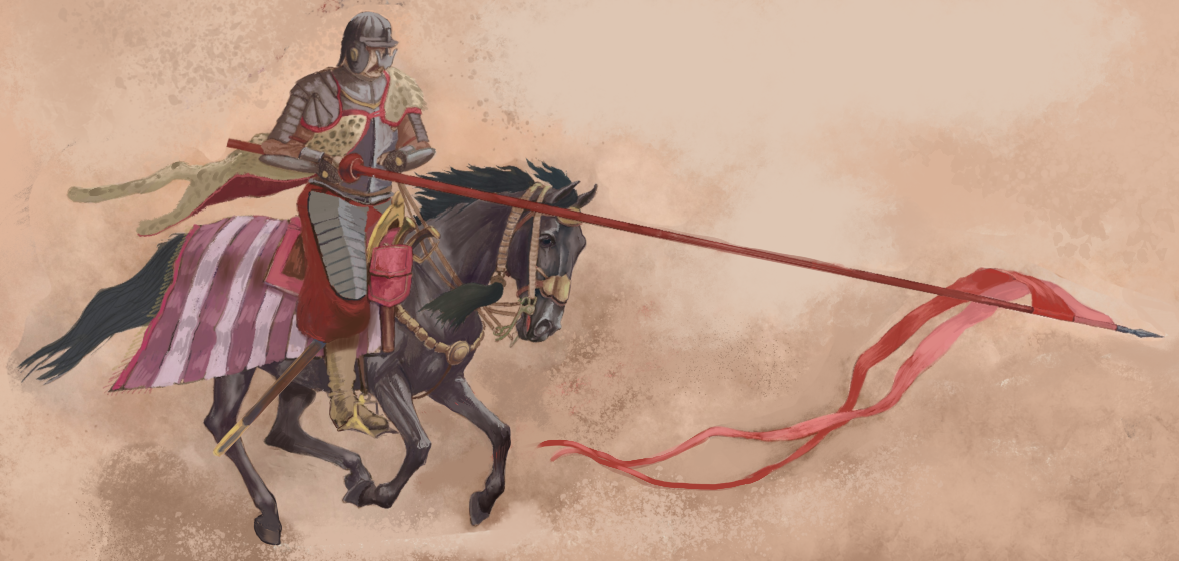
Winged Hussar Companion from Lapanow ca. 1652AD

 Salvete Omnes,


it has been some time since I posted anything related to the winged hussar.

Pacem Aeternam


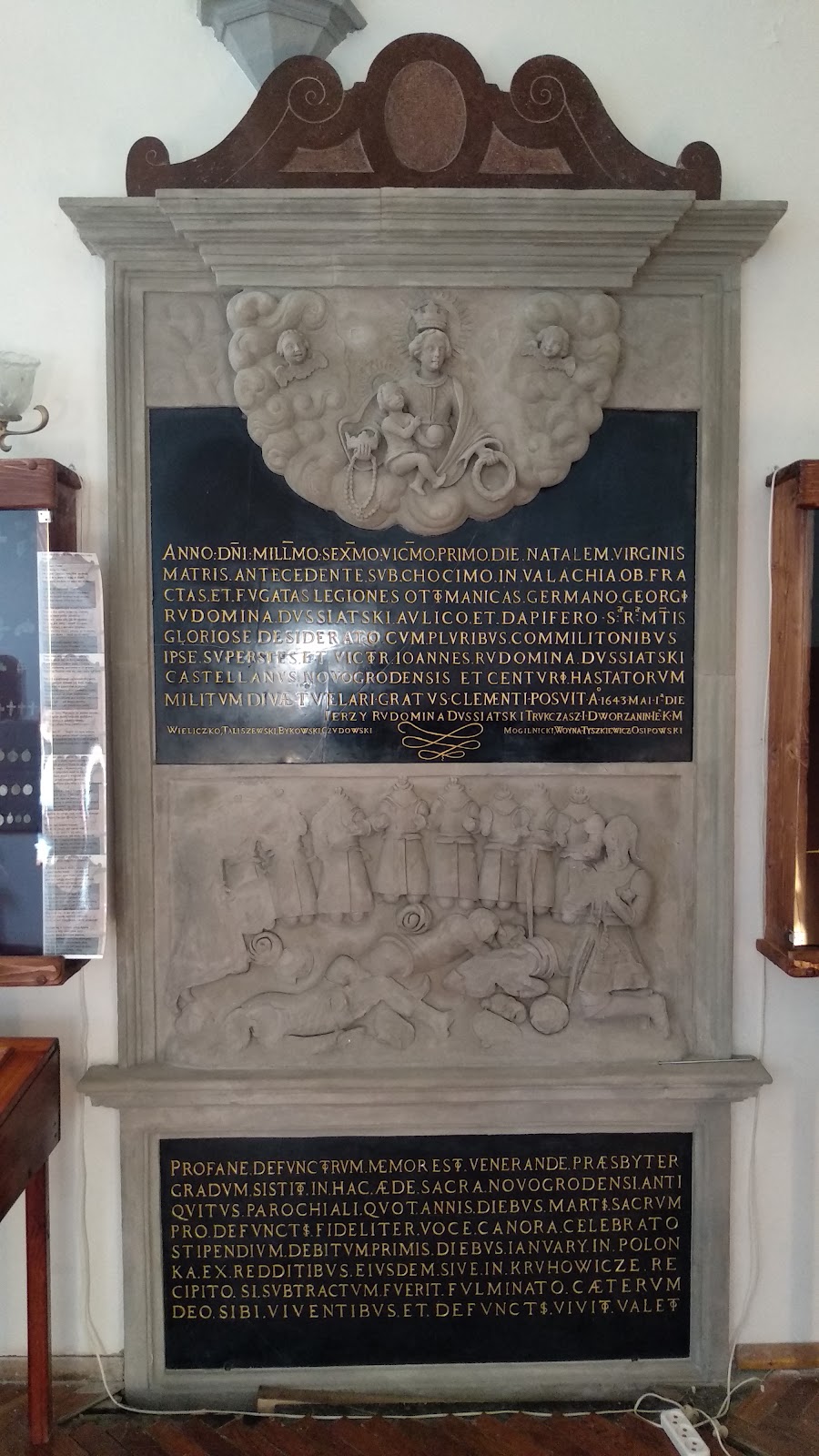
One of my friends, Damian Loj, sent me this link to an epitaph from Lapanow's church of Saint Bartholomew the Apostle (founded in 1529 by Mikolaj Lapka, and rebuilt in 1614 by judge (iudex castri) Marcin of Lutoslaw Lutoslawski).


The Lapanow Parish was an affluent one in the end of the XVI century,  consisting of the following villages - Lapanow, Lutomierz, Kepanow, Grab, Boczow, Brzozowa, Ubrzez, Kobylec, Wola Wieruska, Janiszowka, Wolica and Wola Grabska. There were three church patrons - Hieronim Lapka, Stanislaw Lubomirski ,Druzyna coat of arms, and Jan Dabrowski (1596).

The stone plaque depicts a pious winged hussar companion Marcin Lapka (1599-1652). Lapka's wife Marianna Lipska from Lipia had the epitaph carved circa 1652. The plaque was mounted on the outside of the church and only in 2012 was moved into the church. The linked site says that the archives from 1748 noted four such epitaphs existing at that time, unfortunately only two survived the winds of times, albeit the second one from 1666AD contains only the lower part of the epitaph. The second epitaph, Andrzej Werbski Pilawa coat of arms,  was also funded by his wife Magdalena nee Lyszkowska  and their children.


 we can see clearly the hussar lance, his 3/4 plate armor, hussar helmet or shishak, and l-type Polish sabre


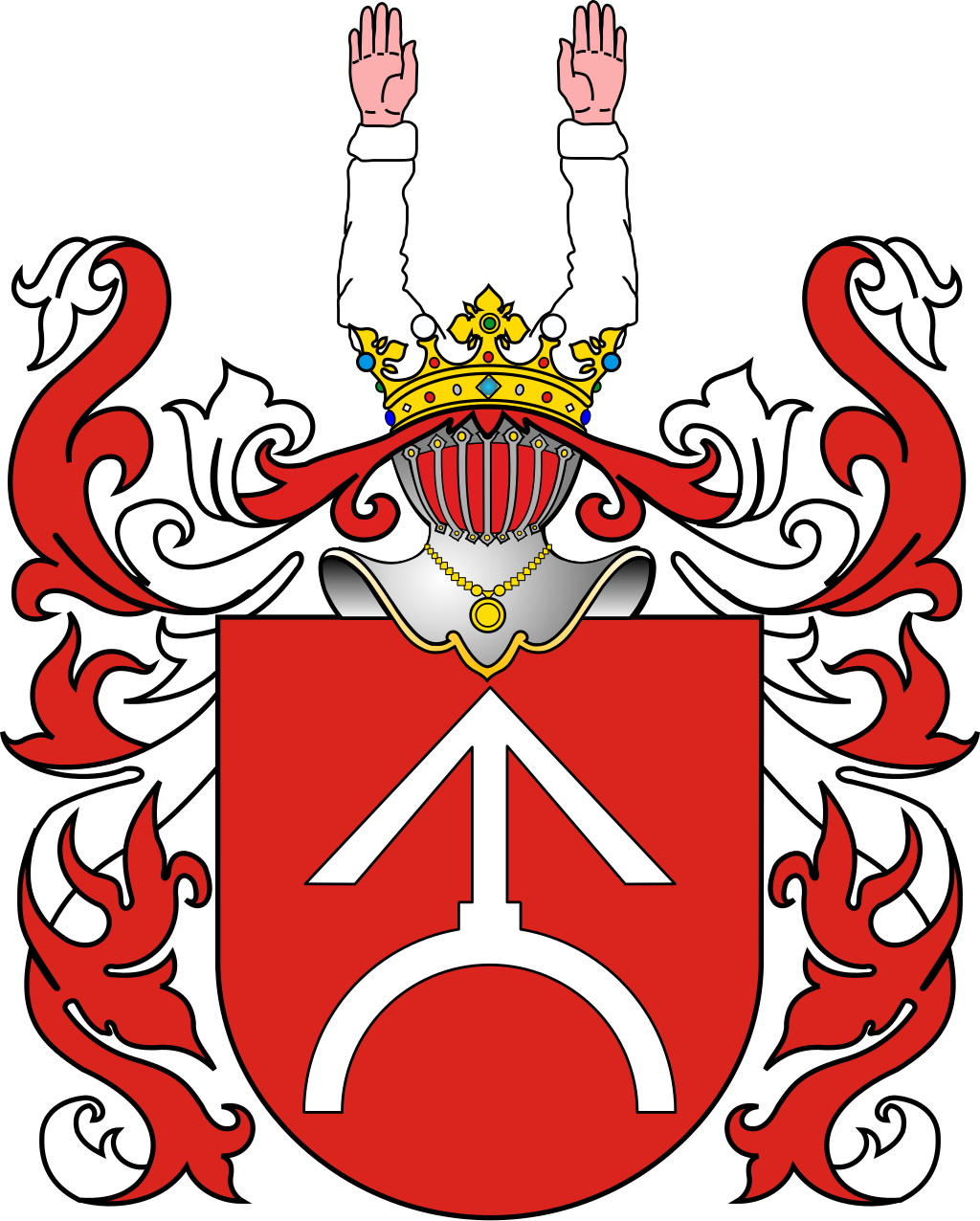
The plaque also contains the winged hussar's coat of arm - in my opinion it is Szreniawa, 


and not a Druzyna (also called Szreniwa bez Krzyza - Szreniawa without a Cross), as they declare on the website linked above. But on the other hand, Druzyna is part of Szreniawa lore, and some historians, following Jan Dlugosz  consider Druzyna to have been the original coat of arms out of which the Szreniawa developed or originated. Bartosz Paprocki, the author of the monumental Polish heraldry, listed the Lapka family as both Szreniawa and Druzyna (circa 1543), later writers like Niesiecki and Boniecki say that Lapka were of Druzyna coat of arms.


Lapanow has also a very unusual monument to the farmer peasants killed, 5 killed and 10 gravely wounded protesters,  by the government's forces on June 5, 1932,  which makes this column a symbol of our Polish peasant farmers struggle for the peasant rights during the 2nd Polish Republic.


ps
8th of September is also the anniversary of the 2nd battle of Orsza(Orsha) - a huge  and victorious battle for the Polish-Lithuanian realm against the Muscovy ( the Orsha battle was won but the war did not result in recovering Smolensk, the gateway to Lithuanian Duchy).

Valete

Thursday, December 5, 2024

Krzysztof Dorohostajski, grand marshal of Grand Duchy of Lithuanian, in Krakow 1604

 Salvete Omnes,

yesterday or on the 4th of December but in 1604 AD, the rulers , many lords, magnates and common citizens of  Polish-Lithuanian Commonwealth came to the capital of the realm - i.e.,  Krakow (Cracow), to greet and welcome Constance of Austria as the new wife  of our king, Sigismund III. Constance would wed and be crowned as queen-consort of the Polish-Lithuanian realm.


The Krakow entry was commemorated in the fabulous scroll painting known as the Stockholm Roll - this name is due to the fact that the Swedish king  had the painting taken from the Warsaw Royal Castle in 1655AD and it had been stored in Sweden until returned by prime minister Olof Palme in 1974. 


One of the officials depicted in this gouache painting is senator Krzysztof Dorohostajski vel Dorohostayski (Leliwa coat of arms),


 who was the grand marshal of GDoL during this time. 

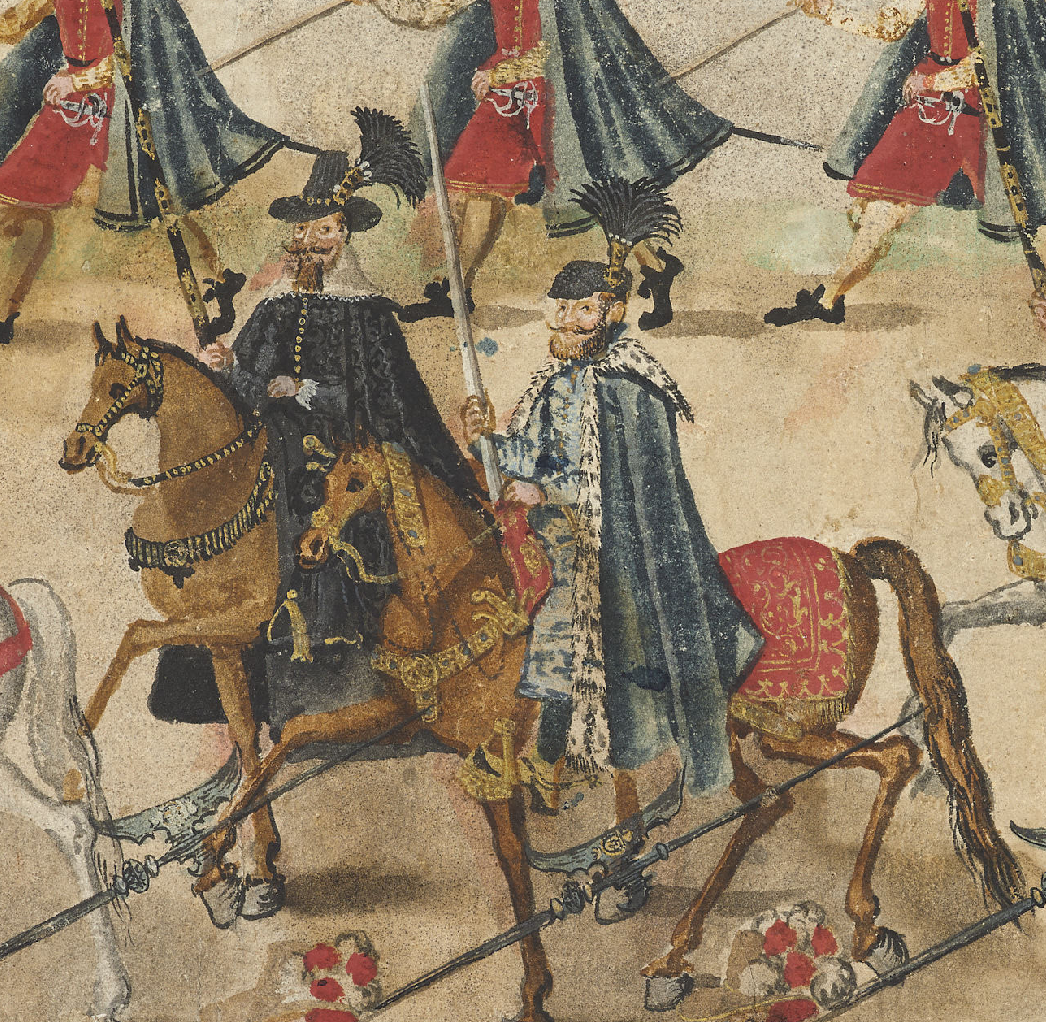
Dorohostajski is dressed in a Spanish or Italian dark costume of the period, holding his staff of office

Pan Krzysztof, an authority on war, law and horses, is riding a bay or rather a  chestnut horse, presumably a stallion, himself being a famous writer of a horsemanship treatise, Hippika,  published in 1603, and formerly a winged hussar companion and at that time a captain of  his own winged hussar company. He would participate in the wars against Sweden and Muscovy until his passing in 1615.
Dorohostajski horse's tack appears to be very splendorous and exquisite, gold pieces on the black background, with gold or gilded stirrups.  
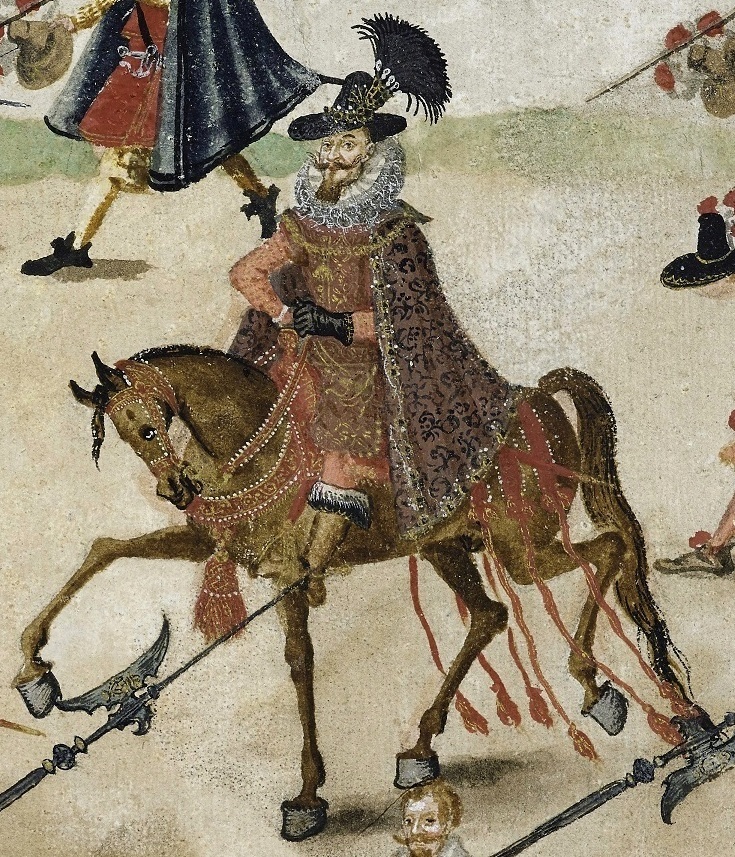
The court marshal of GDoL, Piotr Wiesiolowski (Ogonczyk coat of arms),


riding on a chestnut stallion next to Dorohostajski, is dressed in a prevailing then Hungarian style of  costume, his horse furniture more like of the winged hussars, and he has a sword under his thigh.  All gilded and ornamented with precious and semiprecious stones and perhaps pearls. 

                                                                                              ***

Nota bene our then king and groom, Sigismund III Vasa, is depicted as mounted on a dark chestnut stallion 


and his bride and queen to be, Constance of Austria with her royal entourage in the carraige: her mother archduchess  Maria Anna, her sister Maria Christierna and king's sister princes Anna. 


enjoy

Valete


Wednesday, February 28, 2024

Winged hussars with lances - some illustrations

 Salvete Omnes,


the month of February 2024 is ending, winter coming to an end and Novruz will come running. 

The wars are not ending unfortunately, there are no leadership in the West to stop the mayhem.
and European farmers, the core of that land, went to wage big protest war against the elites and their lackeys, who are in denial of biology and photosynthesis  - Godspeed to the farmers!


I am going to end this month with some of my illustrations showing long lances of our winged hussars - some older and some newer illustrations.


enjoy 

valete

Friday, February 23, 2024

Domany - 22 .02.1655 AD

 Salvete Omnes,

it was yesterday, but in 1655AD, with lots of snow and wind when during the Ruso-Polish war of 1654-67 AD the Grand Duchy cavalry division commanded by 


Aleksander Hilary Połubiński, Jastrzebiec coat of arms, engaged the Russo-Cossack division under


knyaz/kniaz or duke Yury Ivanovich  Romodanovsky,  and    the winged hussar company (according to their roll a 100 companions and retainers officially) under Jakub Teodor Kuncewicz (Labedz coat of arms)


of this Lithuanian division attacked with lances and  broke, in frontal charge, 3 companies (rota) out of  circa 900 strong Muscovite pike-musketeer  infantry regiment  at Domany (near Mohylew or Migilev in present day Belarus), an epic feat of arms.


Polish warriors killed and wounded many Muscovites, captured the artillery, wagon train and many soldiers, while some Muscovite  along with their commander prince Romodanovsky escaped to Mogilev, where there was Russian command.


from dr Sikora's Favebook page

[in Polish]
z wczorajszego wypisu na Fb mojego druha Radoslawa Sikory wzmianka o Domanach, z moja grafika - link do artykulu z Kresy.


ps

let's go Polish and other EU farmers in their protests. 

Valete

Monday, June 12, 2023

Jerzy Rudomina and 8 winged hussar companions cenotaph

 Salvete Omnes,


this topic is closely related to the battle-siege of Khotyn and the great Polish-Ottoman war 1620-21AD, two years ago I published the Polish version of this article - so as the saying goes-  better late than never I am 'publishing' the English version here today.                                                                                        


 ***

One of the heroes and and also one of the chroniclers of this war with the Ottoman sultan Osman II and his imperial army was Polish-Lithuanian cavalry rotomistrz/rotameister (captain) Jan Rudomina Dusiacki (1581-1648AD). 

This Jan Rudomina, later a castellan of Nowogrodek (an ancient city of Belarus and GDL, now in Belarus), was a son of another Jan, a tribunus of Braslaw, who was admitted to the Radziwill coat of arms Traby by Grand Lithuanian Hetman Mikolaj Radziwill Rudy ( Red) in 1575AD.  

Younger Jan Rudomina brought his winged hussar banner, in which his brother Jerzy and other citizens of property and means from the Grand Duchy of Lithuania served among this cavalry company. 

The Rudomina banner, without their kopia lances,  participated in the famous cavalry charge against the huge Ottoman attacking force of September 7, 1621AD. The Rudomina's winged hussar banner was combined within a ‘pulk’ or the crack mounted unit of 4 winged hussar companies, rapidly formed for this purpose under the leadership and orders of Grand Lithuanian hetman Jan Karol Chodkiewicz, against the Ottoman army attacks on the evening of that September 7.

In the course of the fighting, the Rudomina banner, fighting like reiter cavalry using pistols, broadswords and sabers,  suffered significantly higher  losses  among the 4 banners in this engagement (described in the poetry of the era, in diaries, and eventually in modern historical studies, e.g. by researcher Radosław Sikora). Among the killed companions and retainers of Rudomina banner was Jerzy Rudomina, Jan's brother. Jan took the bodies of the fallen companions back to Grand Duchy of Lithuania, and he had  his brother  Jerzy buried in Vilnus, while the companions were buried in Nowogrodek. 

Jan himself was wounded and wrote an epic diary of the Khotyn battle – published in print in 1640AD and nowadays available in digital form on the website of the Jagiellonian Digital Library. 

In 1643, Rotmistrz Jan funded a cenotaph commemorating the valiant death of his brother and his 8 companions on that Khotyn battlefield on September 7. The cenotaph was installed inside the Transfiguration of Christ church in Nowogrodek.


And although the current church was re-built in the XVIII century, the cenotaph survived the storms of history (Soviet hordes 1919-20AD, then the invasion and occupation by the German Nazi bestial savages 1941-44AD, and finally the rule of the only ‘just’ Red system (1944-90AD), and although mightily damaged, it can be admired in the said church of the Transfiguration of Christ in the old ducal city.


 Fortunately and happily, during the XIX century, some unknown artist drew a cenotaph and then the drawing was copied in the form of a lithograph printed by the Lemercier company in Paris, France, the so-called Vilnius Album, edited by (?) J.K. Wilczyński, published in Paris 1845-1856, volume 2, and the publication itself was financed by a descendant of the Rudomina family.  


Finally, on academia page of dr Katarzyna Kolendo-Korczak, you can read her article about the very cenotaph (in Polish) still located in the ToC church in Nowogrodek.


Valete

Tuesday, February 8, 2022

Winged Hussar from De Re Miltiari

 Salvete Omnes,

happy to announce that the Polish publisher Infort Edition has published the new volume of their De Re Militari magazine - 172 page of military history.
It can be had from their Wanax store page.

And on the front cover my winged hussar companion with of the Cecora-Chocim 1620-21 A.D. period.

The back cover has the winged hussar retinue with camp servants, horses, wagons , and oxen. 

Nowy numer De Re Miltiari - nr 6 (2022-1)  


 Valete

Wednesday, August 22, 2018

Defilada 2018 - winged hussars via Wataha Press lense

Salvete Omnes,
Radoslaw Sleszynski
continuing with the Polish Armed Forces parade in Warsaw 2018 I had asked Wataha Press from Poland, photoreporting group, and got their consent to share with you several of their staff photographer's pictures from the said parade - this being photographer Gosia Piotrowska.
ensign Wieslaw Wojciechowski
his beautiful mare
you can view more photos here
 For the first time in the history of XXI century reenactment the marching winged hussars were accompanied by reconstructed  mounted tympanist and trumpeters. Alex Jarmula was reenacting hetman's ensign (as shown in the famous Altomonte's painting showing battle of Vienna 1683)

During this parade Polish reenactors also portrayed horse archers - Polish Tatars -and pancerni medium cavalry of the Polish-Lithuanian Commonwealth period.
During the parade the two types of infantry of the same period were  beautifully reenacted, I especially loved the Polish style infantry.
Valete!
all images@Wataha Press
ps
Marek Kalasinski's photos of Wieslaw Wojciechowski

***

Saturday, June 30, 2018

Odyseja Pomnika Katynskiego z NJ


 Salvete Omnes,
[in Polish]
z Twittera Slawka Platty

Walka o Pomnik Katynski w Jersey City, NJ trwa -  teraz raczej jest pewne, ze będzie musiało  mieć miejsce referendum - Polonia amerykańska uzyskała drugi oddech w boju o zatrzymanie Pomnika w miejscu w którym stoi dzisiaj.
Polski Dziennik z NY/NJ podaje
  Max Kolonko na twitter  podawał, ze Polonia przegrała glosowanie w Radzie Miasta Jersey City ale jak już wiemy nie złożyła broni i walczyła dalej pod wodza min mec. Slawek Platta , mimo oporu  burmistrza Fulopa i jego grup interesu,  członków  Komitetu Katyńskiego i także Klubow Gazety Polskiej (KGP) (Niezależna atakuje mec. Platte), I tak nasza amerykanska Polonia wygrywa jednak kolejna rundę w obronie Pomnika idąc do referendum nad losem Pomnika, teraz decyzja bedzie w rekach wyborców Jersey City, NJ.

 Matthew Tyrmand, nie znający języka polskiego 'desant z US' (obok desantu z UK czyli Jeff 'a Danniels'a), który fetowany jest w RP jako syn dawno zmarłego świetnego pisarza polskiego mości Leopolda Trymanda, otz tenze Matthew zdaje się, ze opowiada się po stronie czlonkow Komitetu Katyńskiego stojacych po stronie burmistrza, Fulopa (któremu zdaje się mocno 'zagotuje się pod siedzeniem') i KGP etc.

Reportaż -video z sutuacji - link [English]
Vivat Polonia, vivat proces demokratyczny w Ameryce!
                                              ciąg dalszy nastąpi
                                                          ***
w temacie pomników - strona Bitwa pod Komarowem pokazała na 'Fejsie' projekt pomnika sławnego zwycięstwa kawalerii polskiej na bolszewikami w zakończonym szczęśliwie 1920 roku.
copyright @ Bitwa pod Komarowem

Valete !
ps

szybki szkic towarzysza husarskie z kopia.  

Tuesday, September 5, 2017

Winged hussar saddle & tack AD 1684

salve,
September  has arrived and our 2017 summer is getting to the old age when we have to say goodbye to each other, if there would be Indian summer then the time will come, perhaps, to do some riding and perhaps to do some reenacting, if possible... - Ojala!
                                                                              ***


Today I am going to turn to the Old Poland horse-tack from XVII century or actually the description of such tack from the XVII century primary sources (although published in the XX century).
a pukiel - noseband adorning plate with precious and semiprecious stones

Well, here we go:
amongst the winged hussar saddles in the movable property roll (done in 1684 after their owner's passing) of horse tack and military equipment owned by a  captain/rotameister,  imć pan Stanisław Wężyk ( Wąż coat of arms, capitaneus or starost/starosta of Sierdz,  (he was a captain between 1657-1677) there was the following magnificent specimen:

     One complete winged hussar saddle [unfortunately no description] and tack set, silver & gilded,  turquoises-adorned, whereas its breastplate had 31 'braycarki'* (small gilded silver plates ornamenting the leather straps of the said breastplate); in each 'braycarek' 3 turquoises, and there was a larger plate (sort of a falerae, centered in the breastplate on horse's breast) with the following precious stones set in it:
5 large turquoises,
5 small rubies,
5 smaller turquoises,
7 smaller rubies
4 of some green stones (emeralds?); 
Bridle - consisted of bridle itself with straps and so called 'pukle' (sing, 'pukiel'-  small convex gilded silver plates, one  covering the forehead and the other nose, and 2 other plates on the both sides of the bridle, where cheekstraps/crownpiece and browband meet)
the 'noseband' 'pukiel'/plate had 9 turquoises
the side 'pukle'/plates - one had 15 turquoises and 5 rubies, the other had 13 turquoises and 8 small rubies.
the forehead 'pukiel' -  18 turquoises, 7 rubies, 2 green stones.

Bridle's straps were covered with 'braycarki ' as well, the browband had 53 braycarki, and each braycarek had 2 turquoises in it.
There were 4 buckles in total:
 2 buckles had 8 turquoises each, and the other 2 buckles had 6 turquoises each. Between these buckles there were 65 braycarki.

This set included also a pair of winged hussar type spurs that were silver & gilded.
detail of a breastplate with 'braycarki and larger 'phalerae'
detail of the Polish Army Museum winged hussar horse's bridle - braycarki, noseband pukiel and side pukiel visible


Polish original from general Czesław Jarnuszkiewicz's article in the Polish periodical publication of  'Stowarzyszenie Miłośników Dawnej Broni i Barwy' (the Old Arms and Uniform Aficionados Society) titled - Barwa i Bron, 1934, nr 1, p. 7-8
 jeden z kilkunastu rzędów husarskich zmarłego w roku 1684 rotmistrza (był nim w latach 1657 – 1677 roku) Stanisława Wężyka. 
 „Rząd usarski srebrny, złocisty, turkusami sadzony, u którego podpiersień mając braycarków [blaszek, zdobiących rzemienie] wszelkich trzydzieści jeden, w każdym braycarze po turkusów trzy, a w narożnych pośredni pukiel wielki, w którym turkusów wielkich pięć, rubinów pięć małych, turkusów pięć, rubinów małych siedm, a zielonych kamyczków drobnych cztery; [...]Nagłówek w którym braycarków pięćdziesiąt trzy, w każdym po dwa turkusy, na końcach zamków cztery, we dwóch zamkach tych po osiem turkusach z osobna, a we dwóch po sześć turkusach; między tymi braycarkami jest braycarków sześćdziesiąt pięć; braycar na wierzchu jeden z pięcią turkusów, puklów cztery; w jednym puklu turkusów dziewięć, a we dwu postronnych: w jednym z nich turkusów piętnaście i rubinów sześć, w drugim [puklu] zaś turkusów trzynaście, rubinów małych ośm. W puklu czwartym, co na czole, turkusów ośmnaście, rubinów siedm, zielonych kamyczków dwa. Ostrogi srebrne, złociste, usarskie.” (Jarnuszkiewicz, Broń, s. 7 – 8).

...

reconstructions by Radoslaw Szleszynski of Polish Army Museum extant winged hussar period bridles
*braycarki - braycar (singularius), also brajcar and brajtar/braytar. via elektroniczny słownik Języka Polskiego XVII i XVIII wieku.

Tuesday, January 24, 2017

Winged Hussar companion - circa 1697


Salve,
it has been a while since I posted any winged hussars done by my real or digital brushes.
well,
this is my illustration I painted for the publication titled 'The Great Northern War Compendium' (vol. I & II ) published in 2015, Steven L. Kling jr. editor et al.
free election at Wola

It is after an image of a winged hussar companion  painted most likely by the Italian artist Marcin(Martino) Altomonte, the king Jan Sobieski's court painter and alter active in Vienna.

This rider was painted as one of the figures within Altomonte's large canvas showing the Polish king's free election by the Commonwealth nobility at the village of Wola near Warsaw in AD 1697 - the painting was painted most likely between 1697-98? or so ...
I actually  painted two images, the first one, above, has his lance much shorter but the lance is more or less of the length shown in the original painting 


enjoy

Saturday, January 18, 2014

Count Adam Batthyany - winged hussar extraordinarie

Salve,
Wikimedia Commons has this fantastic print from the studio of  Jakob von Sandrart who was one of the best engravers in Nuremberg.
The print is dated to 1664 and shows count Adam Batthyany or Adamus de Betania, Hungarian magnate and one of the chief defenders of Holy Roman Empire's border with the Ottoman Empire during the 1640s and 1650s - of the so called Capitancy of Kaniza.

He was appointed the capital-general in 1640 and his military duties included the security of the entire area south of Lake Balaton.

 This Hapsburg Empire border region, de jure secure under the 20 year extension of the treaty of Zsitvatorok of 1606,  was in constant chaos and threat of small scale raiding by the enterprising commanders leading small Turkish forces while both sides pretended there was peace observed, i.e., no large scale war; hence in this state of no-official-war the Turkish commanders exploited Hapsburg inability to conduct war on two fronts (Thirty Years' War)on their side of the border conducted raids across the border into Royal Hungary for plunder, slaves, cattle and glory.


Count Adam must have achieved his goals with enough success since he was called 'a pillar of Fatherland, ' name coined by his friend and Hungarian poet Miklos Zrinyi (Zrinski). He was to have a very large retinue and being the last Batthyany to hold such vast estates in Royal Hungary, had some 1000 courtiers et al., amongst them he hosted young noblemen from Austria, Transylvania,  Croatia and Poland.
On the subject of Croats he was keen to resettle Croatian mercenaries with their families in Royal Hungary, Croats being experienced warriors and Catholics. He was known for using hussars in his border wars with the Ottomans.
On 15 March 1659 count Batthyány died in Güssing, but it is known that during the battle of Székesfehérvár (1654) when his troops defeated the pasha of Kaniza he had suffered a stroke and yet in 1657 he had been leading the troops, along with  Franz III  Nádasdy , against another Turkish incursion into his Royal Hungary..
But enough about count Adam, let us turn to the engraving itself, done about
 5 years after count Adam's death.

He is shown here as a war leader and winged hussar commander mounted on a spirited stallion, holding a mace as a sign of captaincy, command and war prowess.


He is protected with a splendid,  apparently gilded, half-armour but instead of wearing thigh & hip plate ( Faulds & Cuisses ) protection he has a coat-of-mail under his cuirass, not unlike the winged hussar on the Tablica Gołuchowska and Stockholm Rolka paintings.  Around his shoulders, covering parts of his armour he is wearing a wild cat pelt, lynx or leopard, although perhaps this pelt looks more like a lynx one with a short tail?

A typical hussar shishak helmet covers his head, with a splendid 'egreta' of precious stones and feathers, perhaps a mix of egret featehs with   falcon or hawk feathers.


Under his right thigh there is a broadsword, typical arrangement for these shorter weapons, whereas longer 'estocks' were usually carried on the left side. He is wearing a 'dolman' underneath his armour, or at least should have worn one, as it was Hungarian fashion of almost 2 centuries, and would persist well into XIX century. His boots are typical Hungarian of the period, most likely of Moroccan leather.


We are offered a closer look at count Adam's horse bridle, with a typical curb-bit with long shanks, while our hero is riding with one hand holding the reins in a military style, not unlike the style the California vaqueros were using some 100 years ago. We see just the lower skirts of his saddle, and perhaps it is a Ottoman Turkish-Hungarian blend, with high pommel and wide cantle.

While this imaginary portrait is splendid in itself,  the background images  shows one spectacular scene, namely they show winged hussars attacking their foe.

We have the entire retinue - the noble towarzysz hussar and his retainer. Behind them there is a mounted archer and another winged hussar charging the pillaging Turkish soldiers.

Both soldiers wield lances, but only the retainer has a wing attached to his back, while the towarzysz is wearing armour and is covered with wild cat, leopard (?) , pelt.
 Again, the winged retainer with a wing not unlike the Tatars at the battle of Warszawa 1656, except this Royal Hungarian has a long lance aka kopia (Lat. 'copia')


 The wings are also little similar to the wings from Certmen Equestre and wings drawn by Dollabella in his prints showing entry of Polish ambassador  Jerzy Ossoliński entry into Rome.

ps
 images from Wikimedia Commons