Showing posts with label historical accounts. Show all posts

Sunday, November 29, 2020

Woloskie konie i jezdzcy

Salvate Omnes,
[in Polish]


na koniec miesiąca listopada - nieco o Wołochach i koniach wołoskich ze źródeł staropolskich i XIX w: 
primo, z XVI wieku
 ''Leonarda Góreckiego, szlachcica polskiego, opisanie wojny Iwona hospodara wołoskiego z Selimem II, cesarzem tureckim, toczonej w roku 1574'' - z Polona Biblioteka Narodowa. Tłumaczenie z łaciny  Władysława Syrokomli.

''Naród ów celuje jazdą, gdyż i najuboższy chowa u siebie rumaki dla najazdów i bitew. Jako Węgrzy, używają puklerza, włóczni [lancea?] i przyłbicy, niekiedy łuki i dziryty służą im w bojowej potrzebie.
 Konie ich krzepkie i pełne zapału, nie tyle zalecają się biegiem, co wytrwałością i siłą; gdyż jest w obyczaju, przekoływać nozdrza koniom, aby ich usposobić do dłuższego oddechu, tak iż rumak wołoski, choćby w letnim skwarze, zdolny jest wytrzymać przez trzy dni pracę bojową.''  (strona 5, 1855)
 
 Relacya o stanie politycznym i wojskowym Polski (AD 1665) - autorstwa Sebastiana Cefali'ego.
 „Wołosi jest to jazdą złożoną z ludu wołoskiego, dawnej podległego Polsce dziś Turcji . Używana  jest do  podjazdów, niepokojenia nieprzyjaciela, dostania języka.
Łuk, pałasz i pistolety są jej bronią, niektórzy zamiast luku maja karabin, przedniejsi noszą pancerze/odziani siatką żelazną. Są wielcy rabusie, ale bitni. Liczba ich w całym wojsku  nie dochodzi do 20 chorągwi”


i na koniec opinia zamieszczona w zbiorze 'Rozmaitości' AD 1821 - opinia brytyjskiego konsula Bey William'a Wilkinsona, esq., z 1820 :
- Wołoskie konie nie maja nic szczególnego w sobie, są małe i bez ognia; jednakże zalecają się silą i są przyzwyczajone do każdej pracy. Bogaci Bojarowie sprowadzają sobie czasem piękne konie z Rosji lub Węgier do zaprzęgu, gdyż wierzchem żaden nie jeździ. Tylko Książę [hospodar] trzyma kilka wierzchowców, a i na tych nie on, lecz Albańczykowie, jego gwardziści jeżdżą. (strona 186)


valete


Friday, July 29, 2016

Cremony's Comanche chief Janamata

Salve,
still grazing horses in the prairies - :)
John Cremony, soldier, explorer, traveler and interpreter, wrote a book titled ''Life Among the Apaches '' in 1868. This book is quite extraordinary and full of exquisite detail on the life of the Apache and other tribes during the period of 1847-60s. The Long Riders Guild has an article on his ride across the Jornada de Muerto pursued by the Sierra Blanca Apaches in 1851 (perhaps I will attach the excerps from this fantastic feat ).
Today I will share with you another part of the book, this one a short description of an encounter with a Comanche war party during the Mexican-American War of 1846-48.

My first business acquaintance with "Lo" occurred in the year 1847. A band of about one hundred Comanche warriors, led by a chief named Janamata. or the
"Red Buffalo," taking advantage of the subdued and defenceless condition of the Mexicans, crossed the Rio Grande, about seventy miles below Old Reynosa (Reynosa Viejo, the older settlement 9? miles west from Reynosa), and
commenced a series of depredations. 


Information was immediately given to the American officer commanding at that post, and the writer was detailed, with a force of fifty men, to drive off the invaders, with orders not to engage in hostilities, unless the Indians proved refractory and deaf to all other appeals.


After marching fifty miles, which was accomplished in two days, we arrived at the scene of operations, meeting the Comanches on the highway. Our force was immediately disposed to the best advantage, and placing a white handkerchief on the point of my sabre, I advanced alone toward the chief, who, leaving his warriors, rode forward to meet me. He spoke Spanish fluently, having evidently acquired it in his many marauding excursions into Mexico.
[...]
     Janamata was a good type of his tribe, in point of physical development. He was about five feet ten inches in height, with well proportioned shoulders, very deep chest, and long, thin, but muscular arms. His forehead, was very broad and moderately high, his mouth enormous, and garnished with strong white teeth. His nose was of the Roman order, broad and with much expanded nostrils, which appeared to pulsate with every emotion; but his countenance was rigid and immovable as bronze. 
His arms consisted of a bow and quiver full of arrows, a long lance, a long sharp knife, worn in the top of his moccasin boot, and a very good Colt's  Paterson revolver. A strong shield of triple buffalo bide, ornamented with brass studs, hung from his saddle bow, and his dress was composed of buckskin and buffalo hide well tanned and flexible, but wholly free from ornament. 


Lino Sanchez y Tapia watercolor
''I afterwards learned from a Texas Ranger that he was called Janamata, or the "Red Buffalo," from a desperate encounter he once had with one of those animals, which had ripped up his horse, and attacked him on foot. 


In this encounter Janamata had only his knife to depend on, as he had lost lance and bow when unhorsed. It is related that as the buffalo charged upon him, he sprang over the animal's lowered front, and landing on his back, plunged his knife several times into its body; then, as suddenly jumping off behind, he seized it by the tail and with one cut severed the ham-string. These details made an impression upon me at the time which has never been effaced or weakened.''
(story not dissimilar to this Minneconjou Sioux more tragic story about the chief called La Corne Suelle who using only a knife was killed by a bison bull/tatanka - see Edwin Thompson Denig, Five Indian Tribes of the Upper Missouri: Sioux, Arickaras, Assiniboines..,p.23-24).
Unfortunately John Cremony did not remember anything about the Comanche horses during this encounter.
enjoy

Sunday, July 24, 2016

Kurz Journal p.5.0

Salvete omnes,
I have decided to return to the Kurz' Journal  and this episode the author would tell you about his first bison hunt in the Upper Missouri prairie country.
Kurz arrived at  Fort Berthold on July 8 1851 and was to stay there working as a clerk. Due to a cholera outbreak among the Indians in August,  the manager from Fort Clark Dorson arrived there and ordered Kurz to go across the Missouri River to stay at the second post run there by the American Fur Company - 170 miles as crow flies,  said Kurz. His guide Bellange and he left on  September 1, and arrived on the 6th (or so) at the destination. (some other time I will pull interesting bits and pieces from that journey, as well as about the return to his station or post at Fort Berthold).

Buffalo Chase begun on September 23, 1851[p.138-40]:
This has been a splendid day in my experience; I have been on the chase for the first time and shot my first buffalo. Sketched my first buffalo from life.

After breakfast old Spagnole [Joe Dolores], our cattle herd (doesn't look like a shepherd) brought news that huntsmen from the opposition fort ['dobies']  were running buffalo on the lower prairie. At once Mr. Denig*, with much kindness, offered me the pacer so that I could chase buffaloes with Owen Mackenzie [half-Indian, half-Scott] and so have an opportunity to study them. 

Mackenzie rode Condee. We were therefore admirably mounted, and having no orders to bring meat back we followed the hunt with no other object in view than our own pleasure. Mackenzie was to kill a fine specimen so that I might have the chance to make a sketch. My equipment consisted of my sketchbook, carried in my pouch, which was swung over my shoulder, a rifle laid across my lap, hunting knife stuck in my belt at the back, and a bullet pouch hung beside
the powder horn, also suspended from my belt. Mackenzie had returned only this morning at breakfast from a buffalo hunt of several days in another region; it was therefore most kind of him to ride out again with me before he had taken any rest.

How different are one's sensations when sitting a fiery courser whose desire is always to advance beyond the pace, which one must constantly restrain, lest the animal be carried beyond control from excess of high spirits, from sheer delight in the chase — how  different from riding a weary, melancholy nag that one wears oneself out with beating and prodding without getting on any faster. What a difference it makes in one's feelings ! 
When provided with an excellent mount, the blood courses more rapidly through one's veins, one's heart leaps for joy; Nature seems entrancing! 
We could not have chosen more beautiful weather — warm sunshine, clear air, a cloudless sky, and the wide, wide horizon, in the far distance, merged in blue
haze. The ground was dry — no dusty stretches, no bogs or fens. 

We had to go 5 miles at a brisk pace before we reached the herd we were
in pursuit of. We were beginning to think that the "dobies" had spoiled our sport when, near the so-called Butte de Mackenzie (named for the father of my companion on the chase), we came unexpectedly upon a small group of both old and young bulls. Some of them were lying in the grass near a spring at the upper end of a coulee; others were comfortably grazing round about them. We changed our course at once, rode around the hill, along by thickets of wild cherry and
plum trees that covered the coulee, in order to fall upon the buffaloes unawares. But the sound of hoof beats had already warned them; those we had seen lying on the grass had sprung to their feet, and, with tails aloft, speedily took to flight.

At a mad gallop we crossed the brook and followed close upon the fleeing herd. Even the horses shared our eagerness and tried to outdo each other, but I allowed Mackenzie to get ahead so that I could observe him. With his keen eye he had already selected his victim, approached within 2 feet, and fired. So true was his aim that the animal lay dead as I passed on a gallop. It might be truly said that suddenly he fell to earth. In the grip of death he groaned, beat the
ground with his hoofs, and rolled over on his side. So accurately had the ball pierced his heart that I thought at first he had fallen from sheer fright. But we went much farther. I had a great desire at least to shoot at a buffalo. Mackenzie bade me follow him; we set out again at a gallop and came up with the herd. 

 Kurz described his own achievements at hunting bison and then drawing in situ:

He singled out a bison for me and forced the animal apart from its companions. I pursued it over the rolling prairie until I was so close I couldn't miss aim.
At my first shot the ball entered just a little too high; he turned in such a way that my second shot struck his right knee. 
Then Mackenzie rode forward and in passing the old fellow sent a bullet into his heart. 
The pouch swung across my shoulder was a great hindrance when I was shooting, because I was forced to keep it in position with my left arm and yet found it difficult to do that and at the same time fire a gun.

While in full chase, drawing nearer and nearer the fleeing herd, we reloaded our rifles. Mackenzie was laughing the while at the wounded buffalo, who was trying to run, notwithstanding a bullet in his heart. In truth he was killed ! He could go no farther. All at once he stood as still as a block and looked angrily toward us, his nose dripping with blood. I reined in my pacer and took aim, intending to shoot the animal in the head and bring him down. My horse, all
in a heat from the swift gallop, could not stand quietly; he snorted, he foamed, he pawed the ground; as a result, my shot went amiss, merely grazing the forehead of the monster. He hardly moved his head. But he began at last to sway, placed his feet wide apart to balance himself, but nothing could help him more. He was obliged to come down, first on a fore knee, then on his side. The beast was too thin to serve me for a model buffalo; therefore, we left him lying
there and rode back to the first one we had shot. We dismounted, tethered our horses with long halters, and allowed them to graze while I made as exact drawings as I could, showing different views of the fallen bison. As soon as I had finished my sketching, Mackenzie cut out the tongue and other choice bits of meat to take to his wife. Then we galloped home. 
What joy ! 

until the next time 

ps
*Mr Denig, the factor (manager) or bourgeois at Fort Union - as described by Kurz himself [page 120]
 
Bellange delivered the letter he brought to a small, hard-featured 

man wearing a straw hat, the brim of which was turned up in the back.
He impressed me as a rather prosy fellow. He stopped Bellange short, just as the
 latter was beginning a long story he wished to tell; on the other hand, he ordered 
supper delayed on our account that we might have a better and more plentiful meal.
 A bell summoned me to the first table with Mr. Denig and the clerks. My eyes almost 
ran over with tears ! There was chocolate, milk, butter, omelet, fresh meat, hot bread — 
what a magnificent spread ! I changed my opinion at once concerning this new chief; 
a hard, niggardly person could not have reconciled himself to such a hospitable 
reception in behalf of a subordinate who was a total stranger to him. 
After we had eaten he apologized for not having a bed in readiness for me; 
that night I must content myself with buffalo robes in the interpreter's room; 
better arrangements would be made next day. [...]


...

Wednesday, June 22, 2016

Batty - HOW INDIANS HUNT THE BUFFALO

Salve,
Joseph Batty wrote on How Indians Hunt the Buffalo [on horseback and in 1870s].
Hopefully in the future I will provide more primary accounts describing the bison hunting techniques of the Great Plains tribal peoples:


Were it not for the buffalo, the Indians of the southern plains would be deprived of food, and also of bedding, clothing and teepies which the skins furnish ; even now there is so much hunting by the Whites that the number of buffalo are greatly reduced, and the Indian's comfort, comparatively speaking, is already gone. On the northern plains they remain yet in greater numbers, but their final destruction is inevitable everywhere.

The Great Fall Hunt

" The great Fall hunt " is the Indian's harvest and annual feast. 
Never is he in such good spirits, never does he hunt with such excitement, and never is his insatiable appetite so gratified.
 In September, bands start out well provided with teepies, guns, ammunition and horses. They travel sometimes hundreds of miles before reaching a buffalo country, camping each night when darkness overtakes them. When finally reaching a place where buffalo are known to abound, runners are sent out to sight them. When they return with good news, the Indians, anticipating the hunt, are thrown into great commotion; they strip themselves of all clothing except breech clout, and moccasins, and some deck themselves with feather head-dresses. 

Saddles are removed from ponies and riding pads substituted. 
Young bucks are sent out to choose desirable camping ground near water, and when a place is decided upon, squaws and trappings are sent for. The squaws get up the teepies, erect scaffolds for drying meat, and make all preparations needful to camp comfortably. 
The hunters that have started on their ponies ride until a favorable herd of buffalo is dis- covered, then, as well as diversity of country will admit, they slowly surround them at a distance. It is seemingly understood that they shall all dash forward after a certain length of time, and they come in a fury of speed, yelling inhumanly, and shouting the "whey! whey! whey !" to their horses. 

Each Indian singles a buffalo and follows it in every direction, and the form of the surround is lost. So perfectly trained is the pony, and so skilled in hunting is the Indian, that in every effort to turn or get away, the buffalo is pursued as it were in shadow, and unto death. When the first buffalo falls, the Indian looks forward, and if any scattering ones are seen, a second chase ensues. Old men and young bucks not engaged in the fight stand at specified distances with extra horses, and when those in the chase give out, the rider drives up to those. in reserve and exchanges. 

The hunting is done as near camp as possible, and the squaws are sent for to skin and dress the buffalo that have fallen within reason- able distance. Each of the animals too far away to be reached, are partially skinned by the Indian who has killed them, and they will often tear the liver and heart from a buffalo while warm, and devour it with the relish of wild beasts; the best meat is cut out in flakes, and piled and tied on the ponies. They are cruelly overladen, and the meat hangs so low on each side that it usually drags upon the ground, gathering much dirt, which is never removed, but allowed to dry in ; then, as if the poor pony was not sufficiently loaded, the Indian takes his seat upon the top of the meat and rides to camp, the pony staggering beneath the load. Both pony and rider become saturated with blood, and neither are ever cleaned. If the chase has been a successful one, the remains of partially dressed buffalos are left; but if not, they return, and the carcass is cleaned and meat taken to camp. Sometimes those who have not been successful in the chase will assist others in dressing game. 

At night a great feast commences, in which men, squaws, bucks, children, and even the dogs participate. Singing, dancing and wild games are enjoyed, and the most immoderate eating that man or beast could be guilty of is indulged in. The intestines of the buffalo are considered the choicest parts, and are devoured by the Indians in a most disgusting fashion. They often eat, at this feast, the greater portion of the choicest meat of the first day's hunt, but on the second day and afterwards, meat is prepared for the Winter. 
Day after day the hunt is continued, a chase often being six miles long, until meat enough has been obtained for the Winter, or until intense weather puts an end to the sport.
[...]
The squaws do all the drudgery; they prepare the meat, and hang it on the scaffolds to dry. In damp weather it is often partially smoked by fires being made beneath it when drying. The squaws often skin the buffalo, and always dress and tan the robes. Few skins are used early in the season, except for teepies and lodges.
When the Winter coat of the buffalo is half grown, it is at its best, and the squaws begin to tan robes for trade and their own use. Very strong lariats are woven by the Indians, out of the fine hair from the fore shoulders of buffalo, for which they get fabulous prices.
Some Indians use the army revolver in the hunt, some the carbine or Winchester rifle, while others use the bow. 
A warrior snatches an arrow from his quiver over the shoulder, springs the bow with a magic hand, and in an instant buries the arrow to the feathers in the flesh of the buffalo. 
The arrows are marked in colors near the feathers, so that each can be recognized, and the game claimed by the owner of the one which, by its position, indicates that death was caused. 
 
***

Images are from Wikimedia Commons and are photos of paintings done during the XIX century - Alfred Jacob Miller, George Catlin, John Mix Stanley, Paul Kane & Karl Bodmer.

Monday, June 20, 2016

Batty & bison hunting 2

Salve,
'Mister' Joe Batty back in the saddle, so to speak:

HOW TO HUNT [Buffalo]*
Buffalo are hunted in two ways
they are still-hunted on foot with a heavy rifle, 
or
run with horses and shot with the carbine, army revolver, or Winchester repeating rifle. 
                                    ***
It is a much more difficult matter to shoot well when mounted than on foot; rifles should not be cocked until an instant before discharging, and the finger must not rest upon the trigger except at the moment of action. Unless these rules are carefully observed, and the utmost caution taken, sudden movements and irregular motions in riding, will sometimes cause the gun to discharge, and the rider to shoot his own horse. In general shooting, hit the game high in the shoulder. Most of the hunters who shoot for market, stalk the game and fire at long range with the heavy Sharpe's rifle.[article on the 1863 and 1874 models]

The large American horse is a rough rider, and unless thoroughly broken to the sight of buffalo, and perfectly trained to rough ground, is liable to stumble, and throw one over his head at any moment. 

There is but little danger with the Indian pony ; he runs securely and smoothly, and knows how to " lay aside " a buffalo as well as his rider does. The most comfortable way to be mounted is Indian fashion, with double pad resting each side of the pony's spine, as a substitute for a saddle [apishamore]. Moccasins keep the feet from slipping, and enable one to retain his seat with ease. If a saddle is used, the Spanish saddle with the California tree is the easiest ridden and the safest known. With the McClellan saddle, one frequently gets unhorsed; it answers, however, for ordinary riding.
When preparing for the hunt, saddle-bags and blankets are removed from the horses, and saddles are cinched tightly; the hunter then straps a well filled cartridge belt around his waist, seizes his weapon, mounts his pony, and is ready for the run.
clearly an apishamore saddle on the roan horse


It is quite a feat to shoot successfully from a horse's back, when on a dead run, and one should not attempt it unless he has been long accustomed to the saddle.
When making a surround, the herd is usually sighted from a distance, and the hunters approach from the bottoms, or " coolies ;" it takes considerable time, but is generally successful if managed by veteran hunters. Should the herd become alarmed and stampede before the surround is completed, the hunters rush from concealment and endeavor to turn the herd. Then follows an exciting moment; the yelling of the hunters, rapid running and thundering tread of the buffalo, and constant reports of the guns, with horsemen half visible in a cloud of dust, form a strange, wild and exciting scene, that must be seen from a distance to be appreciated. When one is in the excitement of the chase, he can have no idea of general effect ; he singles out his buffalo, and runs it to the death, and should the chase be a short one, he heads another band and obtains a second run. Buffalo usually fall on their knees with
the fore legs doubled under, and often one horn is buried in the ground. After the hunt, the hunters are called together by signal, and proceed to dress the game.
If the skins are saved they are taken off flat, like cattle hides, salted (except in cold weather), then stretched on the ground, driving stakes through holes in the edges ; but if the flesh only is used, the best of it is cut in flakes and the horses are packed with as much as they can carry. When killed for the market, they are quartered with the skins on, and wagons are used for their transportation.

enjoy
*American bison

Friday, May 13, 2016

Wspomnienie szarzy - 1920

Salve,
[in Polish]
coraz częściej sięgam do publikacji związanych z wojnami Polski o niepodległości AD 1917-21, i 'kartkując' na Wielkopolskiej Cyfrowej  miesięcznik wojskowy ''Przegląd Kawaleryjski'' w numerze z 1939 roku natrafiłem na fragment wspomnień napisanych przez ppor rezerwy dr Tadeusz Kosiński ( być możne to doktor praw, prawnik i starszy asystent w Zakładzie Prawa Procesowego Cywilnego Wydziału Prawa Uniwersytetu Jana Kazimierza we Lwowie  - informacje o nim wziąłem z tego  artykułu - który po aresztowaniu prze NKWD w październiku 1939, spędził parę lat w wiezieniach i łagrach sowieckich, aż zaginał bezpowrotnie gdzieś w sowieckiej Azji Centralnej po 1941 roku).

Wspomnienia dotyczą wydarzenia w czasie jesiennej, zwycięskiej kampanii 1920 roku, i fragment przedstawia opis szarzy ułanów 1 Brygady Jazdy na oddziały piechoty bolszewickiej pod wsią Kłębówka koło Zasławia, szarzy  z dnia 23 wrzesnia 1920 roku, napisany dzień po jej wykonaniu,  w piątek 24 września 1920 roku:


Otóż wydaje mi się, że to jest nic innego jak opis fragmentu słynnej szarży 5-tego pułku ułanów zasławskich, od której to pułk dostał swoją nazwę. Opis szarży w ''Zarys historji wojennej 5-go Pułku Ułanów Zasławskich'':


Nota bene żurawiejki pułkowe tutaj.
Pozdrawiam
ps
o innej szarży pułku z 1920 roku, pod Korostyszewem - z malarzem Stanisławem E. Bodesem

Sunday, April 17, 2016

Bronc breakin'

Salve,
time has come to revisit the Old West - I miss it badly, don't you ?
so archive.org gives us access to hundreds of thousands of books, and my favorites are the XIX century books, full of life and stories.

In this instance let us turn to a bronco's breaking (there was little gentling as you will read shortly) as described by an American officer John G. Bourke then serving with the 3rd US Cavalry in the Arizona and New Mexico Territory during the Apache wars. - the book is titled "On the Border with Crook" - and it is freely available for reading or downloading here.

At first, our author introduces Fort Grant to us:

''There would be very little use in attempting to describe Old Fort Grant, Arizona, partly because there was really no fort to describe, and partly because few of my readers would be sufficiently interested in the matter to follow me to the end. It was, as I have already said, recognized from the tide-waters of the Hudson to those of the Columbia as the most thoroughly God forsaken post of all those supposed to be included in the annual Congressional appropriations. Beauty of situation or of construction it had none ; its site was the supposed junction of the sand-bed of the Aravaypa with the sand-bed of the San Pedro, which complacently figured on the topographical charts of the time as creek and river respectively, but generally were dry as a lime-burner's hat excepting during the "rainy season." Let the reader figure to himself a rectangle whose four sides were the row of officers' "quarters,' the adjutant's office, post bakery, and guard house, the commissary and quartermaster's storehouses, and the men's quarters and sutler's store, and the "plan," if there was any "plan," can be at once understood. Back of the quartermaster's and commissary storehouses, some little distance, were the blacksmith's forge, the butcher's “corral,” and the cavalry stables,"

then he move onto the bronco's breaking:
     
[..] while in the rear of the men's quarters, on the banks of the San Pedro, and not far from the traces of the ruins of a prehistoric village or pueblo of stone, was the loose, sandy spot upon which the bucking "bronco" horses were broken to the saddle. Such squealing and struggling and biting and kicking, and rolling in the dust and getting up again, only to introduce some entirely original combination of a hop, skip, and jump, and a double back somersault, never could be seen outside of a herd of California "broncos." The animal was first thrown, blind folded, and then the bridle and saddle were put on, the latter girthed so tightly that the horse's eyes would start from their sockets. Then, armed with a pair of spurs of the diameter of a soup-plate and a mesquite club big enough to fell an ox, the Mexican " vaquero " would get into the saddle, the blinds would be cast off, and the circus begin. 


There would be one moment of sweet doubt as to what the "bronco " was going to do, and now and then there would be aroused expectancy that a really mild- mannered steed had been sent to the post by some mistake of the quartermaster's department. But this doubt never lasted very long ; the genuine " bronco " can always be known from the spurious one by the fact that when he makes up his mind to " buck " he sets out upon his work without delay, and with a vim that means business. If there were many horses arriving in a " bunch/' there would be lots of fun and no little danger and excitement. The men would mount, and amid the encouraging comments of the on-lookers begin the task of subjugation. The bronco, as I have said, or should have said, nearly always looked around and up at his rider with an expression of countenance that was really benignant, and then he would roach his back, get his four feet bunched together, and await developments. These always came in a way productive of the best results ; if the rider foolishly listened to the suggestions of his critics, he would almost always mistake this temporary paroxysm of docility for fear or lack of spirit. And then would come the counsel, inspired by the Evil One himself : “Arrah, thin, shtick yer sphurs int' him, Moriarty.” This was just the kind of advice that best suited the " bronco's " feelings, because no sooner would the rowels strike his flanks than the air would seem to be filled with a mass of mane and tail rapidly revolving, and of hoofs flying out in defiance of all the laws of gravity, while a descendant of the kings of Ireland, describing a parabolic orbit through space, would shoot like a meteor into the sand, and plough it up with his chin and the usual elocutionary effects to be looked for under such circumstances.
Yes, those were happy, happy days - for the " broncos" and the by-standers.''
**
and some more on the pleasures of living quarters at this Army installation:
''There were three kinds of quarters at Old Camp Grant, and he who was reckless enough to make a choice of one passed the rest of his existence while at the post in growling at the better luck of the comrades who had selected either one of the others. There was the adobe house, built originally for the kitchens of the post at the date of its first establishment, some time in 1857 ; there were the "jacal" sheds, built of upright logs, chinked with mud and roofed with smaller branches and more mud; and the tents, long since "condemned" and forgotten by the quartermaster to whom they had originally been invoiced. Each and all of these examples of the Renaissance style of architecture, as it found expression in the valley of the Gila, was provided with a "ramada" in front, which, at a small expenditure of labor in erecting a few additional upright saplings and cross-pieces, and a covering of cotton wood foliage, secured a modicum of shelter from the fierce shafts of a sun which shone not to warm and enlighten, but to enervate and kill.''

more to come from this book in the future
enjoy


Thursday, February 18, 2016

A. Sidney Galtrey - Horses et Mules at War


Salve,
Internet library Archive is as great as usual, and new and fascinating books can be found there.
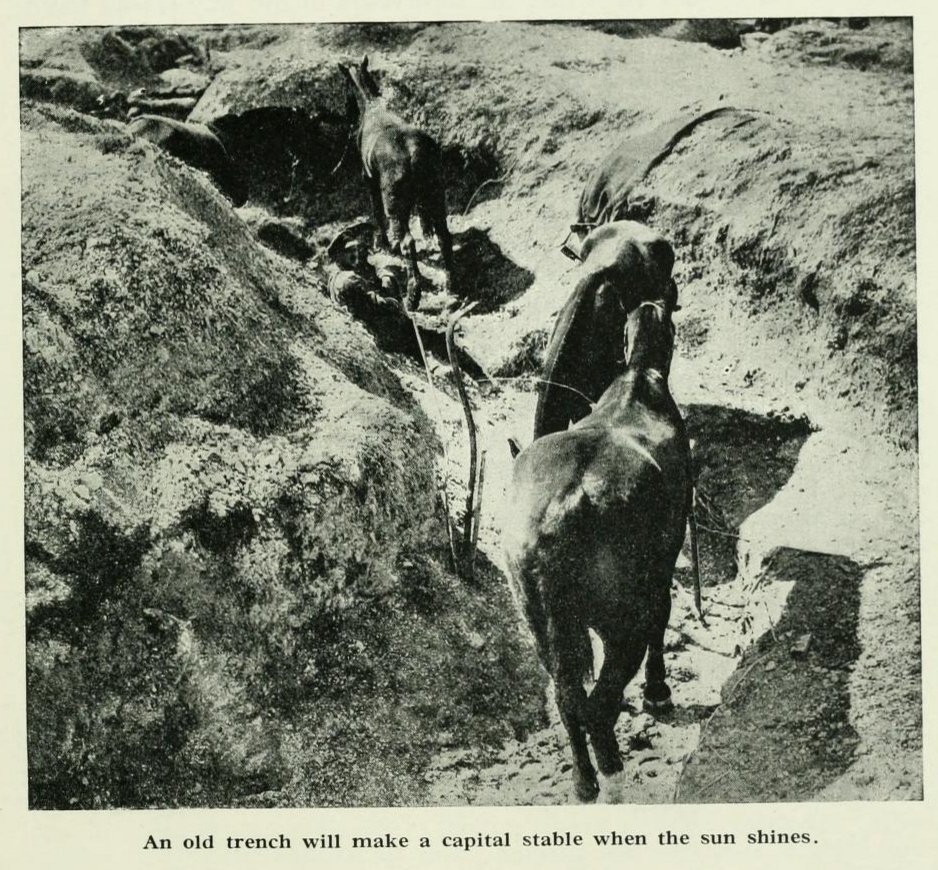
One of such 'discoveries' , for me at least, is the following little volume titled: 'The Horse and the War ' (mules included - :) ) by a British Army officer and journalist Captain A. Sidney Galtrey and  illustrated from drawings by another soldier, Captain Lionel Edwards, with original photos. It was written in the autumn of 1918.
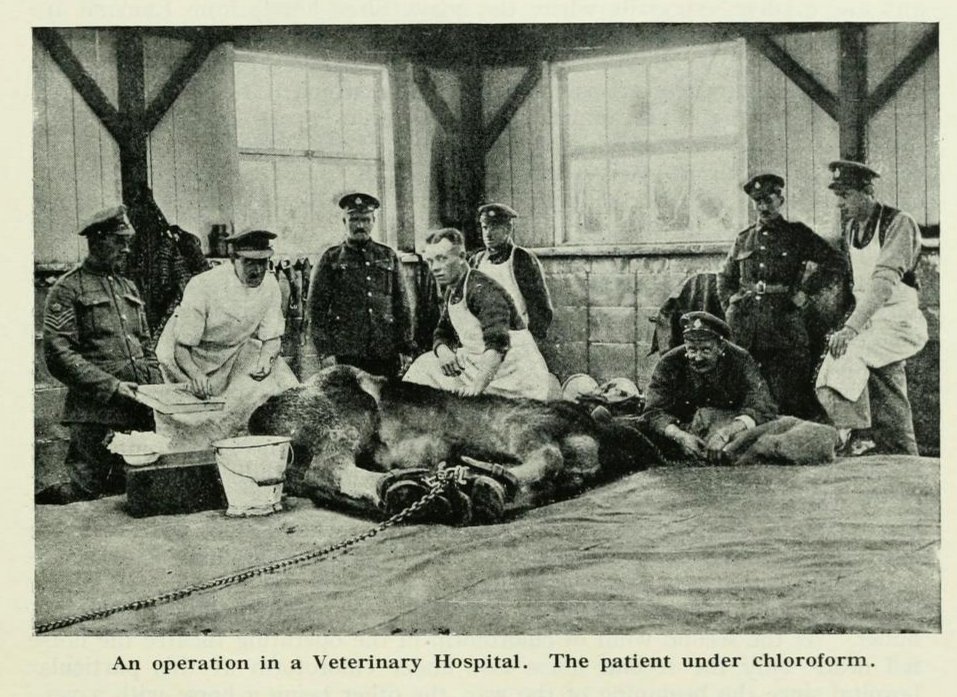
It tells the story of the light draft horse and mule and their participation on the side of the British military in the western European part of War World I. Also about how these hard working horses and mules were often saved by the veterinary service of the British Army... good short article here.
                                                            ***
Remounts


Transport across the sea


War conditions


Post-war


horse de la Perche


Enjoy
ps
all images are from the book