Showing posts with label Columbus Day. Show all posts

Monday, October 14, 2024

Columbus Day or the Day of the Return of the Horse to America

 Salvete omnes,


today, as usually every Monday around Oct 12 we celebrate the Columbus Day or discovery of  the Americas by the Old world representatives in likes of the Spanish Admiral Cristobal Colon and his Spanish Crown fleet. 
 It was the true beginning of the so called Columbian Exchange between the Americas and the Old World. (my postings from the past on this subject - one & two)

infographics from this page as fair use only


For the Hispanic or Latino populations of the Americas this is El Dia de la Raza, and for the indigenous Americans, from Aleutian Islands to Tierra del Fuego, this important anniversary is The Day of Sorrows and Resistance. 

So perhaps horse could bridge the vast and growing gap between the past and presence, namely, as paleohorses  went extinct on the American continent but survived in Eurasia and there were domesticated by our ancestors the Proto-Indoeuropeans some 6,000 years ago, and  as Equus F. Caballus were returned by the Spanish and Portuguese explorers. 
In fact, the first horses (of the primitive Andalusian stock and perhaps offsprings of the imported hacas and local mares)  were carried on board of the Admiral's fleet and were landed  in the Caribbean horse paradise-to-be  on Colon's (2nd) second voyage (along with circa 1,500 men and wome & kids from the Spanish realms), thus the date of the arrival is actually 1493 AD, but we could celebrate the date of October 12 as the Day of Horse of Americas.


So happy Return of the Horse day or whatever you wish to celebrate, just celebrate history and learn from it. 

ps

obviously we don't know whether the Chinese, Mongols, Koreans, or later Muscovites sailed their ships to the western shores of Americas  before Columbus. The Islandic Norse sailed from Greenland to eastern shores of during the so called Vinland sagas period, but whether they left there any horse it is unknown. Also it is unknown whether the the traders and fishermen from southern France and northern Spain, who sailed to the bays and inlets of the eastern New England and Canada in the XV century prior to 1492AD,  brought with them any horses. But it is highly unlikely -  but absence of evidence is not evidence of absence (Carl Sagan). 
Valete

Wednesday, October 12, 2022

Columbus Day & Don E. Worcester on Wild Horses (Arizona and The West 1960)

 Salvete Omnes,


today we have quite a bit of the anniversary: 530years ago  on 12th of October 1492 Colon (American Columbus) and his three ships reached the New World.  The Columbian Exchange was started back then and continues to this day and age. 


First native people to independently  ride and perform horse husbandry were the Mapuche in Chile and  Chichimecos in northern Mexico in the second half of the 1500s. Indians of the present US territory started using horses for war and chase sometime in 1630s.
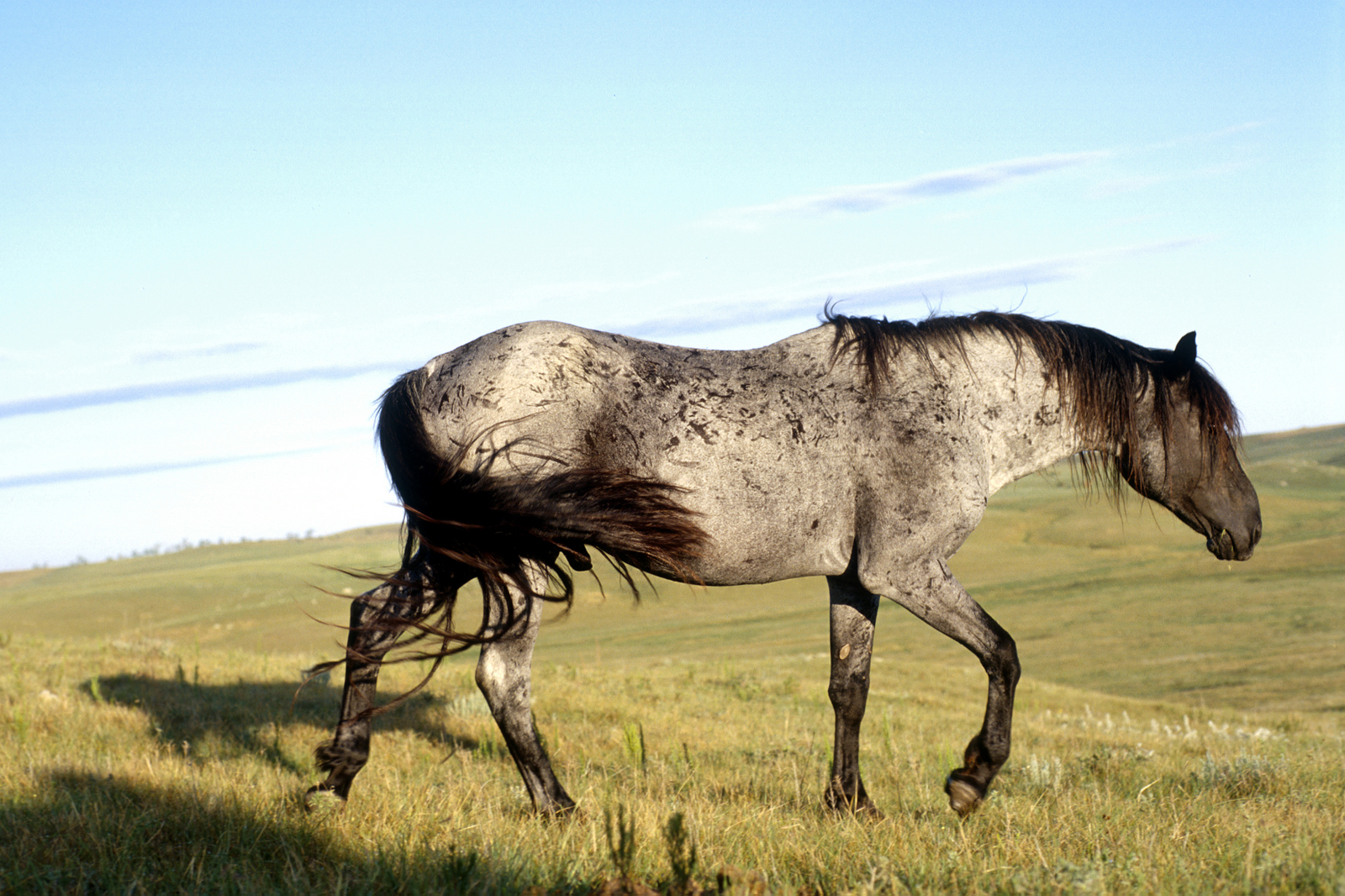
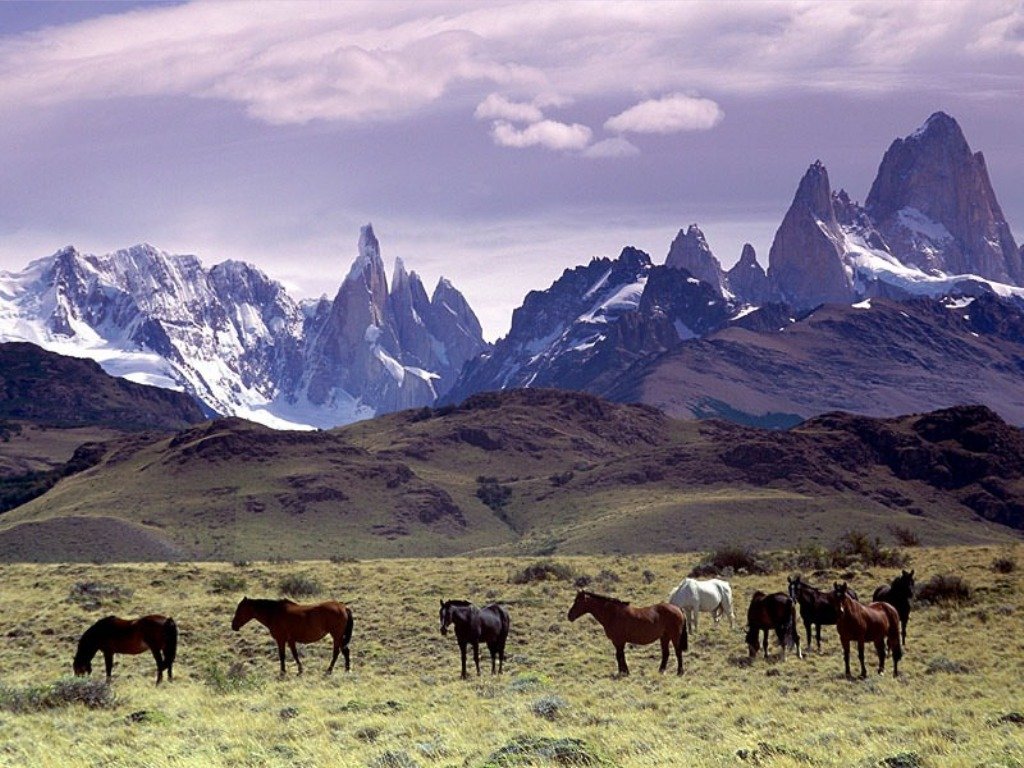
With the Spanish arrival on the American continents immediately some horses strayed from their herds and thus started the cimarron, bagual, mesteno herds aka wild horses or mustangs.


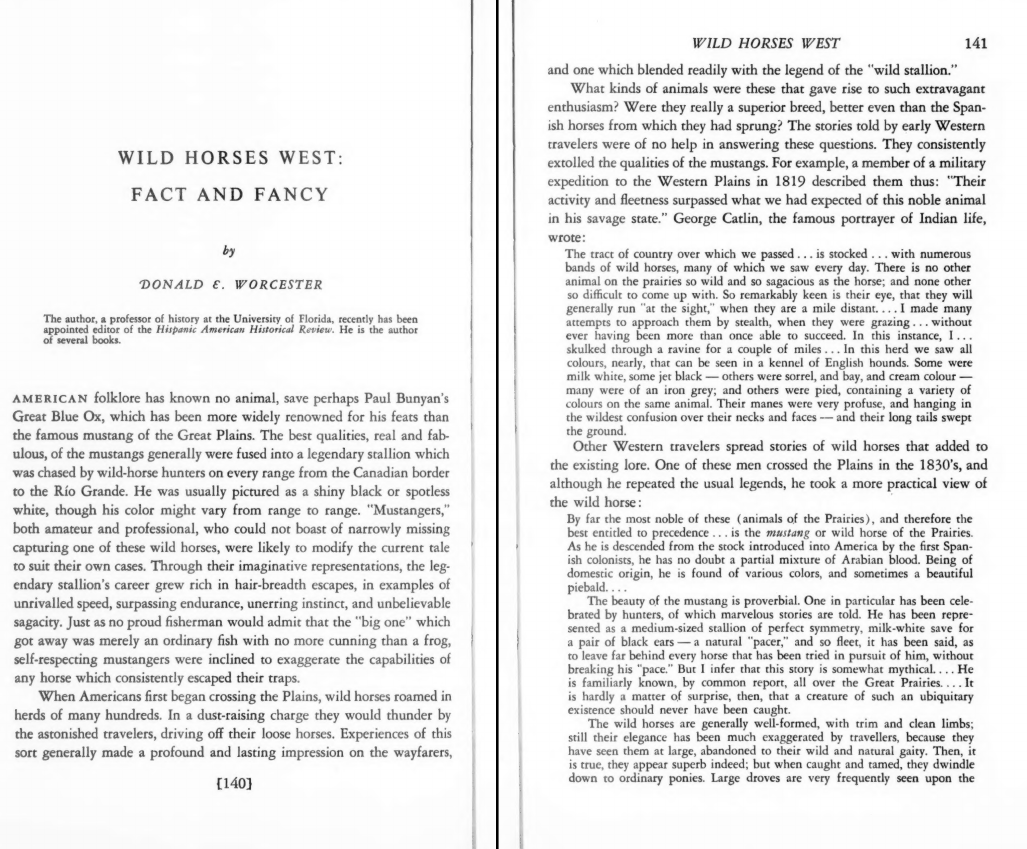
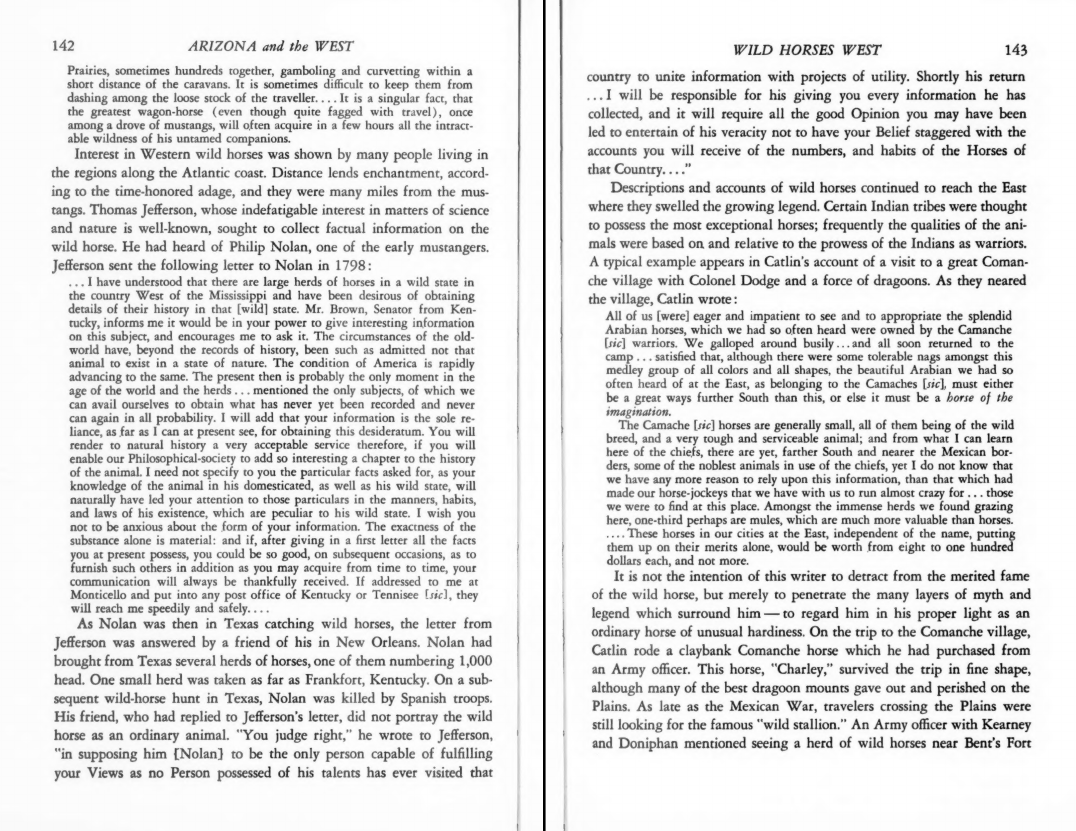
American historian and prolific writer Don (Donald) E. Worcester wrote this article on the wild horse - fact and fancy-   for Arizona and the West Journal in 1960 (vol 2, issue 2 ) accessible  via Archive.org :


vivat Columbus Dy and el Dia de la Raza - the Day of Sorrows for the native Amerindians.


Valete

Tuesday, October 12, 2021

Columbus 12.X.1492 - 2021AD - the Americas' horses

 Salvete omnes,


today is the actual day admiral Cristobal Colon (Columbus) and his armada reached Bahamas, and on the 28th they reached Cuba. Acting on behalf of Isabel of Castilla and her husband Fernando II of Aragon, the Spanish admiral brought his small fleet to the New World and the rest is history, including the history of the horse of the Americas.

Whereas it is immaterial whether he was Genovese (native of Genoa, Italy - nota bene the Republic had been one of the principal slavers in the Black Sea and Mediterranean Sea regions, dealing mostly in Slavic and other Christian slaves sold onto the Spanish and South Italian markets ) or Spanish, or Portuguese; it is very interesting that with his voyages begins the history of Eurasian and North African horses in the Americas.


In order to add some illustrations I am using some of the Theodor  de Bry's works of the much later period (and this prolific printmaker had been instrumental in the illustrating and spreading of the so called Spanish Black Legend or la Leyenda Negra, including Las Casas' accounts and pamphlets etc).


What many might have omitted in their story of the horse in the Americas is that those three beautiful Caribbean island - Cuba, Jamaica, and Santo Domingo homes to the Taino Indians were the primary horse breeding centers for the conquista of the Americas during the very  late  XV and first half of the XVI centuries.  I am not sure whether Puerto Rico was part of this breeding program at that time?


let us continue this topic -  vivat Columbus Day & Dia de la Raza...

valete

Thursday, October 11, 2018

Codex Canadensis - horses et al

Salvete omnes,
Columbus Day or the day of discovery of the Americas by the Europeans is tomorrow although in the US its celebration's changes the date and actually hoovers around the 12th of October (this year it was the 8th).
On wiki commons there is a gallery of extraordinary works from circa AD 1700, showing the American Indians, flora and fauna of New France or the France held lands in North America.
The collection is called Codex Canadensis and was perhaps drawn by Luois Nicolas,  one of the Jesuit priest-missionaries in la Nouvelle-France.

Among the drawings there are two plates showing horses.
 I am not sure about the early horse history in present day  Canada.  So let's put some faith in the writing that says that the drawing shows one of the stallions sent (along with 60 fine mares) to New France in 1660s. And that from these horses more fine horses were bred in French Canada.
Canadian horse breeders association put on their webpage that the French horses were sent in 1663 and that there were 12 of them, but more shipments followed.
Perhaps this horse is a spotted one,

Dr Deb Bennett in her book Conquerrors states that this horse is of Breton horse ancestry. (page 390).
Francis Parkman in his book - Count Frontenac and New France Under Louis XIV - writes about the horses in Quebec a bit - first, that the stocking of the country with cattle, sheep and horses was done with the royal shipments and at king's expense and distributed gratuitously among the settlers, and no youngones were to be killed until there was enough stock to replenish itself (p.212-13). So perhaps horses had been arriving yearly for some time, eg one books claims period of 1665-1671, first shipment being 2 stallions and 20 mares.
Parkman writes more about the curious horse history in Quebec, namely circa 1710AD that the inhabitants engaged in horse breeding on  such large scale that this horse husbandry worried so much the royal governors (in true paternal fashion - he, he, the French absolutism) that the royal governor  proclaimed a new law forbidding the possession of more than 2 horse and 1 foal. Excess had to be removed away or killed  - presumably for meat and skin- in the ensuing harvest year (p. 279).
The second drawing shows a horse of the New Holland (New Netherland) or the Dutch colony in North America - although circa 1700 AD there were not Dutch colonies on the American continent, only in the Caribbean, and of Virginia of the Atlantic coast. Perhaps the Dutch imported those from the Spanish colonies or their holding in South America (Portuguese colonies there).
What is even more interesting those Canadian horse were being spread west and southwest from Quebec by French traders and their native trading partners. Deb Bennett wrote in her book that perhaps as early as 1675 Pierre Moreau known as La Taupine was trading horses to the Indians of the Illinois country (p. 384). Perhaps especially after the Montreal proclamation of 1710  that those French horses made their way onto edge the Great Plains, spreading from Ontario west to Saskatchewan and south to French outpost of St. Louis (present day Missouri). There they met the Spanish horses coming from the New Spain. During the XVIII century the Indian ponies and wild mustangs became a product of this mixing of Spanish and French-Canadian horses.

I think I have to get The Epic Journey of the Canadian Horse: History and Hope from Louis XIV to the Present in order to learn more
Valete!

Thursday, October 12, 2017

Columbian exchange & horse in the Americas

Salve,
well, from the northern Europe of the Bronze Age lets jump to Anno Domini 1492, as today is Columbus Day/Fiesta Nacional de Espana / el Dia de la Raza  etc,  thus  another anniversary of the beginning of our modern Americas.

Incidentally, on this day we, the horse people, celebrate or should celebrate the return of equus caballus to the Americas - obviously the date is general, as the horses did not arrive AD 1492, but begun arriving with the Colon's (Columbus) second voyage of conquest and settlement  and so on, in la Hispanola(1493), Cuba(1494) and later continuing onto the mainland with the entradas.
I want to signal the new thread in my blogging - that is the Age of La Conquista (Conquest), Colonial Spanish empire and the horse in the Americas.
Slowly, probably very slowly but surely, for I really enjoy studying this period of the horse history.

We are blessed with abundant primary sources for this period, and later secondary works, and nowadays in the Age of Internet many previously inaccessible article and books can be read directly in one's computer.
I hope to corral for us all some interesting equestrian histories and art, including some of my own.

....so, to begin with this thread, I would like to bring to your attention the person of a conquistador, cavalryman and later a lay priest Juan de Castellanos who wrote and later published his epic and very long poem - Elegias de varones ilustres de Indias,; in there de Castellanos put the following verses as allegedly spoken by some conquistador companions during la entrada of Gonzalo Jimenez de Quesada and the conquest of Nueva Granada (Colombia), crude words spoken upon a desperate victory over some brave native warriors in or near the valley of Opon:
[fragment can be easily translated via google translate]
Tierra buena, tierra buena,
Tierra que hara fin a nuestra pena.
Tierra de oro, tierra bastecida
Tierra para hacer perpetua casa.
Tierra con abundacia de comida,
Tierra de grandes pueblos, tierra rasa,
Tierra donde se ve gente vestida
Tierra de bendicion, clara y serena,
Tierra que hara fin a nuestra pena.
[1857 edition, p. 309-10, can be read or downloaded from archive.org]
Monument to Pizarro and his horse in Lima, Peru
For the victorious Spanish conquistadors the conquered land would be the land of prosperity and wealth, and so would the Americas prove themselves to be the greatest land for the horses.
But first the horses would replenish and grow abundant in the Caribbean pastures, before really making for the continent with the conquistadors. we could say that the American horses were born in the Caribbean in the early XVI century.
ps
I have been watching the Spanish Kingdom (Spain) troubled internal conflicts taking place in their autonomous regions, especially in Catalonia (but Pais Vasco is not far behind nor is Galicia etc).