Showing posts with label Dakota Indians. Show all posts

Sunday, February 16, 2025

Buffalo vel bison hunting III - bison skinning or dressing - The Eastmans

 Salvete Omnes,

Seth Eastman's drawing engraved


the last chapter on hunting bison - the process of skinning of bison etc.
In this chapter Mary Eastman brings forth much more information from the colonial and frontier annals, 

Mary ends the chapter the the ominous saying stated to her by 'an aged Indian' -'When there are no more buffaloes, there will be no more Indians.'


.


.


  the illustration drawn by Seth provides some more detailed information on the equestrian, two grazing buffalo runners,  in the background -
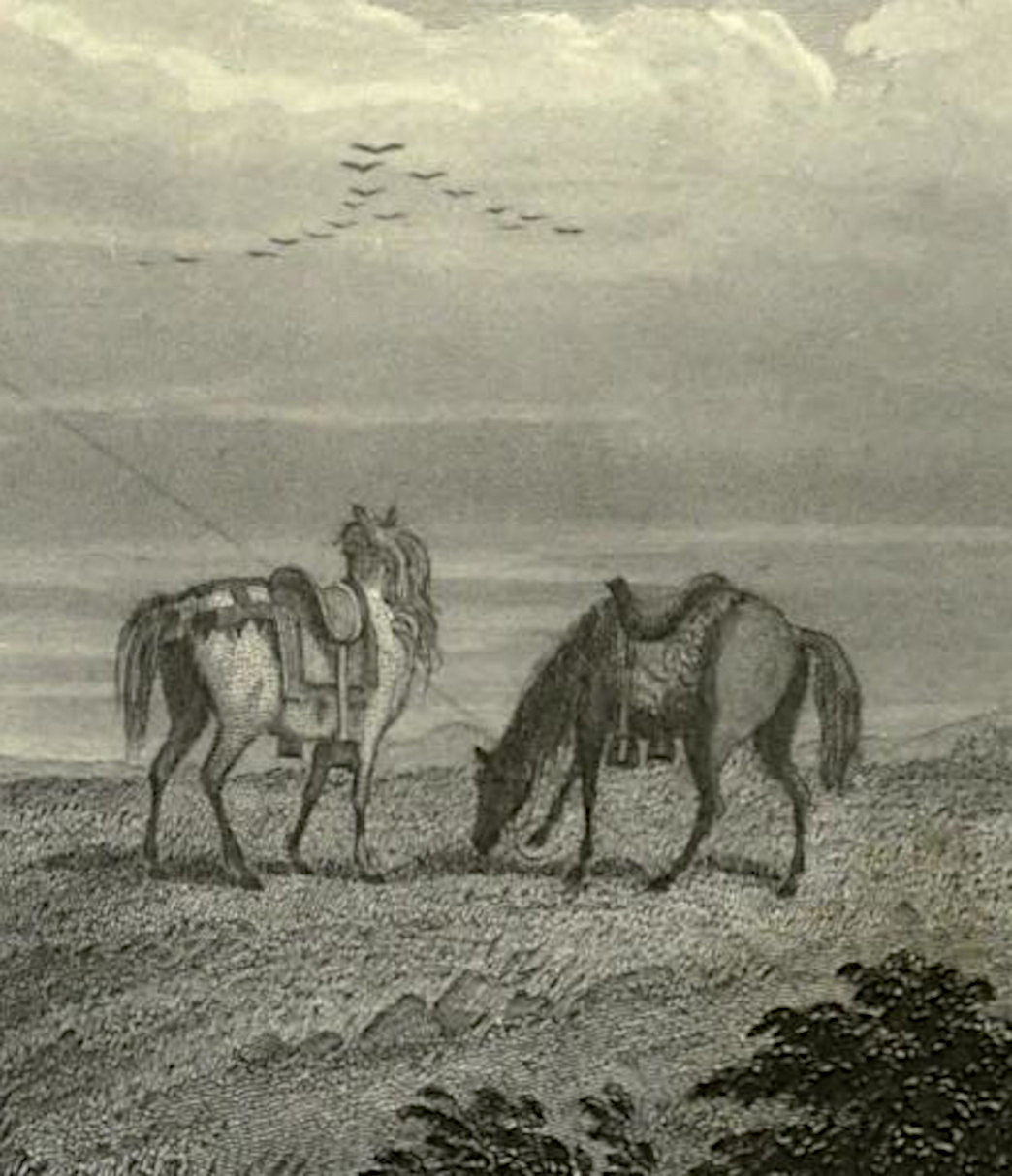

they seem to be outfitted with the native saddles with stirrups and one horse has a bison hide blanket, while the 'flea-beaten gray' has more elaborate harness with a crouper. In some of the Eastman's paintings these  fringed croupers appear as well. The can be seen in the perido art - from George Catlin, Paul Kane, Bodmer, A.J. Miller or Rindisbacher. 

Valete 

Buffalo vel bison hunting II - bison winter hunt by the Eastmans

 Salvete Omnes, 


continuing from the last post, Mary and Seth's chapter on the bison hunt (and deer)  in the winter, in the snows and frozen conditions.


.


.


tbc

Valete

Buffalo vel bison hunting I - bison chase by the Eastmans

 Salvete omnes,

the grey horse chasing the bison has some splendid horse tack

a quick 'lope' to frontier America, when the Eastmans, Mary and Seth, 


lived and wrote and Seth painted and drew the aboriginal people of Minnesota country, where Seth was a commanding officer at Fort Snelling, Minnesota - 1841-49.


They knew the Dakota Indians, of the Eastern division of the greater Sioux Nation, Seth already spoke the language, serving at Fort Snelling during the 1830-32 there, and  in 1831-2 he was married to a prominent Dakota family's daughter  named Stands Sacred with whom he had had a daughter Winona and thus Seth would be the grandfather of the famous doctor, pastor and writer Charles Eastman.  Upon leaving the Minnesota frontier in 1832/3 for West Point post he 'divorced' his Dakota wife. 
Mary learned to speak Dakota language and learned of the Dakota Sioux lore and customs etc. 


In 1854, while living near Washington, D.C., Mary wrote and Seth, then already a veteran officer in the US Army,  illustrated  a book titled 'Chicora and other regions of the conquerors and the conquered.'

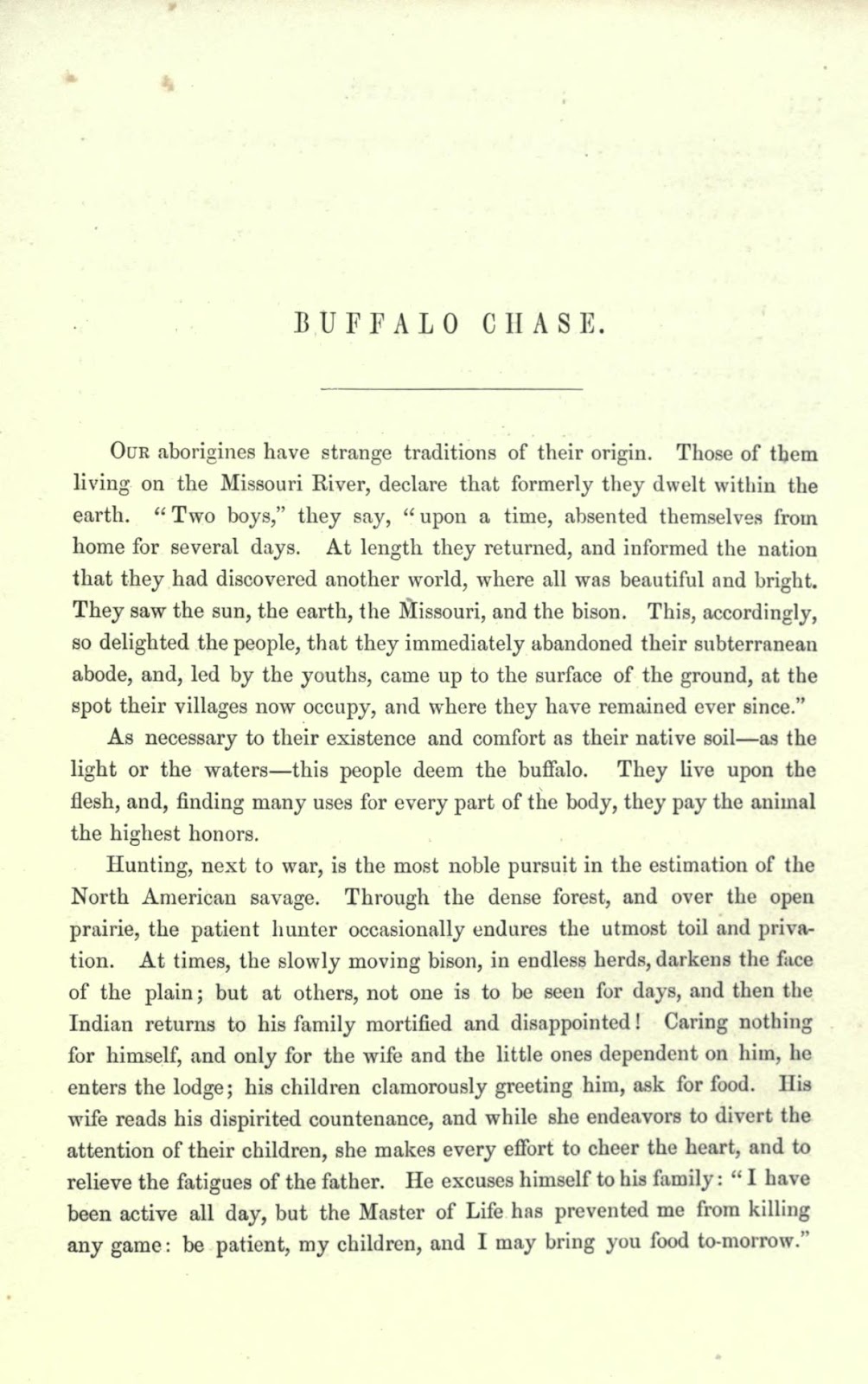
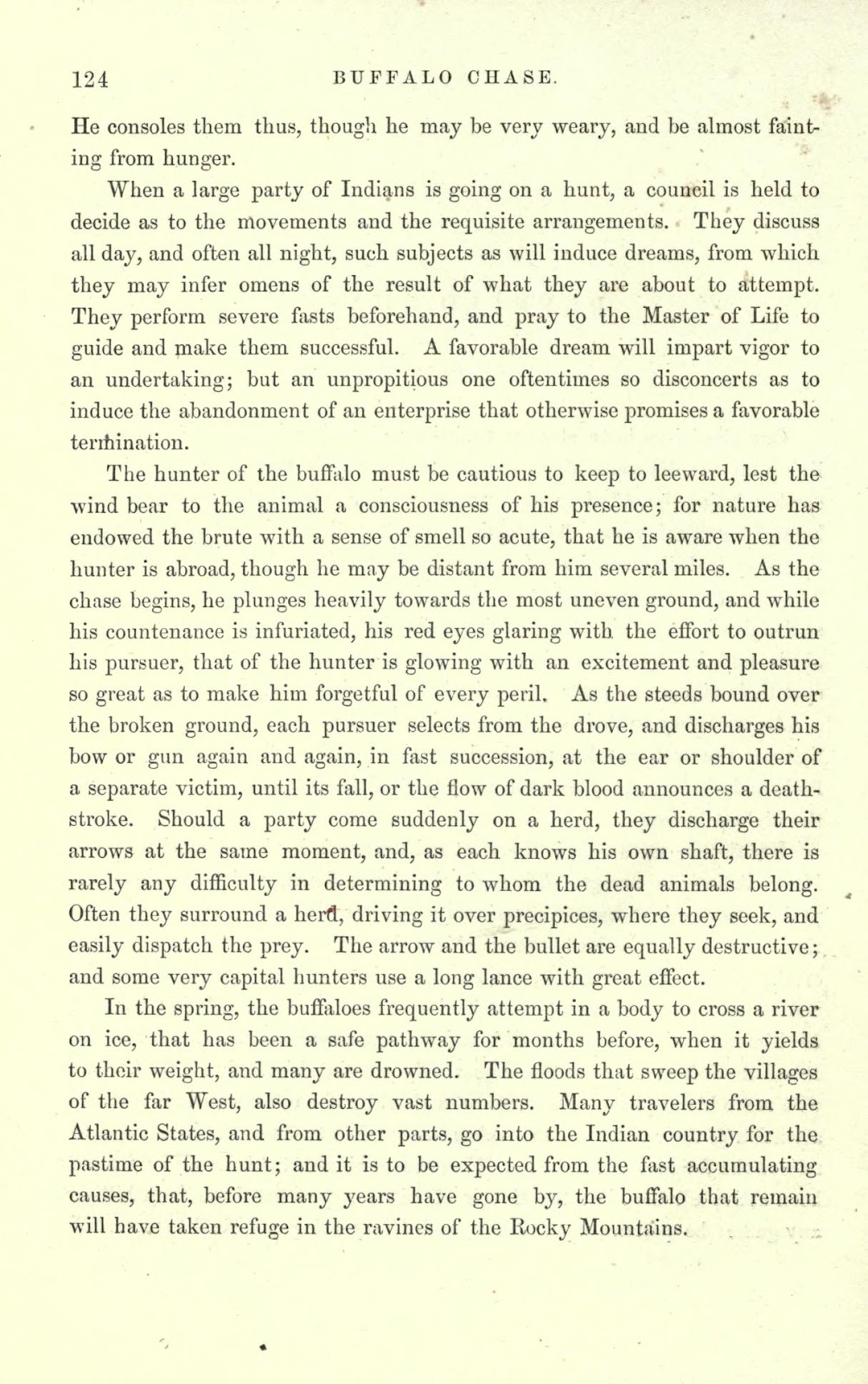
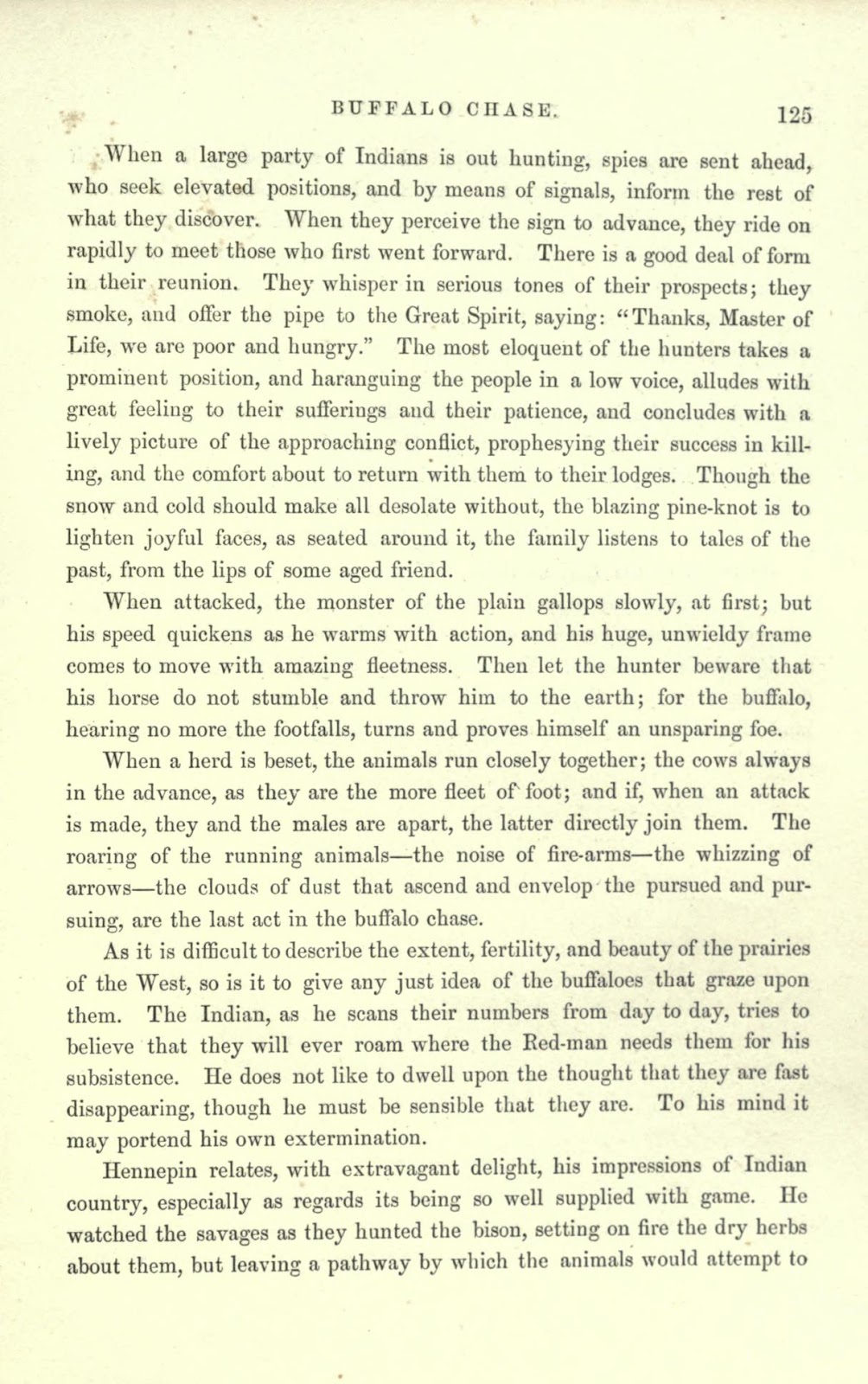
from that book come there pages on buffalo(bison) hunt on the plains - 

.


.

.


to be continued 

Valete