Showing posts with label Old Polish kozak/pancerni cavalry. Show all posts

Thursday, January 29, 2026

Illustrations interpeting Old Polish-themed XVII century prints

 Salvete Omnes,

a little bit of Stefano della Bella and Certamen equestre art - or rather some attempts by the XIX century illustrators to interpret the Italian and German period masters.

chronologically, Stefano Della Bella was the author who observed Polish riders in Rome, Italy (1630s), and later in France (1640s).


The XIX century illustrator working from Stefano's prints created these two illustrations.


.

The famous Certamen Equestre prints by Ehrenstrahl document the splendorous  horse show at the Swedish court in 1670s. One of the historic people portrayed in these prints is a Polish condottiere Zachariasz Gamocki (there are two fine articles by Stockholm & Uppsala Universities researcher  Elzbieta Swiecicka on the Gamckis family - husband and his  wife Eva Richard de la Chapelle). 
Gamocki was in the service of Swedish crown, used as messenger and translator/inteprter due to his knowledge & command of various languages including Turkish & Crimean Tatar - but there was also an ambiguity and perhaps scandal about that during the Crimean Tatar embassy of Alsna Aga to Sweden  in 1671- , but in the Certamen prints he was shown among the Polish fraction of horsemen, horses  and retainers.


Below the interpretation of the figure of this Swedish courtier by the XIX century illustrator 


.

all images from Polona, Polish Republic-EU national library

Valete


Sunday, October 12, 2025

Around Jan Sobieski part III - Miaczynski the cavalry commander

Salve, 


The anniversary of battle of  Parkany (9th of October 1683AD) caused me to bring up the person of  one of the most talented Crown army  officers of the king Jan III's reign.
Atanazy Walenty Miączyński, Suchekomnaty coat of arms (1639-1723), voivode of Wołyń (Volhynia), venator Regni,; starost and court treasurer,; pułkownik (commander of the pułk which was a larger than banner/company tactical unit of the pre-1764 Commonwealth armies) lived a long life that was spent in war camps war, in the diplomatic journeys and courtly life (and thus obviously he had to be part of many courtly intrigues). 

 He must have been a fine cavalryman as a young warrior, and pan Antanazy rather quickly and early become a commander of cavalry, eg we know that in 1673 he was a rotameister(captain) of a Vallachian light cavalry banner that took part in many a battle: eg at Bracław (AD1671) the cavalry  banners he commanded blocked the Tatar's retreat thus allowing the complete rout of the Tatars during that engagement; then he commanded cavalry units at  the Podhajce fight; fought under Jan Sobieski   at the war camp of Żurawno, and  while pursuing the fleeing Ottoman soldiers during the final stage  at the battle of Chocim (Khotin) AD 1673 he was seriously wounded -    it is good to remember that the Ottoman cavalry and warriors were terribly skilled in hand-to-hand cavalry combat,  and their swords were most deadly in those close combat encounters. 

Battle of Vienna 1683 campaign - the turning point of his courtly career -  pan Atanazy entered the campaign commanding  3 pancerni cavalry companies (his own and his brothers). He also served personally on the king, along with Andrzej Modrzejowski, who got killed in the preliminary royal winged hussar banner charge against the Ottoman camp. During the general advance on the Turks he captured the Grand Vizier's tent where he took into custody of the famous, with sword Zulfikar (Zulfiqar), banner. 

Then, after the battle and capture of the enemy camp, our king Jan III sent him to pursue the Ottoman forces feeling away  across the river, giving him the 'pulkownik' command of the Polish army's light cavalry banners. 

During the first battle (6th of October) of Parkany he helped to save our good king's life. As we can see he was rather busy, active and very resilient, surviving mayhem and hand to hand combats, camp sickness, hunger, and successfully  commanding larger tactical cavalry units.


The war against the Ottoman Empire and their Tatar allies continued and then came the Polish campaigns to recover Polish Crown Podolia and the fortress of Kamieniec Podolski, fought hard and with much of great war effort, i.e, money and  human and equine participants (and animals for consumption only, including oxen and sheep, and fresh pork where available). The continuous war against the Ottomans saw pan Atanazy grow up in significance within the court, eg during the 1686 Moldavian campaign he was part of the king's war council, as he had become one of the most experienced mid-level commanders of the ''Respublica'' army.

He was significantly involved in the defeat of the Tatars during the winter  battle of Lwow(1695), one of the astonishing feats of audacity, bravery, strength and fury on the part of the nomadic Crimean Tatars. 

 During the reign of the  next Commonwealth ruler, our king Augustus the Strong, when the Great Northern War already had erupted in our part of the woods and plains, he also took to the field, eg commanded units during the Kliszow campaign,  later remained faithfully in the much defeated and troubled king Augustus' camp and that in spite of the Swedish depredation pinpointed against his own estates and his 'people'. 


During his long life he built a castle at Maciejów (now in Ukraine) while at his estate at Zawieprzyce founded a hospital for the soldiers wounded during the wars with the Ottomans and their allies, the Tatars. 


famous painting by Jan Matejko 

Valete

Thursday, October 9, 2025

Parkany II - 9 Ocotober 1683 AD

 Salvete Omnes,

the routed Ottomans' fatal crossing of the river Danube - detail from a painting by Pierre-Denis Martin


today we celebrate the anniversary of the second battle of Parkany - 9th October 1683AD.

on the left bank the fortress of Parkany or today's Sturovo in Slovakia opposite Gran in Hungary

.


Parkany II was mostly a cavalry battle, roughly some 30-plus thousands on each side, although some sources say 15-plus thousands of cavalry and 1000 Janissary on the Ottoman side. The Ottomans had a camp with supply train with the swamped banks of Hron river behind them.


Victorious engagement for the armies of  our Polish Crown and Hapsburg Empire against the Ottoman Imperial army commanded by seraskier Kara Mehmed.
Hapsburg army was commanded by prince Charles of Lorraine, husband to the widow of our king Michal Korybut.  Overall command belonged to Jan III.

Winged hussars shock tactics shone in this battle - skillfully managed by our king Jan III. 

Jan III placed prince Charles' forces - infantry and artillery - in the center of the allied army, his left wing under hetman Stanislaw Jan Jablonowski, and the right wing under Hieronim Augustyn Lubomirski, here also was the command post of king Jan III.  Around noon the allied army advanced and came up to the enemy lines, about 1,5km from the Parkany fortress. Then the Ottoman forces attacked furiously and charged, mostly the left wing, according to Dupont, king's secretary, at least ten times they charge, but the center was protected by the portable devices known as cheval de frise, while Jablonowski counterattacked with his Polish cavalry supported by the Imperial cuirassiers.  King's left wing moved forward breaking the right wing of the Ottomans and causing panic that ended in a rout. Most panicked Ottoman cavalry then tried to swim the Danube, a huge river at this juncture, and drowned in process. Serskier Kara Mehmed did save himself but his command was destroyed. 
The battle resulted in a complete annihilation of the Ottoman army - depriving the sultan  of his best sipahi cavalry. 

Pierre-Denis Martin's full canvass showing the battle


Altomonte also painted  this monumental canvass - 


Parkany frieze from  the royal Wilanow Castle

Monument to king Jan III Sobieski in Sturovo


ps.
there are some interesting primary sources to this engagement, including three Ottoman chroniclers. 

enjoy

Valete

Monday, September 22, 2025

Polish-Russian war 1609-11AD - advance on Smolensk

 Salvete Omnes,

Yesterday, i.e., the 21st of September,  but in 1609AD,  Polish-Lithuanian army crossed the border the Commonwealth-Muscovy border and advanced onto Smolensk, the most important fortress of the western Muscovy, guarding the so called Smolensk Gate. 


Since 1582 Polish-Lithuanian Commonwealth and Muscovy had been under the truce, although our Polish-Lithuanian magnates supported Dmitry, the alleged son of Ivan IV,  who even married and crowned a tsarina Maryna Mniszech, Polish noblewoman. 


Since 1605AD Muscovite realm, Grand Duchy of Muscovy, was in the throes of the civil war  known as the Dimitriads, where various factions of the Muscovite aristocrats aided by Polish-Lithuanian magnates, foreign mercenary armies and foreign powers, like Sweden etc, were meddling within the Russian realm. Technically, upon the murder of tsar Dmitry I in 1606,  there was a tsar or grand duke Vasili IV Shuisky in Kremlin, but his fraction had to face Dmitri II, known as false Dmitry II, whose armies and popularity with the population allowed for control of rather vast areas of the huge Muscovite realm since 1608AD.

Since 1600AD Polish-Lithuanian Commonwealth already had been in a war, this was a dynastic war  against the usurper Karl IX of the kingdom of Sweden, where  the war was  mostly carried by Lithuanian  army with many private banners and companies. Ducal  forces were under the commanded of Jan Karol Chodkiewicz, victor of Kircholm 1605. 

King Sigismund III,  the scion of the Swedish Vasa dynasty elected by the noble host  to sit on the Polish-Lithuanian Commonwealth throne in 1587, and his councilors decided to breach the 1582 AD truce and to attack Smolensk, taken by the Muscovite armies in 1514AD. The ship had sailed- Mars ruled.


Smolensk on the Dniepr/Dnieper River 1609-11


Royal Polish army was divided into various divisions, the advance party was led by  Lew Sapieha, a chancellor of Lithuanian, and Stanislaw Stadnicki, castellan of Przemysl - reached Smolensk on September 28. 
Then came hetman Stanislaw Zolkiewski division, with the artillery park = reached the camps on September 29.
And finally the king's division and court with the rest of the army and thousands of wagon trains filled with ammunition, powder, food, fodder and other supplies and necessities, but also thousands of servants, traders, and camp followers. 

King and his contingent  crossed the border, via a bridge over the river Iwala or Iwata,  on the 21 of September, 1609 and reached Smolensk camps on  October 1, 1609.

The anonymous diary of this campaign tells that  in vanguard 800 Hungarian infantry marched first, then the 200 [infantry] of starost of Sacz [Stanislaw Lubomirski], 100 [infantry] of lord of Krakow[Janusz Ostrogski], then 100 strong  horse banner of  Old Polish Kozak cavalry of starost of Sacz,   then lord of Krakow also  a 100strong  Kozak cavalry. Thena very fine 200 winged hussars banner of starost of Sacz. Just before the His Majesty person and  retinue(70 strong) a very well equipped   100-lancer strong winged hussar banner  of lord of Krakow. After the king [marched] the court banner of 600 lancers, after them a 150 horse [reiter] banner made out of Prussians, Pomeranians and 'Inflanteers'  under pan Nowodworski*, each rider with two carbines. After them a 100 strong Kozak cavalry royal banner. Then 1400 German infantry under [Ludwik] Weiher [marched across the bridge]. The weather was fine, no clouds in the sky and this fine weather lasted until the evening. The king arrived in Wasylov where he joined hetman [Zolkiewski] already in the camp there. This day a finely equipped banner of prince Porycki, 150 horse strong, came[to our side].  (page 65 of the diary).


According the Polish archives,   during the quarter of the 5th of July through Ocbober 5, 1609 the cavalry arm of the army consisted of:

- 2,300 winged hussars or lancers

- 800 Polish kozak cavalry

- 300 "German' reiters.

By the next quarter - October through January 1610, the number of winged hussars would grow to 4000 lancers, Polish Kozaks to 900 horsemen, while reiters would fall to 269. Again in 2 quarters- January to July  1610AD the winged hussar would drop to 2205 lancers, Polish Kozaks to 400, and the reiters would grow again to 300 horsemen (after Kazimierz Gorski, 1895). 


Infantry - German, Hungarian hajduk, Polish hajduk and royal guards -  and artillery - cannon masters, gunsmiths, gun crews and craftsmen  -   also waved in numbers during the first year of the siege - started with 4213 officers and soldiers, went down to 2513 (June) and to 1698 in July 1610.  Gunmasters 


The siege continued during the summer of 1610,  the following winter and spring of 1611. During this period hetman Zolkiewski defeated the allied army at Klushino, July 1610, and consequently  the Muscovite Shuisky regime collapsed and victorious and Sun Tsu-like hetman Zolkiewski entered Moscow and new era, our Poles in Moscow, ensued.

King Sigismund III victorious at Smolensk


 Finally  our king ended victorious in June 1611AD,  when on the 13th  the Polish army stormed and captured the fortress, king  had medals made for the happy occasion. During the final assault knight of Order of Malta pan Bartlomiej Nowodworski *,  Nalecz coat of arms,  sallied to blow the gate and having succeeded became a hero. Winged Hussar Samuel Maskiewicz wrote his diaries describing the war. Hetman Stanislaw Zolkiewski wrote his famous work about his war -  Poczatek i progres wojny moskiewskiej. Another warrior ,Mikolaj Scibor Marchocki also wrote his history of the war.


Meantime, since 1605 many thousands of Cossacks, Zaporozhian and Don, roamed the Muscovite lands siding with this or that party or power But perhaps more importantly it was during this period that the  new Polish light cavalry was born:  the Lisowczycy (Lisowski' kozacy [singular Lisowczyk, kozak lisowski] cossacks), one could say also to the detriment of the civilian populations in Muscovy and in Polish-Lithuanian Commonwealth, and further west in the Holy Roman Epire and Hungaries.
For the project about Khotyn 1621 I did draw two Lisowski kozaks.

Valete

Monday, July 28, 2025

Battle of Warsaw 1656, July 28-30th

 Salvete Omnes,


the famous battle in the fields of Warsaw's suburb Praga took place between July 28th to 31st, 1656AD.

King of Polish-Lithuanian Commonwealth and Swedish king saw their forces struggle for supremacy and glory, while soldier and their horses  fought the actual battle

Carolus X Gustavus
The events of July 29th, i.e., the maneuvers and epic fighting of  the second day are the most notoriously debated - it was the day of the Polish (actually the grand duchy) winged hussars banners famous charge[1] against the allied armies commanded  by the Swedish king.

This three day battle ended in a tactical victory of the Brandenburg-Swedish allies, but Swedish king Charles X Gustavus failed to destroy or even dent the main body of the Polish king's army, and in winning this battle the Swedish side faced again and again the guerilla-style warfare  waged by Stefan Czarniecki and other Polish commanders. On the other hand the withdrawal of the Polish forces from Warsaw led to another surrender of the city and the infamous pillages carried by the allied Swedes and Brandeburg-Prussian soldateska continued for another season..  
We are fortunate to have several prints made by Erik Dahlberg, who participated in the battle, of this momentous event in military history. And some primary sources writtten by this battle's participants, including Lithuanian magnate, Boguslaw Radziwill, who fought on the allied side against his king and country. 

Swedish-Prusian-Brandenburg forces come south from Nowy Dwor
the Polish king's army included an allied light cavalry Crimean Khanate Tatar contingent. Its size has been variously interpreted from the sources (like our Polish participant and poet Wespazjan Kochowski gave the size of the Tatar division at 6,000)  - see the XIX century German researcher August Riese's assessment from a German 1870 book on the battle.


Johan Philip Lemke painted the battle, here a detail from his painting showing winged Tatars with short cirit javelins and swords

I may write more about what the present Polish scholarship presents about the numbers of the king's army 28-30th July 1656.
..to be continued


ps

I could note here that we also have the memoirs or recollection of a westerner on the Polish side, namely, shortly after the battle a certain Scottish officer in Polish service (since March 1656) one Patrick Gordon was taken prisoner by the Brandenburgian soldiers, and general Douglas of the Swedish army came to his rescue, so to speak, hence Gordon went to serve his old masters, the Swedish king's army, but was to be taken prisoner several more times during the Deluge, and eventually ended up in the Muscovite army where he became one of the most strongest supporters of tsar Peter I. But this is for another day.
[1]My friend Radoslaw Sikora wrote a chapter in his dissertation on the winged hussar charge at Warsaw. I may do a little synopsis of his findings.

Valete

Tuesday, July 1, 2025

Two Riders - R. Savery - National Galleries of Scotland

 Salvete Omnes,

a new month has started and the Dog Days of the Summer have started as well - so let us start .

National Galleries of Scotland graciously allow us to share their digitized art collections, and one of period gems is this drawing by Roelandt Savery. (crica 1605-10AD)


.


Note that both riders are mounted on stallions and judging from their conformation these warhorses are of 'eastern', lighter, type. 

Are they the Old Polish kozaks cavalry ? Well, difficult to say - Savery had lived in Prague, Kingdom of Bohemia ( Austrian Hapsburg Empire) at least since 1604AD. But also he traveled down south to Croatia (then part of the Hapsburg Kingdom of Hungary) and Croats, Serbs of Krajina and Hungarians (including various ethnic horsemen of that Kingdom) used costumes, armor, weapons and horse tack similar to their Polish counterparts, and the preference to ride stallions and geldings instead of mares. Savery was a master of portraying of these East-Central European warriors, so just let us enjoy the drawing.

enjoy

Valete


Sunday, December 29, 2024

Zajazd or foray ... husaria & pancerni for grain and cattle AD 1604

 Salvete Omnes,

end of this 2024 is near, but two days away, so to enliven our last days of the Old Year, a little story from the annals of crime and mayhem in the Old Polish Commonwealth, where even our famous lance cavalry aka winged hussars and Pancerni kozak cavalry were willing participants. 

                                                         ***


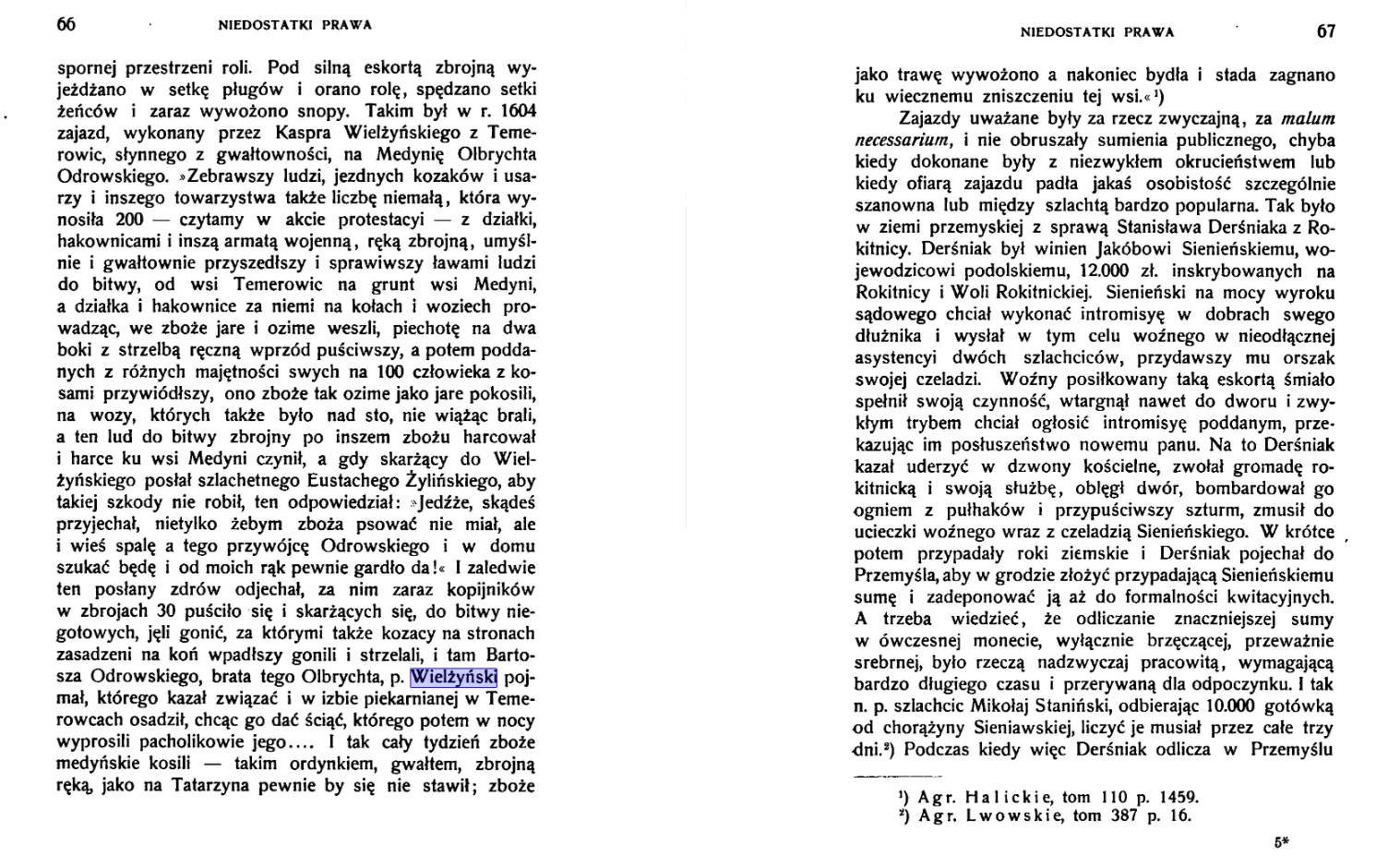
So here the today's entry from the famous work by Wladyslaw Lozinski, Prawem i Lewem

in the Old Polish law a zajazd (foray) was supposed to have been an enforcement or execution of the king's court order/verdict conducted/carried out by the winning noble party, sanctioned by the king's representative, the starost (starosta - or castellan/constable) of starostwo (district jurisdiction could  more or less covered   a powiat - a county). A foray party could include the winning or order holding noble with his or her noble supporters, their retainers and servants, but also their peasants and even hired  Cossacks and/or warbands of  roaming the borderlands Tatars, Vallachians, Gipsy and Carpathian mountain shepherds etc. In case of a magnate such foray band could include who companies of soldiers, including private army and even the friendly cavalry or infantry units, whose commanders and companions had been asked to participate by the foray organizers. 


Ideally this legal action was to have been done only after the refusal of the losing party to submit to the court's order/verdict. In reality it was done when one of the adversaries/parties before a king's tribunal  felt stronger or even brazen enough to conduct a foray, which in actuality often could become an armed raid that pillaged, robbed and burned, harvested the land, kidnapped noble family members,  servants and peasants & their animal stock, and even cause homicide among the servants and/or noble owners of the forayed estate(s).  


we travel to 1604AD, when a nobleman Kasper Wielzynski of Temerowice (Temerowce (?)) organized  a foray against the estate of Olbracht Odrowski (Odorowski). 


Our pan Kasper, perhaps Nalecz coat of arms, gathered a number of winged hussar companions with their retinues, pancerni companions with their retinues, other noblemen, a number of hajduk infantry, even field artillery pieces and heavy muskets carried on wagons. Also he brought a 100 peasants with sickles, scythes and tools to harvest and  gather grain from the fields of his adversary. The whole foray contained 100 wagons to gather the spoils.


The foray entered the fields of Medynia in fully ready for war,  panoply and guns blazing, while his peasants immediately started to harvest the fields and load the wagons with the reaped grains. 
Brother of Odrowski, one Bartosz, who was present in Medynia sent a friend and nobleman, Eustachy Zylinski, on horseback to parley and dissuade the foray from committing their numerous transgression and acts against the owner's estates, but this envoy was threatened and he hastily  retreated into the villages' manor. But then a company of 30 lancers/winged hussars charged the unprepared defenders of the village, while the associated pancerni retinues flanked hussars' charge  and fired on the escaping defenders and thus took the buildings, including the manor.


Bartosz Odrowski was taken prisoner, kidnapped back to Temerowice and came close to getting murdered. The foray party pillaged the village, trampled the fields while collecting a 100 wagons of grain, and eventually retired taking the cattle and herds of livestock.  


So, to our surprise  the Halicz court chronicles noted  the winged hussars presence in this foray.  Our Lwow Land  historian Lozinski did not explain nor provided additional detail, including the outcome of this legal case between Wielzynski  and Odrowski.

 
Froum other sources  we known Wielzynski would became a lowczy ziemi lwowskiej ( Lwow district master of the hunt), while Odrowski was a soldier and king's captain in the Khotyn War of 1621,  - nota bene the said Odrowski, then a rotameister or captain, was named 7 times in various court complaints for his pancerny banner pillages and mayhem during the king's campaign of 1621 in  Red Ruthenia and Podolia - the Khotyn war) 


for my Polish readers I am including the appropriate pages from 'Prawem i Lewem' Wladyslawa Lozinskiego.

Prawem i Lewem, zajazd pana Kaspra z husaria

in 1637 the main actor and spiritus movens of this foray, perhaps to pay for his sinful life was supposedly the founder of the Discalced Carmelite  nun monastery in Lwow ( in today's Lviv there is a church, saint Agnes Church, the remainder of the Carmelite nun monastery liquidated by the Austrians in 1782AD).  

o zalozeniu klasztoru Karmelitanek we Lwowie

ps

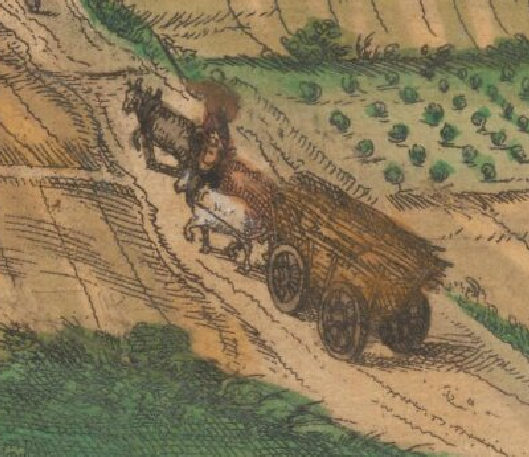
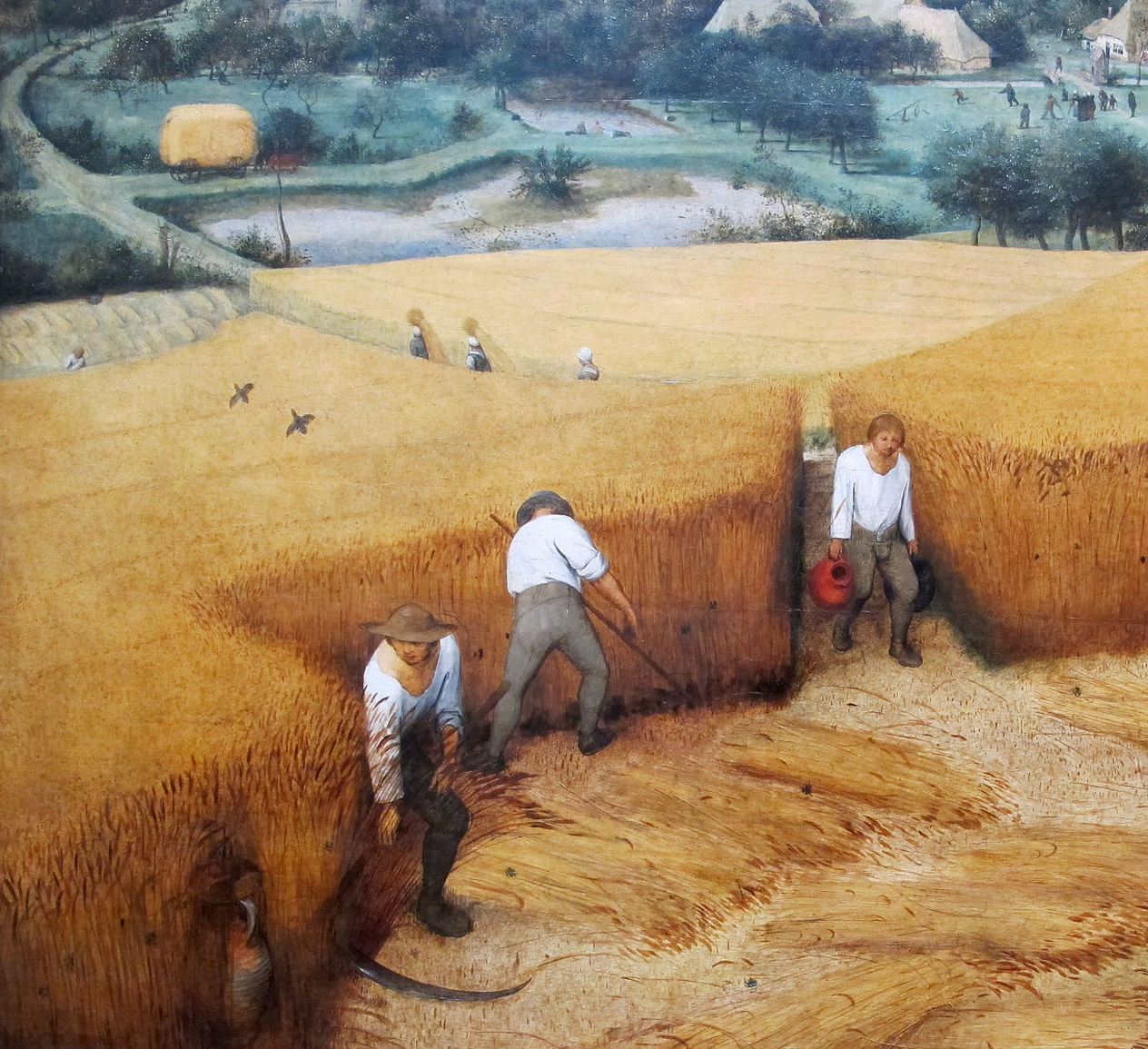
small detailed images come from the Swedish print showing the battle of Walmojza, already a subject my my previous postings, 

Valete