Showing posts with label Persia. Show all posts

Friday, March 13, 2026

Iranczycy nie Persowie plus chronologia Iranu - Iranians not Persian and short history of Iran

 Salvete Omnes,


[my post contains links to a video material in Polish only]


The air war between Iran & their allies and US (all the best to our boys & girls) & Zionist Israel rages in the Middle East and, obviously,  in the social media -but I daresay Twitter X is the best forum for the info (perhaps Telegram too?) .


Polish professor Gosciwit Malinowski prepared two presentation on Iran and their history etc on Ytube, but they are in Polish only. Amazing skill and knowledge and talent to tackle the topics.


Zapraszam do przesluchania - 

. Krótka historia Iranu: 100 tysięcy lat w 100 minut - 

. Dlaczego Iran a nie Persja: tożsamość narodowa Irańczyków - 

.


I hope POTUS D. Trump will end this war, let us pray, this weekend, declaring his  satisfaction with the   accomplishments of the military campaign and the political aims realized. 

Valete

Monday, May 8, 2023

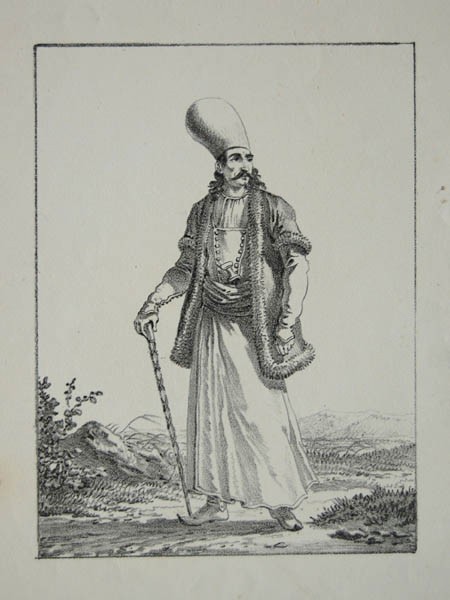
Aleksander Orlowski - The Persians

 Salvete Omnes,

today a little artwork  of this Polish expatriate - Aleksander Orlowski - 

two Persian ladies on pilgrimage - a fine mule is their beast of burden


During this Saint Petersburg period (1802-1832) he painted, drew and printed many subjects -  I would like to bring your attention to the Persians in his art:

Polish National library says this is a wife of Persian sultan


enjoy these images done during the early XIX century by our Polish artist (or based on his work by other engravers etc).


Valete

Sunday, June 5, 2022

Cirit - Jereed

 Salvete Omnes,

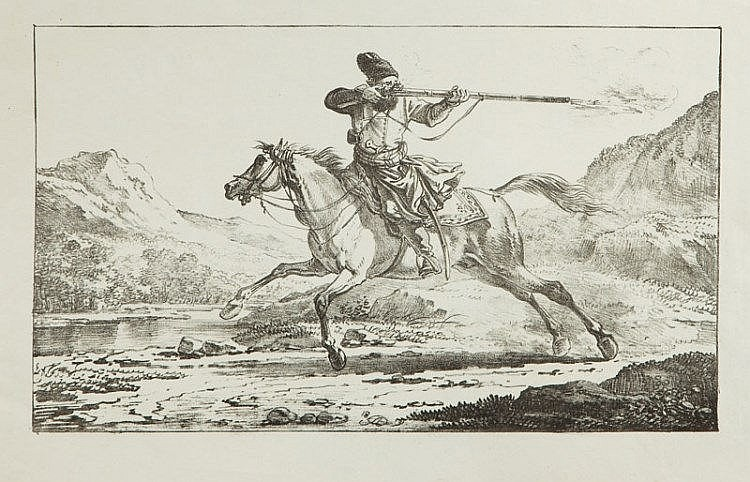
let us gallop with a javelin in hand - Turkish-Persian style.

 First, a note on Cirit aka Jereed from XIX century -
'Jereed is a short lance, having a blunted head, when used in sport, but sharpened for warlike purpose; it is one of the most favorite amusements, both in Persia and Turkey. A good description of exercise will be found in Mr Morrier's 'Ayesha.''

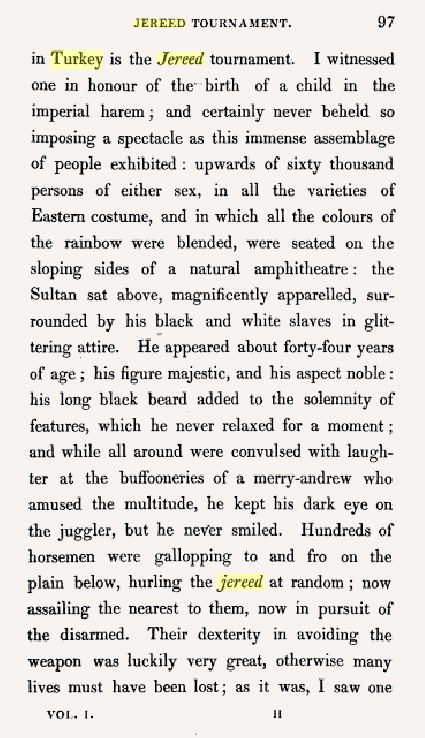
Next, from a traveling-spying book by  a British journalist/useful observer - Richard Robert Madden

Travels in Turkey , Egypt, Nubia and Palestine: 1824, 1825,1826, and 1827.    - this is his depiction: 


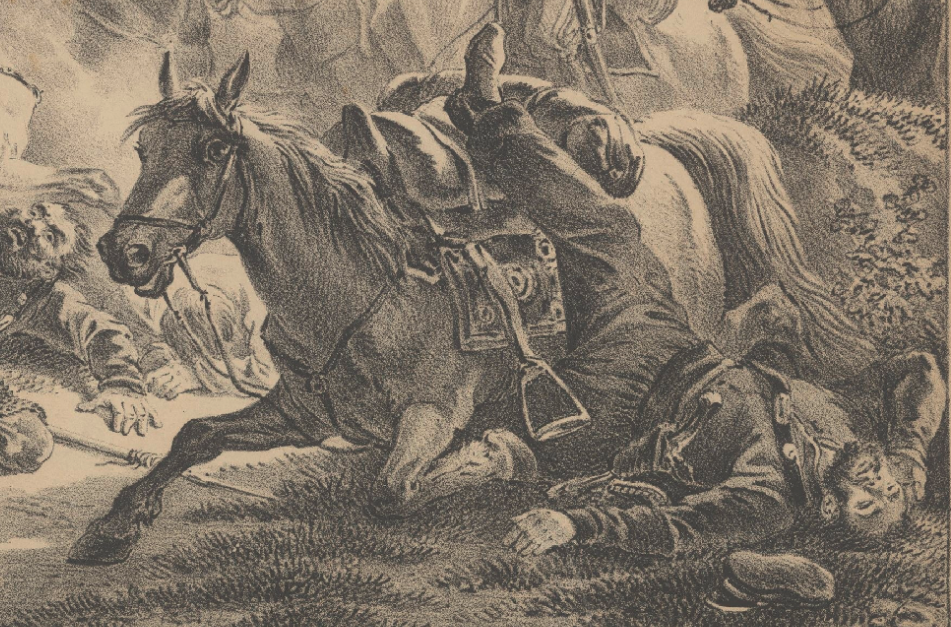
and to illustrate this 1820s description a painting by Luigi Acquarone after Antoine Ignace Melling -


Valete

Wednesday, August 23, 2017

ancient Persia - Wiesehofer and other scholars' works

Salvete omnes,
summer in its foulness thus while you are on the beach or in front of your computer, it perhaps pays to visit the archive.org library, where there are treasures to be had.
I have not visited ancient Persia in a long time, therefore I would like to share with you some fine articles that you can read off the Archive library or download and read later on, whatever tickles your fancy.

from the Metropolitan Museum collection in NYC
Let me start with Josef Wiesehofer from Kiel University and his studies of the Achaemenid Persia - I like especially the one titled The Achaemenid Empire in the Forth Century B.C.E. - but there are a few more there and all are worth your while.
Nota bene I have finished listening, while driving, to a whole set of lectures by prof. K.w. Harl on the rise of the Kingdom of Macedon and Alexander's conquest of the known world - it was quite enjoyable and with plenty of newer scholarship( perhaps a bit too much about the otherness of the Macedonians when compared with the ancient alias  'poleis' Hellenes, and the way good professor pronounced the ancient Greek personal names was a bit tricky). However, I think the military information was too general, at times too vague and too short. On youtube there are other lectures by the good professor, search away.
harness ornament - MET, NYC

Maria Brosius, New out of old? Court and court ceremonies in Achaemenid Persia (2007)- you can listen to an intro to the Near East ancient history - lecture given by the very professor. 
Loyd Lewellyn-Jones,  King and Court in Ancient Persia 559 to 331 B.C. -  2013 [sic!]

a compilation of articles edited by Niels Nielding et al, Achaemenid Impact In The Black Sea. Communication Of Powers. 2010 - in that book dealing with northern and north-western reaches of the Achaemenids' empire, there is one by prof. Tuplin about the infamous expedition against the Pontic Scythians


and little Parthia, my favorite ancient Persian empire to study
pillar of Persian studies A.D.H. Bivar - Political History of Iran under the Arsacids - 1983 

fantastic Mary Boyce, Parthian Writings and  Literature, 1983,  and very interesting history of the Zaroastrian religion and its peoples  - Zaroastrians, 1979.


Archive Library's works of Marek J. Olbrycht will come in the future installment, in one of these linked articles chain, so to speak.
...
as per my sketches, these are my older sketches, but  I have been reworking them  be it in the 'libre' Krita, GIMP and MyPaint software.
enjoy

Tuesday, April 21, 2015

Sassanian plate from Mogunticum - Mainz

Salve,
while visiting Römisch-Germanisches Zentralmuseum (RGZM) in the ancient city of Moguntiacum aka Mainz I came across this interesting Sassanian plate, allegedly from VI-VII century AD, and an example of the Sassanian metal art  - frankly I have never seen one like that before I think


Any ideas?
enjoy
ps
nota bene the Mainz museum has some amazing artifacts from the Late Antiquity and early Middle Ages, a true gem and its is free to enter...

Friday, July 18, 2014

On the Sogdian painting and Sassanian connections

Salve,
 I am always interested in all things pre-Islamic and early Islamic greater Persia, this time I want to share with you a link to an article titled  'Sasanian traditions in Sogdian paintings: hunting and fighting scenes' by Geri Della Rocca de Candal, available for reading or download at academia.edu (or a link via this interesting Facebook page titled Eran ud Turan ). Sogdiana or Transoxiana or Turan  was the land of Silk Road traders, horse breeders, artists and sometime warriors living in the shadow of the great empires of Persia and China and roamed by the Saka and later Turks/Turkuts, until conquered by the Arabs during the VIII century AD (and known since then  as Ma warāʾ al-nahr).  Introduction to the Sogdian art via iranica.com.

Persian and  Sogdian hero Rustam/Rostam (known to us through Shahnameh/Schāhnāme of Ferdowsi - nota bene article on early illustrated version of Shahnameh from 1333AD) in his splendor from a mural at Panjikent (image from Wiki Commons)

Last days of Panjikent - article - and if you curious more about the last ruler of that Sogdian city and his famous palace at Mugh Mount.

From my own stable :)  I drawn this image from a metal plate of Pur-i Vahman, it represents my newest attempt at copying this image. For our interest his stallion's bridle includes the dropped-cavesson (metal noseband) plus bit arrangement, horse's tail tied like a swallow's one,  then a cropped and cranetallated mane, and clearly depicted stirrups in more or less steppe and Korean fashion. Horse tack is still adorned with Persian elements (horse tail and a phalera), reflecting Sassanian and Saka traditions.

Dr  David Nicolle talks about this plate in his other book - Armies of the Islamic Conquest (Osprey Publishing, page 42).


Saturday, January 25, 2014

Sassanian hippotaxotai - a sketch

Salve,
a Sassanina hippotaxotai or horse archer - a MyPaint sketch

enjoy

Friday, September 7, 2012

Sassanian warriors


Salve,
5 years ago my friend and scholar Patryk Skupniewicz wrote an article for the Ancient Warfare Magazine (vol I-4  2007/2008), and based on his fine sketches I sketched, drew and painted several Sassanian warriors using mostly acrylics and inks. All mistakes were mine...
 
Chronologically, from the earliest to the latest Sassanians


...

...

...

...

...

Tuesday, July 12, 2011

Achaemenid horseman - asabāra

Salve,
I  have several more Achaemenid Persian horsemen to show, so bear with me :) pretty please...


This one may be a later Achaemenid horseman - influenced by the Alexander Mosaic weygaert/alexandermosaic , thus no bow and arrows in a ''gorytos,'' but just a sword and two javelins called ''palta'' (wooden shaft  of cornel wood).
In the fashion of his Median ancestors he wears a kantuš over his ''thorax'' armor, that is a mix of Greek and north Iranian (steppe influence), and a scaled neck-guard eg Achaemenid throat guard .
 Perhaps he would carry a shield (''pelta'') in a Saka/Scythian fashion, with or without a metal ''umbo.''
In order to dress himself up and become even more armored he would need to acquire armored  'leggings' and perhaps arms' leather tubular  sleeve-like protection (''cheir''), while his horse could have to acquire a chanfron (metal head armor aka ''prometopidia'') and chest armor - scale or leather peytral (''prosternidia''). It is possible that he also carried a mace or war ax (klevetz) known as ''sagaris'' popular with the nomadic subjects and mercenaries of the Great King. Here is Xenophon on the subject - dariocaballeros.blogspot. xenophon-peri-hippikes-arms-and-armor
 Professor Tuplin in '' All the King's Horse '' presents in a very challenging article the idea of apparent poverty of cavalry in the Achaemenid Persian iconography. and where he discusses the Persian cavalry or rather its absence in the archaeological and iconographic materials drawn from the Achaemenid empire territories - eg the researcher states that in the monumental and public iconography of the Achaemenids there is no mounted rider, there are no cavalrymen overtly shown, nor there is a horse as a weapon of war in cavalry context (eg official seals out of 77 images in Persepolis treasury tablets have only three equines ). The Great King is a spearman or archer, but a pedestrian one when fighting or at times using a chariot to strike the foe.  This is such a undeniably a very great change from the New Assyrian kingdom ( to which ancient Media and Persia were heirs) iconography and documents where riders mounted on horses in context of war dominate. More on this research paper by professor  Tuplin in the future...
ps
Jan, thanks for you comments :) ,  asked a question about the helmet here - well, it is a conversion of this helmet:


Khoda Hafez

Sunday, July 10, 2011

More Achaemenid Iranians

Salve,
sketches of the ancient Persia: Achaemenid period - some done under the directions and comments by mr. Marek Wozniak


Ancient Iranian horsemen - kantuš

Salve,
a little sketch of ancient - Achaemenid - Iranian horseman ''asabāri,''  -
one of them is wearing a kantuš or a Median robe, known by it's Greek name as kandys (candys)
( Ormond Dalton: ''which had the peculiarity that the long narrow sleeves were not used but hung loose on either side like the sleeve of a hussar's jacket'') , over his scales armor.

Some time ago a Hungarian researcher (V. Gerves-Molnar in her study of szür-  ancient Hungarian coat) from Canada put forth a claim that kantuš was a ancestor to Hungarian and Polish ''kontusz'', and this hypothesis has not found fertile ground yet amongst the Polish historians of the Polish national costume (yet other picked it up (eg  Tullia Linders '' The Kandys in Greece and Persia'' - 1984),
But professor Nick Sekunda embraced it in his book The Persian Army 560-330 BC  when talking about the kantuš.
Another Hungarian researcher A. Gaborjan,  when studying other Hungarian coats - ''daroc'' and ''guba,'' pointed to their relationship with the ancient East, and probable Persian influences via Turkish borrowings of Persian fashions etc.

Thursday, June 16, 2011

Post Islamic Conquest - Persian Rider


Salve,
this is a drawing from a post-Sassanian silver plate done in a style of Sassanian metal work showing royal hunts. One of the foremost experts on this art was late professor Boris Marshak, excerpts from his book with plates are here Marshak's toreutics .
This figure is the central fragment of this plate from Hermitage - http://depts.washington.edu/silkroad/museums/shm/shmsasanian.html  - from  so called  Greater Khorasan , made most likely in late VII century or later, showing a prince Pur-i (Pur-e) Vahman - so named in works by Marshak, Darkevich, Lukonin, Harper etc,  or according to Yaacov Lev  this is Arabian conqueror Ibn Rahman (however Lev's info on the horse tack and horse traditions is suspect) - galloping on his fine steed with a fully drawn bow.
A 'reconstruction' drawing along with more information on this warrior's horse and  equipment will follow later this month, fingers crossed.