Showing posts with label ecuyer. Show all posts

Sunday, December 15, 2024

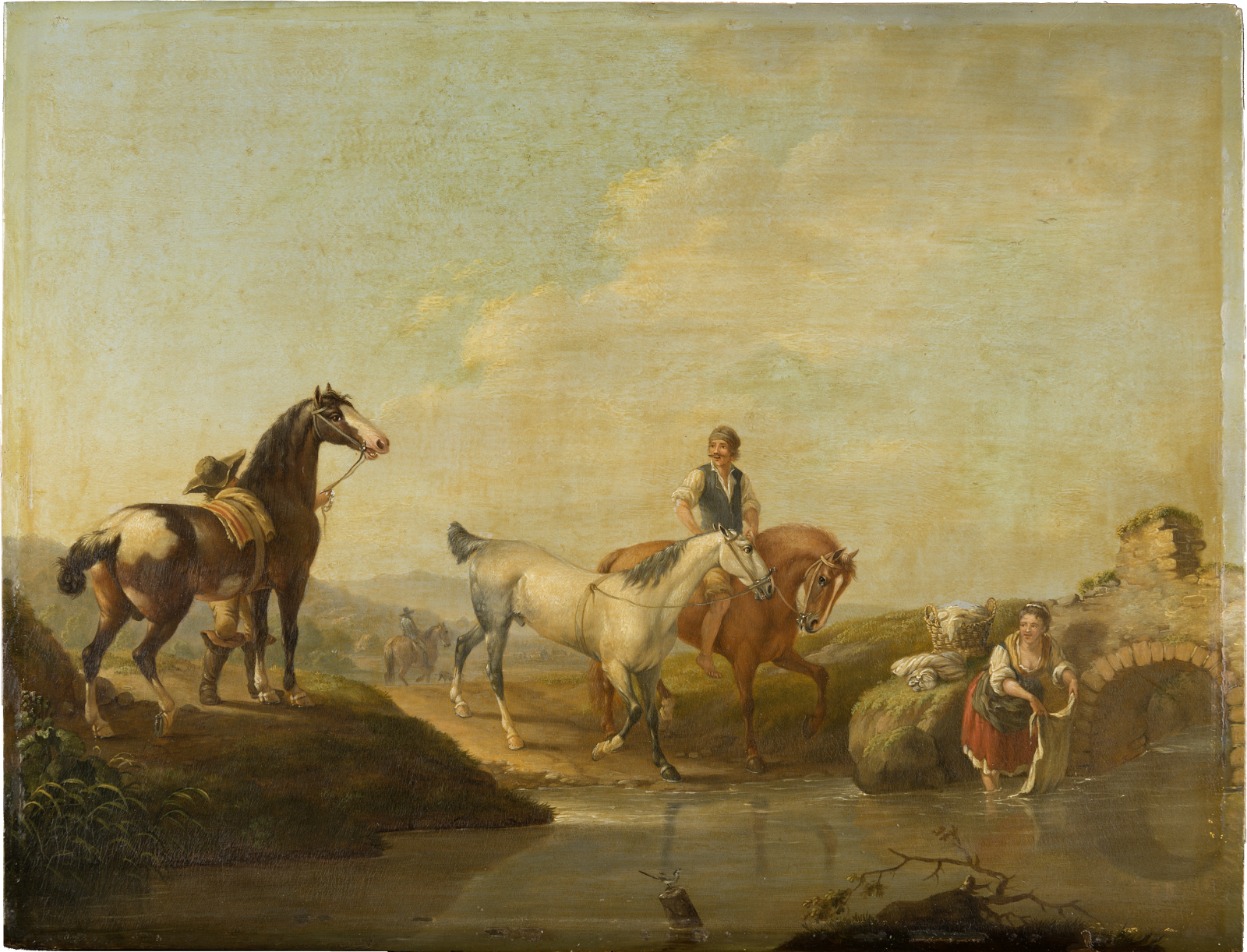
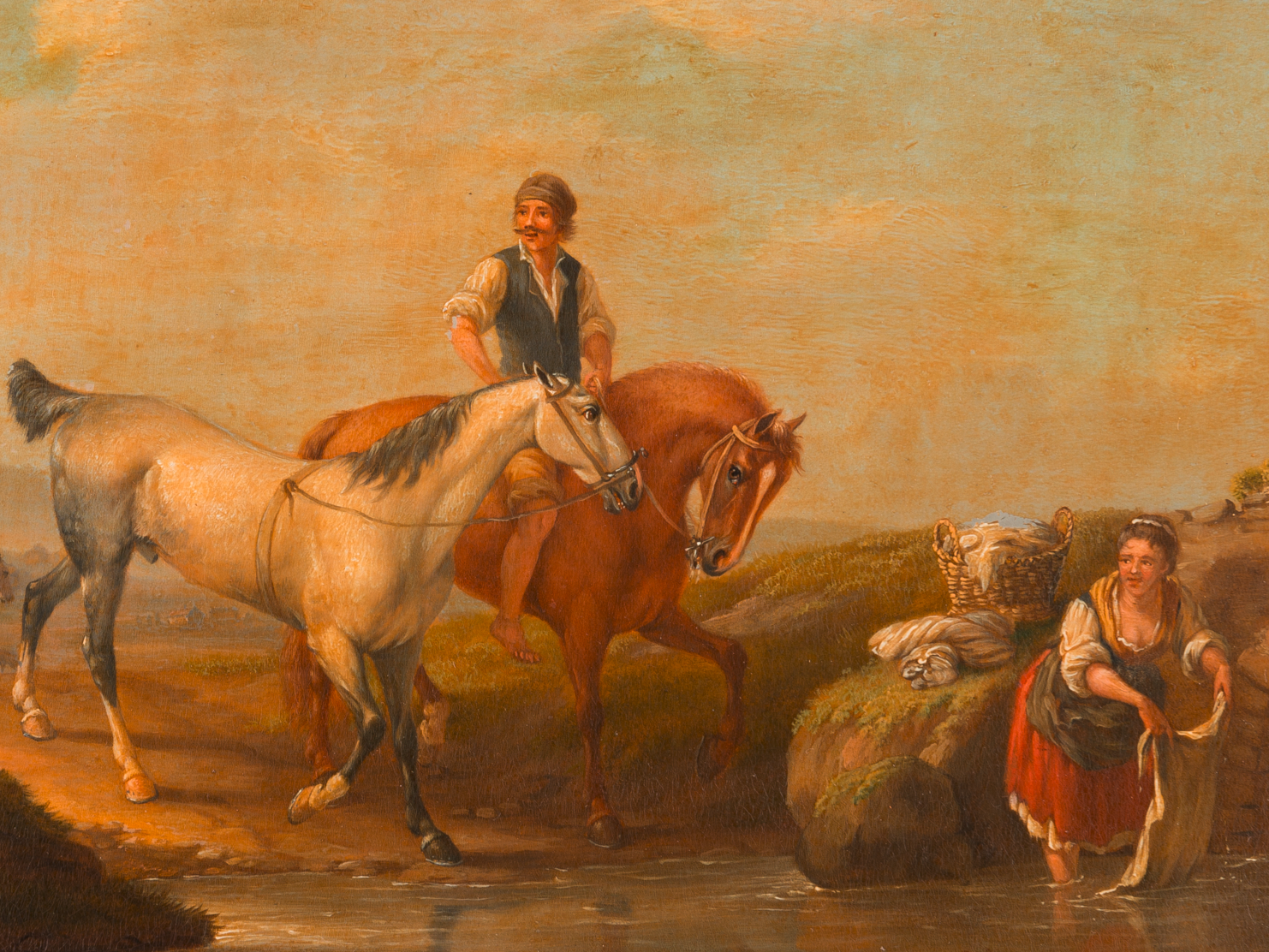
Have a nice Sunday with J.G. Pforr's stallions

 Salvete Omnes,
 only 9 days to Christmas - heehaa 

enjoy your Sunday with some beautiful Pforr's horses - XVIII century the 'crème de la crème' of the breeding and riding in continental Europe 

presenting a stallion - perhaps a Spanish, Neapolitan or Lipizzaner? 


.

grey stallion (English Thoroughbred?) in training,  a cavesson bridle 

mustachioed, bare-leged horseman riding bareback a chestnut horse

and a nice paint in the foreground
folded blanket as the saddle, snaffle bit 

enjoy your day 

Valete

Thursday, July 25, 2024

Fiaschi - maneggi, posata & repolone via Tomassini

 Salvete Omnes,


a little entry from the archive of the history of horsemanship and some modern research into the history of equitation


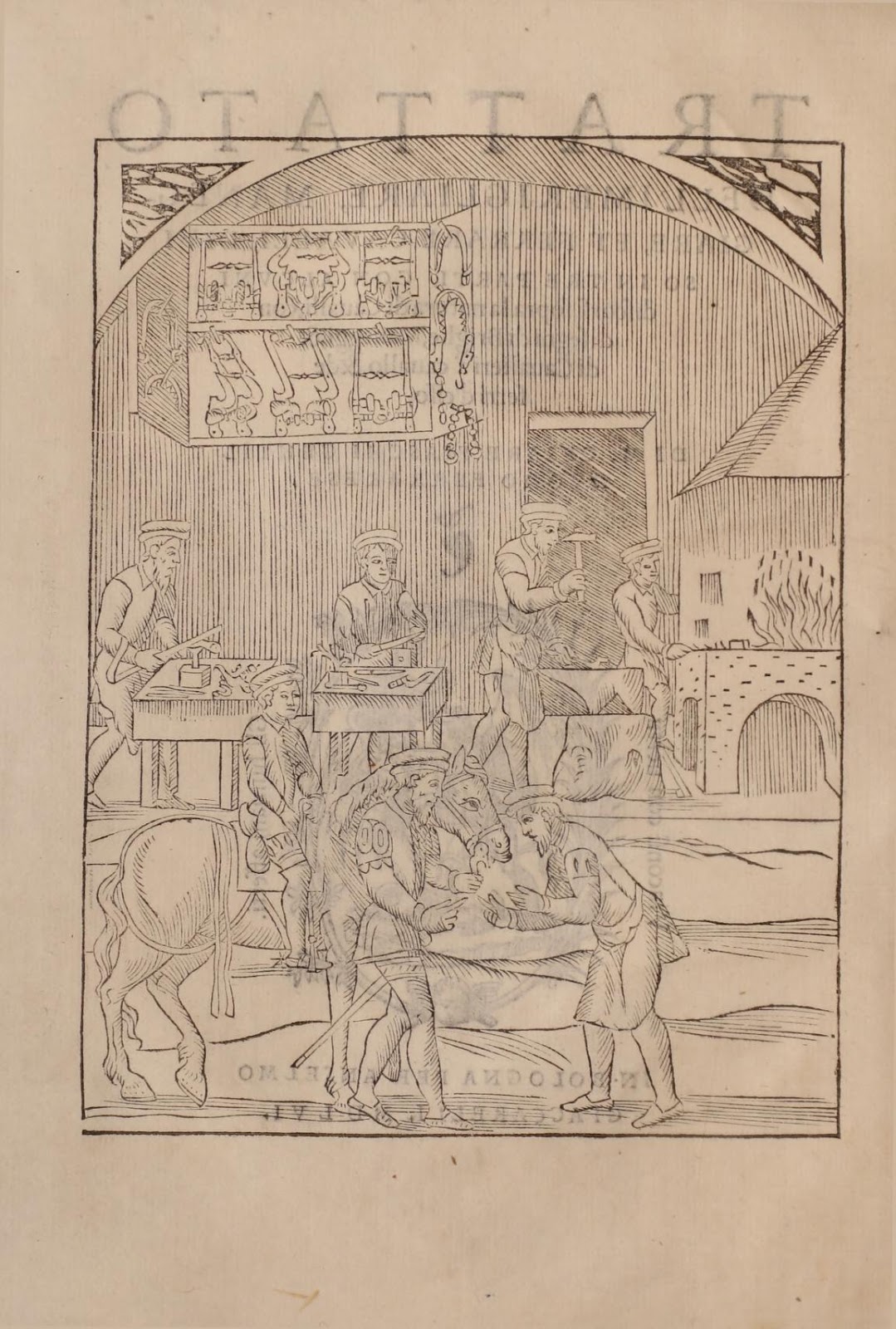
Archive World Library contains thousands of old books - eg Trattato dellimbrigliare, maneggiare, et ferrare cavalli: diviso in tre parti, con alcuni discorsi sopra la natura di cavalli, con disegni di briglie, maneggi, & di cavalieri a cavallo, & de ferri d'esso.
which is a very nice copy of the famous equitation treatise by Cesare Fiaschi, a gentleman of Ferrara, Italy (a town where the famous Palio took place), born in 1523 when d'Este princes ruled Ferrara and fought their enemies with fire and artillery mostly,  and where he died after 1570AD, when the arts of horsemanship and their studies took over Italian peninsula and eventually the aristocratic Europe.


Some time in the first half of the XVI century  the  Este's Ferrara saw opening of a riding academy.


Perhaps there messer Cesare Fiaschi became a riding master or ecuyer  of the academy in Ferrara, and 5 years after famous Frederico Grisone's treatise on horsemanship, Cesare published his famous work on horse training in 1556AD.


Modern Italian ecuyer, researcher  author, and RAI journalist, Giovani Batista Tomassini has been researching the art of horsemanship, including the life and works of signore Fiaschi. - note I posted about Giovanni Batista Tomassini's articles and research in the past. 
This is messer Tomassini's work on Fiaschi's life - new and proven information - it is a veritable trove of information about Cesare, his family history, and his trials and tribulations, including a trial for heresy in 1560s.

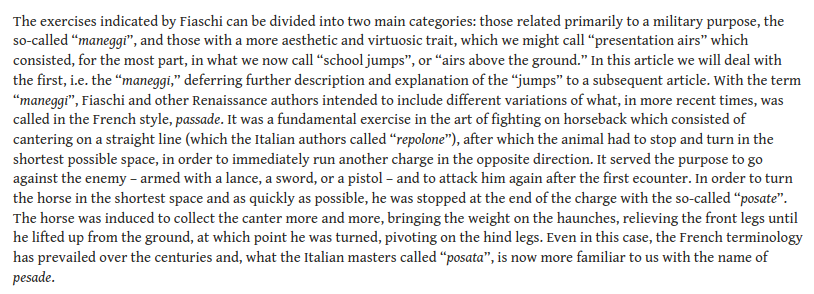
But I would like to turn your attention to another two articles on Fiaschi and and works by signore Tomassini - Maneggi and Jumps - part 1 & part 2. 

here I will 'quote' one of the most interesting passages from the part 1 - 

worksofchivalry.com site or from Academia


The second part discusses not only Fiaschi, but also Claudio Corte and Grisone, all most famous and influential ecuyers of the era.


and some of the morsico bits form signore Friaschi


Valete


Thursday, December 19, 2019

James Fillis - ecuyer on Archive.org

Salvete Omnes,
our 2019 is rapidly closing, with the beautiful holiday of Christmas still several days away.
so on the gift giving and receiving note perhaps you may be interested in this 'libre' collection of two translations of the European ecuyer James Fillis' famous French work on equitation -

Principes de dressage et d'équitation - the 2nd, 1891 edition - the photos of exercises come from that edition, eye friendly  -
below ecuyer Fillis in the Russian cavalry school uniform?


Breaking and riding, with military commentaries  (American edition here) was translated by captain Horace Hayes, one of my favorite XIX century writers on horse.

Grundsätze der Dressur und Reitkunst was translated by Gustav Goebel( the published 1918 version).

 In pre-war Poland it was published under the title Zasady ujeżdżania i jazdy konnej in 1930.


Valete
ps
I think I will post the entire chapter on the army horse.

Thursday, May 23, 2019

ROßFECHTEN SYMPOSIUM 2019 - Arne Koets et company video

Salvete Omnes,
just a video link -  ROßFECHTEN SYMPOSIUM 2019 - the After Movie- beautifully done presentation of enthusiasts, great riders and horses , and with rather - ;) great musical score -  congrats Arne Koets and company.
 
 nota bene, watching the video I noticed various swords and sabres, and I saw there the   Polish training swords go-now - I use them too - 
this is wonderful stuff, perhaps there will be more videos.. 
Valete


Thursday, May 10, 2018

Mr. Baucher - 3rd ed images

Salvete Omnes,
our world spinning around us rather fast, so back to the more tranquil steam age of XIX century and equitation literature - I was looking at the Baucher's various editions and would like to share with you several plates from the French 3rd edition - huge AD 1867 edition from archive.org world library along with some period artwork showing the French cavalry of the 2nd Empire
title page - 3rd edition


English translation
 French cavalry uniform - field and parade -  of the period is shown in these plates, cavalrymen performing various exerices described in the book
I especially like the lancers  of the guard (Napoleon III - 2nd Empire) -
officer of lancers by François Hippolyte Lalaisse


lancers


lancers

kepi or the headgear of the French soldier (cavalry and infantry alike) adopted in the US and Imperial Russian armies


Iam not sure what the first rider is perhaps the Artillerie a Cheval or the Guides & the 2nd rider is  a Chasseurs a cheval 
 François Hippolyte Lalaisse - officer of the chasseurs a cheval


enjoy

Sunday, March 4, 2018

Rene de Menou seigneur de Charnizay

Salvete Omnes,
spring is near and I am thinking about training horses, and the French National Library on the web aka Gallica (but also world digital library or Archive)  offers a read and historian a peak into the Monsieur du Pluvinel-influenced circle of French horse trainers, riders and their horses.

This time we have a nobleman and soldier Rene de Menou seigneur de Charnizay, 1578-1651, who was a disciple and friend to the royal ecuyer Antoine de Pluvinel, inherited his master's work, and in AD 1628 published a new version of Maneige Royal as L'Instruction du Roy et al, that was supposedly closer to the writing of du Pluvinel than the first edition (after Hilda Nelson's discussion in her preface to the Le Maneige Royal Or, L'instruction Du Roy: En L'exercice De Monter a Cheval, AD 2015 edition).
 De Menou wrote and published a work  titled La pratique du caualier, ou, L'exercice de monter a cheual  and we have from Gallica hies work published in AD 1650 (but earlier versions exist - 1612 and 1620). However, de Menou mentions du Pluvinel in his book and apparently he was writing within the circle of du Pluvinel's ideas and teachings.
Parts of that work will be the subject of today's post and perhaps one more post.

This equestrian work is most curious because it lists several types of horses native to the French Kingdom and its parts - Gascongne (Gascony), Lymousin (Limusin), Poictou (Poitou), Normandie, Bretagne, Comte de Bourgongne (County of Burgundy).

also author includes a short description of horses from 'Germanies' (Holy Roman Empire) and Flanders (most popular and easy to obtain), Italy, Spain (difficult to obtain), and the Ottoman Empire - Turkish and Arabian horses (but very few and far between), as well as the North African horse know then and now as Barb.

Unfortunately there are no Polish horses that entered the realm of signeur de Charnizay, but then in the Polish Lithuanian Comonwealth the French horses were not know for their qualities then as well, so I guess some type of quid pro quo.
So there are some pages from the book, corralled by me, describing  horse types or even breeds, according to their origin, for riding, mange and lists.


enjoy