Equestrian Polish, Eurasian and the Americas history and horsemanship - from Bronze Age to circa1939AD. Historical equestrian art, my own artwork; reconstructions, and some traditional art media and digital artwork-related topics. All rights reserved unless permitted by 'Dariusz caballeros' aka DarioTW, copyleft or fair use.
Tuesday, March 4, 2025
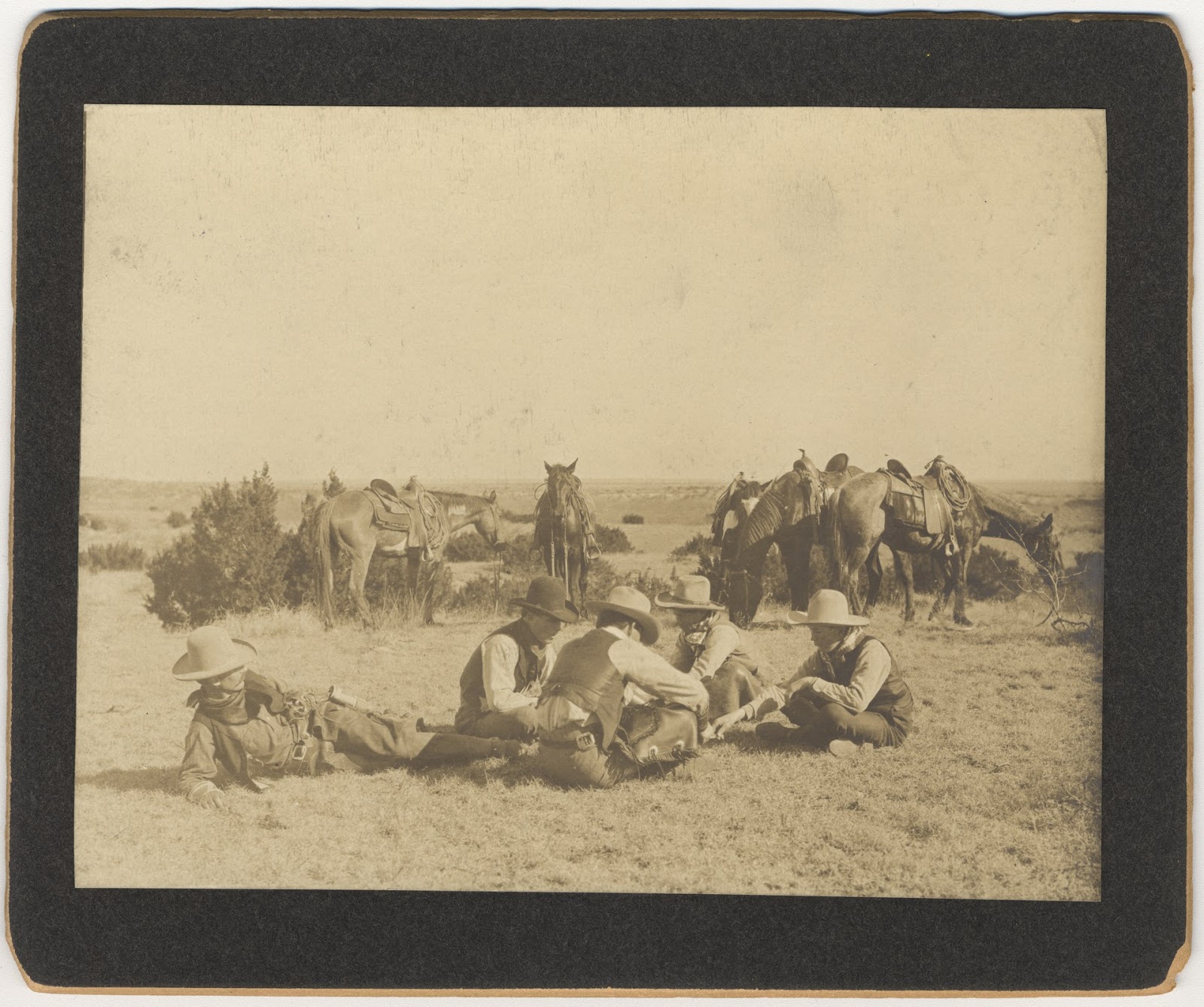
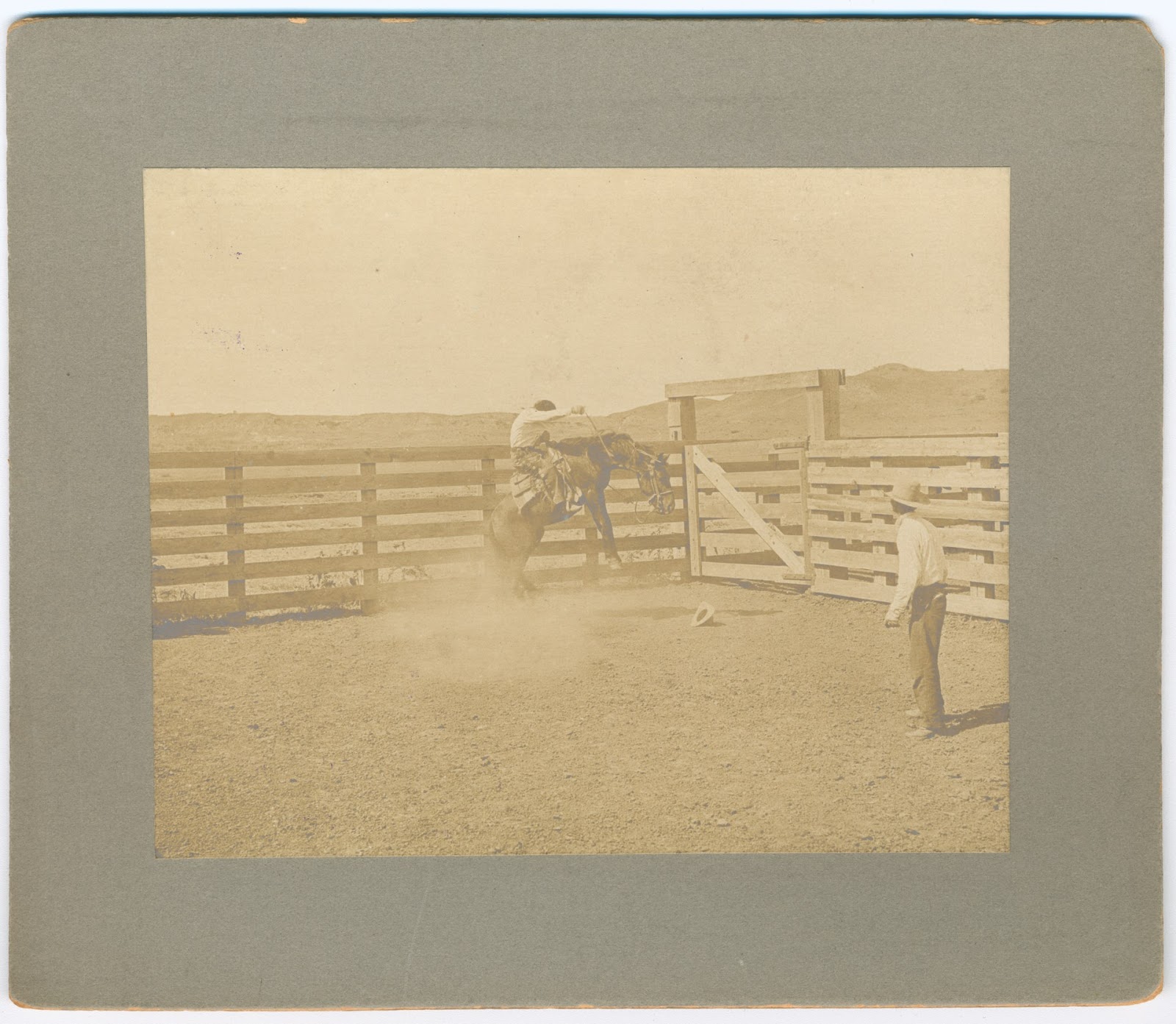
Texan Horses and cowboys by Erwin Smith
Tuesday, January 9, 2024
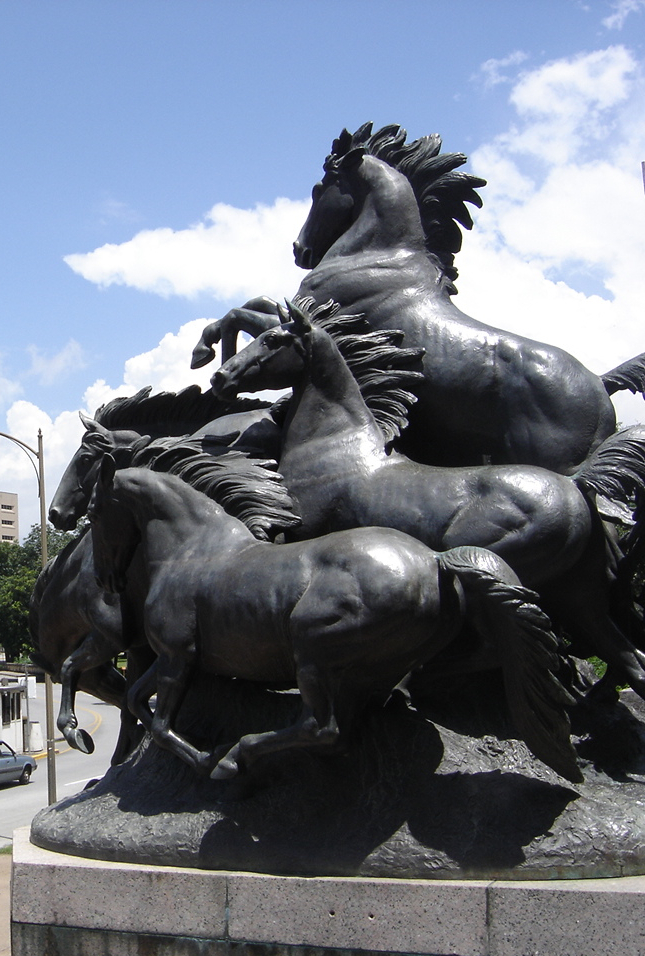
The Seven Mustangs of Rancho Randado
Salvete Omnes,
a little bit of mustangs lorein this post and some Dobie's storytelling & A. P. Proctor's sculpting - from Texas
Frank Dobie in his book 'The mustangs' wrote the following:
''When A. Phimister Proctor [famous American sculptor] was commissioned in 1939 to make a bronze statue of a group of authentic mustangs - the sculpture called The Seven Mustangs, presented to the people of Texas by Mr. and Mrs. Ralph D. Ogden of Austin, unveiled on the campus of the University of Texas in 1948 - the only Spanish horses in Texas available for models [...]were owned by Tom T. East in his San Antonio Viejo ranch in the brush border country. He had around 250 head of dun and grullo horses, all line-backed. They were descendants from a dun mustang stallion caught when about ten years old on the Rancho Randado. In 1920 Tom East got a grullo stallion, son of the dun, and began breeding him to a few mare that were puro Espanol. In the course of years he found that no matter what color of a stallion bred to dun mares, ninety per cent of the colts were dun. [...]The Randado used to raise about the best Spanish horses in Texas. It was a horse ranch, established late in the 18th century.[...] It was fitting that A. Phimister Proctor's mustangs, plunging forever in bronze, should, while representing all Spanish horses, have been modeled upon coyote duns out of the Rancho Randado.''
Book is available for borrowing from the Archive, world library.
enjoy
Valete
Friday, October 25, 2019
Headless Horseman ... of Texas
perhaps some pop culture today:
this year's Halloween is very close and I just remembered the old Soviet 'western' film - The Headless Horseman - I had watched as a kid (in Polish).
at that time and for a long time afterwards I had not known that the movie was based on the adventure novel by a well-known hero of the Mexican War Thomas Mayne Reid - published in England in 1865 (the 1869 edition here).
LibriVox has the book in audiobook form.
Frank Dobie'a Legends of Texas (1924) has another tale of a headless horseman titled The Headless Squatter told by John R. Craddock.
some of the Headless Horseman 1869 edition illustrations:


Valete
Sunday, April 22, 2012
Breaking bronchos* in Texas
let me take you to XIX century southern Great Plains, where Spanish horses (later crossed with other American breeds ) had been used extensively and thoroughly since the colonization of Texas first by the Comanches and Kiowa from the north-west and then by the Spanish from the south-west and eventually Anglo-Americans (including lost of German immigrants and some Polish folks) from the north-east.
Today the attached pictures, containing the text, will tell the story of gentling semi-wild horses known then as bronchos* (broncos) in Texas, at Lechuza Ranch near San Antonio, as seen and and described by British traveller Mary J.Jaques in her book "Texan Ranch Life" (London:1894). Illustrations (mostly Frederic Remington, Charles M. Russell and some period photos) come from several XIX century and early XX century books in public domain.
Enjoy Ms Jaques storytelling:
...
* bronco - ''Sin domar''- Mexican Spanish for a semi-wild, unbroken (ungentled) horse, a horse without schooling.