Showing posts with label Medieval Italy. Show all posts

Tuesday, May 23, 2023

House of Savoy I

Salvete Omnes,


another quick post of more than several future posts dedicated to the equestrian portrayals of  some members of the House of Savoy, an Italian dynasty that is still going on today. Among other deeds and actions they were crusaders during the Age of Crusades - here I always refer you to Helen Schrader, who researches the Outremer  and writes both non-fiction and  'awfully' engaging novels about their history. 

The Savoyards claimed titles to the Kingdom of Jerusalem, Kingdom of Cyprus, and Armenian Kingdom of Cilicia.


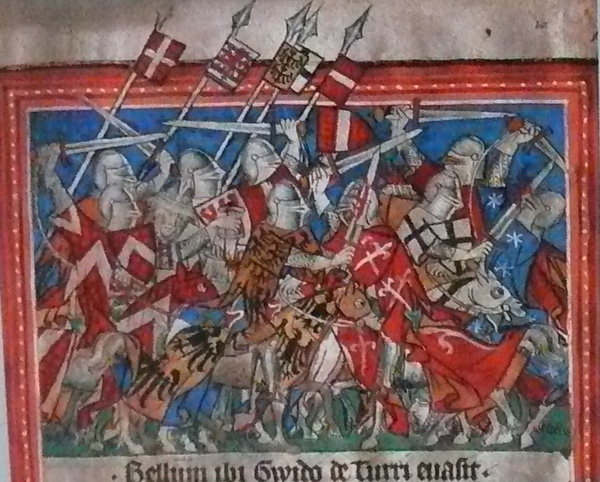
We will start with  some heraldry as evidenced in their medieval seals and one miniature - the dynasty was founded by Humbertus I who ruled in the County of Savoy, then a state within the Holly Roman Empire.


40 years of rule 

Thomas, son of Humbertus III 
Peter 


Amadeus V 

                                                                     Amadeus V in this XIV century miniature 

and then move to the transforming XVI century and this duke - Emanuele Filiberto I (1528-1580AD) on horseback in the full display of the Renaissance horsetack and rider's attire. 

woodcut circa mid XVI century.
his portrait painted by maestro Paolo Veronese 


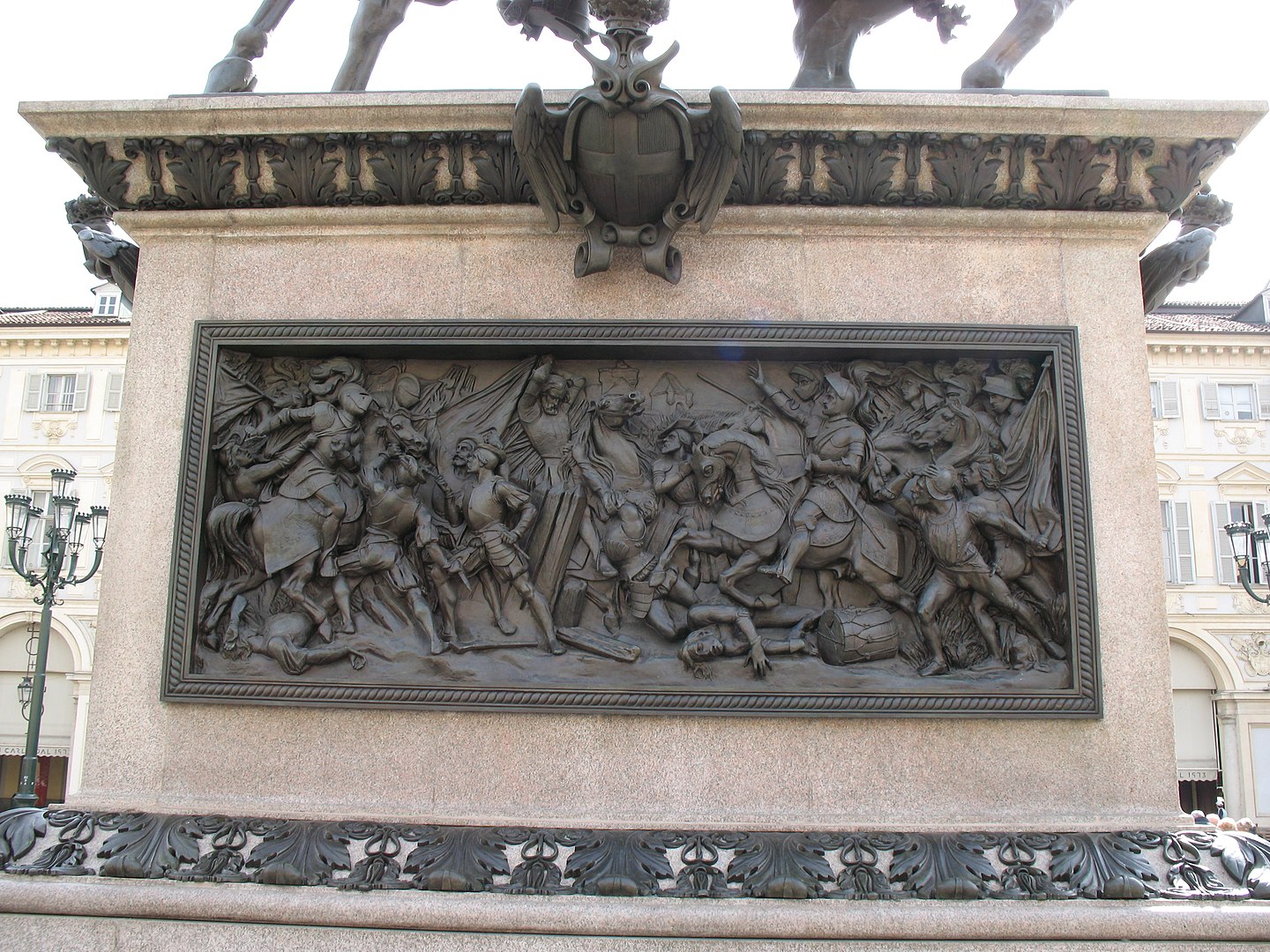
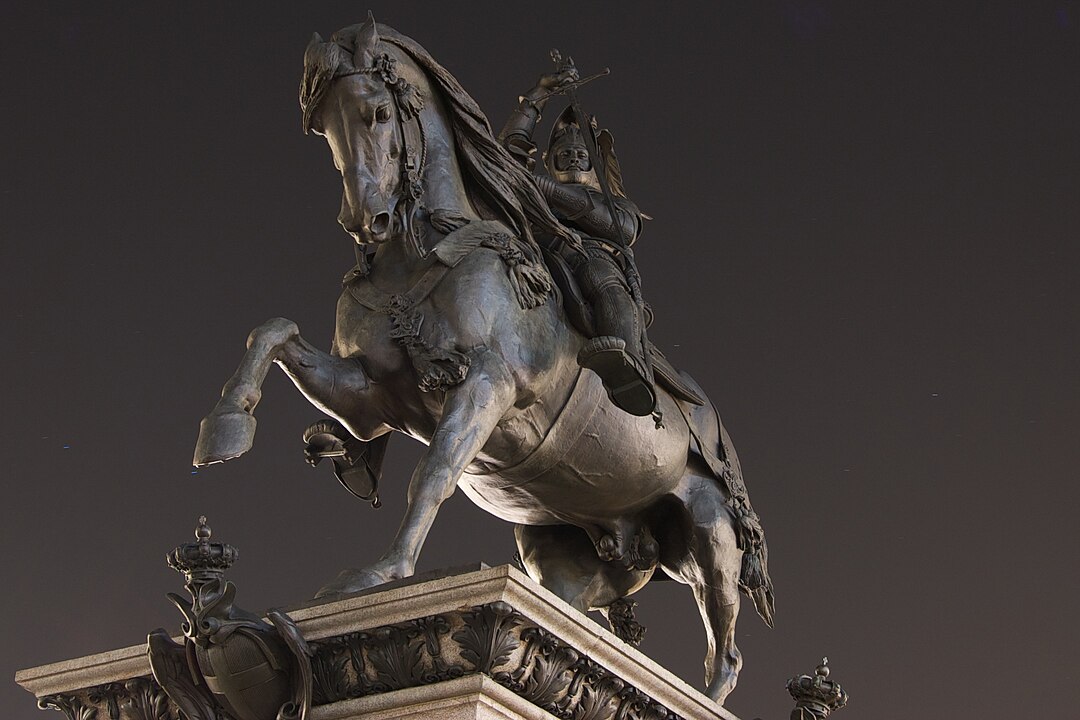
this ruler has been subject to an equestrian monument in Torino (Turin), Italy-EU - erected 1838AD  


to be continued - 
ps
all images come from Wiki Commons. 

Valete

Friday, December 31, 2021

Happy New Year 2022

 Salvete Omnes,

last post this 2021 - 

hurrah - we have made it

I hope the new year 2022 will not be worse than this one, and I do hope for a better one  than 2020 and 2021 combined.

Hence, all the best to you and your family and loved ones, may your horse treat you better than your goverment - :)


Freedom and liberty, joy, humor and smile and plenty of happiness during this night of Saint Sylvester feast. (taking the liberty of attaching some art showing Saint Sylvester  the pope and European medieval horses. )


                                                                                  ***

Wesolej zabawy w humorze i zdrowie tego Sylwestra, Dosiego Roku - Szczesliwego Nowego ROku 2022

                                                                                 ***

muchissimo mucho de lo todo  que es mas beuno esta fiesta de la Nochevieja - Feliz Ano Nuevo!

Valete

Tuesday, May 21, 2019

Lorenzo Veneziano - horses and knights

Salvete Omnes,
Spring is around us, and where is the global warming or climate change? It has been cold and cold.
anyway, to warm up the historical equestrianism a bit - maestro Lorenzo Veneziano and the horses and  horsemen in his art :
first this little picture, the triptych from 1370sAD - Museo Tyssen-Bornemisza in Madrid, Spain -on the right side of the triptych there is a horseman with his grey steed, but owing to the small size of the picture I cannot see much there

the second image, a predella, from the Staatliche Museum in Berlin shows  Conversion of Saint Paul, is more populated, with 7 horses and riders, and due to the proper size for more investigative approach  appears quite rich in detail.


the center figure - of Saint Paul the Apostle - the knight soon to become saint Paul carries a great sword, and a combination of cuir-bouilli (hardened leather) armor that for the last quarter of the XIV c. appear to have been purposefully antiquated as already the Italian armor industries were the most advanced in Christian Europe.

 the red leather saddle is interesting,as with its low pommel and cantle appears to portray a riding knightly saddle (note the saddle skirts and cinch - it is a leather one?), but the gray  horse (shod with horse shoes), with its tied tail and short mane and tied up forelock, perhaps is supposed to represent  a dextrarius and not a palfrey. Horse tack is rich in beautiful vermillion red, the bridle has a curb-bit with a single set of reins.
the figures on the left
we see two figures on the left, one sorrel horse with a long- shanked curb-bit hanging from its bridle and dark blue tack,  behind him(presumably the armed men rode male horses) a gray horse with red tack - both horses appear collected.

 the horses on  the right - the brown horse with another set of rich red horse tack, also a curb-bit and studded crouper and breastplate. The saddle with long skirts appears to have been portrayed with larger pommel and cantle than that of Saint Paul. There are three more horses, seen in less detail - gray, bay, and dark brown,


 So in this little predella we get a glimpse of the rich equestrian  life of the northern, Venetian?,  Italian nobility.
Valete

Sunday, April 28, 2019

Simone Martini et tents etc

Salvete Omnes,
I would like to bring your attention to several works of the XIV century Sienese painter Simone Martini , disciple of the famous Giotto. In his brushwork we see medeival Italian horses, horse tack and event tents used by the medieval armies.

 
 first, the fresco of Guidoriccio da Fogliano, the Sienese condotiero (mercenary) commander, at the siege of Montemassi at the Palacio Publico in Sienna.
He is riding a tall grey dextrarius that is shod and  caparisoned.

We do not see much of the condottiere's armor but for his neck, arms and legs that are protected by the mail, and the legs are reinforced by some early plate armor. Riding in the military fashion, double reins in left hand, he holds the botton, the symbol of his authority as the commander (and conqueror of Montermassi).


 very interesting portrayal of the pavilon tents of the nobility and commanding officers and also tents for the troops (included grass or perhaps straw covered tents) and it is my guess that the green structures are stables for their horses.

Another work, a panel painting, that is interesting is the  Blessed Agostino Novello Altarpiece
 where in this tempera panel we see a fallen horse

 and the details of the saddle (painted leather skirts) and stirrup  with the stirrup leathers.


Valete

Sunday, December 10, 2017

the Magi's Adoration of Jesus - Bartolo di Fredi's horses

Salvete Omnes,
the season of holidays is upon us with the Star of Bethlehem shining high somewhere in heavens - between January 6 and today  I plan to bring  more XV century paintings of the Magi (Wise Men, Trzej Krolowie, Los Reyes Magos etc  - see the New Testament: Mathew chapter 2 on the Magi ), since these paintings usually contain some of our favorite equine subjects i.e., horses, horse tack and riders.

So today  let us travel to Sienna, to the panels conjured by  master painter Bartolo di Fredi -

Note that  the bits on these bridles contain ornate large discs or cheekpieces covering the mouthpiece so these are snaffle-bits.  There are no curb-bits or curb-chains in the foreground horses' bridles, however, in the paintings and drawings of Pisanello where there are similar bridles such curb-chains are present. So perhaps di Fredi omitted them? In the narrative taking place in the upper part of the Siena panel the horses of the Magi caravan have double reins so perhaps there there had curb-bits?


one Adoration painting is held at the MET and was painted circa 1390 AD -
the three horses here (the forth is visible only as per its ears) are gray, raven black and roan - perhaps indicating the 3 Magi. Different colors of their bridles'  leathers, each appropriate to the horse's color i.e., so it would be easily visible and pleasing to the eye.
a closeup on the horse heads
breast collar/breasplate visible here along with the front arch/pommel of the gray horse saddle


and the second Adoration from the Pinacoteka Nazionale di Siena - the upper part of this panel contains more narrative storytelling than the truncated MET one.  The story starts with the Magi leaving their country somewhere in the east (right side of the panel) and first arriving in Jerusalem to confer with king Herod (Herod the Great he was), and then continuing on to Bethlehem and to the shepherds' barn where the King of the Jews, baby Jesus was born. the XIV century graphic storytelling.
-
clearly a finely bred horse at least a palfrey or  even dextrarius, of unusual color . Saddle here is not a war saddle but a typical late XIV and early XV  saddle for travel and parade.
 Horses are shod, with gold horse shoes? The stirrup visible here is of the most ornate and sumptuous make, studded and clearly a piece of noble, aristocratic ownership. Crouper in the color of the rest of its tack, i.e., red, with golden thread design and gold leaf adornment? Rear arch/cantle is painted or embossed? Front arch/pommel is clearly visible and gives indication of its size and width. No cinch is visible but on the upper part of this panel we can clearly see textile cinches.
-
stallions neighing

-
we can say something about the riding style - long legs, long stirrups, left hand holding rather loose reins.
The horses shown in their full state appear to be finely bred type, well trained and gentled, with some showing their airs (perhaps) thus indicating high level of horse training in XIV century world of chivalry, specifically the world of Italian chivalry.
-
presence of the hunting dogs is interesting, reflecting chivalry traditions of taking their hounds on a trip etc
Note that the horses ridden in the upper part of the panel have double reins, so perhaps that indicates that they are using curb-bits along their snaffle bits?
There are camels with lots of load, as camel could carry even 600 pounds, and camels indicate the foreign, non-Christian/ non-Italian aspect of the journeying magi.
-

enjoy

Valete!

Tuesday, December 8, 2015

Cangrande della Scala - autopsy of a XIV century Italian knight


Salve,
while researching  the equestrian statues from the Medieval period, mostly from the Italian states, I came across this very unusual article(in pdf) authored by Gino Fornaciari et al.  A different version of this study via academia.edu.
The article is a step by step presentation of the autopsy of the preserved 'mummy' of  the XIV century Veronese prince and knight Cangrande della Scala, who was a very active warrior , statesman and the Ghibeline League supporter - his last deed was to take Treviso, in Veneto, and if you traveling in Italy do visit, it is a lovely small city with good cuisine and nice people (visited last year).

Cangrande was immortalized in the Decamoron and the Divina Comedia, and in this funerary equestrian monument. 

The authors of this multidisciplinary study conclude that this warrior-prince (1,73 m tall, healthy and robust otherwise) was cut short (he was only 38 years old) as he was poisoned with foxglove aka digitalis plant ('naparstnica' in Polish), present in his system.


There are some figurines of Cangrande I della Scala done by the militrary modelists - [1] , [2]
giving a sens of the richness and beauty of his chivalrous appearance.
Enjoy
ps
all images are from Wikimedia Commons