Showing posts with label ancient Greece. Show all posts

Monday, November 28, 2022

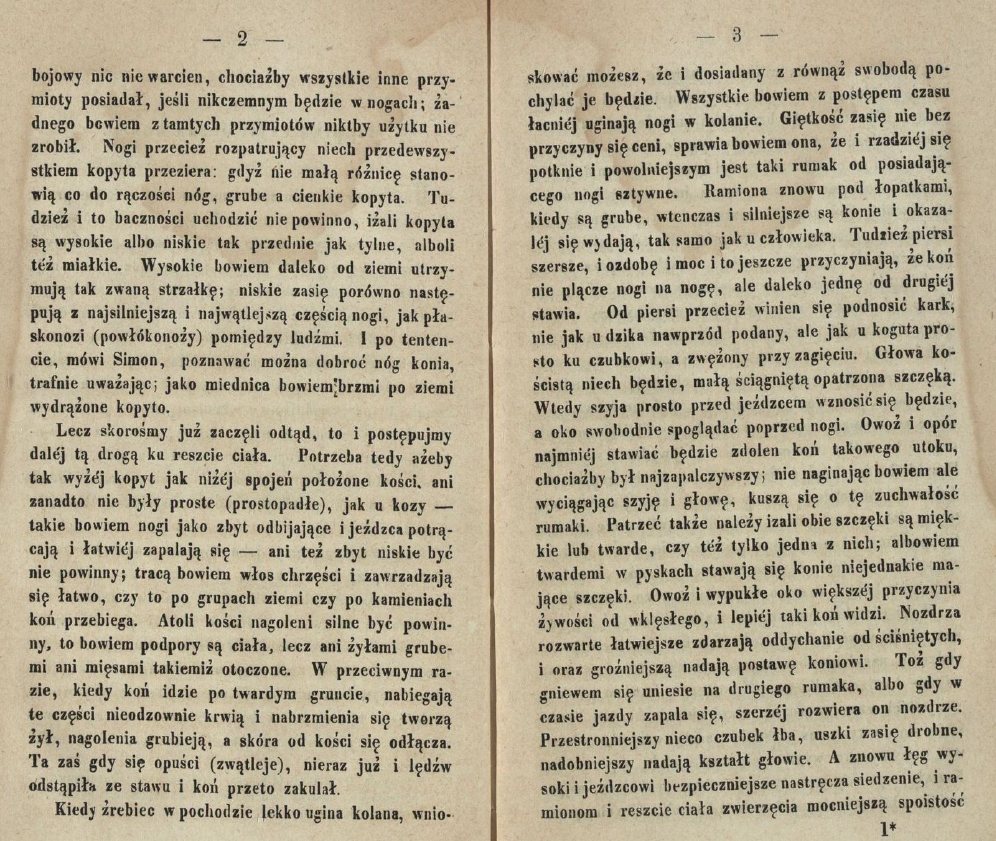
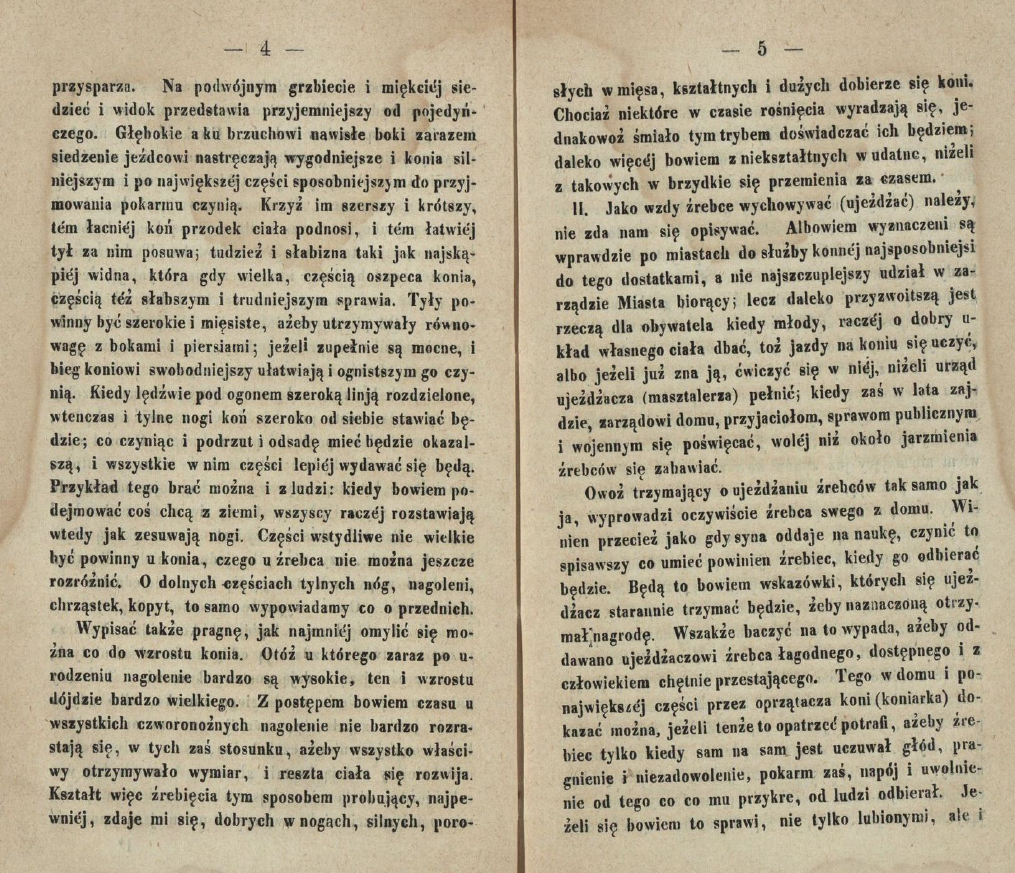
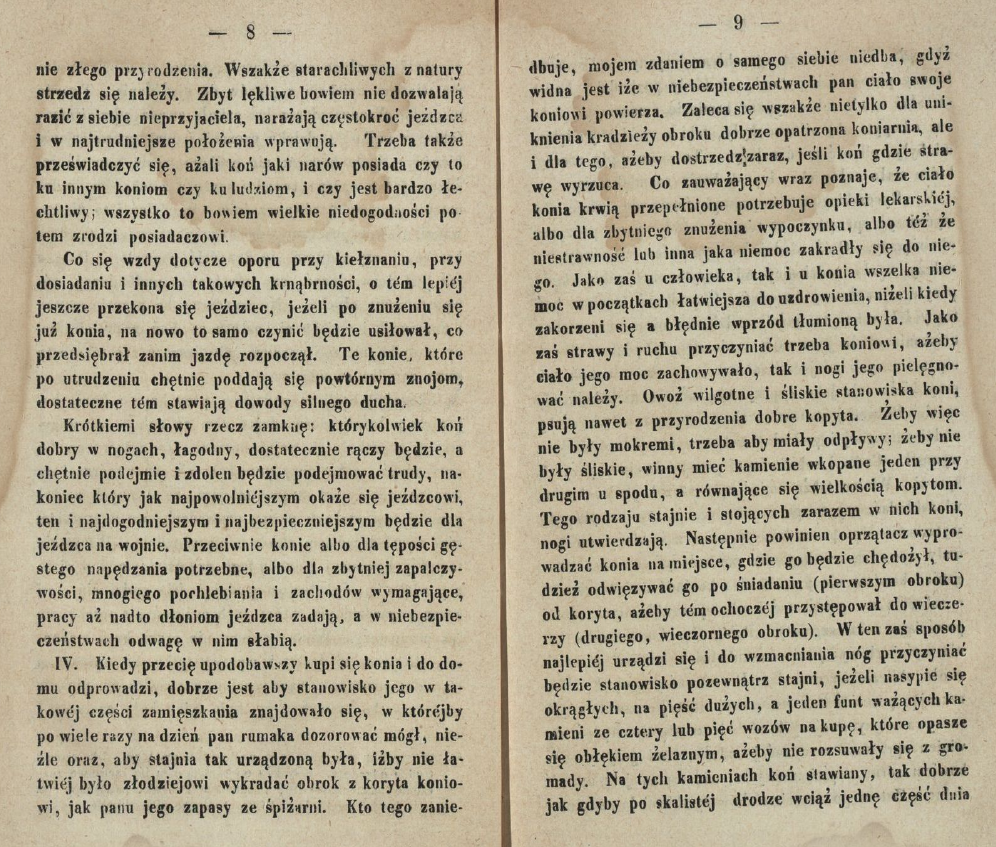
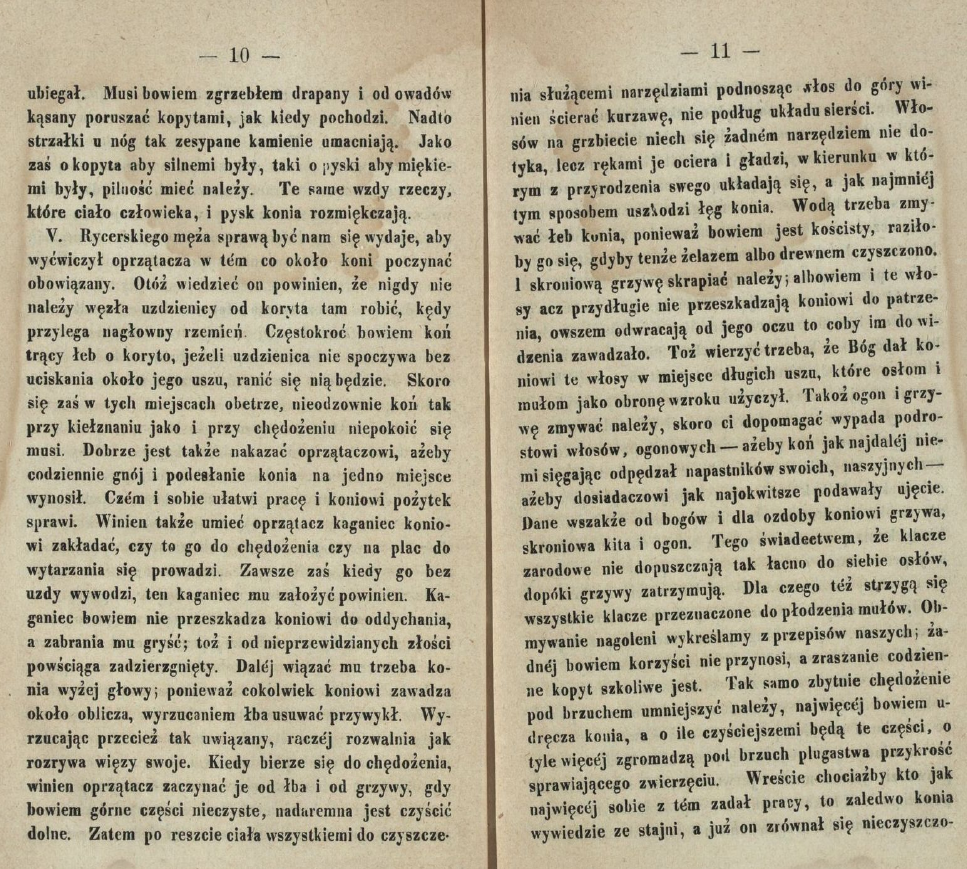
Hippika Ksenofonta w tlumaczeniu Antoniego Bronikowskiego I

 Salvete Omnes, 


 [in Polish]


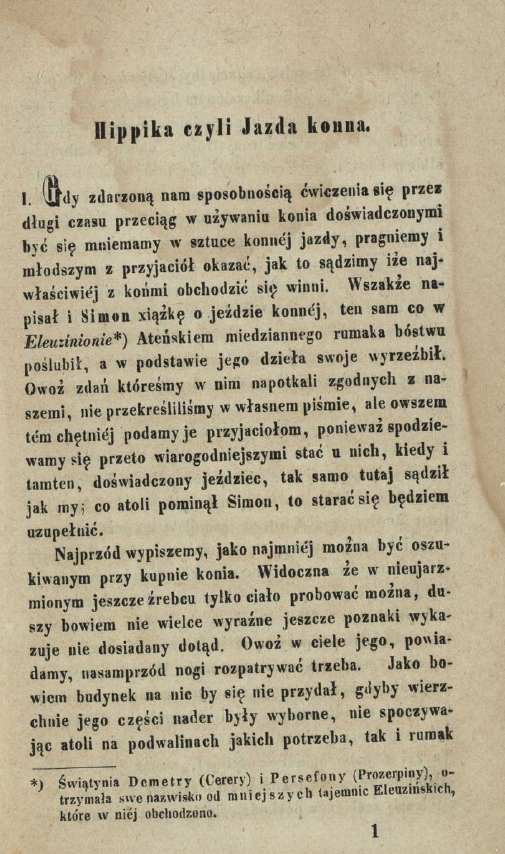
dzieło Hippika czyli 'Jazda Konna' 'rylca' Ksenofonta, helleńskiego żołnierza i filozofa, jest podstawą do studiowania traktatów hipologicznych per se.
Tłumaczenie Antoniego Bronikowskiego (1817-1884-  właściwie pełne nazwisko rodowe to Oppeln-Bronikowski, herbu własnego)  na język polski  ukazało się w Ostrowie [Wielkopolskim] w 1860tym roku, gdzie tłumacz był profesorem gimnazjum królewskiego. 


tedy piękno staropolskiego języka, w tym  języka hipologicznego, przed Wami, drodzy czytelnicy:


cdn

Valete


Sunday, July 17, 2022

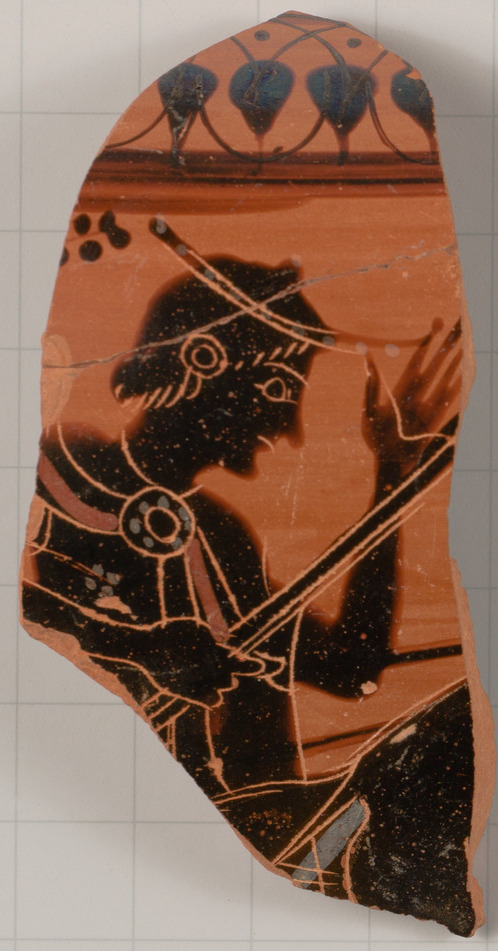
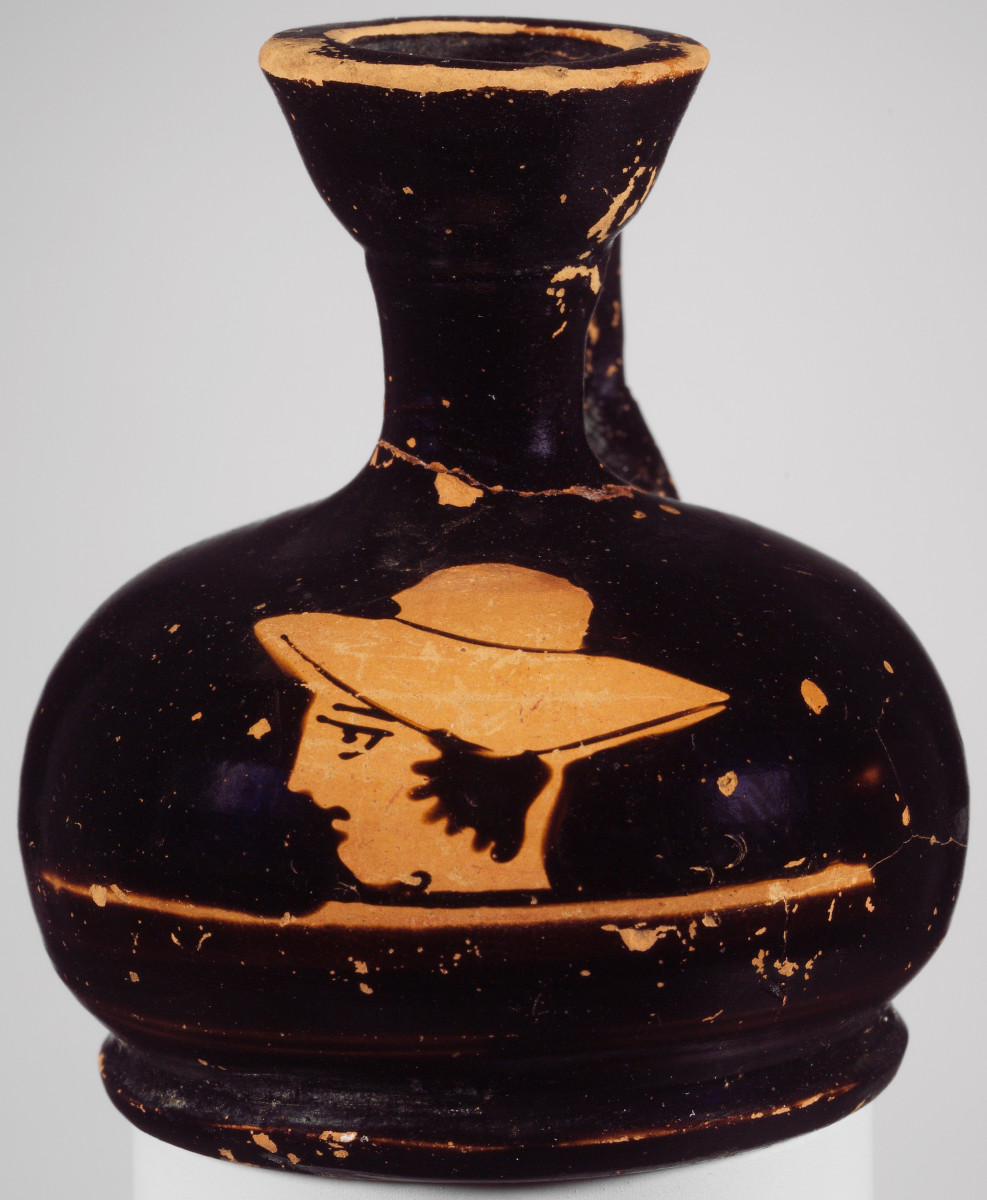
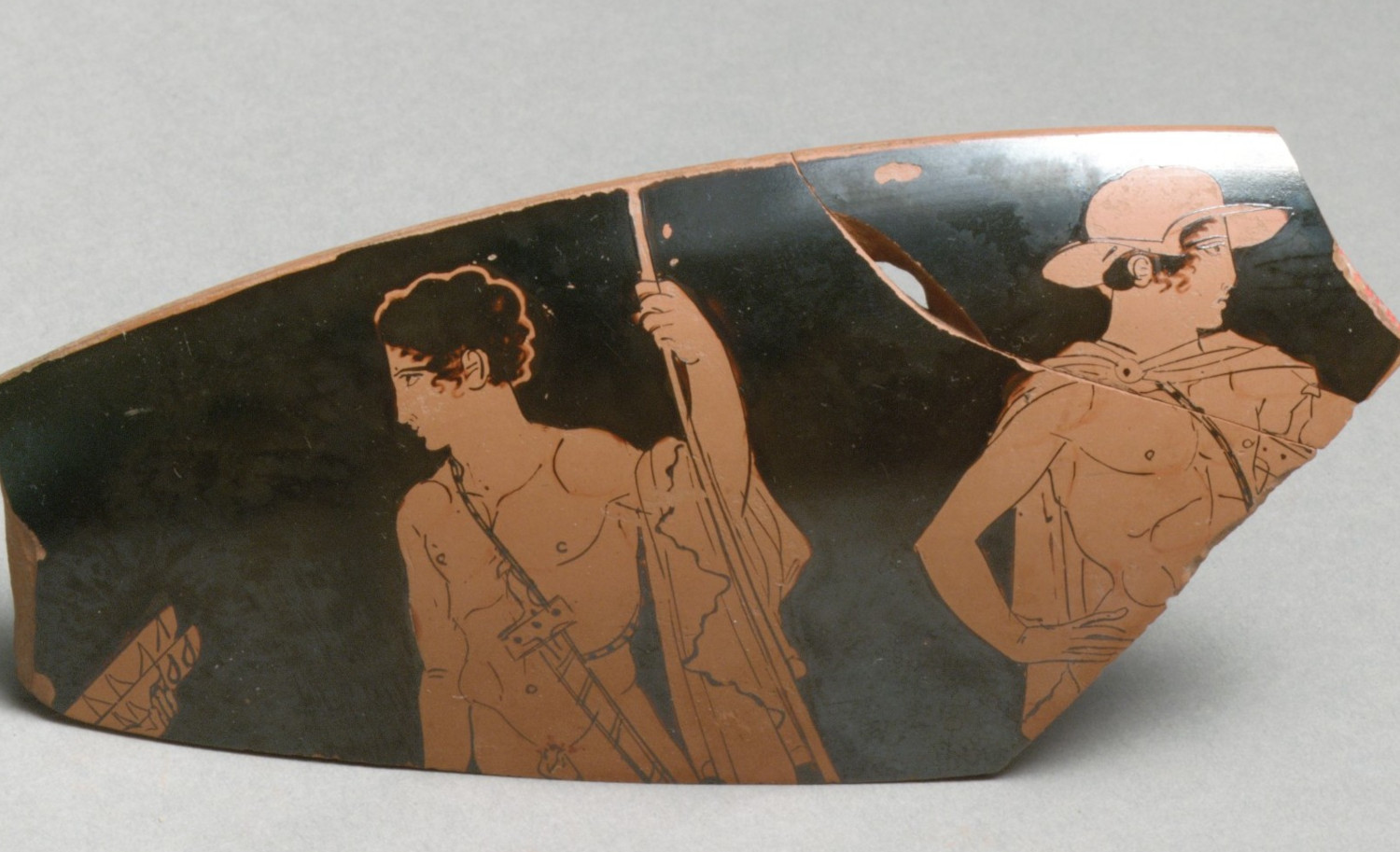
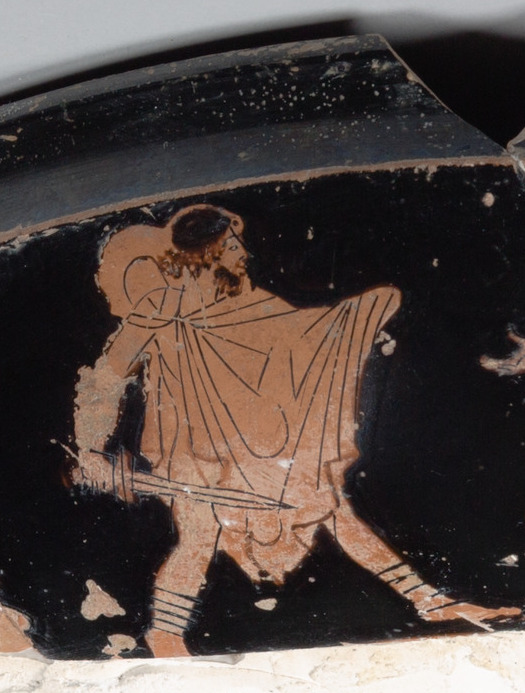
Petasos - ancient Greek horseman hat

Salvete Omnes,


ancient Greek Petasos was perhaps the first wide brim hat for the horseman, huntsman and traveler, be it of felt, leather or even woven from plant fiber. 


It seems that petasos originated in ancient Thessaly and for centuries was part of the Thessalian horsemans's suite:
petasos hat, chlamys(and perhaps an exomis or khiton/chiton(tunic)  underneath), 1 spear, 2 javelins, long soft leather boots and sword/sabre or a short sword. The very headgear was used by horsemen in Magna Graecia (Italy eg Tarantine Greeks) , Macedonians, Athenians, and later was transported along with the general pilos hat and Macedonian kausia hat to Asia, as far as northern India and Central Asia - Bactria etc. 


Petasos from Iran - VI-IV centuries BC ('Before Christ' not before C19 - :) )


various images from Met in NYC


nota bene,  a type of ancient horseman cloak - chlamys -  in ancient art - some examples

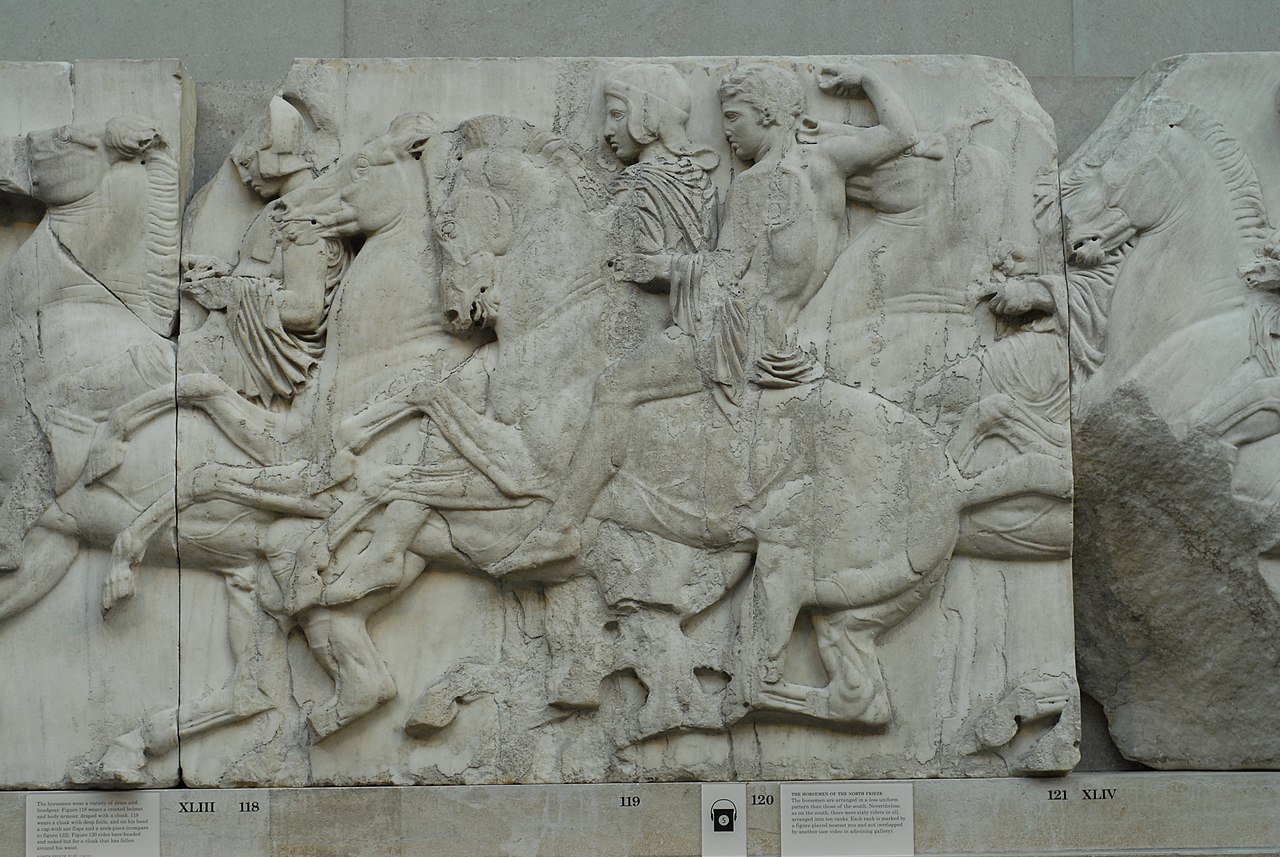
Parthenon frieze


from a sculpture (Mausoleum at Halicarnassus)  


 as reconstructed 


enjoy

Valete 
Wednesday, February 2, 2022

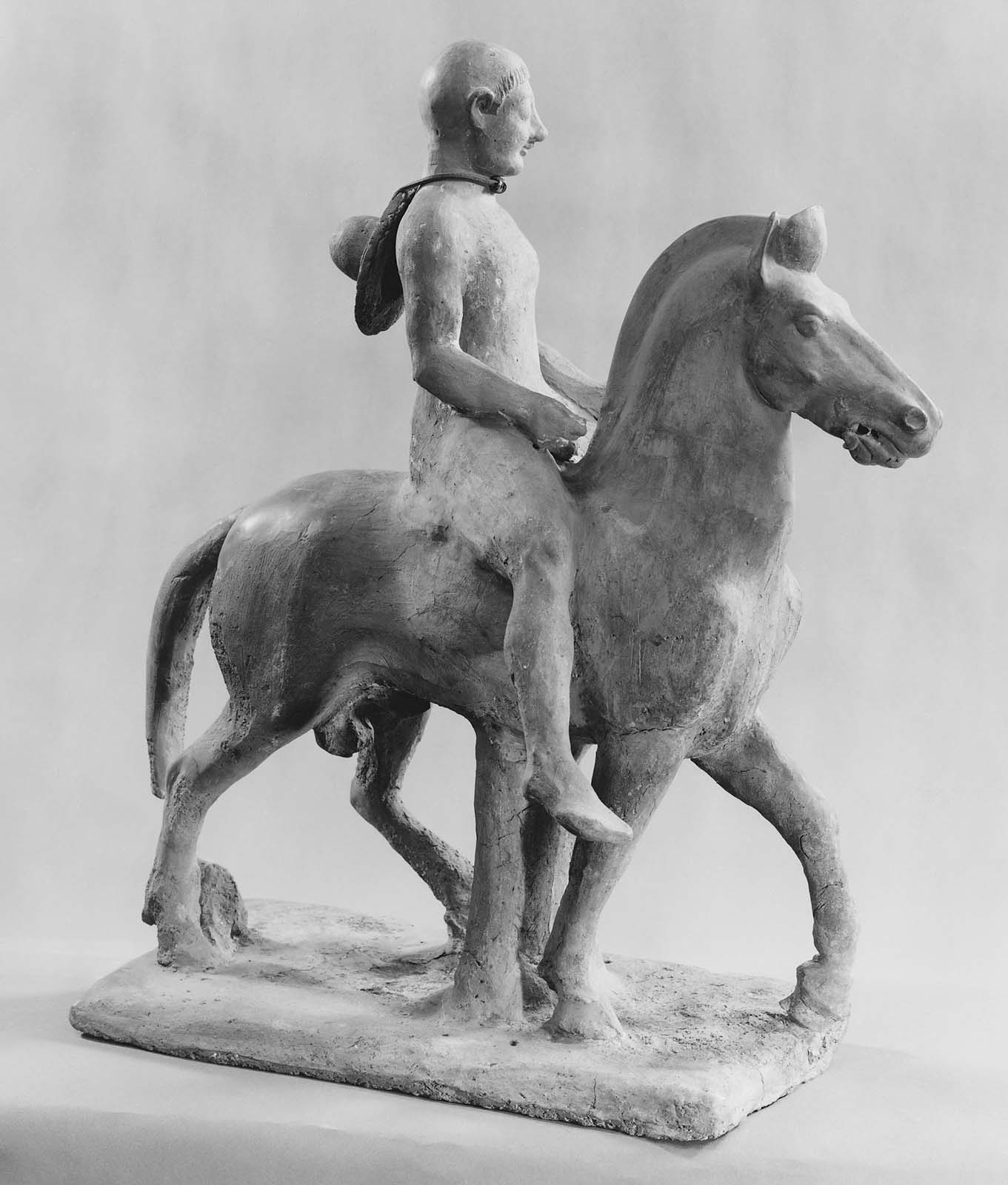
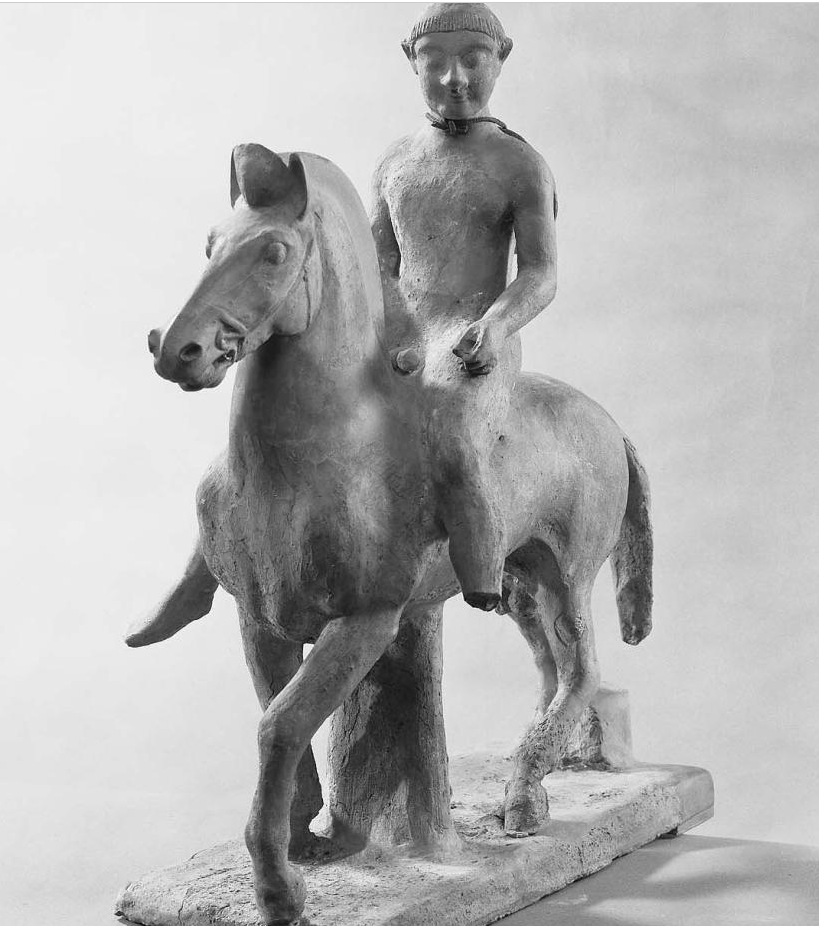
Terracotta horseman from Greek Sicily - Boston MFA

 Salvete Omnes,


In this post we will yet again canter to Magna Graecia, where Greek colonists from the ancient Greece proper, between the XI through V century BC, migrated and established city states all over  southern Italy and Sicily, in process of settling, expanding, conquering the native population and/ or merging with the indigenous people (the best example might be the kingdom of Bosporus in Crimea) and  creating great civilization and  plenty of great art.


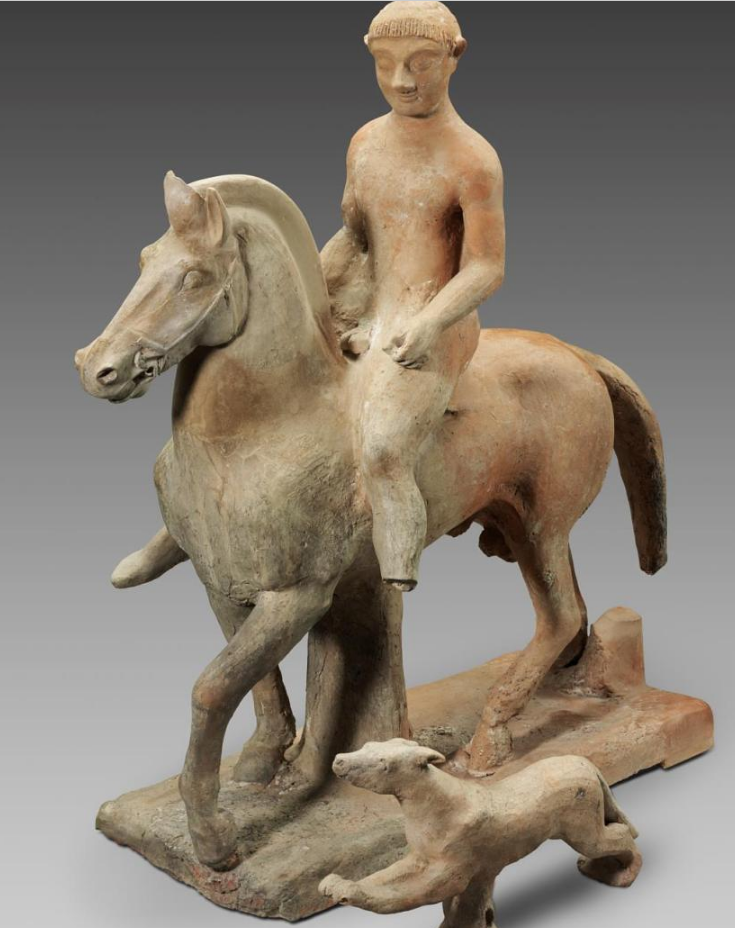
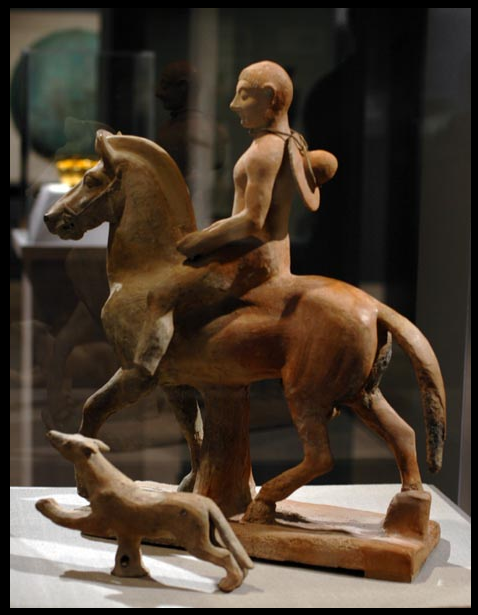
Allegedly from the beautiful island of Sicily comes one of the extraordinary late VI century BC sculptures - a hunter on horseback with a dog, Sculpted in terracotta, a bit restored, and still beautiful. 

 
Boston Museum of Fine Arts is the owner of this figure. On the linked page there is a bit of information about this piece and its peculiarities.


for further study, drawing and interpreting 

Valete
Tuesday, November 16, 2021

Cheiron - periodical on equine history with many libre articles

 Salvete Omnes,


another link today, and what a link it may be - the International Journal of Equine and Equestrian History titled 'Cheiron' offers many an interesting article.
The Vol 1 issue 1 - November 2021, - the publishers and editors have made all its content accessible for libre download.


So if you like your horse history or would like to learn some then do enjoy downloading and reading the articles.


Nota bene the name 'Cheiron' is a variation of the ancient Greek 'Chiron/Kheiron' - or a famous centaur of the ancient Greek mythology, teacher of Achilles. Also can peruse wiki gallery looking for centaurs.


Heracles/Hercules in this one below(from Napoli Archeo. Museum) :


Valete