Showing posts with label breastplate. Show all posts

Sunday, December 14, 2025

Tang riding horse harness terminology

 Salvete Omnes,


Tang Dynasty period in Chinese history is famous for the ceramics in shape of horse and horse & rider. 


I have a book - actually an exhibit catalog from  the Kentucky Horse Park (published 2000AD).
Title: The Imperial China, The Art of the Horse in Chinese (review). 
In the Chapter: The Horse in Chinese History by Bill Cooke (director emeritus of the International Museum of the Horse at the Kentucky Horse Park) there is a description of the Chinese terminology around the Tang Dynasty period. 


The author provided information on the horse harness terminology -

Jisheng on the crouper harness

Bridle- 'luotou' and the Bit - 'Youle' with cheek-bars - 'Biao'


Saddle - 'An'

Pommel and cantle saddle with tree bars

High pommel saddle with a saddle cover, saddle pad, saddle mud guard, and stirrups

Behind the saddle, to the saddle tree Tang saddlemakers added 4-6 straps hanging down the saddle pad

horse with a crenellated mane


Saddle-pad - 'cun' and  Saddle mud-screen -  'zhang-ni'


Saddle cover - 'Anfu'


Saddle cinch/girth - 'Fudai'

Breastplate/breast-strap - 'Panxiong'


Crouper/crupper - 'Qiu'


Apricot/peach leaf ornament - 'Xingye'


Cranellated /crenelated mane - 'three flower' 'Sanhua'


Bounded Tail -  'Fuwei'


Crupper saddle adornment -'Jisheng' (parasite), also a version known as 'Fire pearl ' - 'Hounzhu'


enjoy

Valete

Friday, January 17, 2025

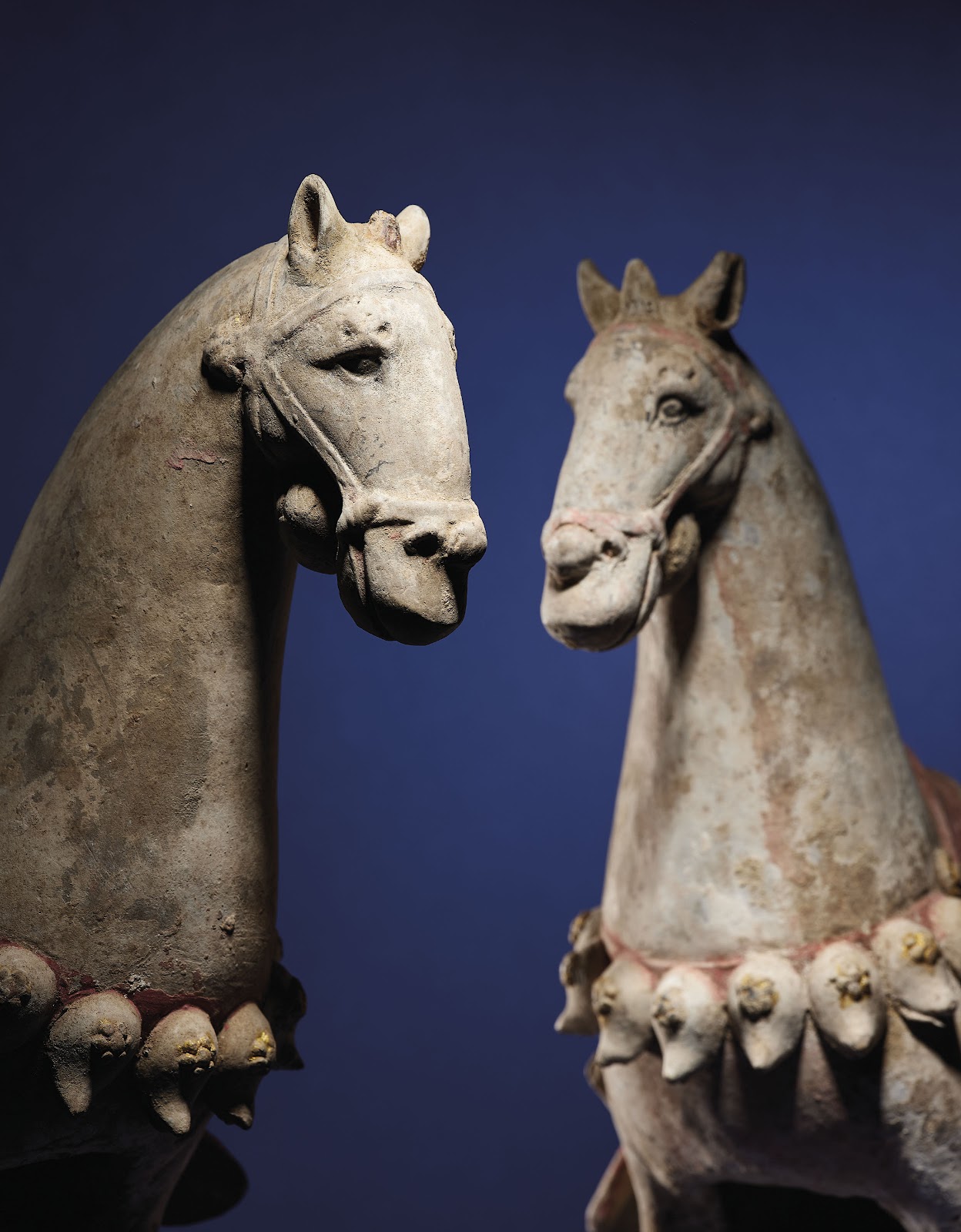
Eastern Wei - caparisoned horses

 Salvete Omnes,


a little visit to early 'Medieval' China - Eastern Wei Empire (AD 534-550) and their warriors and horses.


.

Eastern Wei, albeit short lived, gave us the peculiar sculptures  of fabulously caparisoned and harnessed horses , that where continued during the unifying Sui Dynasty period of the Chinese history, but the Eastern Wei gave way to Northern Qi imperial dynasty (ended in AD 589 by the Sui Empire). 

A Christie's' gallery - larger and full image here. 


A caparisoned horse with a very clearly sculpted saddle and stirrups -


-from this gallery.


Bonhams auction hourse - a Horse Gallery 


In these sculpted horses we can see many elements of the steppe horse harness elements that will endure for more than a thousand years until the modern age.

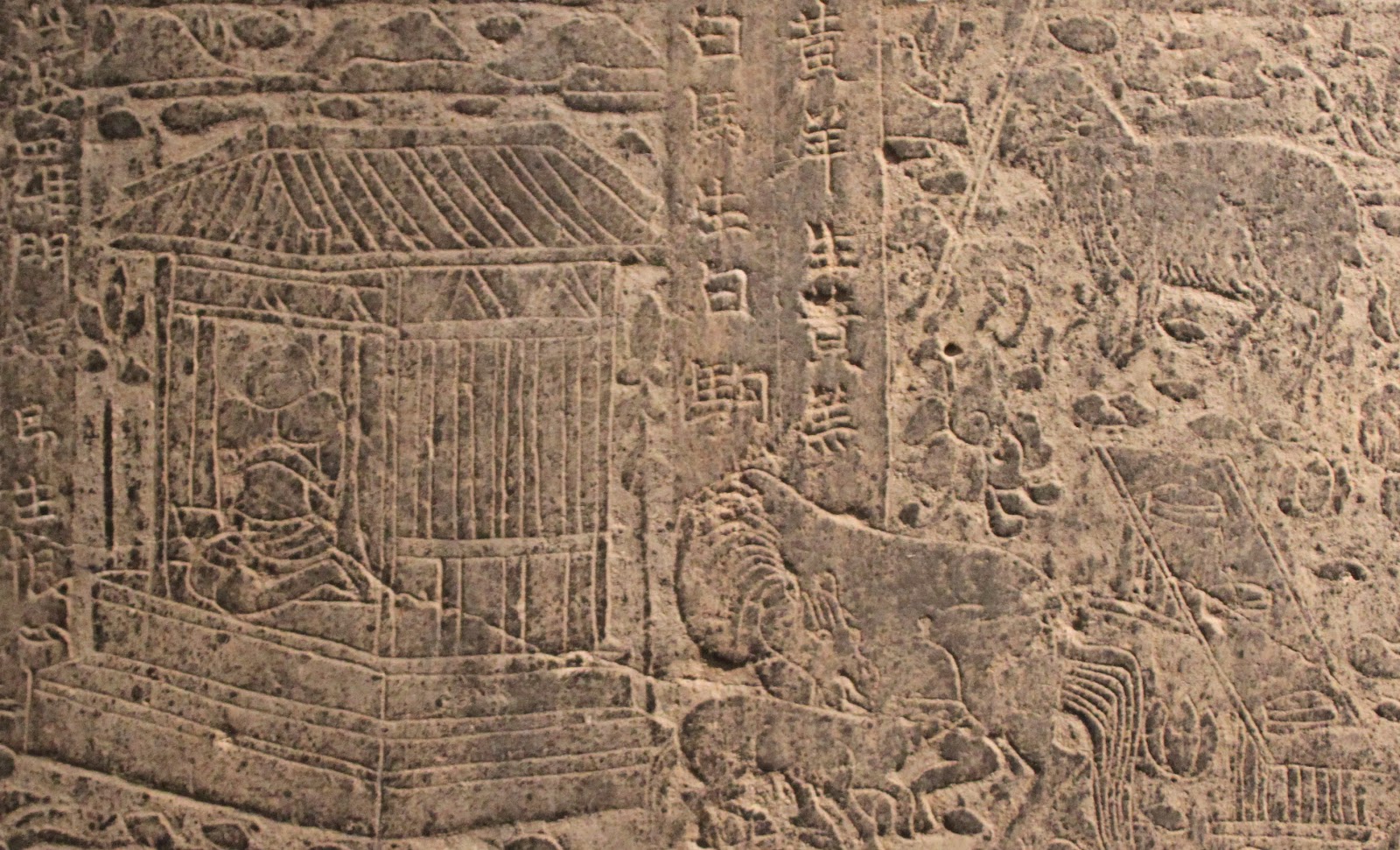
Eastern Wei Stele of 90 Secular Members, 543 AD

a mare with a foal

harnessed horses and carriages

a fine steed in a flying gallop

some personages 


warriors


camel - instrumental in the trade between the Central Asia, Northern Dynasties empires and eastern steppes and Korea.


oxen - 


enjoy

ps 

I will do a post on the Northern Wei and Northern Qi - I hope

Valete

Tuesday, May 23, 2023

House of Savoy I

Salvete Omnes,


another quick post of more than several future posts dedicated to the equestrian portrayals of  some members of the House of Savoy, an Italian dynasty that is still going on today. Among other deeds and actions they were crusaders during the Age of Crusades - here I always refer you to Helen Schrader, who researches the Outremer  and writes both non-fiction and  'awfully' engaging novels about their history. 

The Savoyards claimed titles to the Kingdom of Jerusalem, Kingdom of Cyprus, and Armenian Kingdom of Cilicia.


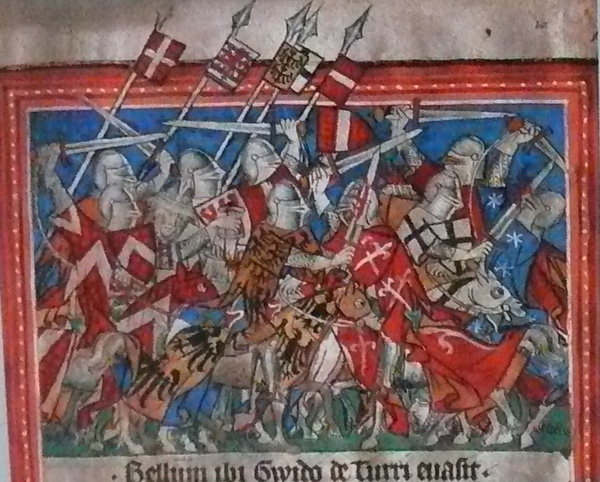
We will start with  some heraldry as evidenced in their medieval seals and one miniature - the dynasty was founded by Humbertus I who ruled in the County of Savoy, then a state within the Holly Roman Empire.


40 years of rule 

Thomas, son of Humbertus III 
Peter 


Amadeus V 

                                                                     Amadeus V in this XIV century miniature 

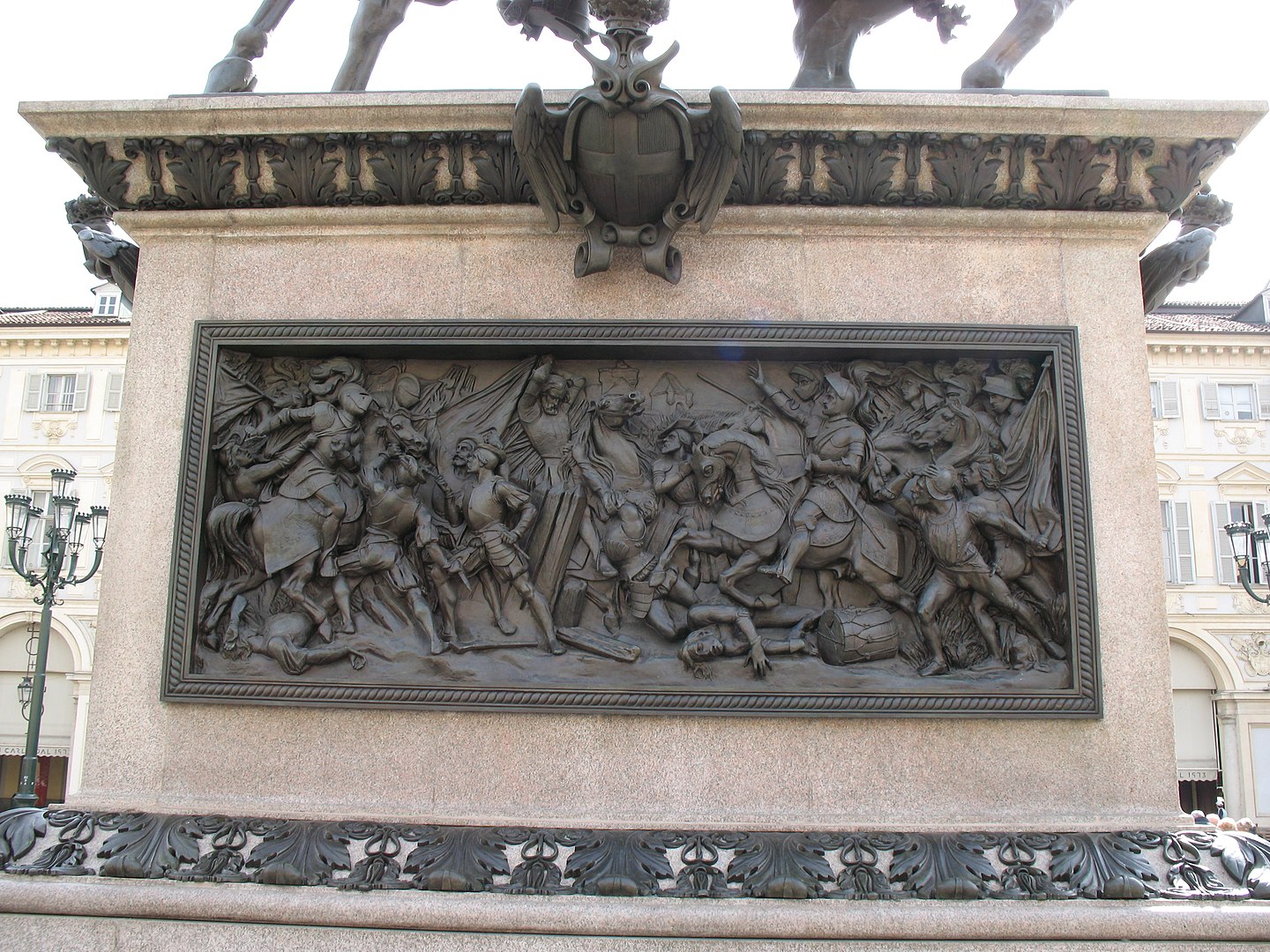
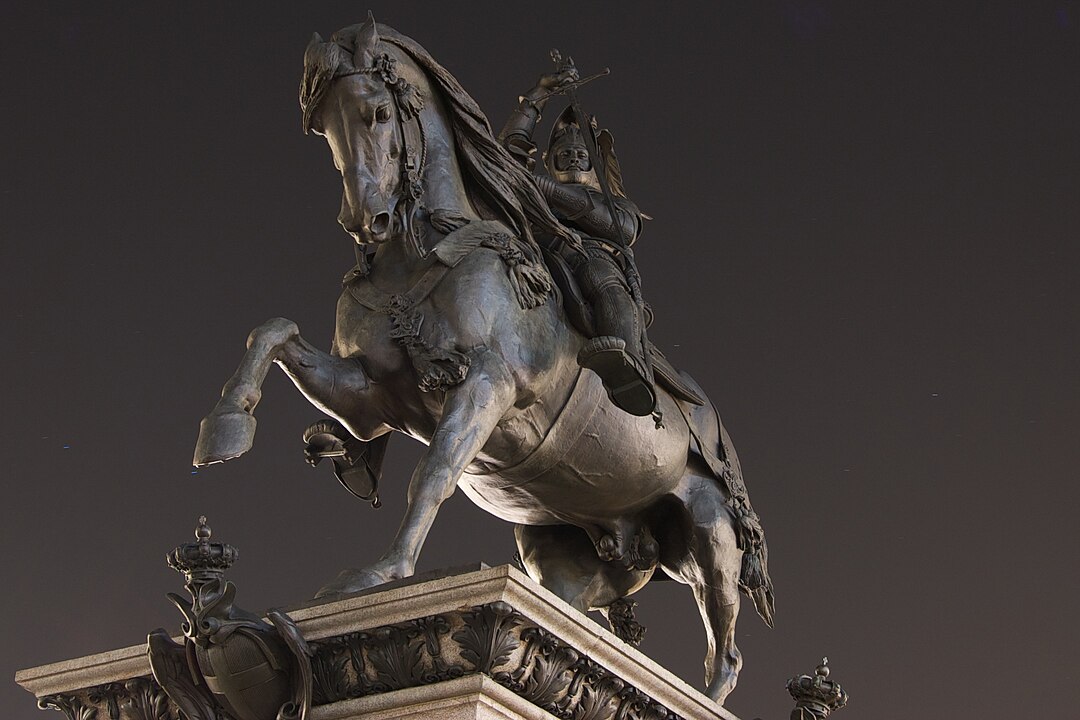
and then move to the transforming XVI century and this duke - Emanuele Filiberto I (1528-1580AD) on horseback in the full display of the Renaissance horsetack and rider's attire. 

woodcut circa mid XVI century.
his portrait painted by maestro Paolo Veronese 


this ruler has been subject to an equestrian monument in Torino (Turin), Italy-EU - erected 1838AD  


to be continued - 
ps
all images come from Wiki Commons. 

Valete