Showing posts with label stradiots. Show all posts

Tuesday, August 4, 2026

Ottoman Turkish horsemen - Niklas Stor

 Salvete Omnes,


summer is in its dog days - 
I corralled some woodcuts from a German artist Niklas Stor (1503-1562)  depicting the Ottoman Turkish warriors. During this period  the Ottoman empire, Hungarian kingdom and German Reich entered into almost continued warfare. 

Master Niklas' work, in the tradition of master Albrecht Durer, provides plenty of information on the Ottoman riders and their equipment. 


.


.
.


. jasyr ( esir/asir - captives in captivity)


two camels(Bactrian & dromedary)  


& a giraffe 


enjoy

Valete

Sunday, March 31, 2024

ἀνάστασις τοῦ Ἰησοῦ - Happy Easter- Wesolego Alleluja

 Savete Omnes,

Tobias Frendt pinxit


Ἀληθῶς ἀνέστη!, romanized: Khristós anésti! - Alethós anésti! -
Paschal Greeting 

Christus surréxit! - Surréxit vere, allelúja ("Christ is risen!" - "He is risen indeed, Alleluia!")

today is Easter - Happy Easter to all 

lots of hunting spears 


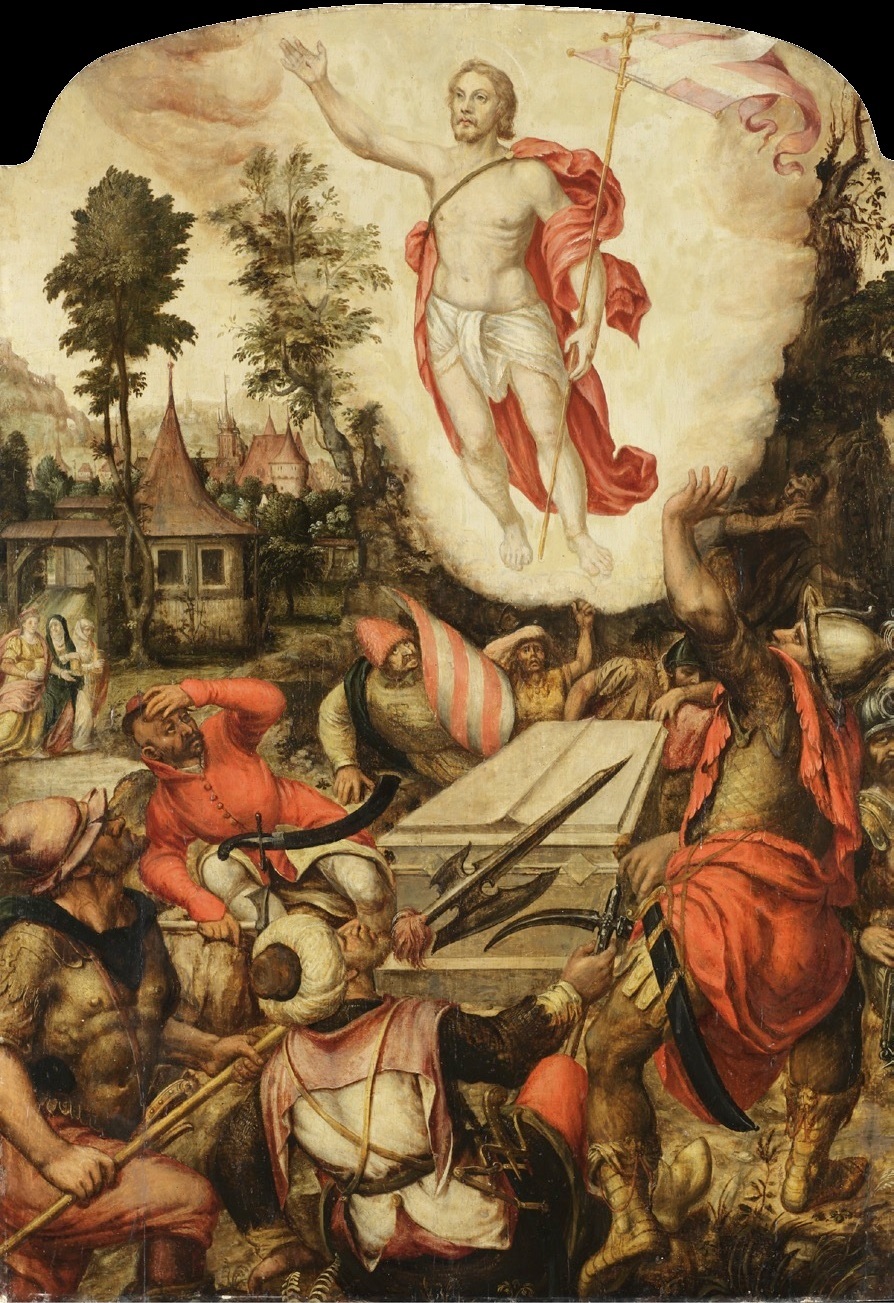
unknown German  master - Resurrection 
.
Cranach the Younger - horse and armor detail 

Wesolego Alleluja - Feliz Pasquas 

Valete

Sunday, February 11, 2024

A shield, lion pelt, & crane wings of ambassador's valet

 Salvete omnes,

today I prepared a sort of info-graphic, where we can learn and understand a little more about one of the riders in Stefano della Bella's print - Entry of Jerzy Ossolinski into Rome, AD 1633.


Perhaps in the future more this sort images will appear on my blog - what do you think, dear Net travelers? 

enjoy

Valete

Sunday, September 24, 2023

Hans Suess von Kulmbach - armored knights, horses, early hussar and stradiots lancers

 Salvete Omnes,


a little canter to early XVI century Polish ream where Northern Renaissance art life flourished in the old capital, in and around the royal court of Sigimund I Jagiellon. 

Apart from Michal Lancz there was another early painter in Polish Kingdom who also painted early hussars, stradiots and Rac, and knights and saints.

Northern Renaissance painter Hans Suess von Kulmbach was a prolific painter and draughtsman. 

In the old Limbach's church, nowadays a Lutheran Church, there is a surviving altar with his painting showing four military saints in period plate and chain armor-  


During the period of 1509-15 he was active in Krakow (Cracow), but returned to Nuremberg, where he died in 1522AD. He painted figures that resemble Rac or stradiots of the period. 


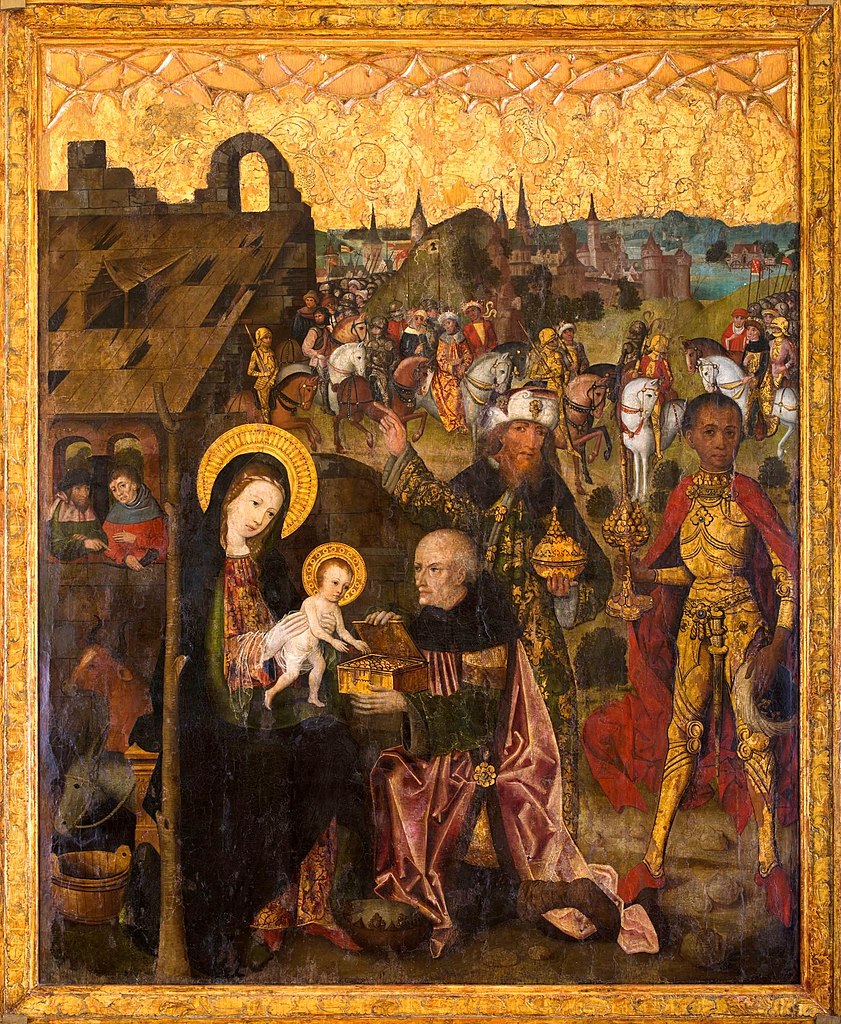
and the Adoration of Magi, in full glory at the top of this post,  is a mine to be explored

period bridle and curb-bit a a detail of the saddle's pommel


straditot and Rac lancers, ahorse with a curb bit

rowel spurs, langes messer and a stradiot attire

rowel spurs 


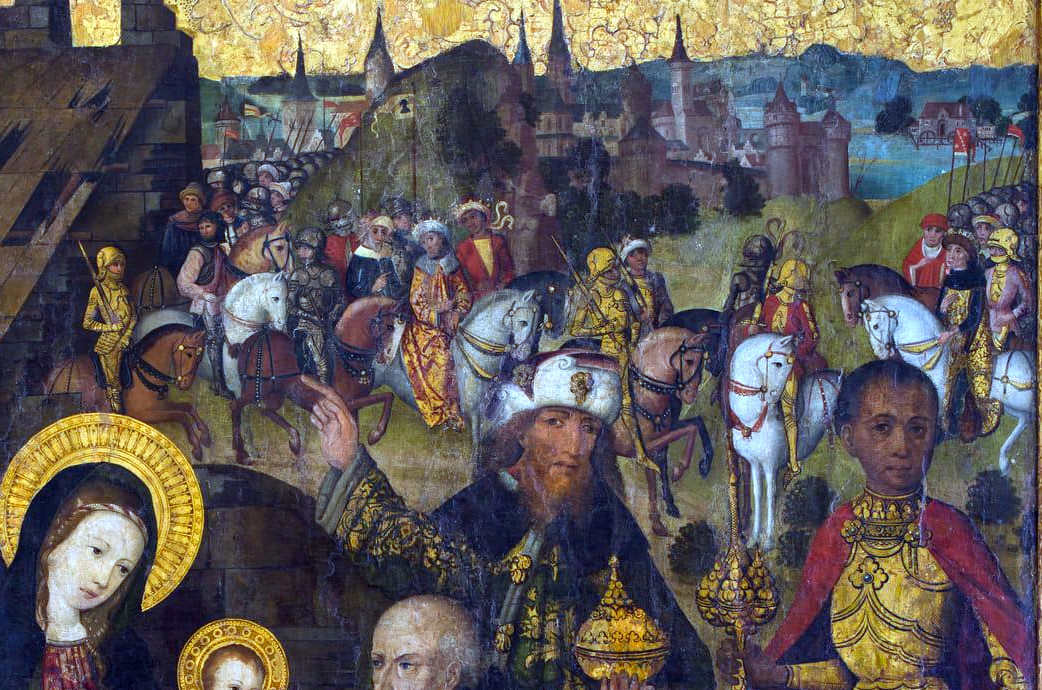
There is a painting at the old town of Sandomierz - Diocesan Museum. Probably painted in master Hans Suess' workshop in Krakow. But it closely follows the original master Hans' work.  Again, Rac lancers, stradiots and perhaps even Tatars (in those felt or sheep-skin  conical hats) . My thanks to Radoslaw Sikora for allowing me to use his photo of the said painting.


a sabre 

Polish bridle?  a curb-bit and double reins
lancers, their hussar lances with lively pennons 

more lancers and horsemen, including one Tatar handling the camel, a and 2 Tatars with arrow quiver? 

enjoy

Valete

Friday, September 8, 2023

Orsza 1514-2023 arms and armor of non-hussars

 Salvete Omnes


I have written a little bit about the Orsza 1514 battle - today's is yet another anniversary - and various aspects of Polish military of the early XVI century, mostly from the  early winged hussars position in that battle and the greater conflict.. Today we are going to move away from the famous Orsza battle painting towards various sources from the period, predating the famous Warsaw National Museum piece.

So during this period the principal side arm of the Polish knights, men-at-arms, horsemen and of some infantrymen  still was a straight sword - 


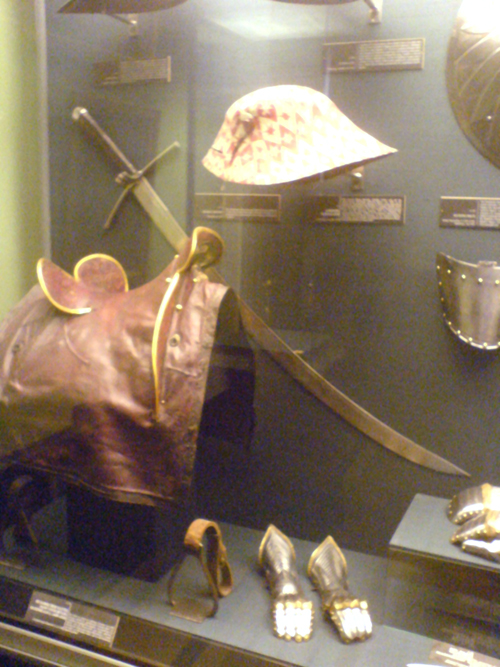
Salet helmet, plate armor, 'messer sword' and long sword

many infantrymen were using a German messer - of the longer or shorter blade, with sabre-like hilt - like the one from Vienna


Speaking about the infantry they were using crossbows 


and early arquebus firearms. 


Rotameisters and aristocrats, men-at-arms and knights would have worn plate armor of the older, Gothic or Italian style, or the newer Maximilian's style - like this St. George in Durer's print


Non-hussar Polish cavalry could have looked more like the Durer's knight from his famous engraving

Cornelis Van Dalem's painted version

There is a tempera panel painting from a Krakow workshop  circa 1500, now held at the National Museum at Poznan, that shows various knights and men-at-arms in plate of this turn of the century period.


enjoy - to be continued 

by the way you can revisit my post about the Behem Codex - to see some period iconography from the Royal Court.

Valete