Showing posts with label Jan Sobieski. Show all posts

Thursday, September 17, 2026

Battle of Vienna 1683 - a print

 Salvete Omnes,


5 days ago there was the  343rd anniversary of the battle of Vienna (1683AD).

Vienna city-fortress 


In order to commemorate the battle you could enjoy the period print by Justus van den Nypoort and Johan J. Hoffmann from the Austrian national library.  


enjoy

Valete

Tuesday, November 11, 2025

Chocim 1673 AD - Jan Sobieski's infantry and cavalry victory

 Salvete Omnes,


On November 11, 1673AD Polish-Lithuanian Commonwealth armies under the command of Crown  hetman Jan Sobieski, aided by many capable senior commander like Lithuanian grand  hetman Michal Pac and junior commanders like Mikolaj Sieniawski, destroyed the Ottoman army, commanded by Hussein Pasha,  at Chocim (Khotyn in Ukraine now, by the will of Joseph Stain since 1945). Our king Michal Korybut Wisniowiecki died on Nove.10, 1673.
Polish historian D. Orlowski estimated, in his popular book Chocim 1673 (2007), that there were 27 thousand Crown soldiers, the Grand Duchy of Lithuanian brought close to 7 thousand soldiers. In total some 34 thousand soldiers, 65 cannons and 1 mortar. There are still the armed servants from the noblemen soldiers retinue, and we don't know how many of those participated in the storming of the Ottoman earthworks and camps. We have to take into account the 4-5 thousands of the Moldavian and Vallachian soldiers who came over to the Polish side with their rulers. Their infantrymen must have participated in the storming, capturing and dismantling of the Ottoman earthworks.

Ottoman army under Hussein Pasha, according to the Polish historians, were about 30-31 thousand strong, well provided for with munitions, supplies and fodder for the winter. They had a 25-30 artillery pieces and were in contact with their commands in Moldavia and  Kamieneci Podolski, and it is thought that the some Moldavian and Vallachian troops who had stayed with the Ottomans. They could not count on the Tatars, because these Ottoman vassals had been attacked by the Kalmucks from the  Don steppes, and Zaporozhian Cossacks from the north and west. 

I should add that before the battle there were tournament like duels and fights (harc in Polish) between bravest and most audacious horsemen from both sides. Two Polish notable knights died in these duels on the 9th of November, namely the Sieradz sub-cupbearer Jedrzej Modrzewski and leutenant Florian Maj. Polish-Lithuanian tried to take the earthworks defended by the jannisaries on the 10th but after a number of  very bloody engagements Polish attackers had to withdraw from the Ottoman fieldworks. Polish side maintained formations and martial spirit during the night of 10/11th  and thus Ottoman side had to stay in armor and with arms. 

In the morning of the 11th Polish artillery opened fire - the chroniclers say a quarter hour in duration of artillery fire. At 8 A.M.  in a surprise attack the  Polish infantry regiments and companies, camp servants and dragoon companies stormed the earthworks. with Jan Sobieski with a sabre in hand walked ahead of   his own dragoon regiment, yelling - 'for the love of God, for the [Christian] faith, and churches, for Amor Patria (Love of Homeland), with hope in God attack them courageously.'  many great infantry officers and other commander like the Crown artillery commander Marcin Katski,  Stefan Stanislaw Czarniecki, Korycki, Zebrowski, Denhoff, Tetwin, Heydepol, Pietrzykowski, etc. The rest is history 
We should note that Hussein Pasha, with about 5 thousand spahis cavalry, had made across the Dniester bridge before it collapsed, and found refuge in Kamieniec Podolski, with Halil Pasha.  But 8 thousand spahis perished, 6-8 thousand of jannissaries were cut down, many good commanders were killed or died from the wounds. 3000 Ottoman soldiers were taken prisoner.  
Both the small fort on the Turkish side of the river and the Chocim castle (Nov 13th) were taken.
Jan Sobieski marched his Crown army into the Turkish lands, Moldavia, and the war went on, and it was not going as good as the victory at Chocim promised. Moldavia was to become the object of Sobieski-Ottoman struggle and warfare for the next 20 odd years. But that is for another post. 

 
 The next Spring Jan Sobieski would become Jan III after the free election by the noblemen at Wola, then a village near Warsaw.

Saint Martin in the foreground, with Jan Sobieski and his army at Chocim in the background. 

 I played a little bit with this Vasa battle-flag and changed the Vasa coat of arms to Janina, Sobieski family coat of arms. 


. Jan Huchtenburg painting battle  at the National Museum, at Warsaw.


.

Jan Pasek, who was not at the battle, observed  in this Memoirs:   'During this[1673] the Turks did no leave the field [of war], but entrenched themselves at Chocim and encamped there. [..] with the Tatars already having gone from them. In inaudio exemplo (unheard of example) our side decided to take the entrenched camp, first they came close to the fieldworks, had the entire camp circumcirca (all around) surrounded. The  infantry climbed the walls' of  Turkish earthworks, and destroyed these walls nemine reclamante (with nobody protesting), since the Turks did not even fired their artillery, yet they had so many artillery pieces [at their disposal]. Our Lord must have blinded the pagans and taken away their hearts[courage]. for they received our men, who were clamoring to get to them, as modeste as if a guest had been arriving and not the foe.

Polish researcher-historian Zbigniew Hundert published an article [in Polish] on the winged hussar companies at Chocim 1673 - available on Academia

Like I write above, many thousands of men and horses died in this struggle, and when the bridge across the Dniester River, from the Turkish entrenched camp to the Moldavianside where there was a small Turkish fort, collapsed under the weight of men, horses and equipment, many more Ottoman soldiers and servants perished in the icy waters of the mighty river. Many perished from the Polish light cavalry pursuit and also from the wrath of the Moldavian peasantry. After the victory and march either back to Lwow or march into Moldavia,  the Polish-Lithuanian camps saw many thousands of horses die from the  very cold weather conditions etc. 

Perhaps some other time I will write about some aspects of this battle - like the booty and captives and animals taken by the victorious side.

Happy 11th to all Polish people around the globe and to all Veterans

Valete

Sunday, October 12, 2025

Around Jan Sobieski part III - Miaczynski the cavalry commander

Salve, 


The anniversary of battle of  Parkany (9th of October 1683AD) caused me to bring up the person of  one of the most talented Crown army  officers of the king Jan III's reign.
Atanazy Walenty Miączyński, Suchekomnaty coat of arms (1639-1723), voivode of Wołyń (Volhynia), venator Regni,; starost and court treasurer,; pułkownik (commander of the pułk which was a larger than banner/company tactical unit of the pre-1764 Commonwealth armies) lived a long life that was spent in war camps war, in the diplomatic journeys and courtly life (and thus obviously he had to be part of many courtly intrigues). 

 He must have been a fine cavalryman as a young warrior, and pan Antanazy rather quickly and early become a commander of cavalry, eg we know that in 1673 he was a rotameister(captain) of a Vallachian light cavalry banner that took part in many a battle: eg at Bracław (AD1671) the cavalry  banners he commanded blocked the Tatar's retreat thus allowing the complete rout of the Tatars during that engagement; then he commanded cavalry units at  the Podhajce fight; fought under Jan Sobieski   at the war camp of Żurawno, and  while pursuing the fleeing Ottoman soldiers during the final stage  at the battle of Chocim (Khotin) AD 1673 he was seriously wounded -    it is good to remember that the Ottoman cavalry and warriors were terribly skilled in hand-to-hand cavalry combat,  and their swords were most deadly in those close combat encounters. 

Battle of Vienna 1683 campaign - the turning point of his courtly career -  pan Atanazy entered the campaign commanding  3 pancerni cavalry companies (his own and his brothers). He also served personally on the king, along with Andrzej Modrzejowski, who got killed in the preliminary royal winged hussar banner charge against the Ottoman camp. During the general advance on the Turks he captured the Grand Vizier's tent where he took into custody of the famous, with sword Zulfikar (Zulfiqar), banner. 

Then, after the battle and capture of the enemy camp, our king Jan III sent him to pursue the Ottoman forces feeling away  across the river, giving him the 'pulkownik' command of the Polish army's light cavalry banners. 

During the first battle (6th of October) of Parkany he helped to save our good king's life. As we can see he was rather busy, active and very resilient, surviving mayhem and hand to hand combats, camp sickness, hunger, and successfully  commanding larger tactical cavalry units.


The war against the Ottoman Empire and their Tatar allies continued and then came the Polish campaigns to recover Polish Crown Podolia and the fortress of Kamieniec Podolski, fought hard and with much of great war effort, i.e, money and  human and equine participants (and animals for consumption only, including oxen and sheep, and fresh pork where available). The continuous war against the Ottomans saw pan Atanazy grow up in significance within the court, eg during the 1686 Moldavian campaign he was part of the king's war council, as he had become one of the most experienced mid-level commanders of the ''Respublica'' army.

He was significantly involved in the defeat of the Tatars during the winter  battle of Lwow(1695), one of the astonishing feats of audacity, bravery, strength and fury on the part of the nomadic Crimean Tatars. 

 During the reign of the  next Commonwealth ruler, our king Augustus the Strong, when the Great Northern War already had erupted in our part of the woods and plains, he also took to the field, eg commanded units during the Kliszow campaign,  later remained faithfully in the much defeated and troubled king Augustus' camp and that in spite of the Swedish depredation pinpointed against his own estates and his 'people'. 


During his long life he built a castle at Maciejów (now in Ukraine) while at his estate at Zawieprzyce founded a hospital for the soldiers wounded during the wars with the Ottomans and their allies, the Tatars. 


famous painting by Jan Matejko 

Valete

Thursday, October 9, 2025

Parkany II - 9 Ocotober 1683 AD

 Salvete Omnes,

the routed Ottomans' fatal crossing of the river Danube - detail from a painting by Pierre-Denis Martin


today we celebrate the anniversary of the second battle of Parkany - 9th October 1683AD.

on the left bank the fortress of Parkany or today's Sturovo in Slovakia opposite Gran in Hungary

.


Parkany II was mostly a cavalry battle, roughly some 30-plus thousands on each side, although some sources say 15-plus thousands of cavalry and 1000 Janissary on the Ottoman side. The Ottomans had a camp with supply train with the swamped banks of Hron river behind them.


Victorious engagement for the armies of  our Polish Crown and Hapsburg Empire against the Ottoman Imperial army commanded by seraskier Kara Mehmed.
Hapsburg army was commanded by prince Charles of Lorraine, husband to the widow of our king Michal Korybut.  Overall command belonged to Jan III.

Winged hussars shock tactics shone in this battle - skillfully managed by our king Jan III. 

Jan III placed prince Charles' forces - infantry and artillery - in the center of the allied army, his left wing under hetman Stanislaw Jan Jablonowski, and the right wing under Hieronim Augustyn Lubomirski, here also was the command post of king Jan III.  Around noon the allied army advanced and came up to the enemy lines, about 1,5km from the Parkany fortress. Then the Ottoman forces attacked furiously and charged, mostly the left wing, according to Dupont, king's secretary, at least ten times they charge, but the center was protected by the portable devices known as cheval de frise, while Jablonowski counterattacked with his Polish cavalry supported by the Imperial cuirassiers.  King's left wing moved forward breaking the right wing of the Ottomans and causing panic that ended in a rout. Most panicked Ottoman cavalry then tried to swim the Danube, a huge river at this juncture, and drowned in process. Serskier Kara Mehmed did save himself but his command was destroyed. 
The battle resulted in a complete annihilation of the Ottoman army - depriving the sultan  of his best sipahi cavalry. 

Pierre-Denis Martin's full canvass showing the battle


Altomonte also painted  this monumental canvass - 


Parkany frieze from  the royal Wilanow Castle

Monument to king Jan III Sobieski in Sturovo


ps.
there are some interesting primary sources to this engagement, including three Ottoman chroniclers. 

enjoy

Valete

Friday, September 12, 2025

Vienna 1683-2025 - horses

 Salvete Omnes,


today we commemorate the battle of Vienna 1683 -  I have written many posts on the battle, and I am sure will write many more, God willing. 

I would like to commemorate the struggle with the images of horses from the period paintings, mostly from this one - Anonym Entsatz Wien 1683 (painting in Vienna , Austria). 


Many thousands, perhaps a hundred thousand,  of horses participated in this battle. Horses on both sides suffered from lack of adequate feed. Days before the battle the Ottoman side had to take  their horses across the  Danube River to pasture and hay cutting parties roamed further and further from the besieged city and their own camps. During the battle some horses died from wounds but many more, especially of the Polish cavalry and wagon trains, died from malnutrition and near  starvation (the last couple days before the battle they ate tree leaves or nor food at all,  ). After the battle there was very little fodder  in and near Vienna, captured Ottoman camps had stores of fodder but they were wasted by the pillaging victorious soldiers,  while mostly Polish forces captured more than 20,000 animals in the Ottoman camps, including some very fine Turkish and Arabian noble horses.
Imperial bureaucracy was slow to deliver hay and grain to the encamped armies, while the armies  immediate supplies for men and horses. Only when the Polish royal army decamped away from Vienna and entered the country near Pressburg (present Bratislava) they had enough fodder for their horses - but then many Polish soldiers were sick with fever (bloody dysentery) and dying from this plague.
There was more fighting to be had in October against sultan's vizier Kara-Mustafa and his armies. 

Valete

Sunday, June 2, 2024

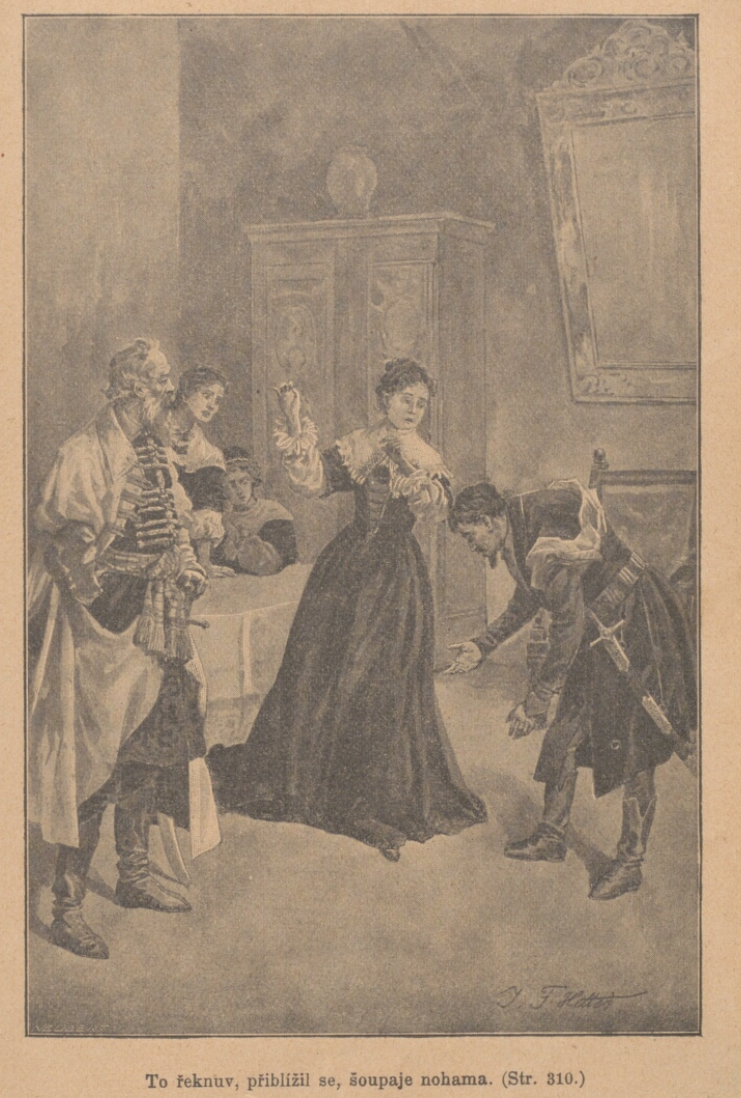
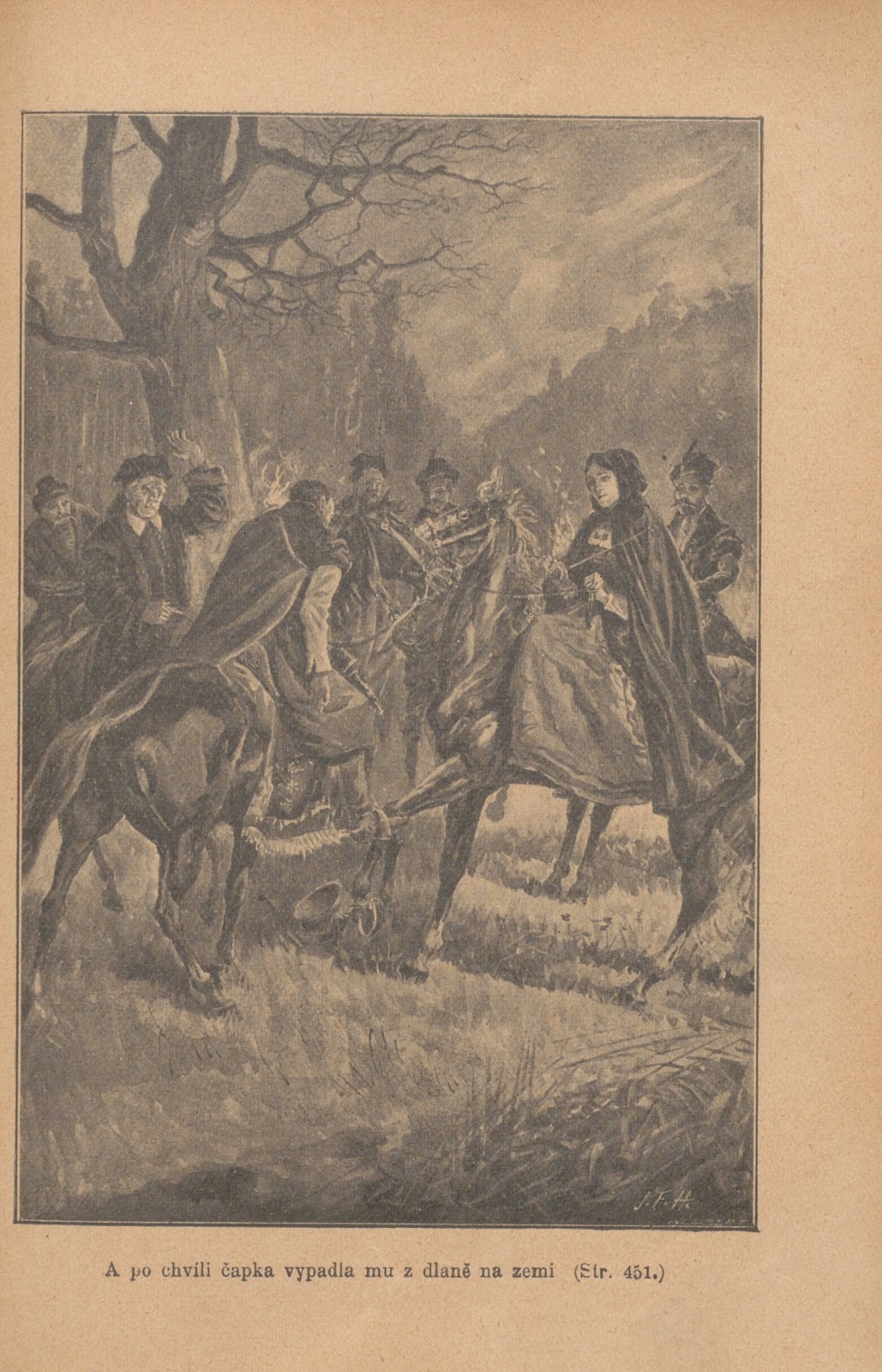
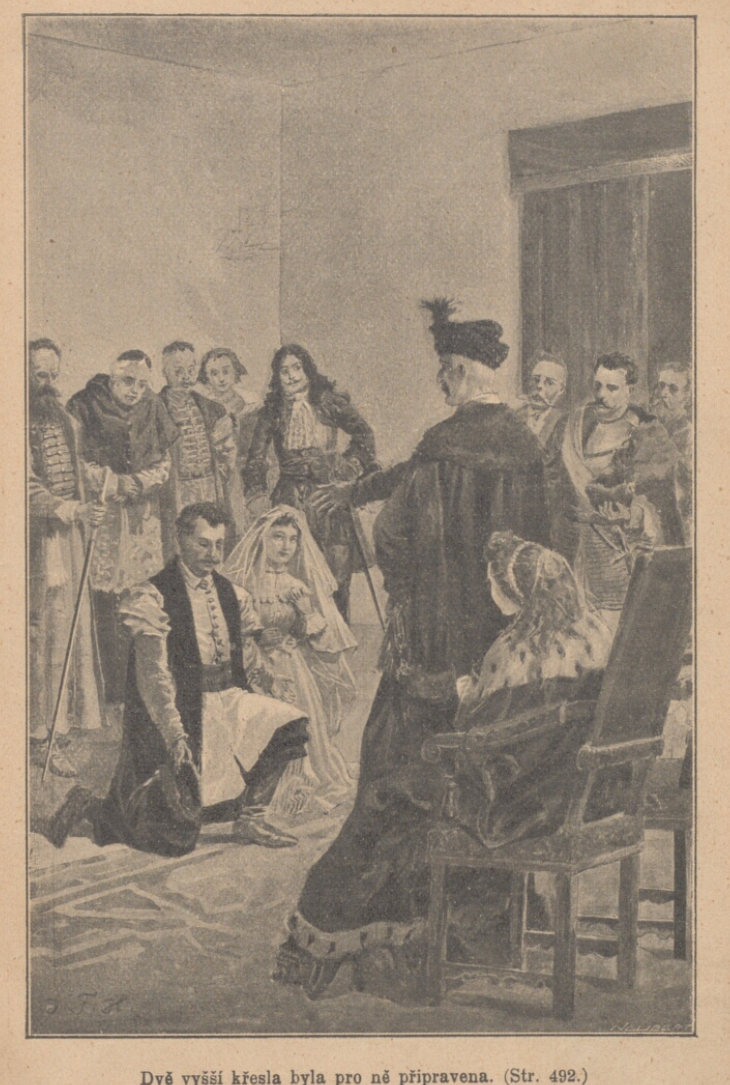
Na Poli Slavy - On the Field of Glory - Henryk Sienkiewicz

 Salvete Omnes,


new month has arrived - hurrah - the Northern Hemisphere calendar summer only 20 days away

back to the  Czech illustrations of Henryk Sienkiewicz's novels. -


this is the Na Polu Slawy - On the Field of Glory (Jeremiah Curtin translation) - of 1906AD. Published in Czechia in the same year as Na Poli Slawy.


From the National Library of Czechia I selected some plates from the 1906 edition.


Illustrations by maestro  Josef Frantisek Hettes.

Enjoy

Valete