Salvete Omnes,
Battle of Maloyaroslavets - 24-25th of October 1812AD.
 |
| Eugene de Beauharnais |
I was going to commemorate this battle of the Napoleon's invasion of Russian of 1812, but did not get to it in time. So here it comes today -
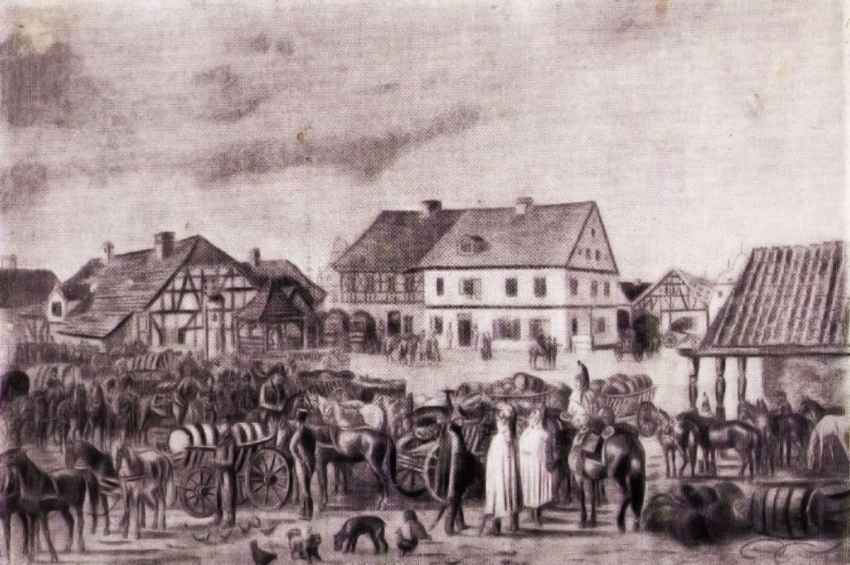
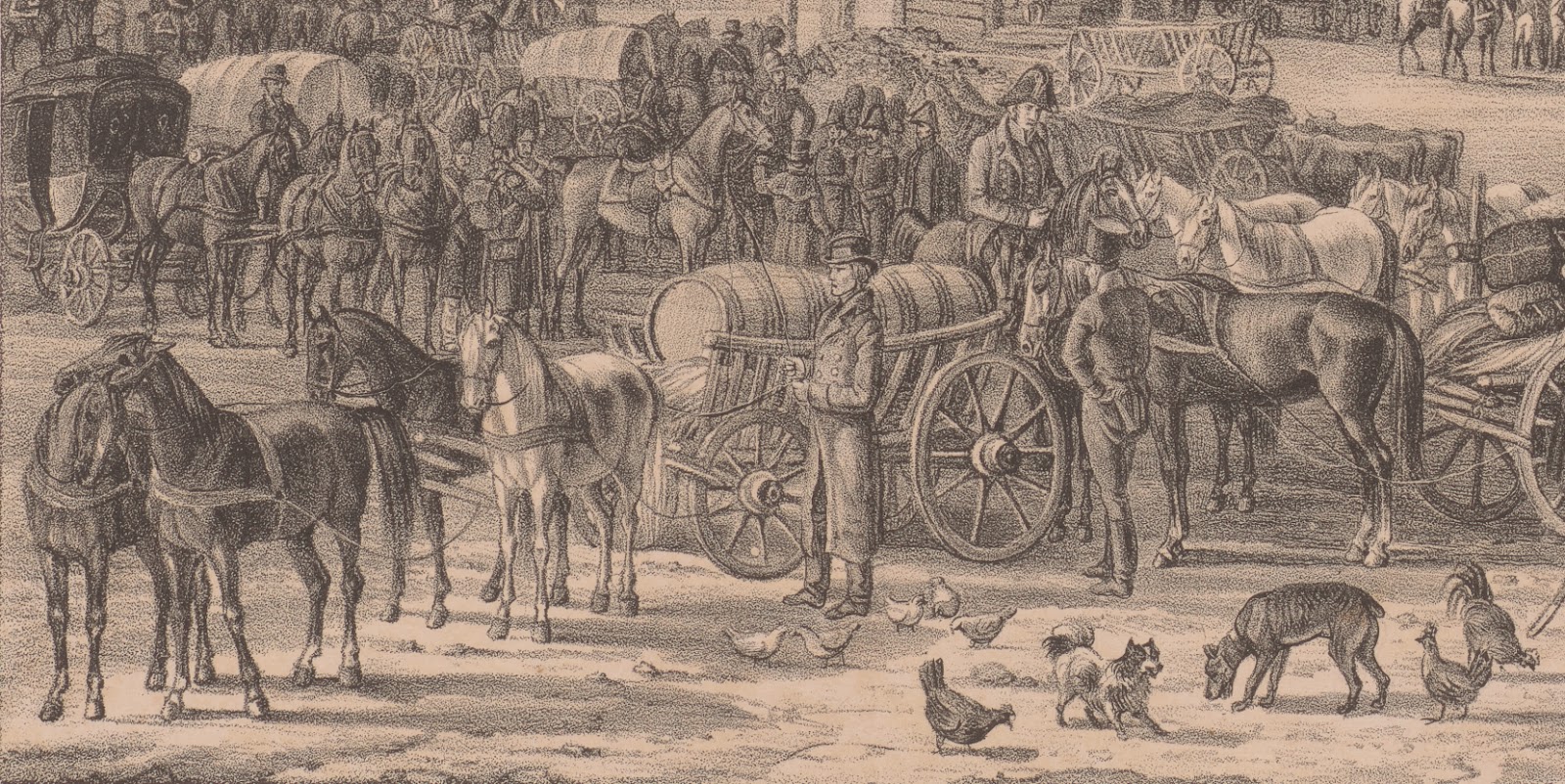
On the 19th of October Napoleon's army, occupying whatever was left of Moscow, was to begin marching in the direction of Kaluga, on the so called Kaluga Road, the highway that had not been subjected to ravages of the invading French and allied corps. Officers and soldiers acquired between 15 to 20,000 wagons and carriages pulled by horse and perhaps oxen, those vehicles full of war trophies, useless things and pillage. Individual soldiers also carried loot and trophies, of questionable military value, in their sacks and backpacks. Napoleon tried to impose order and rule of law, eg each wagon or carriage was to transport at least one French wounded, but this was a lost cause. Also the civilian contingent was not small and compromised the military order some more.
Thus the Grand Army looked more like a Tatar horde after a successful raid. The weather was of the mid-autumn variety in the Eastern Europe- little sun, cloudy, humid, rainy atmosphere and wet ground, wet clay and sandy roads, wet clothes and little dry kindling to light campfires at night. Last French units under marshal Mortier withdrew from Moscow on the 22nd of October, the Grand Army seemingly committed to march towards the Kaluga Road, with de Beauharnais in the vanguard. During the abandonment of Moscow Mortier had the Kremlin set on fire, his sappers blowing some old towers and walls. The French left many wounded in the ruined city, and they were subject of some assaults and violence by the Russian peasants who inundated the city on the 23rd. The city was ruined as a logistic base for anyone, whereas the Kaluga direction taken by the French would offer new return road and fine supplies in the pillaged towns and villages.
French marched onward towards the Kaluga Road direction, aiming to take the town of Malojarslavetz on the Luzha river. Russian high command did not know that the French left Moscow and that Napoleon was with his main forces marching toward Kaluga Road.

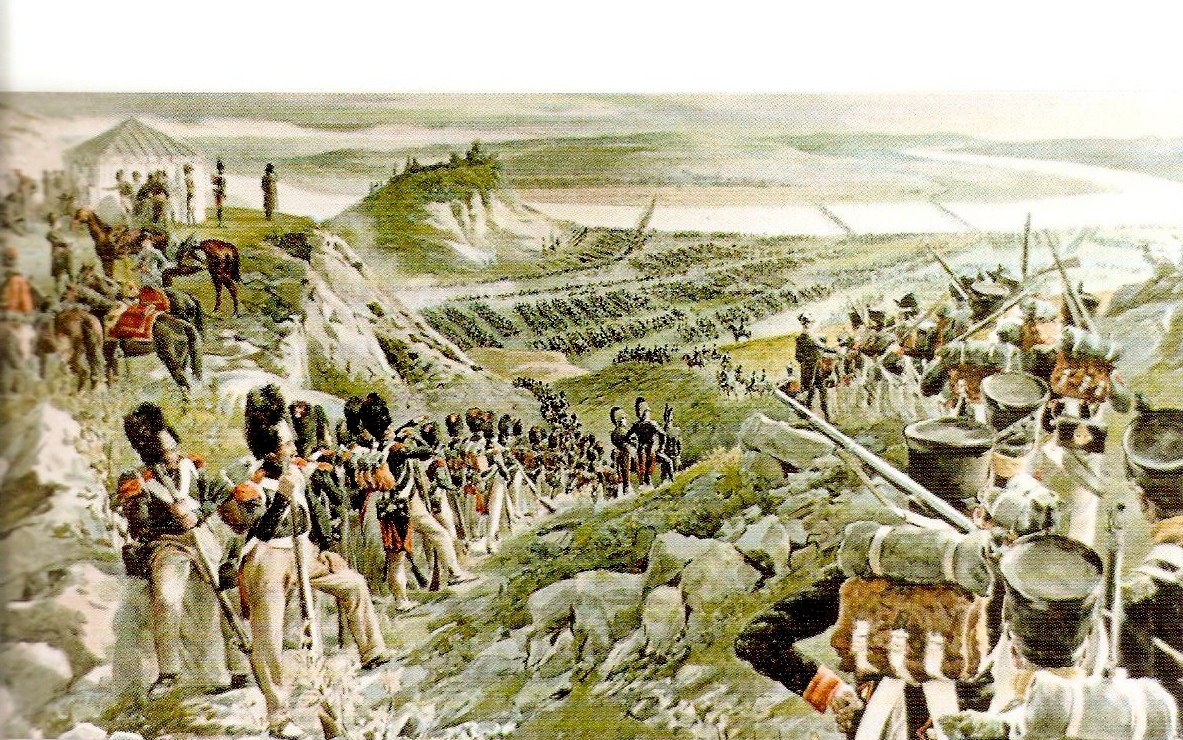
The Grand Army's Italian Corps under de Beauharnais marched to the outskirts of the town on the northern bank while the Russians corps commanded by by general Dokhturov et al was ordered by Kutuzov himself, albeit hovering in the background, to capture the bridges and fords and stop the enemy from taking the town.


 |
| Robert Wilson's writing about the battle |
General Delzons' units of the Italian corps were to cross the river onto the southern bank and hold the road, with the remainder of the corps would push the Russians off the Kaluga Road and force them to withdraw towards Moscow etc. Delzons was slow in fortifying his position in the evening of 23rd , and when he moved his infantry battalions in the morning of 24th, the Russians were stronger and their artillery positioned to dominate the filed of battle.


British volunteer on the Russian side Robert Wilson was with the Russian horse battery and he says in his memoirs that he commanded their fire against the French battalions, decimating the French infantry with the grapeshot fire.

General Delzons was killed along with his many brave officers and soldiers.

More and more Italian divisions came into combat - like general Pino's division and Italian guard. French and Italian artillery came into play too, forcing the Russian s to abandon Maloyaroslavetz by the evening . On the Russian side Kutuzov's main forces appeared on the horizon, not entering the fray but forcing a stand off or a temporary stalemate. The French-Italians captured the town and the river crossings and held it but the following day the new phase of battle had to take place in order to capture the Kaluga Road direction. The fighting was very heavy and each side lost thousands of men.

Thus in effect on the following day more numerous than the French army albeit inexperienced Russian army blockaded the southward road to Kaluga, and Napoelon had to make a decision whether to continue the battle or return to the Smolensk Road. He also heard the cannons and gunfire of fighting taking place where his right flank's cavalry-artillery-infantry forward detachment of Poles under general Charles Lefebvre-Desnouettes was moving toward Medyn, the potential alternative route of withdrawal. By the nightfall his marshals wanted to retreat, they say, and he was not convinced yet, and then after sleeping in a peasant cottage at a village of Horodnya, along with his small cavalry escort started riding towards the Maloyaroslavets battlefront.
Then the cossack regiments of the Russian army commanded by general Ilovaisky appeared. And general Lefebre's command marched into a fight at Medyn.
but that will be the subject of my next post.
Valete