Showing posts with label American Great Plains. Show all posts

Tuesday, May 26, 2026

Bison & Indigenous People of the Plains

 Salvete Omens,


The Memorial Day weekend came and went and let us share this video of Bison, People and Plains from Ancient Americas Yt channel. 


Before the coming of the horse the bison (Plains and Wood Bison) 


and indigenous people lived in a particular relationship, with perhaps as many as 30 to 35 million bison living in the North America, hunted by the Indians and thus providing them with food, skins for tents and clothing, bone tools and many, many other uses. 


The dogs pulled smalledr travois and thus their tipis were smaller. During the 1500s the Plains Apaches who were the nomads lived in their wickiups in their Plains rancherias.


.


The dominant pre-Columbian Plains  inhabitants were the  horticultural tribes  who lived in the Plains from time immemorial. They lived by the rivers in the river valleys with fertile soil, in their permanent earth lodge villages (eg Pawnees, Mandan etc) or like the Caddo confederacies in large towns made out of the grass houses.  


Their hunts were seasonal and when hunting they also used tipis for dwellings during this communal hunts. 


enjoy 

ps there is a project Hunt Primitive in North America, where they hunt animals, including bison, with stone weapons - bow and arrows, atlatal, spears etc.


Valete

Monday, August 25, 2025

Frank Henderson Ledger - Arapaho fame and honor

Salvete Omnes,

the glyph of a rider and horse in the top part of the page gives out the identity of the artist portraying himself astride his war horse


a quick trip to the Great Plains via some free available drawings by an Arapaho artist 'Frank Henderson'(1862-1885) [and his friends] in the collection of Metropolitan Museum.. American anthropologist Alfred Kroeber was the researcher who spent years observing the Arapaho tribe, and observed that the tribal warriors, warrior societies and their families sought martial exploits in war as the means to obtain fame and honor.


As the Nicelle Beauchenne Gallery biography states:  the true Arapaho identity of this artist is unknown, that he came from Cheyenne and Arapaho Indian Agency, Darlington Indian Territory. It was most likely done during the period of post 1874-5 war in the Southern Plains, where US Army units defeated the tribal warriors and forced all the belligerents into the Indian Territory, where they were to create a new reality for themselves, no longer free hunters of bison and horse-cutting raiders, under the goverment agents and their might. 

The researchers concluded that the Henderson Ledger contained drawings by many artists, became a gift for his former teacher, Martha Ker Underwood. The ledger was exhibited in NY (Acevedo Gallery) in 1988, researched, unbound and pages sold off. The Hood Museum at Dartmouth College (Dartmouth, MA) and MET. 


The page 172 from the ledger graces the cover of this book


the researchers uncovered that at least one of the artists who created images within the Henderson Ledger can be found in Vincent Price Ledger.

Valete

Thursday, August 21, 2025

Buffalo wolf - the loafer of the Great Plains

 Salvete Omnes,


back to the Great Plains before the settlement by the European-American settlers, when with the millions of bison and antelopes two kinds of wolves roamed the plains - the coyote and the buffalo [often white or black] wolf (Canis lupus nubilus). Plains Indians, both in the pre-horse and post-horse period,  used the entire hides of these large wolves (more than 4 feet without a tail) to approach as close as possible the grazing bison herd and to hunt that grazing bison with a bow and arrow.  The native scouts on warpath used these pelts to camouflage themselves and to show their special status within a raiding band, including wearing eagle feathers attached at the head of the pelt. 


wolves hunting a bull

American traveler and artist, George Catlin, recorded the wolves in their natural environment, and even used wolf pelt as a disguise to approach and to observe and  sketch bison herds.

Wolf pelt camouflaged native hunters, with bows and arrows, creep up to a grazing herd in order to hunt the beasts up and dangerously close, risking being trampled or gored to death by the bulls 

Catlin and his native companion approaching the buffalo herd

Upper Missouri Bluffs, with a pair of white wolves

wolves attacking a bull
..

the description of the  wolf of the Great Plains (1819-20) -


a rather gruesome photo (by John Grabill) of a band of Wyoming cowboys with a captured-with-lasso wolf 

these wolves were hunted to almost extinction in the Great Plains, most often with poison, but they survived in the north-est, in Minnesota, in the Canadian Prairies and so on.
Hence, they are surviving in Montana and perhaps Colorado - here some photos of the  actual wolves 


and its southern cousin, the Mexican wolf

enjoy

Valete

Friday, July 25, 2025

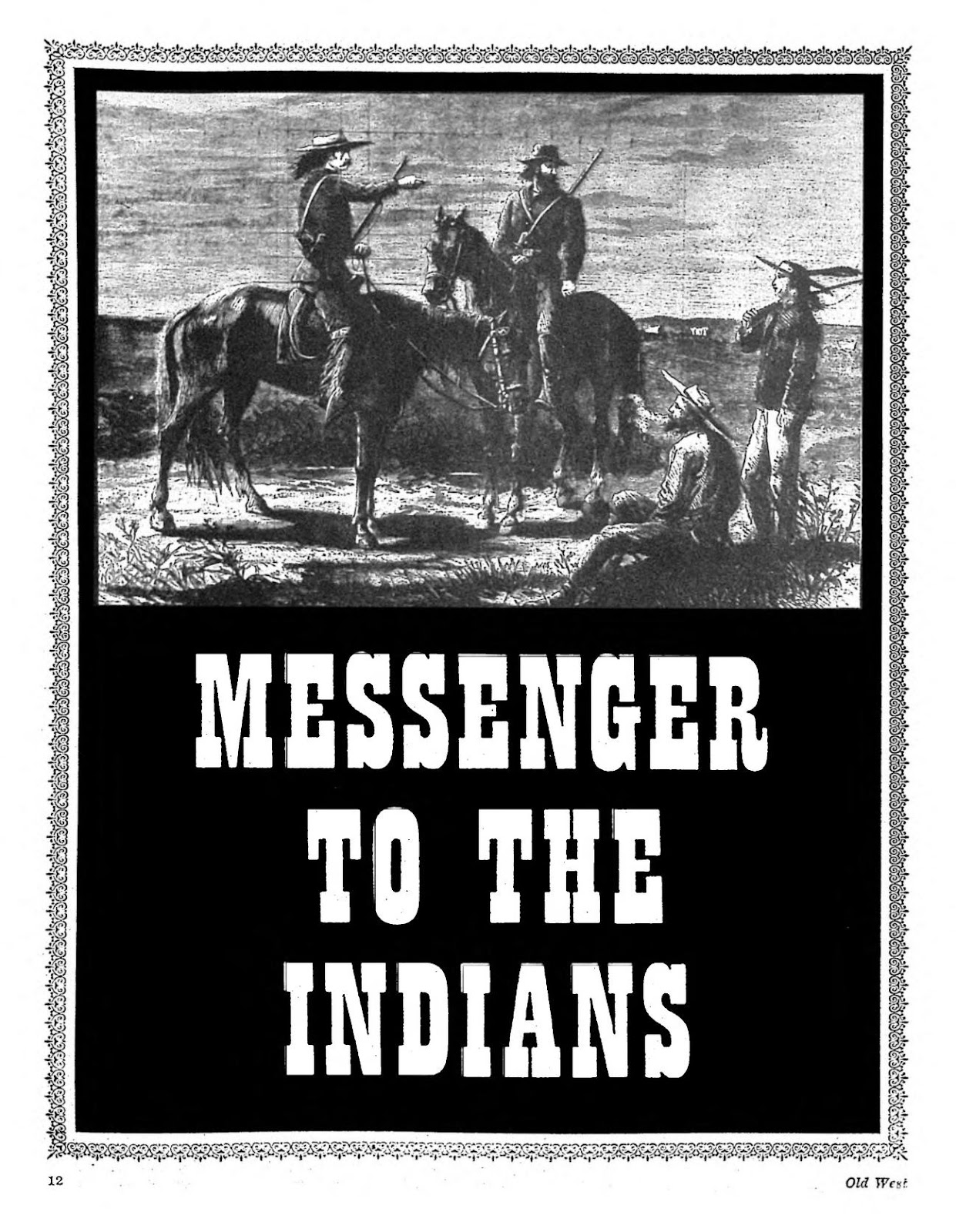
Will Comstock - Army scout

 Salvete Omnes,

Will Comstock in Harper's illustration from June, 1867

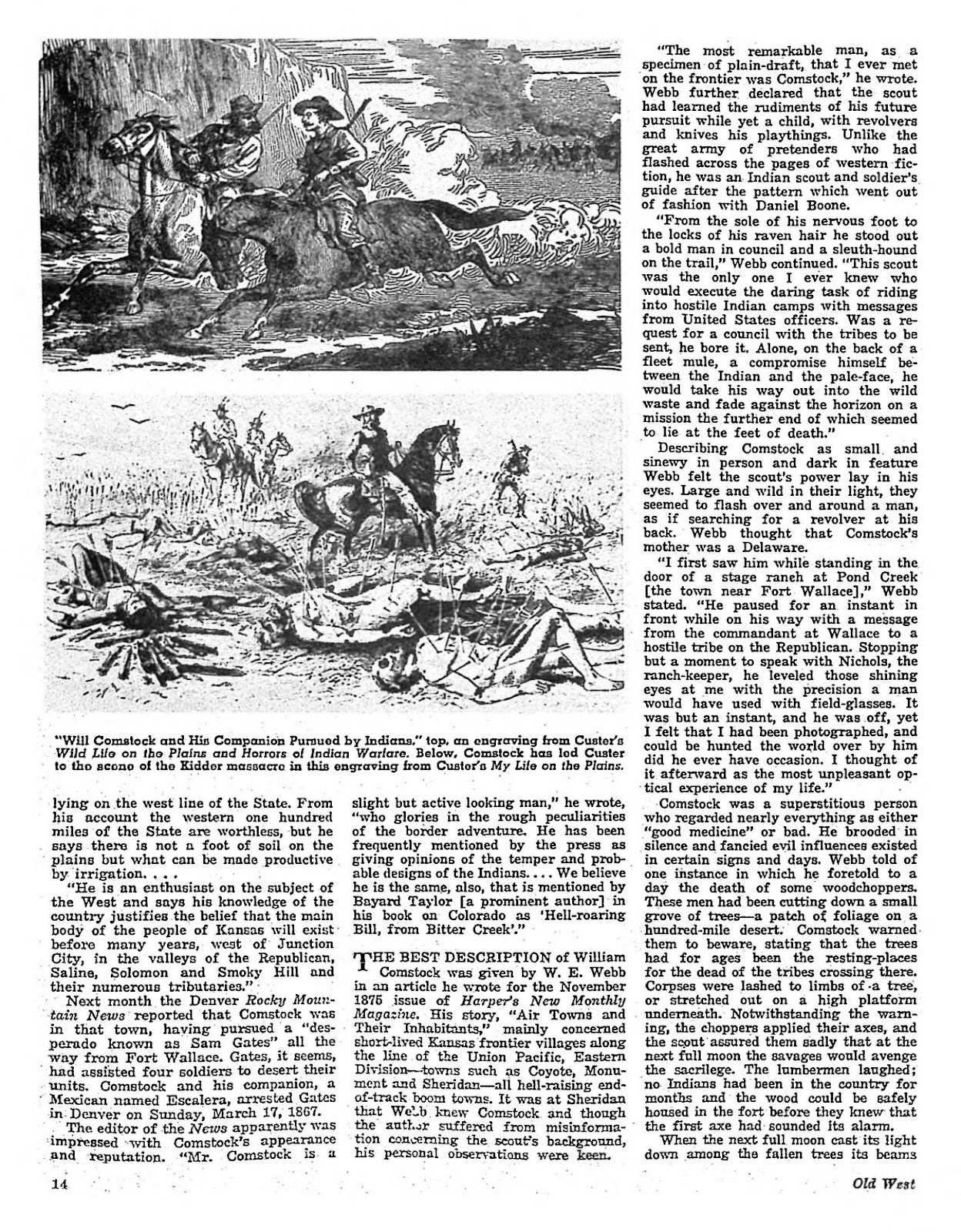
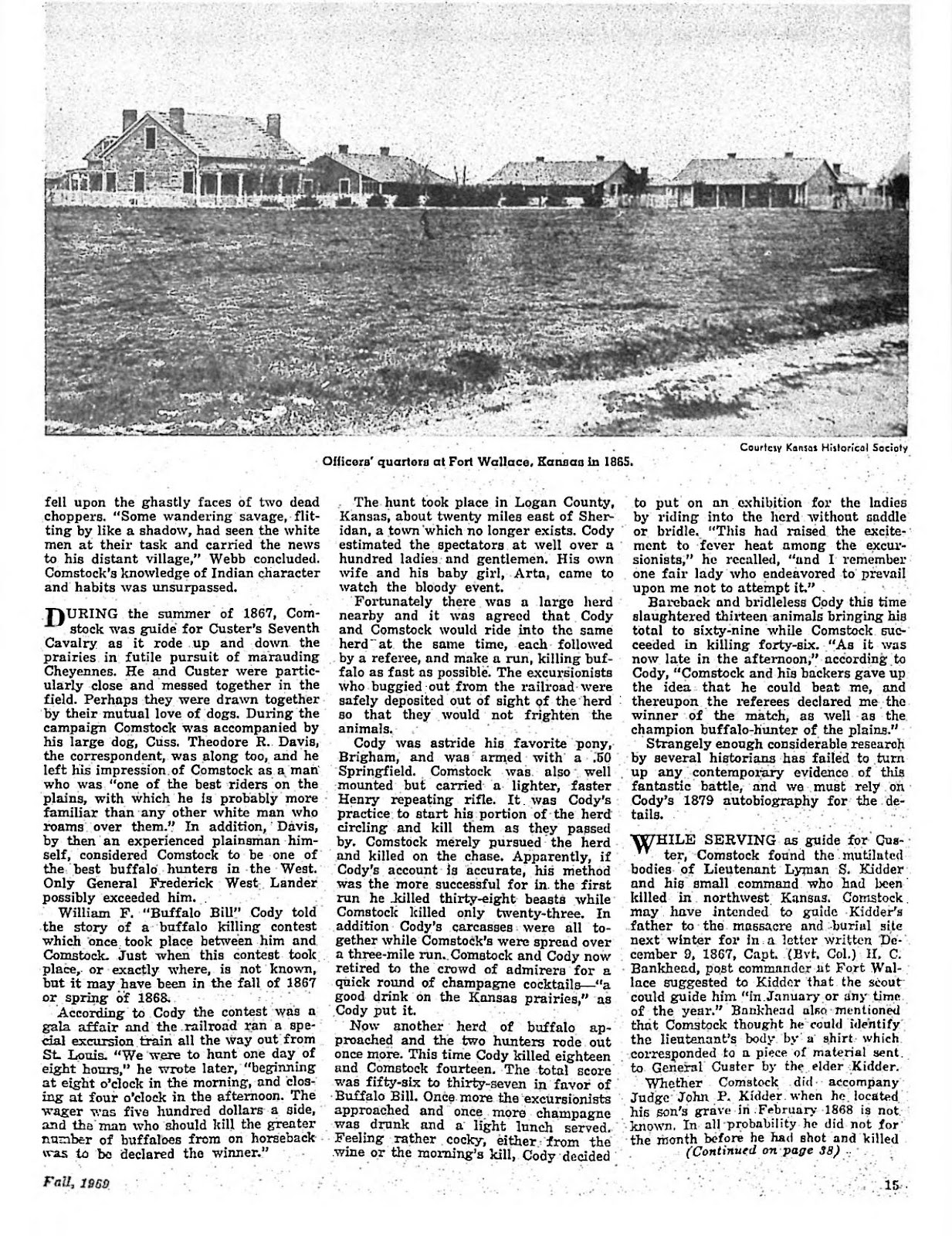
a little article from Old West Magazine 1969 on this US Army Scout and soldiers' guide - William 'Medicine Bill' Averil Comstock (1842-1868). His mother, Sarah Sabina Cooper. was a nice of James Fenimore Cooper, famous American writer.  

.

.

the contest between Buffalo Bill and Comstock in killing bison
.

.
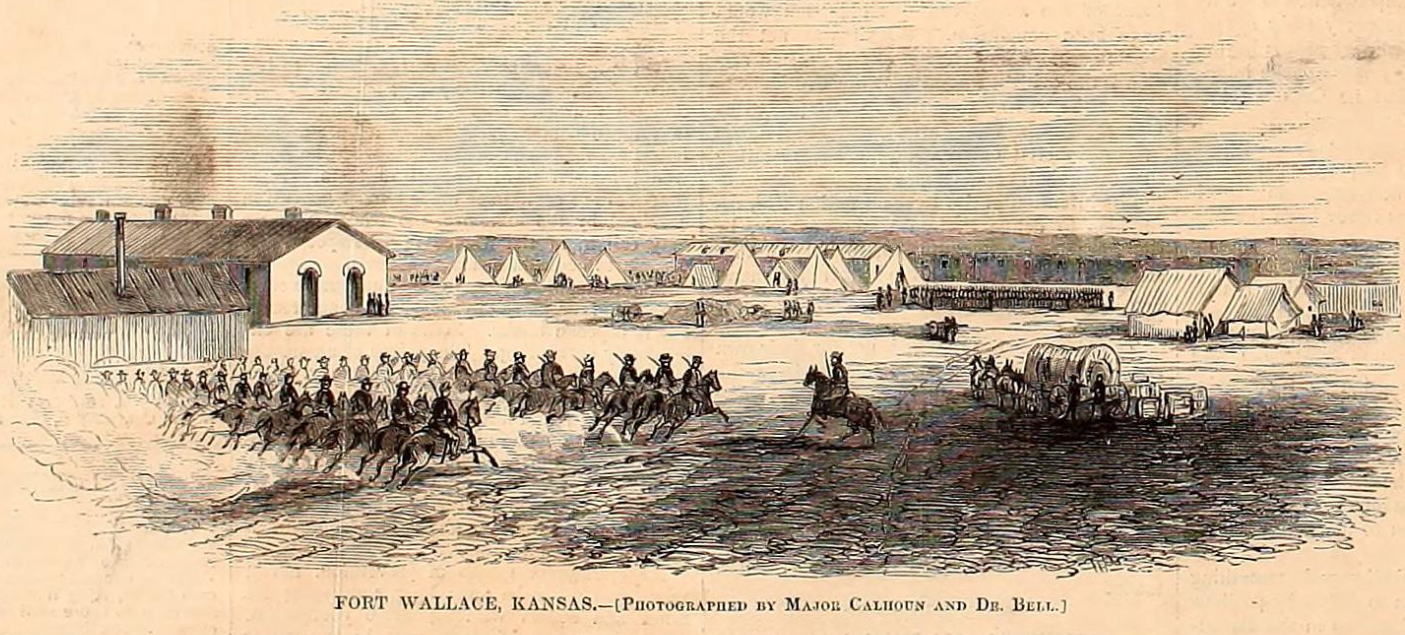
Fort Wallace 

From general G. A. Custer's  Wild life on the Plains and horrors of Indian warfare - the killing of Comstock by the Cheyenns near Fort Hayes in 1868- 

.


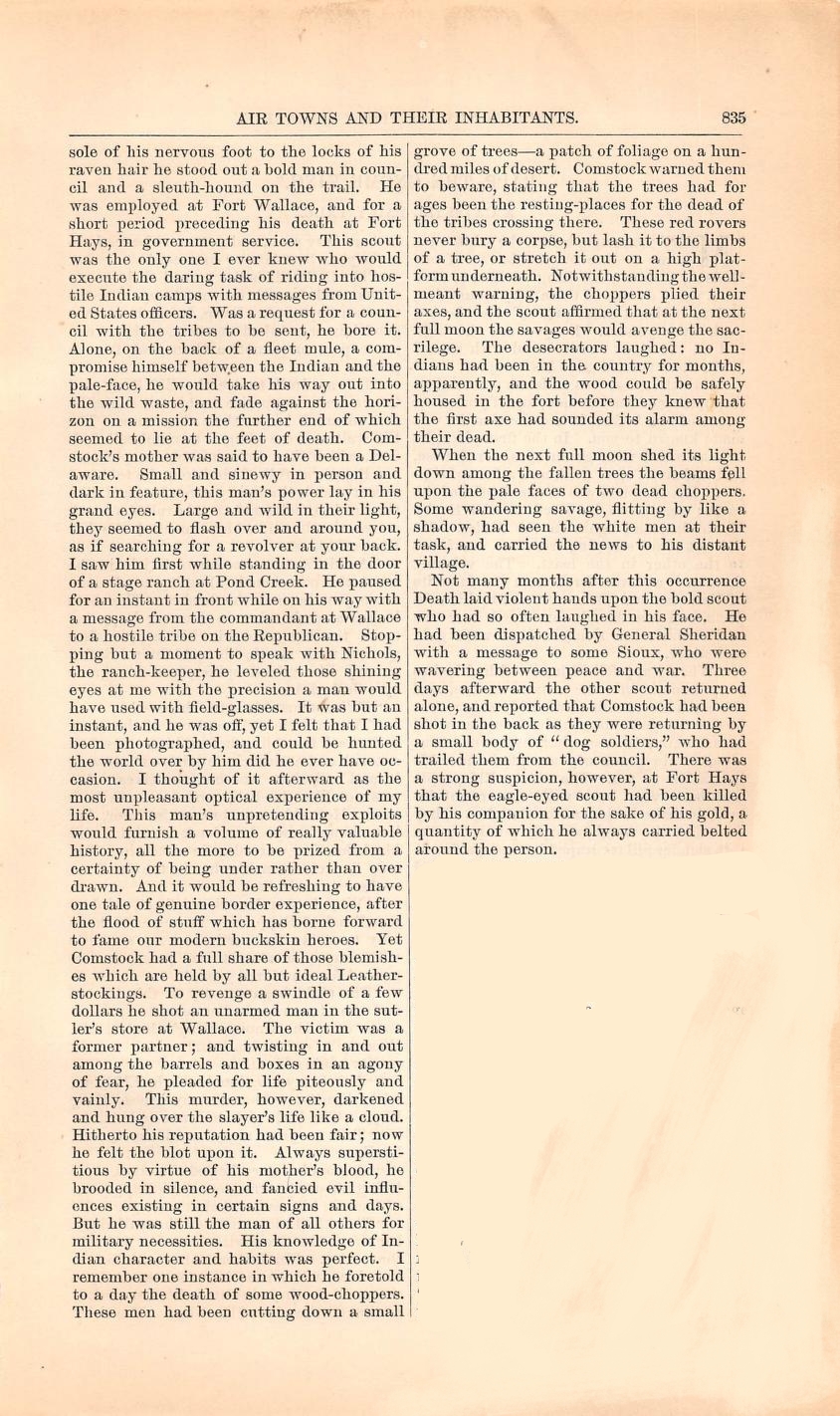
W.E. Webb's recollections about Comstock from Harper's Monthly Magazine, Nov 1875.


Valete

Thursday, June 12, 2025

Belden, the white chief- apishamore saddle circa 1870

 Salvete Omnes,

George P. Belden, native of Ohio, was a cavalryman in the Nebraska Cavalry and then got his Lieutenant's commission in the regular army as as 2nd Lt US 2nd Cavalry , serving in Dakota Territory and Wyoming Territory. He was cashiered from the Army in Nov 1869, and died in 1871. 
He wrote and published his experiences as Belden, The White Chief; or Twelve Years Among the Wild Indians of the Plains (Vet pub, NY- 1870), with illustrations based on his and fellow soldier, Mr. Innman, drawings.

Within his book there is a short chapter on the 'apishamore'  or soft pad saddle made for  White Bear by his wife.


.

.


.
to be continued

Salvete