Showing posts with label primary sources. Show all posts

Thursday, December 23, 2021

Taxcala Codex from the Smithsonian

 Salvete Omnes,


I think a short entry on this one. So I have a a nice little 'regalito' (a gift) of a link for  you this Christmas season - notwithstanding what our POTUS wished to us all a couple days ago.

so there it is - the Smithsonian Institution librarians have digitized the Mexican facsimile copy (edicion Alfredo Chavero & Genaro Lopez) of the Lienzo de Tlaxcala (Tlaxcala Codex) from 1892AD. Then the digitized album have been placed, yes, you guessed it, on the world digital library archive.org - here there is this link. You can download, copy and do whatever you desire and enjoy this old art and historical primary source.


Enjoy this work of beauty and drama, you can be  studying the horses there and then perhaps also entire beautifully drawn story painted by the indigenous North American  artists, created in the 1570sAD in Tlaxcala, then part of Spanish realm known as Nueva Espana (New Spain).


ps
Nota bene, have you known that there is  the Montezuma noble family in Latin America and Spain,  the direct descendants of the tlaotlani Montezuma II? well, you know the Spanish did not kill   and exterminate all indigenous people in the Americas, they even married them and created la Raza. The Spanish Black Legend, created by the XVI-XVIII centuries protestants in Europe (picked up by the Americans in the XIXc), made the Spanish and to some degree the Portuguese into those  monstrous genocidal killers and destroyers of all indigenous - which is  a false narrative and outright lie. You can read many a book on archive about this slanderous fabrication.

Merry Christmas to you, dear fellow net surfers and travelers - :) 

Valete

Sunday, November 14, 2021

3rd Silesian Uhlan Regiment -then and nowadays

 Salvete Omnes,
staying in the spirit of Polish Independence Day - I would like to point you, dear Net surfer, to a video presentation about one of the Poland's Volunteer Cavalry Federation's units, namely the 3rd Silesian Uhlan Cavalry Regiment,reenacted mostly by the citizens from in the Silesian(old Upper Silesia) voivodeship,  in the olden days Silesia was the so called Pearl of the Polish state.


So, here there are two video links showing reenactors from the 3rd Silesian Regiment squadron.
First, the most recent, from Kedzierzyn Kozle presentation in November 2021 -here
and the 2019 production - here
 

The 3rd Silesian -  1917-39 - cavalry regiment of the Second Polish Republic was quite famous and well known during its historic existence. The regiment fought in the 1917-20 war for Polish Restoration, and with bravery and distinction during the tragic and calamitous September 1939 campaign.
The regiment cultivated the tradition of the 3rd Uhlan regiment of the Duchy of Warsaw, and 3rd Uhlan Regiment of Kingdom of Poland (in union with Russian empire 1815-30, 1831-1917).
They had yellow-white pennon of their lance, and their home was in Tarnowskie Gory and Pszczyna (one, 34r squadron).


In 2014 they(Wanda Ponikiewska&Bogumil Twardowski) published the memoirs of one of the uhlans who participated in the 1919-20 war with the Red Army of the Bolshevik Russia and some action against the independent Lithuania's army- Zbigniew Karlowski(1900-1920). Zbigniew received Krzyz Walacznych (Cross of Valour) and posthumously Polish Cross Virtuti Militari 3rd class. He died in Grodno (now in Belarus) on Nove 2, 1921, from the wounds received during the miltiary operation cumulatively known of the Niemen River Battle.
Zbigniew Karlowski, Wspomnienia Ulana 3 Pulku z wojny 1919/20 roku (Bydgoszcz 2014)
valete

Friday, October 15, 2021

Rudomina eques polonus - rotmistrz & jego brat

 Salvete Omnes,

[in Polish]

wokół Chocimia i wielkiej wojny 1621AD - 

jednym z bohaterów i zarazem kronikarzy wojny z Osmanem II był rotmistrz Jan Rudomina Dusiacki i jego chorągiew, w której wśród towarzystwa służył jego brat Jerzy i inni obywatele a posesjonaci z Wielkiego Księstwa Litewskiego. 

Chorągiew ta brała udział w słynnym natarciu kawleryjskim, tj walkach  'pułku' husarskiego wprędce stworzonego pod wodzą samego hetmana wielkiego litewskiego Jana Karola Chodkiewicza na wojska osmańskie wieczorem 7 września, 1621AD.
W toku walk chorągiew Rudominy poniosła znaczne straty (opisane w poezji z epoki, w diariuszach, i w opracowaniach np Radosława Sikory), min. poległ brat rotmistrza Jerzy. Sam pan Jan napisał diariusz ekspedycji chocimskiej - wydany drukiem w 1640 roku i dostępny na stronie Jagiellońskiej Biblioteki Cyfrowej

W 1643 rotmistrz Jan ufundował bratu swemu i jego 8 towarzyszom poległym pod Chocimiem cenotaf w kościele w Nowogródku(mieście starożytnym Białorusi i WKL), który to pomnik przetrwał burze dziejowe (hordy sowieckie1919-20, panowanie jedynego sprawiedliwego ustroju(1944-90) i najazd  germańskiej dziczy hitlerowskiej 1941-44), i choć uszkodzony może być podziwianym w farze Przemieniania Pańskiego w wielkoksiążęcym mieście. 

fragment z Polona


Szczęśliwie  XIX wieku nieznany artysta narysował cenotaf i następnie rysunek został skopiowany w formie litografii  wydrukowanej  przez firmę Lemercier w Paryżu, Francja, jako część tzw Album Wileńskie,  pod redakcja(?) J.K. Wilczyńskiego, ser. 2, Paryż 1845-1856, poszyt 2, a sama publikacja sfinansowana przez potomka rodu Rudominów.

A na stronie mości pani Katarzyny Kolendo-Korczak można przeczytać artykuł o cenotafie, który wystawił swojemu poległemu bratu Jan  Rudomina w farze w Nowogródku.

[in English]

soon to follow

Valete

Friday, October 1, 2021

List Jana K. Chodkiewicza do Mansfelda

Salvete Omnes,

[in Polish]

jak wiemy 27-emgo września minęła kolejna rocznica bitwy pod Kircholmem - i w mej 'stajni źródeł i wypisów' o wiktorii kircholmskiej mamy kolejne  źródło z epoki - piórem samego hetmana i zwycięzcy kircholmskiego.


List Jana Karol Chodkiewicza do Joachima Fryderyka grafa von Mansfelda, generała rajtarii szwedzkiej i dowódcy 10 kornetów jazdy prawego skrzydła armii szwedzkiej pod Kircholmem, w sprawie poległych oficerów i wymiany jeńców.  


 kopia miedziorytu Giacomo Lauro na podstawie rysunku Antonio Tempesta z 1606 roku


Valete

Wednesday, October 21, 2020

Wypisy zrodlowe do dziejow Husarii - R. Sikora

 Salvete Omne,

[in Polish]

Wielkie Nieba!
.. właśnie dostałem od mego druha dr Radosława Sikory jego najnowszą książkę - opus magnum niezwykle i pierwsze w historiografii polskiej dotyczącej historii jazdy polskiej kopijniczej zwanej husarią: 

Wypisy źródłowe do dziejów husarii. AD 2020.

Książka została wydana przez Wydawnictwo 3DOM z Częstochowy. Widzę, że książka jest dostępna także tutaj.

ISBN 978-83-66227-39-2

Ilosc stron -436

Praca czyli wybór źródeł do historii husarii zawiera 105 chronologicznie ułożonych źródeł (od opisu wykonanego przez byłego towarzysza husarskiego Marcina Bielskiego do diariusza sekretarza królewskiego Adam Naruszewicza), w tym wiele przepisanych z rękopisów i są tu smaczki także dla tychże badaczy czy aficionado, którzy husaria zajmują się od dawna. Nie ma żadnych ilustracji, ale uwaga są kopiaste przypisy źródłowe do staropolskich wyrażeń, zwrotów i określeń  (2196 przypisów )

Twarda okładka, którą  załączam w pełnej krasie - zdjęcia są chronione prawem Copyright etc -


 jak i krotki film o tym jak powstała okładka na której znalazł się współczesny następca husarskich kopijników,   były  komandos tj żołnierz polskich Sił Specjalnych pan Piotr Tomasz 'Soyers 'Soyka.


Przy okazji pogadanka   Radkowa z Lęborka, gdzie min na filmie widzimy siodło wykonane przez siodlarza i jeźdźca Marcina Rudę  na podstawie zdjęć i opisów XVII-wiecznego siodła polskiego w zbiorach narodowych Królestwa Szwecji. Min  także można usłyszeć opis bitwy pod Kluszynem.

Ze wstępu autora:


 ergo, gorąco polecam jako konieczną pracę w biblioteczce badacza jak i entuzjasty/entuzjastki historii polskiej skrzydlatej jazdy kopijniczej.

Valete

Sunday, June 19, 2016

Słownik terminów hipologicznych używanych w Polsce XVI-XVII w. etc


Salve,
jak już pisałem w poprzednim poście w temacie tej publikacji z Napoleon V przeglądam sobie Słownik terminów hipologicznych (dalej Słownik) z uwagą, i czytając hasła dziwię się czasem, nieraz zachwycam, a czasem oburzam, a innym razem nie wiem co sadzić. Nie jest lekko z hipologią staropolską.
Cóż, nie można niestety stwierdzić nic z pewnością o proweniencji podanych definicji w Słowniku z powodu braku przypisu źródłowego lub choćby tytułu zbioru etc z którego pochodzi hasło oraz jego wyjaśnienie etc.
Na ten przykład mamy hasło -
''Jątewka'', w nawiasie autor podaje -  'staropolskie*' ''jątew'' ( strona 45)
autor twierdzi w wyjaśnieniu ze to 'spokrewniona, siostrzana klacz zwykle po tym samym ogierze'.
W celu poszukiwania wyjaśnień na necie udałem się do google et tutti quanti, et wyniki poszukiwań dają zero rezultatów  jeśli chodzi o hasło  'jątewka/jątew'.
 Caveat -  jest światło w tunelu :)
bo Google natrętnie pokazuje żebym poszukał jątrew, i tedy szukam;
Szukanie hasla 'jątrew' daje ponad 300 wyników.
Nolens volens najpierw wskoczyłem na stronę wikiźródła, do ''Encyklopedii staropolskiej'' - a tamże stoi:

Jątrew, jątrewka, bratowa, t. j. żona brata rodzonego lub przyrodniego. Stryjkowski pisze w kronice Litwy: „Dowmunt, widząc jątrew i bratową swoję, księżnę Narymuntową, wziął ją sobie gwałtem za żonę.“
Później na stronie Wikislownik - tamże hasło jątrew jest 'rozpisana' na detale.

Później udałem się do bibliotek cyfrowych i słowników na linii (google nie podaje do nich linków) 
We wersji elektronicznej Słownika staropolskiego pod red. S. Urbańczyka (11 tomów, Kraków 1953-2002), można zobaczyć wyjaśnienie  słowa i obfity materiał źródłowy za okres X wiek po AD1500: (via skan)

 'Słownik polszczyzny XVI wieku T. 9: Iskać - Jużyna' podaje (skan ze stron):


I co tu sądzić, mościjewy? Nic o koniach!  za to o żonie brata dzisiaj zwanej bratową - :)
ale jak mawiał mości Wołodyjowski u Sienkiewicza, nic to!
Tak tez szukamy dalej, bo dość ciekawa to zabawa intelektualna, choć 'Słownik' bałamuci i omamia, na manowce wysyłając.
Może autor poda źródło tajemniczego hasła 'jątewka' w następnej edycji 'Słownika', jeśli takowa będzie?
W każdym razie casus zadziwiających haseł i definicji zawartych w Słowniku będzie kontynuowany, jak Bog da czli ojala! 
___________________________________________________________________________
*gwoli wyjaśnienia, to autor nigdzie nie wyjaśnia co oznacza termin 'staropolski/a' w jego 'Słowniku'

Sunday, August 30, 2015

A bit - 1759 definition etc


Salve,
have posted anything about the horses lately, then it is time to change this pattern - :) , so from the XVIII century horse literature classic comes this definition of a bit:
The title -  'The Farriers's and Horseman's Complete Dictionary: Containing the Art of Farriery in All Its Branches; with Whatever Relates to the Manage, and to the Knowledge, Breeding, Feeding, and Dieting of Horse' by  James Williams et al ,  1759.

*''BIT, or Bitt, or Horse-bitt, in general, signifies the whole machine of all the iron appurtenances of a bridle, as the bit-mouth, the branches, the curb, the sevil-holes, the tranchefil, and the cross chains: but oftentimes it signifies only the bitmouth in particular.
The bit-mouth is then a piece of iron forged several ways, in order to be put into a horse's mouth, to keep it in subjection.
Of these bit-mouths, some are single cannon mouths, some are cannon mouths with an upset or mounting liberty, some scatch mouths, some mouths after the form of a barge. Some with two long turning olives, and several other sorts, all with different liberties for the tongue, or without liberty. But all bit-mouths ought still to be proportioned to the mouth of the horse, according as it is more or less cloven or wide; or more or less sensible and tender, according as the tongue and the lips are higher or flatter, and as the palate is more or lest fleshy ; observing withal, that if the horse be old, the palate will always have but little flesh upon it. Guillet.
It is the opinion of the Duke of Newcastle, that as little iron as possible should be put into the horse's mouth; and we seldom use any other than snaffles, cannon mouths jointed in the middle, cannon with a fast-mouth, and cannon with a port mouth, either round or jointed.''
"As for the bits now in use, besides the snaffle or watering bit, there is the cannon mouth jointed in the middle, which M. Solleysell affirms to be the very best of all, because it always preserves a horse's mouth whole and sound; and though the tongue sustains the whole effort of it, yet it is not so sensible as the bars, which are so delicate that they feel its pressure through the tongue, and thereby obey the least motion of the rider's hand. The longer it is towards the ends fixed to the branches the gentler it will be. We should make use of this mouth to a horse so long as we can; that is, if with a simple cannon mouth we can draw from a horse all the obedience he is capable of giving, it will be in vain to give him another; this being the very best of all.''
The cannon with a fast mouth is all of one piece, and only kneed in the middle to form a liberty for the tongue. This bit is proper to secure those mouths that chack or beat upon the hand ; it will fix their mouths because it rests always in one place, so that deadening the same in a manner, thereby, the horse loses his apprehensions, and will soon relish his bit-mouth better than the last, which being jointed in the middle, rests unequally upon the bars. This however because not jointed in the middle is more rude. The middle of this bit should be a little more forward to give the more play to the horse's tongue, and the bit should rather rest upon the gums or outside of the bars than upon their very ridges.

The fourth sort is called the cannon-mouth with the liberty after the form of a pigeon's neck. When a horse's month is too large, so that the thickness thereof supports the mouth of the bit, this it cannot work its usual effects upon the bars; this liberty will a little disengage it, and suffer the mouth of the bit to come at and rest upon his gums, which will make him so much the lighter upon the hand.

The port-mouth is a cannon with an upset or mounting liberty proper for a horse with a good mouth, but a large tongue; having its effects upon the lips and gums; and because the tongue is disengaged, it will subject the horse that hath high bars, and in some degree sensible.
The scatch mouth with an upset or mounting liberty is ruder than a cannon mouth, because not fully so round, but more edged and preferable to them in one respect, which is that those parts of a cannon mouth to which the branches are fastened, if not well riveted, are subject to slip: but the ends of a scatch mouth can never fail, because of their being over lapped, and therefore much more secure for vicious and ill natured horses.
Some are of opinion, that the best  way to sit a horse exactly with a bit, is to have a great many bits by them, and change till they hit upon the right: but at first, be sure to let him have a gentle one, rightly lodged in his mouth, so as not to frumple bis lips; or to rest upon his tushes. Then  let him be mounted, and pulled two or three steps back, whereby you will know if his head be firm, if he performs frankly, or only obeys with reluctancy, that so you may give him another bit, which may gain his consent. If he inclines to carry low, you are not to give him a liberty for the tongue, which will rise too high ; for that by tickling his palate, would bring his head between his legs.'' Sportsman's Dicit. in voc.

enjoy
ps
* oroginal spelling

Thursday, January 12, 2012

Jana Krasinskiego opis Polski et wjazd Walezego do Krakowa

Salve,
today's entry will be mostly in Polish, I hope I will translate the passages in not too many days, so please bear with me :) 
Dear Samuel pointed to me this work - Jana Krasińkiego Polska  written in Latin by a Polish scholar, clergyman and nobleman Jan Andrzej Krasiński (a fellow Mazur aka mazowszanin like me) under a Latin name: ''Joannis Crassinii Polonia. Ad Sereniss. et Potentiss. Henricum I. Valesium, Deigratia utriusque Poloniae regem. Bononiae apud Peregrinum Bonardum, venia ab superioribus concessa.''  (published 1574). It was translated by XIX century Polish scholar Stanisław Budziński and published in Warsaw (under Russian occupation) in 1852.

...
Polska Jazda w tym dziele:


''Liczne są w Polsce wybornego żołnierza chorągwie; dzielą się one na chorągwie pieszych i jezdnych. Jezdni bogato uzbrojeni (pancerni) mają zdatne do upartej walki konie, których przednią część zbroją żelazną pokrywają. W boju używają włóczni, a następnie dwóch ''mieczy'': jednego długiego ku spadku czworograniasto kończatego (koncerz), drugiego zakrzywionego i krótkiego do zadania cięcia [szabla]; walczą także gdy tego potrzeba krótkiemi rusznicami, podobnie jak Niemcy, lub żelaznemi buławami, jak to u Węgrów jest zwyczajem; do zasłonienia się tarczy używają (1). Inny rodzaj jazdy stanowią lekko zbrojni, t.j. tak nazwani w Polsce i Węgrzech usarze. Ci prawie wszyscy zbroje i przyłbice noszą, używają lekkiej kopii, zakrzywionego miecza i tarcz podobnych do tureckich. Niektórzy zwyczajem Scytów strzały z łuków ciskają, inni z krótkich rusznic strzelają do nieprzyjaciela. Trzeci rodzaj jazdy stanowią kozacy,którzy bardzo są wytrzymali na zimno, głód i trudy wszelkiego rodzaju. Uzbrajają się oni bardzo lekko, podobnie jak Tatarzy. Konie mają bardzo rącze i do małych utarczek zdatne. Siodła na koniach tak urządzają, iż bez trudności na wszystkie strony mogą się obracać i z łuku strzelać. Do walki używają najczęściej łuku, rażąc gradem pocisków jeźdźców i konie nieprzyjacielskie. Używają także szabli na wzór wschodnich, i krótkich drzewców. W kraju nieprzyjacielskim bardzo szybko posuwają się, niszcząc wszystko ogniem i mieczem; a właśnie na szybkości i bezpieczeństwo żołnierza i zwycięztwo polega. Przebywając w obszernych stepach podolskich, gdzie ciągle z Tatarami krymskiemi wojnę prowadzą, wożą z sobą w jukach całą swą żywność, składającą się z chleba, wędzonki i soli z pieprzem zmieszanej. Każdy prócz tego opatrzony jest w hubkę i krzesiwo, aby gdy zwierzę jakie (którego pełno jest w tych bezludnych szlakach) ubić się zdarzy, mógł zaraz ogień rozniecić i upiec zdobycz, sola i pieprzem zaprawioną. Polacy zwykli także urządzać chorągwie piechoty, częścią w rusznice, częścią w oszczepy uzbrojonej, której używają do odległych wypraw, powierzając jej wszelkiego rodzaju machiny wojenne. Ona toruje drogę wojsku, buduje mosty, dobywa miast i twierdz; wielce zatem jest na wojnie przydatną. Jednak Polacy najwięcej na jazdę liczą, a pieszego żołnierza nie-tyle co Włochy i Hiszpanie cenią.''
 
(1) Dokładniej I bardziej malowniczo ten rodzaj jazdy opisuje Ogier (Iter polonicum, w zbiorze Miclera I, 720, 726.), zowiąc ją właściwiej usarzami, ponieważ tak nazywano w Polsce najcięższy rodzaj jazdy. Mieli oni zbroje z żelaza kute; przeciwnie pancerni (od niemieckiego Panzerheinde— kolczuga) okrywali się kolczugą t. j. koszulą z kotek stalowych złożoną. —Włócznie (rohatyny) husarzy były to kopie do 19 stóp długości. Mlecze do przebijania, na pice; stóp długie, przymocowane były do siodła pod lewem kolanem; spód u rękojeści miały płaski dla tem łatwiejszego przebicia leżącego już na ziemi nieprzyjaciela. Buławy były to młotki żelazne dla rozbijania żelaznych pętlic i spięcia zbroi. Zob. Niemcewicza: Panowanie Zygmunta III we wstępie, i Wójcickiego: Obrazy starodawne w tomie I o husarzach.[przypis mości Budzińskiego)

 
'WIADOMOŚĆ O PEZYBYCIU I KORONOWANIU HENRYKA WALEZYUSZA KRÓLA POLSKIEGO.
We czwartek dnia 15 lutego J. K. M. przybył na nocleg do Balic majętności wojewody krakowskiego, o półtorej mili od stolicy. Następnego dnia bardzo rano, gdy J. K. M. z Balic wyjeżdżał, przyciągnęli tam panowie polscy z licznemi hufcami. Liczby ich dokładnie nie wiem; ale naliczono do 32 pocztów, każdy we 300 około ludzi z francuzka, z niemiecka jak rajtary, lub z węgierska uzbrojonych. To ostatnie uzbrojenie składa się z hełmu, kolczugi, wielkiej tarczy, zasłaniającej aż po głowę, oraz z kopii długości małej dzidy, dosyć grubej, lecz wewnątrz wydrążonej. Konie pokrywają skórą niedźwiedzią lub lamparcią i po większej części przywiązują im dzwonki; a siebie i konie ubierają w takie mnóstwo wielkich piór oraz w skrzydła orle w pręgi zfote pomalowane, że zdają się być raczej widziadłami lub maszkarami, jak rycerzami; a jeśli dodać długie chorągiewki które mają przy kopiach, to zaiste wszystko to wyda się bardzo potwornem. Muzykę ich stanowią trąby, rogi, wydające gł os jak kobza wysoko wzięta, oraz dwa małe bębenki miedziane, które jeździec siedząc na koniu trzyma przed sobą i jeden o drugi uderza. Czwarty sposób uzbrojenia jest kozacki, którego używają Litwini i Rusini. Broń ich składa się z krótkiego drzewca .czyli spisy, kołczanu i strzał; konie mają szybkie jak wiatr. Uzbrojenie Kozaków i Tatarów jest jednakowe. Niektórzy dla lepszego przebrania się prowadzili niedźwiedzia na koniu, zupełnie uzbrojonego i trzymającego kopię.'
 ...
Konie:
 O koniach ukrainnych czyli Rusi Czerwonej, Podola i Wolynia:
Konie ruskie pod względem szybkości i piękności ledwie że nie dadzą się z hiszpańskiemi i tureckiemi porównać, a daleko są od nich silniejsze.
 O rzedach polskich, w tym o malowaniu koni
'Jeżdżą [Polacy] na koniach kosztownym rzędem strojnych; szyje ich i piersi srebrnemi lub złotemi blachami oraz futrem ze szlachetnych zwierząt pokrywają; siodła zaś, czoła koni ponad oczami i ogony drogiemi kamieniami ozdabiają. Wielu różnemi kolorami konie farbuje.'

o okrywaniu koni wyszczególniam tutaj: 'Konie pokrywają skórą niedźwiedzią lub lamparcią i po większej części przywiązują im dzwonki; a siebie i konie ubierają w takie mnóstwo wielkich piór oraz w skrzydła orle w pręgi złote pomalowane, że zdają się być raczej widziadłami lub maszkarami, jak rycerzami'

 ..
O Litwie i jej jezdzie:
'Liczną mają jazdę [Litwa], która stanowi znaczną dla króla polskiego pomoc; gdyż (jak o tem słyszeliśmy od tamtejszych mieszkańców dobrze rzeczy świadomych) są oni w stanie do 40,000 jeźdźców zgromadzić. [I]Konie ich sa piękne, silne i raczę[/I]. Prowadząc z Moskwa prawie ustawiczną wojnę o granice, niekiedy tylko cieszą się pokojem'
  ...
I na koniec, dodatkowo, opis mieszkańcow tego krolestwa nad Dnieprem, Niemnem i Wisłą:

..Zwykłym zaś napojem jest piwo z wody, pszenicy lub jęczmienia i chmielu przyrządzane. Piją także wyborny miód. który się robi z miodu pszczół i chmielu. Szlachta i możniejsi używają wina, które morzem z Hiszpani i Francyi, a lądem z sąsiednich Węgier i Niemiec sprowadzają. Ubiór mieszkańców po większej części długi, niewiele od węgierskiego i dalmackiego różniący się. Kolor twarzy, jak u wszystkich północnych mieszkańców biały. Ludzie obojej płci są po większej części wysokiego wzrostu, silni i pięknej urody. Mężczyźni w ogóle siłą obdarzeni i na wszelkie niebezpieczeństwo odważyć się gotowi. Shańbionym przez wyrok sądowy tak jak trucizną się brzydzą. W ogóle naród ten lubi strojność w ubraniu. Szlachta i znakomitsi bardzo kosztownie odziewają się: noszą bowiem suknie ze złotogłowu t. j. z jedwabiu przerabianego złotem, obszywane perłami, futrem sobolim lub kunim podbite, a wyłogi ich srebrem i złotem aż do dołu przerabiane; pierścienie złote lub srebrne pozłacane, perłami zdobne, na palce kładą. Bardzo kosztowne zakrzywione miecze, szablami perskiemi zwane, w srebrnych lub złotych pochwach do boku przypasują; pochwy i rękojeście drogiemi kamieniami zdobią.
...
ps
 I would like to welcome all new followers of my blog - Witajcie!

Wednesday, February 23, 2011

Interesting woodcut re Ottoman Turks at war


Salve,
again scouting the Net I came across this interesting later XVI century German woodcut showing 4 Ottoman horsemen escorting a very strange but triumphal procession. We have captured Hapsburg soldiers, identified by two headed black eagle on a first flag, showing to the observing, presumably, Turks their colors, weapons (one weapon looks like a long sword of the landsknechts) and finally comrades' severed  heads stuck on pikes and swords.
Head cutting is nothing new within the warrior cultures of the Eurasia, Africa, Oceania and Americas.
This particular processions resembles reported parades of cut heads and scalps on sticks and spears  within the American Indian warfare ceremonial and ritual during XVI-IX centuries.

Thursday, November 25, 2010

King of Poland Royal uhlans 1770s


Salve,
English travelers' accounts of their voyages during have of the XVI-XIX have been great source of information for this blog, my friend Radek  found some interesting account of the 1770s uhlan regiment, serving as a household unit of the King of Poland:


Travels into Poland, Russia, Sweden, and Denmark: interspersed ..., Volume 1

 By William Coxe, page 140


Ulans or Uhlans for the King
The king has a corps of 2000 troops in his own pay, and entirely dependent upon himself. These troops consist chiefly of Ulans or light horse, who furnish alternately the escort which accompanies his majesty. We saw a small party, about thirty, who were encamped near his villa, and had afterwards an opportunity of examining them more minutely.
The Ulans are chiefly Tartars, many of them Mahometans, and are greatly to be relied on for their fidelity. The corps is composed of gentlemen and vassals : they all form in squadron together, but are differently armed ; they both indiscriminately carry sabres and pistols, but the gentlemen only bear lances of about ten feet long ; instead of which, the others are armed with carabines. Their dress is a high fur cap, a green and red jacket, pantaloons of the fame colour, which cover the boots as low as the ankle; and a petticoat of white cloth descending to the knee*. Their heads are all shaved after the Polish manner. Their lances, at the end of which is fastened a long swallow-tailed flag [pennon] of black and red cloth, are shorter and weaker than those of the Austrian Croats, but they carry and use them much in the same manner, and with no less dexterity. The men were of different sizes, and seemed fine and well-grown, but were greatly disfigured with their petticoats and pantaloons.
Polish horses for light cavalry
The horses on which they were mounted. were about fourteen hands high, of remarkable spirit, with great strength of shoulder. 
Poland is much esteemed for its breed of horses; and the king of Prussia procures his light cavalry from this country. 
On the ruin of the Polish horses

The breed, however, has been almost ruined during the late civil wars*, and the nobility are now chiefly supplied from Tartary.

Coxe, Travels vol1 (page 140)
* I intend to draw and paint several reconstructions of these Royal Uhlans (ulans) - pan Bronislaw Gembarzewski  premier military uniform historian from Poland seen in this relief  B.Gembarzewski , in his monumental work 'Polish Soldier - arms and equipment' vol II has some interesting reconstructions and cites sources for the Royal Uhlans, from 1770s through 1794.
*Polish-Lithuanian Commonwealth wikipedia.org/wiki/Polish-Lithuanian_Commonwealth under the Saxon kings was subject to increasing Russian influence during the first half of XVIII century, and after the last Polish king, Stanislaw August Poniatowski  S_A_Poniatowski  - his election at Wola was subject to some paintings showing  Polish horses eg  Election_of_Stanislaw_II_August_of_Poland_at_Wola muzeum w Poznaniu , was elected with full support of the Russian army bayonets, coercion and money PLC become Russian protectorate. Enraged patriotic elements of nobility declared a confederacy (at the ancient fortress of Bar in present Ukraine) and civil war erupted, but it has to be stressed that quickly the Polish-Lithuanian royal armies had been replaced by the Russian forces that had battled Bar Confederates troops  for 4 years - wikipedia.org/wiki/Bar_Confederation
 The end of Bar Confederacy resistance spurred three black eagles: Russia, Prussia and Austrian Empire cease the moment and to take some defenseless Polish-Lithuanian  territory. Russia received the least developed areas but Prussia took the ethnically Polish territories of northern Poland  and  begun infamous Prussian robbery of Polish-Lithuanian foreign  commerce profits and in the end caused the economic strangulation of the country (including counterfeiting Polish currency and imposing huge tariffs on PLC agricultural exports and other commerce), while the losses to Austria were painful because they took some of the best cities ( the Royal city of Lwow-Lviv,  returned in 1918 to be again stolen from Poland in 1939 and 1944 by the 1st class world murderer and genocidal tyrant J. Stalin ), most populated areas of the country, including  the horse breeding areas of southern Poland - it was the so called First Partition of Poland wikipedia.org/wiki/First_Partition_of_Poland

Happy Thanksgiving to all my US friends, readers and followers :)

ps
 a little sketch after drawing by Juliusz Kossak

Saturday, October 9, 2010

The mid-XVIII century Uhlan, der Ulan, Ulan, Улан in the Prussian soldier writing


Salve.
long time ago I wrote this http://dariocaballeros.blogspot.com/2010/02/uani-introduction.html , so now let us jump to this remarkable book from the end of the XVIII century, when a Polish-Lithuanian Tatar (and Polish) lancer was yet to become the famous ulan [uhlan] of the Napoleonic wars. Note that Prussians were actually great importers of Polish horses in the XVI,  XVII and XVIII centuries,  and most likely the so called Trakehner horse breed was created by the Prussian breeders out of some foundation mares and sires that were of Polish imports in the XVIII century.

'Remarks on Cavalry; by the Prussian Major General of Hussars Warnery' for the first time published in 1781.


on the lance, the 'queen of cavalry battle':

“There was formerly in European armies, a species of cavalry called lancers: they were armed at all points; […] they were all noble or lived nobly, but they could not be employed on all occasions, they were too expensive, each of them was obliged to have two horses for his own person, a large one for battles and tournaments and another for marches and detachments; and beside these, one for the servant who had the care of them: and it was in consequence of the great expence that these troops were discontinued, when the armies were augmented
[our general is obviously simplifying the reason why heavy lancer of  XVI and early XVII centuries became obsolete in the Western European theater of war]. It is nevertheless certain, that the lance will always be the Queen of Arms for defensive of this nature of cavalry.”

About Polish-Lithuanian ulans:

“Ulans are nowhere to be found, except in Poland, unless you assimilate them with the pretended Prussian 'Bosniacks'; they have faithfully served the Kings of the House of Saxony [Saxon kings that also were the kings of Polish_Lithuanian Commonwealth in  a from of in personal union between the countries, similar to Wladyslaw Jagello] and the present one has three regiments of them in his service; they are well mounted and disciplined, and form an admirable corps of light cavalry: they ought to be all Tartars of Lithuania ( still Muslim), brave, faithful, and steady, and by no means drunkards. There are however amongst them a few Poles; the Respublica [Polish-Lithuanian Commonwealth] has also a few corps or 'pulks,' but they are by no means in the same order that the others are. They have preserved their ancient institutions; the Towarischs [towarzysz] or Noble Comrades [who] have their Podstowy [pocztowy] or servants [retainers], who are Poles; the Towarisch are the masters, and the Podstowy the privates, as formerly in France, the latter perform the ordinary service. […] the arms of the masters are, a pike [a lance] with a banderole [pennon], (or small flag) a sabre and pistols; those of the servants the same as the Hussars [sabre, carbine, a pistol or two]. In an action the latter form in second line in two ranks, in small squadrons, and the masters attack or charge in single rank, which was the custom amongst all the Gen's d'Armes [knights and later lancers].”

“no light troops are better appointed or more active or allert on horseback, than the Polish Ulans: the equipage and appointments of the Ulan and his horse, are admirable, commodious and proper: and although I am not very partial to those of the Hungarians, yet I am persuaded it is very proper for several nations, particularly those in which it is national dress.”

a little on the Polish, Tatar, Moldavian horse and Hungarian too:
...Polish, Tartar, and Moldavian horses, answer better for them [service as light cavalry] than Hungarian, those being extremely degenerated within these fifty years; without doubt, for want of attention to procure stallions from Turkey, which are found to be the best in the Hungarian Haras (or studs,) and they never had any other, while the Turks were in possession of that country.
and when talking about a light horseman's steed  our general states :
[...] for Polish horses, as light, strong, and excellent for all the operations of war.
[...]In a course of 600 paces, a good German horse, in condition, will get before a Polish, Tartar, or other horse of that description : but if the course is continued to a greater distance, the latter will regain its ground, leave the other behind, and continue in wind for a much longer time : and should the heavy horse be forced a little beyond his wind, he becomes insensible to the bit and spur, and looses all his activity.


On a light horseman and his equipment, and Polish [sic!] saddles:
For a soldier to be really a light horseman, he must be able to turn his horse quick and short, when in full speed, to raise up and catch any thing from the ground; he will find himself much firmer in his feat, have greater command of his horse, and much more agility in the exercise of his arms, &c. by being mounted on an eastern saddle, that is to say, upon a Hungarian, Turkish, or Polish one [as one can see we Polish people had our own saddles similar to Hungarian and Turkish]; to those who have been accustomed to other saddles, they appear at first to be inconvenient, but they very soon find themselves perfectly at ease in them, and ever after, prefer them to all others; they are very light, cheap, and durable, and do not so often require repairing [sic!] as the others do.


Continuing:
A good goat or sheep's skin, should be used instead of a housse [textile], they will cover at the same time, the pistols and the portmanteau [in a Polish  and Hungarian fashion, I should add] ; the bridle also ought to be as light as possible, without any unnecessary buckles or straps; there should be but one attached to the pommel of the saddle, to strap on the cloak rolled up before the trooper, which will be very important, to protect his belly from a thrust with the bayonet or sword, the stirrups should be bronzed; and by these means, the trooper, on his arrival at camp or quarters, has but few straps and buckles to clean. He covers his arms, accoutrements, &c. with the goat-skin, and has time to attend to his horse and himself; in short, every thing should be light and proper, without affectation. I have been informed, that except as to the saddles, the English regiments of Eliott, and Burgoyne, are thus equipped.
The Hussars do not require tents, [...] no light troops are better appointed or more active or allert on horseback, than the Polish Ulans: the equipage and appointments of the Ulan and his horse, are admirable, commodious and proper...
 until the next time :)
ps
Juliusz Kossak's watercolor  is to show one of the foremost Polish light horse commander and 'zagończyk' (zagonchikh) of the XVIII century Kazimierz (Casimir) Pulaski, 'father of the American cavalry', hero of USA and Poland. Here our Kazimierz  is shown during the action against the Russians near the fortified and very Holy monastery of Częstochowa (where our only  Queen of Poland resides :) ),  that monastery  he successfully defended (for 2 years) against the Russian invaders and their Polish supporters during the Bar Confederacy 1768-72.
..the saddles come from the Polish Army Museum in Warsaw, and represent XVIII century Polish-Lithuanian saddlery, most likely from the old royal city of Lwow (Lviv) :)

Wednesday, July 21, 2010

Spanish and Polish horses - Konie Hiszpanskie z 1840tych wedlug Teodora Tripplin


Salveos.
  Polish soldier, doctor of medicine,  writer and traveler Teodor Tripplin wiki/Teodor_Tripplin , during his voyages of 1837-38 visited Iberian Penninsula and North Africa - it resulted in a number of books and articles,. He was quite a character, and  some of his stories got published as 'Maurowie niegdyś w Hiszpanii, a dziś w Afryce.' (Moors once in Spain, today in Africa) in Biblioteka Warszawska,   vol. 1 of the 1851 edition ( the story run throughout the  4 volumes). He, accidently  being a veteran Polish horse soldier, wrote, on pages 422-424, about Spanish horses of Jerez stud and put some comment on the Polish horses too in the context of the Spanish ones. I may translate his writings into English but for now  the Polish original for Polish readers -

"Miasto Xeres [JEREZ DE LA FRONTERA) leży wysoko na wyniesionej, cokolwiek pochyło ściętej opoce: Na lewo piętrzy się ogromny taras, który mieszkańcom służy za miejsce przechadzki. Bramy i obwodne mury ustąpiły domom, w miarę, jak się ludność miasta powiększyła; dziś dochodzi do 40,000, i wzmaga się ciągle w dostatki ta ludność; wszakżeż to stolica wybornych win i sławnych rumaków. ,, , •

Z wysokości obłoków nie spadajmy do głębokości piwnic, ale namówmy naszego Pegaza do fraternizowania ze swemi nieskrzydlatemi braćmi, którzy tutaj tak wesoło, tak swobodnie na polu pląsają. Sióstr tu nie masz wprawdzie; zwyczajem maurytańskim trzymają tutaj pleć piękną czworonożną pod szczególnćm i bardzo starannem zamknięciem; męzką zaś utrzymują w zupełnej niewiadomości, że coś podobnego, jak klacz lub kobyła, istnieje. Mówią, że takie wychowanie przykłada się wiele do utrzymania rasy w pełnej swój szlachetności.

Stadnina, z którą fraternizujemy w tej chwili, liczna i czysto-andaluzka, miała wprzódy zaszczyt należeć do Ojców Kamedułów, posiadających ów niezmierny klasztor tuż pod^Xeresem. Nieubłagany edykt Mendizabala pozbawił poczciwych ojców przytułku, wraz z niewinną przyjemnością trudnienia się rozmnażaniem rasy końskiej. Stadninę kupił z dobrami jeden hidalgo, w spółce z kilkoma majętnemi wieśniakami.

Konie czystej andaluzkiej rasy mają prawie bez wyjątku dwa ważne biedy piękności: tojest głowę wielką, rysów cokolwiek pospolitych, i krzyż cokolwiek wązki, zniżający się pochyło, nieco śwhkki jak to mówią. Zdawałoby się, że konie te słabe są w zadzie, a jednakże to się nie sprawdza, bo i nadzwyczajnie dobrze skaczą, i do dziesięciu mil geograficznych pod jeźdźcem ubiedz są w stanie bez schwacenia się, lub też zbytniego znużenia. . Inny błąd, według mnie także bardzo ważny, leży w ustroju tylnych nóg zanadto, wygiętych, a zatem zadaleko prześcigających przednie nogi. Krok takich koni jest długi, posuwisty, ale w wypuszczonym kłusie tylne kopyta zacinają się o przednie. W galopie niedogodność ta wcale się nie spostrzega, dlatego też Andalu* rzadko używa kłusa.

Konie andaluzkie nie tak prędko dorastają i dojrzewają, jak, stosunkowo mówiąc, ludzie tego kraju. Dopiero w siódmym roku przychodzą do swej właściwej siły; lecz za to nieprędko L pola schodzą. Konie wierzchowe dwadzieścia lat mające jeszcze są szybkie, giętkie i wytrzymałe. Późne rozwijanie się koni andaluzkich, pochodzi zapewnie także ze sposobu wychowywania ich w znanej nam niewiadomości. Do czwartego roku tak są dzikie, chude i kudłate, że pojąć nie można, żeby z takiego stworzenia wyrobił się koń silny i piękny.

,.i DonDiego Gonzales deRibeira pokazał mi pysznego bułanego ogiera, u którego, prócz łba cokolwiek wielkiego, nie było nic a nic do zganienia; krzyż bowiem miał piękny i nogi nie zanadto wygięte. Rosły, silny w kościach, z grzywą i z ogonem koloru jedwabiu surowego, a włosa tak bogatego, że aż na ziemię spływał, koń ten miał dumny, wysoki chód, a w galopie tak orał ziemię, jak gdyby ją chciał w kawały rozbić. Właściciel żądał za niego 12,000 złp. Piękne i wielkie konie zawsze są w Hiszpanii i drogie i rzadkie. Za konia jako tako zdatnego pod oficera kawaleryi lekkiój, zapłacić trzeba przynajmniej 1400 złp. Dodam ta jeszcze, że Hiszpanie nigdy klaczy pod wićrzch nie używają, ani tóż nigdy ogierów nie wałaszą. Zdaje się, że cała siła konia andaluzkiego spoczywa w jego męzkości; gdy ją raz postrada, przepadł do wszystkiego.

Pewny jestem, że nasza polska rasa koni, tak ładna i silna, w rękach umiejętnych i dbałych o jej sławę gospodarzy, wyższejby mogła dostąpić doskonałości, jak rasa andaluzka. Ale wlec za sobą źrebięta, zaledwie kilka tygodni żyjące, na wszystkie jarmarki i imieniny, zaprzęgać je do kocza w konkury, gdy zaledwie trzech lal dojdą, jestto barbarzyństwo, prowadzące najoczywiścićj do spodlenia całego plemienia koni.

W sztuce ujeżdżania koni Hiszpan bardzo jeszcze nizko stoi. Siedzi on wprawdzie mocno na koniu, z urodzenia bowiem śmiałym jest jeźdzcem; ale nie potrafi obejść się umiejętnie z koniem, nadać mu dobre chody, wygiąć go należycie w wstawach. Konie andaluzkie daleko są łagodniejsze i rozumniejsze jak nasze; uporu nie mają żadnego, niełatwo je znarowić, i łatwą bardzo pracą możnaby z nich wszystko zrobić, możnaby ich wszystkich sztuk nauczyć. Pomimo tego Hiszpan kładzie swemu koniowi munsztuk tak mocny, żeby nim hippopotama ujeździł, przytóm wędzidło do ściskania języka opatrzone jest sztangami, na dziewięć cali długiemi. Takim munsztukiem można wywierać nieograniczoną siłę na biódne zwierzę, można go odrazu osadzić na zadzie. Hiszpan namiętnie lubi używać takich rycersko-żakoskich effektów, drzćć galopem po bruku, raptem, krótko parować konia w najbystrzejszym biegu. .

Eleganci madryccy zaprowadzili gonitwy konne na sposób angielskich; koń hiszpański jednakże nie celuje wcale szybkością biegu, i w tym względzie o tyle jest niższym od naszego, ile nasz od angielskiego. ••/'•'' : • " ' ' "

•• Dość tutaj o koniach, wróćmy znów nad obłoki."

taken from google books editon of Biblioteka Warszawska, page 422-24, vol 1, 1851.  tripplin dzieje maurow
ps
 little sketch of mine above

Saturday, June 19, 2010

English Sportsman on Polish horse circa 1730s

Salve,
While perusing Sportsman Dictionary vol. 11, published 1737,  I found the following depiction of our Polish horses:
"These are much like the Danish horse, and are generally about the size of the Spanish Jennet, are of a middle stature, but their limbs are much better knit together, and are of a much stronger make, than the Spanish ones.

This horse is in many respects, like our natural English horse, except that their head are somewhat slenderer, like the Irish hobby; but  their necks and crests are raised upright, and very strong; their ears are very short and small, and their backs capable of bearing any weight; their chines [shins] are broad, their hoofs are judged to be as good as those of any horse in the world.
They are very good for a journey, and will endure long ones, with more ease than any other horse"


The attached  prints,  done during the late 1645 to  1651AD  in France,  by the Italian  draughtsman and master printmaker Stefano della Bella you can see such horses [nota bene this etching above  was used by Richard Brzezinski to reconstruct a winged hussar for this Osprey book - Polish Winged Hussars ]


Almost 60 years later, in their 1790s edition, famous  Encyclopedia Britannica editors wrote:
'Polish horses are like Danish, only the have not so fine a fore-hand, their colour is generally a bright bay, and that of the outward peel of the onion, They are fiery and vicious, '
while the depiction of the Danish horse is as follows:
'Danish horses are low, short, and square, but they have a fine head and short hair.'

ps

nice page with medieval and early modern horse tack, including a blurred image of a winged Polish horse from 'Certamen Equestre' series ( these Eimmart prints   commemorate the 1672 horse parade at the Swedish court of Karl XI ) horse tack
this one above is one of the G.C.  Eimmart's prints showing Polish musicians on Polish horses. Please note that many of the Eimmart's prints were used by the Poland's preeminent military costume historian and fabulous artist, pan Bronislaw Gembarzewski. Unfortunately his works were burnt during the savage destruction of Warsaw by the Hitler's Germans in 1944, and they mostly survive in microfilms and old publications, especially valuable are his books:  Żołnierz polski. Ubiór, uzbrojenie i oporządzenie wojska polskiego od XI wieku do 1831 roku (from microfilms published in 1960-1966, 4 volumes) [this one is a compilation of then available sources on Polish military men and their horses] , Wojsko polskie. Królestwo Polskie.  1815-1830  [Polish Kingdom] (1903), Wojsko polskie. Księstwo Warszawskie. 1807-1814  [Duchy of Warsaw] (1905), Husarze [Winged Hussars]  (1500-1775) (1939)

Saturday, June 5, 2010

Polish language sources to the Chocim/Khotin battle 1621 - from google

 
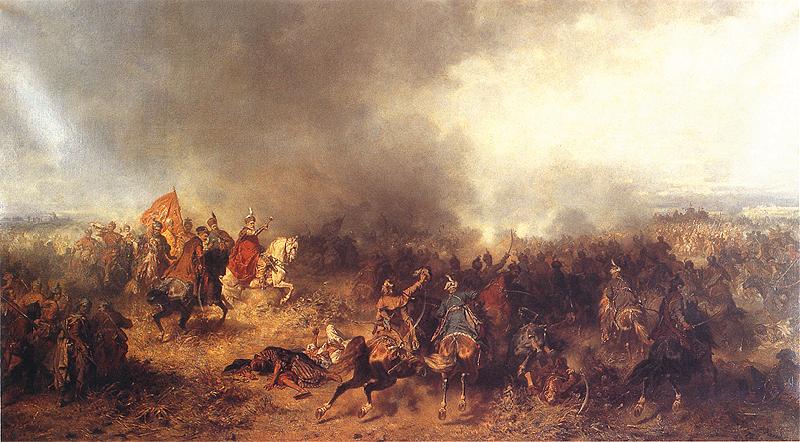
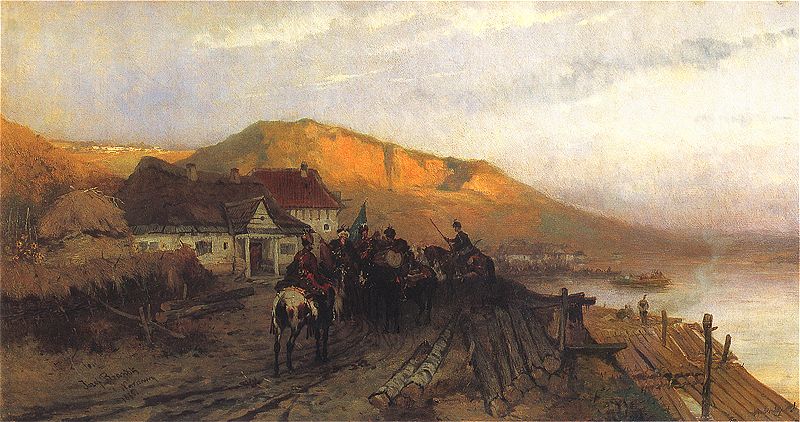
      almost 411 years ago a large Polish-Lithuanian army (including huge Zaporozhian Cossack contingent under Piotr/Petro  Zahajdaczyny/Sahaidaczny) commanded by the grand hetman Jan Karol Chodkiewicz (in this Jozef Brandt painting Chodkiewicz Chocim ) withstood one of the largest Ottoman Turkish  armies in a defensive encampment at the Chocim/Kotin  fortress Chocim   , also acrossing on the Dniester River (you can see the Dniester shore in this Jozef Brandt painting  Nad_Dniestrem ),  in Moldavia (present Ukraine).
The 1621 Chocim campaign has not been a subject of any  extensive scholarly study in English - there are some  articles though - they can be downloaded from the wikipedia wikipedia.org Battle_of_Khotyn 1621   battle page.

There are published Polish languages primary sources to this battle, compiled already in the XIX century by Polish historians and enthusiasts.
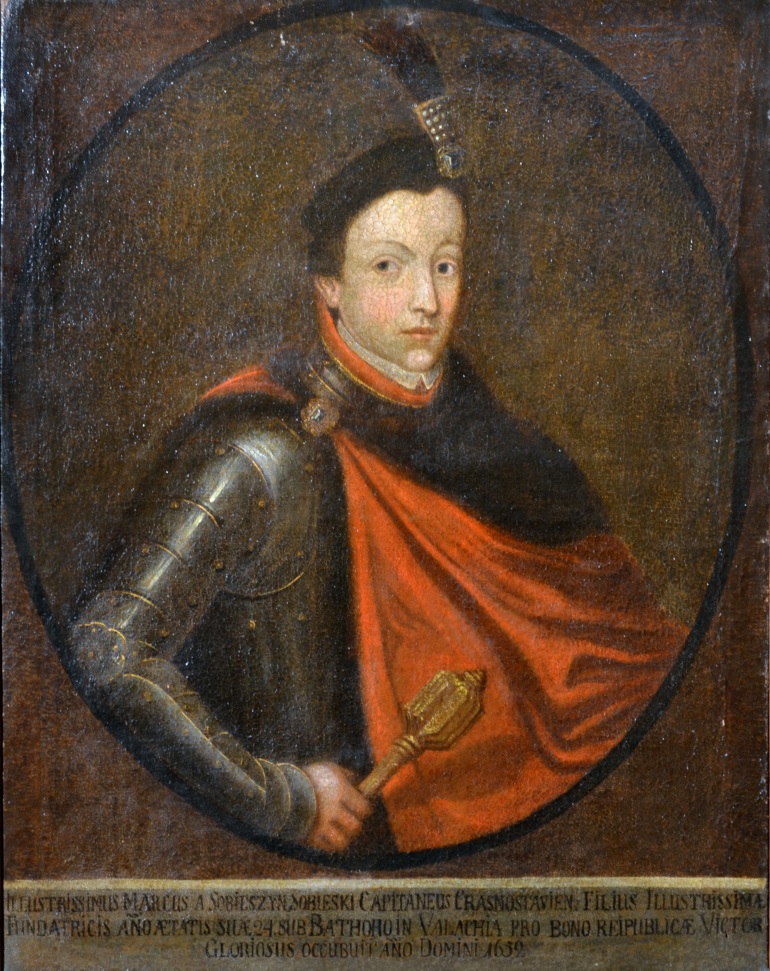
First of them,  Pamiętniki o wyprawie chocimskiej r. 1621, is a compilation of Polish writers (themselves participants of the famous battle)  Pamietniki Wojny Chocimskiej - including the diary of Jakub Sobieski  Jakub Sobieski , father of future king Jan III of Poland-Lithuanian and his prematurely deceased brother Marek Marek Sobieski ( I will write a page or two about this great cavalryman and patriot).

The second,  Collectanea z dziejopisów tureckich: rzeczy do historyi polskiey służących, is a compilation of various Ottoman Turkish writers as they relate to the Polish-Turkish relations between XV and XVIII centuries  Collectanea z dziejow  .

Finally a work of licentia poetica based in Sobieski'diary  by the already mentioned XVII century Polish-Lithuanian poet and bonn vivant  Waclaw Potocki who wrote this most famous XVII century Polish  epic poem known as Transakcja wojny chocimskiej (The Progress of the Khotin War)  and it can been read in various formats from archive.org  wojna chocimska .

Wednesday, April 1, 2009

Equus polonicus - Ridinger


Salvete,

Finally I found a good copy of Ridinger's Equus polonicus or our good Old Polish Horse, etching made for the album of some 30-plus etching of the mid-18th century horses of Europe and Middle east (Persian, Turkish, Arabian, Barb etc., horses) .
Johann Elias Ridinger (b.Ulm 1698 – d. Augsburg 1767) was a German artist and printmaker who devoted his life to the art of printmaking and specialised in equine, wildlife and hunting themes. He was often employed by His Majesty King f Poland and Prince of Saxony Augustus III, and we even have a print of him showing our king, not the best one we had, riding one of his horses.
 Interestingly,  Saxony was importing Polish horses all the way up to the end of the 18th century for the Saxon 'chevau legers' of the royal guard, where general Jan Henryk Dabrowski's father was a cavalry officer. See the print attached here too.
see this website dedicated to his art and the art of printmaking in general http://www.luederhniemeyer.com/index.php

Please note that our horse is a pinto, with a really small head and very nice muscular body and dry, strong legs. While Herr Ridinger might have exaggerated the small size of his head, nevertheless this lightly roman-nosed head does conform to the 16-18th (or even early 19th century) century preferences our ancestors had for their horses' heads, i.e., small, dry and noble
tbc