Showing posts with label Zaporozhian Cossacks. Show all posts

Wednesday, September 29, 2021

Chocim aka Khotyn 1621 order of battle - Polish-Lithuanian army

 Salvete Omnes,

One of the most important battles in Polish history, the one of Chocim (Khotyn) 1621,  is not really celebrated in Poland and other former lands of the Polish-Lithuanian Commonwealth. But for these celebrations that took part last Saturday in Rzeszow, Poland.


This epic armed conflict  between  Polish-Lithuanian Commonwealth and  Ottoman Turkey, the culmination of about 20 years of border conflicts, incursions, raids and etc, armed invasions eg Cecora 1620AD.  this year has its 400th anniversary.  And not a small role in  instigating this conflict, apart from the huge role of the Polish  border magnates, Zaporozhian Cossacks and Crimean Tatars,  was played by the enemies fighting during the early stages the 30 Years War -prince Gabor Bethlen on one side and the Hapsburg Empire. Perhaps Gabor Bethlen was instrumental in instigating the Ottoman attack on Polish-Lithuanian Commonwealth, as he was the enemy of our Respublica. Luckily for the Polish side the victorious Ottoman  commander Iskander Pasha had died before the fighting at Chocim took place.

so I would like to add some info about the Polish-Lithuanian Commonwealth army that mustered in the defensible war  laager around the medieval Chocim castle  on September 2nd, 1621 AD or at the beginning of a month long   'battle' between the hostile parties. It should be followed by another post about the Ottoman host.

the commander in chief :

Lithuanian grand hetman  Jan Karol Chodkiewicz

three major components of the army:

-mercenary soldiers and their retinues, where appropriate

-the Zaporozhain Cossacks

-magnate and lesser lords private banners and companies with appropriate retinue and warmed camp followers.

Polish-Lithuanian Commonwealth army at Chocim had also several separate commands -

 -Crown

-Lithuanian  grand duchy,

these former armies were untied under one register.

 -Zaporozhian Cossack

Now, as far as the total number of soldier there are two troop lists aka registers, that differ slightly as to the number of units and horses/portions(infantry),  of the Crown and Lithuanian army divided into different types of units:


Register one                                                                                              Register Two 

1. Winged hussars :

  -53 banners or 8520 horses (paid for soldiers on paper)          or             - 70 banners       or 8600 horses

2.  Pancerny kozak calvary and lisowczyk banners                     

  -66 or 8450 horses                                                                    or    -75 kozak cavalry or 7700 horse and 10 lisowczyk/1300horse

3.  German  reiter cavalry 

- 10 companies/ 2160 horses                                                       or - 12 companies 1300 horse

4.  regiments of German infantry

-5 regiments / 6450 portions                                                          or  -6 regiments  6100 portions

5.  Polish and Hungarian hajduk infantry

-29 companies/ 7600 portions                                                         or -30 regiments /8000 portions

all together 

33180 horses and portions.                                                             or- 33000 horses and portions

 Crown and Lithuanian army also included the camp followers, and some historians count to add about 30 to 35,000 armed camp followers from the hussar, kozak pancerny, reiter and  infantry commanders' retinues to the total number of armed combatants. The actual numbers of paid soldiers were at least 10% smaller in fact or so it this thought.

 The second important component consisted of the Zaporozhian Cossacks commanded by hetman Petro Konaszewicz-Sahajdaczny and it consisted of about 25-30,000 soldiers or portions(?)

 So for the purpose of operational and tactical combat application this Commonwealth army was divided into 'pulk' or temporary divisions of various sizes -
1.prince Władysław Vasa - 10,180 horses and portions

2. Grand hetman Chodkiewicz - 4,600 horses and portions

3.voivode Lubomirski -  3,350 horses and portions

4.Maciej Lesniowski - 1,000 horses and portions

5.Jana Mikolaj  Boratynski  - 859 horses and portions 

6.Mikolaj Zienowicz - 1,750 horses and portions

7.Aleksander Sapieha - 2,000 horses and portions

8.Piotr Opalinski - 1,600 horses and portions

9.Mikolaj  Kossakowski - 1,300 horses and portions

10.Mikolaj & Prokop Sieniawski, 1,200 horses and portions

11.Stanislaw Rusinowski - 1,200 lisowski horse

in addition there were 2,650 horses and portions that were not included in these 'pulks', as they arrived separately into the war laager  and thus not assigned to any division.

The army had circa  30 pieces of field artillery, only few of them heavier guns.  


Zaporozhian Cossacks, with their separate camp extended along the river constituted a self-operating rather huge division ( we do not know how they might have been divided and operated other than they did have a 'pulk'  organization too) -  like I said experienced fighter, scholar and commander hetman Petro Konaszewicz-Sahajdaczny commanding.   


From the very first day the Commonwealth army was not sufficiently provisioned with foodstuffs, horse fodder, munitions and especially gun powder. For some reason  the river Dniester was not used to ship food and war supplies into this war laager. Which is interesting in itself since all Commonwealth large rivers were used as the  shipping and trading highways, yet Dniester was no used to provide supplies to the fighting army.

to be continued

Valete


Monday, June 28, 2021

Beresteczko 1651-2021

 Salvete Omnes,

another anniversary this month - the gargantuan battle of Beresteczko 28-30th of June 1651 - 370th anniversary of the Polish-Lithuanian(Ruthenian) victory over the rebellious Cossacks and their allies - the Tatars.

Huge victory for the Polish-Lithuanian Commonwealth, and like Grunwald Ad 1410, this victory in the field was not persecuted to the fullest in the subsequent campaigning, thus allowing the rebellious Cossacks and their Tatar allies to regroup and return to fighting during the autumn of the same year during the so called Biala Cerkiew campaign. C'est la vie - 


Number of combatants must have been huge - more than 80 thousand Polish-Lithuanian troops and national levy, perhaps 2 times as many of camp servants (ox cart and horse wagon drivers were at least as many as the number of those wagons)  on the royal side, and on the Cossack-Tatar side God only knows, more than the Polish-Lithuanian royal host.  So this battle may have been one of the largest of the XVII century.


His Royal majesty Jan II Kazimierz Vasa/Waza was the commander of the Polish-Lithuanian armies and he is the victor of this battle. The enemy commanders - Crimean Tatar Khan Islam Garay and Zaporozhian Cossack Bohdan Chmielnicki - were out maneuvered and their armies routed .

Prince Jeremi or Jarema Wisniowiecki, Korybut coat of arms, already famous for the Zbaraz defense  and his other actions during this terrible war, this time proved his martial prowess again and again, and he gained more fame for his actions during this battle. But he was not in favor with king Jan II, and nothing good came out of it.

Hail the victorious, memento mori to the fallen.


In the coming weeks or even months I will collect and write down  some of the army lists and some other interesting materials related to the battle, like the color of a Tatar horse price Boguslaw Radziwill, Traby coat of arms, captured during the third day of this herculean battle.  


to be continued

Valete

Monday, January 26, 2015

Anatoly Telenik - paintings & sketches

Salve,
this year is still new -:) so I am planning to start a new theme - contemporary painters and illustrators , in whose art horses and history are featured.
I am going to start this theme with Anatoly F. Telenik (А. Ф. Теленик), Ukrainian painter who lives and works in the south of Ukraine, near the Black Sea. We should remember and reflect that presently in the south eastern Ukraine there is war,  this bloody awful, needless, foreign-influenced and terrible war  that is wrecking lives, causing death, havoc and misery in peoples' lives as we speak.
                     Let us not forget Ukraine in our prayers for peace.

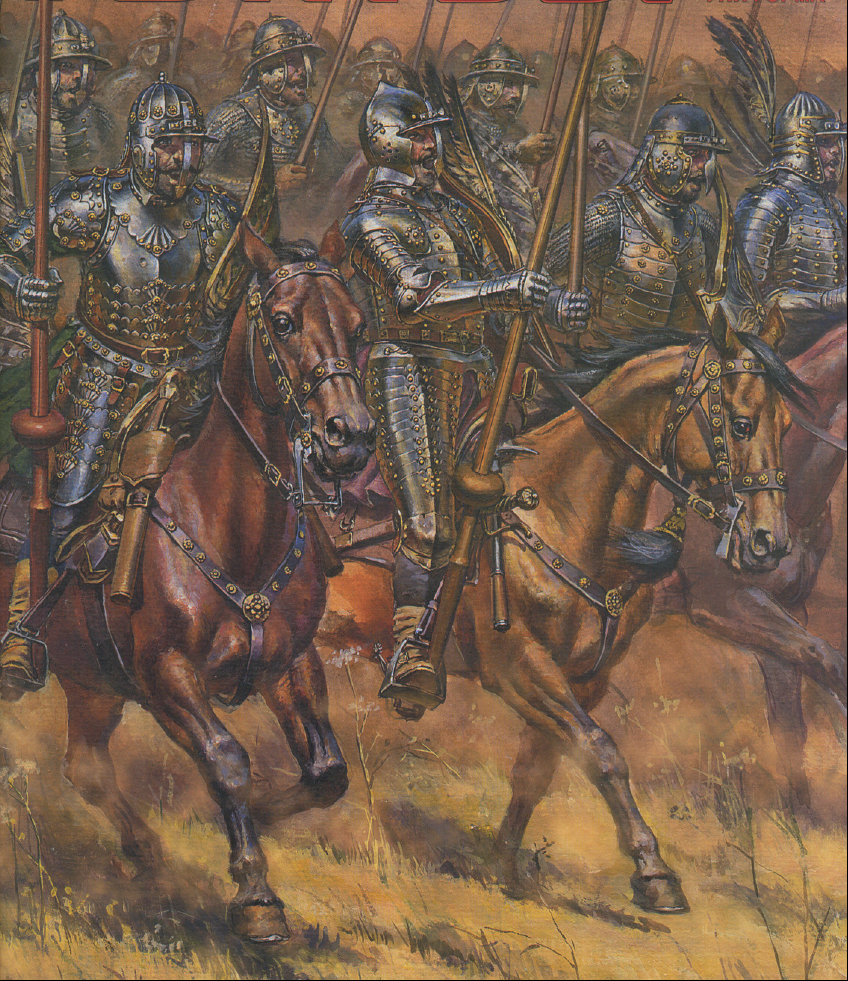
    Mr. Telenik kindly allowed me to show some of his sketches and details of his larger paintings.
Anatoly is very prolific, paints, usually in oil, many historical subjects ranging from Medieval, Early Modern and Napoleonic periods, as well as still lives, landscapes, figurative art and any other subject he sees fit to touch his brushes to, as long as there is time to do it. His historical paintings, especially related to the Napoleonic Wars figure prominently in many collections, while they have been reproduced in numerous books (eg 1812 war  as in this publication) and magazines in Ukraine, Russia etc.
Below details from anatoly's Napoleonic paintings, battles of Eylau and Borodino.


I love this art related to our common history - the Polish-Lithuanian Commonwealth, - for we, Poles and Ukrainians share some proud history together, and hopefully will share some more in the future :)


So then more  winged hussars and Zaporozhian Cossacks.


In my opinion Mr. Telenik's art rightfully falls within the greatest of this genre - Juliusz and Wojciech Kossak, Jozef Brandt, and Józef Chełmoński etc.

enjoy

Ps
today I read that Demis Roussos died on Sunday (25.01.2015) - pacem aeternam, great artist.

Monday, December 17, 2012

A rider - MyPaint and Gimp manipulated image

Salve,
let me share with you a drawing/digital/ I did this month with MyPaint and manipulated with GIMP a bit.
The image - well, perhaps he is a schwartz character from some remote corner of the vast Polish Commonwealth borderlands (in 1620s A.D. the Respublica Poloniae was approximately 1 million kilometres in area) or perhaps a Registered Cossack (Polish Cossacks or Zaporozhian Cossacks) on a lookout for the Crimean Tatars.

 I may add several items to this image, perhaps a skull or some bones..., add some items on the horse tack list etc... After the New Year.

For, now I hope you will find it interesting :)
ps
Polish painter Józef Brandt was famous for showing these lookout (czaty) parties and our Cossacks eg:

many here and a nice one  here