Showing posts with label crouper. Show all posts

Sunday, December 14, 2025

Tang riding horse harness terminology

 Salvete Omnes,


Tang Dynasty period in Chinese history is famous for the ceramics in shape of horse and horse & rider. 


I have a book - actually an exhibit catalog from  the Kentucky Horse Park (published 2000AD).
Title: The Imperial China, The Art of the Horse in Chinese (review). 
In the Chapter: The Horse in Chinese History by Bill Cooke (director emeritus of the International Museum of the Horse at the Kentucky Horse Park) there is a description of the Chinese terminology around the Tang Dynasty period. 


The author provided information on the horse harness terminology -

Jisheng on the crouper harness

Bridle- 'luotou' and the Bit - 'Youle' with cheek-bars - 'Biao'


Saddle - 'An'

Pommel and cantle saddle with tree bars

High pommel saddle with a saddle cover, saddle pad, saddle mud guard, and stirrups

Behind the saddle, to the saddle tree Tang saddlemakers added 4-6 straps hanging down the saddle pad

horse with a crenellated mane


Saddle-pad - 'cun' and  Saddle mud-screen -  'zhang-ni'


Saddle cover - 'Anfu'


Saddle cinch/girth - 'Fudai'

Breastplate/breast-strap - 'Panxiong'


Crouper/crupper - 'Qiu'


Apricot/peach leaf ornament - 'Xingye'


Cranellated /crenelated mane - 'three flower' 'Sanhua'


Bounded Tail -  'Fuwei'


Crupper saddle adornment -'Jisheng' (parasite), also a version known as 'Fire pearl ' - 'Hounzhu'


enjoy

Valete

Monday, October 27, 2025

Saddle pommel plate - figures of hunters , MET

 Salvete Omnes,

a quick entry - Pommel plate from a saddle MET DP273591
The MET describes this pommel plate as Mongolian (Central or Western Asian) or Tibetan (13th-15th ceentury/ XIII-XV century). 


..

a close up clearly shows two mounted warrior, archer executing a Parthian shot and a lancer handling his lance in the two-handed manner, with a tiger or panther in between. 


enjoy

Valete

Thursday, June 12, 2025

Belden, the white chief- apishamore saddle circa 1870

 Salvete Omnes,

George P. Belden, native of Ohio, was a cavalryman in the Nebraska Cavalry and then got his Lieutenant's commission in the regular army as as 2nd Lt US 2nd Cavalry , serving in Dakota Territory and Wyoming Territory. He was cashiered from the Army in Nov 1869, and died in 1871. 
He wrote and published his experiences as Belden, The White Chief; or Twelve Years Among the Wild Indians of the Plains (Vet pub, NY- 1870), with illustrations based on his and fellow soldier, Mr. Innman, drawings.

Within his book there is a short chapter on the 'apishamore'  or soft pad saddle made for  White Bear by his wife.


.

.


.
to be continued

Salvete

Sunday, February 16, 2025

Buffalo vel bison hunting III - bison skinning or dressing - The Eastmans

 Salvete Omnes,

Seth Eastman's drawing engraved


the last chapter on hunting bison - the process of skinning of bison etc.
In this chapter Mary Eastman brings forth much more information from the colonial and frontier annals, 

Mary ends the chapter the the ominous saying stated to her by 'an aged Indian' -'When there are no more buffaloes, there will be no more Indians.'


.


.


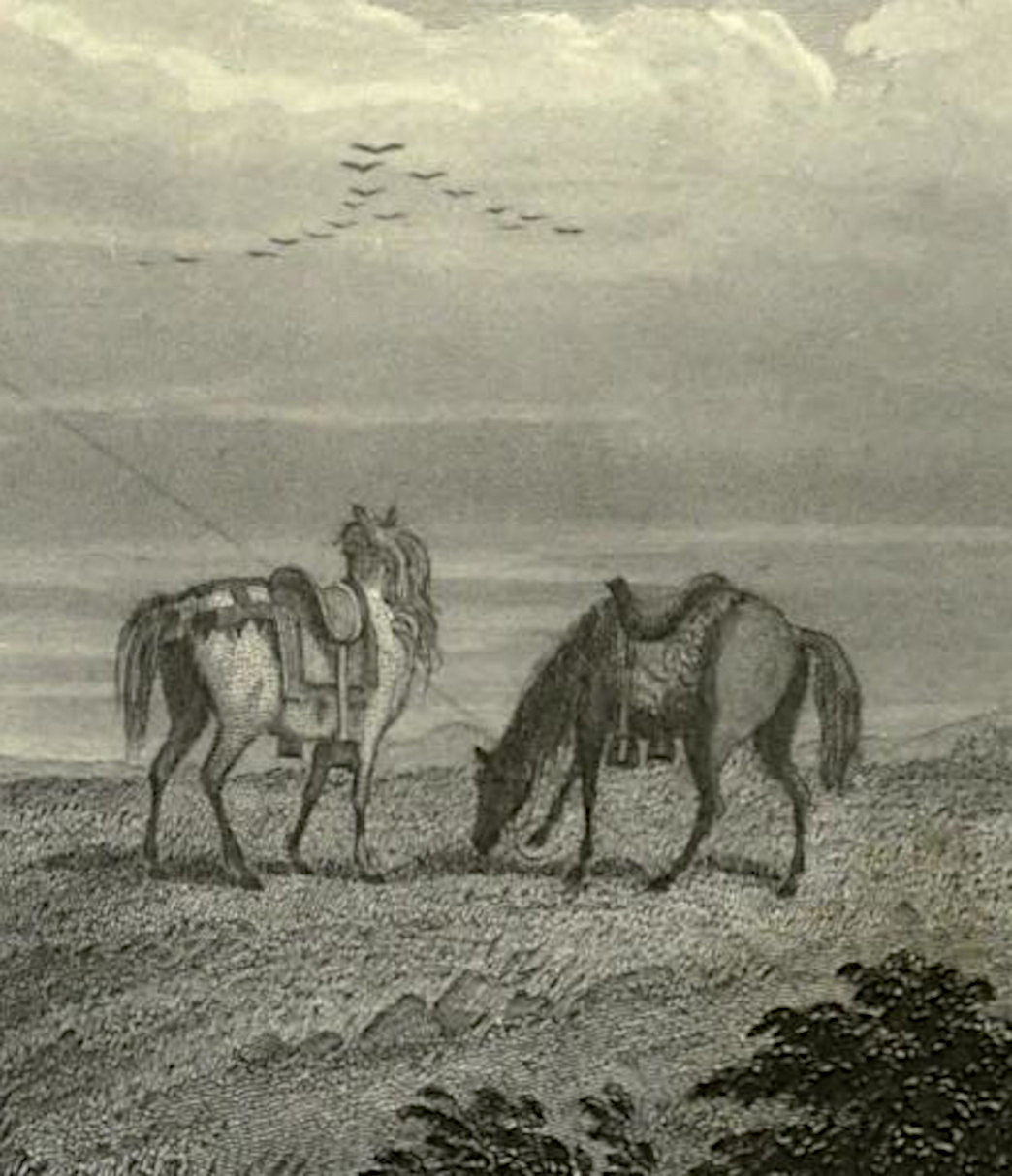
  the illustration drawn by Seth provides some more detailed information on the equestrian, two grazing buffalo runners,  in the background -


they seem to be outfitted with the native saddles with stirrups and one horse has a bison hide blanket, while the 'flea-beaten gray' has more elaborate harness with a crouper. In some of the Eastman's paintings these  fringed croupers appear as well. The can be seen in the perido art - from George Catlin, Paul Kane, Bodmer, A.J. Miller or Rindisbacher. 

Valete 

Friday, January 17, 2025

Eastern Wei - caparisoned horses

 Salvete Omnes,


a little visit to early 'Medieval' China - Eastern Wei Empire (AD 534-550) and their warriors and horses.


.

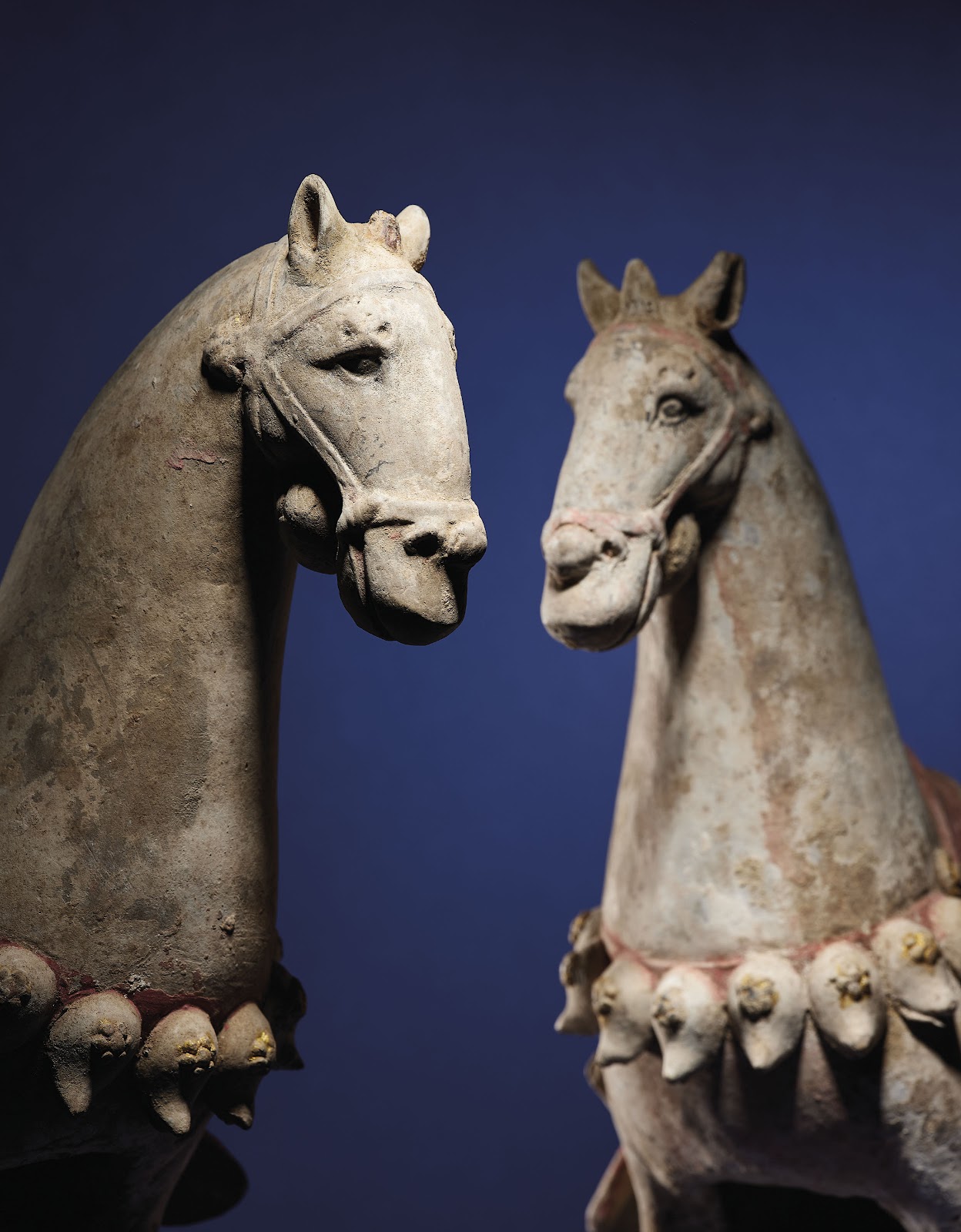
Eastern Wei, albeit short lived, gave us the peculiar sculptures  of fabulously caparisoned and harnessed horses , that where continued during the unifying Sui Dynasty period of the Chinese history, but the Eastern Wei gave way to Northern Qi imperial dynasty (ended in AD 589 by the Sui Empire). 

A Christie's' gallery - larger and full image here


A caparisoned horse with a very clearly sculpted saddle and stirrups -


-from this gallery.


Bonhams auction hourse - a Horse Gallery 


In these sculpted horses we can see many elements of the steppe horse harness elements that will endure for more than a thousand years until the modern age.

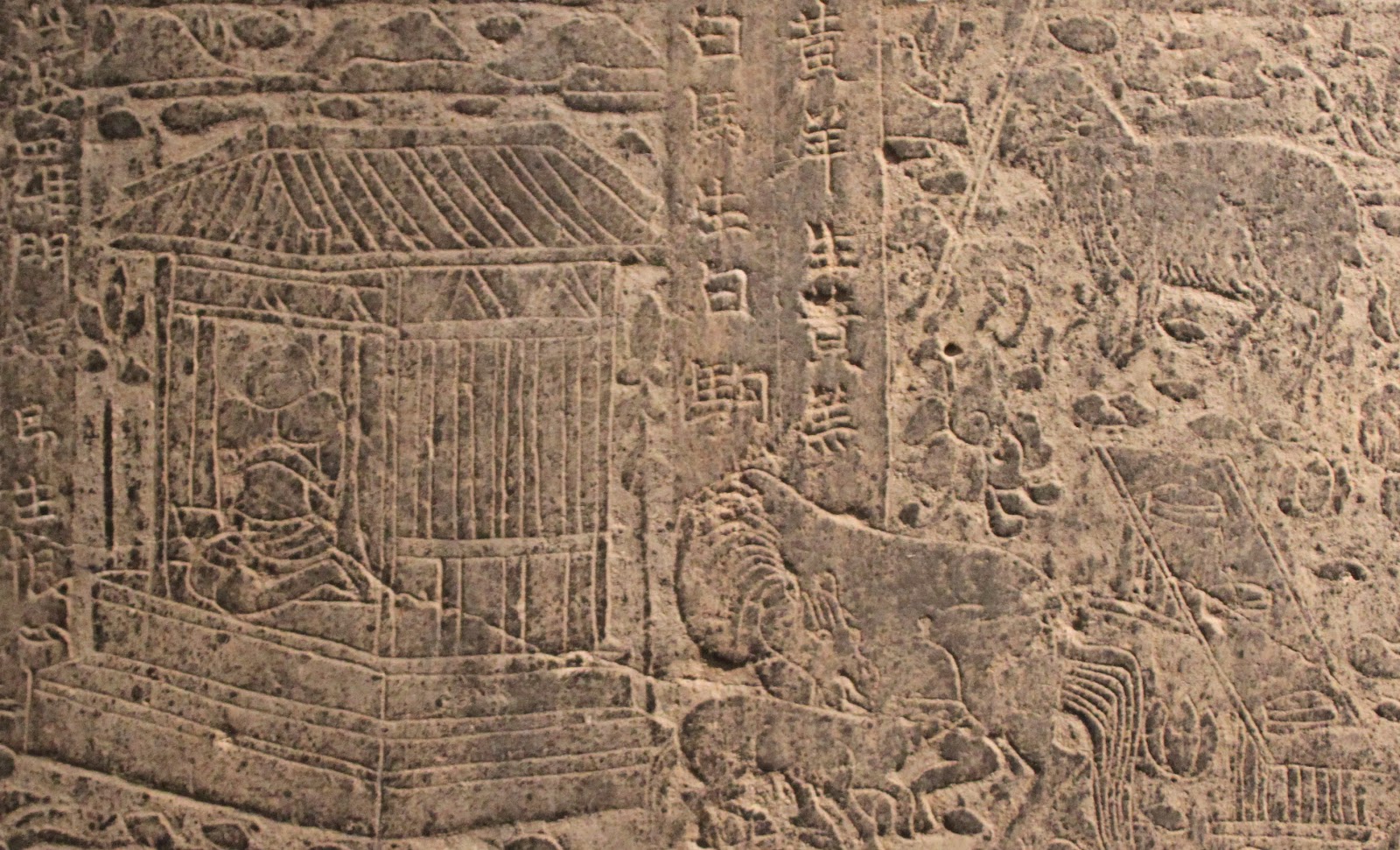
Eastern Wei Stele of 90 Secular Members, 543 AD

a mare with a foal

harnessed horses and carriages

a fine steed in a flying gallop

some personages 


warriors


camel - instrumental in the trade between the Central Asia, Northern Dynasties empires and eastern steppes and Korea.


oxen - 


enjoy

ps 

I will do a post on the Northern Wei and Northern Qi - I hope

Valete

Sunday, June 30, 2024

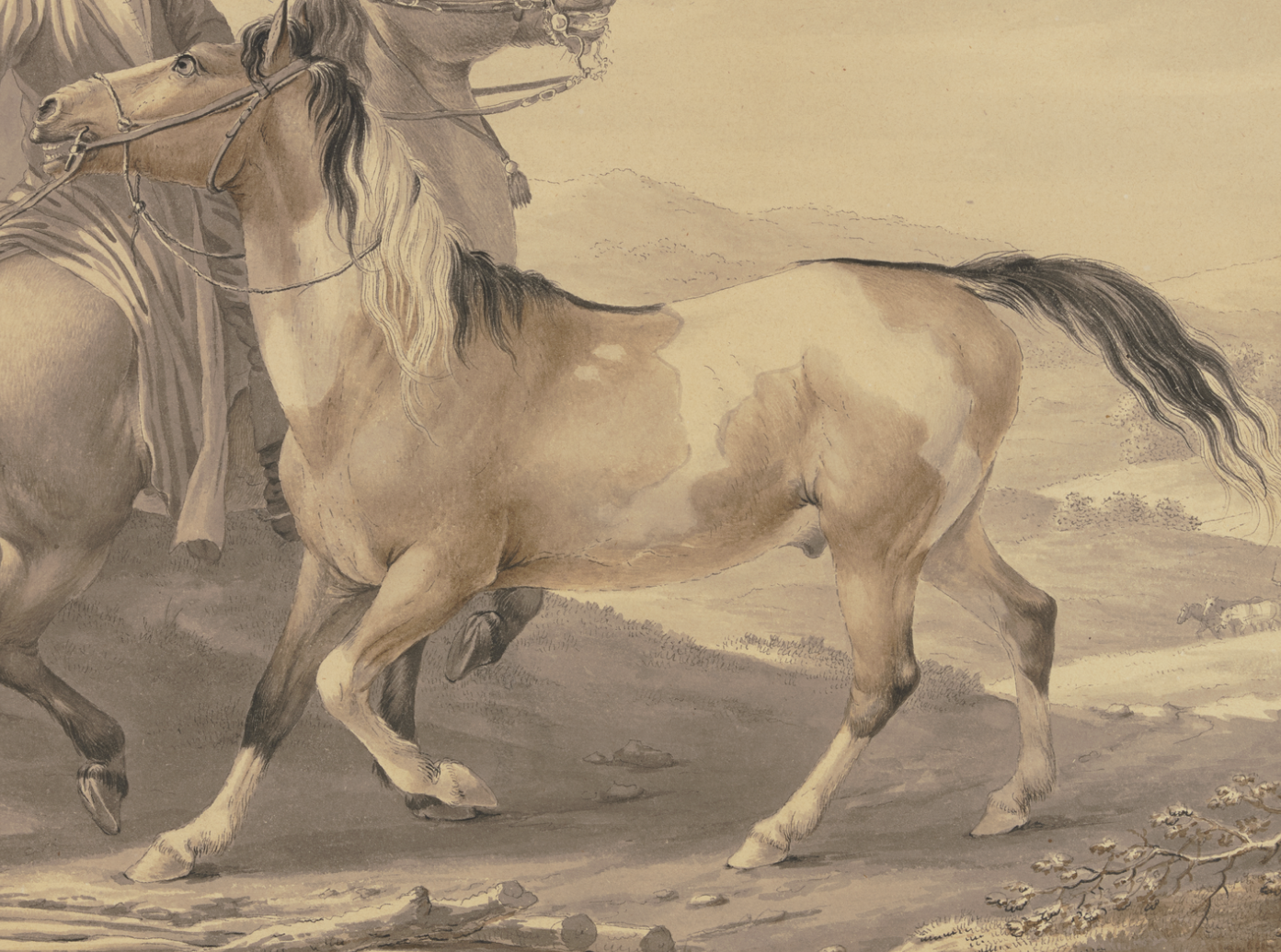
Johann Georg Pforr - Polish horses

 Salvete Omnes,


J.G. Pforr (1745-98) was active in Western German state of Hesse-Kassel. Being a son of a tenant farmer, he went to work in a mine, injured there he then was hired as a porcelain painter, and from that factory he went on to become a full-time painter. 
Influenced by Philips Wouwermann, Paulus Potter, and  other Dutch painters, he was called a German Wouwermann by his fellow countrymen. Johann Pforr died too early, in his 55 year, and he art remains.

curious bit and kind of interesting headstall & the third rein 


from his 'stable' of horse drawings and paintings comes this piece-  Polish horses of his era. This artwork is held at  Städel Museum in Frankfurt on Main River, western German state of Hesse.

very typical Polish headstall and bridle of the period 


A rider dressed in Polish traditional costume - zupan and kontusz or some other overcoat  and rogatywka/konfederatka czapka or headgear - mounted on a bay? horse holding a paint horse

I wonder if the rider's costume was taken from some Saxon archive, as in Saxony there were Polish-Lithuanian Tatar lancers or uhlan/ulan regiments until 1763. 


enjoy

Valete