Showing posts with label kopia husarska. Show all posts

Wednesday, February 28, 2024

Winged hussars with lances - some illustrations

 Salvete Omnes,


the month of February 2024 is ending, winter coming to an end and Novruz will come running. 

The wars are not ending unfortunately, there are no leadership in the West to stop the mayhem.
and European farmers, the core of that land, went to wage big protest war against the elites and their lackeys, who are in denial of biology and photosynthesis  - Godspeed to the farmers!


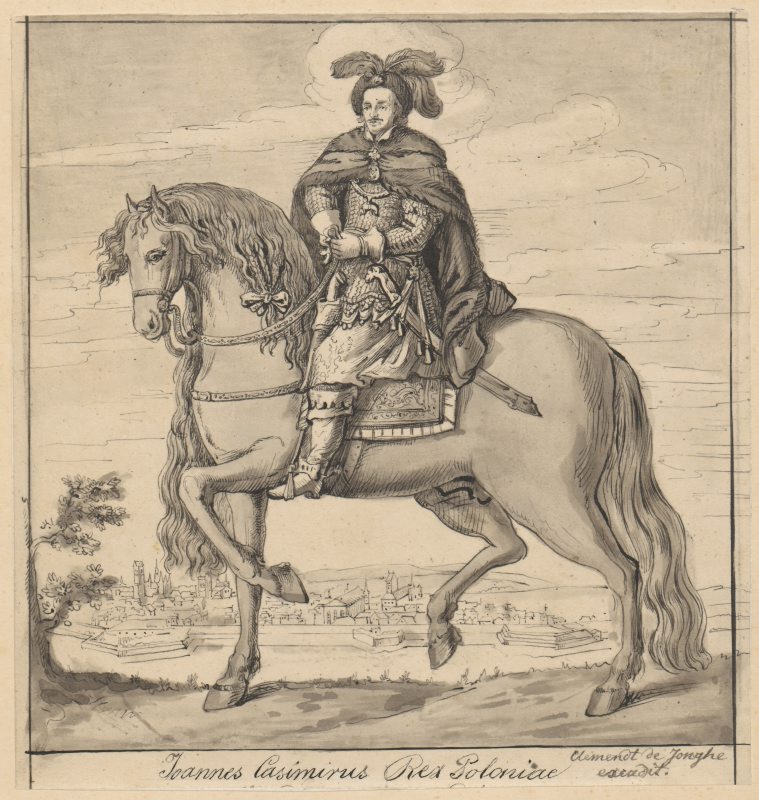
I am going to end this month with some of my illustrations showing long lances of our winged hussars - some older and some newer illustrations.


enjoy 

valete

Monday, February 19, 2024

O chędożeniu konia - dr Radoslaw Sikora goscinnie

 Salvete Omnes,

[in Polish only]

Krótko, ale niezwykle, bo dzisiaj gościmy na moim blogu Dr Radoslawa Sikorę, który na swojej stronie Fb zamieścił wypis o [staropolskim] chędożeniu konia.

Wypis imc Radoslawa zamieszczam jako 'obrazek'

fragment mojego rysunku - panskie oko konia tuczy

plus parę moich własnych dodatków na temat znaczenia i użycia chędożenia w przeszłosci:

A tutaj jak owe 'chędożenie'   widział twórca Słownika Języka Polskiego Samuel B. Linde, wydanie z Warszawy, wtedy stolicy Księstwa Warszawskiego, całkiem niepodległego państwa polskich obywateli & obywatelek i żołnierzy, AD 1807: 


a w słynnym słowniku Alexandra Chodzkiego, (Dokładny Słownik polsko-angielski i angielsko-polski, Berlin 1874) stoi (str 18):
Chędogi - clean, neat

Chędogo - cleanly, neatly, powiedzenie:  choc ubogo, lecz chedogo, poorly but cleanly.

Chędogość - cleanliness, neatness

chędożyć - to clean, to scour

A pismo Przyjaciel domowy, pismo dla gospodarzy, w numerze z października AD 1854 - opisuje tak oto wychowanie źrebiąt i źrebców:


'Pobudka Zacnym Synom Korony Polskiey do służby Woienney' Wojciecha Rakowskiego(1554-1617)


Valete

Sunday, June 12, 2022

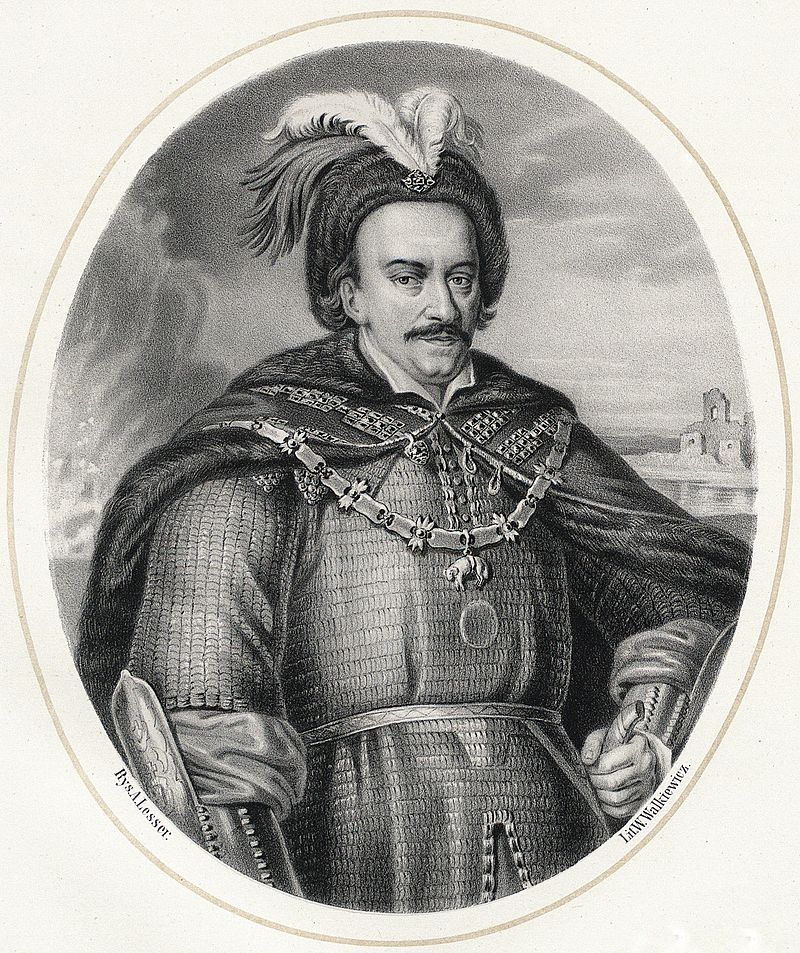
Aleksander Lesser - drawings of East-Central European arms and armor

 Salvete Omnes,


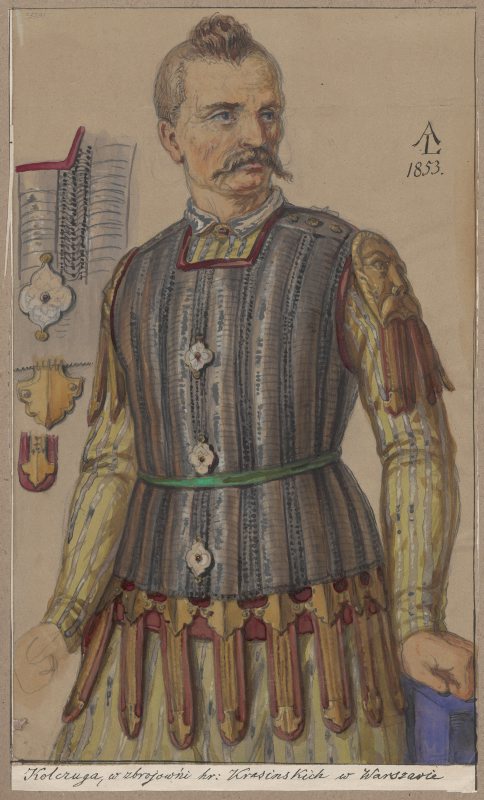
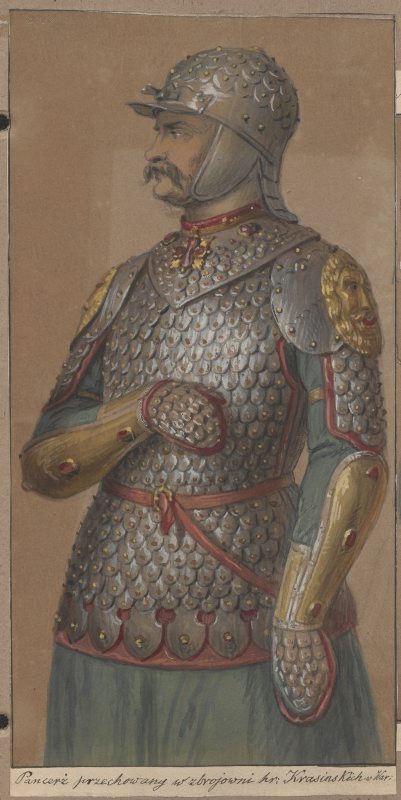
a short entry -  various drawings by a Jewish-Polish painter and draughtsman Aleksander Lesser , pre-Jan Matejko historical painter, among others he was a student of the German Nazarene movement artists like Julius Schnorr von Carolsfeld et al. 


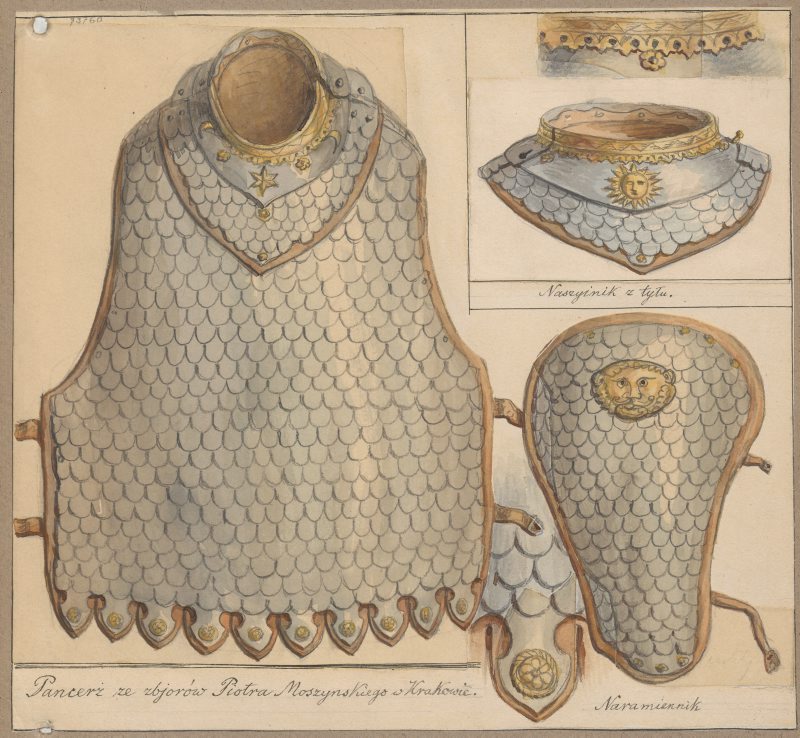
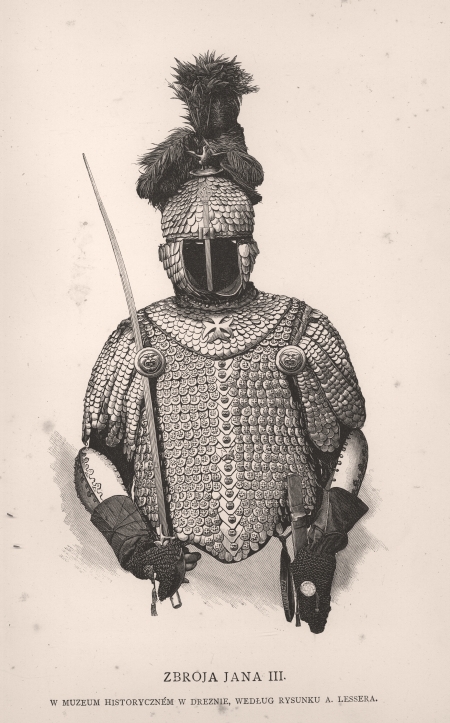
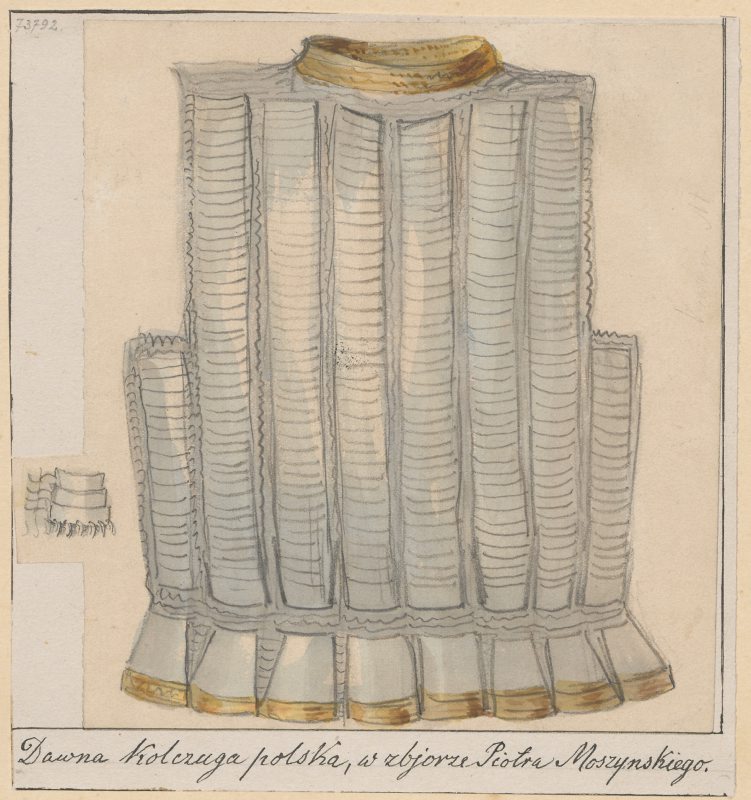
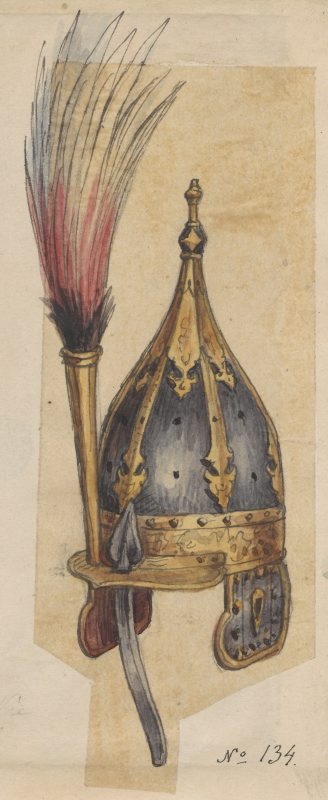
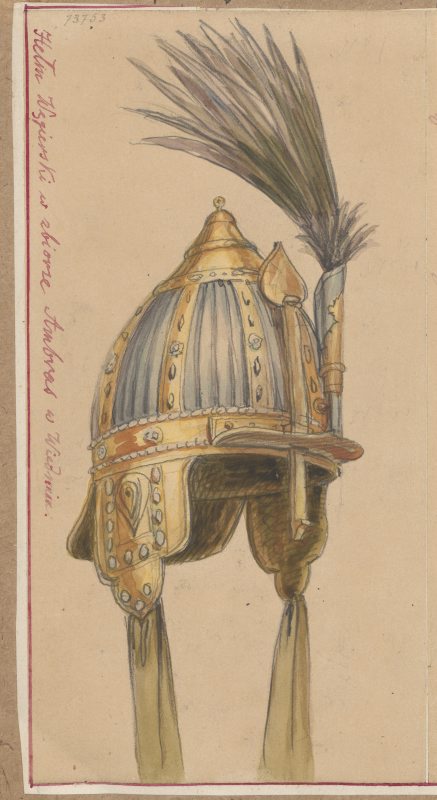
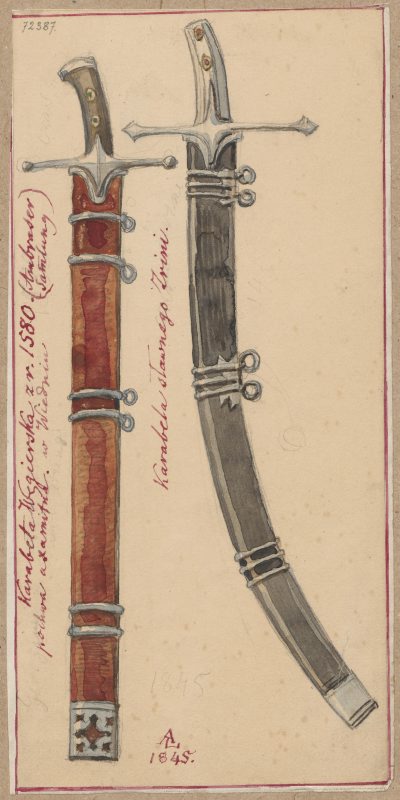
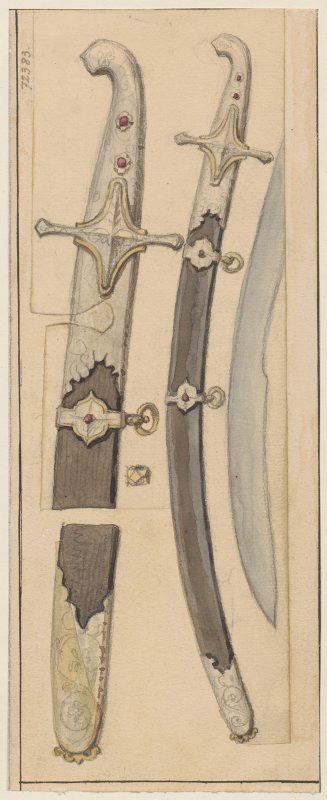
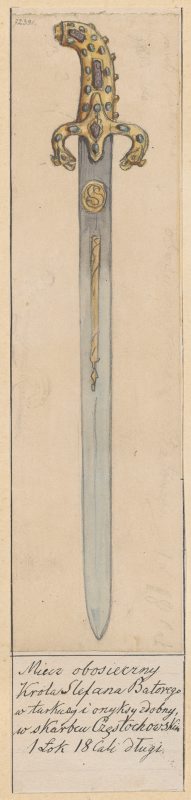
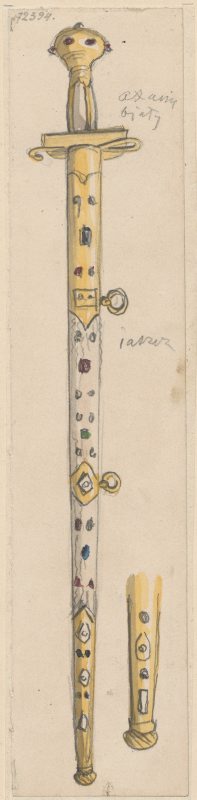
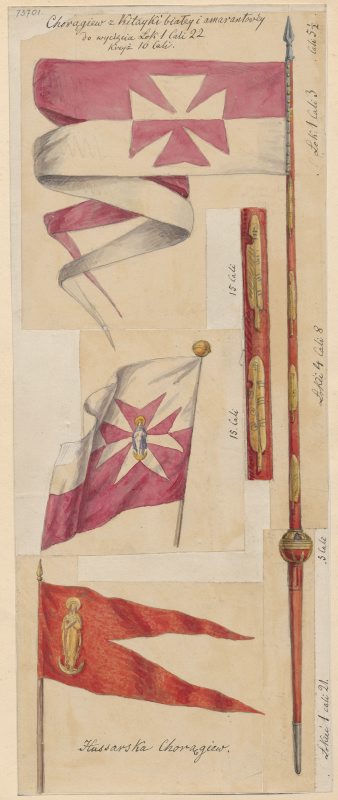
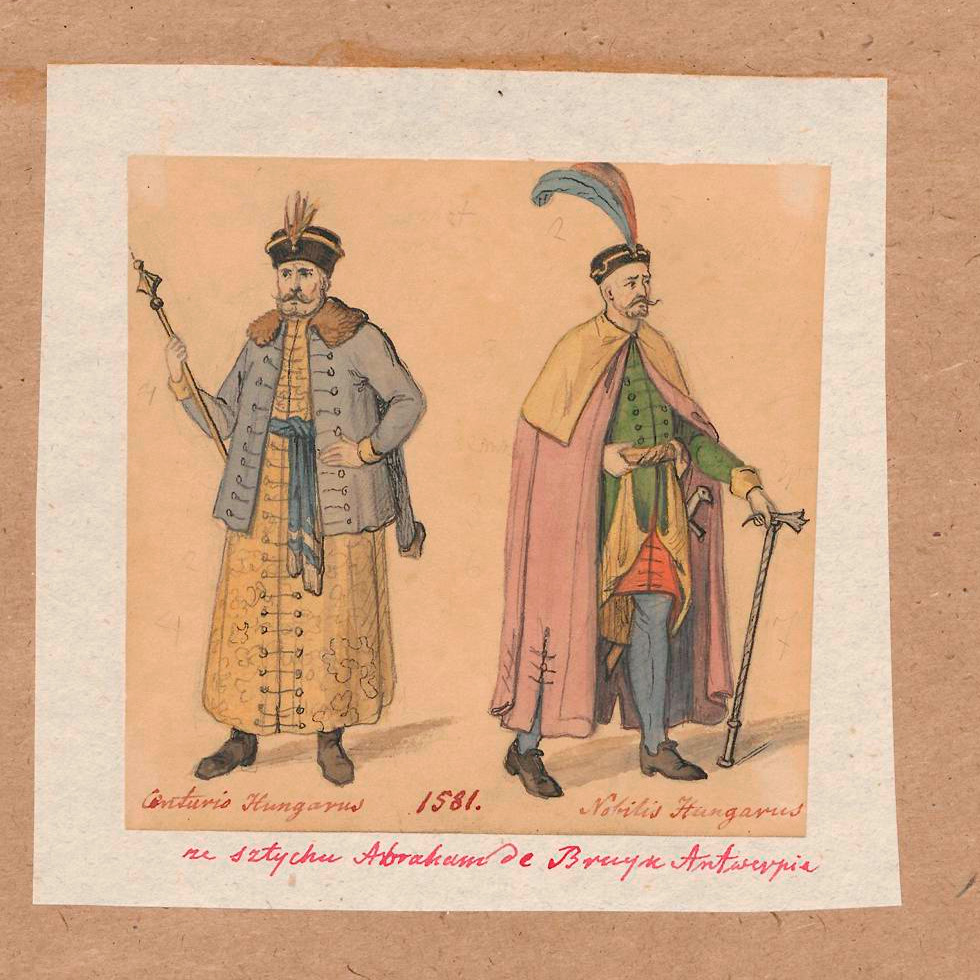
These drawings represent pan Aleksander's research within the  various arms and armor collections in Europe of his age. As he was a Polish historian-artist and researcher - they represent mostly items related to the  Polish-Lithuanian and Hungarian history of the early modern period. Karacena, chain-mail and bechter (mail and plate armor) armor, shishak style helmets, swords and even a winged hussar kopia.
a bechter

a karacena armor suit

Jan III Sobieski karacena armor


 bechter cuirass

a karacena armor suite


a szabla/sabre and a palasch


a pallasch

a koncerz

a kopia hussarska, hussar lance, hussar lance pennon

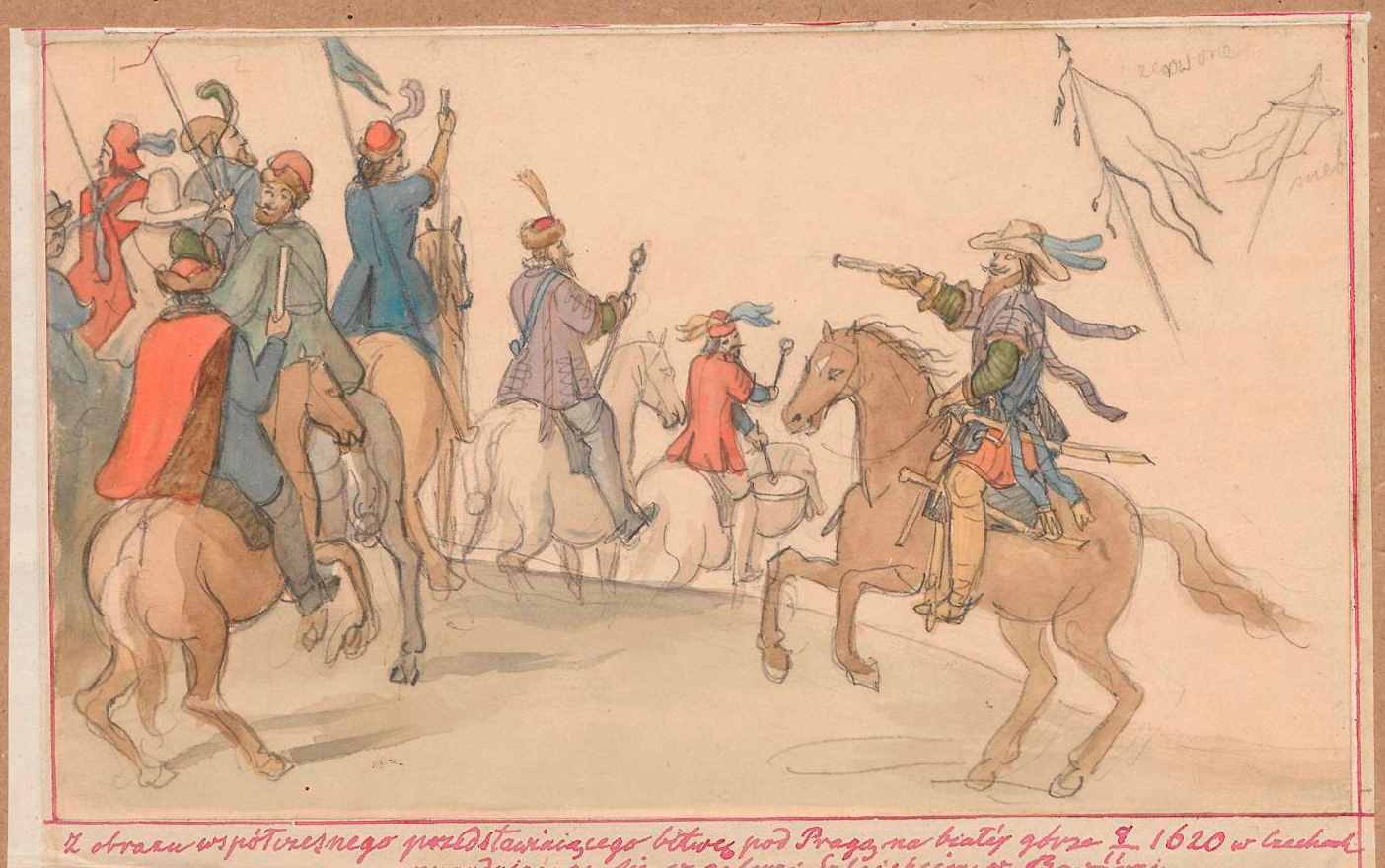
Pan Lesser studied old paintings eg - his sketches


you can explore these and other drawings and paintings via Polish National  Museum digital platform - Aleksander Lesser.

Valete

Saturday, January 29, 2022

Winged Hussar and other images from the Book of friends

Salvete Omnes,


Book of friends -  or more properly Johann Joachim Prack von Asch's liber amicorum was a compilation of entries spanning 1587-1612AD, including the period of the so called Long War (thanks to Bruno Mugnai I have the 2-volume book  on the said war  ), with the paper coming from the ancient paper bazar in Constantinople. Joachim Prack von Asch from was a Hapsburg diplomat, who  traveled between Constantinople,  the capital of  Ottoman Empire and  Bohemia and other lands of his emperor, Rudolph II Hapsburg.

The Book of Friends is available either on the Getty Digital Collections site or on Archive - world's library - and from its pages come this gouache miniature showing a winged hussar killing his lancer adversary, a Turkish Ottoman lancer.


the Christian winged hussar is on the left - piercing with his hussar lance the throat of the Ottoman sipahi or perhaps the elite Deli lancer.
The winged huusar has a large wing on his left side, clearly visible shield, a shishak helmet with three feathers, a leopard pelt on his shoulder, short zupan, red close-fitting breeches, yellow boots with long spurs, under his thigh he carries a hussar war-hammer with pick (nadziak) - he is a picture-perfect winged hussar of the period, be it in Polish realms or the Hungarian lands.  His sorrel horse is caparisoned with an animal pelt, the bridle is with a curb-bit , reins and headstall without any visible adornments .
His Ottoman adversary has a shield,  tall Ottoman shishak with a wing on its front,  he has  some armor(perhaps mail), loose-fitting sharavari (Turkish salvar, from Persian sharavara) pants, a kilij sabre and a koncerz (estoc), also  a painted lance with lance apple.  His gray horse is caparisoned with a long textile fringed shabraque,  his bridle is ornate and sumptuous, at the throatlatch there is a long horse bunczuk(Turkish tug),  

and some other horse-related images


Valete 

Thursday, November 25, 2021

Hungarian Hussars from Esztergom

 Salvete Omnes,

there is a group on Facebook titled 'Szlafrokow Romowy' (for reenactors , historians, and aficionados interested in the Old Poland and her neighbours costumes and attires) and Tomasz Rejf, one of the members of the group and an avid XVII century reenactor and researcher, has provided this link to the British Museum scan of a drawing (pen and ink, and watercolor) by Jacob Hoefnagel, Flemish artist, showing the vista of the Hungarian city of Esztergom circa 1595AD.

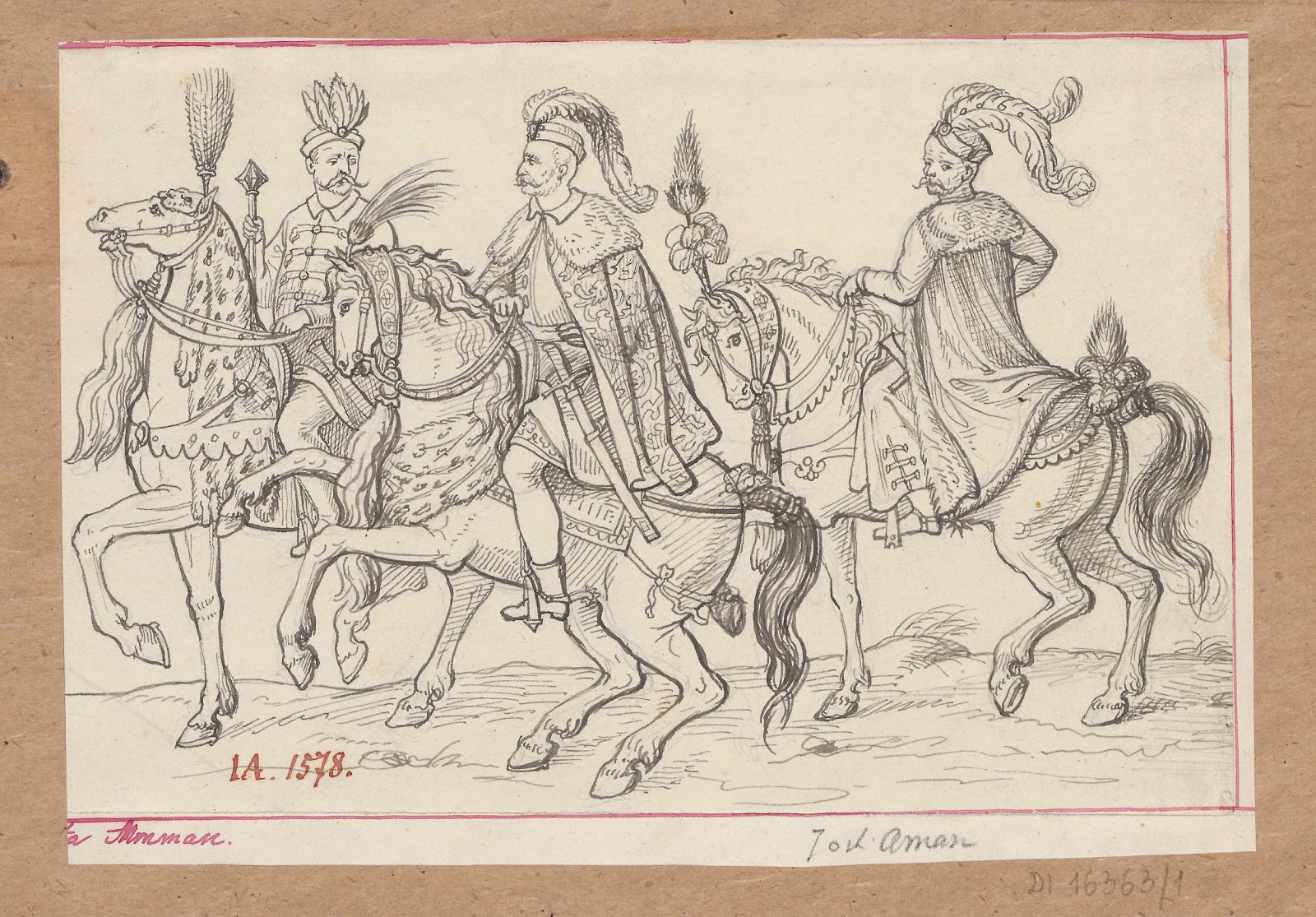
In that picture, in the right hand corner there are three hussars or lancers astride fine prancing horses and with all that finery that made Hungarian and Polish winged  hussars so picturesque, each with a different hussar lance. 


Wiki Commons has a scan of a print that was based, mast likely, on the Hoefnagel's drawing.


enjoy studying the images 

Valete

Ps

Happy Thanksgiving - :) 

Sunday, June 27, 2021

Saint Longinus from Biecz - winged hussar kopia?

 Salvete Omnes,


a quick gallop in search of artefacts and imagery related to the famous Polish cavalry of the early modern period aka  winged hussars.

Biecz is a very old town in southern Poland, in the Little Poland historic province. It has been mentioned already in the early XI century, and circa 1257Ad became a town founded based  on the German law town privileges. Under king Kazimierz Wielki town became a seat of a royal starost,  and  the capital of Biecz county (abolished by the Austrian overlords following the First Partition of Poland and annexation of Biecz county in 1780s).


One of the most important monuments and active Roman Catholic church is the Corpus Christi Collegiate church in Biecz.


and inside this late Gothic -Renaissance church , above the entrance to the 'presbiterium' (presbitery aka chancel) there is a beam on which a Passion scene has been constructed. 


the Latin sentence is carved onto the beam -  Christvs Dominnvs Factvs est pro nobis obediens vsqve AD Mortem MDC XXXIX -  which could mean that the figures of this Passion scene were placed there around 1639AD?

One of the sculpted figures of this Passion scene portrays a Roman soldier aka Saint Longinus. 
but this is a XVII century Saint and hence he is dressed and armed like a winged hussar?
His kopia or lance with which is is piercing Christ's chest  is very much like the winged hussar lance of the period - very long and 'slender' looking, with the galka or apple/pomme ball-like handguard very close to the butt end


the kopia's dimensions and its appearance seem to support my hypothesis that actual winged hussar kopia had a rather short rear part, from galka to  butt end,  in relation to its entire length. 


unfortunately I have no good modern photo of this figure of Saint Longinus as winged hussar


ps 

I have no information if this kopia/lance has been studied by any Polish historians. Anybody knows?

valete