Showing posts with label Peter Snayers. Show all posts

Saturday, September 27, 2025

Kapalin husarski - winged hussar war hat

 Salvete Omnes,


today is the 420 anniversary of the momentous battle of Kircholm (1605). I have written about Kircholm many times (please, be so kind and check labels). 


Today a word or two about the war hat found to have been used by the winged hussars(companions and retainers). Typically we associate the winged hussars lancers, especially the companions, with a helmet known as a szyszak (shishak, shishaq). Naturally during the period of late XVI and early XVII century the lancers wore a variety of helmets, and a kapalin war hat was one of them. 

Note that war hats or kettle hats were in use since the early Middle Ages, and even as late as 1630s Swedish modern army had kapalin war hats in their panoply, especially the cavalry, albeit their were often blackened.

winged hussar carrying a lance and a kapalin war hat


Polish museums, eg Krakow National Museum, have a collection of these helmets, also in Belarus too, perhaps in Lithuanian and Ukraine as well.

a 'kaapalin' from a Belarusian museum, placed on a chain mail shirt 


National Museum in Kielce has a very nice example of these kapalin war hats used by our hussars. 


Also, Museum Ziem Wschodnich-Lublin Castle   has  a well preserved example of Polish-Lithuanian cavalry kapalin war hat.


more photos of the helmet on the museum website.


So perhaps some of the boys who charged the Karl IX's Swedish army wore the kapalin war hats, a popular helmet with some companions and many retainers through 1650s.


enjoy

Valete

Friday, November 8, 2024

White Mountain 1620-2024

 Salvete Omnes,


..

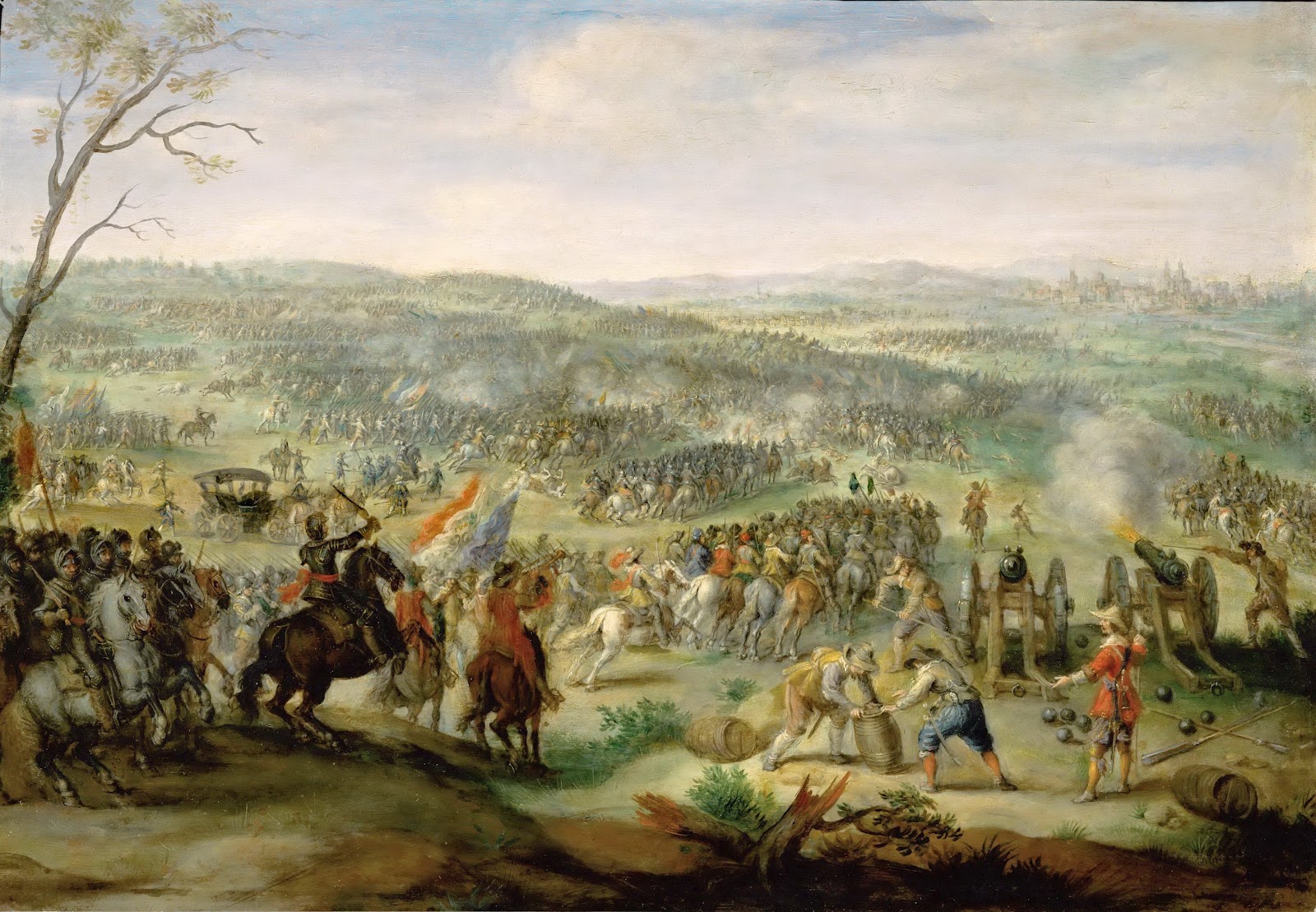
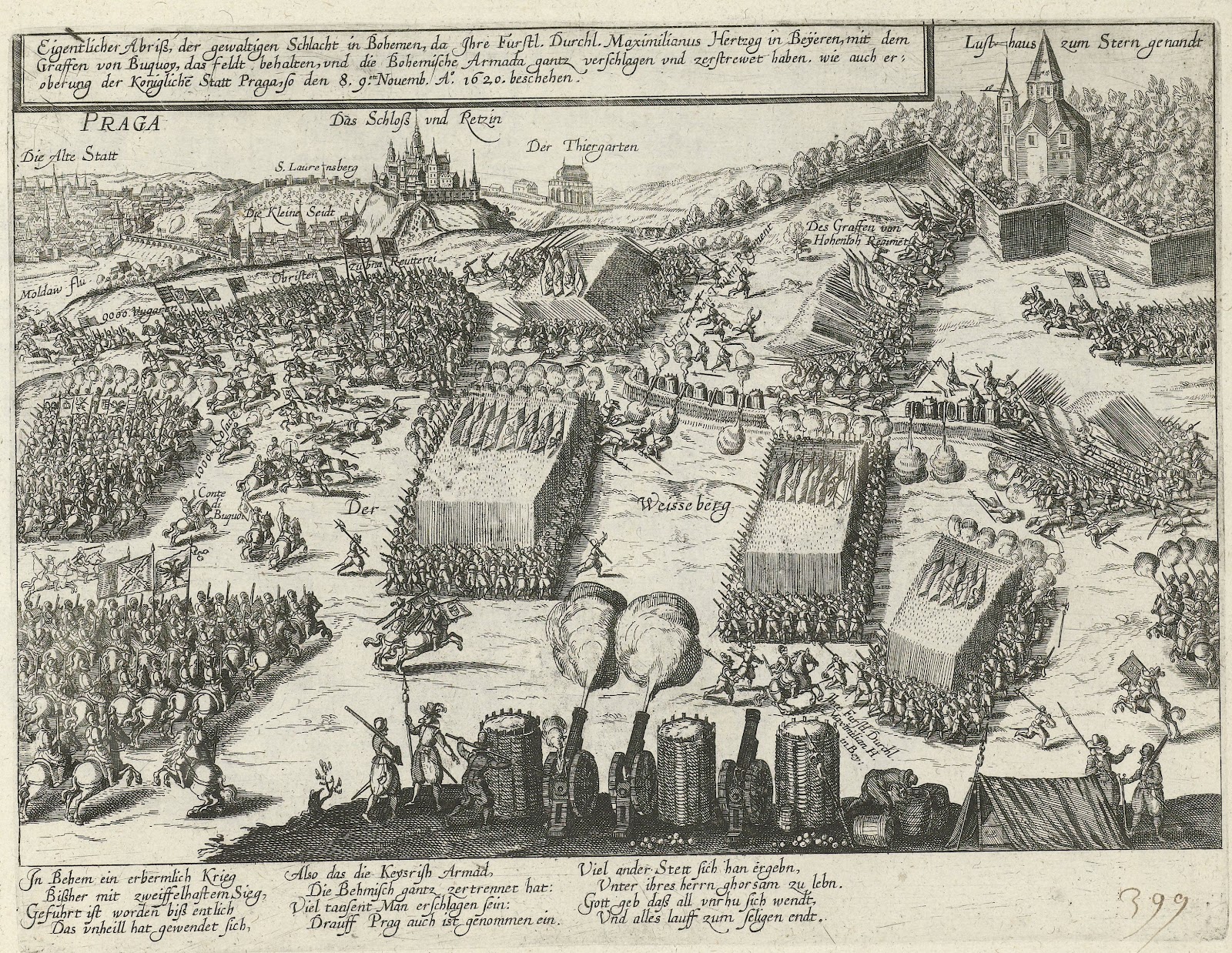
on this day in November 1620 AD at White Mountain (  Bitva na Bílé hoře) Bohemian Protestant royal army aided by the Hungarian forces, commanded by Jindrich Matyas Thurn and Christian I, Prince of Anhalt-Bernburg, was defeated by the combined Catholic armies of Imperial forces, commanded marshal de Tilly and the Catholic League under  Count of Bucquoy.

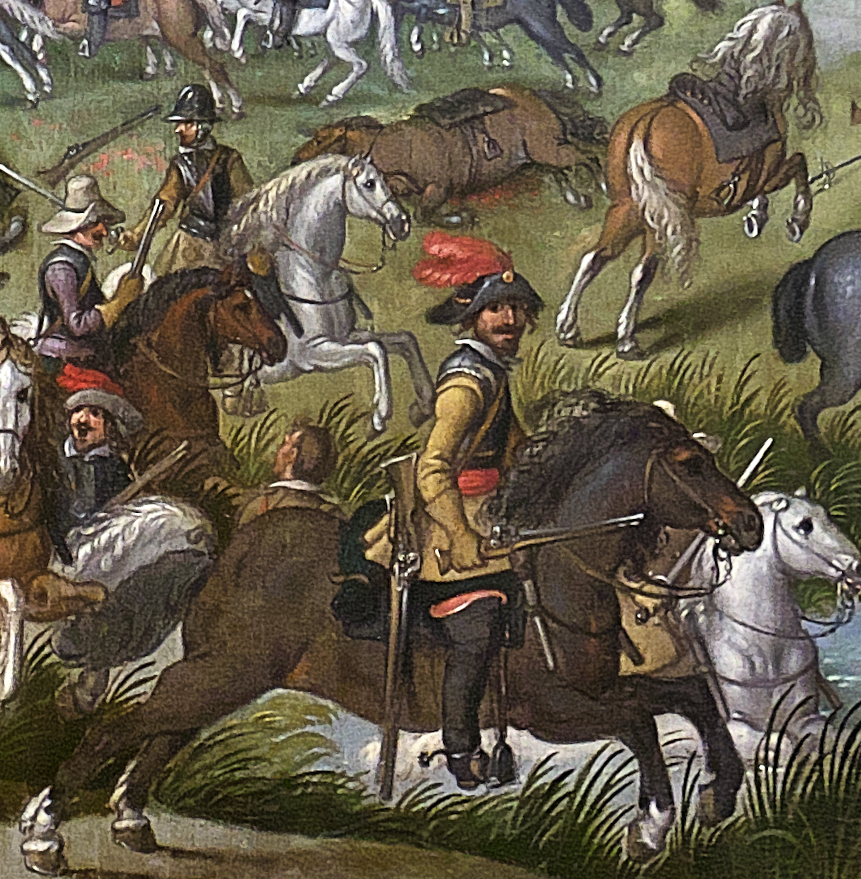
Perhaps our Polish Lisowczyks

There was also a 1,500 riders-strong mercenary  contingent of Polish cavalry known as the Lisowczyks (Lisowski kozaks/cossacks as Polish light cavalry originated during the Polish-Muscovy War). There were also Croats and Imperial Hungarian on the side of the Catholic army.

imperial and League forces, the Polish contingent is on the bottom right

..

it was a very short battle considering the size of the armies and the seriousness of the struggle  - the actual battle lasted  more or less 1 hour, and more or less 2,000-4000 men were killed on the Protestant side and perhaps the same number on the Catholic side - the losing side also sustained 2000-5000 men prisoner out of 28,000. But actual losses are uncertain.  It is certain that the Protestant army was defeated and routed and in pursuit, in which  the Poles, Croats and Imperial Hungarian excelled. 
The battle was followed by steady collapse of the Protestant struggle and armed  opposition within Czechia proper, while the contingent of the Protestant army were withdrawing, bleeding men and equipment, to the north into Silesia  (part of the Bohemian Crown) and German states to the north-west or even further to the Dutch Republic. The war was far from over and would last for 28 years more, but the very heart of it, the Bohemian Crown, was finished.
 The most serious social and political outcome of this battle  would result in the total destruction of the Protestant Czechia, especially the Protestant aristocracy and upper levels of the other parts of society,  during the subsequent months and years of the XXX Years War and further  anti-Czech policies of the Imperial politicians. Czech language and culture would begin its revival in the late XVIII century in a complete different set of circumstances. 

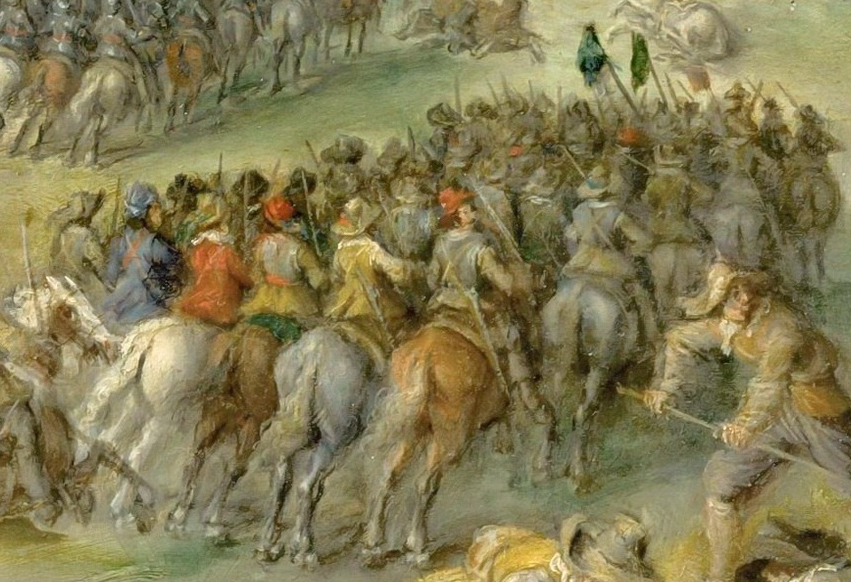
Snayers' vision of the battle

. Polish cavalrymen delegation led by captains Stanislaw  Strojnowski and Wojciech Sulimirski, presented to their commander-in-chief the  captured flags: 38 Hungarian colors, 5 infantry banners or colors and 9 cavalry standards.


Perhaps worth noting is the taking of the capital - Prague. 
On  Nov 9, 1621 the imperial & League forces entered undefended Prague, while on the 10th the  soldiers of the Royal Castle surrendered to Count Bucquoy . What followed was the great pillage and mayhem of the Bohemian Crown capital. 


Maximillian of Bavarian ina cuirassier armor


 For example Maximilian of Bavaria, commanding his Bavarian contingent,  had 1500 wagons of loot carried for his pleasure and onwerhsip, but when the unruly Imeperial soldateska continued looting and pillaging within the city and its environs  Maximillian asked commander-in-chief Bucquoy to stop the lawless pillage by the soldiers. But the war being war and the scoundrels and mercenaries alwyas hungry the pillage lasted for some time, our Lisowski kozaks not being the worst among the victorious soldateska. 


Valete

Sunday, March 5, 2023

A Scottish pistol gift for Polish Vassal duke of Courland Frederic Kettler

 Salvete Omnes,


back to the XVII century - our northern European part of the Eurasian continent. 


 So Courland & Semigallia, a westerly region within today's Latvia, was a duchy and fiefdom of Polish-Lithuanian Commonwealth from 1569AD.  


In the early XVII century the duchy was ruled by two dukes Friedrich (Frederic)(1567- )  and his brother Wilhelm (1574-  ), sons of the former Grand Master of the Latvian Order Gotthard Ketler, the first ruler of this post-Livonian Order & Livonian Confederation statelet.  

Gotthard Ketler and his wife Anna (she was from the medieval pagan prince Niklot and his descendants Slavic Obodrite dynasts, then of Holy Roman Empire duchy of Mecklenburg, that survived there until 1918AD)


Dukes Friedrich and Wilhelm ruled during the time when Polish-Lithuanian Commonwealth entered into the more than 60 year period of wars against the Swedish Kingdom for the southern and south eastern Baltic provinces of Polish realm. You can, if you read Polish or by using translator, read Polish researcher  Mariusz Balcerek's work Ksiestwo Kurlandii i Semigalii w wojnie Rzeczypospolitej ze Szwecja w latach 1600-1629 (The Duchy of Courland and Semigallia in the War between the Polish-Lithuanian Commonwealth and Sweden in years 1600-16290 published in 2012 - available for reading or download on Academia. There are good maps in this book, so it has many uses for any researcher. (I will point to pages in this book, writing Balcerek, Ksiestwo.. p..)


Duke Friedrich commanded a sizeable contingent of Courland's levy in the summer of 1605, when the  Swedish army landed in Courland. Duke had initiated action before our grand hetman Jan Karol Chodkiewicz with his Commonwealth army appeared on the front. During the Kircholm campaign duke Friedrich joined Chodkiewicz' army with a number of cavalrymen - pistoliers aka reiters. Duke himself wrote about three banners/companies(300-400?) that he took to Kircholm. Also a number of noblemen horsemen (a 100?) from Plityn/Piltene, separate from duke's reiters, took part in the battle, before having crossed the difficult ford across Western Dvina River. Their participation was important and significant, and they gave examples of bravery, sacrifice and heroism, losing brave commanders and horsemen like Sacken,Meden and brothers Dietrich and Ernst Brunnawen  (Balcerek, Ksiestwo,p.102-121 ).


The Pistol armed cavalry was a norm during the last 60 years in the German-speaking theaters of war in Europe. It quite agreed among the researcher that the German reiters made this short firearm the weapon for cavalryman of the period and of the future. And this rather  short-range effective firearms served well when in close-quarters combat.  Reiters aka Pistoliers used wheel-lock weapons, and also other types available then like snaphance  pistols and carbine.


It is believed that duke Friedrich received a gift, a pair or brace of snaphance pistols, from king James I, king of England, Wales and Scotland in 1615. And that in 1616 duke of Courland gifted these pistols to elector of Saxony, prince Johan Georg.

One of the surviving pistols is part of the Metropolitan Museum of Arts  (NY, USA) arms and armor collection. And the other pistol is at Dresden, Federal Republic of German. From the MET from there we got some nice photos of this splendid pistol


another Scottish snaphance pistol from Chicago museum.

Valete

Monday, February 27, 2023

Leopold Wilhelm Habsburg on horseback

Salvete Omnes,

back to the XVII century equestrian portraits from royal Europe.

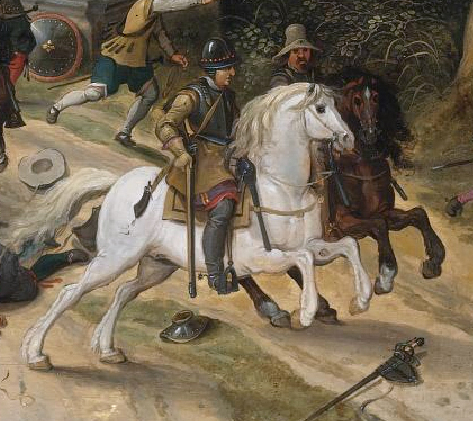
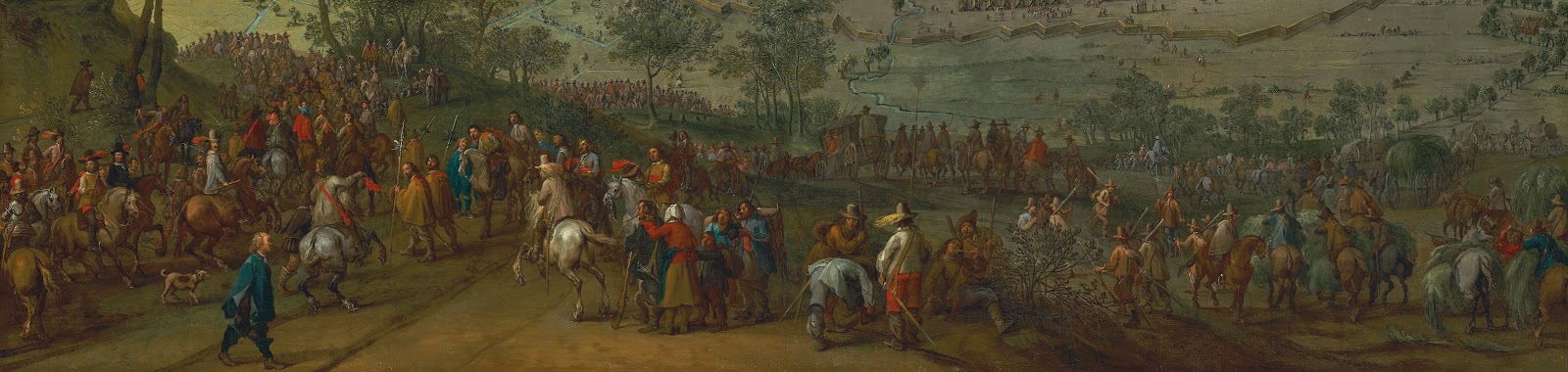
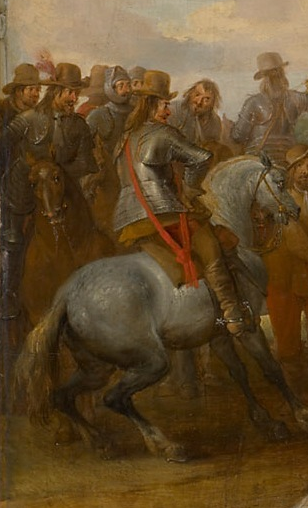
a detail of Peter Snayers' painting - Siege of Armentierers - and archduke on a gray horse

another Snayers - Siege of Diskmuided - this time archduke is mounted on a chestnut steed 


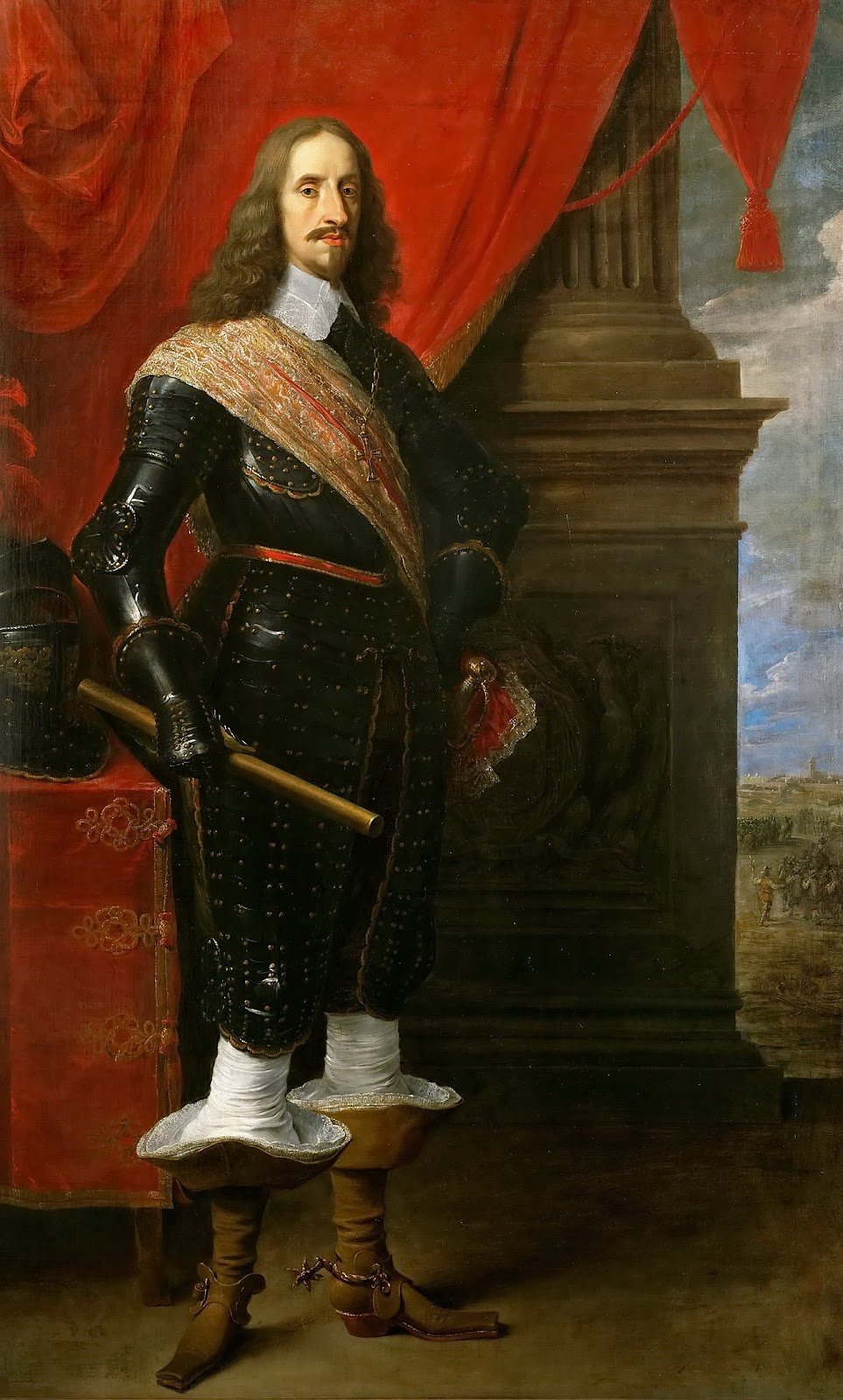
This time it will be archduke Leopold Wilhelm  von Osterreich (Hapsburg) - a scion of the Austrian imperial family: son of emperor Ferdinand II and brother of emperor Ferdinand III, who was not very lucky or perhaps unlucky as a military commander, but made it into history as art collector and bishop of Wroclaw (Breslau) upon  passing of  our Vasa royal, Karol Ferdynand Wasa in 1655/6 (he held 3 more bishoprics as the time of his passing in 1662), and also a Grand Master of the Teutonic Order.

National Trust images - 


a stallion and most likely a Spanish royal horse


I think this mount was a dark chestnut horse
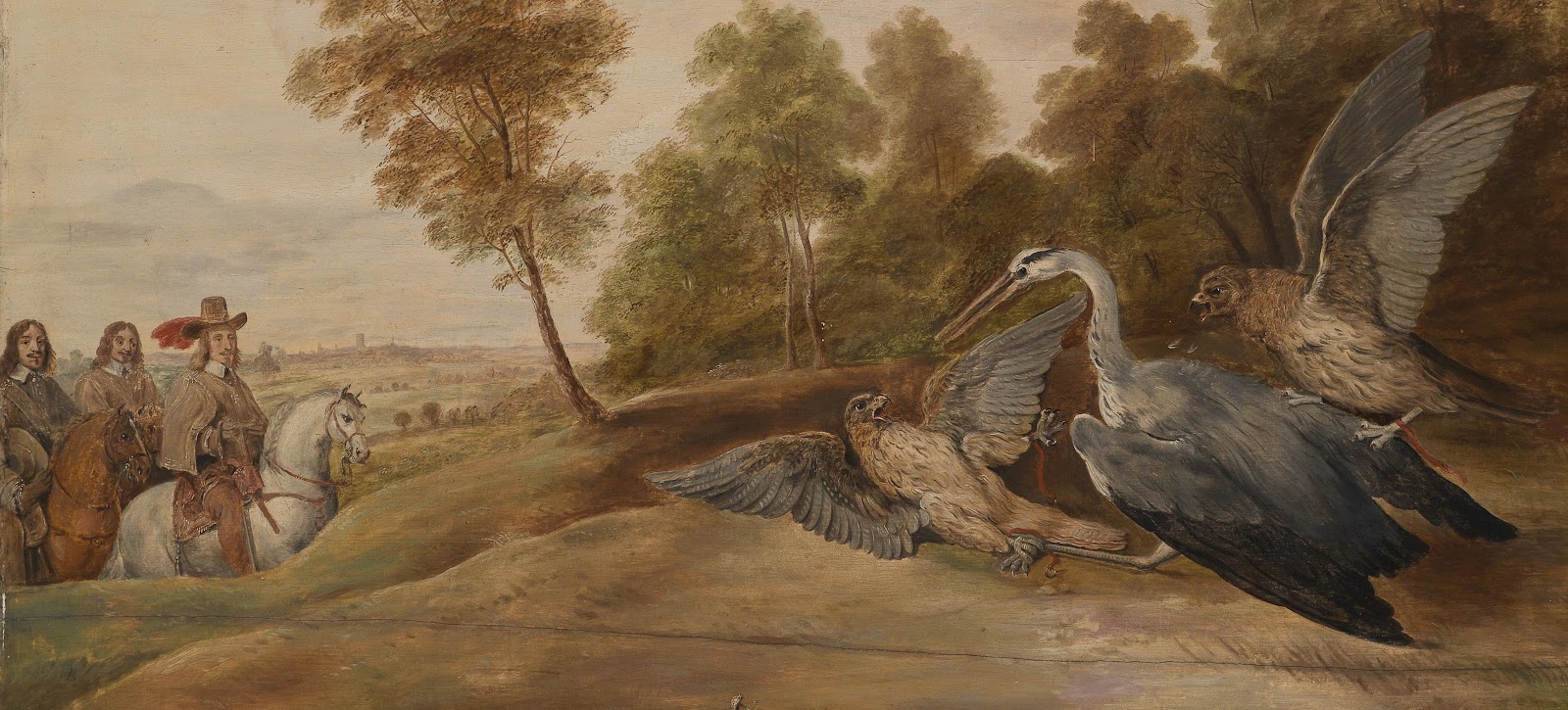
and here archduke hawking by David Teniers the Younger 


nota bene Leopold Wilhelm had some nice suits of armor as evidenced in these portraits, also showing the changes in fashion, including helmets etc. 


Valete

Monday, February 6, 2023

Cardinal-Infante Ferdinand of Austria on horseback

 Salvete Omnes,

Peter Snayers pinxit


I already posted one Ferdinand Hapsburg , the joint- victor of Nordlingen 1634, hence it behooves me to post these portraits of cardinal-Infante Ferdinand of Austria. They were painted by many masters of brush and oil paint.
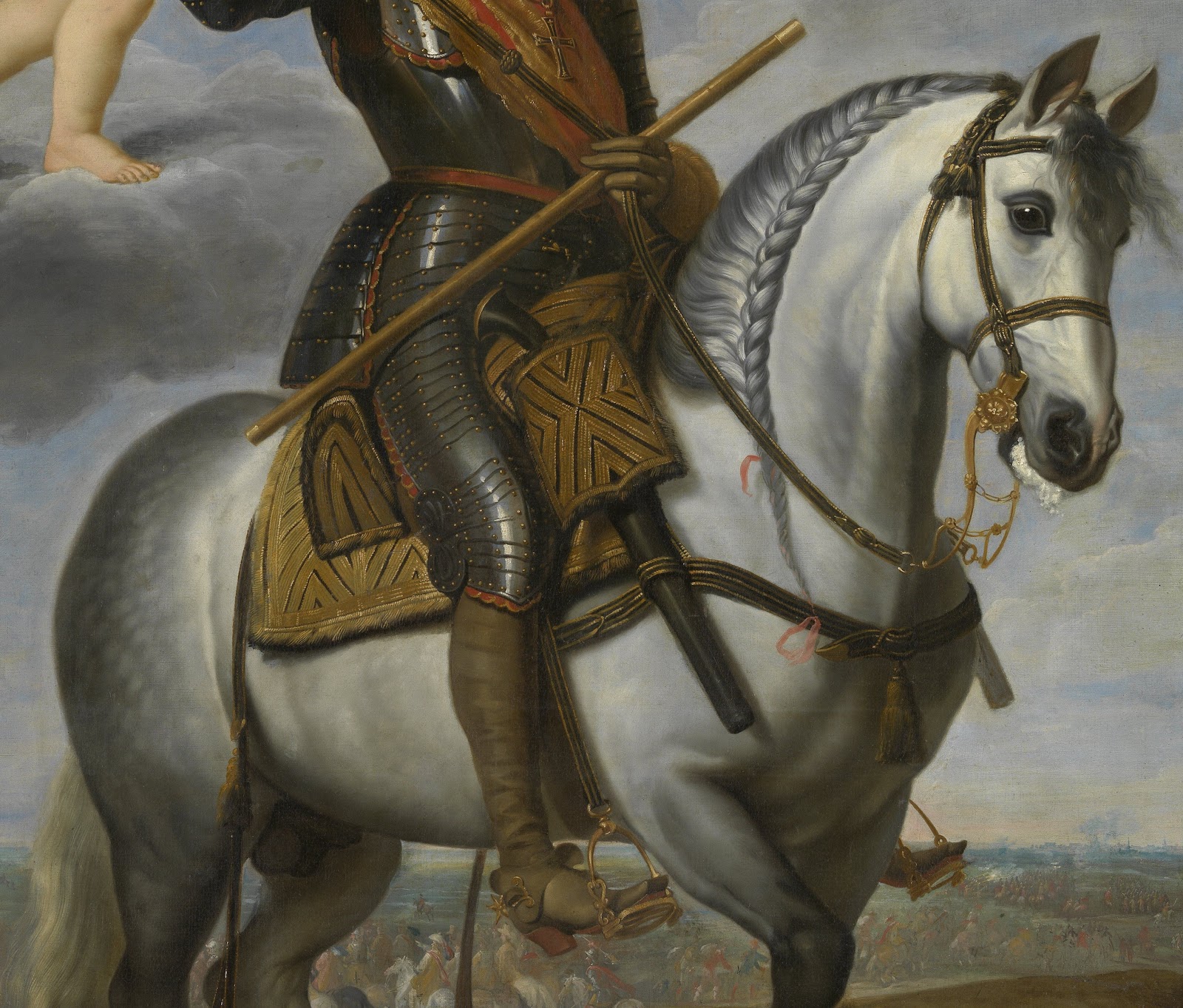
Let us start with this one by Gaspar de Crayer


and other famous masters of the ear - don Velazquez, maestro Rubes,
Diego Velazquez pinxit

Rubens or his atelier pinxit
Jan van den Hoecke pinxit

Cornelisu Schut pinxit


Alexander Voet I fecit

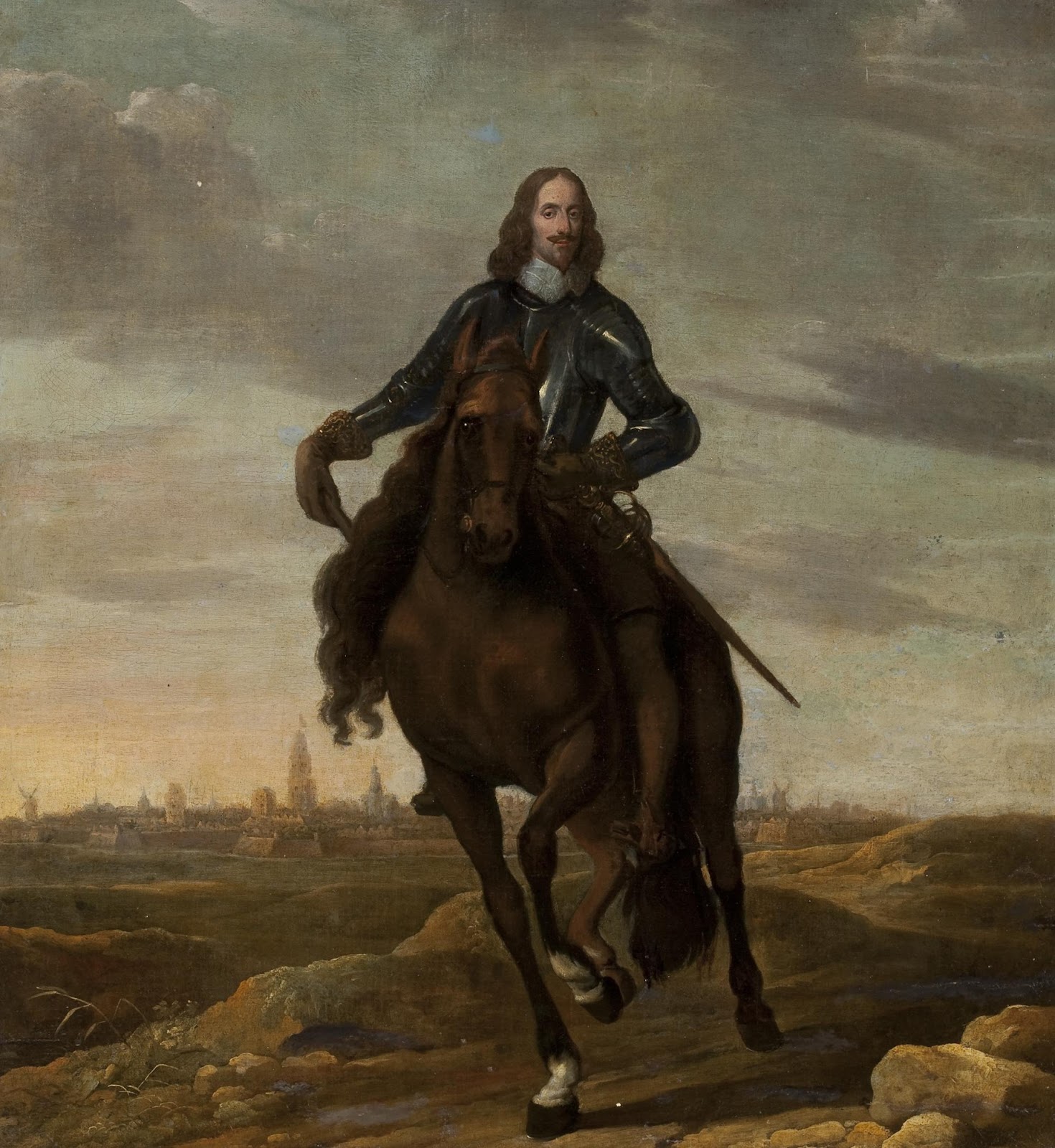
now, this portrait is accredited to Adam Franois/Frans van der Meulen (1632-1690 ) while whereas our Cardinal-Infante died in 1641.
So this is an imaginary portrait I suppose


this bridle is adjusted above the browband
large padding under the saddle?


Valete