Showing posts with label chariots. Show all posts

Thursday, December 7, 2023

The Earliest Images of Horse and Battle Chariots in Egypt - a Re-Evaluation - a lecture

 Salvete Omnes,


dr Stephen Harvey delivers a lecture - The Earliest Images of Horse and Battle Chariots in Egypt - a Re-Evaluation (on Yt) - delivered at Salmagundi Club in NY, on October 24, 2023.


Dr Harvey participated, along with Mohamed Abd Elsalam, Kathryn Hansen, Robert Hurford, Mike Loades, & Bela Sandor, in the archaeological project of rebuilding of the ancient chariot  (PBS production from 2013). 


The Hyksos are part of the lecture - their apparent role in the appearance and development of horse breeding, horse training and horse chariotry in the ancient Egypt  during the Second Intermediate Period and subsequent early New Kingdom. 


enjoy the lecture

Valete

Sunday, February 2, 2020

Roman chariots and chariot racing etc

Salvete Omnes,

and since yesteryear  we have had the brand new month of February, and new post in the older theme - the ancient Roman vehicles etc.
This time a few images showing the Roman quadriga or 4-horse chariot - the most extreme of the Roman vehicle use for the specator show and pleasure - Academia article on the topic here - with the driver or charioteer having a short but perhaps if victorious then almost very celebrity-like moment in time.
Rome's Circus Maximus was the most famous ancient Roman chariot racing stadium.

Let us start with some of the Roman mosaics-
Barcelona, Spain - circus 
 

 Villa Roman del Casale

Lugdunum - musée gallo-romain de Fourvière - in Lyon


stone relieves and  funerary monuments - sarcophagi etc


Napoli, Italy Museum


Finally, some modern connections and reconstructions  have been developed for the film - mostly due to the amazing popularity of the American Christian novel titled Ben-Hur, A Tale of The Christ by Lew Wallace, the most popular novel of the XIX century .
there has been attempts at reconstruction of the Roman chariot racing - in the feature movies like Ben Hur (3 version - 1925,1959 & 2016, all spectacular and ahistorical but I do prefer the Charlton Heston's version, there was a short film made in 1907, can be viewed here) -  and in more documentary fashion lately the Timelines' production on the  Chariot Racing.

Also, last year  the author and equestrian reenactor Mike Loades  developed his new video production  on the Roman circus chariots and it can watched here. I am yet to watch it ..

Valete
ps
all images are from Wiki Commons

Thursday, June 20, 2019

Artemis, virtue, hunt & godess in chariot etc

Salvete Omnes,
there is so much beauty in ancient art, so here we go:

 
a quick collection of ancient images (mostly pottery and coins) related to Artemis, goddess of hunt and virtue, and horses, including ancient chariots.

Unusually, there is a detail (from two different examples of ancient pottery) showing Artemis in a chariot pulled by deer


valete
ps
all images from wiki commons - there are many other images, including Roman era sculptures  on the funerary monuments

Tuesday, March 6, 2018

Chariots of the Kingdom of Two Lands

Salvete Omnes,
Spring is here, Baroque horses and Polish winged hussars can wait for another day, so today we are traveling to the New Kingdom of Two Lands or Aegyptus ( the ancient Greek name for the kingdom of the Nile valley, used in Odyssey by Homer,  orAigyptos - Αἴγυπτος ).
these energetic ancient Hellenes had settled as traders and mercenary soldiers in Egypt in Late Bronze Age/early Iron Age, and eventually after the Macedonian conquest of the Achaemenid satrapy of Egypt they had ruled the land of the Nile for centuries  before the Octavian's Roman legions came and put an end to the Macedonian dynasty and ushered in 6 centuries of Roman rule, eventually the conversion to Christianity and the birth of Coptic  nation  ( presently in danger of being obliterated in post-1952  Republic of Egypt that is mostly Arabic and Islamic in culture and religion; nota bene I know quite of few Copts in the US and Canada and hear  their stories).
Just a little post to signal my interest (and hopefully yours, dear traveler) in the beauty of the chariot horse and the chariot itself, instruments of war from before.
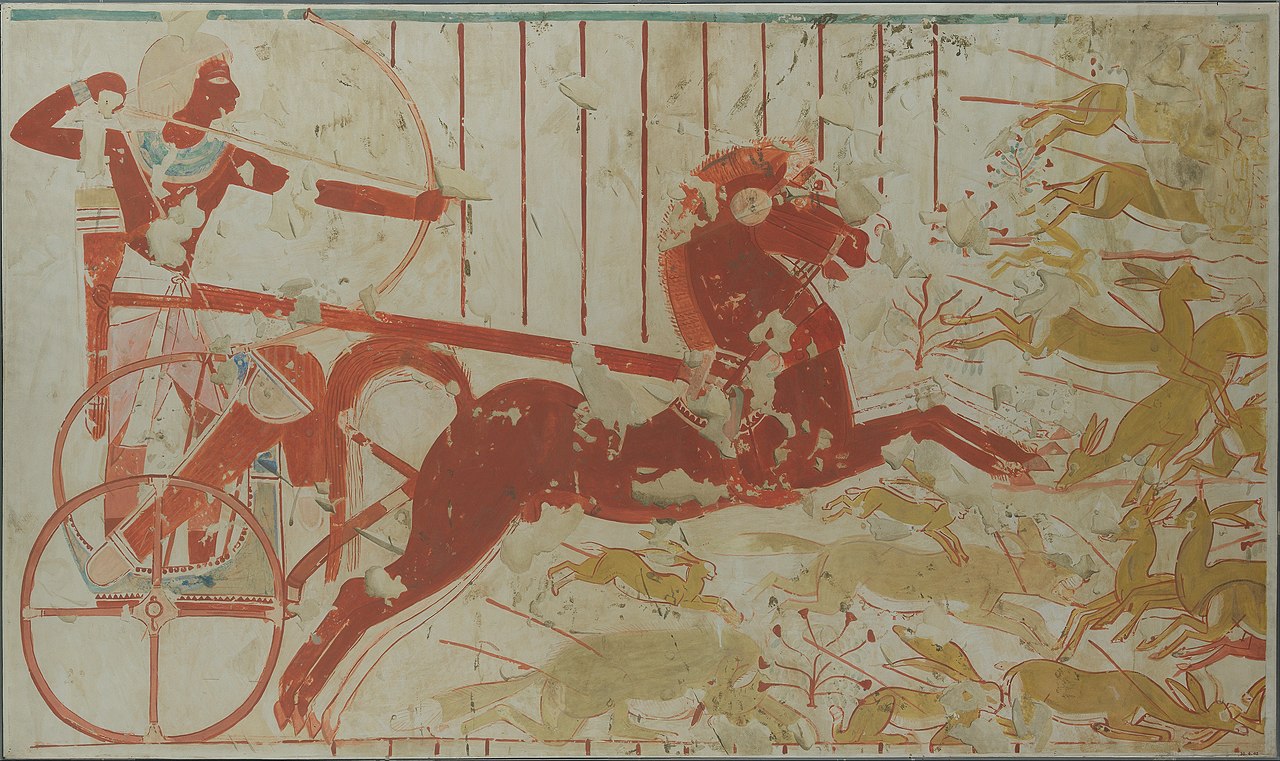
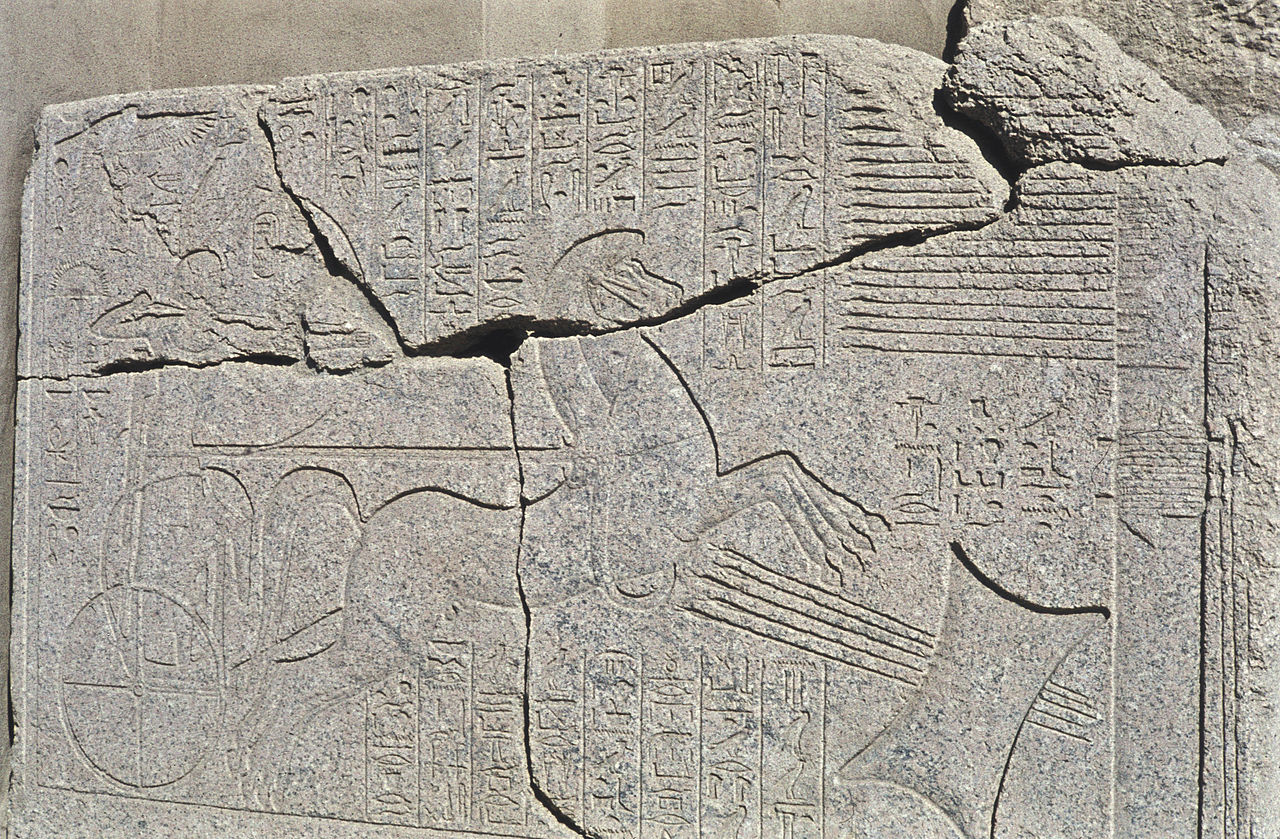
so here below we have a few images of great warrior  pharaoh of the XIX Dynasty  Ramses II (who was a fair-haired or reddish-blond man, as his surviving mummy shows  ) war exploits and leadership,


always most resplendent and bellicose when riding in his chariot, with his trusted bows and arrows in hand, javelins and deadly  khopesh sword resting near.


also this beauty of sumptuous art, for it is a ring with chariot horses from Ramses II (held at the Louvre Museum in Paris, France)

enjoy
ps
all images are from Wiki Commons
Wednesday, May 31, 2017

DNA studies of the Ancient Aegyptians

Salvete omnes,
when I was studying at the university I had to read the already very controversial book title Black Athena - it was a required reading and studding its content was like reading the Soviet or Gender Communist works: convoluted, often contrary to reason and fishing for evidence, finally bending it all to the ideological thesis presented by its author.

So finally there is some respite from the racist nonsense of Mr. Berbal and his ilk,  these are newest DNA studies of the material taken from the ancient Egyptians mummies -

 An international team of scientists, led by researchers from the University of Tuebingen and the Max Planck Institute for the Science of Human History in Jena, successfully recovered and analyzed ancient DNA from Egyptian mummies dating from approximately 1400 BCE to 400 CE [New Kingdom to Roman Period], including the first genome-wide nuclear data from three individuals, establishing ancient Egyptian mummies as a reliable source for genetic material to study the ancient past.

and surprise! surprise! -

 The study found that ancient Egyptians were most closely related to ancient populations in the Levant, and were also closely related to Neolithic populations from the Anatolian Peninsula and Europe. "The genetics of the Abusir el-Meleq community did not undergo any major shifts during the 1,300 year timespan we studied, suggesting that the population remained genetically relatively unaffected by foreign conquest and rule," says Wolfgang Haak, group leader at the Max Planck Institute for the Science of Human History in Jena.
figure 3 from this page of the above study
figure 4

figure 5

so they belonged to the Western Asian and European stock...

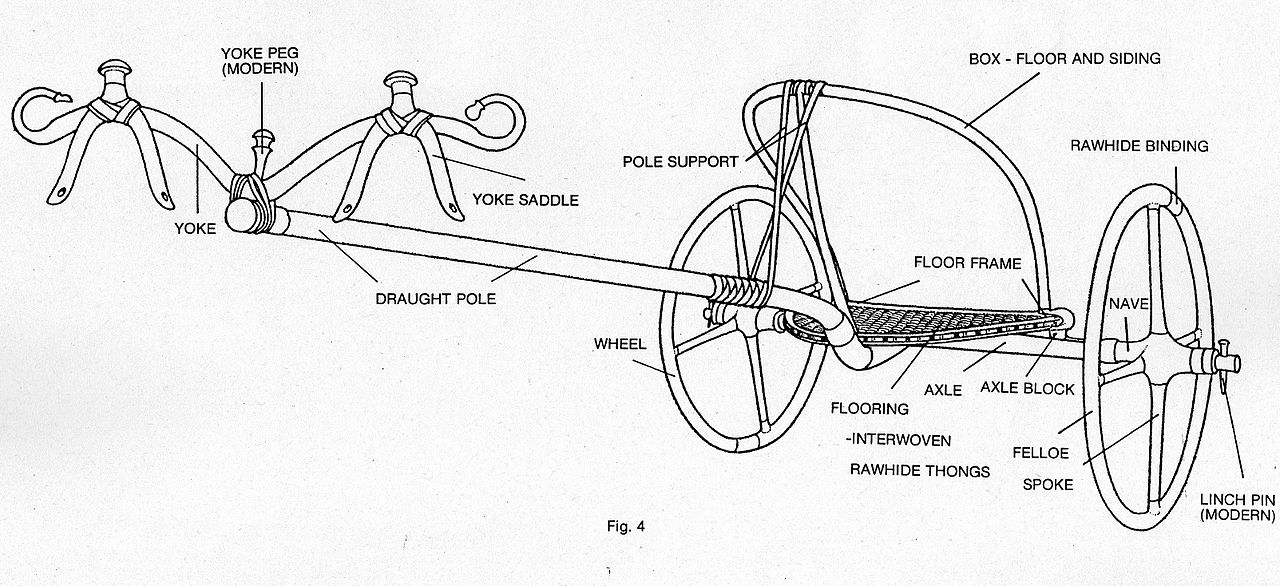
A succinct study of the New Kingdom Egyptian chariotry - from Matei Tichindelean


Aegyptian chariot from Matei Tichindelean's work
enjoy