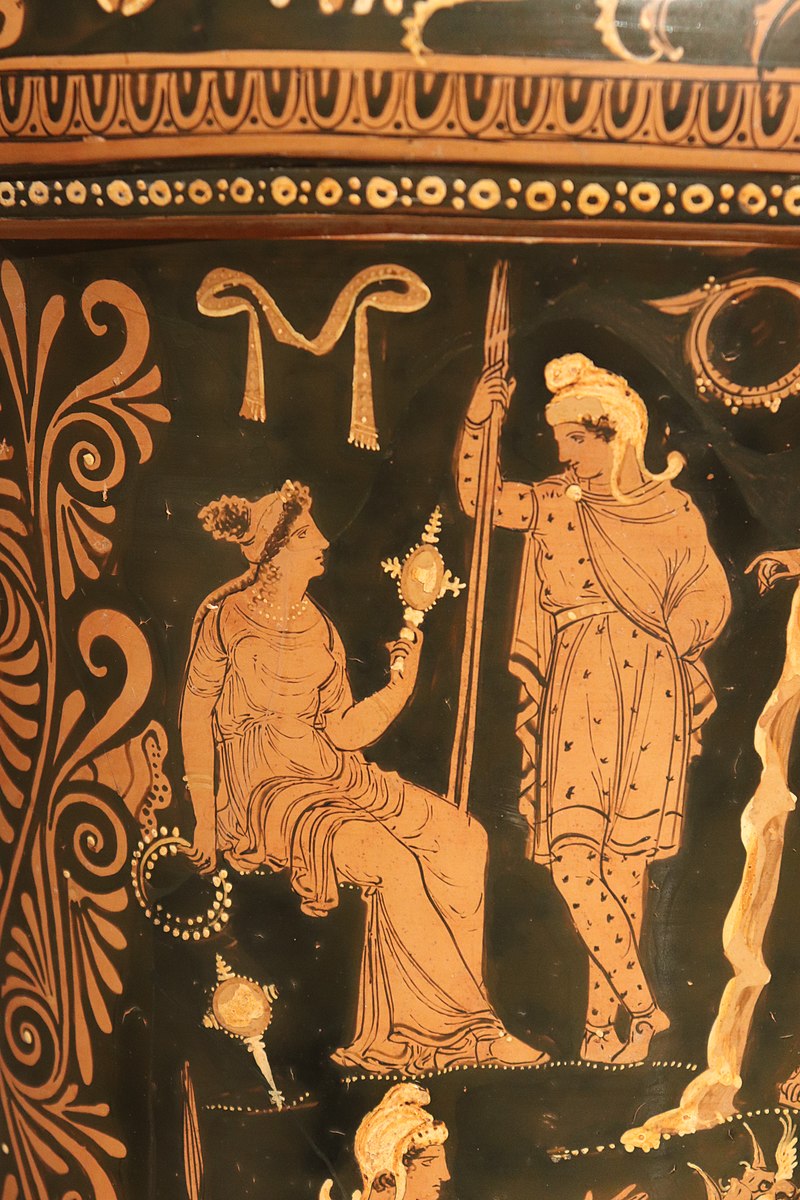
Showing posts with label Pegasus. Show all posts

Friday, March 10, 2023

Perseus, Gorgon Medusa & Pegasus

Salvete Omnes,


Spring is approaching fast  as time flies - we should have the new year start on the Spring Equinox - like the ancient nomads and ancient Iranians had had. 

Gorgon chasing after Perseus


Ad rem,
I love ancient Greek myths - and today decided to share some images related to the myth (well, collection of myths ) about the ancient hero named Perseus or the destroyer. Why Perseus, well, he is credited as the hero releasing the fabulous winged horse of the myths - Pegasus.


Hermes giving Perseus a curved sword

 Unwed Danae of Argos, daughter of king Acrisius,  was the mother of Perseus while his  father was the mighty and thundering  Olympian god Zeus (in form of the Shower of Gold or Golden Shower).  


Zeus as Shower of Gold coming to Danae


Danae and her son were banished from Argos by her father, sealed in a wooden casket and he had them thrown out into the sea. 

 After two days hey were fished out of the sea by Dictys (netman or fisherman), bother of king Polydectes (much-receiver or Death)  of Seriphos (island of the Cyclades). From that island he set our on his hero quest. The quest was prompted by the king Polydectes, lusting after Danae, who demanded that every young men on his  island provide him with a horse needed as a wedding gift for his intended marriage to Hippodamia (daughter of Oenomaus, famous for his chariot horses and chariot races). Perseus was too poor to own a horse so he boasted that he could find and slay a Gorgon monster. And as a result of his boast he set out on his quest.


Since Perseus was a mortal son of his Olympian god father, then his Olympian half-brothers and half-sisters would eventually come to his aid and provide him with magic items to help him achieve his hero quest: a cap of Hades (making the wearer invisible), winged sandals allowing him to fly, polished bronze shield, a curved sword, and a leather bag.

So this Perseus' hero quest involved searching for, finding and eventually slaying the Gorgon monsters, there sisters - Stheno (strength) , Euryale (far-leaper), and Medusa (wide-ruling). The most dangerous was Medusa, who once had been a beautiful girl and became the victim of Poseidon's lust and ravishment, and Medusa had the evil power to turn humans and animals into stones (petrifying them) just by looking with her eyes. 


Perseus, with his cunning, bravery, courage, and skills and magic tools, searched, found and slayed all there Gorgons, and used Medusa's head to carry on his other heroic deeds, including the defeating of the Poseidon's monster bound to devour princes Andromeda

Perseus freeing beautiful Andromeda

 
Perseus and Andromeda

Eventually, Andromeda and Perseus married and had children, and hero Heracles was one of their descendants. Perseus gave the Gorgon Medusa head to his half-sister goddess  Athena, who carried it on her shield.
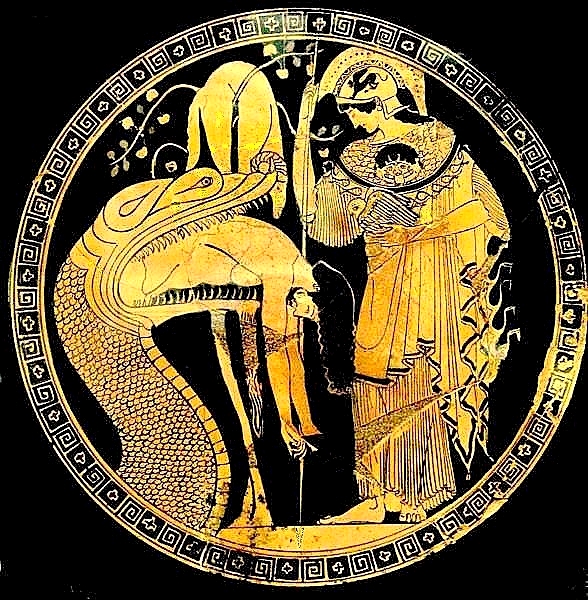


Finally, about Pegasus and his coming to the world - when Perseus slayed Medusa by cutting her head, the monster carried her children conceived during the ravishment by Poseidon - winged horse Pegasus and a giant Chrysaor, and these unlikely 'twin' children finally left her body via her neck. Thus Pegasus flew into the skies and the legend. Not much is known about Chrysaor.
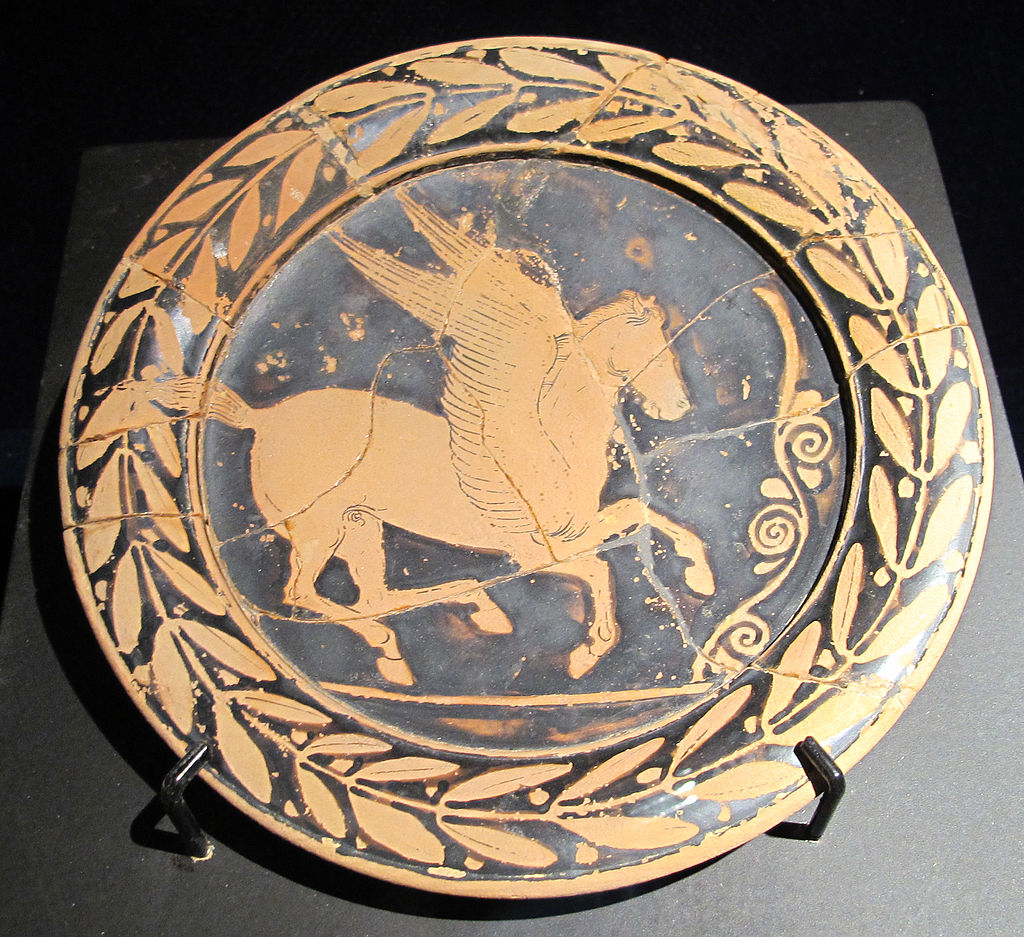
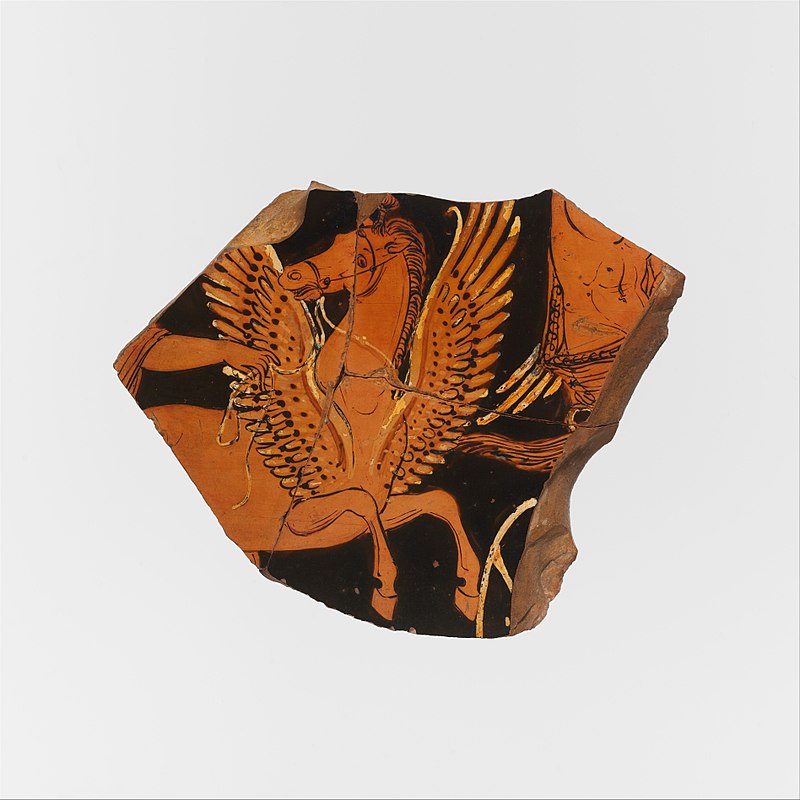

You can easily look for books available on the archive world library  - eg. borrowing  Early Greek Myth by Timothy Ganz, or the classic telling The Greek Myths by Robert Graves.

enjoy

Valete

Wednesday, October 17, 2018

Ancient bit from Dodona Sanctuary

Salvete Omnes,
a little time jump today, we will time travel to the ancient Epirus where at Dodona since the time immemorial had been a sanctuary and oracle.
Pegasus or  winged horse from Louvre

Excavations brought forward various and amazing objects of art from across the ancient Greek antiquity.
 Among them, on display at the Athens Museum,  there are the fine examples of the ancient metal forging arts from the IV century BC/Ante Christum , a two different bit parts (one from Dodona, and one from an unknown location), shown at the museum as one large bit: with large S psalia and elaborate discs on the 'bit-bar,' shortened ringchain and studded bars between the psalia and discs. The s-shaped psalia or cheekpieces look a bit like the wild boar's tusks and could make the horse head appear quite unusually grotesque. Similar bit is displayed on the Alexander Mosaic.


the way this composite bit is constructed or displayed on a see-through horse's head -
- with its discs sharp, pointy and this large inside the horse's mouth and the metal chain rings joining the two pieces very short and with rings loose inside the mouth (perhaps dangling on the tongue) to create one horse bit,
- then perhaps this display  in this entirety presents a hypothetical piece of horse equipment, and not a real one (my old rendering of the Persian bits now make me think twice about them too). Because how would they  operate this bit without completely ruining a horse's mouth  (as it is 'reconstructed' in the museum).

a horse from Dodona, rider missing - note this  horse with rider from Boston Museum, dated to late VI century BC.
horse from Louvre

Valete!
ps
Alexander Mosaic from Pompei -  the Persian Achaemenid horses with S-shaped bit


***

Monday, November 30, 2015

Polonia jako Paradis Iudeorum


Salve,
Today a little post in Polish only -
panta rhei mawiali Grecy, historia mimo wielkich fanfar o jej końcu jeszcze wciąż trwa, a obecnie rożne grupy, plemiona (- :) ) i narody chucpiarsko wysuwają wobec Polski roszczenia etc co do świadectw historii lub majątku, ergo dlaczego by nie skoczyć  w glebie polskiej historii, i zacytować to co napisał o Koronie Królestwa Polskiego jako raju narodu żydowskiego czyli Paradis Iudeorum słynny XVI-wieczny pisarz Izaak z Trok.
Przy okazji o statucie Kaliskim inaczej - tutaj.
Izaak ben Abraham z Trok - karaimski pisarz i lekarz (artykul tutaj)

''Jakoż na własne słyszeliśmy uszy, jak opowiadano i własnymi widzieliśmy oczami w dziełach autorów chrześcijańskich, iż w Anglii dopuszczano się w tych czasach wielkich okrucieństw; karzą srogą śmiercią wszystkich księży wiary papieskiej, wszystkich wyznawców i zwolenników tejże religii, a nawzajem tak samo postępują w Hiszpanii i we Francji, gdzie wyznawców nauki Marcina Lutra, tak okrutną śmiercią mordują, że każdemu, który o tym słyszy, włosy na głowie powstają. Lecz zdaje się, że to wszystko jest karą za ich grzechy, w wspomnianych bowiem trzech państwach, przelewano wiele krwi Izraelitów, bez najmniejszej przyczyny i prześladowano niewinnych do tego stopnia, że ich wygnano z krajów, gdzie się urodzili i przemieszkiwali tak, że ani jeden Izraelita tam nie pozostał.
Podobne postępowanie nigdy nie miało miejsca w Polsce, gdzie obecnie się znajdujemy. I owszem, tutaj pociągają do odpowiedzialności i surowo karzą tych, którzy im źle czynią lub szkodzą; tu nawet wspierają Żydów przychylnymi przywilejami, aby mogli mieszkać szczęśliwie i spokojnie. Królowie ziem tutejszych i ich dygnitarze (oby Bóg powiększył ich szczęście!) są miłośnikami wspaniałomyślności i prawości – toteż nie wyrządzają żadnego bezprawia lub krzywdy Żydom w ich krajach mieszkającym i dlatego też Bóg użyczył ziemi tej wielkiej potęgi i spokoju, tak dalece, że różniący się wiarą nie tchną ku sobie nienawiścią i nie wytępiają jedni drugich.''

O tym jak rożne, pełne meandrów, były dzieje żydów w starej Polsce  niech świadczy krótka praca pod tytułem ''Kolaboracja Żydów ze Szwedami w Krakowie AD 1655 roku'' czyli artykul    Radosława Sikory, Ph.D., na portalu Kresy.pl
Pozdrawiam
ps
Pegaz z Poznania, żeby nam - Polonii za granica i Polakom w kraju-  skrzydeł dodał, jako ze czasy mamy ciekawe.