Showing posts with label nadziak. Show all posts

Sunday, August 16, 2026

Death on Horseback chasing a Flying Knight - S. Vrancx

Salvete Omnes,

from the collections of the Cleveland Museum of Art -
a drawing (c. 1631AD) by the Flemish master Sebastian Vrancx- Death on Horseback chasing a Flying night.

there is a text that translated reads - No man is so clever, nor animal so swift, Death overtakes them all.


Splendid mustache on the flying knight

. The flying horseman does not appear as a Western (Flemish, Spanish, French or German) knight, but pretty much an Eastern European - Polish, Hungarian or Croatian light horseman. Although he does not have a cravat like the fables Croatian riders did, so perhaps a Polish or Hungarian equues

Curb-bit with some very long shanks
He is wielding with a nadziak or horseman pick, while Death fires a pistol at the flying rider.
He has a pair of pistols (we see one in a holster) and powder flask at the belt (and presumably a long firearm hanging on his pendant), a sabre at the side and a broadsword under the thigh. 
His booted feet are firmly placed in the typical Eastern European stirrups, and his half-calf boots end with rowel spurs.
All and all a Polish or Hungarian light cavalry officer or companion.


the end of his long firearm visible under the horse's belly

enjoy

Valete 

Friday, May 8, 2026

Abraham Teniers' saddles, pistol holsters & cavalry weapons from the guardroom

 Salvete Omnes, 


Flemish master David Teniers the Elder had 4 sons who became painters and masters in their own right. 
David Teniers the Younger achieved the most notoriety, but his younger brother Abraham also was noted for this popular guardroom scenes theme.


In these paintings we can observe numerous pieces of equipment, including fine saddles, armor, weapons, even our Central European  (Polish, Hungarian or Croat) weaponry - sabre and nadziak/war hammer. 


1.


2.
drums and pistol with a young black groom carrying a sword


Valete

Saturday, November 2, 2024

2 "Amigos' from one source - on using the period iconography

 Salvete Omnes,

I would like to share with you two interesting examples on fair use of art and also on the need for caution when looking at the period art.

Stefano della Bella - Italian artist working until the 1660s - active in Rome (papal court), Florence and Paris (French court), creating his own art in the form of drawings, then engraving & etching and printing his creations. 

MET has this image - Polish horseman, part of the 'Figures on Horseback' (Cavaliers nègres, polonais et hongrois) collection.


Rotameister or rotmistrz Pieczowski in 1645AD


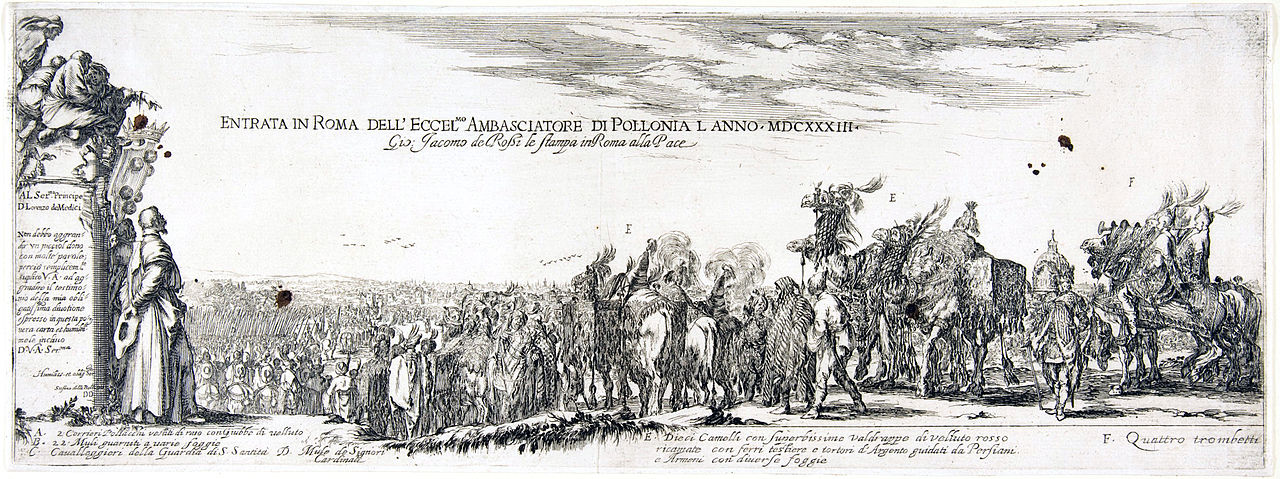
this etching - dated to 1648-53 - , aside his beauty and artistic aspects,  is very  rich in the material cultural details, as it is most likely than not that the actual drawings drawn by della Bella, eg  in situ when our royal Polish ambassador's cavalcade entered Rome in 1633 , served as the source material for maestro Stefano. 

The embassy of 1645 - the royal  Polish ambassador's entry into Paris in 1645 - drawings held in the British Museum, and my posts about them here & here.

Fast forward to the period of wars in Polish Commonwealth -1648-1670s - and this artist Johann Hoffman of Nuremberg combined the original image by della Bella with the head and hat from Hondius. (Hondius' etching was done in 1650AD says this portal)
instead of the mace our king carries a nadziak (horseman's pick)
Also, this Nuremberg artists did not know the reins were not chains with links, but sort of little 'apples'-bells that when in motion created noise and jingle. (there are actual examples of such jingly reins in the Russian museum of Kremlin).

Finally, another artist made use of the della Bella's original -  Johann A. Boner, who created a mirror image by coping the original, with his limited skill and knowledge, and created a busy background for the images, consistent with the tittle.
This time the rider became a Tatar Khan with the Ottoman Turkish army in the background .
enjoy

Valete


Sunday, March 31, 2024

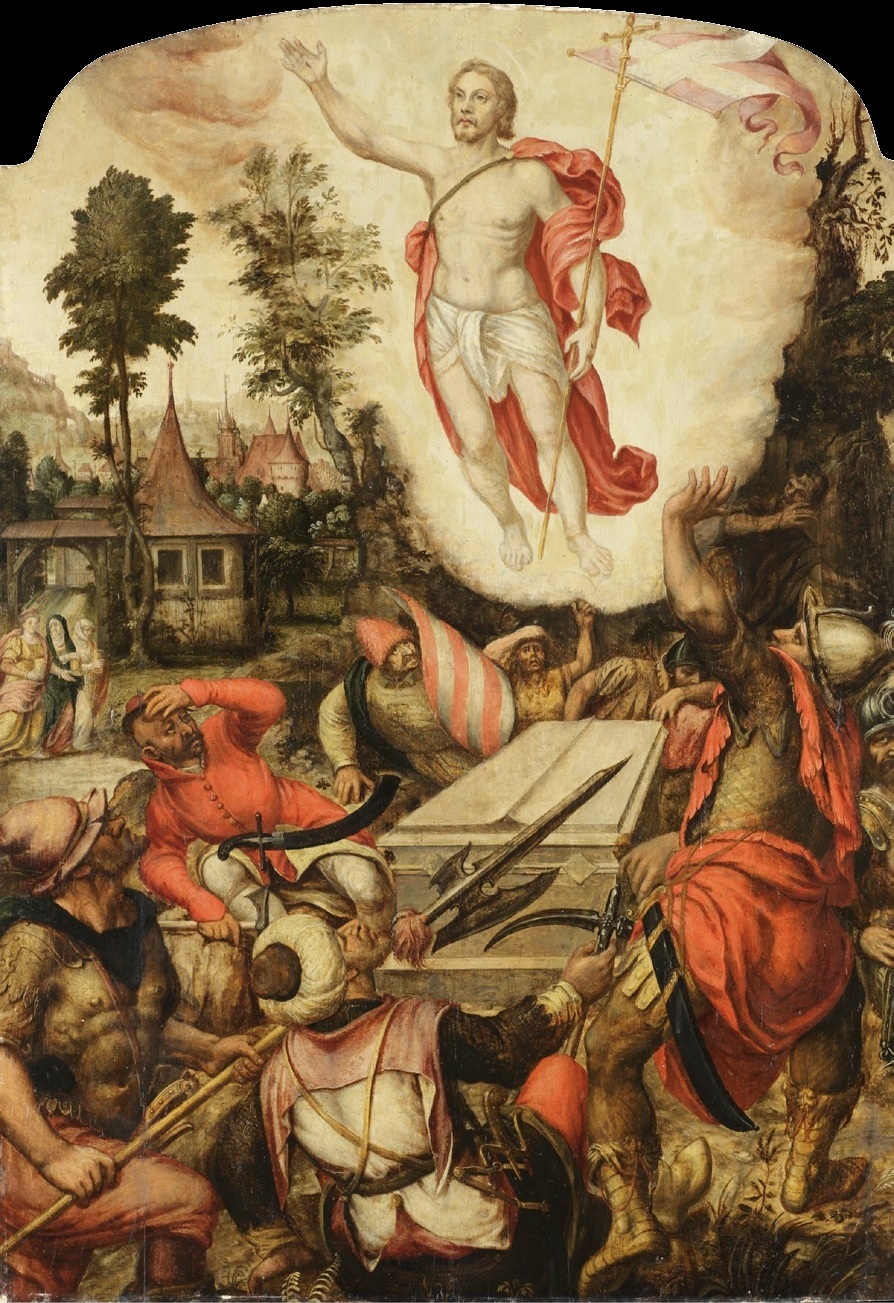
ἀνάστασις τοῦ Ἰησοῦ - Happy Easter- Wesolego Alleluja

 Savete Omnes,

Tobias Frendt pinxit


Ἀληθῶς ἀνέστη!, romanized: Khristós anésti! - Alethós anésti! -
Paschal Greeting 

Christus surréxit! - Surréxit vere, allelúja ("Christ is risen!" - "He is risen indeed, Alleluia!")

today is Easter - Happy Easter to all 

lots of hunting spears 


unknown German  master - Resurrection 
.
Cranach the Younger - horse and armor detail 

Wesolego Alleluja - Feliz Pasquas 

Valete

Wednesday, January 25, 2023

Orava Castle and Juraj Gyorgy Thurzo

Salvete Omnes,


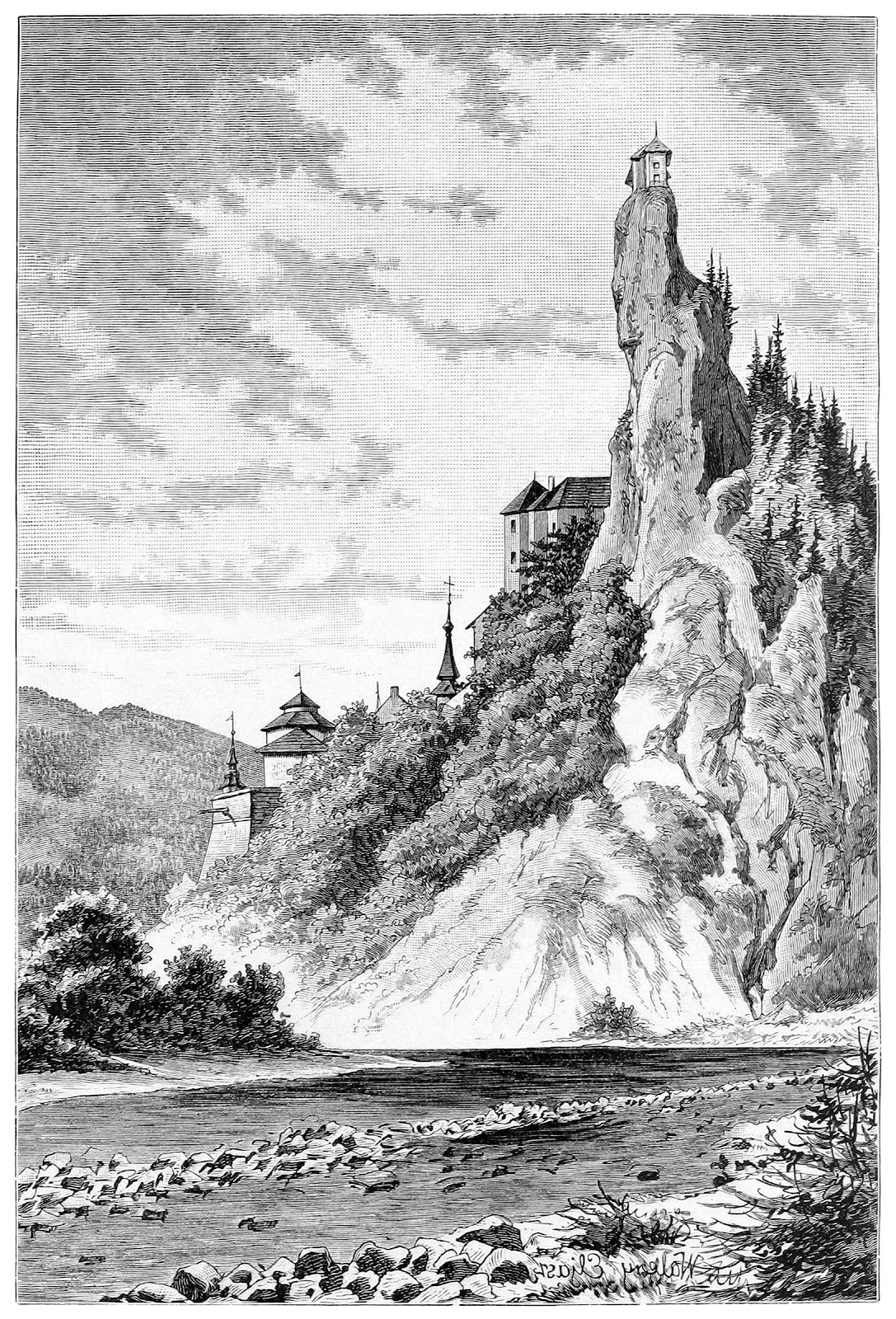
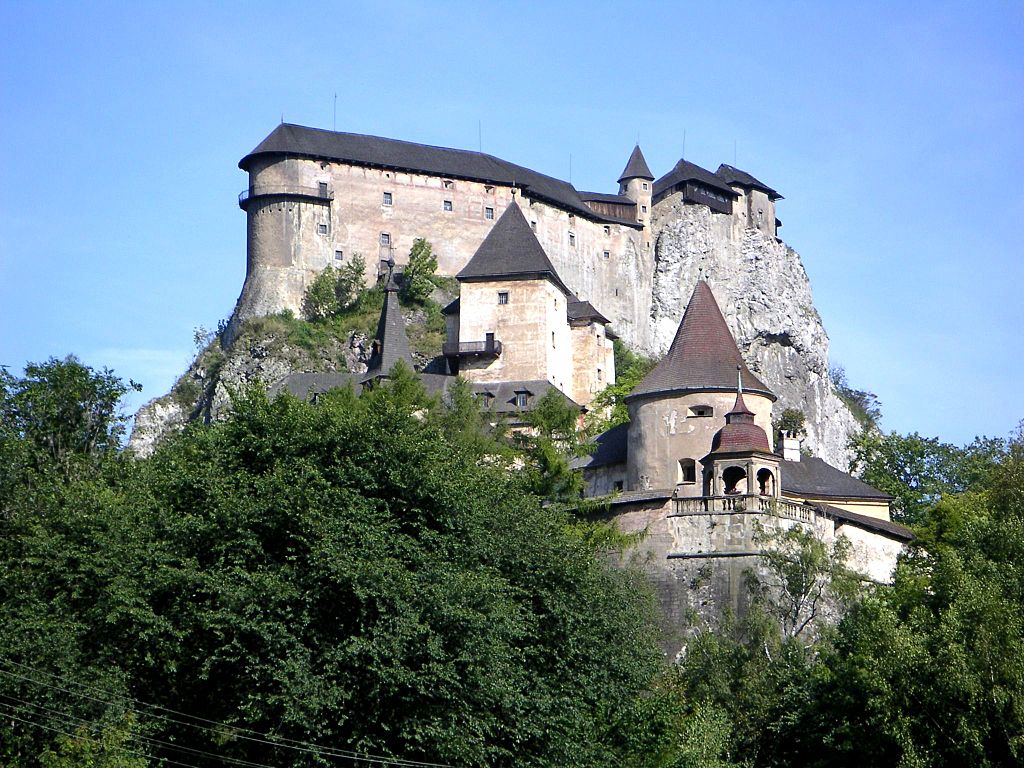
today we shall canter to one of the most picturesque places in Slovakia, where on a high rock above the Orava River there is a beautiful castle (very detailed history in Polish here). Known as Arwa or Orava, 


this castle became the seat of the Thurzo family, when Ferenec Frantisek Thurzo, a bishop of Nitra in Kingdom of Hungary, fell in love with a daughter of Mikulas Kostka/Kosztka,  left the priesthood and became thus the father of the Thurzo line from Orava.


The castle has inspired many artists - like our Polish Eljasz Radzikowski etc.
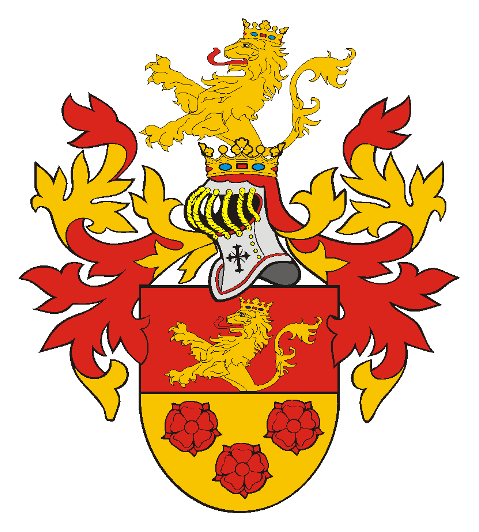
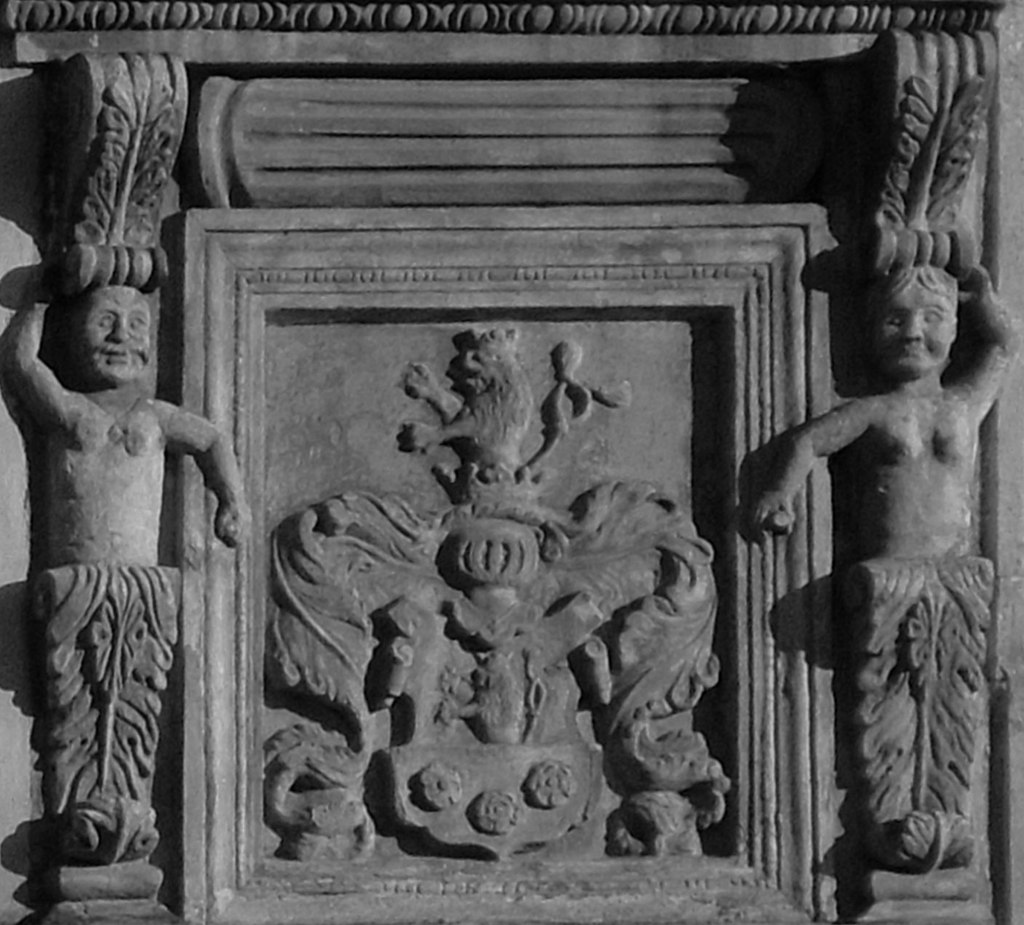
Thurzo coat of arms

bishop Ferenc Fratisek Thurzo coat of art, father of Gyorgy


Inside the castle there are some interesting and beautiful elements worth our glance or two...


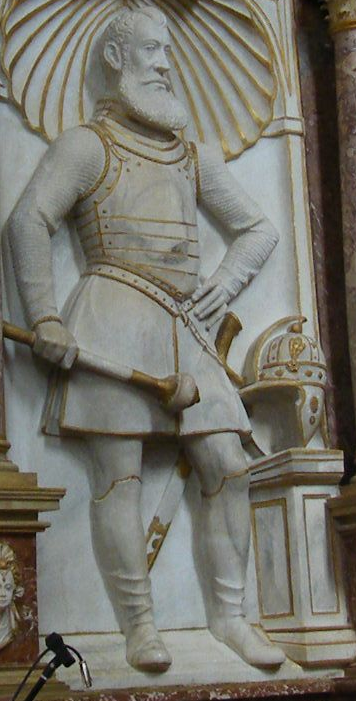
Including this funerary monument to Gyorgy Juraj Thurzo, a power magnate of the Upper Hungary as Slovakia was known then, and between 1609-1616AD Thurzo was the palatine of Hungary.
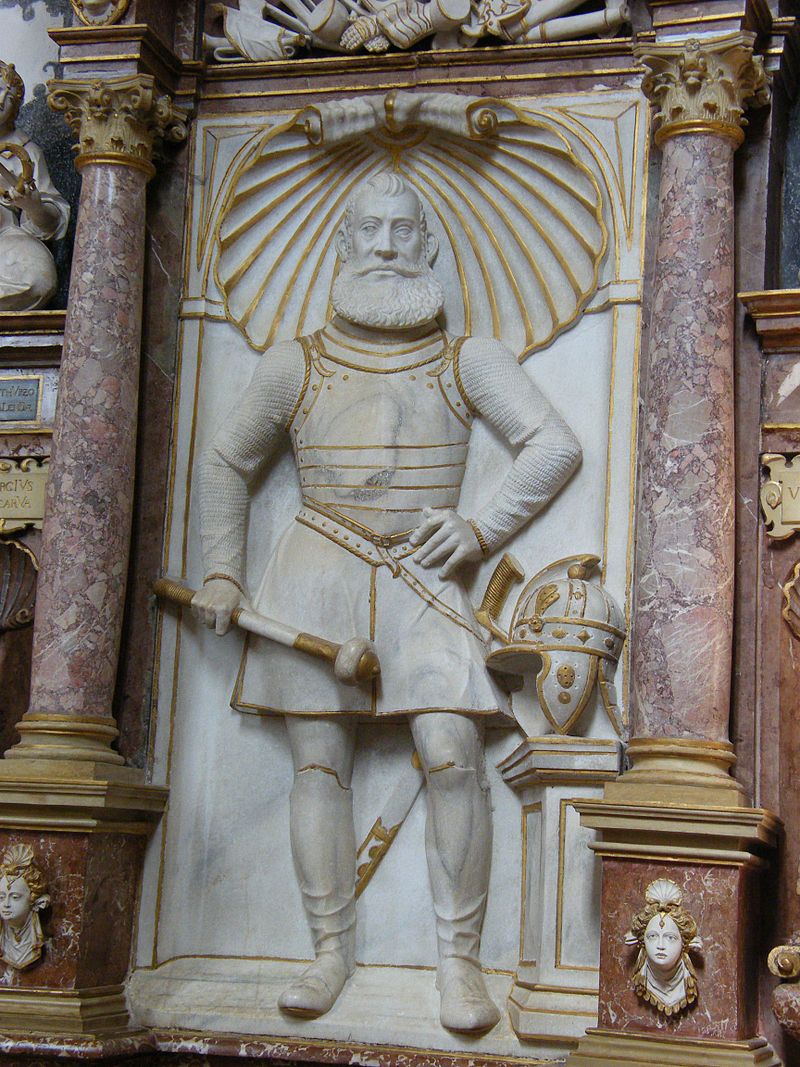

sir Gyorgy aka George was a famous warrior and commander. In this monument he appears as a winged hussar commander

a little bit of a side view

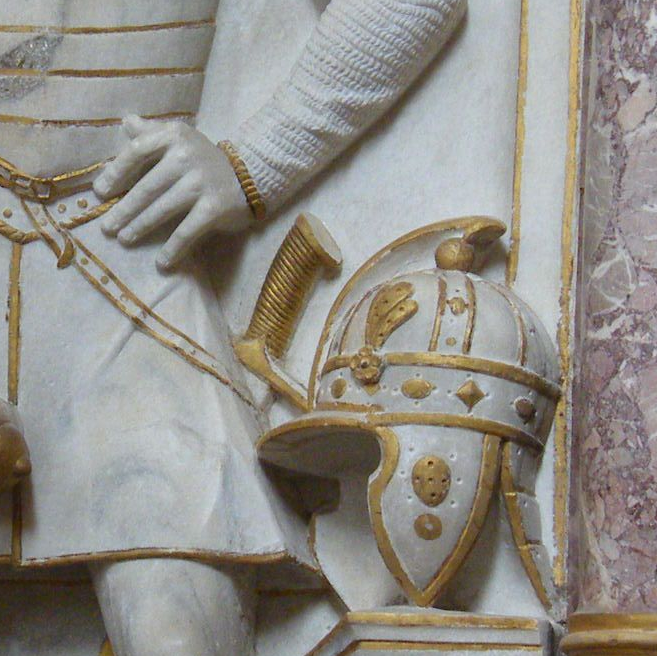
a closeup on the shishak helmet, sabre hilt and the sabre belt, and gilded finishing of his chain-mail sleeve


Comes Gyorgy Juraj Thurzo on horseback - a print from the XVII century
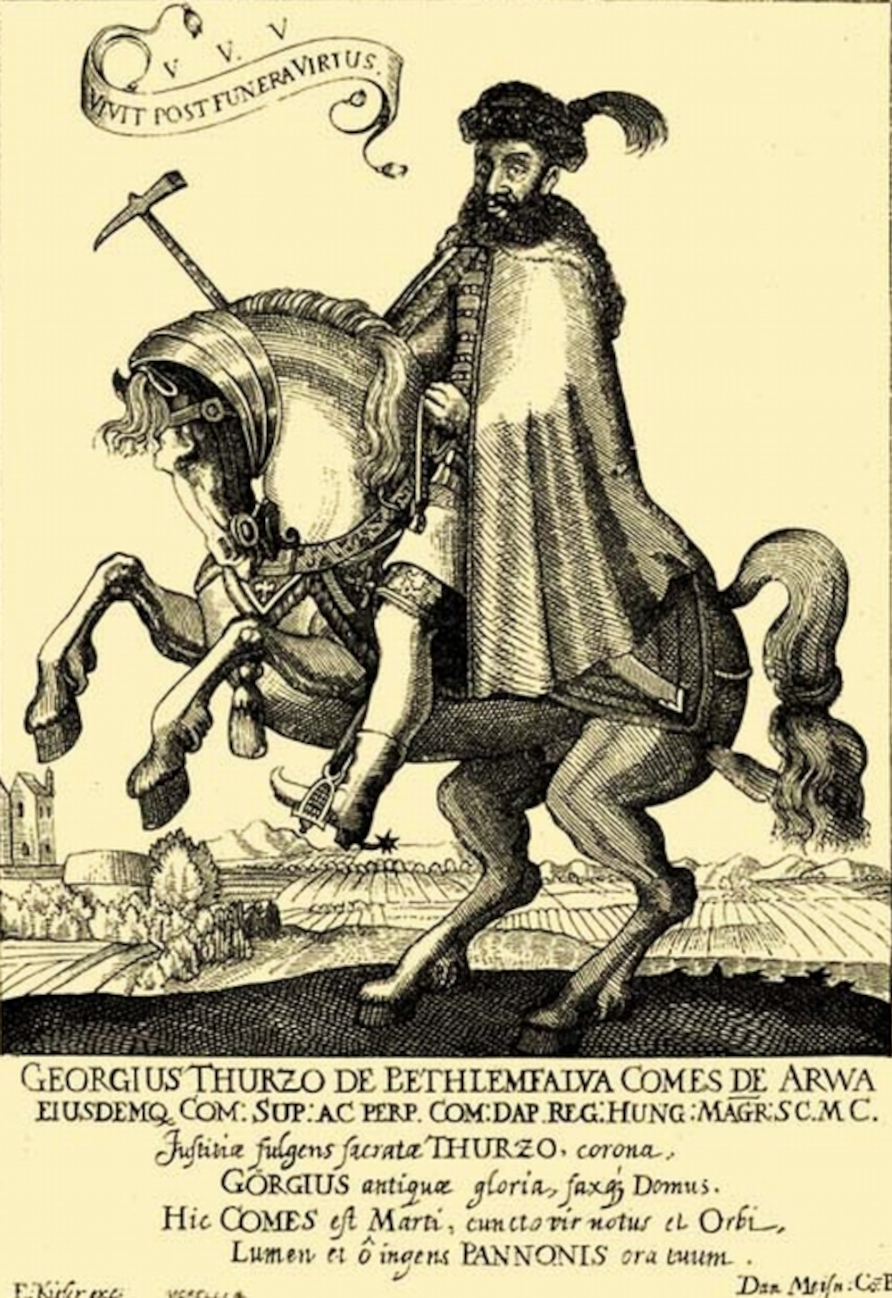
in this print we see the splendor of this Hungarian nobleman's horse gear and also a horseman pick, a weapon going back to the Scythians and horse mounted warriors of Eurasia


more photos here.

From the inside of the castle come this beautiful imagery of Saint George fighting the dragon,
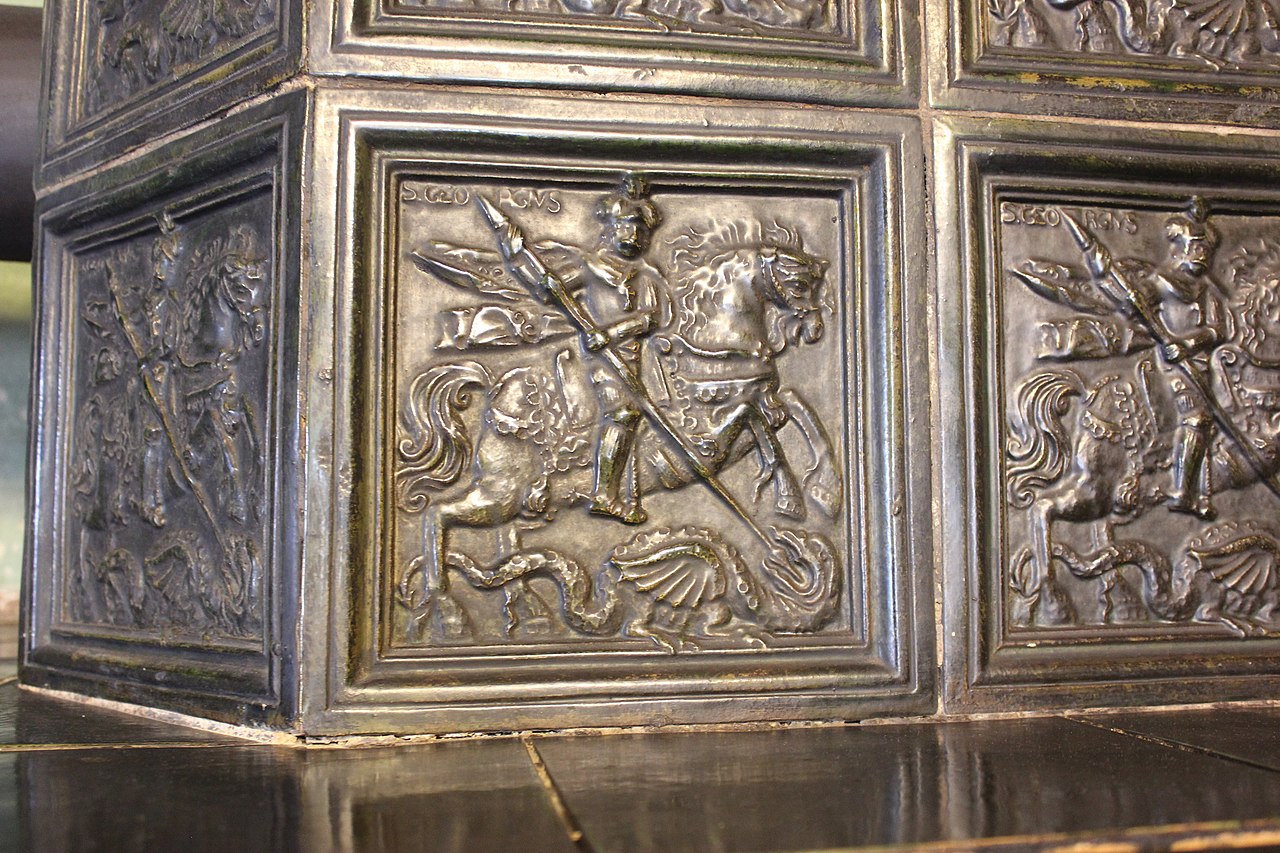
Saint George appears to be armed and armored like a typical winged hussar of the period, 2nd half of the XVI, early XVII century 


while this detail above, of a wall painting shows a hunting scenes (with dogs, falconry, with a short boar spear chasing wild boar) ,  perhaps comes from an earlier period.

Valete

Wednesday, August 12, 2009

Old Drawings ...


Many years ago when B.Clinton was US president and in Poland there was comrade Alexander Kwasniewski presiding from the Warsaw's Belvedere Place, I did a series of drawings of Polish noblemen on horseback, or rather some horses with their riders pretending to be Polish riders.
Historically correct they were not and definitely on the fantasy side, yet I had lots of fun drawing them using various Pigma micron pens and watercolors. I did clean the drawing and changed the color of the Background with GIMP and PS.

This image is supposed to show one over-armed szlachcic (nobleman) of the early XVII (17th) century.

He is wearing a Hungarian style 'magierka' (headgear), a type of hat very popular with Polish nobility between 1560-1640s (more or less), a short 'zupan' (zhupan a riding coat of ancient Iranian - Sarmatians, Scythians - nomads provenance), and riding boots where the heel was of iron and shaped like horseshoe (R. Brzezinski writes about this Polish footwear in his Osprey's book – Polish Winged Hussar). The stirrup suppose to be of a Polish type, based on the Tatar stirrups – most Polish riding gear was based in the Caspian-Pontic steppe traditions.
Under his left leg he is carrying a pallasch (a Polish Palasz) a fearsome broadsword that had its origins with the Sassanian, Turkic, and Islamic knightly traditions. I drew a Tatar looking sabre that was usually carried under the bow case. He is carrying a 'nadziak' in his right hand, a fearsome weapon indeed.
Bow case ( 'sajdak' or 'sahajdak' in Polish) is a fantasy piece, the same with saddle, although it is very loosely based on the original saddles of the time period. Horse tack is a bit fanciful but especially towards the end of the 1600s Polish horse tack became more Oriental (Tatar and Turkish). The horse tail (tug or kutas) or 'bunczk' (bunchuk) hanging from the horse's neck was adopted early in the 1500s by the Polish horsemen, and was often dyed red and adorned with colorful silk cords, gold, silver and precious jewels.
By the way a big or small mustache was a must for a Polish nobleman - His Royal Majesty King Jan III Sobieski, Prince and Marechal du France Prince Jozef Poniatowski, and Conqueror of the Soviet Russia Marshal Jozef Pilsudski are the most famous examples of that continuous fashion that lasted from the early medieval Poland until the mid 1990s. Even today it is the part of traditional Polish male appearance, although not in fashion that much with the young bucks.