Showing posts with label George Catlin. Show all posts

Tuesday, May 26, 2026

Bison & Indigenous People of the Plains

 Salvete Omens,


The Memorial Day weekend came and went and let us share this video of Bison, People and Plains from Ancient Americas Yt channel. 


Before the coming of the horse the bison (Plains and Wood Bison) 


and indigenous people lived in a particular relationship, with perhaps as many as 30 to 35 million bison living in the North America, hunted by the Indians and thus providing them with food, skins for tents and clothing, bone tools and many, many other uses. 


The dogs pulled smalledr travois and thus their tipis were smaller. During the 1500s the Plains Apaches who were the nomads lived in their wickiups in their Plains rancherias.


.


The dominant pre-Columbian Plains  inhabitants were the  horticultural tribes  who lived in the Plains from time immemorial. They lived by the rivers in the river valleys with fertile soil, in their permanent earth lodge villages (eg Pawnees, Mandan etc) or like the Caddo confederacies in large towns made out of the grass houses.  


Their hunts were seasonal and when hunting they also used tipis for dwellings during this communal hunts. 


enjoy 

ps there is a project Hunt Primitive in North America, where they hunt animals, including bison, with stone weapons - bow and arrows, atlatal, spears etc.


Valete

Thursday, September 18, 2025

Keeokuk vel Keokuk - Sauk chief on horseback in full spendor

 Salvete Omnes,


chief Keeokuk vel Keokuk, who later in life called himself the 'man who has been everywhere,' was a principal leader of the pro-American goverment factions of the formerly Woodland Algonqian Sauk(Sacs) and Meskwaki (Foxes)tribes  and a chief antagonist of Black Hawk and his independent faction (the 1832 Black Hawk War and aftermath resolved the conflict within the Sacs & Foxes in Keokuk's favor).


George Catlin visited the notorious chief in his  Iowa home, and they met again during the Sauk chief's visit to the East Coast. Catlin drew the chief, his favorite wife and son (who became his successor when the chief died in Kansas 1848). 


Also, he painted a famous painting of chief astride a fine warhorse - Keokuk was a note warrior and war leader, and 


The photo of the painting comes from the Smithsonian.

We could say that Keokuk and his people did not prosper from pro-government stance  in their dealings with the Americans between 1804 and 1840s, finally ending in the so called Indian Territory in 1860s. 
They had to fight another fight for their reservations in Kansas and Iowa in the 1950s and 1960s, surviving and winning that last fight for their tribal existence. 

Valete

Thursday, August 21, 2025

Buffalo wolf - the loafer of the Great Plains

 Salvete Omnes,


back to the Great Plains before the settlement by the European-American settlers, when with the millions of bison and antelopes two kinds of wolves roamed the plains - the coyote and the buffalo [often white or black] wolf (Canis lupus nubilus). Plains Indians, both in the pre-horse and post-horse period,  used the entire hides of these large wolves (more than 4 feet without a tail) to approach as close as possible the grazing bison herd and to hunt that grazing bison with a bow and arrow.  The native scouts on warpath used these pelts to camouflage themselves and to show their special status within a raiding band, including wearing eagle feathers attached at the head of the pelt. 


wolves hunting a bull

American traveler and artist, George Catlin, recorded the wolves in their natural environment, and even used wolf pelt as a disguise to approach and to observe and  sketch bison herds.

Wolf pelt camouflaged native hunters, with bows and arrows, creep up to a grazing herd in order to hunt the beasts up and dangerously close, risking being trampled or gored to death by the bulls 

Catlin and his native companion approaching the buffalo herd

Upper Missouri Bluffs, with a pair of white wolves

wolves attacking a bull
..

the description of the  wolf of the Great Plains (1819-20) -


a rather gruesome photo (by John Grabill) of a band of Wyoming cowboys with a captured-with-lasso wolf 

these wolves were hunted to almost extinction in the Great Plains, most often with poison, but they survived in the north-est, in Minnesota, in the Canadian Prairies and so on.
Hence, they are surviving in Montana and perhaps Colorado - here some photos of the  actual wolves 


and its southern cousin, the Mexican wolf

enjoy

Valete

Saturday, July 29, 2023

Horse Whips and Quirts on the Plains - as George Catlin saw them

 Salvete Omnes,


a  quick 'gallop' with famous American artist George Catlin via his Letters and Notes on the Manners, Customs and Conditions of North American Indians.


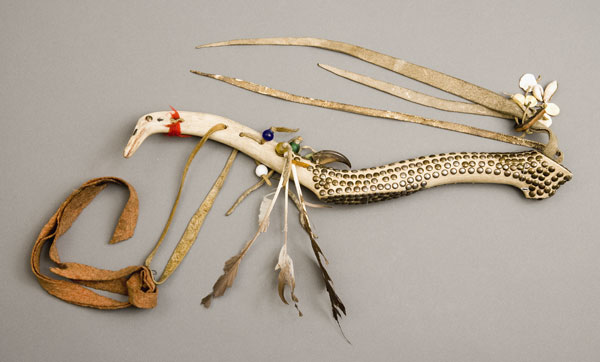
About horse whips used by the Great Plains horsemen:


one of the original Plains people - the Pawnee, who dwelled on the Republican River and for centuries gardened and hunted and made war along the river valleys of Nebraska.


so when you draw or paint a Plains warrior do not forget a horse whip on his right wrist :)

And two XIX century Nez Perce quirts - from Wiki Commons


Valete

Friday, February 24, 2023

Back to George Catlin's Warriors

 Salvete Omnes,

there is war in Europe, as we all know, and Ukraine is the epicenter of it, the current escalation is a year old today.
I hope the war will end soon, the suffering and blood letting of the Ukrainian people.
Peace must prevail in Ukraine...

Long gone warriors from the Great American Plains will illustrate this post - all painted and drawn by Catlin's masterful hand
The Pawnee, Crow, Blackfeet, Mandan, Hidatsa and Sioux (Lakota):


Nowadays it is the time of scalp taking in Ukraine, but let us hope perhaps soon they will celebrate their acquired honors and stop the war, burring the war hatchet, and leaving this war in the past and for the historians, giving peace a chance.


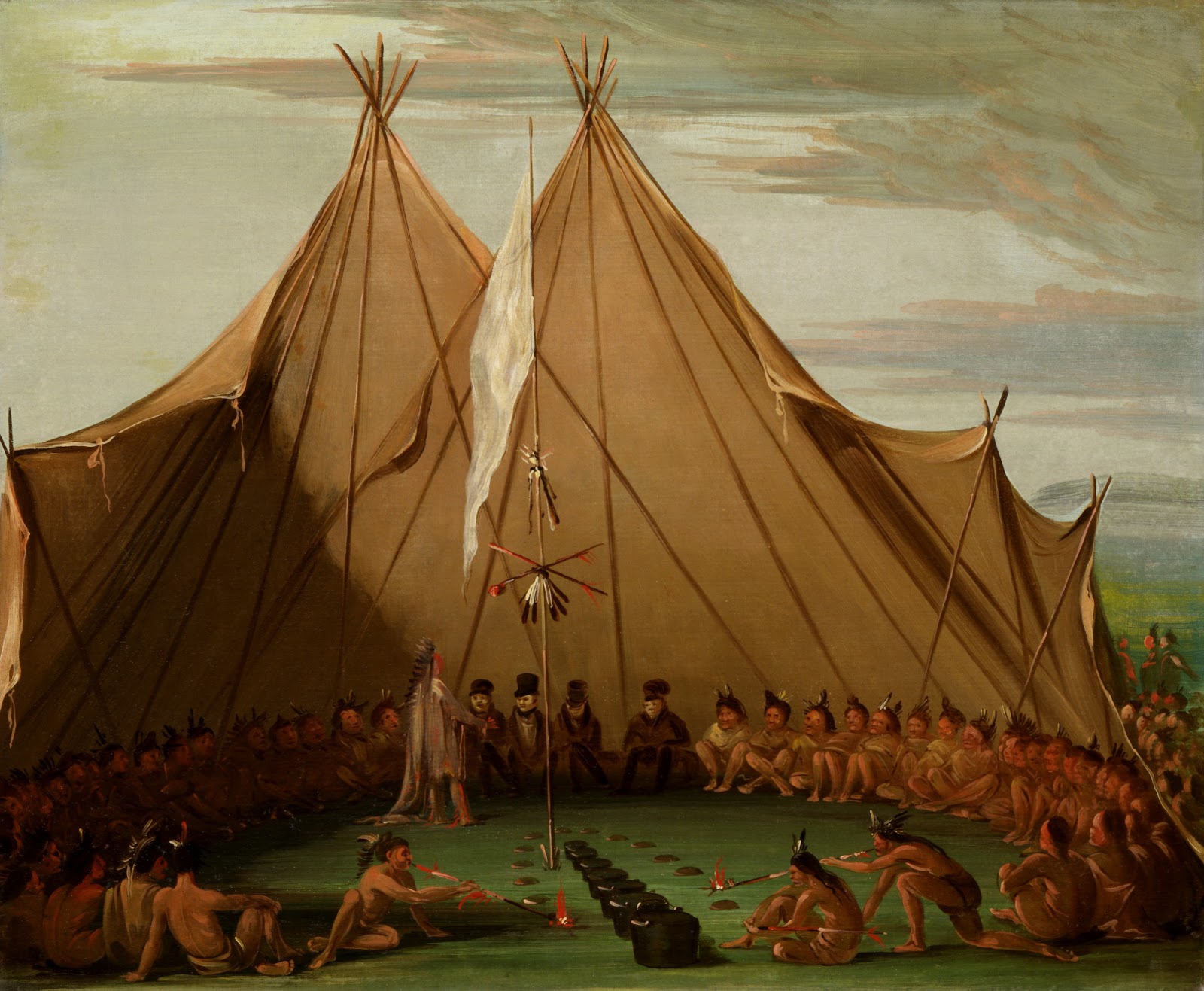
let us hope the parties to this conflict will sit down and parley, like these Sioux in the Dog Feast Ceremony

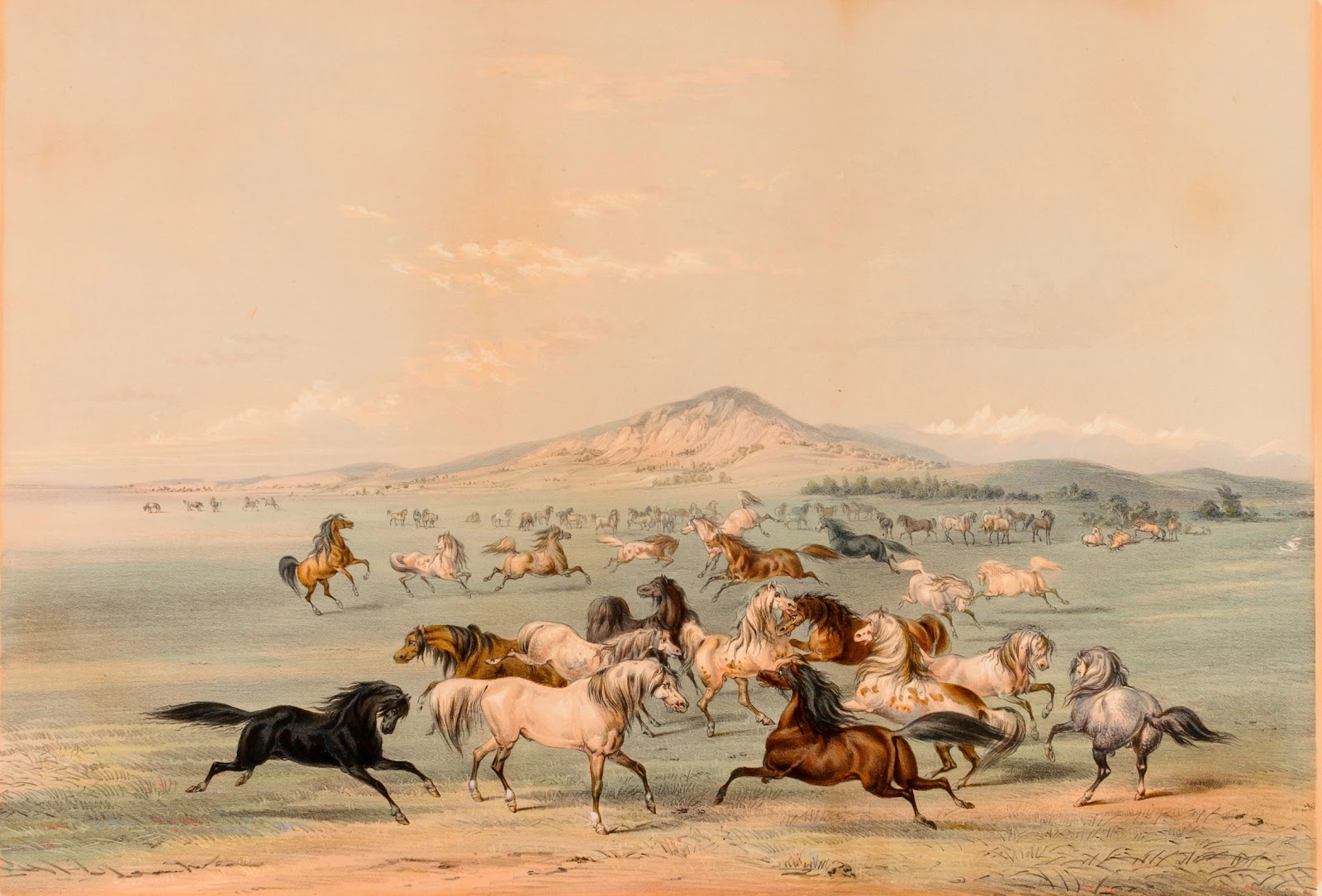
and things will go back to normal, and  their peace and tranquility will be closer to the image of  the horses in this print

all images come from the Smithsonian American Art Museum and National Gallery of Art.
Valete