Thursday, February 26, 2015

Historical art of Sergey I. Shamenkov

Salve,
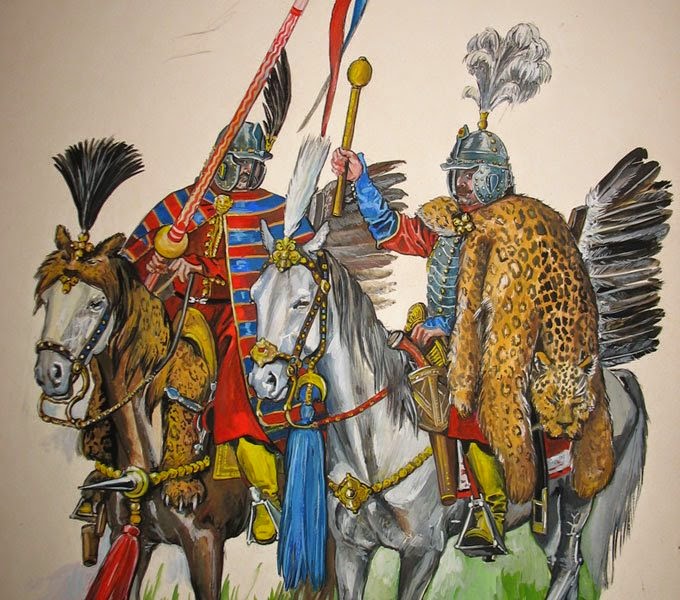
today is my pleasure to introduce to you another artist from Ukraine, who specializes in meticulous research into the military and material history of the subjects he paints and writes about - eg excellently researched article on the Swedish officers' uniforms during the Great Northern War, or antother one about the winged hussars armour of the Russian Imperial service. 

Sergey I. Shamenkov comes from from beautiful Odessa, on the Pontic cost of Ukraine, where ancient Greeks mingled with the nomadic Scythians and others some 2,700 years ago.

So Sergiey  graduated from the M.B. Grekov Odessa Art School, then Lviv National Academy of Arts, specialized in sculpture. Works in the genre of military miniature figurines, small-form sculpture, he is an author and illustrator of several military history books from the Kiev publishing house "Tempora".

Also, Sergey has been in the military history reenactment since 2001. He is a founder and director of   "Enchepingsky Infantry Regiment", "Hetman's musketeers." Member of military history clubs: Vic "Roman Vexiliatio of the province of Lower Moesia," "Legion of the OSS."

Research interests: civil and military costume of Ukrainian Cossacks, Russian Empire, Polish-Lithuanian Commonwealth, Sweden during XVI- XVIII centuries.

Sergey signs his work as Rogala, and apart from Ukrainian language, he is fluent in Russian,  Polish is his mother's tongue,  and he knows English - :)

Finally, Sergey has an active page on Facebook, so you can find him there if you choose so.

Gallery of some of Sergey's meticulously researched works, one day we will do an interview about his art, research, and art process.
Migration Period - Huns, Slavs, Goth warriors


XVI-XVII centuries - great research and spectacular results


Great Northern War


Enjoy

ps
 all the images Sergey Shamenkov's copyright.

Wednesday, February 25, 2015

Charles V - el rey de Espana & Emperor - on horsback

Salve,
let us turn to the Renaissance Europe for a moment today, as usual about the horses and their riders, a very aristocratic rider in this instance.
The focus is on the top monarch of the Christian Europe, Charles V , who has been portrayed with knightly horses quite often.
Mind you he was not the most powerful monarch in the world at this time, actually because the was not a single most powerful monarch, but truly he was one of them, the other powerful one was the Ottoman Turkish emperor  (sultan)  Suleiman the Magnificent.
Although we may say that he was not as knightly as his paternal grandfather, der Kaiser Maximillian, nevertheless let us look at some of his fabulous portraits and other images showing el empeador Charles with horses and horse tack of his times.

Charles V, apart from the landsknechts, liked to use stradtiots and Hungarian hussars as well as German reiters and this portrait fabulous equestrian portrait by Titian shows him as a lighter cavalryman than the heavy lancer of the first part of the century.
But Charles did own many suits of armour and used heavy horse armour for his mounts, as this drawing of one of them shows.
or this contemporary woodcut print, ( from this  flicker's account )

Battle of Muhlberg and other martial pursuits


this part shows Hungarian hussars
 and more early winged hussars here


and some other images, including one associated with his conquest of Tunis

.
 .

. some of the funerary procession horses of Charles V


'Fictional' portrait of Charles  by Anthony van Dyck
modern illustration showing Charles V

Enjoy

Monday, February 23, 2015

Altomonte - Wieden i Parkany - renowacja i 'spory'

Salve,
Italczyk Marcin Altomonte pracował był dla króla jegomości Jana III jako jeden z nadwornych malarzy monarchy ad maiestas gloriam.
Najslyniejsze to
Bitwa pod Chocimiem AD 1673 - ze strony hussar.com.pl


Bitwa pod Wiedniem AD 1683


Druga Bitwa pod Parkanami 1683

Artykuł o samej Zolkwi i jej historii od strony  historii Polski,  utraconych zabytków sztuki i obrazów Altomontego.

Ciekawy artykuł o renowacji 2  powyższych  obrazów Altomontego z ukraińskich zbiorów przeprowadzonych na koszt strony polskiej w Polsce.

Artykuł o 'sporze o Altomontego' związanym min   z 'polska' Kolegiata w Zolkwi jak i planem zmarłego dyrektora Lwowskiej Galerii Sztuki/Obrazów  dotyczącymi dziel Altomontego.

w albumie "Husaria Rzeczpospolitej' zabrakło 2 obrazów Altomontego - wymienionego wyżej Chocimia jak i 'Bitwy pod Ostrzyhomiem', także również nie występuje dzieło jego kolegi od pędzla a rylca, i być może kompana od kielicha Jerzego Eleutera Szymonowicza – Siemiginowskiego, miejmy nadzieje ze autorzy poprawia te braki w drugim albumie o ikonografii związanej z husaria?

przy okazji ów słynny  konny portret Jego Królewskiej Mości Jan III autorstwa mości Eleutera z AD 1686

a tutaj mamy min artykuł z 1930 roku o ikonografii wojennej Jana III - autor Aleksander Czolowski - link podał dawno już temu Kadrinazi :) , ergo odświeżam
pozdrawiam

Variae

Salve,
there is war in Europe - you know, in Ukraine, south-east of Poland, and thus in the spirit of the horrors inflicted on the south-eastern Ukrainians  I decided to share with you this very interesting and horrifying entry titled  'Homage of a war horse'  this being a recollection of daily drudgery and despair  during the last days of the Croatian Army's withdrawal in 1945.

The mutilation inflicted on the poor 'Zelenko' actually reminds me of the accounts of Polish-Bolshevik fighting 1918-21, where one of the Polish soldiers found a horse skinned alive and left alive and tethered to a stake by the withdrawing Reds.
I also intend to write a little bit about the last Kmicic of Old Polish-Lithuanian Commonwealth) or general Stanisław Bułak-Bałachowicz (an archival film of general's troops fighting the Bolsheviks in Estonia), I am awaiting a book on this fantastic cavalryman and true man of Polish Kresy (Borderlands). In an Osprey book on the White Armies during the Bolshevik takeover of Russia (aka Russian Civil War) the author took some liberties with the life of general, and I intend to provide truer accounts of his life etc.

Anglo historians of Alexander the Great tend to diminish or even disregard Quintus Curtius Rufus's 'Historiae Alexandri Magni' preferring instead L. F. Arrianus, for many reasons etc. And on Academia's site there is an article by prof. Marek Olbrycht on the Macedonian Mutiny at Opis and Alexander's Iranian policies, and Curtius Rufus accounts play the basis for the reconstruction of the events therein, perhaps you may find this useful.

Interesting article by prof. Witold Świętosławski - 'The Saddle of the Late steppe Nomads'..

A book by a noted Polish pre-1920s historian Witold Czermak - ''Plany wojny tureckiej Władysława IV'' (''King Wladyslaw IV's plans of war against Ottoman Turkey'' ) - gratis via Wielkopolska Biblioteka Cyfrowa or in a reprinted book form by Napoleon V
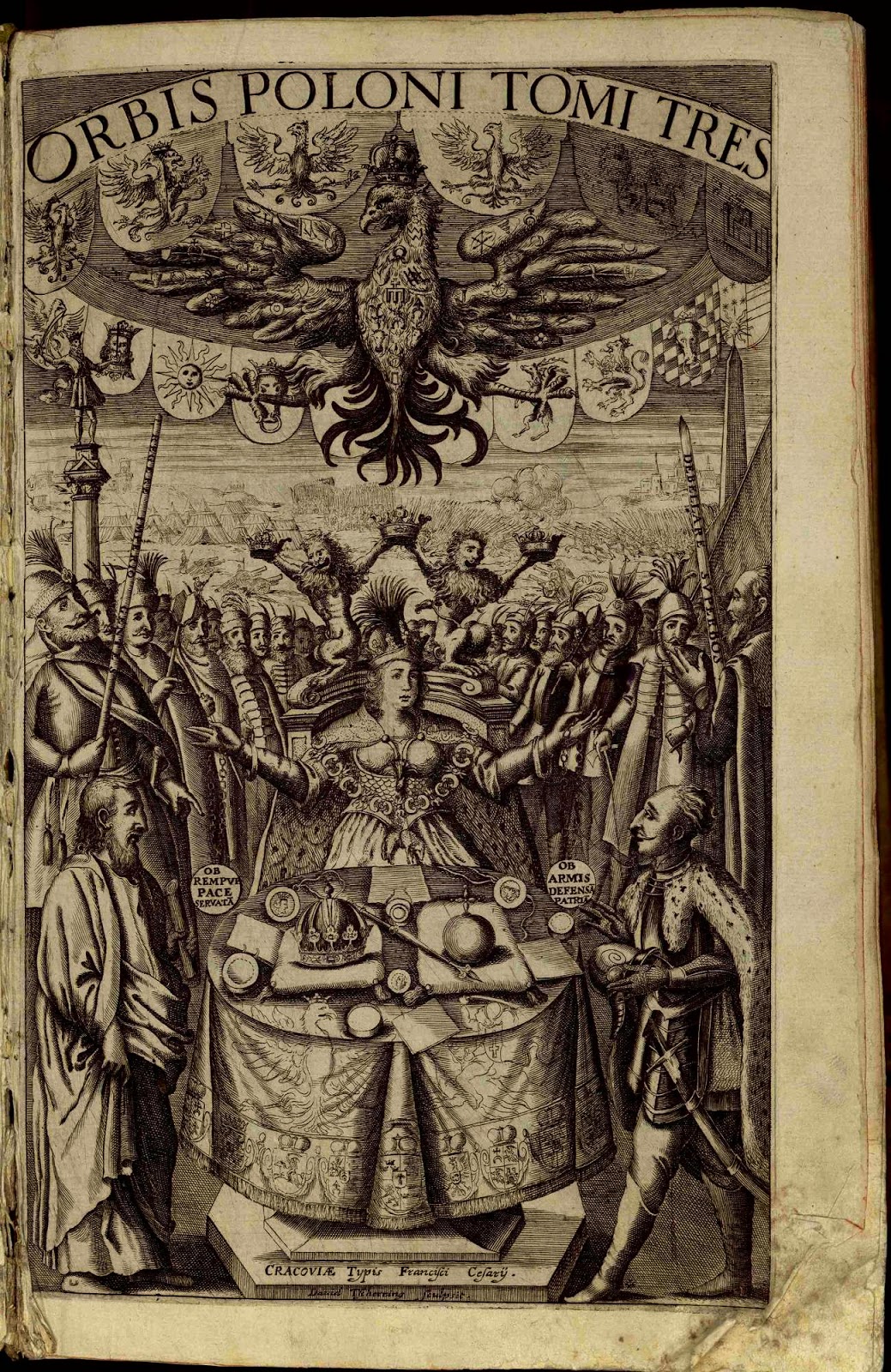
Finally, a page from a three-volume work Orbis Polonus  this being a a compendium of heraldic histories (an armorial)  by a XVII century Polish historian and a Dominican monk Szymon Okolski showing perhaps an winged hussar officer, to the right of  Polonia, and various nobles in their resplendid costumes.


I particularly like the beautiful eagle and the female figure personifying Polonia aka Crown of the Kingdom of Poland.


enjoy
ps
I have to mention something else, especially since I cherish my ancestors and their achievements, especially my grandmother and great grandfather who preserved two Jewish men from Łodź ghetto, so these 2 men emigrated to Israel after the War World II. Also I must recall that my grandma was almost beaten to death by the German policeman near the fence of the Glowno ghetto in 1940, when she was passing a couple of loaves of bread to some Jewish  friends on the other side of this fence. She was saved by the intervention of her childhood German (German Pole) girlfriend, who while running away in a civilain horse-drawn convoy  in turn was massacred, along with some 500 Germans and German Poles, by the Soviet Army tanks  near Głowno in January 1945. Eh, our Central European history is not an easy one, isn't it?
Ad rem, Ida - a feature film made with Polish taxpayers money [sic!] won an Oscar for the Best Foreign Film, and there is a petition on the net to amend a bit the presentation of this  fictional 'flick' with an intro in English explaining that Poland was occupied by the Germans 1939-45 and the Holocaust was perpetrated by the Germans, as the film never even mentions that most important piece of information.
Also, the film takes some horrible liberty with the Soviet and Communist occupation of Poland, and murder of the Polish patriots and soldiers (like rotameister Witold Pilecki) by them and eradication of Polish spirit and character. Thus it seems to me that this feature film promotes anti-Polish stereotypes and falsifies history, especially Polish-Jewish histories, and obviously the history of Nazi and Soviet occupation of Poland. I have seen the film, and I am not impressed, nor i care about Oscars as any example of the highest art award in film industry, the ancients had a saying - De gustibus et coloribus non disputandum est.
Once, long time ago Poland produced a beautiful movie - Noce i Dnie, (Nights and Days) - also nominated to the Oscars, a film infinitely better than this 'flick' but it was about the end of Polish land nobility during the Partitions of Poland, and thus a topic unimportant to Hollywood, perhaps read this book - Hollywod's War with Poland

Sunday, February 22, 2015

Franciszek Smuglewicz - Battle of Chocim AD1673

Salve,
during XVIII century, the last century of Old Poland,  there was a bit of  blossoming of native Polish painters engaged in painting historical pieces, and neoclassical artist  Franciszek Smuglewicz was one of the first of this movement in Old Poland.
Pan Franciszek  started his art studies early, for at first studied at the attelier of his father and his father's friend and fellow artist Szymon Czechowicz, then went to Italy in 1763. In Italy our maestro of brush and paint,  studied in Rome (interested in the ancient Roman art, he was active in recording discovered art of the Nero's   Domus Aureus a and his work was featured in a collection of prints 'Vestigia delle Terme di Tito'), various schools and academies, and spent there about 20 years (some of his art studies were supported by our Russia-selected king Stanisław August Poniatowski), perfecting his talents and artistic craft.
In Old Poland, situated in Warsaw close to the royal court,  maestro Franciszek became a successful painter, including king's favors,and observer, through his art, of the political events taking place there, also painted political figures and historical events, ancient history, portraits, architecture, and worked on many church interiors eg this saint. Amongst his historical works there was an unfinished series of 100 drawings and prints, illustrations that  were to serve as illuminations for the Adam Naruszewicz's History of Polish Nation.
 Having moved to Wilno (Vilnus nowadays) after the Third Partition of Poland, he became the first dean of the new School of Arts at the Vilnus University. He painted and drawn many images of old Vilnus, having thus recorder the ancient appearance of this old princely city.
Sadly he did not live to enjoy the renewal of Polish state, Duchy of Warsaw, under Napoleon, dying in 1807 in Vilnus where he was buried (Cmentarz na Rossie)
The painting in question - Khotyn or Chocim AD 1673, great Polish-Lithuanian victory over the Ottoman Turks -  is perhaps unique in its martial character and national, Polish symbolism and in the fact that this is one of the first works recreating a historical event  painted by a Polish-born artist of this quality when it comes to skill, mastery and abilities of the painter. Also it is noteworthy that Smuglewicz, when a young man before his trip to Rome,  must have seen the last winged hussars wearing armour etc. Being a neoclassical painter he nevertheless shows some Baroque flair, and perhaps studied some of the XVII century paintings showing the very battle, perhaps including the Andrzej Stech's canvas.

This painting follows the tradition already started in the XVII century, when the images showed actual winged hussars, of showing our winged hussars as heavy armoured cavalrymen, with wild cats pelts, gilded armour, rich arms and horse tack,  fabulous horses and flamboyance. Interestingly we see no wings, but there are plenty of feathers on the hussar helmets and  also the wild cat pelts are clearly visible. Defending Turks also look quite Turkish, so to speak, although they seem to be anachronistically wearing their summer costumes, contrary to the actual attire worn during this cold November battle.

He also painted a battle of Warka AD 1656, where Stefan Czarniecki and Jerzy Lubomirski defeated the Swedish forces, cavalry and dragoons, and in this work we see Czarniecki at the head of his armoured cavalry (wined hussars were prominent in this victory) crossing our little Masovian  Pilica river to attack the Swedes.

Franciszek Smuglewicz heroic, winged hussars-horses-sabres, approach to painting of our Polish history was soon emulated and followed, first by Aleksander Orłowski, then January Suchodolski and countless Polish painters off the XIX and early XX century.
Enjoy
ps
great,  2-guitar interpretation of Isaac Albeniz' Asturias (Leyenda) 

Wednesday, February 18, 2015

Painting from the Gołuchów Castle


Salve,
 I have failed to include into my blog this famous and perhaps quite controversial image of the Polish nobility, soldiers and horses, associated with the reign of His Royal Majesty Sigismund III..
According to Zdzislaw Zygulski jr. (''Broń w Dawnej Polsce'' p.295)  - this important iconographic primary source in a form of a panel painting ( Tablica Gołuchowska - 'Goluchów costume tableau' o 'Gołuchowska Board')  contains various types of Polish noble civilian and military attire dated to the beginning of XVII century, however it appears to be of a later date than the famous 'Rolka' painting. It is held at the National Museum at Poznań, but came from the famous collection started by Izabela Działyńska at the Czartoryski's Gołuchow Castle(previously the seat of the Leszczyński clan ). 

Amongst various figures, both male and female nobility)  painted in a somewhat miniaturist manner, we find a figure of a winged hussar armed with nadziak (warhammer) and sabre, with his head covered by a gilded helmet (shishaq/zischagge) adorned with a szkofia (aigrette), armoured with a gilded, four-lames breastplate and mail arm protection, underneath the armour he is wearing a short military żupan, red, tight trousers with buttons on side (not unlike later hussar pants during the Napoleonic and later periods), short yellow leather boots with long, gilded spurs. Zygulski jr writes  that the wild animal pelt on his shoulders is a cheetah skin while Richard Brzezinski, in his 'Polish Winged Hussar, p 48, writes that this pelt only appears to be a leopard one, where it was dyed with spots to make it look like one.


The second cavalryman - a kozak officer - is armed with an Oriental bow(bow in a bow case) and arrows (in a quiver), and sabre, while his torso and arms are protected with a mail(maile) armour, rather short, worn over  a longer than the winged hussar , brocade żupan (with a red lining).  His left arm is covered with additional steel protection known then as zarękawie or vambrace. Fine long yellow leather boots encasing tight, black pants,  and a fur hat or 'kołpak' with long blue textile hat bottom complete his martial attire that is very Polish and very officer like.


Finally we have another soldier there, a typical Polish infantry soldier or a 'haiduk' armed with a sabre, war ax, and a firearm, which according to Mr. Brzezinski is an arquebus (Polish Armies, vol. p 40),  he carries a match wound on his left arm;  although an infantryman he has no 'bandolier' or a belt for carrying the measured charges, but has a powder flask and bullet pouch at his belt, while over the left shoulder he carries  a canvass bag for his firearm.  With his head covered by a black 'magierka' hat (with several small pipes stuck into the brim), he is wearing an early uniform consisting of a white red-lined  żupan (and most likely wooden buttons)  and a short-sleeved, white delia or 'delijka' also with red lining and with passementerie loops and butons, with a belt tied at his waist.  Under his overcoat (delijka) and coat (żupan) he wears  tight red pants while black 'trzewiki' or short boots are on his feet, all of this to complete  an  image of an early European uniformed infantryman, second to the Ottoman Turkish infantry in their uniform appearance  (an article in Polish about Polish infantry prior to 1655AD  by Tomasz Rejf).


Perhaps next time I will discuss a bit the horses and horse tack from this painting.

enjoy
ps
another great piece by Anatoly Telenik - a detail of a larger painting showing Polish Commonwealth winged hussar comarade  - the armour depicted comes in part from the Polish Army Muzeum in Warsaw, and it is called 'anima' type and dated to circa 1620AD.


Sunday, February 15, 2015

Discovery in Russia

Salve,
 a definitely very interesting and perhaps more than groundbreaking discovery in Russia's Kuban region at the foothills of the Caucassus Mountains -  early Bronze Age (4,000 years ago, perhaps assiociated with the Maykop Culture) horses burried with their tack,  The horses, 20 discovered thus far, were laid there at the deapth of mere 1 metre for all these 4 millenia. They have not found any remains of the riders, unfortunately.

You can easily translate this with google translate or bing translator etc.

another interesting arricle - ancient European Wild Horse appearance and genetics findings

 enjoy
ps
the attached photo of the horse skeleton and bronze tack comes from the article and it is just for information purposes, taken by Natalia Fedorenko.

Wednesday, February 11, 2015

'Husaria Rzeczpospolitej'


Salve amici,
 yesterday I wrote this short 'review of sorts' - a brand new coffee table book on the Polish winged  hussars, book published by the Instytut Wydawniczy ERICA from Poland. For now the review is in Polish.
                                                    ***

  Pozwolę sobie dodać 'króciutką' ''recenzyję'' albumu ostatnio wydanego w kraju pt : 'Husaria Rzeczpospolitej' autorstwa mośćów Radosławów -  Sikory et Szleszyńskiego. 
Link do przykładowej księgarni, choć mój egzemplarz przybył via EMPIK
http://tetraerica.home.pl/pl/p/Husaria-Rzeczpospolitej-/277

    Ad rem, mam przed sobą przepiękny album, ciężki zawartością i pachnący dobrym papierem, materiałami źródłowymi et chwała husarii w relacjach pisanych et ikonografii z epoki tejże najpiękniejszej jazdy świata - choć od strony obróbki części plików zdjęciowych pozostawia coś tam do życzenia (zwłaszcza fragmenty Certamen Equestre) - z tej samej francuskiej biblioteki internetowej 'Gallica' mam dużo, dużo lepsze skany tych koni 'piórnych' niźli panowie autorzy zamieścili, mogli byli się do mnie zwrócić, jako że się znamy.. a szkoda...


Tedy o zawartości - przy pierwszym przeglądaniu pominąłem teksty źródłowe, i od razu rzuciłem się na genialne zdjęcia z Pelplina (Bazylika Katedralna), i nie zawiodły moich oczekiwań;  ponadto, idąc chronologicznie, znajdujemy dużo dobrych zdjęć słynnego obrazu bitwy pod Orsza, jest oblężenie Połocka AD 1579,  Rolka, Kircholm, trochę dziwnie 'pocięta' i zaprezentowana  husaria z Kielc (plafony na Zamku Biskupim), Tczew AD 1627 (choć odwrócony), Smoleńsk (z Kornika i rycina) różnoraki Wiedeń AD1683, Kalisz AD 1706, są grafiki, freski i rzeźby nagrobne etc - miodzio waszmość państwo, miodzio całkiem, choć jest i trochę piołunu. 
Zanim przejdę do piołunu to może trochę jeszcze  o nagrobnych rzezbach aka pomnikach nagrobnych, które chyba po raz pierwszy doczekały się pokazania w kontekście husarzy w polskojęzycznej publikacji. Nie jest to oczywiście wyczerpujące zestawienie tychże dziel sztuki sarmackiej, ale dość pionierskie - ok, może nie do końca, bo w 'Polish Winged Hussar ' (z Osprey'a) mości Richarda Brzezińskiego znajduje się świetna płaskorzeźba nagrobna z kościoła  w  Suchej  kolo Strzelec Opolskich przedstawiająca skrzydlatego husarza imci pana Piotra Strzele, Morawianina, który zmarł był AD 1600 - niestety, tej płaskorzeźby nie ma w albumie.

Bo ze złych wieści to nie ma w albumie ani Kluszyna 1610! ani Chocimia 1673! ani okuć z trumny HWK Żółkiewskiego! ??? brak husarii i koni z tablicy Gołuchowskiej! i parunastu innych sławnych które winny były się tam znalesc a ich nie ma, za to zamieścili obrazy Bacciarelliego nasi kochani autorzy choć równie dobrze mogli Orlowskiego i Norblina czy Smuglewicza etc. 


  Jeśli chodzi o 'kopiaście' zamieszczone materiały źródłowe to chyba jest to dobre i godne pochwały podejście do prezentacji źródeł, wydaje mi się, w tym kontekście, choć nie bardzo rozumiem te dwojga języków tłumaczenia, skoro brak omówienia  i samej husarii jak, i tejże ikonografii w owych językach. Gwoli tłumaczeń tych zamieszczonych źródeł to dobre, moim zdaniem, jest tłumaczenie francuskie! Jednakże angielskie wyraźnie odstaje - cóż, wydaje się, ze tłumacz musi się jeszcze wiele nauczyć,  ale nie jest łatwo tłumaczyć teksty historyczne z polskiego na angielski oj nie... Może także szkoda, że zamiast 'anachronicznego' już dzisiaj francuskiego nie ma tłumaczenia na ukraiński? Na stronie 15 jest i moje tłumaczenie ze staro-hiszpańskiego na język polski - ku chwale Ojczyzny :)

  Może trochę o wstępie - cóż, wstęp jest zgrabnym esejem o husarii, i zawiera, naturalnie, wiele poglądów głoszonych w książkach R. Sikory et jego artykułach, min mamy listę 10 'najciekawszych dokonań husarii miedzy AD 1574 a AD 1694 ( tak, tak, 'nieszczęsny' Hodów się załapał z owym 100 liczniejszym przeciwnikiem 400 husarii-pancernych).. Mamy tam także o piórach a skrzydłach co to konie straszyły, o kozłach hiszpańskich a innych ciekawostkach i poglądach autora - razem zgrabnie i po husarsku. Przy pierwszym przeglądaniu dziwnym wydało mi się,  ze  tego eseju autorzy nie zdecydowali się przetłumaczyć na francuski i angielski, ale jak się okazało przy gruntownym czytaniu tekstu w pierwszej części albumu esej jest przetłumaczony na obydwa języki (Wersja angielska wstępu jest na s. 45 - 47. A francuska na s. 77 - 80) , ergo wniosek, ze pewnie przydałby się spis treści do wszystkich tekstów zawartych w albumie, jak i spis ilustracji, byłoby łatwo i przejrzyście dla czytelnika i kolekcjonera. 

Jak już rzekłem brak mi spojrzenia na ikonografie naszej skrzydlatej jazdy zaprezentowanej w albumie - tj jakieś nawet bardzo 'cieniutkiej' analizy materiału ikonograficznego od strony przedstawienia rzeczywistego wizerunku husarza - być może zamiast zamieszczać materiały źródłowe pisane i ich tłumaczenia w 2 językach, czy nie lepiej byłoby omówić zamieszczona ikonografie? Coż, na to już za późno, ale pozostaje luka, i dla użytkownika bez wstępnej wiedzy o husarii ta ikonografia pozostanie li tylko obrazkami, i tedy chybiony będzie cel czyli wyjaśnienie na czym polegała owa fałszywość wizerunku husarzy w malarstwie XIX wieku. 

'Wychowałem' się na twórczości XIX-wiecznych polskich malarzy, i jakoś nie wydaje mi się, żeby zafałszowali wizerunek husarii mościpanowie Orłowski, Suchodolski, Kossakowie, Brandt, Pawliszczak, czy Grottger a Rozwadowski etc, bo przecież takiej glorii husarii jaką oni malowali czy rysowali nikt inny nie namalował . Po prostu mieli swa wizje na podstawie zachowanych po zamkach, pałacach i dworkach eksponatów, opowieści rodzinnych, powstającej historiografii polskiej trzech zaborów, jak  i kultury a naleciałości klasy szlacheckiej a bogatego mieszczaństwa, arystokracji, wciąż żyjących wyznawców Sarmatyzmu, czyli dla tych wszystkich z których się wywodzili lub dla których malowali etc, a nie byli przecież historykami wojskowości tylko malarzami rodzajowymi.. ergo, nie zgadzam się z takim 'ostrym' stawianiem rzeczy jak podają autorzy. 
Muzealnictwo wojskowe i rekonstrukcja naukowa husarii to dopiero lata 1930te, a jak widać po nielicznych filmach, ilustracjach czy obrazach  a także, a może niestety, dzisiejszych  rekonstruktorach husarii większość nie otarła się o rekonstrukcję naukowa, a ogląda li tylko 'Pana Wołodyjowskiego', 'Potop' czy 'Ogniem i Mieczem'.. 


Finałowo  dodam, że moim zdaniem jest to wielka szkoda, że nie podzielili mospanowie koledzy materiału na, powiedzmy,  wiek XVI do AD1648, i tom II od wojen kozackich do końca istnienia husarii - idąc może metodologicznie okresami panowań naszych monarchów. Uważam, że wtedy byłoby klarowniej i przejrzyściej, a przede wszystkim  łatwiej i dla specjalisty jak, i dla czytelnika-amatora historii husarii...

Ergo czekając na album numer II, który zapowiadają we wstępie I albumu sami autorzy, ten dzisiaj  oceniam na '4' całościowo, choć jeśli chodzi o jakość wydania definitywnie dam '6'. 

Co by nie rzec jest to przepiękna, jedyna jak do tej pory,  książka-album tego formatu dla miłośników husarii... którą szczerze polecam.

finis

Sunday, February 8, 2015

Lars Andersen - archery and some

Salve,
the internet world has been swept by a debate caused by the video of master archer Lars Andersen.  - what a skill on this archer! But... there are problems with his historical claims and mysterious pronouncements.

There have been some level-headed, informed responses, eg by Mike Loades,[1] or by schola gladiatoria, and this one is a 'nice' critique so I am sharing it with you.

so do ponder while watching and perhaps eventually do go & get a bow and some arrows and then  go practicing away - it is great, I assure you- :)


[1]
Mike Loades  - I enjoyed  his book on the English  Long Bow and the documentary on the Egyptian New Kingdom chariotry.

Ps.
per archery  I own a 55 pound horse Korean bow and enjoy my archery whenever I can, including 'hunting' animal-shape targets with it.

Battle of Eylau AD 1807 anniversary


Salve,
 today we have the anniversary of the battle of Eylau AD 1807,  one of the bloodiest battles of the Napoleonic Wars - article at Wikipedia.
Napoleon's Campaing in Poland, 1806-7 - an entire book from archive.org

This two-day battle, without a clear winner, is famous for the huge charge of the French cavalry. However, it saw a large number of most unhappy blunders and loss of life, due to the cold and a frightful blizzard, so as a result of the terrain and climate conditions the struggle at Pruessisch  Eylau or Bagrationovsk  saw an appalling carnage of French and Russian infantry (much less on the Prussian side), acts of heroism and bravery, and numerous charges of cavalry on both sides, especially during the second day of the engagement, obviously resulting in a tremendous loss of horses. 
Cavalry charge at Eylau - ''The 10,700 men of the Reserve Cavalry and the Guard Cavalry stepped off into the driving snow.''
Eylau Campaign - translated by Greg Gorsuch
Cavalry remounts of the French Army 1806-7
Order of battle of the Russian and allied Prussians
Cavalry lessons - Eylau and Friendland - 1st Polish Campaign


 Battle as seen from the saddle on the Russian side - excerpt from Denis Davidov's Memoirs - - original Russian

Anatoly Telenik also painted episodes from this battle, and you can find some examples below:


During this battle 7 French eagles or regimental battle standards were captured by the Russians.
For the Polish readers - good albeit quite general book -  Tomasz Rogacki, Pruska Iława 1807 (Bellona)
Enjoy