Salve,
it has been a while since I posted any hussaria sketches.
well, voila, there are some, in various stages of 'undress' as per finishing etc :)
.
.
Nota bene 'O quam dulce et decorum est pro patria mori!' was and still is written on the monument of Crown Grand Hetman Stanisław Żółkiewski killed in action at the battle of Cecora, and eventually buried St. Lawrence's Church in Źółkwia, now Zhovkva in Ukraine. The monument stands in the area where hetman was killed in 1620 - Berezovca, Moldova.
ps
a Facebook page devoted to Husaria (winged hussars) history and reenactment has been having a little competition - "your own image showing hussaria or somehow connected to hussaria'' - and I placed one of these sketches there
Equestrian Polish, Eurasian and the Americas history and horsemanship - from Bronze Age to circa1939AD. Historical equestrian art, my own artwork; reconstructions, and some traditional art media and digital artwork-related topics. All rights reserved unless permitted by 'Dariusz caballeros' aka DarioTW, copyleft or fair use.
Monday, November 18, 2013
Thursday, November 14, 2013
Around Jan III Sobieski - part II
Salve,
continuing from my last entry, we will look at the dignitaries and courtries around Jan III Sobieski
Today the top military commanders
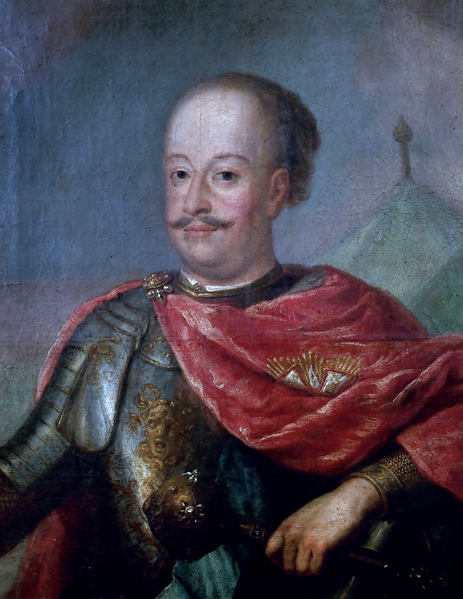
Crown Grand Hetman Stanisław Jan Jabłonowski, Prus III coat of arms
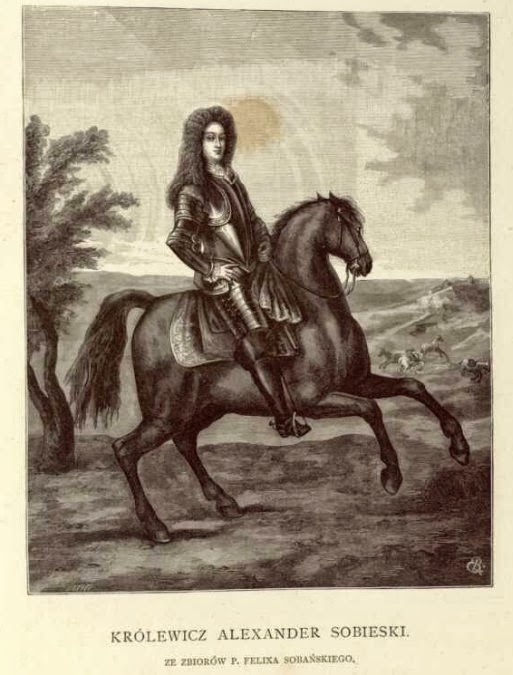
his son Aleksander Jan Jabłonowski ,
Crown Field Hetman Mikołaj Hieronim Sieniawski, Leliwa coat of arms
and his son Adam Mikołaj Sieniawski, Leliwa coat of arms, future hetman, who took part in the battle of Vienna 1683 being only 17 years old
voivode of Kiev and Crown Field Hetman Andrzej Potocki, Pilawa coat of arms, amongst others commander of the Crown army left wing at battle of Chocim (Khotyn) 1673.
his son Stanisław Potocki, Pilawa coat of arms, who was killed at the battle of Vienna 1683. I will write about this chevalier and his brave and untimely death.
brother of Andrzej, future Crown Grand hetman Feliks Kazimierz Potocki
I hope to write and illustrate with my drawings some more detail about these men in the future, God willing
...
to be continued
continuing from my last entry, we will look at the dignitaries and courtries around Jan III Sobieski
Today the top military commanders
Crown Grand Hetman Stanisław Jan Jabłonowski, Prus III coat of arms
his son Aleksander Jan Jabłonowski ,
Crown Field Hetman Mikołaj Hieronim Sieniawski, Leliwa coat of arms
and his son Adam Mikołaj Sieniawski, Leliwa coat of arms, future hetman, who took part in the battle of Vienna 1683 being only 17 years old
voivode of Kiev and Crown Field Hetman Andrzej Potocki, Pilawa coat of arms, amongst others commander of the Crown army left wing at battle of Chocim (Khotyn) 1673.
his son Stanisław Potocki, Pilawa coat of arms, who was killed at the battle of Vienna 1683. I will write about this chevalier and his brave and untimely death.
brother of Andrzej, future Crown Grand hetman Feliks Kazimierz Potocki
I hope to write and illustrate with my drawings some more detail about these men in the future, God willing
...
to be continued
Wednesday, November 13, 2013
Around Jan III Sobieski part I
Salve,
Polish Independence Day (11 XI) came and went, my grandmother used to tell me about her own recollections regarding 1918 and later, so on or about this holiday I usually think about grandma and my great-grandparents, and how they felt when Poland was resurrected after 123 years of non-existence.
For many reasons I prefer the personages and their lives, times, and events that took place about and around the reign of good king Jan III Sobieski, Janina coat of arms. Incidentally, king John and his contemporaries like to portray themselves in their glory, so many images have survived the tide of destruction that swept Poland prior to 1945, many of them at the Villa Nuova palace (now Wilanów Museum).
I posted some time ago many prints related to the glorious warrior-king Jan, now I can share some images showing his family, courtiers and close associated dignitaries, each print has a heading below the picture.
Let's start:
great-grandfather
grandfathers
parents:
..
siblings:
wife, love of his life:
children:
..
to be continued
Labels:
historical painting,
Jan Sobieski
Thursday, November 7, 2013
Novemeber rains etc
Salve amigos et amigas,
it is raining outside, I guess good reading weather...
this morning I decided to change a bit the info in the heading of this blog. I enlarged the time frame of my blog, changing it from - the end of the Indian Wars (in North America) , to this new date - AD 1939.
I have been using texts and images that go into XX century, and also in our so called Western Civilisation the sad year 1939 was the terminal year of gentry living in Europe. Everywhere, but for Spain, Portugal, Swiss Union, and Sweden raged relentless war, World War II, that brought the end of the gentry and their way of life - with fine estates, horses, dogs, servants and chivalry that would become buried under the piles of dead Europeans.
In our parts of the woods, Central and Eastern Europe, the old class was obliterated with the particular zeal by the Communists and Nazis alike. In Poland particularly during the first 2 years of war the joint occupiers (remember Ribbentrop-Molotov Pact), killed Polish gentry and intelligentsia with gusto and relentlessly.
It is not an accident that the killers, Nazi and Soviets, killed gentry class, they had designs for this monstrous and momentous change in Eastern Europe and as you know they carried their designs, including heinous removal of European Jewry. For centuries it was the nobles, this landholding class reaching far into the Dark Ages with their ancestry, that protected the Jews in our part of Europe from excesses, be it the Cossack fury or bigotry of townspeople.
Hence, I think it would be appropriate to include some talk about the gentlemen and gentlewomen of 1920s and 1930s, as in fact they were part of that great equine-based culture started somewhere during the Bronze Age on the Eurasian steppe.
I should mention that while visiting Poland I bought this fantastic collection of books dedicated to the Polish cavalry regiments between 1914-1938. It is titled ''Wielka Księga Kawalerii Polskiej 1918- 1939'' (Great Book of Polish Cavalry) and I got some 40 volumes (Osprey Military Publishing style) full of period photos, illustrations and interesting text. The series is on going, and more books are expected, I am awaiting the volume on the so called military horse of the 1918-1939 period, as some of my ancestors bred horses for the Polish cavalry - :)
Until the next time then...
Above, a detail from a 1770-2 painting by Bellotto showing Warszawa's left bank across Vistula river: amongst them Royal Castle and Old Town etc. A troop of cavalry, Royal Uhlans with long lances, is coming towards the viewer, while we are treated with a detailed look of the Royal entourage, carriages with matching teams, and amongst the officers, adjutants and servants etc there are king's hussars. The description in Polish here
Wednesday, October 30, 2013
Ill-Made Knight - interview with Christian Cameron
Salve,
as you know I have already expressed my admiration for the historical fiction written by novelist Christian Cameron. Just found another opportunity to share with you my admiration - via podcast.
In this podcast we can listen to Christian being interviewed by Chivalry Today - on the subject of his book 'Ill-Made Knight' (featuring an English knight William Good), writing fiction, chivalry, reenactment, combat historicity, George Washington, violence etc.
Another interview with Christian - fantasy book critic blog
''Ill-Made Knight'' has been reviewed on many websites - eg on historical novel society or Amazon review - and its page on goodreads.
Christian's page where one can come, log-in and discuss history, writing and his books - hippeis.com
Finally, I love the fact that our European Medieval traditions are making a come back in our technology driven Western societies - from martial arts, crafts like armour making, saddlery through music, heraldry, calligraphy and the high art of tailoring.
From Australia and New Zealand, through the Americas to Europe we can find not only arm-chair historians but mostly lay people researching the sources and practising the Medieval arts and becoming bloody :) great at it.
Hurrah
*
Pan Jacek listed his horses on his blog, with nice photos, I touched them and they touched me back and smelled me last week ( I did not ride any ot them, came too late in the day and thus chose conversation and just hanging out with horses and owners over riding), even the free grazing stallion and not skittish colts and filly - what a great bunch - would love to own an Akhal-Teke and ride it across the Great Plains, perhaps one day :)
*
Below, a drawing of a Silesian Piast duke Bolko (Bolesław) II ziębicki and his wife Guta (Juta) from their tomb effigy at the monastery of Henryków,
famous for the Book of Henryków, Latin manuscript that contains the first known written sentence in Polish language
ps
the last two images come from Wikipedia
Monday, October 28, 2013
Boska Wola et Poland en general - my latest trip
Salve,
I went to Poland and tus my blog has been rather silent, so time has come to return to blogging, with tou dear reader permission - :)
My trip was very fruitful - I visited Wrocław, ancient Polish city on the Odra River, where my friend Darek Bufnal lives and practices his arts - eg you can see his historical illustration on his blog or facebook.
In Wrocław we visited the Ostrów Tumski, National Museum with its wonderful funerary monuments of Piast dukes of Silesia (Ślask), notably I took some photos of Panorama Racłlawicka, and my little point and shoot Canon did all right, but to my detriment I simply forgot to bring our big Canon EOS, my fault it was, no doubt. I will post these photos here this week, I hope.
Then I saw some really interesting churches and art within - especially interesting to me were the Renaissance ones located in the really old Polish town of Łowicz and a village of Sobota (near Łowicz ), containing funerary monuments of Masovian noblemen in armour of XVI century.
However, the trip was topped off with a visit to my compadre pan Jacek's ranch located in the picturesque, albeit very flat, countryside of southern Mazowsze - his blogs: Polish and English - who with his lovely wife breeds and nourishes with loving hand a nice small 'tabun' (herd) of Akhal-Teke horses that graze freely on the flat Masovian Plain. I will post some of the photos shortly.
see all of you soon
ps
I love fresh raw milk and had a chance to drink plenty, and made some great kefir too, from milk provided by grass chewing cows grazing freely in the Masovian countryside.
ps"
finished Christian Cameron's novel - of the Tyrant series - Destroyer of Cities, what a feast of historical fiction, mostly describing the siege of Rhodos by Demetrios, son of Antigonus I Monophthalmus 305-4 BC, defended by one of the main characters of the series, young king of Bosporus Satyrus, son of Kineas and Scythian queen Sryanka.
Love the depiction of naval warfare as practised in the ancient Greek world, imagined and reconstructed by ser Christian ( himself an avid historical reenactor, who amongst many things practices European medieval and Renaissance martial arts, ancient Hellenic reenactment, as well as XVIII century woodland warfare)
*
Labels:
akhal-teke,
Christian Cameron,
links
Subscribe to:
Posts (Atom)


_-_Portrait_of_Aleksander_Benedykt_Sobieski_-_Google_Art_Project.jpg)
_-_Portrait_of_Konstanty_W%C5%82adys%C5%82aw_Sobieski_-_Google_Art_Project.jpg)

_-_Google_Art_Project.jpg)


_artist_-_Portrait_of_Teresa_Kunegunda_Sobieska_-_Google_Art_Project.jpg)